




|
|
|
|
||
|
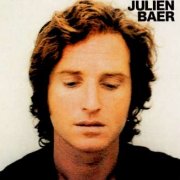 |
Julien Baer (1997, 37.53) **½/T½ |
|
| Marie Pense à Moi Une Femme Seule Le Monde S'Écroule La Bataille la Plus Dure Juillet 66 Dérive 300 Années Lumière La Folie Douce |
Cette Fille S'Appelle Demain Vie sur Mars |
|
Current availability:
Mellotron used:
Julien Baer is a French singer-songwriter of the modern chanson persuasion, probably unsurprisingly, whose eponymous 1997 debut is unlikely to appeal to many non-French speakers, its mix of balladry and mid-paced Gallic pop being fairly culture-specific. A couple of tracks stand out from the crowd, notably Juillet 66 and Cette Fille S'Appelle Demain.
XTC's Dave Gregory plays Mellotron on Juillet 66 and Vie Sur Mars (sadly not a translated version of the Bowie track), with flute parts dipping in and out of the songs throughout their respective lengths, although the keyboard flute on 300 Années Lumière doesn't sound Mellotronic. So; yet another 'you're unlikely to like this'-type album with a little onboard Mellotron. Whatever.
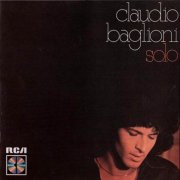 |
Solo (1977, 44.22) **/½ |
|
| Gagarin Duecento Lire di Castagne Solo Romano Male Malissimo Gesù Caro Fratello Nel Sole, Nel Sale, Nel Sud Strip-Tease Il Pivot |
Quante Volte Puoi? |
|
Current availability:
Mellotron used:
Claudio Baglioni is your classic Italian mainstream pop/rock vocalist, a style which rarely travels further than his country's borders, like so many similar 'local market' artists. After a flop first release in 1969 (when Baglioni was all of eighteen), he broke through with his third album, 1972's Questo Piccolo Grande Amore, making him already a major star when he released his seventh, 1977's Solo. It's exactly as mainstream Mediterranean pop/rock as you'd expect, fitting that era's version of 'adult contemporary' like a glove, although the occasional unusual production trick turns up, notably the massed ARP 2600 part (did I hear someone say "PFM"?) on Gesù Caro Fratello and a soundscape nicked from then-current Genesis albums on Il Pivot.
Toto Torquati is credited with Mellotron on two tracks, although with nothing obvious on the title track, we have to assume that the credit was meant to refer to the few seconds of strings at the end of Duecento Lire Di Castagne, while Gesù Caro Fratello has nothing especially audible. Faint background strings? Who knows. Anyway, you're rather unlikely to want to hear this unless you're already a fan, frankly.
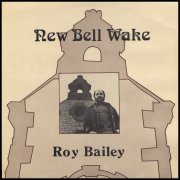 |
New Bell Wake (1976, 40.08) ***/T |
|
| The New Bell Wake Spare Me the Life of Georgie Flying Cloud John Barleycorn Trooper and the Maid The Wymondham Fight Lord Franklin The Beggar Man |
Adieu, Adieu Fair's Fair |
|
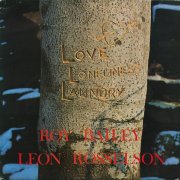 |
Love, Loneliness, Laundry [as Roy Bailey & Leon Rosselson] (1977, 41.09) ***½/½ |
|
| Let Your Hair Hang Down Single in Spring Invisible Married Breakfast Blues Don't Get Married, Girls In the Park Once When I Was Young The Man Who Puffs the Big Cigar We Sell Everything |
Abiezer Coppe Garden of Love Stand Up for Judas |
|
Current availability:
Mellotrons used:
Roy Bailey, ex-MBE (he returned it), is the most famous British folkie you've never heard of; his fifty year-plus career made him a legend on the scene, but he never broke through in the manner of, say, Ralph McTell. Although not being a one-hit wonder (sorry, Ralph) hasn't helped, nor has Bailey's more 'traditional' delivery, a dead-cert put-off for listeners not inured to the style.
1976's New Bell Wake is a hybrid of 'trad' and 'modern' folk, incorporating a capella delivery (Flying Cloud, Adieu, Adieu), barely-accompanied material (John Barleycorn, Lord Franklin) and what can only be described as rhythmless folk-rock on closer Fair's Fair. The emphasis, as you'd expect, is more on the story than the tune, although the actual songwriting (when it's not 'trad. arr.') is memorable, particularly the melody on Fair's Fair. That tune also, weirdly, features a Mellotron (from Leon Rosselson), with cello, trumpet (?) and string parts all over the track, alongside the guitar.
Bailey's next release, the following year's Love, Loneliness, Laundry, was the second of three he made with fellow traveller Rosselson. To my ears, it's a more rounded release than New Bell Wake, Rosselson's contributions standing out in particular, although a better production helps considerably, as does the slightly more mainstream sound (not often you'll see me write that). Standout tracks include Invisible Married Breakfast Blues (why women shouldn't get married), Abiezer Coppe (a history lesson concerning the Ranters) and wonderful closer Stand Up For Judas, a pithy denunciation of the Bible's teachings with an exceedingly catchy tune. Rosselson on Mellotron again, but only just, with near-inaudible flutes on In The Park.
So; two worthy folk albums from the wilderness years, when no-one outside the closed scene even knew anyone was still making this music. Fair's Fair features some of the odder Mellotron use you might encounter; the album's hardly worth buying for that alone, although both of these are worth hearing if you're in the process of exploring the British folk scene. Sadly, Roy died on 20th October 2018. RIP.
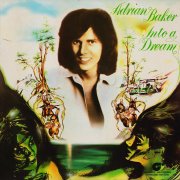 |
Into a Dream (1975, 39.02) ***/½ |
|
| Vibrations I Feel Fine I'll Surrender Live and Love Together Find Another Fool Sherry Candy Baby So You Think You've Got it Made |
Get Away From Me Girl I Was Only Fooling Think About it Is it Love |
|
Current availability:
Mellotron used:
Given the long-running vogue for all things nostalgic, it tends to be forgotten that, as early as the late '60s, musical nostalgia was already a thing; think: Sha Na Na at Woodstock. The original British glam rock scene was, largely, thinly-disguised rock'n'roll revivalism, Adrian Baker's mid-'70s Beach Boys obsession being another facet of the trope. His first solo album, 1975's Into a Dream (thanks for this, Elora!), channels The Beach Boys on opener Vibrations (bit of a give-away, that), most of the rest being mid-'70s pop/rock, typified by a funky, Clavinet-fuelled take on The Beatles' I Feel Fine and Find Another Fool, while the falsetto-heavy Sherry was a top ten hit.
Baker is credited with Mellotron, but uses it just the once, with a flute melody on Live And Love Together. He went on to produce the truly reprehensible Liquid Gold (no fewer than two Eurovision attempts...) and, briefly, sing Carl's falsetto parts onstage with The Beach Boys, while his '80s Gidea Park project continued to keep the era of his teens alive. This is determinedly lightweight, but as '60s pastiches go, there's a lot worse about. Not worth tracking down this obscurity for its minor Mellotron use, though.
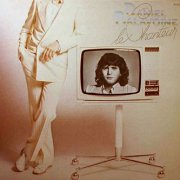 |
Le Chanteur (1978, 39.59) **/T |
|
| Les Oiseaux 1re partie Les Oiseaux 2eme partie France C'est un Voyou Lucie Le Chanteur Si Je suis Fou Oiseau de Nuit |
Le Pied par Terre Des Gens Comme Vous |
|
Current availability:
Mellotron used:
Daniel Balavoine was one of France's most successful artists of the '80s, his first major hit being the title track to his third album, 1978's Le Chanteur. The album falls firmly into the 'lyrics more important than music' bracket, typified by the music being a version of whatever's mainstream at the time (think: the first two Kate Bush albums, before she gained a firmer grip over her presentation), meaning that, over thirty years down the line and in another country and language, Balavoine's songs, however much meaning they may have, come across as bland, late '70s pop/rock with few redeeming features.
Guy Boyer plays Mellotron, with flutes on Lucie and the title track's intro, although I think the strings on France and Lucie are synth-generated. Frankly, you really don't need to hear this unless you have a thing about French-language pop; the Mellotron use is too inconsequential to be worth hearing for its own sake. As a footnote, Balavoine began involving himself in good works in Africa in the early '80s, tragically dying in a helicopter crash in 1986 in Mali.
 |
Ballettirosadimacchia (1974, 38.28) ****/TTTTAscolta!Sandiego Altre Guei Calli E Tutto un Sogno Interludio Oggi Dalla Mattina al Pommeriggio Suono Se ti Piace |
Current availability:
Mellotron used:
Now, here's an oddity for you; an album by a bunch of (allegedly) Italians, also allegedly dating from the mid-'70s, though no-one seems quite sure exactly when. Augusto Croce, of the highly estimable Italian Prog site, has this to say about it:
| "Little is known about this mysterious group, whose only good album changes hands for incredible prices and has never been reissued on CD. Even the year of recording is not sure. Some say it is from 1974-75, but it seems likely that it is from the mid 80's. The album has been released in Canada with a German producer, the music is good organ and Mellotron-led prog sung in Italian with a strong foreign accent and often incomprehensible lyrics: this is almost certainly a foreign group, German or probably Japanese, playing under fake Italian names". |
So, how weird is that? Mind you, the also estimable Mauro Degrassi, who's made me a beautiful CD copy of this rarity, is of the opinion that it was recorded by a bunch of Italian ex-pats living in Germany in the mid-'70s, who probably spoke German as their first language, or maybe that's just the story that's going round? Anyway, it has to be said that Ballettirosadimacchia (a composite of 'balletti rosa di macchia') is actually very good, even if it is, technically, a 'fake'. None of the tracks are that long (apart from seven-minute closer Se Ti Piace), in keeping with many other Italian bands of the era and the album certainly has 'that Italian sound', with mellifluous guitar leads, occasionally gutteral vocals, slightly jazzy drumming and swathes of Hammond and Mellotron.
Oddly enough, despite having a full-time keyboard player in Gianni Mazzi, the Mellotron is played by bassist Tonino Leo Ucchi and drummer Marcello Taddeo Matteotti, although I can't imagine how they could've reproduced the parts on stage, assuming they ever played live. It's difficult to pinpoint any outstanding use, as it's used mostly for chordal string backdrops, with the odd bit of flute, complementing Ucchi's real one (he also sang and played acoustic guitar). The only real variation in approach is the heavily phased Mellotron on Suono, which actually sounds more like an overdubbed synth part; speaking of which, the only obvious Moog (?) part on the album is on Se Ti Piace.
So; who knows this album's real provenance? I hope the real story leaks out one day, but it's such an obscurity that I wouldn't be surprised if the mystery remains exactly that. I would be surprised if it was recorded in the '80s, though, as the sound is so very '70s, with no telltale signs (at least to my ears) that it was produced a decade later, although it seems quite certain that the band weren't actually Italian, at least not by residence. Japanese? I don't think so - German seems far more likely, particularly given Ulrich Zichter's production. Maybe the 'Germans of Italian parentage' story is actually true? Anyway, unless someone sees fit to put this out on CD, you ain't going to just stumble across a copy (note: now out on CD), at least not at a sensible price, so it's probably all rather academic anyway. If you do, though, grab it before its owner realises its true value.
 |
YS (1972, 37.58/45.02) ****½/TTTIntroduzionePrimo Incontro Secondo Incontro Terzo Incontro Epilogo [CD adds: La Tua Casa Comoda Donna Vittoria] |
Current availability:
Mellotron used:
Il Balletto di Bronzo were a classic one-shot Italian band, singing in their own language, who operated at the heavier end of the progressive spectrum. The Italian Polydor CD confuses the issue somewhat by stating the copyright date as 1977, which made me wonder why the band sounded so dated; it is, of course, from '72, which sounds about right, to be honest. YS was apparently a 'fabled city state on the Bretagne coast', although the letter 'Y' doesn't even appear to be used in Italian. The non-obvious tracks are titled first/second/third encounter but again, I don't know if there's an actual concept involved or not.
YS kicks into overdrive almost straight away, then stays there pretty much for the course of the album; Il Balletto di Bronzo don't muck about, just roll their collective sleeves up and get stuck in. This is a decidedly complex and intense record, which may not endear it to all prog fans, particularly those of a nervous disposition. To be blunt, it rocks. There's a good bit of Mellotron on offer, from vocalist/keyboard man Gianni Leone, mostly strings and brass, though I think I heard a short burst of flutes at one point. Leone tends to use it in bursts, rather than layering strings all over the place, so although you can hear it on four of the five tracks, you'll find little sustained use. No specific Mellotron highlights, although the brass at the beginning of Terzo Incontro is particularly searing.
The Polydor CD adds two tracks from a single from the following year, but there's no Mellotron to be heard. There are also English-language (and Mellotron-free) versions of Introduzione and Secondo Incontro doing the rounds, but I don't know if they've ever gained an official release or not. Anyway, YS is fantastic; OK Mellotron, but great album. Buy.
See: Adriano Celentano
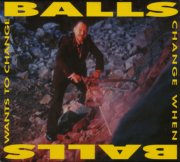 |
Balls Change When Balls Wants to Change (1993, 57.55) **½/T½ |
|
| Lucille Ball Paper World Shit Rolls in Be My Bird Ford Let's Go Crazy I Want to Take You Higher Polar Bear |
God's Gone to Sleep Convertible Blow Job Stop That Moaning Too Much Monkey Business Sadness of Sunday Hairy Rat Tulane Let's Take the Sea |
|
Current availability:
Mellotron used:
The provocatively-named Balls are one of the inconceivably vast number of bands from non English-speaking countries who gain some sort of following in their home territory, while meaning diddly-squat to anyone else. Well, have YOU heard of them? What little information I can glean about the band (well, you try searching for them on Google) indicates that they've released several albums over a near-twenty year period, of which the slightly cod-English Balls Change When Balls Wants to Change is the third. So, wossit sound like, then? A mixture of styles is the short answer, opening with an energetic instrumental before moving through a host of pop and rock styles without ever really settling on anything. Maybe that's the point. I have to say, the band's sound irritated me after a while and an album of this type would be better kept under forty minutes, rather its near-hour length.
As far as the album's Mellotron content goes, the inimitable Esa Kotilainen (one of Finland's handful of Mellotron owners/players) plays understated string, flute and possibly cello parts on the balladic Let's Go Crazy and strings, choirs and flutes on God's Gone To Sleep, but that's it. I suspect you're unlikely to like this album very much, although there's nothing actually intrinsically wrong with it, other than a lack of memorable material. To summarise; sort-of mainstream pop/rock with a couple of Mellotron tracks. I really wouldn't bother.
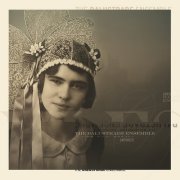 |
Capsules (2007, 44.03) ***½/½ |
|
| Glorianders The Drowning Calm Tangle in Delirium Synnøve Skeie Incarnadine Fall Away Into Darkness A Long Fetch Over The Museums of Sleep |
Crushed Pears Szól a Zene |
|
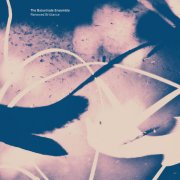 |
Renewed Brilliance (2015, 32.13) ***/½Bathyal ReelThe Lowing Herd Wind The Arch Scope Cleave Show Us to the Sky Everything Stirs Aerial Verandis Summerhill Processionary Goodbye Leona Dare |
Current availability:
Mellotrons used:
Grant Miller's Balustrade Ensemble seem to be more of a project than a band 'proper', drawing in various suitable musicians who have lives outside. 2007's Capsules is an album of ethereal beauty, more of a soundtrack to an arthouse film you'll never see than anything as tawdry as rock'n'roll; of course, the downside is that some of you will find this plain boring, or won't even notice it's playing. Picking out individual tracks is a bit pointless, as they all fit the same general mould, but opener Glorianders sets their stall out nicely, acoustic instruments, voice and electronics merging into a unified whole. As well as his Mellotron, Matt Henry Cunitz (Botticellis, Mushroom, John Vanderslice) also plays Orchestron; I do believe it produces the choirs we're hearing on Glorianders, although the voices on Tangle In Delirium sound like real ones combined with Mellotron, plus strings, with another string part on A Long Fetch Over.
Eight years on, 2015's Renewed Brilliance is, well, more of the same, to be honest, possibly at its best on closer Goodbye Leona Dare, the closest anything here gets to 'structured'. Amusingly credited with 'vintage manuals', Cunitz plays his M400 again, with occasional echoed strings on The Arch Scope Cleave and Show Us To The Sky, to no great effect, sadly. You really have to be prepared to put some work into these, should you wish to hear them; I'm sure they'll reap rewards, but it may take some time. With next to no Mellotron, though, I really can't advise these on that front.
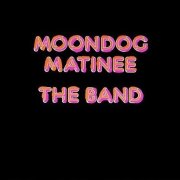 |
Moondog Matinee (1973, 35.56/61.25) ***/½ (T½) |
|
| Ain't Got No Home Holy Cow Share Your Love With Me Mystery Train The Third Man Theme The Promised Land The Great Pretender I'm Ready Saved |
A Change is Gonna Come [CD adds: Didn't it Rain Crying Heart Blues Shakin' What am I Living for Going Back to Memphis Endless Highway] |
|
Current availability:
Mellotron used:
The Band's fifth studio album, Moondog Matinee, continued their chosen remit, redefining American music from the roots up (pun intended), although it could be argued that they made their groundbreaking albums in the late '60s and were slightly past their sell-by date by 1973. This impression is reinforced by their overly-familiar choice of material, not least Mystery Train, The Promised Land and The Great Pretender and we haven't even mentioned their bizarrely faithful rendition of The Third Man Theme. To be honest, the CD's bonus material is better in places than the original LP. Crying Heart Blues works nicely, while Going Back To Memphis rocks more than anything else here, making a nice change from their usual Americana/country-inflected sound.
Garth Hudson plays Mellotron on The Great Pretender, with a background phased strings part that could easily be mistaken for the string synth used elsewhere on the record. However, one of the CD's bonus tracks, Shakin', is smothered in stabbed Mellotron strings and chordal flutes, bumping the expanded version's 'T' rating up nicely. All in all, not The Band's greatest achievement and one of the more insignificant Mellotron parts I've heard in a while, against strong competition, at least on the original tracklisting. Buy Music From Big Pink instead. Incidentally, I've seen a reference to The Band using a Mellotron on their previous release, Cahoots, but all I can hear on the relevant track, The Moon Struck One, is a reedy, flutelike organ patch.
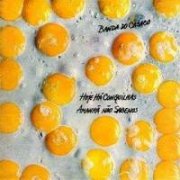 |
Hoje Há Conquilhas, Amanhã Não Sabemos (1977, 36.14) ***/½AcalantoDespique País: Portugal Alvorada, Tio Lérias! Geringonça Dez-Onze-Doze Ont'à Noite Água de Rosas |
Current availability:
Mellotron used:
Banda do Casaco were a Portuguese folk/prog outfit, whose third album, 1977's Hoje Há Conquilhas, Amanhã Não Sabemos, is generally regarded to be the peak of their genre-fusing. While a perfectly pleasant album, I suspect it's lost a great deal of its power over the years, so to speak, sounding rather ordinary three-plus decades on. Better tracks include Alvorada, Tio Lérias!, which starts ominously before shifting into a Flamenco-influenced section and Geringonça (or Strange Machine), although nothing really stands out.
José Castro guests on Mellotron on Geringonça, although I have to say, the 'infinite sustain' atonal strings that open the track and reiterate halfway through sound little like an M400. Mellotron-via-studio-trickery? Hard to say, but not something you're going to track down for its Mellotron content, frankly.
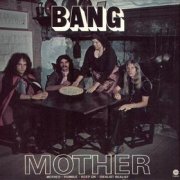 |
Mother/Bow to the King (1972, 31.09) ***½/TMotherHumble Keep on Idealist Realist Feel the Hurt Tomorrow Bow to the King |
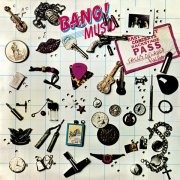 |
Bang! Music (1973, 33.15) **½/TT |
|
| Windfair Glad You're Home Don't Need Nobody Page of My Life Love Sonnet Must Be Love Exactly Who I am Pearl and Her Ladies |
Little Boy Blue Brightness Another Town |
|
Current availability:
Mellotrons used:
Bang allegedly produced one of America's best Sabbath impersonations in their eponymous debut (***), but upon actually hearing it, it's a very ordinary hard rock album with only one track that sounds even slightly like the mighty Sabs. They followed it with a decent enough concept piece, Mother/Bow to the King, although it's all a bit unexciting compared to what, say, the Blue Öyster Cult were doing at the time, not to mention a whole slew of British bands, Budgie, maybe, or Stray. Saying that, the band come up with some decent riffs, not least the opening to Tomorrow, spoilt almost immediately by an overly-cheerful guitar harmony, like a (slightly) heavier Wishbone Ash. Mellotron, finally, on closer and semi-title track, Bow To The King, apparently about a boxing champ. The uncredited string part actually enhances the track quite nicely, making me wonder why they didn't use it more on the album; it would easily have fitted onto a couple of the heavier tracks.
By the time Bang! Music appeared in '73, the fire had obviously left their collective bellies. It starts with a couple of reasonable tracks, notably Windfair, but quickly degenerates into that sort of vaguely hard rock that seemed to be inexplicably popular at the time. Or maybe not; how many bands of that ilk have survived? The band were a trio at this point; given that vocalist/bassist Frank Ferrara's credited with piano, it seems likely he played the Mellotron, too, with strings in the chorus of Windfair and more of the same on Love Sonnet and Little Boy Blue. Another Town starts well, sounding like it's going to be one of the album's best tracks, Mellotron to the fore, until it peters out after forty-five seconds. Why? Just when it looked like things were picking up...
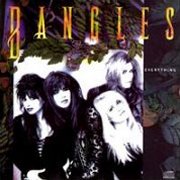 |
Everything (1988, 47.41) ***/T |
|
| In Your Room Complicated Girl Bell Jar Something to Believe in Eternal Flame Be With You Glitter Years I'll Set You Free |
Watching the Sky Some Dreams Come True Make a Play for Her Now Waiting for You Crash and Burn |
|
Current availability:
Mellotron used:
Everything, The Bangles' fourth and last album before their later reformation, is pretty typical of their oeuvre, being a mixture of upbeat '60s-influenced girly pop and fluffy ballads, including the mega-hit Eternal Flame, although there's more of the former than the latter, thankfully. It's very good at what it does, the only proviso being that you have to like what they do, which I can't really say I do, to be honest, although Walk Like An Egyptian was quite good fun.
(John) Phil(ip) Shenale plays keyboards on the album; he informs me that they hired an M400 for the sessions, in 'perfect shape', which must've been rare for the late '80s, heard on the oriental-ish string sounds on In Your Room and the strong string melody on Watching The Sky. You pretty much know what you're going to get with a Bangles album, so as I can't honestly recommend this on Mellotronic grounds, it's pretty much down to how you feel about their music.
 |
A Curious Feeling (1979) ***½/½ |
|
| From the Undertow Lucky Me The Lie After the Lie A Curious Feeling Forever Morning You Somebody Else's Dream |
The Waters of Lethe For a While In the Dark |
|
Current availability:
Mellotron used:
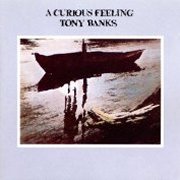
Tony Banks is, of course, Genesis' keyboard player and one of their main writers; many of their classic pieces have his style stamped all over them. By 1979, Genesis had contracted to a three-piece with the regrettable departure of Steve Hackett; after the success of their first album with that lineup, ...And Then There Were Three... the band took time off, Banks and Mike Rutherford recording solo albums during their gap year, Phil Collins following two years later. Sadly. The least commercially successful of the three was Banks' debut, A Curious Feeling; a curious album, in fact. Tony Banks is widely regarded as keeping his best material for the parent band (pity more musicians don't follow this dictum) and his solo albums have always sold poorly. A Curious Feeling, along with Genesis' subsequent album, Duke (***) and Rutherford's solo debut, Smallcreep's Day (***½) can be seen as the collective last gasp of the 'old' Genesis, before their style moved irrevocably towards the mainstream.
Banks is notorious for collaborating with unsuitable singers, of whom String Driven Thing's Kim Beacon was only the first. His voice really doesn't suit the material and it seems strange that Tony couldn't have found someone better. Maybe it's the 'prog keyboard player solo album' disease; think of 'bellowing' Ashley Holt on all those Rick Wakeman albums; better, don't. In fact, it's noticeable that as with his ex-colleague Hackett, the best bits are mostly instrumental; odd, given how many excellent vocal tracks Banks wrote for Genesis, but there you go. From The Undertow is a beautiful, piano-based piece (Yamaha CP70 electric grand), starting the album as it should have gone on; sadly, only a handful of tracks match its quality. After The Lie has some incendiary playing from Banks, with a killer solo, while the instrumentals Forever Morning and The Waters Of Lethe are excellent. The only Mellotron present (allegedly) is on You, but I only know this through an interview snippet; it's completely inaudible, although the track is the other fairly strong vocal piece on the album, while Herman points out that there are choirs on After The Lie, audible on the remastered CD.
See: Genesis | Mellodrama