

![]() |
![]() ![]() ![]() |
![]() |
![]() |
43 Minutes... (1993, 43.38) ***½/½ |
|
| Come Into My World Into the Night In the Rain Fear of Life Morning Song You Are the World See This Evil Your Time is Your Own |
One Candle Letting Go Sleep Like a Baby |
|
Current availability:
Mellotron used:
Sam Brown is a part of what could probably be described as 'UK rock dynasty no.2' (no.1 being the Marty/Kim/Ricki Wilde axis), her parents being original '50s Larry Parnes-era rocker Joe and session singer Vicki Brown. Sam apparently first sung professionally at the age of twelve, and was recording regularly by the early '80s, kicking her solo career off with her most commercially successful album, 1988's Stop! 1993's 43 Minutes... was her third release, informed by her mother's death from cancer and deemed 'uncommercial' by her record company, eventually self-released by Brown on her own Pod Music imprint (later reissued on A&M).
By the standards of mainstream female singer-songwriter territory, it's a pretty uncompromising effort, bearing comparison with both Kate Bush and Heart, the latter chiefly in the vocal department (lazy comparisons, eh - don'cha just love 'em?). Most tracks feature massed Bush-like backing vocals and Brown's piano work, skipping between styles with abandon, touching on pop, balladry, jazz and more interesting territory. Best track? Maybe opener Come Into My World, although little here made me cringe. Brown plays 'Melotron' on one track, with indistinct background flutes on the dying seconds of Fear Of Life, really only notable for being an early British example of the instrument's resurgence in the '90s.
43 Minutes... is an awful lot better than I'd expected, although much of it's not especially to my taste. Sam Brown went on to sing live with Pink Floyd and release several more solo albums alongside sessions and working with her dad, although her hardcore fans tend to rate this as her best work. Next to no Mellotron, mind, but that isn't why you might want to hear this record. A quick odd fact regarding Brown's album titles: rather in the way that the Kings of Leon's album titles all contain five syllables, the initial letter of Sam Brown's spell out her name (up to 'O' so far). She claims to have been unaware of the oddity until after her fifth release, but now seems keen to complete the set.
See: Pink Floyd
![]() |
Duncan Browne (1973, 42.37/58.52) ****/T½ |
|
| Ragged Rain Life Country Song The Martlet My Only Son Babe Rainbow Journey Cast No Shadow Over the Reef |
My Old Friends Last Time Around [CD adds: In a Mist Send Me the Bill for Your Friendship Guitar Piece Mignon] |
|
![]() |
The Wild Places (1978, 41.26) ***/TThe Wild PlacesRoman Véce Camino Real (parts 1, 2 & 3) Samurai Kisarazu The Crash Planet Earth |
Current availability:
Mellotrons used:
Duncan Browne appeared in the mid-'60s, releasing his debut, Give Me Take You (****), in 1968, taking several years to follow it with 1973's Duncan Browne, largely due to his somewhat uncommercial stance and hassles with his label, Immediate. It's an excellent little album, fitting pretty well into the folky singer-songwriter area prevalent at the time; comparisons with Al Stewart and possibly Gordon Giltrap aren't too far off the mark, maybe even Richard Thompson in places. Browne's classically-based guitar work, as much as his songs are what makes him stand out from the pack, along with the occasional unusual arrangement, such as the synth part on Last Time Around. As for the album's Mellotron use (from ubiquitous sessioneer John "Rabbit" Bundrick), the various strings on Ragged Rain Life sound real, but that's full-on 'Tron strings on Country Song, with less of the same on The Martlet. I think Babe Rainbow's strings are, again, real, but he sticks some more 'Tron in amongst the synth swoops and proto-bass pedalisms of Last Time Around. All in all, this is a very good album indeed; I can't believe it's taken me this long to discover it (thanks, Joe!).
After another several-year gap, Browne released The Wild Places in 1978 on small UK label Logo, alongside concurrent releases from his almost-successful band, Metro. I've seen it unpromisingly described as 'new-wave melodic'; a better description would be 'slightly fusionesque late-'70s singer-songwriter' - snappy, eh? It's not a bad album, although Browne's songs are frequently subsumed under unsympathetic arrangements of the type fashionable at the time amongst studio pros; I can imagine the title track done in the style of his previous album and it would be a lot better. Of his three supporting musicians, two were Metro members (bassist John Giblin and über-drummer Simon Phillips), with another major session dude, Tony Hymas, on keys, including a smattering of Mellotron, with background choirs on the title track and an obviously-Mellotronic flute line on Kisarazu, complete with pitchbend. Overall, the material's OK, but compared to his earlier work, this is something of a disappointment. The cringeworthy cover pic's the giveaway here; I mean, would YOU buy this album? Mind you, I picked it up at the same time as a James Last LP (you sick man!), making it appear quite tasteful in comparison.
I think Duncan Browne will be a grower and his debut's excellent, too. After a lengthy period working in the film scoring business, Browne had just finished recording a new album, Songs of Love and War, in 1993 (sampled Mellotron on a couple of tracks), with help from Steve Hackett's old keyboard player, Nick Magnus, when tragically, he died of cancer. As for Duncan Browne, pick it up if you see it; the bonus tracks are good, though 'Tron-free. The Wild Places has its moments, as does its follow-up, '79's Streets of Fire (***), but don't go too far out of your way for them.
See: Samples
![]() |
New Improved Severin Browne (1974, 32.54) **½/T |
|
| Love Notes From Denver Tickle My Lips Romance More Dreams in the Sea Confessions of a Madman Love Song The Sweet Sound of Your Song Do, Magnolia, Do |
Cooking School Beginning to Believe |
|
Current availability:
Mellotron used:
German-born, American-raised Severin Browne is probably best known as the elder brother of the slightly better-known Jackson, although both he and their father are/were songwriters in their own right. As one of the first white artists signed to Motown, Browne found himself slightly adrift, eventually making two albums for the label, who were more interested in him as a writer, anyway. The second and last was 1974's New Improved Severin Browne, a fairly typical-for-the-era poppy singer-songwriter effort, which means it hasn't dated too well, lowpoints including the cod-calypso of Romance and most of the balladry.
Alan Lindgren plays Mellotron, with strings on Cooking School and possibly Love Song, the rest of the album's strings being real. The best this album gets is sounding slightly like CSN&Y, although John Denver might be a better comparison. Harmless, but all rather unexciting.
![]() |
How's Tricks (1977, 41.12) ***½/TT |
|
| Without a Word Johnny B '77 Times Baby Jane Lost Inside a Song How's Tricks Madhouse Waiting for the Call |
Outsiders Something to Live for |
|
![]() |
Live '75 (2003, 111.08) ***½/TT½Can You Follow?Morning Story Keep it Down Pieces of Mind Tickets to Waterfalls/Weird of Hermiston/Post War Spirit One/You Burned the Tables on Me Smiles and Grins Sunshine of Your Love |
![]() |
Spirit: Live at the BBC 1971-1978 (2008, 216.47) ***½/TT½ |
|||
| You Burned the Tables on Me Smiles and Grins Folk Song A Letter of Thanks We're Going Wrong The Clearout Have You Ever Loved a Woman? Powerhouse Sod You Sure Look Good to Me |
Jack's Gone Clearway Powerhouse Sod Can You Follow? Morning Story Keep it Down Pieces of Mind One Spirit |
Without a Word Smiles and Grins Fifteen Minutes Past Three Ten to Four Madhouse Without a Word Times Baby Jane |
Born Under a Bad Sign Lost Inside a Song Something to Live for How's Tricks Spirit Out Into the Fields You Burned the Tables on Me Twenty Past Four |
|
Current availability:
Mellotrons used:
I'm sure you all know exactly who Jack Bruce is and who he's played with (Cream, West, Bruce & Laing et al.), so I won't insult you by going over it all again. Er... Anyway, 1977's How's Tricks was Bruce's fifth solo album, mixing jazz (and lots of it), blues and rock together into a not entirely unappealing stew, although the pure blues of Waiting For The Call is probably slightly unnecessary. Highlights include one of the rockier efforts here, Madhouse and the mad funk/fusion of Outsiders. Tony Hymas on Mellotron, with a superbly-played string part on opener Without A Word and more strings on Lost Inside A Song and closer Something To Live For, although not enough to make this essential on that front.
2003's Live '75 apparently fills a gap in his discography, being a document of an excellent band that never made it to the studio, making it invaluable to hardcore fans of the man. To the rest of us, it's actually quite difficult to pigeonhole, which is probably a good thing, although it doesn't make the reviewer's job any easier. 'Jazzy mid-'70s rock' sort of covers it, though without really describing it very well at all; maybe 'middling rock with jazz, blues and soul influences' would do? Suffice to say, it's the sort of music that was comprehensively wiped out by punk's Year Zero, for better or worse (delete according to taste). Bruce was in good voice in Manchester that night, his band including names such as recently ex-Stone Mick Taylor and celebrated jazzer Carla Bley, playing mostly material from the three solo albums he'd released up to that point, with only one from his Cream days. The playing is excellent throughout (no surprise there, then), although some of the arrangements are drawn out beyond the point of undivided attention, particularly the 23 minutes of Smiles And Grins.
Along with Hammond, Rhodes, clavinet and Moog, Bley provides all the album's Mellotron work (all string section substitutes, I suspect), although I'm unaware of her having used one before or since. The excellent Morning Story has a delicate 'Tron part that lifts an already good song, while Tickets To Waterfalls has little bursts of it amongst her organ work, leaving a few chords here and there on the One/You Burned The Tables On Me medley, and a fairly lengthy part on the even more lengthy Smiles And Grins. While a goldmine for Bruce fans, the rest of us may find much of Live '75 hard going, although it's introduced me to several good songs of which I'd previously been unaware. Bley's 'Tron work is never less than tasteful, and by and large, quite minimalist.
2008 brought a mammoth three-CD set, Spirit: Live at the BBC 1971-1978, containing no fewer than five separate recordings with as many different bands in several different styles. Disc one comprises two different 1971 broadcasts, one with Jon Hiseman (Colosseum) on drums, one with Bruce's old mucker Graham Bond on organ, sax and vocals, though sadly, not Mellotron. Disc three's '77 concert has a similar lineup to How's Tricks, with three lengthy (and very jazzy) improvs from a '78 set spread over discs two and three that are, to be frank, a bit of an endurance test. That leaves the '75 Old Grey Whistle Test set that comprises the bulk of disc two, recorded with (I think) the same lineup as Live '75 - certainly with Carla Bley on keys, anyway. It's not a dissimilar set to that album, albeit with far less jamming (thankfully), only adding one Mellotronic track, Without A Word, with strings throughout. Bley adds the strings to another four tracks, Morning Story, One, Spirit and Smiles, though none to the same degree. Tony Hymas adds 'Tron strings to the same three tracks on disc three's set as he does to the studio versions, so nothing you haven't heard before, but nice to hear them done live.
Solo Jack Bruce seems to be a fairly jazzy proposition, although he's never made it into the top league of UK jazzers, probably due to his varied past and his eclecticism. Who wants to be part of that rarified, snobbish world anyway? These albums certainly aren't for all tastes, but How's Tricks is a nice, concise studio album, and if you have a taste for jamming, you may well go for the live outings. Buy according to taste, I think.
A YouTube clip from The Old Grey Whistle Test.
See: Cream | Spectrum Road
![]() |
Mars Loves Venus (2004, 36.06) **½/T |
|
| Mars Loves Venus Loopy Loopy Love Polyester Meets Acetate Too Big for Gidget Whale in the Sand You Beautiful Militant The Record Store These Things Take Time |
Best Friend Envy No Regrets Leonard Says Your Heart Dies |
|
Current availability:
Chamberlin used:
On their second album, 2004's Mars Loves Venus, New Zealand duo (plus drummer) The Brunettes' style of choice was pre-psych '60s-influenced indie, their male/female vocal interplay and occasionally witty lyrics their strongest suits. Best tracks? Probably the waltz-time Too Big For Gidget and closer Your Heart Dies, while The Record Store might just be the album's best lyric.
James Milne plays Chamberlin, with a string line and a handful of chords on You Beautiful Militant, although other string parts sound like, er, something else. Their follow-up, 2007's Structure & Cosmetics, credits Mellotron, although it fairly obviously isn't. Can we trust the Chamby use here? Who knows? Not that interesting, then, if truth be told, but better than its successor.
See: Samples
![]() |
Quelqu'un M'a Dit (2003, 37.16) **½/½ |
|
| Quelqu'un M'a Dit Raphaël Tout le Monde La Noyée Le Toi du Moi Le Ciel Dans une Chambre (il Cielo in Una Stanza) J'en Connais |
Le Plus Beau du Quartier Chanson Triste L'Excessive L'Amour La Dernière Minute |
|
![]() |
No Promises (2007, 34.40) ***/T½ |
|
| Those Dancing Days Are Gone Before the World Was Made Lady Weeping at the Crossroads I Felt My Life With Both My Hands Promises Like Pie-Crust Autumn If You Were Coming in the Fall |
I Went to Heaven Afternoon Ballade at Thirty-Five At Last the Secret is Out |
|
Current availability:
Mellotrons used:
Is this the same Italian-born virtual Frenchwoman Carla Bruni who is currently cavorting with (OK, now married to) a certain far-right French politician? 'Fraid so... We all know what he's getting out of the deal, but what about her? I doubt if it's anything to do with his pleasant nature, liberal ideals or riveting personality, that's for sure...
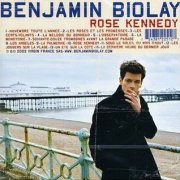
2003's Quelqu'un M'a Dit (Someone Told Me) is a heavily chanson-influenced album, making it fairly impenetrable to non-French speakers, but then, that's who it's made for, so fair enough, really. My problem with the album doesn't lie in its chosen language, but in its tedium; I'm sure it's perfectly good if you're into the style, but I found it utterly tedious, not to mention wearing, almost entirely due to Ms. Bruni's vocals being so high in the mix that you sometimes have trouble hearing the acoustic instruments accompanying her. Louis Bertignac plays Mellotron on L'Excessive, but only just... Vague background flutes seem to be the extent of his use and with so little going on in the mix, it should be difficult to miss.
On 2007's No Promises, Ms Bruni sings in English, principally because the lyrics are all English-language poems set to music, authors including Yeats, Auden, Rossetti, De La Mare and Emily Dickinson. Although the album finds her deep in the clutches of the French political system, it's made no obvious difference to her music. Her voice, however, is starting to show the effects of years of Gitanes abuse; why do some people find cigarette-ravaged tones sexy? Bizarre. This could actually be a lot worse; a lot lot worse, actually, which is why it gets a rather surprising three stars. Bertignac on Mellotron again, with quiet, yet pervasive flute parts on the title-influencing Promises Like Pie-Crust and closer At Last The Secret Is Out, plus an uncredited part on Before The World Was Made, making this a better proposition all round than its predecessor.
So; unless you love French chanson, you are really not going to want to hear Quelqu'un M'a Dit, especially with next to no Mellotron, although No Promises is a distinct improvement.
![]() |
7" (1970) ***/TT½ King of Fuh Nobody Knows |
![]() |
Extemporaneous (1969, 45.15/58.43) *½/T |
|
| Overture/Hello I Love to Hear a Baby Cry/King of Fuh And Now, as We Get Serious/Astronauts/Dockin' Sufferin' Surfin' Commercial: Surfer Sam/Subway Lines The Sirens Cry/The Gun/W.A.R./Bearer of Somber News The Big Burp Theory/Six Interrogatives of Existence Five Minutes for Peace Dwayne of the Upper Regions/Schma/The Lord is One Growth of Hair/Hail the Hare/Now You're Gettin' the Message I Like to Drink Honey/The Hexagon/The Beauty of Creation |
Topics Nutty, Fragrant Something to See/I Want to Say 'Peace on Earth' Don't Paranoi it, Enjoy it/The Reds Are Yellow/Thank You All Hello (reprise) [CD adds: The World Tapeworm of Love (alternate version) King of Fuh (single version) Nobody Knows What's Goin' on in My Mind But Me (single version) Vicky] |
|
Current availability:
Mellotron used:
Brute Force was a pseudonym for New Yorker Stephen Friedland, rather than a band proper, although I'm filing them/him under 'B' rather than 'F'. Friedland apparently now slightly regrets taking a pseudonym, although it's better than his original 'Krude Brute'. Anyway, he managed to get a tape of King Of Fuh to a Beatles associate, who played it to George Harrison, who loved it; George tried to get it released on EMI, but when they declined, George had it privately pressed in a small run, available only via mail order (and later privately released by Friedland himself). Why did EMI decline? Well, you've probably pronounced the title as 'foo'. Wrong. Try 'uh' as in 'but', or 'gun'. Or indeed, 'fuck'. Try the chorus for size:
| 'And the Fuh King did what he wanted to do, The Fuh King went where he wanted to go, Mighty, mighty Fuh King, All hail the Fuh King'. |
Friedland explains it thus:
| I didn't accept the censorship and language taboo, and sought to open the mass megalithic mind even a millimeter more. Yet the same entrenched fear was inside the mind and hearts of the radio program managers, a fear not of the melody, more with the lyrics (although the lyrics have nothing to do with sex, only with the Beauty of the world, and Individuality), but the awesome fear which grips a human being upon looking at the sky and envisioning one's place in the universe, and also the fear of leaving one's pigeonhole job and standing in the unemployment line. |
Yes, Stephen. Or maybe it was simply a juvenile attempt to get the work 'fucking' onto the radio. it's a shame, actually, as the song's a pretty good Beatlesesque psych-pop number, although the lyrics scan abominably, even when Friedland wasn't trying to get around the 'censorship and language taboo'. It's also layered in Mark II 'Tron strings and has a neat major-to-minor shift after the chorus. It was, of course, consigned to almost immediate obscurity, although it's now finally easily available as a bonus track on Brute Force's Tour De Brute Force, released in 2001. I've no idea if there's any more Mellotron on any of Friedland's work, and although King Of Fuh is in some ways a nice track, the infantile lyrics tend to rather put me off. Pity.
Stop press: The track's also available on the CD edition of Friedland's second album, Extemporaneous, from 1970. The album's basically a recording of his live cabaret show, in front of a small invited audience in New York. It's terrible, as you might've guessed, but at least you can get hold of King Of Fuh fairly easily now, should you wish to. Oh, and World manages to repeat the word 'bullshit' about 987 times [yawn].
![]() |
Journey (1979, 43.36) ***/TTTJourneyAnnalia Dream Solitude I Know the Time Jesus Christ |
Current availability:
Mellotron used:
Buccheri specialised in a rather un-Italian form of electronic music, and I'm afraid to say he was never going to be one of the genre's front-runners. It's not that Journey is bad, exactly, just that it isn't particularly good, either. The side-long title track is rather bitty and disjointed, sounding more like several shorter tracks nailed together in a rather unharmonious way than one cohesive piece, and much of the side two material doesn't really stand up, especially Jesus Christ, a rather poor attempt at a 'proper song'. There are other musicians on the album, including a drummer who crops up here and there, and although he's not credited as such, I presume the occasional vocals are by Buccheri too (both are present and incorrect on the final track).
Sorry to be so harsh, but I've heard a great deal better in this area, and my listening pleasure wasn't particularly enhanced by such a dodgy transfer to CD that at several points, it sounds like the tape slipped, or even that it was transferred from a vinyl copy with an off-centre hole. Anyway, Buccheri's Mellotron work seems to be exclusively choir, usually mixed with string synth, with a strong presence on every track except Solitude. Saying that, it's mostly quite background work, and decidedly unambitious, leaving the album with only three Ts.
So, one for EM fanatics only, I think, although I know full well that there's an awful lot worse about than this. Lots of 'Tron, but it's neither upfront, varied or doing anything very interesting, so I believe the choice is yours.
![]() |
Rescue Me (1974, 34.11) ***½/TRescue MeI'm the Ram In the Beginning CC Ryder Country Preacher You're Killing My Love She Can't Say No Wayfairing Pilgrim |
Current availability:
Mellotron used:
Roy Buchanan is one of those tremendous guitarists whose appeal has never really exceeded 'cult' status; after his earlyish death in 1988, at the age of 48, he's unlikely to now, sadly. His fourth solo album, 1974's Rescue Me, consists of his usual brew of soul and blues, concentrating on the latter, all infused with his truly exceptional Telecaster tone (we're talking about the man who effectively invented the 'pinched harmonic' here). If you're of a 'prog or die' disposition, you're probably not going to like this very much, but it does what it does perfectly, better tracks (at least to my ears) including In The Beginning and the slow, mournful blues of Wayfairing Pilgrim [sic] that closes the record.
Although Ken Freeman, inventor of the Freeman String Symphonizer, one of the first (the first?) string machines, is credited with keyboards, he plays Mellotron on Wayfairing Pilgrim to good effect. This isn't an album for the Mellotron obsessive, but its sole 'Tron track is worth hearing if you're going to buy the album anyway. Incidentally, thanks to Tilo for making me aware of its Mellotronic credentials.
![]() |
Mercurotones (1990, 40.06) ***½/T |
|
| Moon Goddess Pearls P.M. Some Hesitation Five o'Clock or Thursday (Up to You) Avenue F Blues Libertine Ready to Break |
Shameless Brother (Take These Dreams) Guilty Hey Sunshine |
|
Current availability:
Mellotron used:
Popular wisdom has it that Texans The Buck Pets were a few years too early for their own good; who'd be an innovator, eh? They were playing 'alternative rock' in the late '80s, but weren't picked up on when it broke worldwide in the early '90s, by which time they were disintegrating. The usual influences they're assigned include Hüsker Dü and The Replacements, the same bands that were being quoted not so long after by Nirvana, Pearl Jam, Stone Temple Pilots et al., although I have to say that their second album, 1990's Mercurotones, is far more appealing than anything I've heard by any of those bands bar Nirvana, who were in a different league anyway. Best tracks? Probably the acoustic Some Hesitation, Five O'Clock Or Thursday (Up To You) and the cello-driven Ready To Break, but there's nothing here that either bored or offended me, which is quite a trick in itself.
Someone plays Mellotron on a couple of tracks, the most likely candidate being producer and M400 owner Michael Beinhorn (Liquid Jesus, Soundgarden, Chili Peppers etc.etc.), with a string part on Five O'Clock Or Thursday (Up To You) and less of the same on Brother (Take These Dreams). So; a formative kind of '90s album before the '90s had really got going, with plenty of energy and a little Mellotron. Could be a lot worse. Oh, and their frontman is my namesake (albeit preferring Andrew), the first time I've come across another one on this site.
![]() |
Time Bomb (2001, 41.49) ***/T |
|
| Frontside Ridin' Time Bomb Porno Star Place in the Sun Helpless Underneath @*#! My Wrists |
Whiskey in the Morning You Slamin' Fall |
|
Current availability:
Mellotron used:
Buckcherry's second album carries on in pretty much the same vein as their first; an unholy cross between AC/DC and punk, with more guitar than you can shake a stick at. Now, I'm not saying this is bad. In fact, it could be really good, but Time Bomb just doesn't excite me in the same way that (for example) Let There Be Rock still does. Maybe I'm just old and jaded. Basically, it's a dozen tracks of raucous rock'n'roll, which you'll probably either love or be completely indifferent to, as I'm afraid to say I was.
Surprisingly, session man Jamie Muhoberac plays Mellotron on the album's two more balladic moments, Helpless and You, although I can't honestly say it lifts them that much. Strings and maybe a touch of choir on Helpless, and strings treated so heavily that they could be generic samples on You. Don't go out of your way.
![]() |
Sketches for My Sweetheart the Drunk (1998, recorded 1992-97, 97.32) ****/T |
||
| Sky is a Landfill Everybody Here Wants You Opened Once Nightmares By the Sea Yard of Blonde Girls Witches' Rave New Year's Prayer Morning Theft |
Vancouver You & I Nightmares By the Sea New Year's Prayer Haven't You Heard I Know We Could Be So Happy Baby (if We Wanted to Be) Murder Suicide Meteor Slave |
Back in N.Y.C. Demon John Your Flesh is So Nice Jewel Box Satisfied Mind |
|
Current availability:
Mellotron used:
You'll all know the tragic Jeff Buckley story, of course; son of Tim, but barely knew him, released classic debut Grace (****½), died idiotically before putting out a follow-up. What a waste. Well, if Sketches for My Sweetheart the Drunk (he'd stated that his second album would be titled My Sweetheart the Drunk) is 'merely' a bunch of demos and outtakes... The guy had talent by the bucketload, and should've had a long and honourable career, not blown it by drowning in a Mississippi tributary fifty years before his time. Sketches... isn't all great, by any means, but there's more good material here than on many far more established artists' regular albums. I'll leave it to others, more tuned into what he was doing, to review this properly, just to say that if you're into songs, as against excuses for a tune, you won't go too far wrong here.
I'm not 100% sure exactly how many tracks feature the mighty 'Tron; there's absolutely no doubt about New Year's Prayer, with the unknown Mellotronist (Buckley?) switching between flutes and strings throughout the track (you can actually hear the heads shifting between sounds in places), but there may also be some on Everybody Here Wants You, with cellos and strings in the mix, though it's difficult to say if they're 'Tron or generic samples. Either way, one in-your-face 'Tron track, and one possibility. Difficult to recommend on the Mellotron front, but difficult not to for everything else. Buy.
By the way, watch for disc two's demo version of Genesis' Back In NYC from The Lamb...
![]() |
Budgie (1971, 40.40) ****½/½GutsEverything in My Heart The Author Nude Disintegrating Parachutist Woman Rape of the Locks All Night Petrol You and I Homicidal Suicidal |
![]() |
Squawk (1972, 38.58) ***½/TTTWhisky RiverRocking Man Rolling Home Again Make Me Happy Hot as a Docker's Armpit Drugstore Woman Bottled Young is a World Stranded |
Current availability:
Mellotrons used:
Budgie were, and for that matter are again, a hard rock trio from south Wales, a heavily industrial area conducive to such goings-on (see: Birmingham). Unlike most of their brethren, however, they had a sense of humour and many of their song titles have become legendary, not to mention their bizarre lyrics. Sadly, their chief claim to fame these days is being multiply covered by Metallica on various b-sides and EPs; believe me, they're worth more.
Although vocalist/bassist Burke Shelley is also credited with 'Melotron' (anyone would think the instrument's name wasn't prominently displayed on its casing...), there is very little to be heard on their debut effort. In fact, the only discernable 'Tron is a couple of sustained string chords, well down in the mix, on the superbly-titled Nude Disintegrating Parachutist Woman. The album as a whole is seriously riff-based hard rock, something slightly like a bluesier Black Sabbath, but without the cod-Satanism. The production is awful; it actually varies from track to track, with an appallingly sludgy guitar sound that does the band no favours whatsoever. For all that, it's a great album (!); if early-'70s UK hard rock's your bag, get it.
By Squawk, Budgie really went to town with the 'Tron. Oddly enough, there's absolutely no credit for it on the sleeve, but it's probably safe to assume that Burke Shelley did the honours again. Some 'clicky' flutes on Rolling Home Again and brass and strings on Hot As A Docker's Armpit are all well and good, but on Young Is A World they go completely over the top. This is a full-blown Mellotron epic, no less, strings everywhere you look and well worth the ear of any 'Tron fan. Overall, the album's similar to their first, although I personally feel that the songs aren't up to scratch in comparison. So, buy? First: only if you like the style anyway; Second: for the 'Tron.
![]() |
![]() |
Long Play 33⅓ [a.k.a. The Albatross, by Gary Stier] (2000/2002, 58.02) ***/T½ |
|
| This Ain't Nowhere Fool Enough Miss America and I Good Day Coming Up Roses Stayed Ragged Out Heart Evil Wind |
What You Don't Need Tied to the Tracks One Man's Ceiling Let it All Come Down [Stier version adds: All My Fault] |
||
Current availability:
Mellotron/Chamberlin used:
Here's a slightly confusing one: Buffalo Nickel (named for an iconic version of the 5¢ piece)'s debut album, Long Play 33⅓, was subsequently reissued two years later as The Albatross, by by-then ex-vocalist Gary Stier, (almost) same tracklisting and all. It's got a very Tom Petty/John Mellencamp sound about it, so it's no surprise at all to find out that Heartbreakers Mike Campbell and Benmont Tench play on the record, along with Kenny Aronoff from Mellencamp's band and workaholic Jayhawk Gary Louris. It's not a bad record, but given that better practitioners of the style are still working, it seems a slightly pointless one, which I'm sure is missing the point quite badly. C'est la vie. Heartfelt plea: a few tracks of this stuff is fine, but a whole (long) album really starts to drag after a while. Best track? Probably closer Let It All Come Down, largely because it's a bit rockier.
Joey Huffman plays Mellotron, while Benmont Tench does his usual Chamberlin thing, although there's not a great deal of either to be heard here, I'm afraid. Faint string parts (presumably Mellotron) on Miss America And I and Ragged Out Heart, although the (presumably) Chamby strings on What You Don't Need are far more full-on, although that would appear to be it.
Given that this is a) on a major label and b) still available, howcum Stier's managed to re-release it under his own name? It's got one extra track (All My Fault), although the original's got a vastly better sleeve. I'd be interested to know the full story behind this. Buffalo Nickel seem to have carried on, presumably without him, releasing at least two later albums. All most intriguing. Anyway, you've really got to be into that American 'road trip' stuff to find this particularly interesting; it barely scrapes three stars, to be honest. Not much tape-replay, either, so I wouldn't go too far out of your way for this one.
![]() |
Adventures in Modern Recording (1981, 33.43) ***½/TAdventures in Modern RecordingBeatnik Vermilion Sands I am a Camera On TV Inner City Lenny Rainbow Warrior |
Current availability:
Mellotron used:
After their huge hit with Video Killed The Radio Star and its associated LP, The Age of Plastic, and their ill-advised teaming-up with Yes for their Drama opus, Trevor Horn and Geoff Downes retreated into the safety of their original outfit, producing a rather less pop-friendly album in Adventures in Modern Recording. It's a clever, assured album, though without an obvious hit, ultimately doomed. After its failure, Horn went into production, of course (Yes, Frankie Goes to Hollywood), while Downes co-formed the appalling Asia with Yes' Steve Howe.
Musically, there are some definite points of interest: Horn does a pretty good Jon Anderson on Lenny, proving he'd learnt something from his Yes experience, while I Am A Camera is a re-write of Into The Lens from Drama, though I'd say they were probably better when doing their own thing. The only obvious Mellotron parts on the album are the choirs on Vermilion Sands and the title track, but even then, they're pretty low-key. So; not bad, not great, little Mellotron. Of its time.
See: Asia | Yes | Bruce Woolley
![]() |
Perfect From Now on (1997, 54.16) ****/TTRandy Described EternityI Would Hurt a Fly Stop the Show Made-Up Dreams Velvet Waltz Out of Site Kicked it in the Sun Untrustable Part 2 (About Someone Else) |
![]() |
Ancient Melodies of the Future (2001, 39.16) ****/TTT |
|
| Strange The Host In Your Mind Alarmed Trimmed and Burning Happiness Don't Try You Are |
Fly Around My Pretty Little Miss The Weather |
|
![]() |
There is No Enemy (2009, 55.33) ***½/T |
|
| Aisle 13 Hindsight Nowhere Lullaby Good Ol' Boredom Life's a Dream Oh Yeah Pat Done |
Planting Seeds Things Fall Apart Tomorrow |
|
Current availability:
Mellotrons used:
Built to Spill are difficult to describe, and also seem to have changed their style from one album to the next. Perfect From Now on sounds to my ears like a cross between Neil Young and the more interesting end of '90s US indie stuff, with a sometimes unpredictable and (dare I say it?) almost progressive approach to their song structures; there are certainly a couple of lengthy tracks on the album, although, of course, that's not necessarily any indicator of a 'progressive' outlook (see: The Allman Brothers). Most of the songs are also suffused with the same kind of melancholy as, say, Low, although BtS are a far 'rockier' proposition all round. Highlights? Stop The Show shoots off at a tangent a couple of times, just to keep things interesting, and Velvet Waltz is a classic 'slowburner', but there isn't actually a bad track to be heard here. Robert Roth's Mellotron (and yes, it's real) appears on three tracks, with considerable string use on Made-Up Dreams and Velvet Waltz, although there's less on lengthy closer Untrustable Part 2. BtS have even been known to use Mellotron live, but I'm not even sure if the band are still together at this point.
The band released an excellent live album, er, Live (****), in 2000, finally following Perfect From Now on with Ancient Melodies of the Future in 2001. There seems to've been another minor stylistic shift, with even fewer upbeat tracks, and the album isn't as 'immediate' as its predecessor, although it's quite clearly a good record. There's no 'Tron actually credited, and with two different keyboard players involved, it's hard to tell who's doing what. Sam Coomes guests on three tracks, so it's possible he plays the 'Tron parts on Alarmed and The Weather, while band mainman Doug Martsch plays the rest. Although it's not credited as such, there's plenty of Mellotron onboard here, with strings/cellos on The Host, pitchbent strings on In Your Mind and Alarmed, and flute parts on Fly Around My Pretty Little Miss and The Weather. I'm not 100% convinced that all the string parts are actually Mellotron, and what sounds like E-bowed guitar on Trimmed And Burning I initially took to be 'Tron strings, but it seems that most of the album has at least a little 'Tron input.
BtS didn't use a Mellotron for another eight years, until 2009's There is No Enemy. It's a perfectly respectable album, but also a rather unexciting one, most of its tracks dragging on longer than necessary. Look, guys, Neil Young can get away with it, and you can onstage, but this is an album, OK? The record certainly has its moments (Nowhere Lullaby, closer Tomorrow), but could have done with being fifteen minutes shorter. Coomes alone plays 'Tron this time round, but not a lot... He's credited on one track, with under a minute of strings on Done, although Tomorrow also features a string part that's quite clearly Mellotron-generated. Not a bad album, then, but nowhere near a great one, either.
Anyway, Perfect From Now on is excellent, with Ancient Melodies... being nearly as good (though There is No Enemy is rather lesser), with a cautious recommendation on the 'Tron front for the former, and a more positive one for the latter. n.b. Brian tells me that they used a real M400 live as recently as 2009, making it highly likely that the Mellotron on that year's album is real.
![]() |
Smasher (1974, 33.07) **/T |
|
| Flamingo Are You Really Happy Together Honeymoon Couple Bad Bad Girl Brown Eyed Handsome Man We All Had a Real Good Time Ooh When You Smile Rock'n'Roll Hootchie Coo |
I Tip My Hat I Tried to Sleep |
|
Current availability:
Mellotron used:
Bulldog formed in 1971 from the ashes of The Rascals, apparently surprising people by not sounding like that band; odd, given that they didn't even share a vocalist. Why would they? Anyway, their debut, 1972's Bulldog, is the kind of album that can only be described as 'rock'; not especially heavy, certainly not at all progressive, not really... anything. This sounds like a jumped-up bar band with a couple of 'names' who got lucky, then couldn't quite decide what musical path to follow.
Their second (and last) effort from two years later, Smasher, is even less 'rock' than its predecessor, opening with several quiet numbers, while the rockier tracks are pretty half-hearted, as you'd expect. John Turi plays Mellotron, with flutes on opener Flamingo and closer I Tried To Sleep, bookending the album, although the strings on a handful of tracks appear to be real; the chord at the end of Honeymoon Couple definitely holds too long to be Mellotronic. All in all, a pretty disappointing effort, to be honest, with so little definite Mellotron that purchase on those grounds, especially of an out-of-print item, would be futile.
![]() |
Lookaftering (2005, 35.37) ****½/T |
|
| Lately Here Before Wayward Hidden Against the Sky Turning Backs If I Were Same But Different |
Brother Feet of Clay Wayward Hum |
|
Current availability:
Mellotron used:
Until 2002, Vashti Bunyan (descendant of John) resided, seemingly permanently, in the 'Where are they now?' file, having left behind one perfect album in 1970's gorgeous Just Another Diamond Day (*****), subsequently disappearing into obscurity. The much-fêted Devendra Banhart helped her reappear in the whatever-we're-calling-this-decade, with her second album, Lookaftering, appearing in 2005, 35 years after her debut. Was it worth the wait? Oh yes... It's hard to say at this stage whether it's quite as good as ...Diamond Day, but Vashti's gentle, intimate voice remains almost unchanged, along with her beautiful songs; a female Nick Drake, anyone? I think it'll take more listens than I have time to give this now for its charms to become fully apparent, so I'm not even going to try to pinpoint highlights, only to say that this is one of the most stunning singer-songwriter albums you'll hear all year, or probably decade.
Producer Max Richter plays keyboard, wind and percussion instruments on the album, including what I believe to be a real Mellotron on three tracks. Against The Sky and Turning Backs have sublime flute parts that could almost have been played by a real one, with the latter juxtaposing it against a cor anglais, plus what I take to be a very background flute part on Feet Of Clay, as there's nothing else obvious on the track. Anyway, you shouldn't be buying this for its fairly low Mellotronic content, but for its pastoral beauty and because Vashti Bunyan needs to be welcomed back. Quite beautiful.
![]() |
Lost Photograph (2002, 45.27) ***½/T |
|
| Inzihuat The Couch Episode Below Delancey Sleepless Bandit Linguist From Latvia Dem Monatstrishter Rebin's Chosid'l Arturo, the Aqua Boy Mem |
Aveenu Malkenu Constantinople Ringling Kid Youkali Storyteller The Cantor and His Grandson |
|
Current availability:
Mellotron used:
Long Islander Rob Burger's Lost Photograph has been described as 'very Jewish', and that's by a website called Klezmershack, so I think they know what they're talking about... It's actually a ripe mixture of klezmer and other East European Jewish styles, allied to anything and everything that Burger could lay his hands on, musically speaking. The album's cohesiveness in the face of considerable diversity is aided and abetted by Burger's accordion, present on most tracks, giving the whole an almost pre-war air in places.
Burger plays Chamberlin, with, er, something on Storyteller, along with strings. Brass of some description? Woodwind? Very hard to tell, but it's clearly coming from a tape-replay instrument. So; something a little different for this site... Lost Photograph is clearly very good at what it does, which is pretty unique, something that almost invariably gets brownie points 'round these parts. One decent Chamby track, but I doubt whether that'll tempt any but those of you who like the sound of Burger's thang anyway.
See: Laura Cantrell | Faun Fables | Oranj Symphonette | Great Jewish Music
![]() |
Darling, Maybe Someday (2008, 38.20) **½/T |
|
| Blue as the Sky Gales of November California Hurricane I Need Your Love Carry You With Me Beauty Moving |
Everything You Said Too Far Gone You're on My Mind End of the Road |
|
Current availability:
Mellotron used:
Tyler Burkum sounds like he should be a full-blown country dude, but is actually a rather drippy singer-songwriter with an occasional country edge. 2008's Darling, Maybe Someday isn't all bad, just mostly, better efforts including the Neil Young-ish I Need Your Love and forlorn closer End Of The Road, although they do little to make up for the rest of the album.
Paul Moak plays Mellotron, with a short strings solo on opener Blue As The Sky and a full-on polyphonic flute part on End Of The Road, which improve their parent songs without making much impact on the album overall. Weak singer-songwriter fare, not much Mellotron. Business as usual, then.
![]() |
![]() |
Mosaic - Electronic Vignettes (1984, 47.51) ***/TT |
|
| Physics Solarsex Winter on the Wind Riverbend The Serum '88 Ave Pladaello The Hill |
Under Shaded Water Lamento di Tristan Ela-a (Theme No. 2) |
||
![]() |
Bhakti Point (1987, 45.47) ***/TTBhakti PointNightland A Book Upon the Crossroad The Turn Again Reunion Little Dreamer Willow Song Closer Than Love |
Current availability:
Mellotrons/Chamberlin used:
Richard Burmer falls into the new age/EM crossover area; electronic music, sometimes rhythmic, but rarely intrusive. Tangerine Dream this is not. Klaus Schulze it is not even more. 1984's Mosaic - Electronic Vignettes and Bhakti Point, from three years later are perfectly respectable albums of their type, but they lack any of the excitement that the best EM can generate. However, that seems to be the point; as with Austrian synthesist Gandalf, the music's entire raison d'être is relaxation, not stimulation. Can't say I'm that keen on the style, but horses for courses, eh?
Mosaic - Electronic Vignettes is perfectly good at what it does, and individual tracks have the ability to hold the listener's interest, but the cumulative effect is soporific, although it's difficult to criticise something for doing what it says on the tin. Burmer plays Mellotron and Chamberlin on the album, but the bulk of the keyboard work is either polysynth or Emulator, which presumably handles the various non-musical samples he uses. Charles Thaxton (Char-el) tells me all the album's flutes are tape-replay, along with some of the strings, brass and (Chamby) oboe, although it's frequently hard to tell. Anyway, background (Mellotron?) strings on opener Physics, incredibly real-sounding flutes on Winter On The Wind, less real ones on Riverbend, a chordal part on The Hill and more real-sounding Chamby flutes on closer Ela-a (Theme No. 2), with probable Chamby strings. Any more on there? Almost certainly, but with everything smothered in reverb and washes of synth, it's hard to tell. And I know digital synths were the new kid on the block at the time, but a preponderance of 'wood block'-type sounds have not helped the album date well.
Bhakti Point isn't that different to its predecessor, although Burmer was presumably using some of the late-'80s 'second wave' of digital synths. I see that one of his favourite instruments was Roland's JX-3P, an analogue-with-DCOs machine that I've used myself quite a bit, although I don't know how many of the pads it generated on both these albums. Just Mellotron this time round, with distant choirs and strings on the title track, strings on A Book Upon The Crossroad and Little Dreamer and upfront flutes on Willow Song.
I'm afraid to say these albums are a bit of a disappointment. I've read so much about Burmer's tape-replay work, then when I finally get to hear it, it mostly sounds like something else. The albums are pretty bland, too, thus their lowish star ratings. I suppose, like so many owners/players, Burmer didn't actually... revere the Mellotron's and Chamberlin's sounds particularly; they were just tools, there to do the job of contributing towards a sonic palette. Fair enough, I suppose; that's all they are, essentially, but it's a shame to hide the light of something so good under a bushel. Anyway, two passable new agey records, very little tape-replay. Incidentally, Burmer sadly died at all of fifty in 2006, after producing a handful of other electronic releases in the intervening two decades.
![]() |
Tooth of Crime (2008, 39.24) ***/T |
|
| Anything I Say Can and Will Be Used Against You Dope Island The Slowdown Blind Man Kill Zone The Rat Age Swizzle Stick |
Telepresence (Make the Metal Scream) Here Come the Philistines Sweet Lullaby |
|
Current availability:
Chamberlin used:
T Bone (originally T-Bone) Burnett's career kicked off properly when he joined the travelling circus otherwise known as Bob Dylan's Rolling Thunder Revue in 1975, already in his late twenties, going on to release several solo albums and work with about a million artists, not least Elvis Costello, Bruce Cockburn and (now ex-) wife Sam Phillips. 2008's Tooth of Crime is his seventh solo effort proper, featuring Burnett not so much singing as intoning his way through ten compositions informed, as you might expect from the title, by Chandleresque noir, with sleazy, '50s jazz-type horn charts on several tracks to add to the effect, like a Dashiell Hammett novel put to music, albeit with modern influences.
Despite having played Chamberlin for several other artists, Burnett gets the inimitable Jon Brion to play it on his own album, with a nicely audible string part on Kill Zone, although that would appear to be it. Tooth of Crime's one of those albums whose detailed arrangements have the potential to grow on the listener, so its rating may be upped at some point. Only one Chamby track, but it's a good'un.
See: Sam Phillips | Jackopierce | Wendy Matthews
![]() |
The Noodle & the Damage Done (1998, 64.40) ***/T½We've Reached the OceanFall Song We Need to Talk First Rai Thin Air Don't Look Down The Deep End/Attention Residents Noodle in a Nutshell |
Current availability:
Mellotron used:
Burnt Noodle (originally just Noodle, apparently) are a West Coast psych/jamming band who throw touches of prog into the equation when it suits them, closely allied with The Field, although that outfit are the more progressively-inclined of the two. I believe there was an early demo tape, released on CD in expanded form in 1998 as The Noodle & the Damage Done (groan, and groan again), which lets you know where they're coming from in no uncertain terms: largely improvised psych with a Zappa-esque edge in places, working best on lengthy closer Noodle In A Nutshell.
Steve Sofranko plays Mellotron, but apart from the occasional flutes on Fall Song, his only Mellotronic contribution is the strings and choirs drifting in and out of Noodle In A Nutshell, the album's one real 'Tron triumph. The band reconvened six years later, releasing Next Exit in 2004; more news when I track a copy down. As for The Noodle & the Damage Done, if you're into, er, altered states of mind, you'll probably love it, but it rather lacks focus for the rest of us. Scrapes three stars.
See: The Field
![]() |
Palookaville (1996, 47.49) ***/T |
|
| Learning to Crawl Spirit of a Boy, Wisdom of a Man Little Lucy's Blues My Crowning Achievement Doesn't Mean I Love You Watching the World Go By Hold That Thought Palookaville |
Johnny Comes Home Don't Give Up on Your Love Never Mind Me Entrance to the Club Liar's Club Isn't That What U Came 4? |
|
Current availability:
Mellotron used:
Glen Burtnik (born Glenn Burtnick) is something of a gun-for-hire, not least as a member of Styx for some years; 1996's Palookaville is his third or fourth solo album, depending on what you count, a solid collection of memorable pop/rock, with elements of AOR and the acoustic end of the singer-songwriter spectrum. Not selling it to you? I'm not sure I'm selling it to me, either, although the quality of songs such as rootsy opener Learning To Crawl, Doesn't Mean I Love You, the title track and Liar's Club, complete with its jazzy piano chords, are sort of undeniable.
Burtnik plays Mellotron, with a polyphonic flute part on Doesn't Mean I Love You, although all other possible parts are probably something else. Is it real? While early, for samples, generic ones existed in the mid-'90s, but the key-click on the high notes sounds genuine enough. Although a part of me hates (or wants to hate) this, another part loves (or at least likes) it, leaving me with a rather strange dichotomy. Yup, the songwriting's classy and commercial, if a little (or a lot) cheesy at times. Your call, methinks.
![]() |
Pilfershire Lane (2009, 43.42) ***/T½ |
|
| Over the Radio/Can You Read Me? Pilfershire Lane/Simsbury 1978 Third Speed of Light Imaginary Audience Superfriends/St. George Get Drunk & Fuck Pour the Bottle, pt. 1 This Is Love |
We Can See Mars ... |
|
Current availability:
Mellotron used:
Tara Busch is an ex-pat American musician, now living in Wales with her husband/creative partner Maf Lewis. Her debut album, 2009's Pilfershire Lane, is less 'avant' than I'd been led to believe, consisting largely of slightly proggy singer-songwriter material, although I suppose that makes it 'avant' compared to the mainstream. Better tracks (by Planet Mellotron standards, of course) include eight-minute mini-epic Pilfershire Lane/Simsbury 1978, the even-more-mini-epic Superfriends/St. George and We Can See Mars, while the last minute or so of closer ... belatedly justifies the album's supposed 'oddball' status.
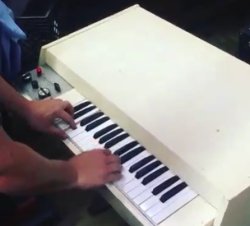
Tara plays a wide range of analogue 'boards, including a Mellotron, with flutes, strings and cellos on Pilfershire Lane/Simsbury 1978, a flute line on Superfriends/St. George and flutes on We Can See Mars, coincidentally (?) the three best tracks. I don't know whether any of you will actually go for this, mainly because I don't really know if I do, either. Unusual and different, but is it any good? Anyway, for all you doubters, here's Tara demonstrating a MkVI.
![]() |
Movies (1978, 34.42) ***½/TTT½Bloody CriesTo Helena The Leader The Earle On the Day My Father Died Turkey in the Corn Children The Escape |
![]() |
Once & for All (1980, 36.32) ***/TStrange Road Boogie1969 Hard Miles Away I'm Getting Out Once and for All School Hate Maple Blues Blue Letter Wet Valley |
Current availability:
Mellotrons used:
Swiss blues/prog outfit Whipping Post's keyboard player, US ex-pat C.B. Busser, released solo albums concurrently with his main band's career. 1978's Movies is a slightly mixed bag, to be honest, with the instrumental prog of Bloody Cries contrasting sharply with the acoustic guitar-driven vocal number To Helena and the jaunty acoustic blues of Children, leaving an overall impression of inconsistency with moments of brilliance. Most of the Mellotron work here appears to be choirs, apart from the short repeating 'Tron flute part in the melancholy On The Day My Father Died. Bloody Cries starts with essentially full-on solo 'Tron, and all four tracks featuring the instrument do so at length, although it might've been nice to hear some strings every now and again, rather than the ubiquitous string synth that's splattered all over the thing.
Despite rumours, there's no Mellotron on Busser's follow-up, 1979's far more progressive string synth-laden Warship-Suite (****), but, surprisingly, it reappears on the following year's Once & for All, an otherwise rather ordinary blues/hard rock effort, better moments including 1969 Hard Miles and the Neil Youngish Away, neither of which is enough to mask the crummy School Hate. Get over it, man. Busser adds Mellotron to a few tracks, with strings (at last!) and flutes on I'm Getting Out and strings on the title track, although nothing you couldn't live without.
There isn't even one really good album to be made from the pair of these, so with only one of them featuring any major Mellotronic input, I'd go for Busser's non-'Tron Warship-Suite in preference to either of these.
See: Whipping Post
![]() |
Stay EP (1999, 16.03) ***/TStayHotel Splendide The Sea |
![]() |
People Move on (1998, 63.45) **½/T½ |
|
| Woman I Know You Just Know People Move on A Change of Heart Autograph You Light the Fire Not Alone When You Grow |
You've Got What it Takes Stay In Vain I'm Tired |
|
Current availability:
Mellotrons used:
After leaving Suede somewhat under a cloud, guitarist Butler worked with various people (notably David McAlmont) before kicking off his solo career in the late '90s. His Stay EP came out on Creation, consisting of an overlong future album track and an overwrought ballad that bookend the not-too-bad Hotel Splendide, complete with 'Tron strings, which is probably all you need to know about this one.
People Move on was hailed in some quarters, though I can't say that this was one of them; brave attempts to sing fall rather flat (literally), and I have to say I find the whole thing rather overblown. His attempts to sound 'epic', er, don't, and at over an hour, the album heavily outstays its welcome. I don't know who plays the Mellotron, although it seems likely it was Butler himself. The anthemic but overlong Autograph does feature some nice 'Tron strings and flutes, complete with authentic-sounding pitchbend, though, while You've Got What It Takes has an orchestrally-arranged string part, which has to be from a real Mellotron, going by the sound's ungainly attack. Hurrah!
Anyway, don't go too far out of your way for these. I didn't.
See: Suede | Nerina Pallot
![]() |
The Butler Did it! (1978, 48.52) **½/T |
|
| Harold Butler: Yes Music (Introduction) Pam Hall: Long Hot Days in the Summer Interlude Prilly Hamilton: Beautiful World Pam Hall & Orville Wood: Book of Life Chorus: Crying in Soweto Pam Hall: New Song |
Ernest Wilson: Let True Love Be Harold Butler: Symphony to a Friend Beres Hammond: One Step Ahead Cynthia Schloss: Love Forever Harold Butler: Crying in Soweto (instrumental) Yes Music (to Be Continued |
|
Current availability:
Mellotron used:
Keyboardist Harold Butler has played with many of reggae's top names, not least Dennis Brown and Toots & the Maytals, running an occasional solo career concurrently with his session work. 1978's The Butler Did it! is less a solo album per se, more a production project, Butler playing keys with Four Corners backing a set of soul singers, playing material sitting somewhere in between soul and reggae. But is it any good? The playing and singing are superb, as you'd expect, but don't expect to get much out of this unless you like, er, soul crossed with reggae.
Butler plays Mellotron flute and string parts on Cynthia Schloss' Love Forever, despite the real strings employed on the rest of the album, although he chooses not to use it on any of his own four pieces. So; good at what it does, one decent Mellotron track.
![]() |
Napalm Springs (2001, 52.20) ***/T |
|
| Napalm Springs Suicide Bridge Anywhere But Now Sophie Alright Are We in Love Again Wonder Sunshine and Ecstasy |
Blue Roses The Systematic Dumbing Down of Terry Constance Jones When People Are Mean It's Cool Dude Dreamtime Please |
|
Current availability:
Mellotron used:
Butterfly Jones include ex-members of Dada (or dada), which is all very well, but since I've never even heard of, never mind heard them... Napalm Springs (ho ho) consists of an odd mixture of styles, switching between the Beach Boys-esque Sunshine And Ecstasy (at least in the vocal department) through the punkish The Systematic Dumbing Down Of Terry Constance Jones to the symphonic pop of Suicide Bridge, although the album's overriding influence is classic powerpop.
Two Mellotron tracks, with a good helping of flutes and strings on Sophie and faint flutes on closer Please, from Mark de Gli Antoni, who also played it on Low's marvellous Things We Lost in the Fire. So; a fairly decent powerpop album that could well improve with multiple plays (as in, 'when?'), with one good 'Tron track. This is actually probably better than I think it is, only as with so many good albums, a couple of plays just ain't enough to reveal its charms...
![]() |
Hold You High (2004, 51.07) **/T½ |
|
| Hold You High Only to You Miraculous Beautiful One Reveal Throne of Grace God of Wonders Your Beloved |
It is Well Lord, Let Your Glory Fall Jesus Washed |
|
Current availability:
Mellotron/Chamberlin used:
I may have said this before, but I find it odd that a genre can be defined by its lyrical content rather than musically, but how else can you describe Contemporary Christian Music, or CCM? Admittedly, an awful lot of it is insipid pop/rock, but there are other musical genres contained within it, allegedly even full-on metal, though presumably not the black variety... By the Tree are presumably named for the appalling Roman method of execution (er, are there any good ones?) that kick-started a religion based on pain, shame and guilt, so I wouldn't go on about it too much if I were you... Amazingly, they play mainstream pop/rock with Christian lyrics, which is a real turn up for the books in CCM circles. OK, it isn't.
Although Hold You High starts in a reasonably promising manner, with the high-octane title track, it slumps into a slough of mediocrity all too soon, with only the occasional burst of energy (Lord, Let Your Glory Fall) to enliven things a little. The lyrical content is exactly what you'd expect, but I suppose that's why it's considered CCM, not merely mainstream pop/rock. Tape-replay player to the CCM crowd Phil Madeira plays Mellotron and Chamberlin here, with what I would guess are 'Tron flutes and Chamby strings on Miraculous, with more Chamby strings on Reveal and Lord, Let Your Glory Fall, though that would appear to be it.
So; usual dullard stuff, with one reasonable tape-replay track. Did you expect more?
![]() |
Elephant & Castle (2011, 38.34) ****/TTTT |
|
| Elephant & Castle I Empty Chairs Red Curtain People Passing Sunset Northern Flakes The Eye of a Giraffe Girl Catching Glassbowl Happy Cow and Ladder |
Moon Behind the Tree Elephant & Castle II Man Playing in a Park Desk With Torso Flowerlady Elephant & Castle III |
|
Current availability:
Mellotron used:
2011's Elephant & Castle (named for a rather grotty inner London suburb) is a (one-off?) project from noted Swedish film score composer Matti Bye and our old chum Mattias 'Änglagård' Olsson. The album's also credited to Swedish photographer Martina Hoogland Ivanow, fourteen prints of whose work are included in the expensive, limited-edition package, also consisting of (you're gonna love this) a vinyl LP and an even more expensive version including (here we go) a phonograph cylinder, although a quick spot of research tells me that the duo aren't the first artists to produce such a thing for eighty years or so, as several artists have utilised the severely outmoded technology over the last decade or so, presumably for novelty value.
The album bears comparison with other Mattias projects in its heavy use of '70s optical disc technology, notably the Vako Orchestron, Mattel's Optigan and the lesser-known Chilton Talentmaker, which, between them, provide most of the album's rhythm tracks, other instrumentation including a handful of 'regular' synths (MiniMoog, Korg Mono/Poly and the like), the Roth-Händle pipe organ (I can only assume it's a pretty small one), various glockenspiels and a tuba. Musically, most reviews come up with phrases like 'underwater', 'broken-down fairground' and the like, which are pretty accurate, to be honest. Entirely instrumental, most of the fourteen tracks (one per print, presumably) sound like the bankrupt, decrepit circus leaving town, a sad, bedraggled collection of instruments painfully squeezing out their last, haunted melodies... You get the idea, I expect. And yes, it is, of course, wonderful.
Mattias has helpfully listed all the Mellotron sounds used, so it's with complete confidence that I can tell you that you're hearing (deep breath) the Chamberlin solo female voice on opener Elephant & Castle I, MkII brass and mandolins and Chamby steel guitar on Empty Chairs, vibes, oboe and 'carousel effects' on People Passing Sunset, the infamous wineglasses on Northern Flakes, flutes and the filthy Hammond (with pedals) on The Eye Of A Giraffe, cello and timps on Girl Catching Glassbowl and more Chamby steel guitar on Happy Cow And Ladder. After a Mellotron-free two-track break, we finish off with a (real) Chamberlin Rhythmate and Mellotron string section on Man Playing In A Park, tubular bells, boys' choir and more Chamby female voice on Desk With Torso, more tubular bells and cellos, with MkII 'moving strings' on Flowerlady and finally, a complete 'Tronfest on Elephant & Castle III, with more tubular bells, boys' choir and mandolins, plus Chamby flute and clarinet and the album's one example of the classic strings, a.k.a. three violins.
If I'm going to be brutally honest, I can't really recommend that you pay over a hundred dollars for this set, however good it is and however beautifully packaged, but should an affordable version appear, I'd snap it up before the duo decide to delete it. If you've heard Mattias' AK-Momo project from a few years back, you'll vaguely know what to expect. Well worth hearing, but not at that price.
![]() |
Look Into the Eyeball (2001, 38.51) ***½/T |
|
| U.B. Jesus The Revolution The Great Intoxication Like Humans Do Broken Things The Accident Desconocido Soy Neighborhood |
Smile The Moment of Conception Walk on Water Everyone's in Love With You |
|
![]() |
Here Lies Love [by David Byrne & Fatboy Slim] (2010, 90.06) ***/½ |
||
| Here Lies Love Every Drop of Rain You'll Be Taken Care of The Rose of Tacloban How Are You? A Perfect Hand Eleven Days When She Passed By |
Walk Like a Woman Don't You Agree? Pretty Face Ladies in Blue Dancing Together Men Will Do Anything The Whole Man Never So Big |
Please Don't American Troglodyte Solano Avenue Order 1081 Seven Years Why Don't You Love Me? |
|
Current availability:
Mellotrons used:
Despite splitting Talking Heads many moons ago now, they're what David Byrne is best known for, and will doubtless be so for the rest of his career, whatever he may feel about the situation. Look Into the Eyeball is his seventh solo album proper, and mixes and matches his various influences in a rather pleasing manner, although I personally prefer it when he strips the Cuban/Brazilian percussiveness away, so highlights for me include the quite beautiful The Revolution and The Accident, unsurprisingly, two of the gentler numbers here. The lyrics are excellent across the board, full of the sort of wry humour we've come to expect from Mr. Byrne, not a million miles away from the wondrous Richard Thompson (with whom he has played in the past). And is it just me, or does he sound a bit like Mr. T vocally on a couple of songs? Anyway, not an awful lot of Mellotron; I'm most surprised he's bothered to use one at all, to be honest, but there it is, on closer Everyone's In Love With You, with a little rhythmic chordal flute part running through the song from Byrne himself.
Byrne's latest project is a collaboration with British dance guru Fatboy Slim, amusingly otherwise known as Norman Cook, ex-indie wimps The Housemartins and The Beautiful South. Here Lies Love is, improbably, a double concept album based on the Philippines' infamous dictator's wife, Imelda Marcos, lady of a thousand pairs of shoes, clearly recognisable on the sleeve. Each of its 22 tracks sung by a different (mostly) female vocalist, including Tori Amos, Martha Wainwright, Natalie Merchant and others, while stylistically, it shifts between slightly '60s-influenced pop, Byrne's beloved Latin and Norm's programmed grooves, for better or worse. Mark de Gli Antoni plays Mellotron on Every Drop Of Rain, with a rather ordinary string part that isn't wildly Mellotronic, making this somewhat unworth it on the 'Tron front.
So; if you like Byrne's solo output: buy Look Into the Eyeball, but treat Here Lies Love with caution. If you like Talking Heads: give at least the first-named a listen. The rest of us: give it a listen anyway; you might be pleasantly surprised, despite a couple of duffers. Fairly minimal 'Tron on both, though, for what it's worth.
![]() |
House of Refuge (2006, 51.57) ***/T |
|
| Didn't it Rain Of Whom Shall I Be Afraid Running Out of Time Big Bill's Blues Lay Me Down Sweet Jesus Today Stardust |
Be Ready When He Comes The Death of Ernesto Guevara Last Fair Deal Gone Down Fortify Me The Beast in Me |
|
![]() |
My Walking Stick (2009, 54.30) ***/½ |
|
| Ol' Rattler Walk on Boy My Walking Stick Lookin' for a Love Ophelia Talk in Circles Three Shots |
Lonely Blue Boy (Danny's Song) Drown in My Own Tears I'm Living Off the Love You Give What Are They Doing in Heaven Today? I Want My Crown One Life (Creole Poetry) |
|
Current availability:
Mellotrons used:
Although US-born, Jim Byrnes is now an honorary Canuck, known for both his acting and musical careers, having released his debut album back in 1981. Saying that, 2006's House of Refuge is only his sixth release; I presume his acting work has got in the way of the music over the years. It's a good album of its type, a reasonably appealing blues/country/gospel mix, better tracks including Running Out Of Time, The Death Of Ernesto Guevara and Last Fair Deal Gone Down, although there isn't anything here that made me cringe. Producer Steve Dawson plays Mellotron, with a cello line on the '40s jazz-inflected Stardust, though nothing you can't live without, to be honest.
2009's My Walking Stick isn't dissimilar to its predecessor, if perhaps slanted a little further towards the blues, the countryish Lonely Blue Boy (Danny's Song) being the furthest from that style. Dawson plays Mellotron again, although on his blog he uses the phrase 'Mellotron vibrophone sound', which sounds a tad suspect to me. Anyway, it can be heard in the quiet bit in Ophelia, but it's impossible to tell whether or not it's real.
So; two good albums of their type, but not ones that will appeal to everyone, with relatively little Mellotron. Worth hearing for old-school Americana fans.
![]() |
Take No Prisoners (1975, 40.31) ***½/TT |
|
| Man Full of Yesterdays Sweet Rock n'Roll Steamin' Along Silver White Man Love Song Midnight Flyer Saturday Night Roller Coaster |
Stop (Think What You're Doing) Hit Me With a White One |
|
Current availability:
Mellotron used:
Byron (née Garrick) was, of course, Uriah Heep's original singer, from their days as Spice in the late '60s until he terminally pissed keyboardist/chief writer Ken Hensley off enough to trigger a 'him or me' situation in 1976. Presumably recorded around the same time as the 'not as bad as its predecessor' Return to Fantasy, a full half of Take No Prisoners involves at least one Heep member on the compositional front, while Mick Box and Lee Kerslake play throughout the album, alongside relative unknowns bassist Denny Ball and keyboardist Lou Stonebridge, co-author of all but one of the album's songs. Despite their differences, Hensley appears on acoustic guitar, and Heep's then-bassist John Wetton adds his ex-Crimson Mellotron to a couple of tracks. The album opens excellently with Man Full Of Yesterdays, essentially a lost Heep track, with several other decent efforts (Silver White Man, Midnight Flyer) only slightly spoiled by the substandard boogie of Steamin' Along and Saturday Night and the drippy balladry of Love Song. Basically, and against all odds, this is unexpectedly better than anything from Wonderworld, Return to Fantasy (bar its killer title track) or Byron's last Heep album, High & Mighty. Had I known, I'd have bought a copy years ago...
Wetton's Mellotronic contributions are well worth the effort, with a string part on Man Full Of Yesterdays enhancing an already good piece, while an uncredited high-in-the-mix cello part does the same for Silver White Man (unless Stonebridge got in on the action, of course), while Love Song's polyphonic flutes do their best to improve a rather dull song. That's your lot, but all in all, this is vastly better than expected, and worth picking up if you see it at a reasonable price. Byron stumbled through several other no-hoper bands post-Heep, turning down an invitation to rejoin after Hensley's departure in 1980, a classic case of pride before a fall if ever I saw one... Eventually, the rock'n'roll lifestyle caught up with him, and he died of alcohol-related illness on 28th February 1985, aged a whole 38. What a waste of a great voice.
See: Uriah Heep