



|
|
|
|
||
|
||
|
|

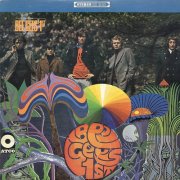 |
The Bee Gees' 1st (1967, 37.44) ****/TT½ |
|
| Turn of the Century Holiday Red Chair, Fade Away One Minute Woman In My Own Time Every Christian Lion Hearted Man Will Show You Craise Finton Kirk Royal Academy of Arts New York Mining Disaster 1941 |
Cucumber Castle To Love Somebody I Close My Eyes I Can't See Nobody Please Read Me Close Another Door |
|
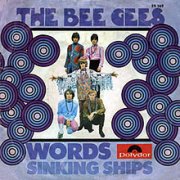 |
7" (1968) **½/T Words Sinking Ships |
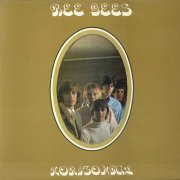 |
Horizontal (1968, 37.13/72.11) ***½/T (T½) |
||
| World And the Sun Will Shine Lemons Never Forget Really and Sincerely Birdie Told Me With the Sun in My Eyes Massachusetts Harry Braff Day Time Girl |
The Earnest of Being George The Change is Made Horizontal [2006 reissue adds: Out of Line Ring My Bell Barker of the UFO Words Sir Geoffrey Saved the World |
Sinking Ships Really and Sincerely (alt.version) Swan Song (alt.version) Mrs. Gillespie's Refrigerator Deeply, Deeply Me All My Christmases Came at Once Thank You for Christmas Medley (Silent Night/Hark! The Herald Angels Sing)] |
|
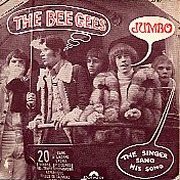 |
7" (1968) ***½/TT Jumbo The Singer Sang His Song |
 |
Idea (1968, 33.04) ***/T |
|
| Let There Be Love Kitty Can In the Summer of His Years Indian Gin and Whisky Dry Down to Earth Such a Shame Idea When the Swallows Fly |
I've Decided to Join the Air Force I Started a Joke Kilburn Towers Swan Song |
|
 |
Odessa (1969, 64.00) ***/½ |
|
| Odessa (City on the Black Sea) You'll Never See My Face Again Black Diamond Marley Purt Drive Edison Melody Fair Suddenly Whisper Whisper Lamplight |
Sound of Love Give Your Best Seven Seas Symphony With All Nations (International Anthem) I Laugh in Your Face Never Say Never Again First of May The British Opera |
|
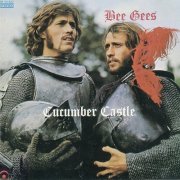 |
Cucumber Castle (1970, 34.15) ***/½ |
|
| If Only I Had My Mind on Something Else I.O.I.O. Then You Left Me The Lord I Was the Child I Lay Down and Die Sweetheart Bury Me Down By the River |
My Thing The Chance of Love Turning Tide Don't Forget to Remember |
|
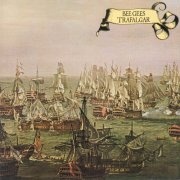 |
Trafalgar (1971, 47.17) ***/½ |
|
| How Can You Mend a Broken Heart Israel The Greatest Man in the World It's Just the Way Remembering Somebody Stop the Music Trafalgar Don't Wanna Live Inside Myself |
When Do I Dearest Lion in Winter Walking Back to Waterloo |
|
 |
To Whom it May Concern (1972, 44.00) ***½/T |
|
| Run to Me We Lost the Road Never Been Alone Paper Mache, Cabbages and Kings I Can Bring Love I Held a Party Please Don't Turn Out the Lights Sea of Smiling Faces |
Bad Bad Dreams You Know it's for You Alive Road to Alaska Sweet Song of Summer |
|
 |
Life in a Tin Can (1973, 32.18) **½/TSaw a New MorningI Don't Wanna Be the One South Dakota Morning Living in Chicago While I Play My Life Has Been a Song Come Home Johnny Bridie Method to My Madness |
 |
Mr. Natural (1974, 46.36) **½/T |
|
| Charade Throw a Penny Down the Road Voices Give a Hand, Take a Hand Dogs Mr. Natural Lost in Your Love |
I Can't Let You Go Heavy Breathing Had a Lot of Love Last Night |
|
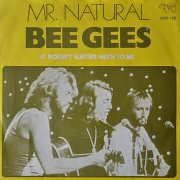 |
7" (1974) **/TTT Mr Natural It Doesn't Matter Much to Me |
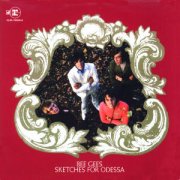 |
Sketches for Odessa (2009, recorded 1969, 77.24) ***/T½ |
||
| Odessa (demo) You'll Never See My Face Again (alternate) Black Diamond (demo) Marley Purt Drive (alternate) Barbara Came to Stay Edison (alternate) Melody Fair (demo) Melody Fair (alternate) |
Suddenly (alternate) Whisper Whisper Part Two (alternate) Lamplight (demo) Lamplight (alternate) Sound of Love (alternate) Give You Best (alternate) Seven Seas Symphony (demo) With All Nations (International Anthem) (vocal) |
I Laugh in Your Face (alternate) Never Say Never Again (alternate) First of May (demo) First of May (alternate) Nobody's Someone Pity Odessa promotional spot |
|
Current availability:
Mellotrons used:
Like many people, I first heard the Bee Gees (abbreviated from 'The Brothers Gibb'), Barry , Robin and Maurice, via their mid-'70s disco abominations; Jive Talkin', You Should Be Dancing et al.; it was some years before I even realised that this was their second stab at fame and fortune and they'd had a whole slew of hits in the late '60s. Sadly, I wasn't impressed by them, either and it was many years again before I heard their early album tracks and realised there was a little more depth to the Gibb brothers than their bland mainstream work.
After several hits in their adoptive native country, Australia (although all were born in the UK, in the Manchester area), the brothers came back to Britain to make their fortune, releasing The Bee Gees' 1st in 1967. It's very much a product of its time, largely comprised of clever psychedelic pop, including many period production tricks (not least the vocal effect on Craise Finton Kirk Royal Academy Of Arts), with enough mainstream appeal to ensure its success. One of the album's most endearing features is Maurice's Mellotron work on a couple of tracks, although much of the album uses orchestral accompaniment. Red Chair, Fade Away opens with an upfront chordal flute part, complete with pitchbend, although the album's Mellotron (and musical) pièce de resistance is the (quite frankly) bizarre Every Christian Lion Hearted Man Will Show You, its Gregorian chant-style verses complete with heavily gothic Mellotron strings, leading into a typical Bee Gees chorus. This really is superb, with some excellent pitchbend work on top of the fantastic verse riff.
By the following year's Horizontal, the Gibbs' true colours were already beginning to show, with little psychedelic experimentation and a surfeit of string-laden balladry, although there's still the odd quirky song, notably Harry Braff. As for Maurice's Mellotron, we get brass on The Change Is Made (thanks, Zohar) and upfront strings on the title track, but the alleged strings on opener World turn out to be a combo of a heavily-modulated organ and real ones. As with 1st, there may be other Mellotron tracks, but most of the strings are real, as are the other orchestral instruments I can hear. The 2006 remaster added a bonus disc of outtakes and the like, essential for fans, less so for the rest of us, although Deeply, Deeply Me has an interesting cod-'Eastern' feel. Upfront Mellotron strings on the alternate version of Really And Sincerely, although that appears to be it for the extras.
Incidentally, the band had a major hit with the syrupy Words that January, with the non-LP Sinking Ships on the flip. I've had it pointed out to me (thanks, Chris), that it could be Mellotron strings, strangely alongside real ones, on the track, although I'm not 100% on this one. A more definite sighting is March's Jumbo 7", with quite noticeable Mellotron string and brass chords throughout. Idea is similar to its immediate predecessor, being largely orchestral pop, without even Horizontal's one interesting track to grab the attention. Perfectly respectable, you understand, just not very exciting for those not into the style. Also like its predecessor, there's one overt Mellotron track, with flutes on Kilburn Towers, although to my ears, there just might be some background flute chords on In The Summer Of His Years, or is it the orchestra?
The ambitious double, Odessa followed, with its seven-minute plus title track and occasional progressive leanings; definitely an improvement on Idea, although I can't quite work out how tracks like Marley Purt Drive or Edison are supposed to fit the album's spurious concept. Two credited Mellotron tracks, with a faint flute part on You'll Never See My Face Again from Maurice and something inaudible under the orchestral strings on Black Diamond from Robin. In 2009, the album was reissued as a three-CD set: stereo, mono and demos, the latter of which featured several more Mellotron tracks, reviewed at the end of this article.
The Mellotron's credited on Cucumber Castle, an album made without Robin, who was in the throes of a brief solo career, but again, I can't actually hear it, which isn't to say that it isn't there. The album's better than Idea, but the brothers had slipped largely into mainstream balladry by this point, with large-scale orchestration that would seem to make the Mellotron redundant. Chris (again) comments that, "My Thing has what sounds like possible M300 sounds on it including cellos. According to Wikipedia, there is no orchestration on this track, so all of the odd sounds have to come from the Mellotron". I concur re. the Mellotron, although I'm not sure it's an M300 we're hearing. The overlong Trafalgar looks like it should be a concept album (as did Cucumber Castle, for that matter), but is basically just another collection of weepy ballads, although a few tracks (It's Just The Way, Trafalgar) dig themselves out of this hole. Maurice's credited Mellotron usage is, as was usual by now, largely inaudible, although I think the wobbly flute line on When Do I is the mighty Mellotron.
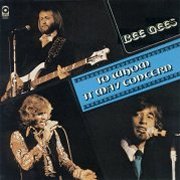
To Whom it May Concern, with cool sleeve pic of Maurice on white Ricky bass, starts badly, but ends up being one of their better early albums, with several tracks bucking their ballads, ballads and more ballads approach. The slightly eccentric, Greek-flavoured Paper [sic.] Mache, Cabbages And Kings, I Held A Party, with its 'Persuaders' theme tune feel about it and the rocking Bad Bad Dreams, among others, stand out from the distressingly familiar dross that clogs up most of these releases. The album also contains their most 'out there' song since Every Christian Lion Hearted Man in the moody, synth-driven Sweet Song Of Summer. At last, there's a definite Mellotron Track, too: You Know It's For You has clearly audible Mellotron flutes and strings, sounding a great deal less cheesy than their usual preference for orchestral accompaniment.
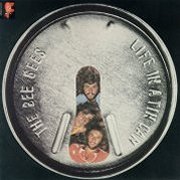
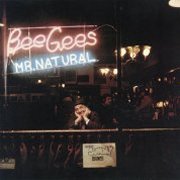
Wondrously, the surprisingly short Life in a Tin Can actually gives track-by-track credits, so at last, there's no dissension over Maurice's Mellotron usage. The album seems to be Business As Usual, being a string of syrupy ballads with little real substance, with an unfortunate country edge to some of them. The credited Mellotron on I Don't Wanna Be The One is, once again, totally inaudible, unless Maurice had some different strings tapes recorded, which is always possible, I suppose. Living In Chicago has melodic flute and string parts, which actually sound like a Mellotron, which is nice, but doth not a Mellotron Album make. Mr. Natural charts the Gibbs' move into a more soul-influenced direction, fulfilled on the massive-selling Main Course a year later. Opener Charade is as cheesy a soul ballad as they were to produce, sax solo and all, but the rest of the album is more varied than its predecessor, thankfully. On the Mellotron front, Voices has not only strings, but, for the first (and probably last) time in their catalogue, choirs; or should that be voices? Throw A Penny and the title track have some strings, too, but they're used so 'orchestrally' that it's difficult to ascertain that they're Mellotron at all. There may be some more on the album, but as usual, it's pretty hard to tell. Incidentally, Chris has pointed me at a b-side from the era, It Doesn't Matter Much To Me, backing Mr Natural itself, another horrible, gloopy ballad, Mellotron strings doing little to improve matters.
Just when you thought it was all over... 2009 brings a three-disc deluxe expanded edition of Odessa, with the mono and stereo versions of the album, plus a disc of demos, outtakes and alternate versions. And guess what? Mellotron; not all over, but here and there. Basically, the alternate mixes tend to contain the same orchestral parts as the album versions, while the demos tend towards Maurice's Mellotron, with strings all over Odessa itself and brass on Black Diamond, although the strings on Suddenly (alternate mix) throw that theory out of the window. It's possible there's more Mellotron hidden away here, but given its low usage on the album 'proper', I doubt it.
Despite the sheer number of Mellotron albums in the Bee Gees' back catalogue, with only one of their first ten releases not being included above (1970's 2 Years on, which could easily have some buried in the mix), it has to be said that there's surprisingly few Mellotron classics among them. First is a great album, with three all-out Mellotron pieces, but I can only hear another five or six worthwhile efforts over the succeeding nine LPs. It's difficult to know what to recommend musically here, as I don't personally like any of their albums after their worldwide debut, but for fans of their particularly quavery style of balladry, most of the above are probably worth hearing. For those of a more progressive/psychedelic bent, buy 1st, then approach Horizontal and maybe Odessa with considerable caution.
I actually feel it's quite irrelevant to ever accuse the Bee Gees of 'selling out'; at all stages of their career, they've striven to be as 'commercial' as possible, with the express aim of selling shedloads of records. It's practically impossible to argue with an approach that honest, even though their ultra-clever take on the genre helped to keep The Disco Years going that little bit longer, for which I shall probably never entirely forgive them. Their falsetto harmonies and an excess of teeth ensured that the band were treated as something of a joke from the late '70s onward - the late '90s Clive Anderson TV interview where they stormed out en masse was a classic example, although I'm afraid they did come across as startlingly humourless. Multiple-million sales tell their own story, though, giving the brothers the last laugh. Sadly, Maurice died in early 2003, after years of ill-health; it's often forgotten that he was the band's real musician, equally at home on guitar, bass or keyboards and it was he who kept their Mellotron flame alive for so long. Despite everything, RIP, Mo.

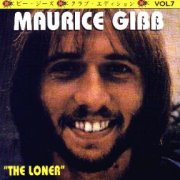 |
The Loner (recorded 1969-70, 70.41) **½/½ |
||
| Journey to the Misty Mountains The Loner (acetate) Please Lock Me Away I've Come Back Soldier Johnny She's the One You Love Improvisation on Piano Railroad Railroad (acetate) |
Laughin' Child Something's Blowing Silly Little Girl Insight Danny Till I Try Hold Her in Your Hand Hold Her in Your Hand (instr) |
Modulating Maurice Goin' Home Whoops Cookie Leave Me Here Song for Lulu Have You Heard the Word Everybody Gotta Clap The Loner |
|
Mellotron used:
Maurice Gibb began recording a solo album in late 1969, during the year-long Bee Gees hiatus, provisionally titled The Loner, although it remained unfinished when the brothers reformed. Snippets circulated amongst fans for years, but it wasn't until a Japanese bootleg label released a twenty-five-track CD version of the album that it became available in any meaningful sense of the word.
Was it worth the wait? Are you a Bee Gees fan? If not, then categorically no; a handful of tracks are vaguely worth the effort, surrounded by guff like two Maurice-sung songs from a shitty, short-lived musical in which he starred in early 1970, Sing a Rude Song (Whoops Cookie and Leave Me Here (To Linger With The Ladies)) and even tracks entirely unconnected to the man (notably Song For Lulu, Maurice's first wife). Better material includes the suitably gloomy Journey To The Misty Mountains, the countryish Railroad (actually released as a single at the time) and the unexpected blues-rock of Goin' Home, although Mo's default position was (you guessed it) big, blousy ballads, smothered in strings. Collaborators on various tracks include members of Bee Gees protégés Tin Tin and various Beatles, although I can't say they improve matters any.
And the Mellotron...? Mo plays reverbed-to-death MkII strings on Modulating Maurice, a two-minute instrumental doodle, allegedly with Ringo Starr, with a high, melodic part running through the country-flavoured piece. Do you bother tracking this down? Up to you, really. Incidentally, She's The One You Love opens exactly like the chorus to David Bowie's Starman, recorded a couple of years later. How widely were these tapes circulating?