




|
|
|
|
||
|
|
CMU C.O.M.A. Caesars (Palace) |
François Cahen/Didier Lockwood Andrés Calamaro Calexico |
Cali Caligonaut Eddie Callahan |
Calliope Hilario Camacho Camel |
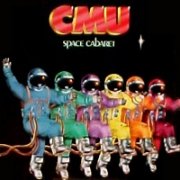 |
Space Cabaret (1972, 42.28) ***/TSpace CabaretArchway 272 Song From the 4th Era A Distant Thought, a Point of Light Doctor, am I Normal? Dream Lightshine |
Current availability:
Mellotron used:
Cambridge-based CMU (Contemporary Music Unit) were a sort of folky/bluesy/proggish outfit, like so many at the turn of the '70s, managing a couple of albums probably as much sought after now for their rarity value as their musical worth. Their debut, Open Spaces (***) isn't actually bad; in fact, its psych-ish title track is well worth hearing, but overall, we're not talking essential.
By its follow-up, Space Cabaret, CMU had moved away from their bluesy roots into a more folk/psych direction, although they could also rock out when the mood took them. There are some really nice moments on the album, but it's no classic, not to mention a bit dated for '72. There's a fair bit of Mellotron strings on Archway 272 (presumably referring to the area of North London), but I wouldn't buy it for that alone.
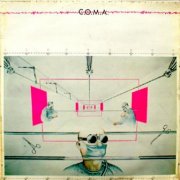 |
Clinik Organik Muzak Anatomik (1979, 35.50) ***½/½ |
|
| Introx Parking Nord Le Roi des Voleurs Tête de Gomme Femme-Robot Coma Assaut Verre |
Hypnose La Valse a Mutant Conséquences Demain |
|
Current availability:
Mellotron used:
C.O.M.A., or Clinik Organik Muzak Anatomik, were a French new wave/synth outfit, not dissimilar to the better-known Metal Urbain, much championed by John Peel at the time, I seem to recall. So why haven't we heard of this lot? It's pretty random what music travels and what doesn't, I've found and for some reason, it seems copies of Clinik Organik Muzak Anatomik (or whatever it's actually called) rarely found their way out of the country, although I wouldn't be entirely surprised if a certain Dave Ball heard it; closer Demain reminds me slightly of Soft Cell's Bedsitter, two years early. Stylistically, it mixes spiky new wave guitars with dissonant synths and mostly electronic drums, topped off with Philippe "P.R." Ross' vocal monotone, sounding every bit as alienated and other-wordly as any post-punk outfit you'd care to name.
Two Mellotron tracks, with the quietest of quiet choirs on Coma itself from Philippe Huart and a brief burst of very recognisable church organ, complete with superbly inauthentic pitchbend, on closer Demain from Marc Desmullier. Long out of print (of course), this has finally received an official reissue on the French Desire imprint. An almost unknown minor classic of the era, this is well worth hearing, though not, sadly, for its Mellotron use.
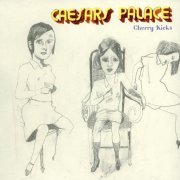 |
Cherry Kicks [as Caesars Palace] (2000, 39.58) ***½/T |
|
| Right About Time Subhuman Girl Crackin' Up One Good Night Spill Your Guts Since You've Been Gone Oh Yeah? Punkrocker |
Fun & Games From the Bughouse Only You Cherry Kicks |
|
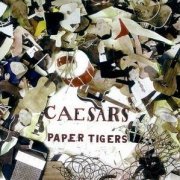 |
Paper Tigers [as Caesars] (2005, 47.42) ***½/T |
|
| Spirit Not That Fall That Hurts Out There Jerk it Out May the Rain My Heart is Breaking Down Paper Tigers Your Time Is Near |
Throwaway Winter Song We Got to Leave Soul Chaser Good and Gone (I’m Gonna) Kick You Out |
|
Current availability:
Mellotrons used:
From a country excelling in all things garage (rock), Sweden's Caesars Palace (later Caesars, or Twelve Caesars in the rest of Scandinavia), named for vocalist/guitarist César Vidal, have raised the bar a notch or three, matching The Hives for sheer '60s-influenced excellence. Saying that, the band have developed their own take on it, ending up sounding like nobody but themselves, which has to be applauded. I believe Cherry Kicks is their second album, although the first as Caesars Palace, full of energetic, tuneful garage rock (Spill Your Guts is typical), with the odd sideways step like the rather odd slowie Since You've Been Gone. One Good Night opens with a beautiful solo Mellotron flute part from David Nyström, sounding nicely authentic, although as so often, it might have been nice to hear it a little more.
Five years on, Paper Tigers is their fourth album proper, ignoring a 2003 compilation and, once again, it's stuffed full of great hooks and a vibrant, upbeat distorted Farfisa-driven sound. My only real criticism is that it's too long; any more than, say, thirty-five minutes of this stuff is a bit much, to be honest, but that's just being picky. There's an interview snippet on their website where Joakim Åhlund, talking about their studio, says, "We have a Mellotron and all our old mics and amps and things", although it isn't credited in the CD booklet and there aren't any pictures, so I don't even know who plays it. Sadly, it's only obvious on one song, with a full-on string part on Winter Song, with the Farfisa and Philips Philicorda organs sharing the bulk of the keyboard work between them.
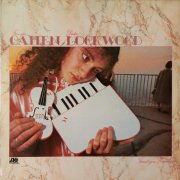 |
Thank You Friends (1978, 36.03) ***½/½Thank You JoeMerci Guy Lettre Ouverte a Mr Debussy Obade a Jean Sebastien Top Espace From Bella to Keith Rêves de Music |
Current availability:
Mellotron used:
Pianist François Cahen played on the first two Magma albums before forming noted Zeuhlists Zao, while his bandmate in the latter outfit, violinist Didier Lockwood, was in a later Magma lineup, also playing with Gong, amongst many others. 1978's Thank You Friends was their sole collaborative project, a partially-improvised (?) album of jazzy piano and violin work, oddly enough, possibly at its best on the eleven-minute From Bella To Keith.
Amongst many examples of minimal confirmed Mellotron use, this album has to come out near the top. Lockwood's credited, but the only just-about-obvious use is a single stabbed choir chord, heavily reverbed, at 9:57 during From Bella To Keith. That's it; this only gets half a T because I don't want to head down the slippery slope of awarding quarters. Nonetheless, a fine album of its type, as I hope is reflected in its rating above. Sad to say, both musicians are no longer with us, Cahen dying in 2011 and Lockwood seven years later.
 |
Alta Suciedad (1997, 55.13) **½/½ |
|
| Alta Suciedad Todo Lo Demás También Donde Manda Marinero Loco Flaca Quién Asó la Manteca? Media Verónica El Tercio de los Sueños |
Comida China Elvis está Vivo Me Arde Crimenes Perfectos Nunca es Igual El Novio del Olvido |
|
Current availability:
Mellotron used:
Andrés Calamaro is apparently one of Argentina's top entertainers, his career path arcing through Los Abuelos de la Nada, Los Rodríguez and concurrent solo albums. 1997's Alta Suciedad (translates as 'high dirt', which highlights the inadequacies of online translation software) largely consists of Latin pop/rock and ballads, although the opening title track is a dirty, brass-driven rock number. Despite my effectively nonexistent Spanish, even I can translate Elvis Está Vivo... No he ain't, Andrés and the song's really dull to boot.
Calamaro plays Mellotron on Comida China himself, with a rather wobbly Mellotronic string part running through the song. Now, given that I don't believe there was a single Mellotron in South America until a few years ago (I now know of two), I can only assume the album, or at least part of it, was recorded in an American or European studio. Either that, or it's samples, but it doesn't actually sound like it. Anyway, you're not going to buy this for one so-so Mellotron track, so it's all a bit academic, really.
 |
Edge of the Sun (2015, 58.06) ***/T |
|
| Falling From the Sky Bullets & Rocks When the Angels Played Tapping on the Line Cumbia de Donde Miles From the Sea Coyoacán Beneath the City of Dreams |
Woodshed Waltz Moon Never Rises World Undone Follow the River |
|
Current availability:
Mellotron used:
As I said in my Calexico samples review, they were formed by two ex-Giant Sand members and play a unique variety of Tex-Mex Americana, for want of a better term. 2015's Edge of the Sun is their ninth album, not that dissimilar to 2012's Algiers, featuring a good bit of stylistic diversity, from country-rock opener Falling From The Sky through the vaguely ZZ Top-esque Bullets & Rocks, the very country When The Angels Played, the mariachi electronica (!) of Cumbia De Donde to the slow burn of World Undone, seeming longer than it is, albeit in a good way.
Sergio Mendoza's credited Mellotron actually sounds quite real on opener Falling From The Sky, the string line running through the song sounding authentically wobbly, which makes a nice change. So; a decent enough album, good at what it does, one seemingly real Mellotron track. What a breath of fresh air after the swampfuls of crud I've listened to recently.
See: Samples etc. | Giant Sand | Sweetheart 2005: Love Songs
 |
Menteur (2005, 52.53) ***/T |
|
| Qui se Soucie de Moi Je M'en Vais (Après Miossec) Pauvre Garçon Pour Jane Je Sais Je Ne Vivrai Pas Sans Toi Roberta Menteur |
Tes Yeux La Fin du Monde Pour dans 10 Minutes Je Te Souhaite à Mon Pire Ennemi Le Vrai Père |
|
Current availability:
Mellotron used:
Bruno "Cali" Caliciuri's second release was a live DVD, which seems to indicate towering ambition and self-confidence, although given that he's already racking up French music awards, perhaps he has a point. 2005's Menteur is only his second album, a confident, fairly mainstream folk and jazz-influenced effort, shifting between French-language pop/rock (opener Qui Se Soucie De Moi, Je Ne Vivrai Pas Sans Toi), the aforementioned folk/jazz influences (Je M'En Vais (Après Miossec), Pour Jane), fairly typical chanson (Je Sais) and bordering-avant orchestral closer Le Vrai Père.
Daniel Presley plays Mellotron flutes on Je Sais, wobbly enough to be real, although all string parts sound genuine. Non-French-speakers probably aren't going to get too much from Cali's work, although he's no slouch on the musical front and a million miles from the kind of insipid modern singer-songwriter guff that clogs up the world's airwaves.
See: Samples etc.
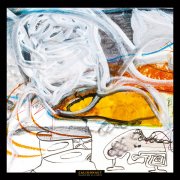 |
Magnified as Giants (2021, 50.39) ****/TTEmperorHushed Magnified as Giants Lighter Than Air |
Current availability:
Mellotron used:
Caligonaut are vocalist/guitarist Ole Michael Bjørndal's solo project, his first album, Magnified as Giants, combining elements of the progressive end of Opeth with the '90s Scandinavian uprising (notably Änglagård and White Willow), probably at its best on fourteen-minute opener Emperor. Compositionally, this is largely in the 'parallel-as-against-series' area, with little repetition, although, if I may be critical for a moment, it's a little too long; near-twenty-minute closer Lighter Than Air might be better with a bit of an edit, while things would be improved by losing the guitar solos. Personal opinion, obviously. Oddball highlight? Iver Kleive's actual church organ on Hushed.
Lars Fredrik Frøislie (Wobbler etc. etc.) plays subtle Mellotron, with lush strings and chordal flutes on opener Emperor, strings on the title track and choirs on Lighter Than Air, although I'm not convinced that the vibes on a couple of tracks are Mellotronic. Given the album's potential for Mellotron overkill, it's good to hear it being used so discretely. A fine start, then, caveats notwithstanding. More, please!
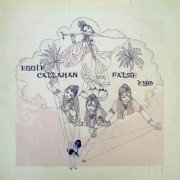 |
False Ego (1976, 38.38) ***½/TT |
|
| Where Will We Be Tomorrow Just Across the Line Shake Your Woogie Santa Cruz Mountains Don't You Know Dying to Sing Paper Rain Lonely Feelings |
Judge Me Flying |
|
Current availability:
Mellotron used:
Eddie Callahan's Hare Krishna beliefs almost certainly influenced the 'questing' lyrics on what may well be his sole album, 1976's damn' near private-pressing False Ego. This highly collectible album sits somewhere in between folk, psych and mid-'70s mainstream rock, soundly oddly like a powerpop/proto-new wave cross at points, notably on Dying To Sing, while Just Across The Line reminds me, obscurely, of Syd Barrett. Despite what must've been a rock-bottom budget, the album's full of neat little production tricks, not least the way Dying To Sing's electric backing fades under the vocals, to be replaced by acoustic guitar for the last few lines, the mental synth effects on Paper Rain or the arranged harmony synth parts on several tracks.
Bob (now better known as Robert) Berry (Hush) plays Mellotron, presumably his own M400, with a lovely string part on Santa Cruz Mountains, subtle at first, but building in intensity through the song, a similar part on Paper Rain (alongside real strings) and a distinctly 'orchestral substitute' part on closer Flying, interspersed with choirs. Are you a fan of oddball folk/psych rarities, or borderline Krishna rock? Then you need to hear this, which, given that it's been reissued on CD, is far easier (and cheaper) than you might expect. Decent Mellotron work, too, used enough to be worthwhile, yet not so much that it becomes cheapened.
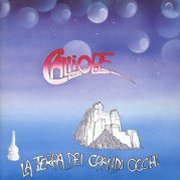 |
La Terra Dei Grandi Occhi (1992, 46.25) ***½/TTTLa Terra Dei Grandi OcchiNon ci Credo Più Lunario Pensieri Affascinanti Passi Dentro il Tempo Avalon L'Anima del Cielo Mellotronmania |
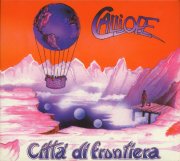 |
Città di Frontiera (1994, 49.59) ****/TTT½La ProvaSarajevo Margherita a Rodi Terra di Nessuno Senza Pretese Windsor L'Attesa Il Ritorno |
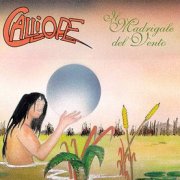 |
Il Madrigale del Vento (1995, 52.53) ***/TTTerra di MaggioLa Nascita della Luna En Haute de Crete La Bionda Treccia Il Tempo Sei Tu La Visione della Dolce Pioggia |
Current availability:
Mellotrons used:
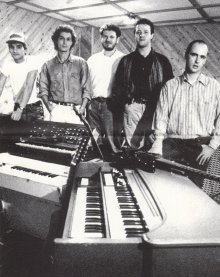 |
Calliope are one of those bands who, for me, were initially very impressive, but whose appeal palled as time went by. After hearing a friend's copy of Città di Frontiera, I was completely blown away, bought it immediately and played it to death, although after picking up their debut, La Terra Dei Grandi Occhi, I was rather less impressed. Playing these back-to-back, I was very aware of their shortcomings; for an Italian progressive outfit, they lack subtlety and their retro leanings are heavily tempered with a '90s guitar sound and style, despite the (authentic) '70s keys.
La Terra Dei Grandi Occhi tries hard and, given the prevalence of terrible neo- outfits doing the rounds in Italy at the time (have you ever HEARD Tale Cue?), Calliope's '70s influences came as a breath of fresh air. The song construction is rather straightforward compared to their forebears, however, with an obviousness to their compositions that would never have been tolerated by, for example, Le Orme, although some of the material actually dated back to that decade. The guitar parts are far too powerchord-based for comfort, too; they could never be mistaken for a long-lost '70s band, assuming that was actually the band's intention. As you can see, though, Rinaldo Doro used their beaten-up M400 on every single track, though to their credit, it's rarely overused, with little bursts of choir and flute among the more prevalent strings. The one outstanding piece of Mellotron work on the album, unsurprisingly, is the ninety-second closing piece, Mellotronmania, consisting of a simple Mellotron flute theme, overdubbed with their other two sounds, building and repeating to fade.
Città di Frontiera opens with my favourite track on the album, La Prova, although it manages to be the only one sans Mellotron, apart from the beautiful forty-nine-second acoustic guitar instrumental Senza Pretese. It's easier with hindsight to see the transition the band made from first album to second; the compositions are better, though still nowhere near those of their influences. Again, a certain obviousness pervades most of the material, with some irritating 'widdly' MiniMoog lines straight out of the Marillion songbook and proto-progressive metal guitar lines doing their best to spoil otherwise quite nice songs. The Mellotron work is a bit more upfront, though, with the usual string washes on most tracks and the occasional bit of choir. Not a classic, but an improvement on their debut.
Between Calliope's second and third albums, their line-up changed radically, only two members (keys and drums) remaining. The difference is immediately apparent, as Il Madrigale del Vento removes the heavier end of the band's sound, adds female vocals and changes their approach to a more obviously neo-prog one, albeit with some unexpected folk touches, not least on the traditional En Haute De Crete. While not a bad album, it smacks a little too much of many contemporaneous Italian neo-prog acts like Theatre, albeit thankfully nowhere near as bad, although, upon re-playing, it's noticeable how awful the drumming is. The opening and closing tracks are both in the sixteen-to-seventeen minute range, rather stretching the composers' skills, to be honest, although the shorter material in between is more cohesive.
I'm assuming the Mellotron's real and is presumably still played by Doro, one of two keyboard players on the album, along with Enrico Perrucci. The album's choirs really don't sound Mellotronic at all, which is perturbing (in a rather unimportant, non life-changing kind of way), but the strings on the first three tracks sound real enough. Maybe they just didn't like the choir sound any more? Sampled strings crop up in places, too, not least throughout Il Tempo Sei Tu, overlaid with real violin. Whether we're actually hearing a real Mellotron here has to be a moot point; going by some of Calliope's contemporaries, poorly-maintained or just plain old machines were breaking down right, left and centre by the mid-'90s, before Streetly Electronics' refurbishment service became more widely known.
So; while sounding pretty good at the time, Calliope have been rather overtaken by events, I fear. Ten years on, the prog audience has modern bands of far more sophistication to listen to, the more retro outfits sounding far more 'authentic' than this and frequently taking more care over their compositions, so I'm left giving only a cautious recommendation on both musical and Mellotronic fronts. 2002's Generazioni apparently consists of half-and-half new recordings and material taped in '93, but it all sounds like new recordings with samplotron, so until/unless I find out otherwise, into samples it goes.
See: Samples etc.
 |
La Estrella del Alba (1977, 36.36) ***/T |
|
| La Estrella del Alba Claros Sentimientos Soledad y Silencio La Casa del Pozo Mis Oies Oisan la Roca, Mi Cabeza Sobre Nubes Va Flotando Arquitecto de Sueños Señora de Ojos Tristes Guapachosa |
Maria El Paseo del Atardecer |
|
Current availability:
Mellotron used:
As far as I can work out (English-language information is startlingly hard to find), Hilario Camacho was a mainstream Spanish pop/rock artist who released albums for over forty years, his swansong appearing posthumously in 2007. 1977's La Estrella del Alba was his fourth, to my knowledge, hitching a ride on Spain's late-flowering progressive scene in places, although the bulk of it's pretty ordinary stuff. My personal preference, unsurprisingly, is for the album's folkier offerings (La Casa Del Pozo), or the slightly proggier material (Arquitecto De Sueños, closing solo piano piece El Paseo Del Atardecer), although I have to say, nothing here made me jab at the 'next' button; even the mainstream stuff's inoffensive.
Jesús Pardo adds Mellotron to the album in true Spanish style, with flutes over string synth on the opening title track and Arquitecto De Sueños and as usual, no bloody strings. Why did they do this? Or not do it, as the case may be? Anyway, an acceptable enough effort, though somewhat lightweight on the prog front, with very little Mellotron.
 |
Camel (1973, 39.10/61.51) ***½/T½ |
|
| Slow Yourself Down Mystic Queen Six Ate Separation Never Let Go Curiosity Arubaluba |
[remastered CD adds: Never Let Go (single version) Homage to the God of Light (live)] |
|
 |
Mirage (1974, 38.02/68.10) ****/TT (TT½) |
|
| Freefall Supertwister Nimrodel The Procession The White Rider Earthrise Lady Fantasy Encounter Smiles for You Lady Fantasy |
[remastered CD adds: Supertwister (live) Mystic Queen (live) Arubaluba (live) Lady Fantasy (original mix) Encounter Smiles for You Lady Fantasy] |
|
 |
Moonmadness (1976, 39.15) ****½/½AristillusSong Within a Song Chord Change Spirit of the Water Another Night Air Born Lunar Sea |
 |
The Single Factor (1982, 38.52) **/½ |
|
| No Easy Answer You Are the One Heroes Selva Lullabye Sasquatch Manic Camelogue |
Today's Goodbye A Heart's Desire End Peace |
|
Current availability:
Mellotrons used:
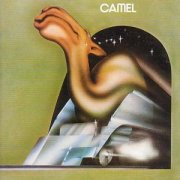
Camel were slightly late entrants to the progressive arena, not releasing their self-titled debut until 1973; Camel has a Canterbury-ish feel to it, albeit thankfully without the tedious whimsy and dull jazziness of many of the bands from the scene. Camel's strength was always their melodic invention, although they were still to refine it by this point in their career; their most noticeable weakness was in the vocal department, various members singing on different tracks, all sounding a bit dodgy. Camel's a good album, without being at all outstanding, mostly organ- and guitar-driven, with highlights including Mystic Queen and Separation, with the punning Six Ate being a live favourite. Keyboard man Pete Bardens, with a string of solo albums already to his credit, only plays 'Mellatron' (aargh!) on one track, the excellent Never Let Go and while the string chords are nice, the standout part on the track is some rippling flute arpeggios, proving that you can play a well set-up Mellotron fast, if you know what you're doing. And no, that's not Andy Latimer on his second instrument.
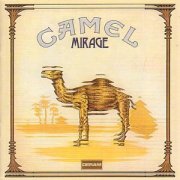
The following year's Mirage was better, with more consistent songwriting, particularly the album's two 'epics', Nimrodel and Lady Fantasy. Mellotron on both, with the proverbial string washes (sorry), although Bardens' use never approaches that of many of his contemporaries' for sheer invention. Andy Latimer's guitar comes into its own on this album, with some beautiful soaring lead work on several tracks, notably Lady Fantasy, while he's no slouch on the flute, either. Definitely worth hearing.
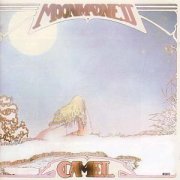
Camel are best-known for their third album, '75's (Music Inspired By) The Snow Goose (****½), an all-instrumental concept piece based on Paul Gallico's short story. Whimsical? Maybe, but the music is quite outstanding melodic prog and the instrumental format suited the band well, making it strange that they never repeated the experiment. Sadly, there's no Mellotron to be heard on the album, presumably because of their use of an unnamed orchestra, arranged by Mike Oldfield collaborator David Bedford. They followed it up with another 'regular' release, '76's gorgeous Moonmadness, melody still to the fore, especially on the rather wonderful Song Within A Song. Mellotron on only one track this time (I've no idea whether Camel owned their own machine, or just hired them in for studio sessions; to my knowledge they never used one live), Air Born, yet another intensely melodic piece, with a few choir chords at the end, but that's it for the album's Mellotron use.
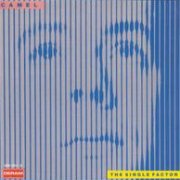
By 1982's The Single Factor, Camel were effectively a Latimer solo project, a status they've maintained to the present day; the album title alludes to this situation and although Bardens returns to guest on one track, this is most decidedly Latimer's show. There are guests a-plenty, including Anthony Phillips on guitar and keys, Duncan Mackay, David Paton (Alan Parsons etc.) and Francis Monkman (ex-Curved Air), although the album retains a stylistic homogeneity throughout. It has to be said that it isn't very good, although Sasquatch (Bardens' guest spot) and Manic on side two aren't so bad. Most of side one is horrible, pseudo-commercial dross, not even worthy of being released under the band's name, in my opinion; I can only assume the only reason it wasn't in actuality a Latimer solo record was the (admittedly declining) power of the Camel brand name. As far as the Mellotron's concerned, Latimer's credited with it on Manic, but alongside Ant Phillips' Polymoog and organ, it's as near to inaudible as you can get; I'm guessing that it's background strings you can (almost) hear, but it's rather hard to say. Avoid.
So, while never much of a 'Mellotron band', Camel's contribution to the progressive canon is noteworthy, without ever being likely to challenge the big boys. Their first four albums are all worth hearing, while albums five to eight all have their moments, as does Mellotron-free live archive release On the Road 1972 (****). Sadly, any vague hopes fans may have had for a reunion of the original lineup one day were dashed in early 2002 by news of Pete Bardens' death. Latimer's version of the band tour and record to this day, but keyboards these days are the usual digital dullness and despite some reasonably-acclaimed recent releases, Camel are most unlikely ever to produce anything even close to the quality of their early material again.
See: Harbour of Joy