




|
|
|
|
||
|
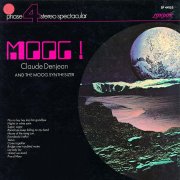 |
Moog! Claude Denjean & the Moog Synthesizer (1970, 40.38) **½/T½ |
|
| Na Na Hey Hey Kiss Him Goodbye Nights in White Satin Sugar, Sugar Raindrops Keep Falling on My Head House of the Rising Sun Everybody's Talkin' Venus Come Together |
Bridge Over Troubled Water Lay Lady Lay United We Stand Proud Mary |
|
Current availability:
Mellotron used:
It seems Claude Denjean was (and still is?) the French easy listening equivalent of, say, John Keating, although I may be barking up completely the wrong tree. 1970's Moog! Claude Denjean & the Moog Synthesizer is every bit as cheesy as you'd expect, for better or worse, Denjean tackling the hits of the day in a lounge Moog style, which will either delight or repel you. I fall into the latter camp, which may possibly indicate a lack of a sense of humour. Highlights? Hmmm. The anonymous band have a relatively decent go at Creedence's Proud Mary, but the bulk of the album is about as Habitat furnishings as it comes.
As well as his ubiquitous Moog modular, Denjean adds uncredited Mellotron to a handful of tracks, with occasional phased, background strings on Nights In White Satin, more orchestrally-inclined strings at the end of a cheesy version of the already very cheesy Raindrops Keep Falling On My Head, background strings on House Of The Rising Sun and a clunky brass melody on Come Together. Is it worth picking this up for its Mellotron use? Nope.
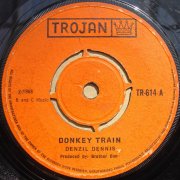 |
7" (1968) ***/T½ Donkey Train Down By the Riverside |
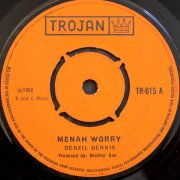 |
7" (1968) ***/TT½ Menah Worry Hush Don't You Cry |
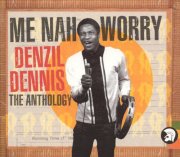 |
Me Nah Worry: The Anthology (2003, recorded 1963-86?, 150.50) ***/T½ |
|||
| Worried Over You I Wish You Well Hush Don't You Cry Will You Still Love Me Tomorrow Me Nah Worry Because of You Beggar in Love I've Got to Get a Message to You The Same Old Feeling So Much Love South of the Border I Had to Let it Out Honey Bee |
I've Got to Settle Down I Forgot to Be Your Lover Painful Situation Man With Ambition Nothing Has Changed My Way Train is Coming Women and Money I'm All Alone History of Africa Your Testimony Ups and Downs People Got to Be Free |
Cupid Hold Me Tight Someone Like You Zip a Dee Doo Dah Oh Carol (All You Have to Do is) Dream Where is My Little Girl Gone Mama We're All Crazy Now I'm in a Dancing Mood Having a Party Happy Days Come on in I Guess I Better Start Believing |
When Will You Ever Learn Rain is Going to Fall This Game Ain't Fair Down By the Riverside Sincerely Rome Wasn't Built in a Day Why Must I Cry Going Down to Canaan Donkey Train Long Long Road Cheerio Baby (Cherry Oh Baby) Civilisation Seven Nights in Rome |
|
Current availability:
Mellotron used:
Denzil Dennis (a.k.a. Alan Martin) came to the UK from Jamaica in 1963, beginning his recording career with the Seven Nights In Rome 7", although, at least according to Discogs, it was five years before he released another solo single, Donkey Train. By this time, he was involved with Dandy Livingstone's Brother Dan All Stars, so it's unsurprising that an unknown musician (T.J. Brown, perhaps?) plays choppy Mellotron sax on the 'A', complete with solo. He followed it immediately with Menah Worry (a.k.a. Me Nah Worry) b/w Hush Don't You Cry, clearly recorded at the same session, more rocksteady than reggae per se, with more Mellotron sax on the 'A' and 'orchestral replacement' strings on the flip.
2003 brought a two-disc retrospective of Dennis' work, including (as far as I can ascertain) not only the contents of a slew of singles, but various associated tracks, artists including The Classics and The Freedom Singers. I can't trace all of the set's contents, so, given that I don't believe Dennis ever released an album at the time, I suspect some of these tracks were either other artists' songs featuring Dennis, or unreleased sessions. The bulk of the lengthy set is fairly standard '60s/'70s reggae, with the odd curveball thrown in; more bizarre tracks include reggae takes on Disney's Zip A Dee Doo Dah and a 'has to be heard to be believed' version of Slade's Mama We're All Crazy Now (!), complete with off-key guitar fills. Aside from both sides of the Menah Worry single and Donkey Train, someone plays Mellotron strings on Cupid and Hold Me Tight, which sound like both sides of an obscure or unreleased single. Not a Mellotron essential, then, but of interest to fans of early reggae, with some unusual Mellotron sax into the bargain.
See: Dandy Livingstone
 |
Yvon Deschamps (1970, 50.43) ***/TTLe Petit JésusAimons-Nous La Honte Le Foetus |
Current availability:
Mellotron used:
Yvon Deschamps is a Québecois humorist, whose third album, titled either Yvon Deschamps or Le Petit Jésus - Le Foetus - La Honte, although the latter could well be a Discogs mis-reading, is largely spoken-word, in front of an audience. It's utterly impenetrable unless one speaks French and speaks it well; Deschamps wasn't making records for the non-Francophone audience, making the bulk of this album hard going for most of us. Vos Voisins are credited as his backing band, although their contributions sound overdubbed in the studio, as they fade in towards the end of twenty-two minute opener Le Petit Jésus, carrying on through Aimons-Nous and fading out a little way into side two's La Honte, only to reappear at the end of Le Foetus.
I presume it's Vos Voisins' Jacques Perron playing what I presume is Deschamps' own M300, used on their own album the following year, with what sounds like a strident brass/strings mix throughout the band's contributions listed above. Nicely full-on, but an awful lot of French-language humour to sit through to hear it. Deschamps used Vos Voisins on several other albums in the early '70s, but, having listened to a few, there's clearly no more Mellotron use.
See: Vos Voisins
 |
Twilight Time (2019, 42.42) ***/TTwilight TimeBusy Port Taboo Red River Valley Lullaby of the Leaves I Hear a New World Sleepwalk Town Without Pity |
Current availability:
Mellotron used:
Guitarist Nick Millevoi's avant-garde jazzers Desertion Trio's third album, covers set Twilight Time, gives its source material such a kicking that few of the songwriters (assuming they were still alive) would be able to recognise their own compositions. Is this a bad thing? Not, I suppose, if you like avant-garde jazz... Red River Valley (reworked in 1959 as the splendid Red River Rock by Johnny & the Hurricanes, of course) and closer Town Without Pity are easy to spot, assuming you either a) like or b) can ignore Kevin Shea's crazed drumming throughout, effectively soloing straight through most of the album's contents. Well, this is the avant-garde...
Ron Stabinsky plays piano, organ and Mellotron, with a clicky, reverbed flute part on their take on Joe Meek's I Hear A New World, possibly the piece here that responds best to the band's treatment. To be brutally honest, I struggled with this album; it does what it does with aplomb, but don't bother applying unless their idiosyncratic approach sounds like it might appeal.
 |
Wermland (2008, 38.46) ***½/T |
|
| Om du Möter Varg Kärlekens Alla Färjor Honky Tonk of Wermland Rymden i en Låda Generation Celebration Life/Universe Neonland Hus Vid Havet |
Partyland Camping Sista Tryckaren En Annan Typ av Disco Dygnet Runt 054 |
|
Current availability:
Mellotron used:
Detektivbyrån were a Gothenburg-based trio who specialised in the use of highly unusual 'rock' instrumentation, including accordion, glockenspiel and toy piano. Their sole album 'proper' (E18 Album was a compilation of singles), 2008's Wermland, is an enchanting, instrumental tour de force of fairyland melodies, like a musical box come to life, accentuated by the glockenspiel work on every track. Trying to pick out specifics is pointless; this is one of those albums that should be experienced as a whole. The overall effect is what matters here, not individual highlights.
Since no one member is credited with specific instruments, it could be any of Anders "Flanders" Molin, Martin "MacGyver" Molin or Jon Nils Emanuel Ekström who play the Mellotron flutes on Hus Vid Havet, but they enhance the track nicely. I didn't expect to like this after hearing the first few tracks, but by the end of the album, it had cast its spell on me, making me want to go back to track one and play it again. And how often does that happen, boys'n'girls?
 |
The Ideal Crash (1999, 55.56) ***½/TT |
||
| Put the Freaks Up Front Sister Dew One Advice, Space The Magic Hour The Ideal Crash Instant Street Magdalena Everybody's Weird |
Let's See Who Goes Down First Dream Sequence #1 |
||
Current availability:
Mellotron used:
I haven't heard dEUS' first two albums, but I believe they were a bit noisier than The Ideal Crash. It's a pretty laid-back record, with a sort-of modern/retro sound, although that doesn't make a lot of sense without hearing it, I'm afraid. It's song-based, but goes off at unusual tangents in places, making for a reasonably original whole. There's a slightly irritating reliance on 'beats', but I suppose that was late '90s contemporary, wasn't it? The band is only four-fifths Belgian (Antwerp, in fact), Scot Craig Ward being the odd man out, although I originally wondered if it might be Tom Barman, with his perfect English-language vocals.
Klaas Janzoons (presumably) plays Mellotron on four tracks, although Sister Dew only has a couple of notes at the beginning. One Advice, Space is more like it, with a cool string line running through much of the song, while Magdalena has some typical flutes and Let's See Who Goes Down First manages not only another string line, but some stabbed chords which may or may not be brass. So; not a bad album, not a bad Mellotron album, but not a classic in either sense.
 |
Glöm ditt Huvud (2003, 14.14) ***½/TGlöm ditt HuvudJag Kan Inte Slå er Nu Du Och Jag Stureplan Ny Kärlek |
 |
EP3 (2004?, 22.22) ***½/TTVad Gör vi HärDet Får Aldrig Ordna Sig Palats Varje Människa Gå Försiktigt Vad Som än Sker |
Current availability:
Mellotrons used:
Devi are another Swedish 'skewed pop' outfit that have gravitated to Änglagård drummer Mattias Olsson's Stockholm studio, there to use some of his arsenal of vintage gear. Much of Glöm Ditt Huvud (means something like 'forget your head'. 'Lose your head'?) utilises either a Vox or a Farfisa organ (still can't tell the difference...), giving the music an authentic mid-'60s feel, with other stuff coming in here and there, including some analogue synth 'whoops' and Mellotron oboes on Stureplan and Mellotron strings/cellos/Chamberlin vibes (via Mellotron) on Du Och Jag. I presume Mattias plays it himself, although drummer Sofia Johnsson is credited with 'synth', so I suppose it may be her.
Mattias sent me Devi's no doubt unofficially-named EP3 a year or so later, although, due to a lack anything as tedious as copyright dates and essentially no 'Net presence, I couldn't say for sure when it appeared. Is Glöm Ditt Huvud 'EP2' or '1'? I've really no idea. Anyway, it's pretty much more of the same, musically, nicely varied across its six tracks; I'm guessing that Mattias added the Mellotron, but that really is only supposition. Nothing until the nice string line on track 4, Varje Människa, making a change from the ubiquitous monosynth that's all over the first half of the EP. Gå Försiktigt has a great Mellotron brass melody opening the song and repeating throughout, finishing up with flutes on Vad Som än Sker. Anyway, another odd little weird pop thing straight outta Sweden. Worth a listen.
 |
Ptooff! (1968, 36.15) ***½/TOpeningI'm Coming Home Child of the Sky Charlie Nothing Man Garbage Bun Deviation Street |
Current availability:
Mellotron used:
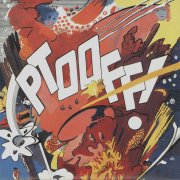
The (Social) Deviants were part of the late-'60s Ladbroke Grove scene in West London, led by the charismatic and multi-talented (it says here) Mick Farren; musician, journalist, lyricist, author and all-round mover'n'shaker. Ptooff!, with its comic/pop art-inspired sleeve, was his band's debut album, sounding years ahead of its time, with the proto-metal assault of I'm Coming Home, the theatrical performance art of Garbage and the lengthy Deviation Street, the latter including an early piece of satire on the whole 'psychedelic' movement. It's a little uncohesive, but paints a broad picture of a time and a place and is an invaluable document of the counterculture (London branch).
Mellotron (from Farren?) on just one track, with a beautiful (no, really) flute part on Child Of The Sky, a hippy hangover from the previous year; not enough to make it worth buying the album for it alone, but worth hearing if you're getting it anyway. These guys ate the brown acid; they clearly not only talked the talk, but walked the walk, or more likely staggered the stagger. When they split, a whole year after the release of their debut, the rest of the band went off to become free festival mainstays The Pink Fairies, making three rather variable albums in the early '70s before the inevitable round of splits and reformations, carrying on up to the present day. And Farren? Sadly, he died on 27th July 2013. Did well to nearly make seventy, frankly.
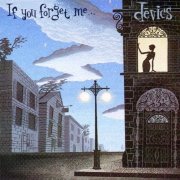 |
If You Forget Me... (1998, 56.18) ***/T |
|
| Prelude Blue Miss Sunday Three Birdback Form Afraid of Loving You Firehead Key |
Opus 7 Spooky Heaven Please Siren Song With the Voice of a Girl Who Still Hasn't Learned If You Forget Me... |
|
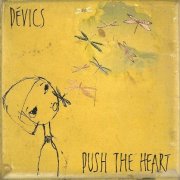 |
Push the Heart (2006, 43.33) ***/T |
|
| Lie to Me A Secret Message to You Salty Seas Song for a Sleeping Girl Distant Radio Just One Breath Moments If We Cannot See |
City Lights Come Up |
|
Current availability:
Chamberlin/Mellotron used:
On their second album, 1998's If You Forget Me..., Devics fit fairly easily into the 'slowcore' mould, drifting along in a late-nite fashion (excuse the cliché). Standout tracks include the rockabilly-influenced Three, Firehead, piano solo Opus 9, the creepy Siren Song and the closing title track, vinyl crackle and all. Dustin O'Halloran plays Chamberlin, with cellos and strings all over Three and cello on Form, adding to the overall spooky feel of the album.
Some years on, 2006's Push the Heart isn't dissimilar, Sara Lov's vocals conjuring up mildly desolate images, intermingled with the occasional actually quite sweet lyric, notably A Secret Message To You, with its unusual typewriter rhythm. As so often with this kind of stuff, a few tracks are great, but a whole album of it drags after a while, as even the faster tracks sound like they're wearing lead boots and your heart matches the tempo to the point where you fear for your long-term prospects. O'Halloran adds Mellotron to one track, with surprisingly genuine-sounding choirs on opener Lie To Me (maybe they're genuine?). Sadly, that's your lot, as it would have fit quite nicely elsewhere, but it was not to be.
See: Sara Lov
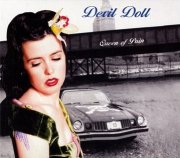 |
Queen of Pain (2003, 72.42) ***½/T |
|
| St. Christopher You Are the Best Thing and the Worst Thing Heart Sized Crush It Was Raining King of Brooklyn 16 Days Walk With Me Things You Make Me Do Faith in Love |
Bourbon in Your Eyes Driven to Distraction Liquor Store Queen of Pain You Put a Spell on Me Union Square Left Why If I Died in Your Arms |
|
Current availability:
Mellotron used:
LA-via-Cleveland-via-NYC's Devil Doll, a.k.a. Colleen Duffy, are, of course, nothing to do with Mr. Doctor's (long-defunct) ground-breaking Slovenian art-prog ensemble although, given that her career's kicked off in the Internet age, there's little excuse for using someone else's name. Yes, I know it's taken from either the 1936 or 1964 film. Anyway, Duffy started off as, of all things, America's premier female rockabilly/psychobilly DJ, before shifting into performance herself, although you have to listen pretty hard to hear the rockabilly influence on her music, probably best described as a rock'n'roll/swing/torch song cross, if that makes any sense at all.
Her debut album, 2003's Queen of Pain, is actually a pretty decent mixture of swing, Latin, the aforementioned torch and just a touch of rockabilly, one of its strongest suits being the lyrics. Try this for size...: "I will not open up my thighs/when you've got bourbon in your eyes". Genius, Colleen! If the album has a fault, it's that it's too long; this isn't the kind of music that works well in indigestible seventy-minute chunks; several tracks could probably have been lost without affecting the listener's enjoyment. Of course, without a major-label budget, singles are pretty much a no-no, so keeping lesser tracks as b-sides probably isn't an option.
Phil Parlapiano (Kim Hill, Alannah Myles, Victoria Williams) plays Mellotron, with an outrageously upfront flute part opening Faith In Love, plus drifting choirs later on, although, sadly, that's your lot. Your typical prog and/or psych fan probably isn't going to like this very much, but anyone with a sleazy side should give this a blast and make Colleen Duffy a star. Shame about the name-clash; your call, Mr. Doctor: return and reclaim your crown.
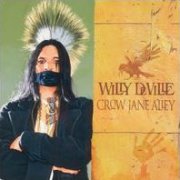 |
Crow Jane Alley (2004, 41.14) ***½/0 |
|
| Chieva Right There, Right Then Downside of Town My Forever Came Today Crow Jane Alley (for Jack) Muddy Waters Rose Out of the Mississippi Mud Come a Little Bit Closer Slave to Love |
(Don't Have a) Change of Heart Trouble Comin' Everyday in a World Gone Wrong |
|
Current availability:
Chamberlin used:
After a chaotic few years in his personal life and a live album, Acoustic Trio Live in Berlin, Willy "DeVille" Borsey released Crow Jane Alley in 2004, having tapped into his Native American heritage in the intervening years. Stylistically, the album isn't dissimilar to its predecessor, 1999's Horse of a Different Color, covering many bases to similar effect.
John Philip Shenale (Tori Amos, Curtis Stigers) plays Chamberlin, with nothing obviously audible on any of the three highlighted tracks above, although (probably incorrect) credits for 'Chemberlin piano' cloud the issue. I'm quite sure the piano's real, ditto the strings on My Forever Came Today, so it's anyone's guess where it might be. Willy DeVille: saviour of American song? On the evidence of this, you could make a good case for it. Not an awful lot of tape-replay work, but I'm amazed there's any, frankly. Tragically, DeVille died of pancreatic cancer in August 2009, probably a complication from decades of (long-kicked) heroin abuse. RIP, Willy.
See: Samples etc.
 |
The Operating Theater (2001, 44.25) ****/TT |
|
| Where They Belong The Human Heart The Kids Solomon Grundy Loathsome Idols Rumpelstiltskin Cadavers The Trial |
Flexible Flyer Sick Day Fruitless Labors First Day of School |
|
Current availability:
Mellotron used:
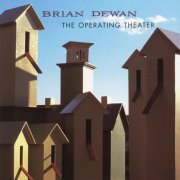
Brian Dewan has worked with They Might Be Giants and Blue Man Group, amongst others, so it comes as no great surprise to discover that his music has a fine-tuned eccentricity, not dissimilar to TMBG's. Played mostly on electric zither, autoharp and accordion, sometimes through distortion pedals (which has to be heard to be believed), Dewan's strange little songs bridge the gap between child- and adulthood, from excellent opener Where They Belong, through Rumpelstiltskin (a straight retelling of the fairy tale) and the frankly rather odd Cadavers through to Fruitless Labors. To be honest, there's not one of its twelve tracks you could easily omit and it isn't often you can say that.
Dewan (presumably) plays what sounds like genuine Mellotron on three tracks, with major string and flute parts on Where They Belong, a flute melody on The Kids and chordal flutes, strings and choirs on Cadavers, nicely upfront. If your tastes veer towards the mainstream, I would urge you to avoid Brian Dewan's music, but if a quirky, eccentric outlook and songs that sound like they could've been written by Dr. Seuss appeals to your sensibilities, Brian's your man.
 |
Orchards/Lupine (2011, 54.57) ****/TT½ |
|
| Diamonds Evil and the Midnight Sun Everything Everywhere Who Are You or the Magnificence of Loving a Million Strangers Love in C Minor Higher Than the Sun Pick Your Bones Out of the Water Seashell Woman |
Fever The Pistol Poison |
|
 |
IV (2012, 42.51) ****/TT |
|
| Voodoo Mademoiselle Six Holes and a Ghost Devil's Due Crumbling Heart The Only Thornless Rose Northbound |
A Mind Slip I Devil on a Wire II The Telephone III Black Hole Raga IV Sixth Dimension Blues V The Telephone pt. II VI Astral Awareness VII Vicious Times |
|
Current availability:
Mellotron used:
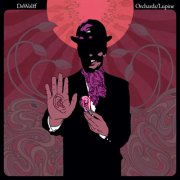
DeWolff are a Dutch psychedelic hard rock trio, making music in the grand late '60s/early '70s tradition, only with better production. 2011's mysteriously-titled Orchards/Lupine is their third album in as many years, full of rocking psych numbers like Evil And The Midnight Sun, fuzz-fest Love In C Minor and Pick Your Bones Out Of The Water sitting next to gentler fare such as Everything Everywhere, the beautiful Higher Than The Sun and the jamming The Pistol, although I'm not sure the laid-back Diamonds was the best opener available to them. Actually, this is so authentically retro I had to do a quick double-check to make sure it isn't on Rise Above. Pablo van de Poel and Robin Piso play Ruud Peeters' Mellotron (thanks, Ruud), with strings and cellos on opener Diamonds, strings on Who Are You Or The Magnificence Of Loving A Million Strangers, a major flute part on Higher Than The Sun and flutes and strings on closer Poison. Wow - I wasn't sure this was going to be worth the effort, especially after a weak opener, but Orchards/Lupine is exactly the kind of antidote I needed to the drivel to which I usually subject myself.
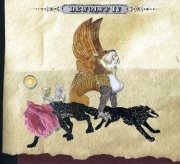
Another year, another DeWolff album... 2012's IV is another superb effort (can this band do no wrong?), highlights including ripping opener Voodoo Mademoiselle, the rocking Crumbling Heart and the 'side-long' A Mind Slip. Matthijs Herder (Black Atlantic, Oceana Company) supplied the Mellotron (and this info), played by Robin Piso again, with strings on The Only Thornless Rose, alongside the real ones (I think), strings on Part III of A Mind Slip, Black Hole Raga, an upfront flute part on Part IV, Sixth Dimension Blues and pitchbent strings and distant flutes on Part VI, Astral Awareness. Incidentally, the super-elongated string notes on Black Hole Raga are officially 'studio trickery', not, just for once, an indicator of sample use. Another top-notch effort, chaps.
 |
Visions in the Dark (1987, 56.17) **/TT |
|
| Passage Take Yourself Back Chained Human Untouchable Ghost/The Crazy Life of Mr Tale Fifteenth Century Fox Last Chance Flight |
Vision in the Dark The Overture The Solo The Voyage The Revelation The Psychasonic The Return in the Real |
|
Current availability:
Mellotron used:
Early contributors to the excellent (and now, sadly, defunct) Gibraltar Encyclopedia of Progressive Rock had this to say about Deyss:
| "The vocalist's grasp of English is horrendous" |
| "A very bad Marillion clone" |
| "Do you like progressive music without originality? You're gonna love this band!" |
| and |
| "Piece of crap" |
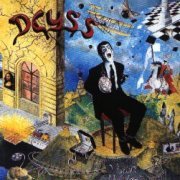
Although other writers were a little kinder. In fairness, some of these comments were referring to their debut, At-King, 'featuring' a different singer, although the originally-named 'Jester', who vocalises on Visions in the Dark is pretty ropey. I think you may've gathered by now that Deyss were no more than Marillion wannabees, operating at the dullest and most derivative end of the neo-prog spectrum, though they're not as bad as, say, the awful Multi-Story. All the clichés are there, from the MiniMoog arpeggios and 'funky' rhythm guitar of Untouchable Ghost to the parping pomp of Chained Human. Ironically, the album actually starts quite well, the instrumental Passage sounding slightly like an IQ outtake, although the temptation to stray into Pendragon territory obviously overcame them mere minutes into the record. The side-long title track starts almost-promisingly, but by part 2, The Solo, we've already degenerated into plagiarismland again, this time ripping Steve Howe's solo excursion on Yes' Sound Chaser from Relayer.
Surprisingly, keys man Giustino Salvati uses a Mellotron on most tracks, along with the ubiquitous polysynth patches so beloved of the neo- scene. He doesn't just use the choirs, either, with a decent enough string part on Passage, although in fairness, most of the featured parts are rather distant-sounding choirs, making me wonder whether they're actually Mellotron. I don't know what else Salvati had in his arsenal, but it seems unlikely that he had a decent sampler way back in '87, so I can only imagine the Mellotron was reverbed into oblivion by some half-witted engineer, resulting in this wishy-washy sound. About the only other highpoint of the band's sound was the guitarist and bassist's use of Taurus pedals, adding that unmistakable low-end rumble to several tracks.
So, what can I say? Typical neo-prog, limiting the album's potential audience to those into that particular prog niche, as it's unlikely to appeal to those of a more 'classic' bent. More Mellotron that you might expect, though really not worth a purchase on those grounds alone. Incidentally, the album was apparently originally issued as a three-sided double LP, side four left blank, making the CD version a rather better bet for those that may be interested. I believe the track order has been changed slightly, too; the one listed above is from the CD. Interestingly, in 2000, Musea released a CD entitled The Dragonfly From the Sun, consisting of a live recording from as early as 1979, of tracks written by the band throughout the '70s, so maybe it's marginally better. Maybe.
 |
Marginal Cirkus (1982, 42.37) **½/TT |
|
| Tankar Utan Ord In Kom Regn Ett Skepp Kommer Lastat Rätt Och Fel Loch Ness År av Lycka Det Tredje Ögat Vårbrytning |
Kyrksilver Annorlunda Vy |
|
Current availability:
Mellotron used:
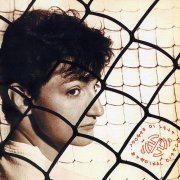
Sven Thomas "Di Leva" Magnusson is apparently now considered a 'new age spokesman' (the mind boggles), but, on his 1982 debut, was merely a 'local market' artist. Marginal Cirkus is a Swedish-language Duran Duran-style pop album of its era, all clattering percussion, slap bass and unnecessary synths, not to mention Di Leva's fashionably Bowie-esque tones, although the producer was clearly aiming for Japan. Fail. Any listenable tracks? The Eastern-flavoured Loch Ness and possibly closer Annorlunda Vy, but it's rather slim pickings, frankly.
Anna Wahlström and Johan Vävare variously play Mellotron, with a crazed, squawking flute line on opener Tankar Utan Ord, equally squawking strings on Rätt Och Fel, a non-squawking low string line on År Av Lycka and upfront strings on Det Tredje Ögat and Annorlunda Vy, although, despite a credit, there's nothing obvious on Loch Ness.
 |
Diagonal (2008, 46.36) ****/TTTTSemi Permeable Men-BrainChild of the Thunder-Cloud Deathwatch Cannon Misfire Pact |
Current availability:
Mellotron used:
I was contacted in early 2008 by a band from Brighton called Diagonal, wondering if I knew where they could hire a Mellotron. Well, since you asked... Bizarrely, it turns out that not only were they signed to Rise Above, as I was (briefly) with Litmus, but we'd actually shared a bill the previous year, but I hadn't seen them play. They play a kind of psych/prog thing, not dissimilar to a lot of bands around the turn of the '70s, throwing just about anything they like into the mix and rightly so. Every track's different to every other, so picking anything akin to a 'best' one is fairly futile; Deathwatch's jazzy feel is accentuated by their rare, late-model Rhodes (a MkV?), Cannon Misfire features some fairly bonkers bass work, while closer Pact sounds like the Soft Machine playing Pink Floyd. And your problem is...?
The album was recorded at Liam Watson's famed Toerag Studios, in Hackney, London, notorious for its hardcore 'analogue-only' policy; not just analogue, but no more than eight-track. And you're encouraged to use four. Toerag and my Mellotron: a perfect match. Ross Hossack plays it, with strings and flutes on opener Semi Permeable Men-Brain (ho ho), choirs on the (frankly) ridiculously-titled Child Of The Thunder-Cloud, sustaining longer than they should at the end. Reverb? There's a mere few seconds of strings on Deathwatch, although closer Pact finishes things off nicely with huge slabs of choir and strings, ethereal flutes wafting around at the piece's false conclusion, before it all kicks off again (assuming something this stately can be said to 'kick off' at all).
See: Samples etc.
 |
Serenade (1974, 32.25) **½/T½I've Been This Way BeforeRosemary's Wine Lady Magdelene The Last Picasso Longfellow Serenade Yes I Will Reggae Strut The Gift of Song |
 |
Love at the Greek (1977, 70.39) ***½/TTTT |
||
| Streetlife Kentucky Woman Sweet Caroline The Last Picasso Longfellow Serenade Beautiful Noise Lady Oh |
Stargazer If You Know What I Mean Surviving the Life Glory Road Song Sung Blue Holly Holy Brother Love's Traveling Salvation Show |
Jonathan Livingston Seagull: Be Dear Father Lonely Looking Sky Sanctus Skybird Be I've Been This Way Before |
|
 |
12 Songs (2005, 50.00) ***½/½ |
|
| Oh Mary Hell Yeah Captain of a Shipwreck Evermore Save Me a Saturday Night Delirious Love I'm on to You What's it Gonna Be |
Man of God Create Me Face Me We |
|
Current availability:
Mellotron/Chamberlin used:
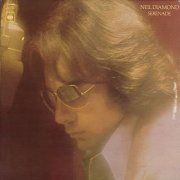
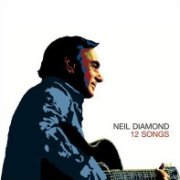
Neil Diamond? Mellotron? So it seems. 1974's Serenade is exactly what you'd expect of one of his albums: impeccable '70s grown-up pop songwriting and arrangements, making it pretty bloody unpalatable for anyone looking for a bit of... grit in their music. It doesn't have to be much, but a little would be nice. The album's at its least bland on The Last Picasso, but that isn't really saying much. Alan Lindgren or David Paich (it's not credited) play chordal Mellotron flutes on The Last Picasso and strings (distinct from the real ones elsewhere) on Reggae Strut, although the jury's out on the strings on Longfellow Serenade.
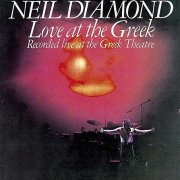
Love at the Greek has to be one of the most unlikely albums you'll find on this site; while you'll find reviews of all sorts of stuff from many different genres, singer-songwriter/MOR doesn't really fit amongst the prog and psych that make up the bulk of its content. For all that, it very much deserves to be here, as one of the most Mellotron-heavy LPs I've heard in a while. No, really! I'll be honest here and say that I'm not exactly wild about the music, but that isn't to say I'm going to slate the album (for a change); actually, I know several people who really rate Mr. Diamond, who you wouldn't expect to in a million years. Within his chosen oeuvre he's an absolute master, having fine-tuned his songwriting craft over many years of writing for other people (The Monkees spring to mind); it's effectively showbiz MOR, but done with such panache that I feel churlish even thinking about running it down.
As far as I can work out, Diamond played a run of gigs at the Greek Theater, LA in 1976/77 in front of large numbers of his adoring fans, then put out a double album to commemorate the event. Just to prove his cross-genre appeal, it was produced by The Band's Robbie Robertson, who did a good job by pushing the Mellotron to the front of the mix. So, why a Mellotron? Diamond's material is usually arranged for strings and these gigs appear to have been deliberately low-key, with a relatively small eight-piece band; there really wasn't anything else around at the time that could reproduce a string section quite as well, so there's no attempt to use it as an instrument in its own right, just as an, er, emulator. It's actually Bill Eberline's (US Mellotron distributors Sound Sales' boss) twin-manual Mark V, although despite the plethora of pictures on the inner sleeves, there's nothing close-up enough to identify any keyboard other than the B3 set high up at the back of the stage. There are several keyboards to be heard, including a grand piano, a Rhodes and an unidentified monosynth (on Jonathan Livingston Seagull), keyboard players Alan Lindgren and Tom Hensley seeming to switch between all of them, so I've no idea who plays what at which time.
Anyway; the music: As I've said, it's principally middle-aged middle-of-the-road, sung by a man who still only appears to be in his thirties, but his and his band's professionalism are impossible to knock; arranged to perfection, played brilliantly and obviously loved by all present. The only track I find really hard to take is Sung Song Blue, which tips right over the edge into full-blown schmaltz, complete with guest vocals from Helen Reddy and Henry Winkler (The Fonz, for those of you too young to remember). Most of the Mellotron work is, as I've said, emulating string parts, so there's much single-note work and few block chords. We get flutes on The Last Picasso, echoing the studio version (above), but that's the only deviation until side four. Jonathan Livingston Seagull is the album's oddity; fifteen minutes, cut down from the original album-length piece, the only place the synth (probably a Moog) and the Mellotron choirs can be heard. As a concept, it's never going to hold up against The Lamb Lies Down on Broadway or The Wall, but then, it isn't trying to. It's a feel-good, pseudo-religious death-and-resurrection piece and seems to work well enough within those constraints. As with most of the other material on offer, it's loaded with Mellotron strings, which definitely enhance the piece, not to mention the occasional flute part. The choirs are also used here and there, along with the strings in Sanctus, which pretty much proves that a Mark V's being used.
Fast-forward nearly twenty years... Enfant terrible Rick Rubin takes charge of what turn out to be the last few years of Johnny Cash's career, helping him produce some of his most acclaimed work. Despite overseeing two posthumous sets, Cash's death must have left something of a hole in Rubin's life, so for his next 'musical rehabilitation' project, he approached Neil Diamond. In all honesty, the end result hasn't set the world on fire the same way Cash's American Recordings did, but 12 Songs is probably the most satisfying album Diamond's ever made for those with an aversion to schmaltz. Comparisons with Cash's albums are unavoidable - at one point, he even sings, "He walked the line" - but, a couple of tracks notwithstanding, this is a singer-songwriter album, not a country one. The most important thing about the album, though, is that it contains no bad songs. Nope, not one awful schmaltzy piece of pap, no cringeworthy horrors of the Song Sung Blue variety, just heartfelt songs about the standard subjects of life'n'love, sung by someone who can now be seen as one of music's (if not rock's) elder statesmen. The ubiquitous Patrick Warren is credited with Chamberlin, but with all the string arrangements on the album, it's pretty hard to discern what may or may not be his contributions. Working on the basis that all the strings are real, Save Me A Saturday Night has a muted woodwind line (bassoon?) that's probably tape-generated, while I'm On To You's cellos simply don't sound 'real', although it's perfectly possible that neither of these are correct and it's actually somewhere else entirely, which accounts for the album's low T rating. To be honest, unlike Cash's last few albums, I can't see myself returning to this on anything like a regular basis, but it's still a late-period triumph for someone who's spent so much of his career in the middle of the road, he isn't even aware of the gutter any more.
 |
Diamonds in the Rough (2006, 49.49) ***½/T |
|
| C'mon in Spiders Diamonds in the Rough Heavy Weather Fools Paradise Miss Elusive Summer Song Make You Mine |
The Delivery Into the Void All I Want is You Trickster The Barbeque Wendigo Let it Go |
|
Current availability:
Mellotron used:
Despite occasionally forays into near-indie territory, Soundtrack of Our Lives side-project Diamonds in the Rough, led by guitarist Ian Person, are, by and large, a powerpop outfit. I know of two widely-spaced releases, the first, Diamonds in the Rough itself, is at its best on Spiders, Heavy Weather, The Delivery's flamenco moves and The Barbecue, maybe, although I can't imagine what you'd leave off if held at gunpoint.
Martin Hederos (another Soundtrack of Our Lives member) plays what I think are genuine Mellotron strings on Heavy Weather and All I Want Is You; nice to hear, but inessential. D'you know, I think I prefer this to any of the several SoOL albums I've heard. Well worth hearing.