




|
|
|
|
||
|
|
End of Fashion Endezzma Jon English The Enid |
Brian Eno Enuff Z'Nuff Eon Epidaurus |
Epitaph Equipe 84 Mikel Erentxun Roky Erickson with Okkervil River |
Eroc Ertlif Alejandro Escovedo Eskobar |
 |
Rough Diamonds (2004, 16.07) ***½/TTRough DiamondsAnything Goes Be Like That She's Love |
Current availability:
Mellotron used:
End of Fashion sit, going by 2004's Rough Diamonds EP, somewhere between indie and alt.rock, assuming there's more than a fag paper between the two genres anyway (don't worry, old Brit expression). Its material's strong enough that almost anything here could've been the lead-off track; I actually prefer both Anything Goes and Be Like That to Rough Diamonds itself, but, y'know, one man's opinion...
Jim Moginie (Midnight Oil, of course) produces and plays his own Mellotron, with background pitchbent strings on Rough Diamonds and high-end flutes on Be Like That, with another pitchbend for good luck. Nothing groundbreaking, then, but eminently listenable.
See: Jim Moginie
 |
Alone (2007, 16.25) **½/½MeAlone Antilevitation Love Me Morbid |
Current availability:
Mellotron used:
Endezzma are yet another entrant into the 'Scandinavian extreme metal' stakes, as if any more were needed. The Alone EP is their debut release, consisting of the usual growled vocals, sludgy riffs and overlong material... Maybe it's just that I don't understand this stuff at all; on the heavier front, '70s hard rock's my bag and this genre-fixated approach simply bores me. Sorry. It's all very silly, anyway, unless you're a True Metal Believer, in which case it's deadly serious. I found a (deliberately) piss-funny 'how to be a tr00 kvlt black metaler' list on someone's blog recently, including helpful advice along the lines of 'be grim' and 'be necro'. In fairness, the list is right royally taking the piss, but even the concept...
Ahem... Lars Fredrik Frøislie (Wobbler/White Willow) plays piano, Moog and Mellotron, although I have to say, it's difficult spotting what the Mellotron might be doing. There are background... somethings on Antilevitation and Love Me Morbid which have to be it, as nothing else credited could make those sounds, but I've no idea what tapes he might be using. As a result, it's a low score on the Mellotronometer, until/unless I get more info. You probably don't want to hear this anyway, unless you're a mad metalhead who has to have everything in the genre. Some task...
England (UK) see: |
 |
 |
It's All a Game (1974, 45.12) ***/T |
|
| Turn the Page Just the Way I am He Could Have Been a Dancer Love Goes on By Firelight Space Shanty Snakeyes Chained to the Middle |
Superstar (You Promised Me) Hail All Hail to the Revolution (12 Bore) |
|
Current availability:
Mellotron used:
Jon English (1949-2016) juggled careers in acting (stage and screen) and music during the '70s, releasing several successful albums, including this presumably semi-concept effort, It's All a Game. It contains a cover of Bob Seger's classic Turn The Page (greatest 'road song' ever?) and seems to basically be about the trials and tribulations of playing in a band (maaan...), not to mention the rear sleeve pic of English as a marionette and the board game on the inside of the gatefold, an idea also used by Triumph a couple of years later. It also has to be said that his countrymen AC/DC's It's A Long Way To The Top (If You Wanna Rock'n'Roll) did it far better in one song... It's not actually a bad album, though English's theatrical background comes lurching through at inopportune moments, not least on closer Hail All Hail To The Revolution (12 Bore) and the frankly bizarre Irish pub singalong interstellar epic (!), Space Shanty.
Mellotron on two tracks, from Michael Carlos, who also played on Chalice's Overflow: strings on He Could Have Been A Dancer and Snakeyes, although neither performance is exactly groundbreaking, to be honest. Interestingly, three-quarters of Sebastian Hardie are also present (how incestuous is all this? OK, it seems he was an early member), though not keyboard player Toivo Pilt (who also played on the Chalice album...), thanked on the rear sleeve as 'Sebastian Hardy'.
See: Sebastian Hardie | Against the Wind
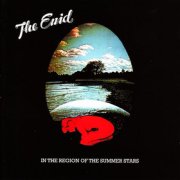 |
In the Region of the Summer Stars (1976, 39.29) *****/TThe Fool...The Falling TowerDeath, the Reaper The Lovers The Devil The Sun The Last Judgement In the Region of the Summer Stars |
Current availability:
Mellotron used:
The Enid formed in 1974, the brainchild of Robert John Godfrey, who had previously worked with Barclay James Harvest as orchestral arranger. He claims that he presented his idea for an album based on the Tarot to Charisma, with whom he had just released a solo album, Fall of Hyperion, only to have it stolen from under his nose by Steve Hackett for his Voyage of the Acolyte opus. Undeterred, Godfrey began developing his own material anyway, demoing it with his fledgling lineup in 1975. These demos became available, briefly, on the vinyl-only The Alternative Enid, Vol. 1 in the mid-'90s.
The band eventually secured a deal with the independent Buk Records and released In the Region of the Summer Stars in '76. The album is an absolute tour de force; classical and rock influences thrown into the melting pot, creating a completely unique sound unlike that of any other progressive outfit of the era. Godfrey's years at music school were put to good use and the arrangements, for keys and two guitars, are top-notch. Anyone who's heard Hyperion will spot a steal from that album's opening track in The Sun, a trick Godfrey was to re-use many times throughout the band's career. Basically, I can't recommend this album highly enough; there's not a duff moment on it, although I know Robert dislikes some of the synth sounds. The band were signed by EMI soon after, who re-released the album, although this version is no more common than the Buk issue.
They used a borrowed Mellotron on the last two linked pieces; The Last Judgement is based on Gregorian mega-hit Dies Irie, which I've never heard put to more effective use, despite the number of times it's been used over the years. The Mellotron use is restricted to some choirs in the background on both Judgement and the title track, so In the Region is far from being a Mellotron Classic, which explains its low 'T' rating, but the album itself is an absolute stormer. Now, a warning: after much legal wrangling with ex-record companies, Robert apparently retrieved various master tapes in the early '80s, only to lose some of them in a fire. Allegedly. The Enid re-recorded In the Region in 1984, but the guts of the original were lost; it's a pale imitation of the original LP, although the material still holds up. This version has a completely different sleeve, so it's the one pictured above that you want. STOP PRESS: As of 2010, the never-actually-lost masters have been provided by EMI and the original album (plus the original version of its follow-up, Aerie Faerie Nonsense) are finally, properly, legally available on CD. Hurrah!
See: Robert John Godfrey
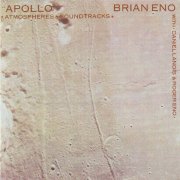 |
Apollo: Atmospheres & Soundtracks (1983, 49.14) ***/½ | |
| Under Stars The Secret Place Matta Signals An Ending (Ascent) Under Stars II Drift Silver Morning |
Deep Blue Day Weightless Always Stars |
|
Current availability:
Mellotron used:
Brian Peter George St. John (pronounced 'Sinjun') le Baptiste de la Salle Eno has been accused of Mellotron usage before, principally on the first two Roxy Music albums, although it eventually turned out to be Bryan Ferry after all. 1978's Music for Films also attracted rumours, also unfounded, but credits have been sighted for 1983's Apollo: Atmospheres & Soundtracks, a collaborative work with his brother Roger and Daniel Lanois, whose production career was just taking off at the time. It's the soundtrack album to For All Mankind, Al Reinert's documentary about the Apollo missions, although the film took another six years to appear, with a partially different soundtrack.
While much of the album's material is 'classic' ambient Eno, a few tracks towards the end feature more of Lanois' input, his pedal steel work helping to invent a one-off genre; space country, maybe? Eno (for once using his Christian name) and Lanois are both credited with Mellotron (doubtless the red-painted M400 at Lanois' Québec studio), but the only place on the album where it even might be audible is on Deep Blue Day, with some suitably ethereal choirs, unsurprisingly well down in the mix.
See: Roxy Music
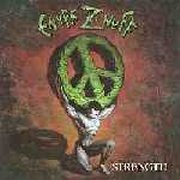 |
Strength (1991, 59.49) ***½/T½ | |
| Heaven or Hell Missing You Strength In Crowd Holly Wood Ya The World is a Gutter Goodbye Long Way to Go |
Mother's Eyes Baby Loves You Blue Island The Way Home/Coming Home Something for Free Time to Let You Go |
|
Current availability:
Mellotron used:
Jim Rigberg's an Enuff Z'Nuff fan and has sent me a far better review than I'd ever manage. Cheers, Jim!
Maybe if they hadn't looked like Poison, Enuff Z'Nuff would today still have some measure of fame. There was a level of melodic sophistication immediately evident in the band's first single, New Thing, that clearly was far beyond anything the late '80s bandanna-bedecked/Sunset Strip crowd was capable of conjuring up. These guys could write strong power pop tunes; unfortunately, their record label did not think that strong pop tunes were enough to sell records. As a result, Enuff Z'Nuff ended up looking like cheap whores complete with moronic band member names, e.g. bass player "Chip Z'Nuff" (Christ) and original drummer "Vikki" Fox. True - the marketing strategy initially didn't hurt - the band's self-titled debut (**½), on the strength of the heavy MTV-rotation videos for New Thing and follow-up single Fly High Michelle sold very well. Hell, Rolling Stone Magazine proclaimed Enuff Z'Nuff the best new band of 1989. Of course, when Nirvana hit, Enuff Z'Nuff - which, courtesy of the marketing strategy, got lumped in with the bands grunge had set out to kill - was relegated immediately to, at best, cult status. Unfortunately, to milk the nostalgia market, Enuff Z'Nuff has never been willing to shed entirely the faux-metal trappings their original label saddled on them (the bass player still goes by Chip Z'Nuff) which probably turns off many would-be listeners.
Strength was the band's second release. Many of the songs have the same 'metal-lite' production sheen that plagued the tunes on Enuff Z'Nuff - for example, guitarist Derek Frigo's unrelenting reliance on harmonic squeals and his vibrato bar. However, many of the songs (Holly Would Ya, Blue Island) feature gorgeous melodies that no amount of overproduction could squelch. Well, at least not squelch completely. The title track includes pulsing quarter-note Mellotron flutes during the verses enhancing an outstanding Beatles-esque track. There are some more Mellotron flutes in the all-too-short ballady first half of The Way Home - the second half of which gives way to a fairly decent period-piece pop-metal song. That's it on the Mellotron front.
If you like great power pop and/or melodic hard rock à la Cheap Trick, you should ignore the way these guys looked and check them out. I would recommend, however, that you begin with Enuff Z'Nuff's best work - 2000's Paraphernalia (****), then Strength (for the tunes, not the Mellotron) and then whatever else you can track down.
| Jim Rigberg |
 |
Eon (1975, 39.38) **/TLoveNo Love is Greater Than Our Love We've Got All the Time in the World You Put the Sunshine of Your Love in My Soul Children of the Night We'll Go on The Star That Never Got to Shine Sing a Happy Song |
Current availability:
Mellotron used:
Eon were a soul/funk act who would count for absolutely bugger-all on this site were it not for two things: 1) they used a Mellotron (obviously) and 2) two of the musicians involved, Larry Fast and Brian Cuomo (presumably brother of Fireballet's Jim), both played on the Intergalactic Touring Band album of a couple of years later. Their first album (of two), 1975's Eon, is a thoroughly average set of soul tunes, mostly overlong for their fairly minimal content; this may have picked up a few sales at the time, but with a few decades' hindsight, it's quite spectacularly ordinary.
Jimmy Cathcart plays Mellotron, with strings and flutes all over opener Love, although, strangely, the rest of the album's strings are real. So; despite one surprisingly Mellotron-heavy track, I can't really recommend this to anyone not already a fan of the genre.
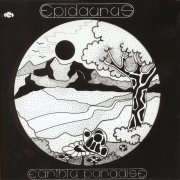 |
Earthly Paradise (1977, 32.28) ****½/TTTT½Actions and ReactionsSilas Marner Wings of the Dove Andas Mitternachtstraum |
Current availability:
Mellotron used:
What a monster... Epidaurus' lone release (until a dodgy '90s reformation, anyway), Earthly Paradise, is one of those albums which sticks like glue after a few listens, a classic of lush, symphonic prog, mostly instrumental, with a little female English-language vocal on a couple of tracks. Its only real shortcoming is its length; under thirty-three minutes barely constitutes an album unless you're The Ramones, at least 'round these parts.
Both keyboard players, Günther Henne and Gerd Linke, play Hammond, Mellotron and Moog amongst other 'boards, creating a huge wall of sound. The Mellotron use on this album is superb - great slabs of strings and choir all over the shop, both players having a keen sense of how best to use it. Since those excellent Garden of Delights folks have made this available again, so do you need any more encouragement?
See: Choice
 |
Epitaph (1971, 36.40/57.07) ***/T |
|
| Moving to the Country Visions Hopelessly Little Maggie Early Morning [CD adds: London Town Girl Visions (single version) |
I'm Trying Changing World] |
|
 |
Stop, Look & Listen (1973, 35.46) ***/0CrossroadsNightingale Uptight Fly Stop, Look and Listen |
Current availability:
Mellotrons used:
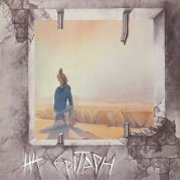
Epitaph were one of those early-'70s German hard rock acts who often get lumped in with the prog bands of the day (see: Birthcontrol, Jane), whilst not actually being anything of the sort. Like many of their European contemporaries (Norway's Titanic and Germans Message and Lucifer's Friend spring to mind), Epitaph recruited an English-speaking singer, Cliff Jackson in this case, giving them a far more acceptable sound to British/American ears. Well, in theory, anyway; the actuality was that while those bands did well in their native markets, none really broke out properly into the international arena. I can't imagine how galling it must have been to see the all-German Scorpions break worldwide by the end of the decade...
Anyway, Epitaph is a perfectly competent album, very much of its time, which translates as 'rather dated'. Opener Moving To The Country is a good, upbeat boogie sort of thing, but the rest of the album shifts into mid-paced territory, with a few too many country-rock influences for its own good (Little Maggie is a particular offender in this area). Lengthy closer Early Morning has a nice jamming feel to it, but ultimately fails to excite, to be honest. There's only one track here containing the mighty Mellotron; Visions, the album's ballad, is swamped with lush strings played by bassist Bernd Kolbe; a nice example of the genre without being particularly outstanding. The CD reissue has several bonus tracks, including a single edit of the track used as a b-side, which doesn't really enhance the album overall, but it's nice that Repertoire saw fit to include all the band's output from the period.
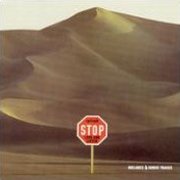
They followed up with Stop, Look & Listen which, again, finishes on its highlight, the lengthy, jamming title track (is there a pattern forming here?). I can find very little to say about the rest of the record; it's so very much of its time that it should probably be sealed in one of those time capsules that were so popular a decade or two back. Preferably every copy. Kolbe is once again credited with Mellotron, but it's absolutely and completely inaudible, so who knows what that's all about? The only other thing I've heard by the band is 1974's Outside the Law (***), which gained a wider release with a US version on the independent Billingsgate label (named after a London fish market, bizarrely), but by that time they'd moved completely into fully 'competent hard rock without doing anything even slightly exciting with it' territory.
 |
ID (1970, 41.45) ***/TTTT |
|
| ID Buon Giorno Amico Mio La Notte di Verità Giochi D'Amore Padre e Figlio Jo Un Brutto Sogno La Notte di San Luigi |
Il Re dei Re Fine |
|
Current availability:
Mellotron used:
Equipe 84 were one of Italy's top beat groups of the late '60s, after the style had gone out of fashion in Britain and America. 1970's ID was their fourth album, bridging the divide between their beat past and the progressive future, although it's more a late-period beat album than anything else, despite the psych guitar work on La Notte Di San Luigi and the occasional progressive touch.
Mario Totaro plays keys, including swathes of (probably MkII) Mellotron, with roiling, atonal strings on the heavy psychfest opening title track and more regular string parts on every other highlighted track, plus brass on Buon Giorno Amico Mio, flutes on Padre E Figlio and string pitchbends on Il Re Dei Re. This really isn't a prog album, despite the occasional psych or prog flourish, but if you're after heavy Mellotron use at any cost, go for it.
 |
Acróbatas (1998, 54.06) **½/T½ |
|
| A Pleno Sol Cádiz ¿Quién Se Acuerda de Tí? Selena Todo es Igual Siempre (Everyday is Like Sunday) En el Trampolín Puedo Dormir de un Tirón Más de una Vida Interludio |
De Par en Par Carrusel En Mis Brazos Lo Peor de Mí Tu Nombre en los Labios Acróbatas |
|
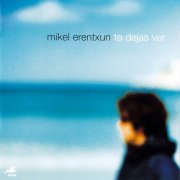 |
Te Dejas Ver (2000, 45.15) **½/T |
|
| Rara Vez En Qué Mujer California La Orilla de Carla Por No Decirte Adiós A Flor de Piel Fácil Próxima Estación |
En Silencio Contracorriente El Invernio es Mujer Que Nadie Me Detenga |
|
Current availability:
Mellotrons used:
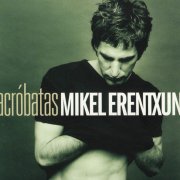
Going by these two albums, Mikel Erentxun makes mainstream pop/rock for the Spanish market, sounding exactly like pop/rock anywhere, only sung in Spanish. Acróbatas is his third album and is deeply uninspiring on all fronts, despite (or more likely because of) its total professionalism and impeccably-written material. The album has a reasonable amount of energy, but... This is music for people who just want something nice wafting along in the background to which they can sing along if they're in the mood. Pop music, that'll be it. Of course, he has to confuse the issue by writing (does he write?) a song like Tu Nombre En Los Labios, which has a main riff copped straight from Alice Cooper's Be My Lover. OK, it's a pretty straightforward chord sequence, but the timing's identical. It doesn't save the album in any way, but Joserra Senperena and Dave Anderson (not that one) play Mellotron on a handful of tracks, with a nice, upfront string parts on opener A Pleno Sol and Puedo Dormir De Un Tirón Más De Una Vida, with an inconsequential part on En Mis Brazos.
Two years on and Te Dejas Ver is, effectively, more of the same, with a faux-'rootsy' feel to the proceedings that does nothing to fool the seasoned audient, who can spot the fakery a mile off. You're using a real Hammond? Whoopee-do. Senperena alone on Mellotron this time round, with the only audible evidence being a solo flute intro on A Flor De Piel with a 'typical' part later in the song, barely scraping a whole T. Generally speaking, Mikel Erentxun is a mainstream pop artist who probably appeals to the 'older listener', a.k.a. the Spanish Eric Clapton fan. Believe me, you really don't need to hear these albums, although they're fairly benign as this kind of stuff goes. More Mellotron on the former than the latter, but neither's exactly a classic on that front.
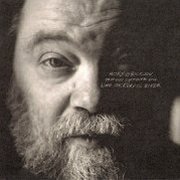 |
True Love Cast Out All Evil (2010, 44.28) ***½/TT |
|
| Devotional Number One Ain't Blues Too Sad Good Bye Sweet Dreams Be and Bring Me Home Bring Back the Past Please, Judge John Lawman True Love Cast Out All Evil |
Forever Think of As One Birds'd Crash God is Everywhere |
|
Current availability:
Mellotron used:
I've often wondered (as you do) why Roky Erickson (1947-2019) spelled his name that way; turns out his real first names were Roger Kynard. Roky was, of course, the legendary ex-13th Floor Elevators frontman and heroic ingestor of pharmaceuticals, both of which led to multiple incarcerations and decades of mental health problems, all of which made his late-career rehabilitation all the more astounding. Kudos to whoever took the inspired decision to pair Roky with Americana gods Okkervil River for 2010's True Love Cast Out All Evil, Erickson's first new album in fourteen years. Highlights include the transcendent Good Bye Sweet Dreams and beyond-fragile closer God Is Everywhere, but I can't say I hear a single unnecessary track here, making this a fine way for a healthier-than-he's-been-since-his-teens Roky Erickson to return.
Okkervil's Will Sheff plays Mellotron, with background string parts on Devotional Number One, Be And Bring Me Home, Please, Judge, Forever and Think Of As One, other string parts presumably being real. I'm not entirely convinced the Mellotron parts add anything much to the album (unusually), but it's always nice to hear, even if it does little more than warble along in the background. I can heartily recommend this album to anyone who's followed Roky's fractured career path over the years, or merely anyone who likes the sound of spooky, wind-blasted psychedelic Americana, despite its low Mellotronic levels.
See: Okkervil River
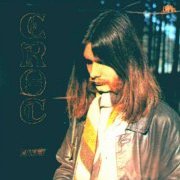 |
Zwei (1976, 48.44) ***/½ |
|
| Nebelwelt Ein Unhöflicher Anfang Aktuelles Vorwort Der Traum vom Wald Lied von der Brücke Toni Geht Nach Boelerheide Geleerte Worte Bemep-Mope Kleine Freude |
Prof. Erwin Senkellfuss Sonnenfluch Herr von Schwabulahn Das Irrsinnslied Eine Erkenntnis Ich Bin Ein Lachen Sternenwelke Ein Höflicher Abgang |
|
Current availability:
Mellotron used:
All students of German '70s prog will, of course, know Joachim "Eroc" Ehrig as Grobschnitt's drummer/resident loon; well, chief loon, anyway. On top of adding his unique brand of insane humour to most of his band's albums, he also saw fit to stick out several solo projects from the mid-'70s onwards, conveniently sequentially numbered (well, you never know...). For those of you with even less German than me, this is the second and is basically an excuse to arse around superbly at Brain's expense while foisting the results on a (presumably) unsuspecting public.
The albums shifts from the drifting, kosmiche Nebelwelt through the mad synths of Ein Unhöflicher Anfang to the accordion of the lengthy Der Traum Vom Wald and that's just in the first few tracks. Diversity's good, but Zwei veers from one style to another with lunatic abandon, with many of the shorter tracks being German-language sketches, probably extremely funny at the time. Ultimately, this rather overlong album probably has too much going on in it for its own good, though there are several worthwhile moments, not least the closing instrumental (upright) piano piece Ein Höflicher Abgang. I was pretty sure there wasn't a note of Mellotron to be heard here, until yet another play revealed a flute melody in the aforementioned Der Traum Vom Wald; it's possible that various sound effects and odd noises could be the Great White Beast too. Hard to tell.
See: Grobschnitt
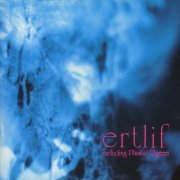 |
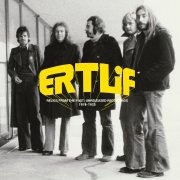
Ertlif (1972, 40.38/47.52) **½/TT½Plastic Queen [added to CD]Try Making it Easy Train of Time You're Nothing at All There is Only Time to Die The Song High and Dry Walpurgis Classical Woman |
 |
Relics From the Past: Unreleased Recordings 1974-1975 (2017, 43.03) ***/TTTFigments of My MindCamargue Distorted Dreams Edgar Flee |
Current availability:
Mellotrons used:
Well, I gave Ertlif a good shot; seemingly the first Swiss progressive LP, it has a very formative sound, with a British blues singer who sounds rather out of place on the material. It's by no means bad, it just isn't that good either; the songs are OK, but nothing really grabs you and screams "Play me again!". There's some reasonable Mellotron from James Mosberger, but nothing startling; rather like the rest of the album, really. Plastic Queen was recorded a year later with a slightly different lineup and some distant Mellotron brass. The best thing about the CD reissue is the picture in the booklet of the band members twenty years apart, in the same pose; nice idea. Have they aged well? Er, not really, no. I really wouldn't bother with the album, unless early blues-based prog is your thing. Nothing special, I'm afraid.
In 2017, a vinyl-length archive collection appeared (presumably emptying the vaults), the self-explanatory Relics From the Past: Unreleased Recordings 1974-1975. Sad to say, it's no more interesting than their album of a couple of years earlier, consisting mainly of jammed-out psych stuff, only nowhere near as good as the market leaders, not to mention terribly dated for the mid-'70s. Better moments? Camargue has something of the better end of The Moody Blues about it, the raucous Distorted Dreams injects a little energy into the proceedings and the side-long Edgar Flee has its moments, but Ertlif were clearly never destined to go down as one of the greats. More Mosberger Mellotron, with occasional chordal strings on Figments Of My Mind, more of the same on Camargue and mad brass and less mad strings on Edgar Flee, with some crazed pitchbends at its conclusion.
 |
A Man Under the Influence (2001, 50.07) ***½/½ |
|
| Wave Rosalie Rhapsody Across the River Castanets Don't Need You Follow You Down Wedding Day |
Velvet Guitar As I Fall About This Love |
|
Current availability:
Chamberlin used:
Rather unexpectedly, Alejandro Escovedo isn't a Latin artist, but an Americana one, these days at least. He was a member of semi-legendary original-era San Franciscan punks The Nuns (they supported the Pistols at their last gig), also brother to Santana's Coke and Pete Escovedo and uncle to Prince collaborator Sheila E, making him generally well-connected, I'd say. He switched across to Americana after moving to Texas in the '80s, 2001's A Man Under the Influence being his sixth studio solo album, highlights including the lively Castanets, the mournful Follow You Down and the beautiful Wedding Day.
Mike Daly's credited with Fidelitorium Studios' Chamberlin strings on opener Wave, a pitchbent (?) string part enhancing the song and vibes (presumably; they're otherwise uncredited) on As I Fall.
 |
There's Only Now (2002, 40.43) *½/½ | |
| Move on Why London? On the Ground Into Space Tell Me I'm Wrong Worship You Save the Day Something is Lost |
Skyscraper Someone New Snowman |
|
Current availability:
Mellotron used:
Going by the evidence given by their Wikipedia entry, Eskobar would appear to be opportunists of the very worst kind. When they formed, grunge was popular. What did they play? As the scene (presumably even in Sweden) turned towards Britpop, guess where Eskobar (then The Bugs) went? Not to mention their multiple name changes, while being shuffled from one major to another, even one doubtless chosen to blow with the wind, probably from their collective anuses. Have you gathered by now that I don't like Eskobar very much? Going by their second, album, 2002's There's Only Now, they play the blandest, most horrible form of indie-pop going, with about as much integrity as, well, Coldplay, I suppose. Its only saving grace is that it comes in at 'vinyl length', thus only wasting forty minutes of my life, rather than the hour-plus to which I could've been subjected.
Andreas Dahlback is credited with Mellotron on the band's collaboration with the tedious Heather Nova, Someone New, with a few string chords repeated throughout the song, largely in the background, which is probably par for the course. The big surprise, though, is seeing the name of the album's co-producer: Simon Nordberg. It might be someone else, but does that name ring any bells for you? Landberk? It might explain the retro keyboards on several tracks, not least the Mellotron... Not that it gives this appalling album any more caché with me, though; I mean, just listen to the horrible, tuneless harmonica on closer Snowman. Is that deliberate? And if so, why? And if not, why even more? Absolute, total shite.