




|
|
|
|
||
|
|
Five Fifteen Flame Dream Flamen Dialis |
Flamin' Groovies Flannelmouth Flash |
Flashlight Tag Fläsket Brinner Flax |
Fleetwood Mac Joy Fleming Flick |
 |
Progressive Hardrock Beyond the Mainstream (1994, 57.53) ***½/½ |
|
| Call the Doctor Hey Bulldog You're a Girl in a Swing A Good Trip Gone Bad Believer Captain and Me Bridges Are Calling Kids Tonight Confessions |
Find Your Own Mushroomland Minds Full of Flowers Testament Long Hair Wildman Rides Again |
|
 |
Psychedelic Singalongs for Stadiums (1997, 66.53) ***½/T |
|
| Hanuman Dance Waterfall (Second Coming) Never Meant to Be Sent Dancing With Mrs. Fischer The Starship Dark Sun A Riddle Joker My Lady O Psychedelic Singalongs for Stadiums |
Emotional Playground Peaceful Walk Wayward Children, Cannonballs and Skydogs Psychedelic Singalongs For Stadiums (Slight Return) Wayward Child |
|
 |
Death of a Clown (2001, 55.11) ***½/TTT½ |
|
| The Prostitute Stone Cold Heartbreaker My Oh My Lick Your Fingers Clean She Kicked Your Present Off the Bed Season of the Witch Sometimes it Helps Child Clown |
Sweet Little Dreamer From London With Love Death of a Clown |
|
Current availability:
Mellotrons used:
Five Fifteen (originally 5.15, from the Who song) are a bit of an odd one; psychedelic hard rock/prog from Finland, which makes them a bit of a one-off. I saw them at a festival in Sweden in the late '90s and they didn't wildly impress me with their super-retro sub-Zeppelin histrionics, but unlike most bands, remove the onstage clichés and on record they're not bad. 1994's Progressive Hardrock Beyond the Mainstream is a pretty stonking rock/prog/psych crossover record, although originality isn't really where they're at, to be honest. But what a title! I mean, how many albums directly describe their contents? No, directly? Well, I suppose there's always Rainbow's little-known Castle Rock and, of course, Grand Funk Railroad's collaboration with Bloodrock, Thud Rock... OK, I'll stop now.
Progressive Hardrock... is one of those 'effortless' records, where (assuming you like their influences) you can just let it wash over you, basking in the glow of their retro approach, before it became fashionable again. Best tracks? A great version of The Beatles' Hey Bulldog, Zep-esque acoustic number Believer and ripping closer Long Hair Wildman Rides Again (spot the cheeky Deep Purple quote on the Hammond). Pekka Witikka plays Mellotron, although its only obvious use is another cheeky quote, the iconic Strawberry Fields flute part thrown in at the end of Hey Bulldog, although all choir sounds seem to be synthetic (OK, more synthetic).
Their third album, 1997's Psychedelic Singalongs for Stadiums (following '96's Armageddon Jam Session Number Four) is another worthy effort. Picking out individual highlights is difficult, but the album has a great overall feel, shifting between electric and acoustic numbers, with male and female lead vocals and plenty of ripping guitar work. Mainman Pekka Splendid Laine (real name, no doubt) plays Mellotron on Wayward Children, Cannonballs And Skydogs, with some nice flute and string work. I've no idea if there's any on '98's Six Dimensions of the Electric Camembert (are you getting some idea of where this lot are coming from?); I'll report back if I ever track a copy down.
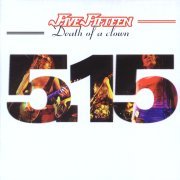
However, it's all over 2001's Death of a Clown. First thing: why are so many titles on this album 'borrowed' from other bands? My Oh My (Slade), Lick Your Fingers Clean (Jethro Tull), Season Of The Witch (Donovan) and probably some of the others? Whatever. Anyway, going by the sleevenotes, it would appear that they used Bigelf's Mellotron; I know Bigelf were based in Scandinavia for a while, which probably made them the obvious choice. Plenty of strings on almost every listed track, particularly Season Of The Witch and Sweet Little Dreamer, with some very upfront flutes on the title track, so overall, a Mellotron recommendation.
See: Crazy World
 |
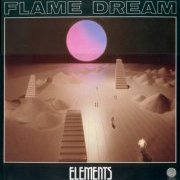
Calatea (1978, 44.10) ***½/TTGate to CalateaSurvey From the Summit Volcano Pyramids Apocalypse of Sounds Gate Out of Calatea |
 |
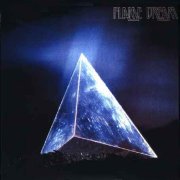
Elements (1979, 45.17) ***½/TSun FireSea Monsters Earth Song A Poem of Dancing |
 |
Out in the Dark (1980, 41.17) ***½/TTFull MoonNocturnal Flight Out in the Dark Wintertime Nights Strange Meeting (part 1) Caleidoscope Strange Meeting (part 2) |
Current availability:
Mellotrons used:
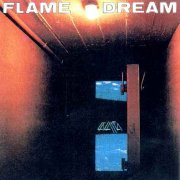
Flame Dream are possibly the most successful progressive band to come from Switzerland, although it seems they made little impression outside their own country. They released several albums on Swiss Vertigo, however and can't be dismissed lightly despite their frequently mainstream sound. As has been pointed out in other online reviews of the band, their sound wasn't a million miles away from their contemporaries UK, although, in fairness, both bands released their debut albums in the same year.
Calatea consists largely of full-on late '70s Yes/Genesis-influenced prog, although the occasional pseudo-commercial moment, notably in Survey From The Summit adds little to the album's appeal. It seems Flame Dream are notorious for their plagiarism and, true to form, there's a riff in Gate Out Of Calatea from one of the early Yes albums, followed by something from the Crimson catalogue, although the rest of the album is more original. Roland Ruckstuhl uses his Mellotron sparingly, with choirs on Gate To Calatea and Volcano, with more choirs and a subtle string part on Gate Out Of Calatea. Not knowing the contents of his keyboard rig, I can't say what produces the church organ sound on Apocalypse Of Sounds; a church organ, maybe? Anyway, a decent enough album, without ever really being in any danger of approaching 'classic' status.
Elements is possibly an improvement on its predecessor; it's certainly more original, the band appearing to be in the process of finding their own sound. Frontman Peter Wolf's flute and sax work seems more assured and the loss of their guitarist gave Ruckstuhl the chance to stretch out on keys, with some excellent piano work on two tracks. There's still the odd 'borrowed' part, particularly in lengthy closer A Poem Of Dancing; again, it's difficult to trace them accurately, although Genesis' Afterglow springs to mind at one point. Ruckstuhl's Mellotron work is confined to a choir part on Sun Fire this time round, as he concentrates on polysynth and piano for much of the album.
In common with just about every other progressive outfit at the time, Flame Dream slightly simplified their approach on Out in the Dark, although it's still 'progressive' as against 'AOR' or somesuch. Compared with Elements, the songs are a good deal shorter, but, at seven tracks spread over forty minutes, we're not exactly talking three-minute pop schlock. The Genesis-soundalike tag really starts to earn its keep here, Ruckstuhl's Yamaha CP70 sound and chord voicings being a dead giveaway, but that doesn't stop it being a decent enough album, just rather unoriginal. Mellotron choir on several tracks here, but nothing you haven't heard before, to be honest, principally on a late-'70s Genesis album.
 |
7" (1978) ****/TTTT Decouverte Autre Chose |
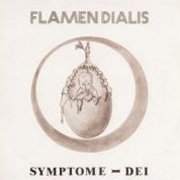 |
Symptome-Dei (1979, 38.59/47.20) ****½/TTTT½ |
|
| Dernière Croisade Le Sanctuaire d'Argile Dédale Vert du Retour Illusion Méandrea Envoutés Eclosion Labyrinth Pourpre de la Connaissance Arc en Lumière |
Renaissance Le Village du Diamanche Matin Eclats [CD adds: Decouverte Autre Chose] |
|
Current availability:
Mellotrons used:
Flamen Dialis (a type of ancient Roman priest, apparently) grew out of the Yecta Plus Band, releasing a single, Decouverte, in 1978 and their sole album, Symptome-Dei, a year later. This really isn't like anything else you'll have heard, unless you're a devotee of Univers Zero et al.; weird, dissonant, experimental, with strange wordless voices and a 'chamber' feel about much of it, but quite exceptionally good with it. I personally found it far more listenable than the other bands with which they get compared, so as long as you're into that 'prog' thing to start with, don't let this description put you off. Difficult to pick out the better tracks on a first listen; suffice to say, if you're feeling adventurous, hopefully you won't be too freaked out.
I don't know whether band leader/keyboardist/drummer Didier le Gallic or his (presumed) brother, Y.H. le Gallic (Yves-Henri? who knows?) plays the Mellotron, but they certainly do it in style; most tracks are smothered in the thing, with strings, flutes and cellos all over the place. At several points you can hear the bottom few 'cello' (i.e. double bass) notes, rarely audible on most albums; all of the Mellotron work is upfront and dry, leaving you in absolutely no doubt as to what you're hearing. Le Village Du Diamanche Matin is basically a Mellotron solo, all three sounds on their tape frame playing a twisted little melody, complete with some messing about with tape speeds, just one highlight of this Mellotron-lover's delight.
 |
Now (1978, 41.10) ****/T½ |
|
| Feel a Whole Lot Better Between the Lines Move it Take Me Back Reminiscing Good Laugh Mun All I Wanted Ups and Downs |
Yeah My Baby House of Blue Lights Don't Put Me on There's a Place |
|
 |
7" (1978) ***/TTT Move it When I Heard Your Name |
 |
Jumpin' in the Night (1979, 40.01) ***½/½ |
|
| Please Please Me Next One Crying Down Down Down Tell Me Again Absolutely Sweet Marie You're My Wonderful One Jumpin' in the Night Yes I am |
19th Nervous Breakdown Boys 5D First Plane Home Lady Friend In the USA |
|
 |
Rockfield Sessions (1989, recorded 1972, 23.24) ****/TMarried WomanGet a Shot of Rhythm & Blues Little Queenie Slow Death Shake Some Action You Tore Me Down Tallahassee Lassie |
Current availability:
Mellotrons used:
The Flamin' Groovies started life in late-'60s San Francisco, bucking the prevailing trend by refusing to 'go psychedelic', preferring instead to stick to their guns and tear out garage rock'n'roll like it was going out of fashion. Which, indeed, it was. Like the Groovies gave a toss; they carried on in this vein for some years, writing several classics along the way, notably their anthem, Shake Some Action. By 1976, round about the time their raw brand of rock was coming back into fashion, they changed tack, donning Beatles suits and cleaning their sound up. Always had an eye on the zeitgeist, those Groovies...
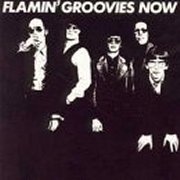
They signed to Sire for Shake Some Action (****), heavy with covers and the first time their best song made it onto a long-player, then took a couple of years to follow it with Now. Again, as many covers as originals, which seems to display a lack of confidence in their own material, although all six self-written songs here hold their own against the outsiders. Cyril Jordan plays Mellotron (presumably the Rockfield Studios machine) as well as guitar, with bass choir notes and a few string chords on Between The Lines, a cool string line on Take Me Back and a handful of chords on the oddly-titled Good Laugh Mun. Interesting to note that all three were band-written; maybe they didn't want to mess with other artists' arrangements? Incidentally, Move It was released as a single, backed with When I Heard Your Name, allegedly from a 1973 session, although it seems far more likely it was an album outtake. It's a so-so track, with a decent Mellotron string part, presumably from Jordan again, available on the expanded CD of the album, plus a 2002 compilation, Slow Death.
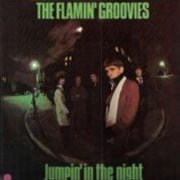
Now closed with a Beatles number, so Jumpin' in the Night opened with one, although Please Please Me was probably a bit of an obvious choice; once again, only six self-written numbers, with eight covers this time round. The Groovies' own material was perfectly good, although the album overall is probably slightly less so than its predecessor. It's also considerably lesser on the Mellotron front, with naught but distant brass on You're My Wonderful One, at least to my ears.
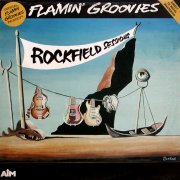
The band's legendary 1972 Rockfield Sessions (four of its seven tracks featured on their two singles for UA) finally gained a coherent release in 1989, featuring more oomph in its twenty-three minutes than most bands manage in their entire careers, which isn't to say that this is heavy; far from it, the Groovies preferring clean, rock'n'roll guitars. Anyway, we get the original recording of the immortal Shake Some Action (although it turns out that it's the one they used on the album of the same name), Slow Death and You Tore Me Down being other highlights. Jordan slaps fat, dirty Mellotron brass all over opener Married Woman, sitting oddly next to slide guitar and boogie-woogie piano. Given how long I've owned this, how can I not have noticed it earlier? These tracks have received various subsequent reissues, including a mid-'90s release as I'll Have a... Bucket of Brains, although the Aussie 2-on-1 with '68's Sneakers was reissued in 2000.
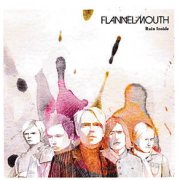 |
Rain Inside (2004, 35.27) **/TT |
|
| The Right Words Living Seconds Street Level Bravado Here Comes the Fight (What a) Comeback Last Exit Dead Moody |
Collection Lovers Lament |
|
Current availability:
Mellotron used:
Flannelmouth (named for a presumably archaic term for a boastful fool) are yer standard indie outfit, Finnish division, whose debut long-player, 2004's Rain Inside, is probably at its least tedious on Bravado, but I'm pushing it to recommend anything here, frankly.
Producer Tom Hakava plays his Mellotron, with strident strings on Street Level, Last Exit and Collection, plus background choirs on Here Comes The Fight, easily the best thing about this sorry collection. Fail. Incidentally, their 2002 EP, I've Seen Nothing Yet, is rumoured to contain Mellotron, but, given that it shares three tracks with this album, we can probably discount it.
 |
Out of Our Hands (1973, 34.00) ***/½ |
|
| Open Sky None the Wiser (King) Farewell Number One (Pawn) Man of Honour (Knight) Dead Ahead (Queen) The Bishop Psychosync Escape Farewell Number Two Conclusion |
Manhattan Morning (Christmas '72) Shadows (It's You) |
|
Current availability:
Mellotron used:
Flash were ex-Yes guitarist Peter Banks' first and last serious stab at a post-Yes career, releasing three albums in the early '70s, of which Out of Our Hands was the last. From a distance of several decades, the album, indeed the band's entire career, hasn't dated well, falling into that 'middling rock' non-category, not being heavy enough, progressive enough or anything else enough to really stand out in the public's collective imagination. Despite having its moments, there's little here to excite the modern listener hoping to discover another lost classic, The Bishop and the slightly Crimsonesque Manhattan Morning being the nearest Flash came to generating any real excitement.
Bassist Ray Bennett doubled on various keyboards, although there's little of the credited Mellotron to be heard, to be honest, with very background strings on None The Wiser and similar flutes on The Bishop. All of which adds up to a fat 'don't bother', I'm afraid, unless you're a fanatical Yes fan, or a collector of early-'70s 'progressive' albums, regardless of quality. Disappointingly average.
 |
Americana Electronica (2015, 35.13) ***/T |
|
| Americana Electronica Bill Bailey Betsy Ross Little Brown Jug Letter to the Inhabitants of America Benedict Arnold War (Give Me Liberty or Give Me Death) Take Me Out to the Ball Game |
In the Good Old Summertime Wabash Cannonball Home on the Range Paul Revere Oh Susanna Electronica Americana |
|
Current availability:
Mellotron used:
In Electronica Americana, Richmond, Virginia-based duo Flashlight Tag have taken the brave step of tackling The Great American Songbook, combining a slew of classics with, you guessed it, electronica. Does it work? To an extent, as you might expect, although for a non-American, the songs lack the kind of inbuilt familiarity that the participants clearly have with them, not that it should affect anyone's enjoyment. Highlights? The album's two potentially opposing features, the electronica and the Americana, come together at their best on Benedict Arnold and Wabash Cannonball, although the handful of spoken-word pieces jar somewhat, rather spoiling the album's flow.
Daniel Clarke plays clicky Mellotron flutes on Betsy Ross; no, I've no idea how they afforded it on a crowdfunded recording, unless they knew someone who owned one. Anyway, an interesting experiment; let's see if they get round to a second volume.
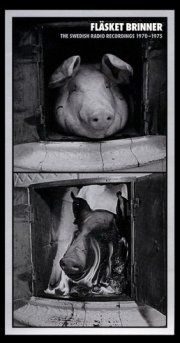 |
The Swedish Radio Recordings, 1970-1975 [Disc 4] (2003, 39.48) ***½/T½AquariusGrasse Kinaspel Barbarella La Resa dei Conti |
Current availability:
Mellotron used:
Fläsket Brinner were one of the earliest Swedish progressive bands (having links with Bo Hansson, who guested on their debut album), although their sound is more jammed-out psych than prog per se. Of course, I'm aware of their existence, but I have to say, I've never heard them before obtaining 2003's four-disc The Swedish Radio Recordings, 1970-1975, rated by some reviewers as actually better than the band's meagre two-album catalogue. I have to say, they don't appeal to me in the same way as, say, Kaipa's symphonic moves, but not only did they appear several years earlier, but were coming from a completely different place, not to mention time.
Each disc of this set covers a complete broadcast, the first three from '70/'71 and the fourth from three years after their second (and last) album, in 1975. The first three are good, semi-improvised psych sessions, effectively, Hansson featuring on discs two and three (with parts of his Lord of the Rings included on the former), with amusing takes on The Troggs' Wild Thing and Johnny & the Hurricanes' seminal Red River Rock on the latter.
However, it's disc four (Studio 7, Radiohuset, Stockholm, October 22, 1975) that interests us most here; a far proggier proposition than the rest of the set, although the band's propensity for jamming makes itself obvious pretty quickly. Jan Ternald plays Mellotron, with a string part appearing a minute into its first track, Aquarius, more of the same about half-way through Kinaspel and a few high string notes fading in and out on Barbarella, although the flute that opens La Resa Dei Conti appears to be the real one used across most tracks.
 |
One (1976, 33.51) ***/T |
|
| Demon in Your Heart Way Here Have You Seen My Friend Hell on Earth Wanna Rock You Pain in the Arse Clever Man Crusaders |
Leaving Home Mirrors |
|
Current availability:
Mellotron used:
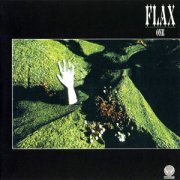
Flax were a Norwegian hard rock outfit, whose first album (of two), 1976's One, sounds, like so many other Euro releases of the era, a lot like Uriah Heep, for better or worse. It starts well enough, opener Demon In Your Heart being a pretty good example of the genre, but within a few tracks, it's slipped to the level of merely 'average', too many so-so songs making it not especially worth hearing except for those who remember them from the time, or real fanatics.
I presume it's keyboard player Lars Hesla on Mellotron, with no specific credit; we get strings on Demon In Your Heart, Way Here and Crusaders, none of it to any great effect, but always nice to hear. The band released their second album, Flax Tracks, a full decade later, in 1986; I would put good money on it being entirely not worth hearing and even better money on it containing no Mellotron.
 |
Bare Trees (1972, 36.59) ***½/T |
|
| Child of Mine The Ghost Homeward Bound Sunny Side of Heaven Bare Trees Sentimental Lady Danny's Chant Spare Me a Little of Your Love |
Dust Thoughts on a Grey Day |
|
 |
Penguin (1973, 36.38) ***/T½Remember MeBright Fire Dissatisfied (I'm a) Road Runner The Derelict Revelation Did You Ever Love Me Night Watch Caught in the Rain |
Current availability:
Mellotrons used:
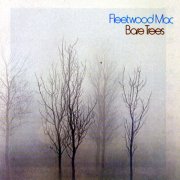
By the time Bare Trees appeared in 1972, Fleetwood Mac seemed to be largely a spent force, at least in Britain and Europe, although they always managed to keep a grassroots following in the States throughout their many early-'70s lineup changes. Apart from the ever-present rhythm section of Mick Fleetwood and John McVie (good job, considering the band's name), the only member still present from their Peter Green glory days was guitarist Danny Kirwan, who only lasted a matter of months following its release himself. The music was the usual blues-based style that the band's fans had come to expect, with no hint yet of the smooth AOR-isms that were ushered in by their new American contingent a mere three years later; I don't know how fans rate this album, but it sounds perfectly respectable to me, albeit with little of the spark of their earlier material.
Christine Perfect (later McVie, of course) had joined a couple of albums earlier and very much made her presence felt here, with decent helpings of organ and various pianos, plus, of course, Mellotron on a couple of tracks. Well, I say a couple, but that's working on the assumption that no-one's playing real cello on the album and it is Mellotron on Sunny Side Of Heaven. It's most certainly a nice, melodic Mellotron flute part on The Ghost, though, although I'd have trouble recommending the album just for the track. Actually, although it's not bad, I'd have trouble genuinely recommending it to anyone who isn't a major fan of rather average UK rock of the period (and I know you're out there); it has neither the raw talent of their early work, nor the radio-friendliness of the West Coast version of the band.
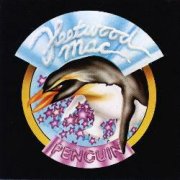
The following year's Penguin shows the first signs of the Mac's musical move towards the West Coast, with a smoother, more Americanised sound than Bare Trees, possibly due to new guitarist Bob Welch. It's not entirely bereft of energy, although even the more rock'n'roll numbers like (I'm A) Road Runner still lack a certain something. Christine's Mellotron use is again on two tracks only; Bright Fire has a flute line running all the way through (I presume it's Mellotron flute), while Night Watch has a good chunk of strings, although I couldn't really call either track essential.
I found a Christine McVie interview on the Web where she states that there was 'a lot of Mellotron' on Why from next album up, Mystery to Me (**½), but all I can hear on the thing is straight orchestral strings, so I've no idea where that one comes from. I've heard their two subsequent albums, too, Heroes Are Hard to Find (*** - nice pants, Mick!) and their commercial breakthrough, 1975's Fleetwood Mac (***), but there's nary a trace of Mellotron, unless my ears are seriously deceiving me. Interestingly, at a recent-ish auction of old Mac gear, most of Christine's keyboards were put up for sale, except her Mellotron, which she explicitly instructed was NOT to be sold. So, can we expect it to turn up on something in future? Hmmm, don't hold your breath...
 |
Joy Fleming (1973, 35.10) **/THand in HandLaß Mich Bei Dir Sein Du Bist Oben (Wah Wah) In Deinem Traum Such Keine Andere Welt Ich Brauch Dich Jetzt Komm Wir Wollen Tanzen Leicht War es Nie Mit Dir Anfang und Ende |
Current availability:
Mellotron used:
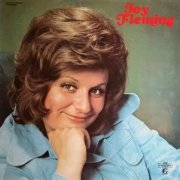
Erna "Joy Fleming" Strube (1944-2017) was a German 'jazz, blues and pop singer', according to Discogs, which translates, at least on her second, eponymous album, as mainstream pop/rock, with a propensity for Big German Balladry (quite distinct from Big Mediterranean Balladry) and big, mainstream early '70s hair. That isn't to say Joy Fleming doesn't have its moments, like, er... the funky guitar work on Du Bist Oben (Wah Wah)? In Deinem Traum's bombastic balladry? Clutching at straws, methinks.
Ralph Siegel plays Mellotron choirs on In Deinem Traum and Leicht War Es Nie Mit Dir, to no great effect, frankly. While not utterly awful, this is the kind of album that remains washed up on the shores of history, there to gently moulder away. Probably for the best, really.
 |
The Perfect Kellulight (1998, 45.22) **½/T½ |
|
| Freezer Burnt Drag Pink Boo The End Anthem Electric Pear Maybe Someday Wishing Well |
High on You There You Go (False You) Radio Song Some Other Day |
|
Current availability:
Mellotron/Chamberlin used:
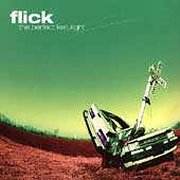
Flick released a self-titled EP in 1997 (originally released independently, as Booger. Tasteful), containing one Mellotron track (flutes on One Hundred Days, from Brad Jones), but the only full release I've heard by them is the first of their two albums, The Perfect Kellulight, from a year later and no, I don't know what it means, either. The music seems to fall into that grey, no-man's land known as 'modern rock' or somesuch, otherwise known as 'sub-Radiohead', with that rather whiny vocal style and a defiantly 'down' approach to their songwriting.
Various tape-replay things going on here; vocalist Trevor Thornton plays decent enough Mellotron cellos on Maybe Someday, while guest Ande Elwood plays Chamberlin on three tracks: Pink Boo has some almost-inaudible flutes (?), while The End has that weird solo male voice, with more of the same on Electric Pear. Not exactly a Mellotron Album, then, or, for that matter, one I shall be playing again. Dull, with unexceptional tape-replay work.