




|
|
|
|
||
|
|
G.Men Peter Gabriel Gabriel Bondage Paul Gaffey |
Jeffrey Gaines Galasphere 347 Galaxy |
Galileo II Noel Gallagher's High Flying Birds Vincent Gallo |
Gamma Elmer Gantry's Velvet Opera Les Garçons |
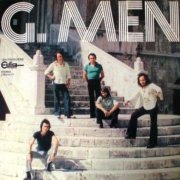 |
G. Men (1974, 33.56) ***/TTT |
|
| Riflessioni La Mia Ragione Pazzo Mondo Ricordi Scoloriti Cuore di Pietra Preghiera Notte Amara Storia di Uomini |
Errori Tuoi Quei Momenti |
|
 |
7" (1975) **/TTTT Oggi Riflessioni |
Current availability:
Mellotron used:
Rimini's G. Men operated for a decade from the late '60s, largely in the soft rock/pop category, although their second album, 1974's G. Men, is closer to the softer end of the Italian progressive spectrum. I wouldn't seriously attempt to make comparisons with the incomparable PFM or Celeste, though; the Moody Blues might be a closer match, although Ricordi Scoloriti and Preghiera rock out in no uncertain style. There's a fair bit of (Giorgio Bersani's?) Mellotron, more Moodies than PFM, with strings all round, a touch of cellos on Storia Di Uomini and the odd flute line.
'75's Oggi 7" is a Mellotron string-laden ballad, featuring a couple of nice solo spots for the instrument, clearly more typical of the band's output and rated accordingly. An album of the same name from later that year turns out to be no more than a compilation of singles and popular album tracks, though. Perhaps I'm being a little harsh here; G. Men's not bad, just rather inconsistent, at its best when it sounds more like a '70s album, as against one from the '60s.
 |
Up (2002, 66.48) ****/½ |
|
| Darkness Growing Up Sky Blue No Way Out I Grieve The Barry Williams Show My Head Sounds Like That More Than This |
Signal to Noise The Drop |
|
Current availability:
Mellotron/Chamberlin used:
Peter Gabriel's first song-based album in ten years and only his third in twenty craps from a great height onto its two predecessors, the overtly-commercial So and Us. More than anything, there are elements here of his third album (titled, as were all of his first four, Peter Gabriel), although it's a long, long way from being a copy. Up manages to be both contemporary and traditional, commercial and underground, English and 'world', all at the same time, in a way few (none?) of his contemporaries can, if they ever could. Rumours of Gabriel's illness of a few years ago are upheld by the downbeat nature of the record, with titles such as Darkness and I Grieve telling their own story.
I'll leave it to the Gabriel experts to review this rather excellent album properly, as I'm sure they already have and I'll concentrate on the fact that there are, bizarrely, three tracks of Mellotron and one of Chamberlin to be heard here. The Barry Williams Show, My Head Sounds Like That and Signal To Noise all have Peter playing Mellotron, while More Than This has the inimitable Jon Brion on Chamberlin, although there's one slight problem. None of the 'Mellotron' sounds like it - they all sound like generic string samples and the Chamberlin's basically inaudible. So, is it or isn't it? I'm hoping someone will ask him in an interview some time (people ask the strangest questions) so I can find out for sure. Very odd.
See: Genesis
 |
Angel Dust (1975, 35.56) **½/½ |
|
| Babylon First Stone in a Pyramid You and the Wind Take My Eyes Ladies and Gentlemen Bondage Rust Flakes Dinosaur Implosion |
Islands Sing Me a Song |
|
Current availability:
Mellotron used:
Gabriel Bondage's first album was Angel Dust, a (mostly) laid-back, acoustic guitar-driven effort, operating in a sort of folk/prog area, although that doesn't really describe it properly. In all honesty, this isn't the most exciting album I'm come across lately, far too much of the material sounding like CSN&Y wannabee stuff, but without their exquisite harmonies. About the only exception to the rule is the three-part Bondage, with a completely different feel to the rest of the album, adding electric guitars, raucous sax and other otherwise unheard elements to the mix, easily the best song here.
Keys man Conrad Green plays a soupçon of Mellotron strings on side one's Ladies And Gentlemen, but it has to be said it's not the heaviest use ever. Their second and last album was Another Trip to Earth (***); while no classic, it was a noticeable improvement on their debut, with a far more dynamic band sound. No Mellotron, though.
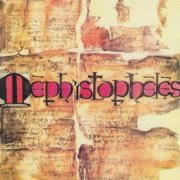 |
Mephistopheles (1974, 34.33) **½/T½MephistophelesSo Sad Dreamer of Dreams Paradise Dear People Finale |
Current availability:
Mellotron used:
While on my second Aussie trip over the 2005/6 Christmas/new year period, I met up with friends in Sydney (hi, Shane), including a guy who tried to sell me a copy of Mephistopheles. I declined, not only because I couldn't afford it, but because it isn't actually that good. It's something of a moot point as to whether this should be filed under 'Gaffey', 'Mephistopheles' or even 'Various Artists'; Gaffey is credited on the sleeve as 'vocalist', but does that make it his album? In actuality, there isn't an artist credited at all, so Gaffey will do given no sensible alternative. The title track opens with a (real) string part and isn't too bad until the vocals start. Oh dear... This is a seriously overblown concept effort in the grand (?) tradition, that may have a pseudo-religious agenda (hard to tell without the lyric sheet), but is pretty duff even if it doesn't; not exactly a classic of Aussie prog, then.
Although most of the album's string and choir work is real, for some odd reason, Peter Harris (of Madden & Harris) provides the same sounds from a Mellotron here and there. So Sad has both real and Mellotron strings and choir, with more of the same at the Paradise/Dear People crossover point, though we're really not talking classic stuff here. You're not going to find this cheap (note: now out on CD), so I suggest you don't bother finding it at all; dull, pompous music with little discernable melody and not even much Mellotron to liven things up. Avoid.
See: Madden & Harris
 |
Somewhat Slightly Dazed (1994, 56.20) ***/T |
|
| I Like You Sweet Janine I Know a Man Safety in Self You Believe in Me All the Will in the World Nursery Rhyme Elliot |
Talent for Surrender What Can I Do Just One Thing In Her Mind Wish it Away I Like You (alt.version) |
|
 |
Galore (1998, 57.52) ***/½ |
|
| First Chapter's Last Page Right My Wrongs A Simple Prayer Step By Step Belle de Jour Everything Praise or Blame Toast and Tea |
Goodbye To Love Her Inside Anything New Alone Leave Her to Me |
|
 |
Always Be (2001, 60.07) ***/T |
|
| Always Be Shake it Off In Your Eyes I'll Have You Back to You The First Time Ever I Saw Your Face Fall You Fool Tomorrow Today |
Your Town Happy That Take Me Back In Your Eyes (live) Hero in Me |
|
Current availability:
Mellotrons/Chamberlin used:
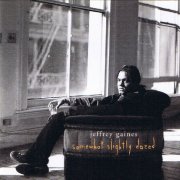
Jeffrey Gaines is one of those artists who seems to have bucketloads of talent, but has yet to find a really suitable vehicle for it. 1994's Somewhat Slightly Dazed is a perfectly acceptable pop/rock effort, better tracks including opener I Like You, All The Will In The World and In Her Mind, but it's all a bit lifeless, albeit not enough to give it a noticeably poor rating. Joel Diamond's (presumed genuine) Mellotron takes something of a back seat, only even slightly audible on three tracks, with background flutes on I Like You, In Her Mind and, most obviously, on the hidden track at the end of the album, which appears to be an alternate version of I Like You.
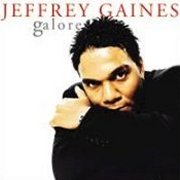
His third album, Galore, has plenty of Sidemen To The Stars on it, including Reeves Gabrels (David Bowie) and the excellent David Sancious, but ends up having a rather bland, generic 'adult pop' sound to it, despite Gaines' wonderful voice. Relentlessly mid-paced, this is radical easy-listening for couples no longer young, yet not quite ready to wholly disengage with their past, although Gaines' songwriting isn't really up there with others of that ilk (Elvis Costello et al.). Gaines plays 'Melotron' himself on album closer Leave Her To Me, though I'll be buggered if I can hear it over the string quartet, although it may be providing the string chords.
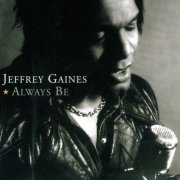
2001's Always Be lacks the occasional energy of its predecessors, although Gaines' songwriting's up to his usual standard, possibly at its best on I'll Have You and closer Hero In Me. Paul Bryan plays Chamberlin, with distant flutes (?) and strings on I'll Have You and background woodwinds of some description on Tomorrow Today, although, without a credit, you probably wouldn't know. So; good albums within their genre, but if you're looking for excitement (or lots of tape-replay), you'd be advised to go elsewhere.
Galahad (UK) see: |
 |
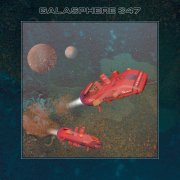 |
Galasphere 347 (2018, 41.34) **½/TTThe Voice of Beauty DrownedThe Fallen Angel Barbarella's Lover |
Current availability:
Mellotron used:
I really hate to say this, as I admire and respect (and even know) several of the people involved in the recording of Henry Fool/No-Man, er, man Stephen Bennett's Galasphere 347's eponymous 2018 debut. Unfortunately, at least to my ears, it typifies many of the things that are wrong with 21st-Century progressive rock, notably its neo-prog stylings, unimaginatively metallic guitars and over-emotive vocals. It avoids the overriding Gabriel So influence of the likes of Big Big Train and the overt nods towards musical theatre that infest the current genre, but then, the former tends to be an alternative to neo-prog, rather than its bedfellow. Marillion or Peter Gabriel? Discuss.
Ten-minute opener The Voice Of Beauty Drowned starts well enough, in an ambient vein, until the band kicks in, at which point the whole thing turns into major-key, brassy-parping, neo-prog central, like an unholy cross between Asia and Pendragon, a position from which it rarely shifts over the succeeding forty minutes or so. Enough widdly synth triplets! The most infuriating thing about Galasphere 347 is that it features moments of real beauty (not least Ketil Vestrum Einarsen's flute work on track one), then tramples all over them with more of those awful synths. Mellotron? Given where it was recorded, I presume we're hearing either one of the Roth-Händle M400s or Bennett's Novatron M400 (or both?), with strings on all three tracks and upfront choirs on closer Barbarella's Lover. I'm sorry, guys, I wish I could be nicer about this, but it's defeated me. Unless, of course, it's one big ironic joke on Bennett's membership of original neo-prog crew LaHost? Perhaps let the '80s stay in the '80s.
See: Henry Fool
 |
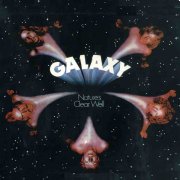 |
Nature's Clear Well (1978, recorded 1975, 37.50) ***/TNature's Clear WellWarning Walls I've Come From a World You've Really Got it Fixed Dreams Out in the Rain Wish I Were Happy |
Current availability:
Mellotron used:
There seems to be some confusion surrounding Galaxy, not least in relation to their home country, oddly. The truth appears to be that they were actually called Waniyetula, a multinational band based in Frankfurt, although they (under both names) are frequently quoted as being Swiss. So where does Galaxy come in? Their US label decided to rename the band, without their permission, for their 1975 recording, released three years later as Nature's Clear Well, although they also managed a German release, A Dream Within a Dream, in '83, more in a Saga vein.
To be honest, Galaxy/Waniyetula were one of those European progressive bands of variable quality, making it unusual that they had an American release at all. Nature's Clear Well is rather ordinary, if truth be told, with a good dollop of that 'German sound' that was so ubiquitous at the time; not that much variation in key/tempo, lots of string synth, you know the score. Saying that, the album does have its moments; You've Really Got It Fixed has some fairly frenzied instrumental parts and Nature's Clear Well itself isn't bad, but it's all a little unadventurous and I keep finding myself wishing they'd push the boat out a little more. Norbert Abels only plays Mellotron on two tracks; choirs on the lengthy title track and flutes on Dreams Out In The Rain, but it's hardly over-used, to say the least.
See: Waniyetula
 |
Transmissions (1999, recorded 1984, 71.54) ***½/TTTT |
|
| Ethereal Sky Waiting at the Speed of Light Automaton Future Roads I Can't Wait Coming on Song of the Siren Orbiter 102 |
To the Stars Man of the Hour Circle of Fire Illusion Don't Look Back Don't Take the Number Automaton Event Horizon |
|
Current availability:
Mellotron used:
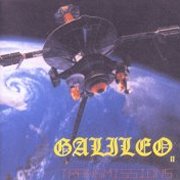
Galileo II were an American hard rock/prog crossover outfit operating in the early '80s, with the inimitable Charles Thaxton on keys (see my Char-El reviews for coverage of Charles' recent work). Although the odd track features an unfortunate commercial influence (either AOR or, oddly, Cars-ish 'new wave'), most of them fall somewhere between a sort-of late-'70s science fiction-influenced US sound (think Rush) and, oddly, contemporaneous British prog. The sound quality on this disc isn't of the highest, but the tracks seem to have mainly been recorded live in the studio, I'd guess straight to a stereo master, their resurrection fifteen years later unfortunately highlighting sonic deficiencies that may not have been apparent at the time. Transmissions obviously isn't actually an 'album' per se, more an archive collection of all the tracks recorded by the band. It's a shame more lesser-known bands don't do this; I'm sure there's a wealth of decent material out there that could all too easily be lost forever.
Charles layers Mellotron all over the disc, with most tracks featuring at least a little, all strings and choir by the sound of it. Highlights include the excellent string chords on Future Roads and the powerful string part on Event Horizon, but it's all pretty good on the Mellotron front, unusually for any band of that era. I'm afraid I have no idea how to find a copy of this any more; although Charles sent CD-Rs to anyone who asked, he, sadly, died in 2019.
See: Char-El | Magik Dayze
 |
Noel Gallagher's High Flying Birds (2011, 45.20) **/T½ |
|
| Everybody's on the Run Dream on If I Had a Gun... The Death of You and Me (I Wanna Live in a Dream in My) Record Machine AKA... What a Life! Soldier Boys and Jesus Freaks AKA... Broken Arrow |
(Stranded on) the Wrong Beach Stop the Clocks |
|
 |
Chasing Yesterday (2014, 43.55) ***/TT |
|
| Riverman In the Heat of the Moment The Girl With X-Ray Eyes Lock All the Doors The Dying of the Light The Right Stuff While the Song Remains the Same The Mexican |
You Know We Can't Go Back Ballad of the Mighty I |
|
Current availability:
Mellotrons used:
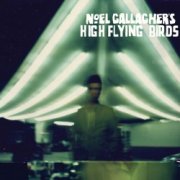
What does Noel Gallagher do after Oasis? Solo career, of course, although he's actually named his band Noel Gallagher's High Flying Birds, apparently in tribute to Jefferson Airplane. To absolutely no-one's surprise, his/their eponymous 2011 debut sounds an awful lot like his old band, minus their charismatic, if awful vocalist. You know 'that' Noel melody line? He uses it everywhere; please can you write something different, sir? Frankly, this is an overproduced mess; I mean what's with the choir (actually London's Crouch End Festival Chorus, a couple of members of whom I've met) on several tracks? Completely overblown. Or the misplaced brass on Dream On? I also feel I have to take issue with the cover pic: it's apparently a famous petrol (sorry, 'gas') station somewhere in Beverly Hills, that should make a great picture. Unfortunately, this isn't it.
Mike(y) Rowe and Gallagher play one or more of Noel's growing Mellotron collection, although it's far from easy to tell where, with so many elements thrown into the mix. Flutes on Everybody's On The Run? Can't tell. Definite strings on AKA... What A Life!, heard on their own at the song's conclusion and on AKA... Broken Arrow and choirs on Soldier Boys And Jesus Freaks, but there could easily be more hidden away. I'm sure you already know whether or not you're going to bother with Noel Gallagher's High Flying Birds; in fact, if you're going to buy it, chances are you already have. If this album has an overriding fault (and believe me, it does), it's that it's boring. Dull, dull dadrock for people who ask for nothing more from their music than something that's easy to sing along with and vaguely memorable. Welcome to Oasisland.
Three years on (no rush with vanity projects), the rather better Chasing Yesterday (no shit!) limped out, admittedly to reasonable reviews. Better tracks include the energetic Lock All The Doors, the John Barry-esque The Right Stuff and the trippy Ballad Of The Mighty I, Johnny Marr guesting, but the bulk of the album's the same old same old, I'm afraid. The deluxe edition extras actually diminish the album as a whole, sounding like the bunch of outtakes that they are. Worst track? Leave My Guitar Alone, with its clichéd lyrics and Hey Jude piano rip. Noel and Paul Stacey play Mellotron (Noel's M4000?), with brass on opener Riverman and The Right Stuff, distant choirs on In The Heat Of The Moment, strings and flutes on The Girl With X-Ray Eyes, although the strings on regular release closer Ballad Of The Mighty I are real, while there doesn't appear to be anything on the bonus tracks. Still: mostly harmless.
See: Oasis
 |
When (2001, 42.59) ***½/TT½ |
|
| I Wrote This Song for the Girl Paris Hilton When My Beautiful White Dog Was Honey Bunny Laura Cracks Apple Girl |
Yes I'm Lonely A Picture of Her |
|
 |
Recordings of Music for Film (2002, recorded 1979-98, 59.21) ***½/½ |
||
| Her Smell Theme The Girl of Her Dreams A Brown Lung Hollering The Way it is Waltz Glad to Be Unhappy Brown Storm Poem Good Bye Sadness, Hello Death Brown Daisies And a Colored Sky Colored Grey Fishing for Some Friends |
Six Laughs Once Happy Sunny and Cloudy No More Papa Mama Fatty and Skinny Her Smell Theme (Reprise) Lonely Boy A Falling Down Billy Brown Drowning in Brown A Somewhere Place A Wet Cleaner |
Sixteen Seconds Happy With Smiles & Smiles & Smiles A Cold and Grey Summer Day Brown 69 Dum Beet Me and Her Ass Fucker Ass Fucker (Reprise) I Think the Sun is Coming Out Now |
|
Current availability:
Mellotrons used:
Noted independent director/producer/screenwriter/artist/model/actor/musician Vincent Gallo seems to irritate and delight people in approximately equal numbers; notorious for his arrogant and vindictive pronouncements, he's nothing if not a 'character' and maintains several different careers simultaneously. What we're interested in here, of course, are his musical endeavours; he's played in bands since his teens in the '70s, including a stint with the not-yet-famous New York artist Jean Michel Basquiat; while he's actually appeared on very few recordings, he's notorious 'round these parts for including material by both Yes and King Crimson on the soundtrack to his best-known production, Buffalo 66.
His first non soundtrack-related solo album, 2001's When, released on small-but-trendy UK label Warp, is a vinyl-length CD of windswept, haunted songs and instrumental pieces, ideally suited for films, strangely enough. He maintains the album's vibe pretty well for most of its length, but it does all get a bit wearing towards the end of the disc, to be honest; the last track, A Picture Of Her, with its out-of-tune-and-time guitar, is really quite unnecessary, though I'm sure Mr. Gallo would disagree. Gallo plays and sings everything on the album, proving himself reasonably competent at most of them, though his drumming leaves something to be desired; although his tremulous voice may not be to everyone's taste, it actually suits this material perfectly.
Gallo is known as a Mellotron/Chamberlin owner, once boasting of having given a stupidly rare Chamby M4 to his friend Sean Lennon. It seems likely that he's using an M300 on this album; every sound used falls within the M300A tape set (there were two slightly different sets, A and B). A fractured flute melody opens the ridiculously-titled I Wrote This Song For The Girl Paris Hilton, with low strings (the M300's two violins) on My Beautiful White Dog and clunky vibes on Was. I'm assuming (maybe wrongly) it's M300 organ on Honey Bunny, which may or may not be inspired by either his band with Lukas Haas, Bunny, or his other well-known celluloid production, the infamous The Brown Bunny, which apparently caused some consternation at Cannes that year.
A year later, Gallo released another album on Warp, Recordings of Music for Film. Exactly what it says on the tin, this is his original soundtrack work to not only Buffalo 66, but also several early works, If You Feel Froggy, Jump ('79), Downtown '81 (er, '81) and 83's The Way it is. All of them, even the late-'90s work, were recorded on low-tech gear; two-track reel-to-reels, various acoustic instruments and analogue keyboards. It seems Gallo has owned at least one Mellotron since the late '70s, although, unlike on When, he hasn't used it/them overmuch on his soundtrack work, to the point where I think that's M300 cellos, possibly treated, on The Way It Is Waltz, but I wouldn't actually swear to it.
One amusing/disturbing facet of this album is Gallo's sleevenotes. Six closely-typed pages of invective, where he manages to say nice things about precisely two people, while dismissing practically the entire female gender at a stroke, not to mention specific unpleasantnesses. Vincent Gallo makes interesting films and fascinating soundtracks, but you get the feeling you probably wouldn't want to spend an evening with him in the pub. Especially if you're a woman. Especially if you don't possess a B cup, as "I like B's", apparently and he ain't talking Hammond organs. If Gallo isn't a total misanthropist, he's doing a good impression of one, but it has made for some interesting work. Hey, since when did 'normal' people make great art?
Anyway, these albums are very similar, proving that Gallo invented post-rock about fifteen years early, so if you like low-fi, blasted weirdness, you'll probably love these. I quite like them myself, as you can see from my ratings above, but I doubt if I'll play them too often. They make me want to see his films, though, so they've achieved something. When is borderline 'worth it for the Mellotron', but Recordings, unless I'm missing a whole load of odd Mellotron work, is practically devoid of the instrument, despite Gallo's claims that it was used on all of the soundtracks contained within.
Unofficial site concentrating on Gallo's music
 |
Darts (1974, 36.26) ***½/½Wishing Like Children (part one)Wishing Like Children (part two) Exposal Endless Goodbye Holiday Darts Anna's Mood Heart Rythme Your Face |
Current availability:
Mellotron used:
The short-lived Gamma played a very particular Dutch style of progressive rock, namely a lightweight jazzy variety that actually sounds very little like the UK's contemporaneous Canterbury scene. Although Focus transcended the sub-genre, they're not a bad reference point, certainly on 1974's Darts, Gamma's second (and last) album. See: the strong Akkerman feel on Wishing Like Children (Part Two) and Exposal or the ripping guitar work on Goodbye Holiday. It can get a little anodyne in places (Endless, closer Your Face), but there's enough here to be of interest to fans of lesser-known Euro prog.
Paul Poulissen plays Mellotron, with a brief chordal strings part on Wishing Like Children (Part Two); shame he didn't use it a little more, really. To my surprise, this has recently been reissued on CD, as the band are obscure enough that they'd previously passed under my usually very precise radar. Not much of a Mellotron Album, but worth hearing for fans of the era.
Gandalf (Austria) see: |
 |
 |
Elmer Gantry's Velvet Opera (1967, 34.09/50.59) ***/TT |
||
| Intro Mother Writes Mary Jane I Was Cool Walter Sly Meets Bill Bailey Air Lookin' for a Happy Life Flames |
What's the Point of Leaving Long Nights of Summer Dream Starts Reactions of a Young Man Now She's Gone [CD adds: Flames Salisbury Plain |
Mary Jane Dreamy Volcano A Quick "B"] |
|
Current availability:
Mellotron used:
David Terry, frontman of Five Proud Walkers, changed his name to Elmer Gantry after the Sinclair Lewis novel (or, more likely, the film version), his band simultaneously changing their name to Elmer Gantry's Velvet Opera. After an initial single, they bashed out their sole album under this name in late '67. It's a strange mixture of the sort of soul the likes of Simon Dupree & the Big Sound had been pumping out for a while and a more-in-tune-with-the-times fuzzed-out psychedelia, making for a slightly schizophrenic record, especially when they combined the styles in the same song, as on Flames (a reworking of their debut single).
For some strange reason, after eight Mellotronless tracks, the Mellotron (unknown player) suddenly kicks in well into side two. What's The Point Of Leaving features some accordion (?) and flutes, the flutes reappearing on the following track, Long Nights Of Summer, along with a full-on strings/brass part. I can't quite tell if there's anything on Dream Starts, but the original album's last two tracks, Reactions Of A Young Man and Now She's Gone both have muted, but perfectly audible string parts. The CD adds both sides of their three singles, adding the background flutes of Salisbury Plain to the list.
So; not so much not a classic of the genre, as not sure to which genre it belongs. Soul/psych? Hmmm. As with Simon Dupree, the best tracks tend to be the ones lying furthest from their roots, which (probably un-) coincidentally tend to also be the ones with the Mellotron content. One for psych completists, I think, although it has its moments and it's not really worth it for that Mellotron. Oh, and after the band finally split, their rhythm section, Richard Hudson and John Ford, went on to join The Strawbs.
See: The Strawbs | Hudson Ford
 |
Von Uns zu Dir (2001, 35.54) ***/T |
|
| Wohin Auch Immer Für Uns ist es Wahr Sie Sagt Sie Geht Bleib Noch Wach Das ist Nun Vorbei Briefschreiber Alles Was Zählt Weit, Weit Weg |
Mein Baby Sagt Ein Guter Freund und Ich Hey, Hey Guten Morgen Baby Parklied So ist Das Mit Ihr und Mir So Leicht Kriegt Ihr Mich Nicht |
|
Current availability:
Mellotron used:
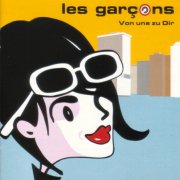
I'm not sure why Hamburg natives Les Garçons have given themselves a French name; I suppose it's no worse than, say, Belle & Sebastian. Given that the band are Beatles fanatics, I applaud their wit in calling their album Von Uns zu Dir (From Us to You); it is, indeed, a very (early) Beatlesque record, probably at its best on opener Wohin Auch Immer, Das Ist Nun Vorbei and Ein Guter Freund Und Ich.
Stefan (credited as Stefhan) Bornhorst (Silicon Scientist, Sonnenbrandt), plays presumably his own Mellotron on the last track, So Leicht Kriegt Ihr Mich Nicht, with upfront flute and string parts, although the strings on Für Uns Ist Es Wahr and Bleib Noch Wach are real. I suppose it's fitting that a group of German Beatles obsessives should come from Hamburg; one for those who just can't get enough Beatles for Sale, then.