




|
|
|
|
||
|
 |
Redemption Road (1996, 50.11) ***/½ |
|
| Pools of Eden Unless You Want Me Our Time Sleeping Rose of Sharon Solitary Singer Road Not Taken Prayer 2000 |
Her Melancholy Muse Through the Glass Darkly River of Gold Redemption Road |
|
 |
Misfits (1999, 42.22) ***/T |
|
| Hollywood Years Mama's Little Baby Sleep Tonight Father Jesus Beautiful Dreamer Love's Shadow Bad Boy/Good Man Last Big Thrill |
Nuestra Senora del Rio Chimes of Freedom |
|
Current availability:
Chamberlins used:
Before beginning my research, I assumed Eliza Gilkyson (sister of Lone Justice member Tony) was a 'typical' modern singer-songwriter, whatever you take that to mean, so it comes as quite a surprise to learn that she was born in 1950. After an early album in 1969, it took her a decade to follow up, taking until the mid-'90s to kick her career off properly, having already released six or seven albums.
1996's Redemption Road is the first of her 'contemporary' releases, a rather lightweight collection of vaguely countryish songs whose depth is almost certainly more lyrical than musical. Despite that caveat and the fact that I really shouldn't like this very much, it's considerably better than the rubbish churned out by most of Gilkyson's contemporaries, to the point where three stars seems fair, better tracks including opener Pools Of Eden and Through The Glass Darkly. Patrick Warren does his usual Chamberlin thing, although the only likely candidate is the background polyphonic flute part on River Of Gold, as the solo flute on Through The Glass Darkly is almost certainly the credited real one.
'99's Misfits pursues a similar direction as its predecessor, better tracks including Bad Boy/Good Man, the instrumental Nuestra Senora Del Rio and her rocking version of Dylan (via The Byrds)'s Chimes Of Freedom. Unlike the album's predecessor, Warren's Chamberlin is almost immediately apparent, with an upfront flute part on opener Hollywood Years, although, sadly, that appears to be your lot. Although I detect a certain religiosity on both of these albums, the overall quality of the material is good enough to suppress any qualms I may have about her views. And, er, surely that's her business, anyway?
See: Samples etc.
 |
Clear Air Turbulence (1977, 40.51) ***/½Clear Air TurbulenceFive Moons Money Lender Over the Hill Goodhand Liza Angel Manchenio |
 |
The Rockfield Mixes (1997, recorded 1977, 43.31) ***/TOver the HillClear Air Turbulence Five Moons Money Lender Angelo Manchenio This is the Way Goodhand Liza |
 |
Rarities 1975-1977 (2003, 74.21) ***/½ |
|
| Finally the Finale My Baby Loves Me Down the Road You Make Me Feel So Good Country Lights (backing track) Child in Time Scarabus (backing track) Smoke on the Water (live) |
Let it Slide (backing track) Reaching Out Twin Exhausted Fool's Mate (backing track) Vindaloo You Get What You Ask for Raped By Aliens |
|
Current availability:
Mellotrons used:
I've owned all four Ian Gillan Band albums (including their double live) since forever, but have hardly ever played them. Listening again to the second, 1977's Clear Air Turbulence, reminds me why. The IGB were a largely failed experiment, combining jazz-rock and prog in a Brand X vein with Ian's hard rock vocals (and questionable lyrics), which could've been great, had the actual songwriting been better, while their propensity for white-boy funk does little to improve matters. The album's probably at its best on the opening title track and Five Moons and, of course, its marvellous Chris "a million SF book covers" Foss sleeve, although the superfluous brass section on Money Lender and the aforementioned diversions into funk-lite drag its star rating down. I'd never previously noticed, but there's a soupçon of Mellotron on the album, almost certainly the Rockfield Studio machine, played by Colin Towns, with chordal choirs on the title track, right at the beginning of the album, repeating towards the end of the track, and background cellos on Five Moons.
Gillan's dissatisfaction with the album's original mix led to it being remixed at his own facility, Kingsway Recorders, but the original mixes (including an extra, admittedly pointless track, omitted from the final running order) survived, issued by Angel Air in 1997 as The Rockfield Mixes. My personal preference is for this version of the album; I could be wrong, but along with the extra brass (boo!), there seem to be more synth solos (hooray!) and an overall clarity missing from the final version. This Is The Way, a studio muckabout, frankly, was rightly removed from the official release, but otherwise, I'd recommend this over the original. Towns plays the same Mellotron choir parts on the title track as before, but we get extra choirs on Five Moons, while the track's cellos are slightly higher in the mix, notably at the end.
2003's Rarities 1975-1977 (Angel Air again) does what it says on the tin, consisting chiefly of alternate versions/mixes or backing tracks from the band's first and third albums, Child in Time and Scarabus; the lack of anything from Clear Air Turbulence is probably down to The Rockfield Mixes mopping up all extraneous material. The bulk of the album is exactly as you'd expect: variations on previously-available recordings, with a handful of otherwise-unavailable tracks. Easily the best of these is closer Raped By Aliens, a dynamic, guitar-and-keys heavy progressive piece, apparently written and recorded by the band sans Gillan, who was busy rethinking his future. (Non-?) coincidentally, it's also the home of the set's only Mellotron use, with a few big choir chords from Towns. If this album's worth owning, it's for this track. After a transitional record, 1978's Gillan (a.k.a. The Japanese Album), Ian took Colin Towns with him to form the heavier (and vastly better) Gillan, whose short, mercurial career burned out in 1982, Gillan going on to a brief liaison with Black Sabbath before 1984's inevitable Deep Purple reformation.
See: Deep Purple | Black Sabbath
 |
Cure for Dreaming (2016, 35.03) ***/TTT½Dhyana By the RiverNo Stone Part Potawatomi Evening Loving Last Mystery Train Involuntary Sway His Voyage Innocent Pain Travels (Chakra Huckster) |
Current availability:
Mellotron/Chamberlin used:
Jenny Gillespie (born in Illinois, apparently now residing in California) released a handful of albums over a several-year period, 2016's Cure for Dreaming being the most recent, although she seems to have gone quiet since then. It's a quirky singer-songwriter record, its composition and arrangements far enough from the mainstream to keep things interesting, possibly at its best on No Stone, Part Potawatomi and His Voyage Innocent.
Gillespie and producer Paul Bryan play his M4000 cycling Mellotron, while Bryan also plays his own Chamberlin M1s, with cellos and chordal flutes on opener Dhyana By The River, chordal strings on Part Potawatomi and Last Mystery Train, vibes on Evening Loving, Chamby strings on His Voyage Innocent and cellos and strings on closer Pain Travels (Chakra Huckster). Generally, it's hard to say which instrument we're hearing, but I'm pretty sure about that Chamby sighting.
See: Paul Bryan
 |
Ginga Tetsudo (1975, 39.49) **½/½ |
|
| Uta o Hitotsu Omoide Shite Goran Haru wa Yukkuri to Kōhī Maindo Ginga Tetsudō Pokapoka Yōki ni Kimi no Tobira Kumo ga Itsunomanika |
Wasurekaketa Kisetsu Motodōri |
|
Current availability:
Mellotron used:
Ginga Tetsudo seem to be obscure even by Japanese '70s standards, without even a Discogs entry. What appears to be their lone, eponymous album features musicians of the calibre of Hiro Yanagida and Ryuchi Sakamoto (on piano), although, sadly, the end result is a kind of mainstream folk-rock effort with no obvious highlights. Harmless, yet deathly dull.
Masao Nakajima plays non-piano keys, including Mellotron, with distant choirs on opener Uta O Hitotsu and closer Motodōri. Is that all I can think of to tell you about this? Frankly, yes.
 |
Ginhouse (1971, 45.58) ***½/½ |
|
| Tyne God I Cannot Understand The Journey Portrait Picture Fair Stood the Wind And I Love Her Life The Morning After |
The House Sun in the Bottle |
|
Current availability:
Mellotron used:
Ginhouse were a Newcastle-based trio who released just the one, eponymous album in 1971. My first thought was, "How have I missed this?" It's difficult to describe accurately, but calling it jazzy proto-prog/hard rock might give you a pointer. Think: Clear Blue Sky or May Blitz: riffy, yet not especially heavy, with unusually inventive chord work. Highlights? Opener Tyne God, the propulsive I Cannot Understand and Life, maybe, while their heavy(ish) take on The Beatles' And I Love Her shows off their arrangement skills.
According to an online interview with Psychedelic Baby magazine, producer Anders Hendriksson played keys, including a brief, piping Mellotron flute melody on Fair Stood The Wind. Those nice people at Esoteric have reissued this rarity, so do yourself a favour and give Ginhouse a listen, albeit not for its minimal Mellotron work.
 |
Apple Bonkers (2014, 36.47) ***½/TT |
|
| Yes Smile Hairy Flowers Dart Change My Mind Mirage Two Daisies Radio Silence |
Sail on Don't Let the Fuckers Bring You Down |
|
Current availability:
Mellotron used:
Joel Gion's glamorous day job is as tambourine player/backing vocalist for The Brian Jonestown Massacre (the Gene Clark role), although his solo debut, 2014's Apple Bonkers, is less druggy, more '60s garage-meets-psych-with-a-hint-of-shoegaze. Highlights include opener Yes, Dart, with its backwards percussion, Radio Silence and the trippy Sail On, but nothing here should disappoint a fan of current psych.
Rob Campanella and Ryan Carlson van Kriedt play what I presume is Campanella's M400, with a distant flute line on Yes, volume-pedalled strings on Dart, a distant octave string line on Change My Mind, chordal strings on Mirage and a background flute line on Sail On. Given that I have little time for Gion's main band, this comes as a very pleasant surprise, not least for its Mellotron use.
 |
Ho Passato un Brutto Inverno (1973, 39.31) **½/0 |
|
| Questo Amore un Po' Strano Il Fiume Corre e l'Acqua Va A Tutti Quanti (To Each and Everyone) Ricordo di un Amore (Dearest) Shalom Shula Shalom Mi Sto Inventando un Mondo Dolci Fantasie La Grande Risposta |
Quanto Amore Ma Tu Chi Sei (Bad Side of the Moon) Più di Tutto il Bene (More Than Sympathy) Canzone di un Inverno |
|
Current availability:
Mellotron used:
Giovanna Nocetti is an Italian pop singer, active since the early '70s. 1973's Ho Passato un Brutto Inverno (I Had a Bad Winter) was her second album, largely consisting of mainstream pop balladry, of interest to absolutely no-one outside her ageing fanbase. Any better moments? Possibly the lively A Tutti Quanti, the brassy Ma Tu Chi Sei and closer Canzone Di Un Inverno, marginally less cheesy than the bulk of the record.
Dario Baldan Bembo is credited with Mellotron, but I'll be buggered if I could tell you where. The orchestration on most tracks does little to help the situation and, given that he most likely played the Ariston Studio M300, nor do that model's unusually realistic strings. Much as I hate to give an album with a specific credit a big fat zero on the 'T' front, that's exactly what I've done.
 |
Geronimo! (2011, 38.45) ***/TT½ |
|
| Outta Sight Here's Looking at You Oh Lies Longest Day of Spring Would You Be There Gift Stay Sweet Friends & Neighbours |
River Song Let's Get Silly La De Da It's Our Time Say Goodbye |
|
Current availability:
Mellotron used:
"What sort of name is Piney Gir?", thunk I. A nom-de-plume, that's what. Angela Penhaligon's fifth album, 2011's Geronimo!, is pretty much exactly the sort of record you'd expect a New York-based, ex-Christian Midwest escapee to make (?), full of twisted Americana (Let's Get Silly), Tex-Mex (The Gift) and powerpop, the latter particularly evident in the Byrdsian Rickenbacker 12-string jangle of Would You Be There.
Garo Nahoulakian plays Mellotron, with long, sustained flute notes on Stay Sweet, little bursts of strings on River Song, odd, choppy strings on La De Da, upfront flutes on It's Our Time and creaky cellos on closer Say Goodbye, all sounding rather real, at least to my ears. I'm not entirely sure who this album's target audience is, but it's the kind of record that might, just might appeal to fans of several different genres and is also rather better than expected on the Mellotron front.
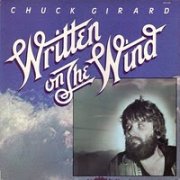 |
Written on the Wind (1977, 35.42) */TSpirit WindMary's Song Thank You Lord Plain Ol' Joe Harvest Time Fool for Jesus Hear The Angels Sing Peace in the Valley The Warrior |
Current availability:
Mellotron used:
Chuck Girard has been around since the early '60s and is still performing to this day; his evangelistic CCM style really falls into the 'you will either love or hate it' category. 1977's Written on the Wind is his third solo release (after two Christian albums with Love Song and some pre-God releases) and is, I'm afraid to say, one of the gloopiest, cheesiest efforts it's been my displeasure to hear for a while, actually managing to outdo some current CCM offenders. The lyrics to Thank You Lord are utterly gagworthy, although Plain Ol' Joe's tragic story seems to largely avoid any majorly Christian bent, while musically, the album's essentially one long, slushy, sickly sweet ballad.
Herb Jimmerson plays Mellotron (or Chamberlin?) on a couple of tracks, with strings on opener Spirit Wind that are distinctly different to the real ones on the rest of the album, while the flutes (and strings?) on Peace In The Valley seem to be tape-replay-assisted, too. I can't imagine what would make you hunt this album down, to be honest: masochism? Insanity? Fully repellent, it doesn't even feature any decent tape-replay work to alleviate the horror. Incidentally, Girard's eponymous debut has pretty much all of Ambrosia playing on it, for some reason. Just thought you might be interested.
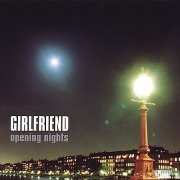 |
Opening Nights (2000, 45.53) **/TTT |
|
| Coming Home Blank We Are Not Humid Air Drifting on a Muse Everyday Drunk Love Butterfly Sunshine |
The Space in Between (You & Me) This Last Song |
|
Current availability:
Mellotron used:
Hard and fast information about Girlfriend is hard-won, but it seems they were the duo of Jens Henrik Horslund and Jacob Karim, 2000's Opening Nights being the first of their two albums. And it sounds like...? Dreary indie, sadly, at its least bad on the medium-intense Everyday and its probable worst on the eight-minute The Space In Between (You & Me), simply because it's eight, interminable minutes long.
Tim Christensen plays one of his own Mellotrons, with orchestralish strings on opener Coming Home, more distant cellos and strings on Everyday, upfront cellos on Drunk Love Butterfly, flutes all over the first half of The Space In Between (You & Me) and more cellos and strings on closer This Last Song. Nice Mellotron, bloody awful music.
 |
Broken Dreams Club (2010, 30.07) **/TThe Oh So Protective OneHeartbreaker Broken Dreams Club Alright Substance Carolina |
 |
Father, Son, Holy Ghost (2011, 53.59) ***/T½ |
|
| Honey Bunny Alex Die Saying I Love You My Ma Vomit Just a Song Magic |
Forgiveness Love Like a River Jamie Marie |
|
 |
Single-sided 7/12" (2011) ***½/TT Lawrence |
Current availability:
Mellotrons used:
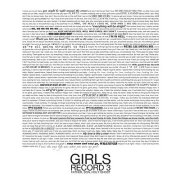
Girls (who aren't) are a San Franciscan indie/country crossover outfit led by Christopher Owens and Chet "JR" White, going by 2010's Broken Dreams Club mini-album. I can't tell whether Owens' childhood in the filthy supposedly Christian Children of God cult has any bearing on the record, but it's not what you'd describe as the angriest album ever, frequently slipping into near-MOR countryisms. J.J. Wiesler plays a brief Mellotron flute part on Substance, sounding reasonably real, although it's always hard to tell with the flutes.
The following year's Father, Son, Holy Ghost, however, is more of a psych/powerpop crossover record and, as a result, a distinct improvement on its immediate predecessor. Better tracks include rocking instrumental Die and psych-fest Vomit, although it has its lowpoints, not least '50s pastiche Love Like A River and dreary closer Jamie Marie. Christopher Owens plays Mellotron; I hear flutes on Die and cellos, strings and wonky flutes on mini-epic Just A Song, although other possible string sightings are probably sustained guitar.
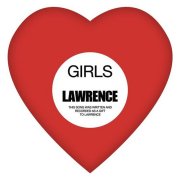
Late 2011's Lawrence is a single-sided, er, single; the sleeve dedication reads, "This song was written and recorded as a gift to Lawrence", the titular gentleman being Felt's Lawrence Hayward, also mainman of Denim and apparently a major influence on Owens. Stylistically, it probably sits in between Girls' two releases listed above and, of course, Felt, enhanced by a nice helping of Mellotron flutes that sound right but are played slightly too fast for genuine veracity. Real? Who knows? Nice song, though.
 |
Lookin' for a Smile (1973, 35.03) **½/T½ |
|
| Natural Inclination Texas Sparrow Let Someone's Smile Get Away Long Way Home Dixie Woman Got to Be You, Got to Be Me Songbird Love, Love, Love |
Lookin' for a Smile Here Comes That Feelin' |
|
Current availability:
Mellotron used:
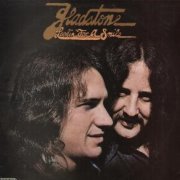
Gladstone were the duo of vocalist H.L. Voelker and vocalist/guitarist Doug Rhone, both currently residing in the 'Where Are They Now?' file. Following their eponymous debut, Lookin' for a Smile was their last stab at fame and fortune, consisting of ten tracks of largely soft rock like Dixie Woman or Texas Sparrow, with, sadly, nothing to distinguish them from hundreds of similar sub-Eagles efforts. This isn't to say that their material was awful, only that there isn't one single feature that makes them stand out from the pack. No, not even the Mellotron.
Keys man Randy Fouts played the expected piano and organ, plus ARP synth (model unknown) and Mellotron, though on one track only, with flutes on Natural Inclination, although Lynn Groom plays Mellotron strings (very nicely) on Songbird, too. I can't really say they lift the song out of the doldrums of countryish ballad territory, although it's better than its successor, the very dull Love, Love, Love. So; this doesn't go for an awful lot, despite being unavailable on CD, for the very good reason that it's entirely average in every possible respect. I found it for a couple of quid and I'm glad I didn't pay any more; perfectly respectable, completely inoffensive, but essentially dull, with little Mellotron. Don't bother.
Glass (US) see: |
 |
 |
Open Wide This Window (2003, 52.49) */½ |
|
| This Window Tonight (I Want to Live in Your World) Weight of the World I Stand Amazed Everywhere I Turn I Love You More Mercy Wake Up |
Hang on Wounded Healers God of Wonders Jesus, You Are Beautiful Peace to You |
|
Current availability:
Mellotron used:
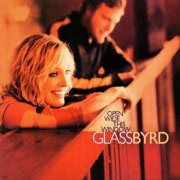
GlassByrd (previously Adore) were the Christian duo of Christine Glass and Marc Byrd, whose sole album, 2003's Open Wide This Window, contains the very worst kind of soporifically mainstream pop/rock you can imagine, improved no end (?!) by the usual grovelly, fantasist CCM lyrics. Particularly bad examples on the lyric front include I Stand Amazed and Jesus, You Are Beautiful, but in actuality, they're all dreadful and, of course, entirely single-issue. Just when you thought it couldn't get any worse, Glass and Byrd both sing in a breathy, reverential style that triggers violent thoughts in yours truly. Musically, Wake Up is the nearest this album gets to 'rock' and believe me, it ain't that near, the rest of the record being the kind of thing that makes me want to chew the carpet.
Mellotron-player-to-the-Christian-community Phil Madeira plays what sounds like rather clean cellos on Tonight (I Want To Live In Your World), although all string parts sound either real or like generic samples. This is fully, truly, thoroughly and horribly awful. One star errs on the generous side.
 |
Younglove (2017, 28.42) ***/TSomedayRomulus Wild Storm Girl Homesick Frozen Places Younglove |
Current availability:
 |
Mellotron used:
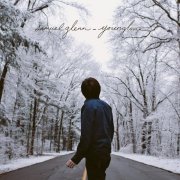
New Englander Samuel "Glenn" Skinner is a young singer-songwriter whose debut release, 2017's Younglove EP, features Glenn on almost everything (bar Matt Slobogan's drumming), with a handful of guests on a couple of tracks. The EP's chief problem, at least to my ears, is that its Dylan-esque '60s vibe is fatally undermined on some tracks by an aimless indie feel (Frozen Places is a particular offender). Better tracks include Romulus and the title track, although I'm less sure about the pedal steel-assisted Homesick.
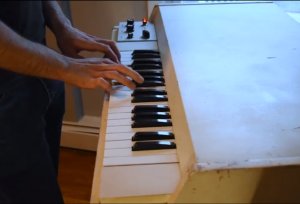
Sam plays his own M400 on the EP (that's a video still to the right), with a chordal string part on Wild Storm Girl throughout most of its six-plus-minute length. I'm sure Glenn's songwriting will mature and as long as he keeps using that Mellotron, I'll keep reviewing his work.
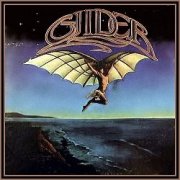 |
Glider (1977, 35.45) **½/TT |
|
| Midnight Flyer It's Too Bad Lost Horizon Bustin' Out Leaving Our Troubles Behind You're Like a Melody On the Line Always the Last One to Know |
Interlude High Fliers |
|
Current availability:
Mellotron used:
Glider were a one-off studio project with a Raspberries connection, whose sole, eponymous album from '77 is a rather bland, soft-rocking effort that occasionally pulls its finger out, notably on the slightly epic On The Line. It didn't sell and the band split soon after, leaving Glider in the Land Of Lost Albums.
No fewer than three Chamberlin players, Steve Halter being the band's chief keys man, although it's Chad Stuart's tasteful strings on It's Too Bad and background ones on Leaving Our Troubles Behind, leaving Halter and co-producer Marc Gilutin to add the solo male voice to On The Line (Halter definitely plays its pipe organ part) and more background strings to closer High Fliers, although the strings on Lost Horizon are synth. While a very long way from 'great', AOR fans may find parts of this acceptable, although it rarely pushes the button marked 'excitement'. Reasonable tape-replay work, too, notably on On The Line, though not enough to make it worth spending very much for an original copy.
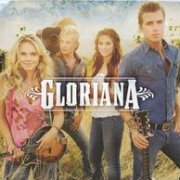 |
Gloriana (2009, 47.17) *½/0 |
|
| How Far Do You Wanna Go? Wild at Heart The Way It Goes Lead Me On If You're Leavin' You Said Cry on Command Over Me Now? |
Come and Save Me Even If I Wanted To All the Things That Mean the Most Change Your Mind Time to Let Me Go |
|
Current availability:
Chamberlin used:
Calling a band Gloriana gives the impression (to me, at least) that they're a Destiny's Child-style girly trio, big on image and thin on interesting music. As it happens, they're a country/pop outfit, big on image and thin on... I say country, but what I actually mean is a kind of teen-pop/AOR/'70s West Coast hybrid, adding the odd country motif (pedal steel, fiddle) to just about slot into the genre. I blame Garth Brooks (hey, remember the 'don't buy used CDs' fiasco?), but then, why blame anyone? This kind of schlock stands alone as some of the least tasteful music ever, combining the worst of several genres into a multi million-selling stew of slick, crass commercialism. I didn't like their debut, 2009's Gloriana very much, in case you were wondering.
The ever-ubiquitous Patrick Warren is credited with Chamberlin on the album, but as so often, without specific credits, there's absolutely no way of telling where it might be used. Actually, even with specific credits, it's frequently a non-starter... This will sell shitloads (with the emphasis on the shit), but hopefully, not to your good self. In fairness, I have actually heard worse, the occasional swamp-guitar run giving me hope for a moment or two, before the song in question lurches into the usual drivel. So; no Chamby to speak of, nor listenable music. Avoid with prejudice.
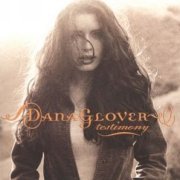 |
Testimony (2002, 58.17) **/T |
|
| Rain Thinking Over Almost Had it All Cherish A Reason Maybe Make it Real River of Love |
Falling Into Love The Way (Radio Song) Testimony ['UK bonus tracks': Sing to Me It is You (I Have Loved)] |
|
Current availability:
Chamberlin used:
Dana Glover seems to be one of those artists who manages to be in the right place at the right time, leapfrogging their way to some sort of success ahead of many more worthy contenders. Saying that, who wouldn't, in that situation? After working with Peter Cetera (Chicago) and Robbie Robertson, she got herself onto a couple of film soundtracks, including the massively successful Shrek, recording her sole album to date, Testimony, soon after. I spent its first few tracks trying to work out who she sounded like, before I decided she's a combination of Joan Osborne (the slidey blue notes) and Alanis Morissette (the slick, mainstream blandness). Almost every track features a credit for 'programming', while her voice is just the right combination of black and white to appeal across the board; the 'soulful' singer it's acceptable for white, middle-class girls to like, US division.
Patrick Warren does his usual thing and sticks some Chamberlin flutes and strings onto Falling Into Love, which do nothing to rescue the song from Blandness Hell. Warren also plays on Make It Real, but I don't think it has any Chamby input, although the first of the 'UK bonus tracks', Sing To Me, has what sounds like a few flute notes at the end. Y'know, this really is mainstream drivel; there's no excuse for anything this faceless, although I'm sure her label's accountancy department would take issue with me over that statement. I know perfectly well you're not going to go out and buy this, even if you see it cheap. Are you?
 |
Basement Apes (2002, 38.54) ***½/T½ |
|
| Reversed Brutus Losing End Easy Living Little Man Not Enough for You Round and Round Black Book Lodge |
It Won't Be Shotgun Seat Powertools and Piss I Saw the Stones Move |
|
 |
Automatic Thrill (2004, 36.12) ***½/½ |
|
| Automatic Thrill Take it Car Full of Stash Here Come the Pigs Dingdong Thing A Call From the Other Side Shaking So Bad Freeride |
Put Me on a Plate Dr. Doktor The Good Times Used to Kill Me |
|
Current availability:
Mellotrons used:
Oslo's superbly-named Gluecifer were/are an unreconstructed, balls-out rock'n'roll band (the Scandic countries have a habit of doing this), whose singer Frithjof Jacobsen had the balls to call himself Biff Malibu. Biff Mailibu! Utterly, stupendously, fucking brilliant! Almost as good as the much-lamented Peter Cook's outrageous suggestions to Equity when they demanded he change his professional name, including Xavier Blancmange, Sting Thunderpants and, possibly the best of the lot, Wardrobe Gruber. Er, moving swiftly on...
After what seems likely to be sample use on 1998's Soaring With Eagles at Night to Rise With the Pigs in the Morning, their fourth album, 2002's Basement Apes (ouch) is a good, rocking effort in the grand tradition, irony-free and all the better for it (remember The Darkness? No? Good). Balls-to-the-wall numbers like Brutus, Easy Living and Not Enough For You typify their sound, the occasional slower one (notably the excellent Losing End) providing some balance. Mellotron from any or all of Kåre Chr.(istoffer) Vestrheim, Cato Salsa and Soundtrack of Our Lives' Martin Hederos, with background strings on Brutus and closer I Saw The Stones Move and more upfront ones on Little Man and Round And Round. Although 2004's Automatic Thrill was the band's swansong, it's almost as good as its predecessor, albeit marginally less energetic, possibly at its best on the opening title track, Car Full Of Stash and Put Me On A Plate. Salsa plays Mellotron, if only just, with a background string part on Take It that wouldn't especially be missed were it not there.
See: Samples etc.
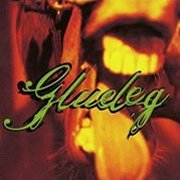 |
Clodhopper (1997, 42.46) **½/T |
|
| Pistons See Saw Man Endless Mrs. Petrie Clodhopper Stack it Let All Hear Fresh Pigs |
Dragonfly Titan Ia The Country Song |
|
Current availability:
Chamberlin used:
Glueleg were a rather irritating funkyish indie outfit from Toronto, with a vocalist (Ruben Huizenga) who insisted on doing that semi-rapping thing that always sounds so crap when done by white indie bands. What am I saying? That always sounds so crap, period. It seems Clodhopper was their second and last album, which at least means I won't have to listen to anything else by them, which is a bonus. It's not all bad, the spoken-word stuff on Fresh Pigs being mildly amusing, but their diluted metal sound really grates after a while and the vocals are too high in the mix throughout, which would be just about acceptable were they any good.
I've already had it confirmed that a real Chamberlin was involved in the recording (no Chamberlins were hurt during the making of this record...), but this is possibly the first time I can remember seeing a credit for 'Chamberlin M-1' (spelt correctly, note), which makes a nice change. After exceedingly minimalist string parts on the first three tracks from sax/keys man Andrew Wyse, Mrs. Petrie sees a full-on flutes intro with some nicely audible strings under the verses, with some more background strings on closer The Country Song, although I wouldn't absolutely swear that any of it except Mrs. Petrie is the real deal.
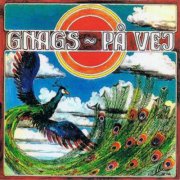 |
På Vej (1973, 41.12) ***/TDu er DigGodag Godag Farvelfærd Politiktak Kloden Rokker Der er Så Meget Jeg Bringer Håb Bryd Op Rejs Ud Solsangen |
Current availability:
Mellotron used:
Forming in 1968, Gnags have released something in the region of twenty studio albums over the course of forty years and are still going today. Their debut, 1973's På Vej (possibly also titled simply Gnags), is a soft-prog/mainstream rock effort characterised by tracks such as Godag Godag, Farvelfærd and the folky Der Er Så Meget, although its best tracks are probably gentle opener Du Er Dig and closer Solsangen, also the longest thing here at over seven minutes.
Ivan Oehlenschaeg and Peter A.G. Nielsen play Mellotron, with background strings on Godag Godag and Solsangen, although it's hardly one of the album's defining features. Overall, a decent enough effort, albeit rather of its time, but with little enough Mellotron that it really isn't worth purchasing for that alone.
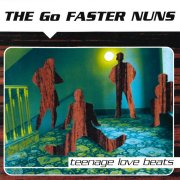 |
Teenage Love Beats (2001, 35.08) ***/T |
|
| To Yr World Go Away Now Luck Of Love Teen Queen Crying She Said Girl Bizarre Keep Your Smile |
New Years Day One Darling Sad Boy |
|
Current availability:
Mellotron used:
The superbly-named Go Faster Nuns were a superior German pop/punk outfit, given how much of the genre is unmitigated shite. Their debut, 2001's Teenage Love Beats, rips through a dozen numbers of the quality of the melodic She Said, Keep Your Smile and One in a mere thirty-five minutes, proving that the band understand that their style's strength lies in brevity.
Markus Kühn plays what sounds like real Mellotron, with a chordal string part entering the fray right at the end of the album, during the second half of closer Sad Boy, on its own for a second or two as the song ends. Hardly a reason to buy this album, although the music just might be.