




|
|
|
|
||
|
||
|
|

 |
 |
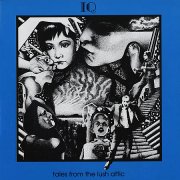
Tales From the Lush Attic (1983, 46.03) *****/TTTTThe Last Human GatewayThrough the Corridors (Oh Shit Me!) Awake and Nervous My Baby Treats Me Right 'Cos I'm a Hard-Lovin' Man All Night Long The Enemy Smacks |
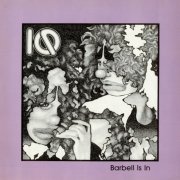 |
12" (1984) ***½/TT Barbell is in (12" Lizard Mix) Dans le Parc du Chateau Noir |
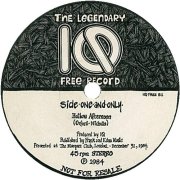 |
one-sided 7" (1984) ****/T Hollow Afternoon |
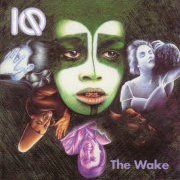 |
The Wake (1985, 49.07/67.11/258.54) *****/TTT (TTTT) |
|||
| Outer Limits The Wake The Magic Roundabout Corners Widow's Peak The Thousand Days Headlong [CD adds: Dans le Parc du Chateau Noir The Thousand Days (demo) The Magic Roundabout (demo)] [Deluxe ed. adds: Outer Limits (demo) Outer Limits (demo) Outer Limits (vocals) |
The Wake (vocal) The Wake (rough mix) The Magic Roundabout (writing) The Magic Roundabout (demo) The Magic Roundabout (vocals) The Magic Roundabout (rough mix) Corners (demo) Corners (vocal) Corners (single remix) Widow’s Peak (live) Widow’s Peak (BBC session) Widow’s Peak (vocals) Widow’s Peak (alt.mix) The Thousand Days (writing) The Thousand Days (early demo) |
The Thousand Days (rough mix) Headlong (demo) Headlong (runthrough) Headlong (vocal) Headlong (vocal) Headlong (rough mix) Outer Limits (instr.demo 2) Outer Limits (instr.demo 3) The Wake (writing) The Magic Roundabout (writing 1) The Magic Roundabout (writing 2) The Magic Roundabout (writing 3) Corners (instr.demo 1) Widows Peak (unused idea 1) Widows Peak (unused idea 2) |
Widows Peak (unused idea 3) Widows Peak (unused idea 4) Widows Peak (unused idea 5) The Thousand Days (demo) Headlong (writing combined) Dance (unused idea) Quiet track Short idea Dans le Parc du Chateu Noir Mike Davis Beacon Radio (Pete/Martin) Andy Rushton Uni Radio Notts (Pete/Mike) Tom Russell Radio Clyde (Pete/Martin)] |
|
 |
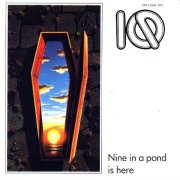 |
Nine in a Pond is Here (1985) ***½/TTT |
|
| It All Stops Here Fascination Intelligence Quotient The Last Human Gateway Awake and Nervous Outer Limits The Wake Glenn Miller Medley |
Flak The Story of Cow and the Grocery Boys Lost Horizon Robo II Funk is in My Brain Stomach of Animal Sno it Pe Crep (Truth) |
||
 |
one-sided 7" (1986) **½/T Nomzamo (demo) |
 |
Picture disc (1986) *****/T½ Intelligence Quotient It All Stops Here |
 |
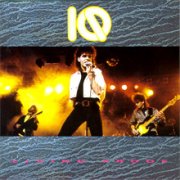 |
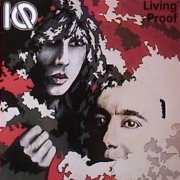
Living Proof (1986, 56.23) ***½/TTT½Awake and NervousOuter Limits It All Stops Here Just Changing Hands The Wake The Magic Roundabout Widow's Peak The Thousand Days Corners |
 |
Nomzamo (1987, 48.12) ***/TTNo Love LostPromises (as the Years Go By) Nomzamo Still Life Passing Strangers Human Nature Screaming Common Ground |
 |
7" (1987) ****/T½ Fascination The Bold Grenadier |
 |
J'ai Pollette d'Arnu (1991, recorded 1985-89, 62.51) ***½/TT |
|
| It All Stops Here Sera Sera Intelligence Quotient Dans le Parc du Chateau Noir Medley: The Last Human Gateway Outer Limits It All Stops Here The Enemy Smacks | Common Ground Promises Wurensh |
|
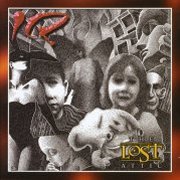 |
The Lost Attic (1999, recorded 1983-99, 76.52) ****½/TTT½ |
|
| The Universal Scam Wintertell The Last Human Gateway (Middle Section) Hollow Afternoon (1999 recording) Apathetic and Here, I... N.T.O.C. (Resistance) Eyes of the Blind Barbell is in (12" Lizard Mix) |
The Bold Grenadier My Legs Fascination Hollow Afternoon Awake and Nervous (BBC session) Just Changing Hands (BBC session) Widow's Peak (BBC session) |
|
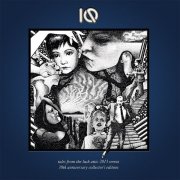 |
Tales From the Lush Attic 2013 Remix (2013, recorded 1983, 129.37) *****/TTTTT |
|
| The Last Human Gateway Through the Corridors (Oh! Shit Me) Awake and Nervous My Baby Treats Me Right 'Cos I'm a Hard-Lovin' Man All Night Long The Enemy Smacks Wintertell The Last Human Gateway (end section, alt. vocals) Just Changing Hands (unfinished demo) Dans le Parc du Chateau Noir (unfinished demo) |
The Enemy Smacks (first attempt) The Last Human Gateway (writing session) Just Changing Hands (instrumental demo) Just Changing Hands (rehearsal) Wintertell (demo) The Last Human Gateway (rehearsal) Unused Song Idea Version 1 Unused Song Idea Version 2 Just Changing Hands (demo) The Last Human Gateway (middle section) |
|
Current availability:
Mellotrons used:
Southampton-based outfit The Lens fragmented in 1981 (re-recordings of their material have been released), three of its members forming a new, more blatantly 'progressive' band, IQ. Before long they replaced their drummer and early Lens member Peter Nicholls joined on vocals; the 'classic' lineup was complete, engaging themselves in a heavy gigging schedule, just in time to become one of the leading lights in the early-'80s UK prog scene. Their album-length demo, Seven Stories Into Eight (****) was released in late '82 and sold a largish but unknown number of copies, eventually being 'retired' two years later. In 1998, the then-current lineup re-recorded the whole tape, releasing it along with a remastered version of the original as Seven Stories Into '98 (****), highly recommended for anyone interested in the band's history.
Soon after the tape's release, keyboard player Martin Orford bought his Mellotron M400 from Adrian Wagner and applied it vigorously to the new material they were writing. Later in '83 they released their first 'proper' album, Tales From the Lush Attic, something of a Mellotron Classic; of the album's five tracks, the only two not to feature it are the disturbing Through The Corridors (Oh Shit Me) and the piano solo My Baby Treats Me Right 'Cos I'm A Hard-Lovin' Man All Night Long (!), an early showing of IQ's, er, 'odd' sense of humour. Tales opens with The Last Human Gateway's major-key melody on the Mellotron flutes, before Pete's somewhat tortured vocals enter the fray. His oblique and entirely original lyrics are one of the band's constant reference points; he admits himself that he "Doesn't really know what they're about". It quickly became apparent that Martin's favourite Mellotron sound was the 8-choir; he once described the strings as sounding like "Someone sawing wood", which makes me wonder if they were the classic three violins, or the grungier sounding string section which does, indeed, sound a lot like someone sawing wood.
Awake And Nervous is an absolute classic of so-called 'neo-prog', the (usually deservedly) much-maligned genre that the scene initiated, featuring simpler arrangements than 'classic' prog, with more emphasis on the vocals. Martin uses the Mellotron strings (no, they're the standard three violins!) here to great effect, along with his Italian Logan string synth. The album's closer is the dark The Enemy Smacks, the lyrics dealing with heroin addiction, featuring more of those flutes in the creepy middle section and triumphal choir finishing the album off nicely. The album isn't to all prog fans' taste, but IQ sounded far nearer to their '70s influences than many of their contemporaries, with a far better grasp of dynamics and chord structures.
Two singles were recorded the following year; Barbell Is In was the band's cod-reggae number, originally recorded for Seven Stories, but Martin still managed to get a quick burst of Mellotron choir in, although this may only be on the '12" Lizard Mix'. It's backed with the first outing for a much-anthologised track, Dans Le Parc Du Chateau Noir, with more of those choirs. The other was a track called Hollow Afternoon, only available as a one-sided 7" at their 1984 New Year's Eve bash at the London Marquee, given to everyone who walked through the door; although most of what we're hearing is string synth, those Mellotron choirs crop up towards the end. These are both now available on the 1999 'odds'n'sods' compilation, The Lost Attic, as is their BBC Radio 1 Friday Rock Show Session, also with extra added Mellotron.
The Wake was released nearly two years after its predecessor, a long time in those days, but it was worth the wait. From the ominous opening bassline to Outer Limits to the closing chords of Headlong, IQ barely put a foot wrong, although Corners still jars slightly with its drum machine and spiky synth sounds. Martin hired in a phalanx of extra keyboards, but much of the album is recorded using his 'old faithfuls', Mellotron on four of the seven tracks. The obvious Mellotron highlights are the title track (choirs on the intro riff) and the nearest the album gets to an 'epic', Widow's Peak, already heard on the previous year's radio session. Along with Tales, this is a seriously essential album, although die-hard '70s obsessives may wish to steer clear. IQ knock anything by Marillion into a cocked hat (in my humble opinion, of course); while not really approaching the standards set by Genesis et al, these are two of the best albums of their era.
The CD version of the album adds three tracks, including Dans Le Parc Du Chateau Noir and a couple of Mellotron-free demos. In 2010, to celebrate its twenty-fifth anniversary, the band opted to release a (wait for it) four-disc version of the album, digging up just about every surviving piece of tape from the sessions, giving us multiple (and I mean multiple) vocal outtakes, rough mixes, unused ideas, writing demos, early demos, work in progress demos and good old-fashioned regular demos of the album's seven tracks. We also get live versions, not least the very first time they tackled Widow's Peak live; the band forget there's a second verse and head off into the next section, while Pete doggedly carries on singing verse two until the band fall into line. Quite impressively, actually. A reiteration of the BBC Friday Rock Show version of Widow's Peak (already available), the earliest known video footage of the band and MP3s of three lengthy radio interviews (not included in the above timings) finish things off nicely. But, I hear you cry, is it worth the effort? Well, how much of an IQ fan are you? Will you ever listen to this stuff a second time? The jury's out, frankly; there are some great moments to be found amongst the endless very similar versions of familiar material, but as to whether Pete's vocal outtakes will bear repeated listening can only be a matter for you, dear reader. Incidentally, while Martin's Mellotron crops up on various versions of things, I think I'm right in saying that there isn't one example of anything we haven't actually heard before, in better quality.
Pete shocked their growing fanbase by quitting soon after The Wake's release, being replaced by the technically superior but otherwise inferior Paul Menel. The band wasted no time in recording him, by releasing what sounds like a set of rehearsal tapes from late '85 as Nine in a Pond is Here, a double LP in a deliberately bootleg-style sleeve, complete with 'TAKRL' lettering. There's four Mellotron tracks on the album, including a side-long The Last Human Gateway, reprises of two other album tracks and another song from Seven Stories, Fascination. Their classic Glenn Miller Medley finally makes it to tape, but side four is plain bizarre; a set of weird experimental pieces mixed with the band's by now legendary humour, the only listenable (frankly) tracks being Lost Horizon and Sno It Pe Crep (Perceptions backwards, fact fans), which is, er, a piece of music played backwards, although I know of nothing they've recorded of that title. Any ideas? The first three sides of Nine in a Pond crept out on CD on a French bootleg, eventually officially released by the band, although side four remains unaccountably missing in action. Funny, that...
IQ's show at London's Camden Palace earlier that year, before Pete's departure, had been filmed, the soundtrack slipping out without the band's consent as Living Proof in '86. It's a very honest representation of the band's sound at the time, but the poor recording quality (at least on the vinyl original) lets it down badly. Martin can be heard Mellotronning away on five of the nine tracks, no extra Mellotron added to previously Mellotronless tracks. There are two non-album tracks here, so the album's worth it for the fan, but not for the casual buyer. Despite their original reservations, the band reissued it on CD on their own Giant Electric Pea label in the '90s after a swift remix.
Before Menel's first album with the band, Nomzamo (a slightly misguided eulogy to Nelson Mandela's subsequently discredited wife Winnie), a demo version of the title track was sent to fan club members featuring the by-now ubiquitous choirs. The song showed a new side to IQ, with a more contemporary sound and more 'world' influences apparent, making it all the odder that they chose to re-record two Seven Stories tracks as Menel's first official release, sticking Intelligence Quotient and It All Stops Here onto opposite sides of a rather silly logo-shaped picture disc. Now, despite my deep reservations about Menel's suitability for the band, I have to say that these versions are absolutely stunning, complete with a little Mellotron on the 'A'; thankfully, both were made more widely available on 1991's J'ai Pollette d'Arnu set.
Sadly, Nomzamo was something of a disappointment; Vertigo 'prog' subsidiary Squawk had signed the band and, along with the other major movers of the 'movement', IQ's new music had a distinctly mainstream bent to it, although the album still manages one epic, the non-Mellotron Human Nature. Despite being used on three tracks, Martin's Mellotron use was slipping badly by this time and none of them are especially 'classic'. He'd stopped using the machine live the previous year, after discovering a knackered roadie bumping it down a flight of steps on his own. What appears to be the band's last genuine Mellotron recording crept out later the same year, a fan club single that paired a re-recording of Seven Stories' Fascination (with a little choir work) and a version of the 'trad.arr.' fave The Bold Grenadier (without).
Menel's second album, the even slicker Are You Sitting Comfortably? (***) had no Mellotron whatsoever, although the 'epic' count was raised by one. Menel and long-term bassist Tim Esau left soon after, to immediately disappear into obscurity (until Tim rejoined, years later). An acquaintance of mine met Paul Menel some years later, who angrily claimed that he'd, "Tried to drag IQ into the future; they tried to drag me into the past"; I think we all know who got the last laugh, eh? I'd personally given up on the band by this point, so I missed their great 'comeback' gig at the (new) Marquee with Martin on vocals. Pete came out for the encore to scenes of hysteria unrivalled since, oh, the most recent gathering of hormonal teenage girls at the time; Bros or somesuch, I'd imagine (about whom it has been said, "Who?"). Not to say that IQ audiences consist of such types. Perish the thought. Pete soon rejoined on a permanent basis, only for the band to suffer another blow; old friend and Lens member Les 'Ledge' Marshall, by now their bassist, committed suicide, leaving the distraught band in temporary limbo. They decided to soldier on and found ex-Ark bassist John Jowitt, joining Pete, Martin and long-term members Mike Holmes (guitar) and Paul Cook (drums. Not that one, you eejit). As an aside, Martin and John also played in Jadis around this time, often incorrectly described as an 'IQ offshoot'. Formed in the early '80s, Jadis have worked their way through multiple lineups and styles, IQ members coming and going with some regularity.
Rather than rush into recording themselves, IQ formed their GEP (Giant Electric Pea. Don't ask) label and released their first 'odds'n'sods' album, J'ai Pollette d'Arnu, which apparently means precisely nothing. The band had been practicing writing complete rubbish in English for some years by this point and now felt confident enough to tackle French, too. The album's a real mixed bag; both sides of that Menel picture disc, a b-side featuring Pete, a demo and four live tracks. The b-side, Dans Le Parc Du Chateau Noir (now also on CD versions of The Wake) has some moody Mellotron choir and, while I thought that it was on both sides of the single, on another listen I can only hear any on the rather stunning Intelligence Quotient. Y'know, the quality of these recordings actually make this CD worth purchasing for them alone.
IQ finally recorded a new album proper and Ever was released in 1993, crediting Martin with Mellotron, among a bevy of newer instruments, although I'm extremely reliably informed (thanks, Martin) that it is, in fact, sampled, as is the Mellotron on Jadis' More Than Meets the Eye. In a sad state of disrepair, Martin's Mellotron was finally sold to Pendragon/Arena/lots of other stuff man Clive Nolan, who won't take it on tour, but at least records with it. Martin still uses samples of the 8-choir, heard to good effect on the double CD/video set Forever Live (****½), recorded in '93 but not released until '96. Bit of a shock seeing John Jowitt with hair... I don't believe the samples are used on the following year's spiffing double CD concept album, Subterranea (****½) and they've definitely been quietly retired by 2000's The Seventh House (****). 2004's Dark Matter, though, is a full-on '70s-style prog album, complete with (fake) Hammond, Mellotron and Moog.
As mentioned above, however, 1999 brought their second odds'n'sods album, The Lost Attic, containing outtakes, demos and rarities from 1983-99, including five Mellotron tracks from the band's '80s heyday. Rumour has it (cough) that the album was only released to cover the enormous cost of their excellent stage show for Subterranea, as was the subsequent live album/video of the tour. IQ are still very much a going concern and still, amazingly, putting out good albums, but don't expect any more Mellotron unless they can dig up enough obscurities to make up a third CD.
Tales From the Lush Attic 2013 Remix provides me with a little conundrum: generally speaking, when I amend reviews to include reissue bonus tracks, as with the massive Wake set, above, I simply, well, amend them, leaving them in their original place in the artist's catalogue. However, in this case, although Discogs lists it under the original album's entry (and? They do the same with Seven Stories Into '98, ludicrously), in this case, I'm listing it separately. Why? It's my site and I make the rules. It's a CD/DVD set, the CD containing (wait for it) the 2013 remix of the original album and a handful of bonus tracks. Is the new mix any different? Slightly, is the short answer. Mike Holmes' sleevenotes tell us that nothing was re-recorded, but everything was tweaked, quite a few missing/ropey parts were 'fixed', alternate parts imported from the multitrack in certain cases and, overall, a greater fidelity was achieved. In total, Mike spent around twenty days on this mix, as against the one (!!) which was all they had originally. In summation? It sounds amazing, to the point where I'm not sure I'll bother listening to the original again. Has it lost any 'atmosphere'? Not to my ears. A triumph, for once, of modern technology.
Bonus tracks? The CD adds four, a new recording of a contemporaneous piece, Wintertell, an alternate version of The Last Human Gateway's closing section and two demos, Mellotron choirs on Gateway and the Dans Le Parc Du Chateau Noir demo. In addition, the DVD, aside from footage of the whole album played live in 2011, includes the multitrack files for Through The Corridors, the original mixes of both Tales and Seven Stories, an audio commentary from Mike and Pete and ten rehearsal recordings and demos, mostly on MP3, of highly variable sound quality. The first one with any Mellotronic input is the 'first complete version' of Gateway, a handful of days before recording began, intro flutes present and correct, although the end section choirs are, wondrously, substituted by strings, also heard on the brief Unused Song Idea Versions 1 and 2. I'm often dubious as to the merit of projects of this kind, but this is so beautifully done that only an idiot would dismiss it. A splendid package.

After using real Mellotron on several albums, though never particularly liking playing the instrument, Martin Orford sampled it around 1986 for live use, although it still found its way onto the odd studio recording. IQ's first 'reformation' album, with Pete Nicholls back in the fold, Ever, credits 'Mellotron', but I'm very reliably informed that it's the same choir samples Martin had been using onstage for several years you can hear on three tracks. They're a bit buried in the mix, to be honest and my original 'real Mellotron' review states that I wasn't totally convinced as to their veracity and it appears I was right. It's a good album, mind you, but don't go expecting the Real Deal.
IQ's Great '93 Comeback was assisted by their first tour with Pete since the mid-'80s, documented on the Forever Live two-CD/video set, recorded in Germany, although it wasn't actually released until '96. The band were already, even at this stage, proving their talent for longevity by refusing to become a 'heritage act', mixing the old (The Wake, Widow's Peak), the new (The Darkest Hour, Out Of Nowhere) and Pete-sings-Paul (Nostalgia/Falling Apart At The Seams, Human Nature), an approach they've maintained to the present day. A complete The Enemy Smacks and two segments of The Last Human Gateway are the icing on the cake, although, to be honest, none of the versions here noticeably improve on the originals. Martin's Mellotron choir samples turn up in all the places you'd expect: The Wake, Widow's Peak, Falling Apart At The Seams and several others, plus a rare outing for the strings on Fading Senses.
Given the popularity of several pieces from the band's long-long-out-of-print 1982 demo, Seven Stories Into Eight, IQ elected to re-record the entire thing after finally squeezing a releasable version of the original tape from a cassette copy and deciding they could probably improve on it. Well, could they? While the original has a great deal of charm and contains some of the band's very best early work, its lack of fidelity (for several very good reasons) is undeniable, so, given that the two-disc set contains both versions anyway, Seven Stories Into '98 is something of an essential release for the (should be) committed fan. Some of the re-recordings are very similar to the originals (Intelligence Quotient and It All Stops Here, in something like their fourth or fifth recorded versions), while some (Barbell Is In) are almost completely unrecognisable, highlights being Intelligence Quotient, It All Stops Here, Fascination and ridiculous Christmas medley For Christ's Sake, as fun as ever. Those Mellotron choir samples turn up on Fascination, It All Stops Here and the of-the-era-but-previously-unrecorded Eloko Bella Neechi, though not on Intelligence Quotient this time.
2004's Dark Matter is a full-on '70s-style prog album, complete with (fake) Hammond, Mellotron and Moog, although the Taurus pedals are real (!), albeit only at all obvious on one track. This has to be IQ's best album for years, given that the interim ones aren't exactly slackers... Opener Sacred Sound has a repeating chord sequence to die for, while 'side-long' closer Harvest Of Souls gets better with every play. Loads of fake Mellotron (strings/flutes/choir), all from the IK Multimedia Sample Tank, suitably credited, making a change from most fakes' credited pretence at reality. Who'd have thought IQ would still be on top of their game after over twenty years? Shocking. Well, let's hope Martin enjoyed the pseudo-analogue experience enough to repeat the experiment next time round... What we can be certain of is that he isn't going to use the real thing, sadly. Oh well.
Although IQ's lineup has always been a little fluid, Martin Orford's departure came as a shock to all and sundry, as did his subsequent announcement that he was giving up music entirely. Undaunted, the band replaced him with Grey Lady Down's Mark Westworth, clearly determined to prove that he could actually make some good music, although his first (and only, as it turns out) album with them, 2009's Frequency, partially suffers from the same malaise as Spock's Beard's post-Neal Morse work, in that when the compositional heart is ripped out of a band (and yes, I know that Martin wasn't the only writer in IQ), any subsequent work can come across as slightly anodyne. It's not a bad album, not by any means (possible highpoint: Ryker Skies), but, despite their best efforts, I hear nothing here to challenge anything on Dark Matter, never mind their earlier work. 'Mellotronically' speaking, Westworth adds strings and choirs (plus a smattering of flutes) to most tracks, in the time-honoured manner; spot the Crimson rip on the title track, though... Frequency is an IQ album that only partially sounds like IQ; as a result, approach with slight caution, although I'd imagine die-hard fans will lap/already have lapped it up anyway.
Westworth was replaced by Sphere³'s Neil Durant at some point during the five-year wait for 2014's The Road of Bones. Hurrah! A Mellotron owner! Er... The album itself is a decent enough effort, if no great improvement on its predecessor, its chief failing being an inability to fully engage the listener attuned to their earlier work; a certain blandness pervading much if its material. Saying that, closer Until The End displays flashes of the 'old IQ', but, overall, a level of excitement seems to be missing. For some reason, the band have opted to go for the now-hoary old trick of the '2CD deluxe ed.', the real trick being that, at least to my ears, the bonus material is better than the actual album. Huh? Nope, no idea, but it seems to be more cohesive and dynamic than the regular release. Samplotron? I've no idea why Durant uses samples (does he still own his M400?), but here they are, used quite minimally, to be honest, with heavy choirs on Without Walls and string swells here and there, but hardly the heaviest use you'll ever hear, unlike returning bassist Tim Esau's Taurus pedals, which he actually manages to overuse, something I'd previously considered impossible.

See: Martin Orford | Jadis | Arena | Ark | Grey Lady Down | Sphere³