




|
|
|
|
||
|
 |
Je Ne Suis qu'une Chanson (2002, 52.12) ***/½ |
|
| Je Ne Suis qu'une Chanson Tous les Souvenirs Les Paroles Silencieuses Nos Amis, les Autres Le Nez au Vent Au Verso de l'Amour Les Éléphants (Les Éléphants/Les Pôts Cassés) La Vie Sans Complexes |
Ça Sent l'Été Pain Perdu Le Pays d'où l'on Ne Revient Pas L'Aventure Humaine |
|
 |
L'Homme de Mars (2008, 49.04) ***/T |
|
| Prologue Ici et Maintenant Welcome to My Paradise Télépathie On a Marché sur la Terre Vibrato Paroles d'Hommes Comme George Bailey Rapport Humain |
Mon Etudiante La Nostalgie de l'Avenir Amer Sonnet Miss Monde Happiness et Moi Dans le Rouge Planète Mars Epilogue |
|
 |
Panorama (2009, 74.54) **½/T½ |
||
| Une Ville à Aimer Un Peu de Prévert Je Suis un Kilomètre Panorama Tous les Mômes Betsy Party Cash Léo Song |
Au Revoir, Adieu Métropolitain Mois de Mai Reste Encore Des Roses et des Ronces Les Éléphants Paroles d'Hommes Inoxydable |
Congas et Maracas Juste Quelqu'un de Bien Papillon de Nuit |
|
Current availability:
Chamberlins used:
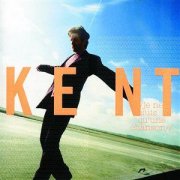
Hervé "Kent (Hutchinson/Cokenstock)" Despesse, a man of many names, was vocalist with pioneering French new wave band Starshooter (it says here), subsequently releasing something like fifteen solo albums, at least three of which are supposed to feature the Chamberlin, although 2000's Cyclone, despite keyboard work by the legendary Mitchell Froom on every track, is not among them. 2002's Je Ne Suis qu'une Chanson is, however, an album based almost entirely on the sound of the traditional French accordion; unusual for a couple of tracks, wearing for twelve. François Lebleu's only definite Chamby use is the distant voices on La Vie Sans Complexes (male? Female? Both?), although it's possible there's something on the opening title track, making this a pretty low-priority tape-replay album.
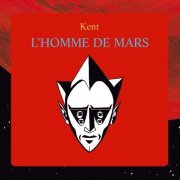
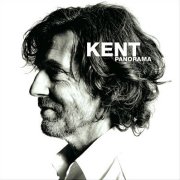
2008's L'Homme de Mars appears to be some kind of concept effort, indecipherable to the non-French speaker. Musically, it largely consists of epic, mid-'60s influenced orchestral pop, for better or worse: possibly worse, on reflection, although (he said, grudgingly) it does it well. Fred Pallem on Chamberlin this time, with a little burst of strings on Comme George Bailey and more of the same on Dans Le Rouge, any other contributions being well and truly hidden in the mix. 2009's Panorama's chief influence is rockabilly, of all things, although Kent throws several rather French-sounding ballads into the mix, as you might expect, along with a handful of mainstream folk/pop efforts. Pallem on Chamby again, with flutes on Je Suis Un Kilomètre, a strings/brass mix and cellos on Les Éléphants and strings and cellos on Paroles D'Hommes. Is this the same Chamberlin used in the late '70s by Magma and Dan ar Bras? I think we should be told.
 |
Doctor Sax & the Great World Snake (2003, 132.00) ***/TDoctor Sax & the Great World Snake |
Current availability:
Mellotron used:
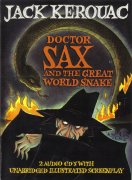
Doctor Sax & the Great World Snake is Jack Kerouac's screenplay of his 'spontaneous prose' novel Doctor Sax (written 1952, published 1959), never filmed, but recorded as a double CD spoken-word set in 2003 by Kerouac's nephew Jim Sampas. As you might expect from the 'spontaneous' part of the above description, this is a somewhat random work, partially autobiographical, like much of Kerouac's work, this one concerning his childhood, both real and fantasy, incorporating vampires, alchemy and, of course, the world snake itself. Too many drugs, says I.
John Medeski plays Mellotron, if only just, with borderline-atonal choirs about twenty minutes from the end and similar cellos, followed by flutes some minutes later and strings right at the end of the narrative, giving the bizarre impression that Medeski was only invited to contribute towards the end of the sessions, assuming they were recorded entirely in sequence. This performance works better in some places than others; suffice to say, if you're not already a fan of Kerouac's work in general and this title in particular, you probably won't want to bother.
See: John Medeski
 |
7" ( 1979) ***½/½ Kong Edvardt Feberlåten |
 |
Kerrs Pink (1981, 48.34/57.15) ****/T |
|
| Velkomst Sett Dem Bare Ned Barkbillens Flukt Sang Fra Skogen Pimpernelle Parringsstevet Bamse Brakar Sirrus |
Hvis Jeg er der Neste År Avskjed [CD adds: Kong Edvardt Feberlåten] |
|
Current availability:
Mellotrons used:
Kerrs Pink (named after a brand of Norwegian potato, apparently) had been around since the early '70s in one form or another before releasing an independent single in 1979, Kong Edvardt/Feberlåten. Despite their ever-changing personnel, they recorded the single with the three-guitar lineup they'd used throughout most of their history, more mellow than you might expect, with a folky feel to both pieces. Halvard Haugerud's Mellotron is well back in the mix on the a-side, with a little strings, which seems a bit of a waste, but there you go. Something you don't often hear on 'progressive' stuff, whatever you take that to mean, is the rather jaunty feel of both of these tracks, obviously coming more from the folk end of things than the prog.
The following year, their self-titled first album draws on the Scandinavian folk tradition, amongst other influences (particularly on Parringsstevet); although most of the tracks are gentle, laid-back pieces, an occasional burst of (slight) aggression shows through, such as on Sett Dem Bare Ned or the closing section of the excellent Hvis Jeg Er Der Neste År. Other artists are largely noticeable by their absence in the band's sound, although Sirrus has a distinctly Pink Floyd bent to it (Cirrus Minor?) and a general 'symphonic' feel pervades several tracks. Again, not that much Mellotron, just choir and strings, so don't go buying this for that alone.
Incidentally, as you can see, both single tracks are included on the CD, which is a good job, as originals are almost certainly impossible to find. They almost certainly didn't use Mellotron on their second album, Mellom Oss, from a year later, although finding out for sure won't be the easiest task, as, when Musea reissued it, the band elected to submit an entirely re-recorded version of the album from the early '90s. Lost tapes? Dissatisfaction with the original? Who knows?
 |
Kestrel (1975, 44.10) ***½/TTT½The AcrobatWind Cloud I Believe in You Last Request In the War Take it Away End of the Affair August Carol |
Current availability:
Mellotron used:
Kestrel's sole release is an odd little album, being a rare example of the little-remembered MOR/prog crossover (!). Adventurous arrangements, but frequently cheesy chord sequences and vocal melodies; what were they thinking? It's actually not a bad listen, as long as you temporarily disable your cheeseometer and pretend that the Fender Rhodes work sounds more like Gentle Giant than it actually does. The best tracks are probably opener The Acrobat and the two longer tracks detailed below, but there's nothing too awful on offer, unless you tend to wither and die at anything played in major (seventh) keys.
John Cook's Mellotron work is quite low-key until several minutes into the lengthy In The War, where a string part cuts in for thirty seconds or more, completely swamping the mix in grand style. Fabulous! The other overwhelming part is the strings and (faint) choir towards the end of the album's other long track, closer August Carol; the rest of his use consists of fainter string and choir parts, but these two tracks earn most of the 'T' rating above.
 |
Hver Sin Vej (2008, 41.27) **/½ |
|
| Bum Bum Almindelig Dag Blege Knæ Ikkeryger Ven Brevet Loppen Togsangen Dope |
Luften Går Hun Ikke Meget for Sig Selv? Fjernsyn Den Stenede Jord Fest og Liv og Dans |
|
Current availability:
Mellotron used:
Marie Key Kristiansen's second and (to date) last album with her band, 2008's Hver Sin Vej, is, sad to say, a dull, mainstream pop album, although it becomes less predictable as it progresses, at its least tiresome on Brevet, the sparse Luften and Går Hun Ikke Meget For Sig Selv?, perhaps.
Tim Christensen plays one of his own Mellotrons, with a flute line and chordal strings towards the end of Ikkeryger Ven; sadly, that's it. Key has gone on to solo success, but I wouldn't expect any more of it than this sorry effort. Very dull.
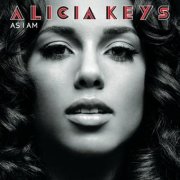 |
As I am (2007, 55.59) **½/T |
|
| As I Am (Intro) Go Ahead Superwoman No One Like You'll Never See Me Again Lesson Learned Wreckless Love The Thing About Love |
Teenage Love Affair I Need You Where Do We Go from Here Prelude to a Kiss Tell You Something (Nana's Reprise) Sure Looks Good to Me |
|
Current availability:
Mellotron used:
I'm the sort of person who knows next to nothing about superstars like Alicia Keys, entirely from choice; seriously, why would I? It seems Alicia "Keys" Cook is a stage-school girl from a single-parent background who has sold thirty-odd million records to date; not bad going by anybody's standards, I suppose. She's a good singer, albeit in that awful 'R&B' style that's so horribly ubiquitous at the moment and a respectable pianist, making a change from the usual run of 'I can sing a bit' types who seem to sell CDs, er, downloads by the bucketload, none of which makes her utterly mainstream work any more appealing to moi.
Credited Mellotron on three tracks, with nothing audible on Superwoman, distant choirs on No One (both from Keys herself) and an interesting pitchbent string part on The Thing About Love from Bigelf's Damon Fox (!). Not interesting enough to give this more than one T, though.
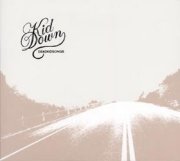 |
Deadkidsongs (2005, 13.44) **½/TWe'll Make it AwayNothing More, Just a Lie Reality Through a Telescope Portrait of a Young Man |
Current availability:
Mellotron used:
Are Kid Down emo? Is that what this metal/indie/pop hybrid is? Their first release, 2005's Deadkidsongs EP, is the kind of thing a certain kind of young person goes for, while leaving those of us with longer memories completely nonplussed. The most irritating thing about this disc is that it has several good points, but they're all cowed into submission by the infuriating vocal style the band insist on using.
Someone (Eric Höjdén?) plays Mellotron, presumably real, as it was recorded at a different studio to the rest of the EP (usually a giveaway), with background string parts on all but final track Portrait Of A Young Man. I can't honestly recommend this to you, though; if this is emo, I'm outta here.
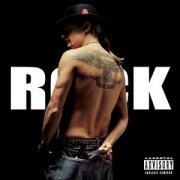 |
Kid Rock (2003, 67.15) ***/T |
|
| Rock'n'Roll Pain Train Cadillac Pussy Feel Like Makin' Love Black Bob Jackson, Mississippi Cold and Empty Intro Rock'n'Roll |
Hillbilly Stomp I am Son of Detroit Do it for You Hard Night for Sarah Run Off to LA Single Father |
|
Current availability:
Mellotron used:
Robert James "Kid Rock" Ritchie is one of those phenomenally successful artists who have constantly flown under my radar (not that I expect he noticed), probably because his target audience, i.e. disaffected redneck American teenagers, is an awfully long way from my own social demographic. As a result, his 'unsuccessful' ('only' 1.4 million sales) eponymous 2003 album is the first thing I've heard by him and, I have to say, it's far better than I'd expected. Most descriptions of his style include hip-hop, metal, country and Skynyrd-style 'southern rock', sometimes all in the same song, which is pretty spot-on. It's actually quite difficult to fault his schtick, as he aims fairly and squarely at his target audience and hits them smack between the eyes (missing the brain by three feet) while making albums that contain, if not something for everyone (that ludicrous old chestnut), something for a lot more people than you might expect. The upshot of all this is that I actually found Kid Rock fairly palatable, if not something I'll put on every week (or year. Or possibly life), with some surprisingly universal lyrical themes and some reasonable cod-'suvvern' riffing.
Anyway, yer man Rock plays a lovely Mellotron flute part on his version of an unreleased Bob Seger number, Hard Night For Sarah, with the only other even vaguely possible use being the strings on Cold And Empty, although it seems likely they're generic samples, given how upfront it is on the Seger track. Again, the strings on closer Single Father are either real or programmed, but one decent Mellotron track is one more than I'd expected. So; a surprisingly listenable album, with an amusing cover of Bad Company's Feel Like Makin' Love for people old enough to remember the original. I shan't be rushing out to purchase anything else by Mr Rock, but at least I don't feel I've totally thrown away an hour of my life. Criticisms? Like so many modern albums, it's too bloody long, but that seems to be par for the course with mainstream stuff, so it's hardly even worth mentioning, although I did anyway.
 |
Out of Uranus (1970, 45.26) ***/T |
|
| Out of Uranus Soon There Will Be Everything Acid Bean Where Nobody Ever Goes Sun Keeps Shining Call for the Politicians Fido Castrol Lost Alone |
Son of Wet Milkman |
|
Current availability:
Mellotron used:
Killing Floor were a late-'60s blues boom band, whose sole album, 1970's Out of Uranus (oh my aching sides, etc.), is a somewhat unoriginal slice of under-powered blues-rock, that seems to have picked up some kind of posthumous reputation as a 'classic'. It isn't. Generic blues numbers like Where Nobody Ever Goes or Sun Keeps Shining don't exactly help matters, but a series of uninspired riffs and awful, clichéd lyrics drag the album down, although given time, it's possible the band could've pulled something out of the hat, going by the energetic, jammed-out ending to closer Milkman. Mind you, they invented/stole the Block Buster/Jean Genie riff three years early on Lost Alone, so maybe they were innovators after all, although there's a particularly poor example of the Dreaded Studio Drum Solo on Son Of Wet, so I take it all back. Maybe it worked better live.
Mellotron on one track, with some nice MkII strings on Soon There Will Be Everything from Lou Martin, later of Rory Gallagher's band. To be honest, it's the best thing about this very average album; how was it possible to be so unoriginal so early in hard rock's history? An inability to let go of the blues probably didn't help, along with a severe lack of imagination, I suspect. Anyway, a rather ordinary effort with a couple of reasonable tracks and one nice bit of Mellotron. This barely scrapes three stars. Disappointing.
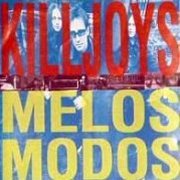 |
Melos Modos (1999, 44.55) ***/½ |
|
| Perfect Pizza Beckon Call-Girl Honesty Mistake I've Been Good Sandalwood + 50 That's All One Goodbye Unpaid |
Lucky Me Cheerleader Type Weeds & Worms Rocketsleep/Hang Up |
|
Current availability:
Mellotron used:
The Killjoys were a Canadian band, formed in 1992, operating at the punkier end of powerpop. Melos Modos was their third album and, while containing some reasonable material, fails to leap out at you like the genre leaders, although the key changes in Lucky Me work a treat, while the acoustic-with-cello Weeds & Words might just be the album's best track, sneaking in under the radar. Just when you think you've got the band sussed, they finish the album 'proper' with Rocketsleep, shifting into drone mode after a few minutes, jammed out to six minutes-plus before the tediously obligatory-for-the-time 'hidden track', Hang Up and several minutes of silence, for no good reason (subtracted from timing above).
Powerpop legend Marshall Crenshaw guests on Mellotron, with what has to be one of the most minor pieces of actually audible Mellotron on this site, a couple of seconds of buried-in-the-mix cellos on Beckon Call-Girl. Why bother? Anyway, a decent enough album in its genre, but far from classic, with next to no Mellotron.
 |
Hide Away (2014, 53.19) ***½/T |
|
| Lay Down Until We're All Free Hide Away Love Wants to Give its Heart to You Sleeping in the Rain Crescent Moon Babylon The White Rose and the Dove |
Love is War California Eyes of Love Graveyard Jones |
|
Current availability:
Mellotron used:
John Kilzer's roots-rock credentials are impeccable, his life story a succession of left turns, from basketball star through mainstream albums on Geffen, addiction, songwriting kudos, church ministry and doctorate. As far as I can ascertain, after those two early major-label releases, his next album, Seven, appeared in 2012, Hide Away following two years later. A set of well-crafted Americana, highlights include opener Lay Down, Sleeping In The Rain, Crescent Moon, the beautiful California, all cello and upright piano and Graveyard Jones, which riffs on The Beatles' Come Together.
There's something terribly tentative about Rick Steff's Mellotron flutes on The White Rose And The Dove, which, along with its not-actually-fully-in-tuneness, have convinced me that, just for once these days, we're hearing a real machine. Only one track, mind, but it's a good'un. An excellent effort, then, that should keep the discerning Americana fan more than happy. Incidentally, Kilzer appears to have neither Wikipedia page nor website. Old school.
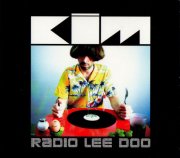 |
Radio Lee Doo (2011, 40.09) ***/T |
|
| Radio Lee Doo Muriel To Kremlin La Dolce Lee Doo I'm Getting Old Uptown The Sunlights Never Came |
The Candidate Don Lee Doo Goodbye Lee Doo |
|
Current availability:
Mellotron used:
Kim Stanislas Giani's Radio Lee Doo is mostly a contemporary pop/rock album, occasionally taking a left-turn into something slightly weirder, as with La Dolce Lee Doo's jazzy moves or Don Lee Doo's properly out-there experimentation. The rest of the record performs the unusual trick of rarely repeating itself, from the opening title track's breezy powerpop, through Muriel's vaguely Supertramp moves, To Kremlin's electropop, I'm Getting Old's pop/punk and closer Goodbye Lee Doo's piano/synth balladry.
Giani's credited Mellotron presents me with a conundrum: usually, it's at least relatively obvious whether or not we're hearing samples, but the strings on Don Lee Doo could, genuinely, go either way. Sonically, they sound real, but some of the playing strikes me as improbable. But then, the major key-click towards the end of the track (this features a LOT of Mellotron) sound authentic, as does the very wobbly tuning. Help! Thrown such a curveball, I've opted to put this here, until (or if) I should find otherwise.
 |
Oh Hear Us (2006, 47.41) **½/TT |
|
| Can't Climb Up Don't Take Your Love Away Eternal Father Is He or Isn't He? The Wheel Last Ride Home When I Was Lost East of Indiana |
Lightning Bugs Ballad #61 Wrap Your Troubles in Dreams |
|
Current availability:
Chamberlin used:
Jennifer Kimball formed The Story in the '80s with Jonatha Brooke, the duo splitting after two records. 2006's Oh Hear Us is her second solo effort, a haunted singer-songwriter album, at its best on the sparse Last Ride Home, East Of Indiana and Ballad #61, although it's possibly too laid-back for its own good, jazzy closer Wrap Your Troubles In Dreams aside.
Paul Bryan plays Chamberlin, with cellos and strings on Don't Take Your Love Away, strings on Last Ride Home, When I Was Lost and East Of Indiana and flutes and strings on Lightning Bugs, all nice to hear, but not adding an awful lot to the overall picture.
 |
Kin Ping Meh (1971, 45.48/64.01) ***½/T½ (TT) |
|
| Fairy Tales Sometime Don't You Know Too Many People (live) Drugsen's Trip My Dove Everything My Future |
[CD adds: Everything's My Way Woman Every Day Alexandra Too Many People] |
|
 |
No. 2 (1972, 39.39/48.11) ***/T½ |
|
| Come Down to the Riverside Don't Force Your Horse Come Together Together Jam Livable Ways Day Dreams Very Long Ago I Wanna Be Lazy |
[CD adds: Sometime (single version) Sunday Morning Eve] |
|
Current availability:
Mellotrons used:
Kin Ping Meh's debut eponymous album is not so much Krautrock as late-period psych/prog, with a guitar-driven jamming sound that was rapidly falling out of favour at the time. This isn't to denigrate the album; it's actually pretty good, with a driving rhythm section and good playing throughout, although it now sounds very dated, as with many contemporary lesser outfits. The CD version adds five tracks from non-LP singles and, while none of them are bad, neither are any of them very exciting, actually dragging the album into 'boredom' territory, although I'm in general agreement with the 'make everything available' lobby. There isn't an awful lot of Frieder Schmitt's Mellotron work, with flutes on Sometime and a good strings part on My Dove, one of the album's best tracks. If you hear the CD version, the single version of Too Many People also features flutes and strings.
The following year's No. 2 is, if anything, even less prog than their debut, the nearest they get to that hallowed state being the lengthyish Livable Ways and their take on The Beatles' Come Together, segueing seamlessly into Together Jam. Not that close, really. Schmitt on Mellotron again, with cellos and strings on Livable Ways and flutes, cellos and strings on Day Dreams, plus flutes on the CD's bonus single version of their debut's Sometime. Incidentally, there's the bizarrest YouTube clip available: KPM backing some bloke called Jacques Perrot, whose party piece appears to be playing his head. In fact, playing Mozart on his head. Backed by a MkII. I'm very keen to find out whether or not this track (Allegro) was ever released commercially. Anyone know? [n.b. It seems the video appeared on an Italian DVD from 2007, This is Kraut Volume 1. Any audio release?]
 |
Powered By Light (2009, 69.13) ***½/TTRiding in TimeThe Ascent Now and Forever Peace of Mind, Peace of Heart Meditation Reconciliation See the Children |
Current availability:
Mellotron used:
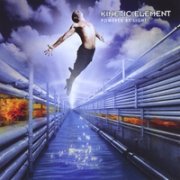
Kinetic Element grew out of keyboardist/vocalist Mike Visaggio's solo project, after the release of Starship Universe in 2006. 2009's Powered By Light sees him at the head of a quartet, making progressive rock in the grand tradition (American dept); lyrically, the album apparently explores Visaggio's Christian worldview, but I'm happy to say it isn't particularly apparent, or no more so than, say, Kansas' pre-obviously Christian albums. Actually, Kansas aren't a bad comparison in places; the very lengthy Reconciliation reminds me of them, particularly the piano work, although a better comparison may be the less well-known Magellan, notably their first couple of albums from the dawn of the '90s (another band led by a singing keyboardist, funnily enough). The album works its way through several different progressive styles; opener Riding In Time is a typical modern symphonic effort, there's a slightly fusionesque feel on Now And Forever, while Meditation is an acoustic guitar piece, although the band maintains a consistent feel across the record.
Instrumentally speaking, Visaggio uses equipment ancient and modern; parts of The Ascent illustrate perfectly how 'classic' and modern sounds usually make for poor bedfellows, the spikey digital synth sounds clashing badly with the Hammond, although this is the worst example. I don't know the story behind the contact, but Visaggio used one or more of East Coast Mellotron guru Frank Stickle's M400s (Frank provides Mellotrons for NEARfest when required). It isn't overused here, with a brief string part on Now And Forever and considerably more of the same, plus choirs, on Peace Of Mind, Peace Of Heart. Closer See The Children features those instantly recognisable Mellotron cellos in its intro, too, used in conjunction with strings later on, with more choirs under real voice.
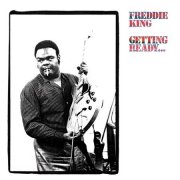 |
Getting Ready... (1971, 36.37) ***½/T |
|
| Same Old Blues Dust My Broom Worried Life Blues Five Long Years Key to the Highway Going Down Living on the Highway Walking By Myself |
Tore Down Palace of the King |
|
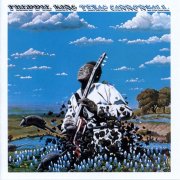 |
Texas Cannonball (1972, 36.42) ***½/½ |
|
| Lowdown in Lodi Reconsider Baby Big Legged Woman Me and My Guitar I'd Rather Be Blind Can't Trust Your Neighbor You Was Wrong How Many More Years |
Ain't No Sunshine The Sky is Crying |
|
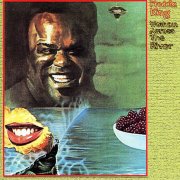 |
Woman Across the River (1973, 39.04) ***½/T½ |
|
| Woman Across the River Hootchie Cootchie Man Danger Zone Boogie Man Leave My Woman Alone Just a Little Bit Yonder Wall Help Me Through the Day |
I'm Ready Trouble in Mind You Don't Have to Go |
|
Current availability:
Chamberlins/Mellotron used:
In 1969, over ten years into his career, Chicago incomer Freddie King (you know perfectly well he's not related to either of the other two blues Kings) played the 1969 Texas Pop Festival, subsequently signing to Leon Russell's Shelter Records. He made three albums for the label, backed by a crack team of session players, not least Russell himself.
1971's Getting Ready... is, by blues standards (pun unintended), a pretty varied release, although opening with a slow, 3/4 blues (Same Old Blues) seems wilfully odd, frankly. His acoustic take on Elmore James' Dust My Broom works well, ditto Key To The Highway and the propulsive Going Down, although insistent closer Palace Of The King possibly takes 'top track' award. Russell adds what sounds like Chamberlin to a couple of tracks, with strings and an eccentric, descending flute line (illustrating the line "Morning rain keeps on falling") in opener Same Old Blues and background strings on Walking By Myself.
The following year's Texas Cannonball repeats the formula, highlights including opener Lowdown In Lodi (an energetic one, this time), the funky I'd Rather Be Blind, How Many More Years (just about recognisable as the song Zeppelin retitled How Many More Times) and the fabulous dual (note: not twin) guitar work on Ain't No Sunshine. Chamberlin-wise, Russell merely adds a distant string line to Can't Trust Your Neighbor this time round, in a way that suggests that he wanted to get it in somewhere (and why not?), as it doesn't especially add to the track.
No great change (OK, no change at all) for '73's Woman Across the River, top tracks including Boogie Man, the haunting Help Me Through The Day and Trouble In Mind, the last-named reminding me of one of his British acolytes, Peter Green. It sounds like Russell's playing Mellotron this time round, with chordal flutes on Danger Zone and string parts on Help Me Through The Day and Trouble In Mind, making this the most satisfying tape-replay release of the three. Tragically, having had a second stab at fame, King was to live all of another three years, dying at the end of 1976, essentially working and drinking himself to death, aged forty-two.
See: Leon Russell
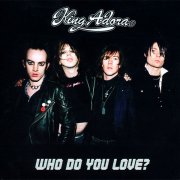 |
Who Do You Love? (2004, 36.54) ***/TT |
|
| Drag 9" of Pure Malice Born to Lose Kamikaze Depression Sweet Abandon Boy for Rent Maniac Love |
Come Death By Rock'n'Roll Fear and Loathing Love So Volatile Asleep |
|
Current availability:
Mellotron used:
Going by their second and last album, 2004's Who Do You Love? (let alone its cover pic), King Adora played a kind of garage glam, notably on opener Drag, which has something of T. Rex about it, unfortunately filtered through The Darkness. Top tracks? Drag, for its sheer chutzpah, 9" Of Pure Malice, for its title, Sweet Abandon and the punky Boy For Rent, amongst others.
My old pal Mark Wallis played his M400, with choirs and background strings on Born To Lose, strings all over Sweet Abandon and block choir chords on Fear And Loathing, although the voices on Drag sound more like actual backing vocals to my ears. If punky Brit-glam with a smattering of Mellotron sounds like your bag, this may just be your new favourite album.
King Crimson (UK) see: |
 |
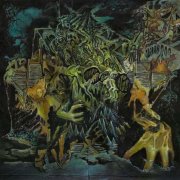 |
Murder of the Universe (2017, 46.49) ***½/TTT |
||
| Chapter 1: The Tale of the Altered Beast A New World Altered Beast I Alter Me I Altered Beast II Alter Me II Altered Beast III Alter Me III Altered Beast IV Life/Death |
Chapter 2: The Lord of Lightning vs. Balrog Some Context The Reticent Raconteur The Lord of Lightning The Balrog The Floating Fire The Acrid Corpse |
Chapter 3: Han-Tyumi and the Murder of the Universe Welcome to an Altered Future Digital Black Han-Tyumi the Confused Cyborg Soy-Protein Munt Machine Vomit Coffin Murder of the Universe |
|
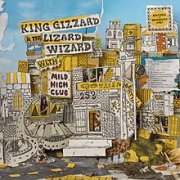 |
Sketches of Brunswick East [as King Gizzard & the Lizard Wizard with |
|
| Sketches of Brunswick East I Countdown D-Day Tezeta Cranes, Planes, Migraines The Spider and Me Sketches of Brunswick East II |
Dusk to Dawn on Lygon Street The Book A Journey to (S)hell Rolling Stoned You Can Be Your Silhouette Sketches of Brunswick East III |
|
Current availability:
Mellotrons used:
I've only become aware of Antipodean recreational drug (ab)users King Gizzard & the Lizard Wizard recently, chiefly through some crazed videos on YouTube, so it's interesting to finally hear a full album. Their second full-lengther of '17, they claim that Murder of the Universe is only one of the year's four or five (!) releases; no, I've no idea where they get the energy/inspiration, either, although I can probably guess.
It's (in their own words) a 'concept album to end all concepts', split into three suites, The Tale Of The Altered Beast, The Lord Of Lightning Vs Balrog and Han-Tyumi And The Murder Of The Universe. Strangely, I haven't yet found an online review that mentions the Lord of the Rings connection with the Balrog; perhaps no-one's noticed? Anyway, it's an endearingly bonkers work, with female narration over the first two parts and a text-to-speech device on the third, a particularly bizarre track about a cyborg who wishes for two things: death and the ability to vomit. Right... Apparently (spoiler alert here), it achieves both, while its out-of-control vomiting destroys the universe. Guys, guys... Drugs. Just drugs. Musically (oh yeah; the music) it's a heavy psych/prog crossover thing, probably at its best on the first part and weakest on the third, utilising repeating themes throughout. Maybe that's how they release several albums a year?
Vocalist/guitarist/general frontman Stu Mackenzie plays Mellotron on the album. Real? I don't know where he'd have sourced one, but it doesn't 'alf sound genuine to my ears... He's actually credited with 'Mellotron flutes and choirs' and, indeed, that's what we get, with chordal flutes (briefly) on Alter Me II, a matched flute and choir line on Alter Me III, choirs on Altered Beast IV, flutes on Life/Death, female voices (I think) on The Reticent Raconteur, a suspiciously-speedy choir part on The Balrog, choirs on The Floating Fire, The Acrid Corpse, Welcome To An Altered Future and Digital Black and upfront flutes and background choirs on the title track. Whew! All in all, perhaps not a work of genius, but definitely one of considerable talent, not to mention considerable Mellotron. I'll be interested to see where the band go next.
And where they go next is... Sketches of Brunswick East (a Melbourne suburb), referencing Miles Davis' Sketches of Spain, in collaboration with a one-man project calling himself Mild High Club. Sticking with the Miles comparison, this is what happens when you cross the band's regular sound with jazz; it works in places and not in others, is my conclusion. Personal favourite is Tezeta, most of the album being simply too jazzy for this listener, but it does its thing with aplomb. More of that (real?) Mellotron, with flute melodies or background chords on all highlighted tracks, plus a choir melody and chords on The Book.
See: Samples etc.
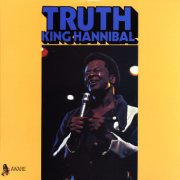 |
Truth (1973, 31.23) ***/TI Got That WillThe Truth Shall Make You Free Party Life Same Ole' Fool Again Black Girl Wake Up It's What You Do Hymn No. 5 |
Current availability:
Mellotron used:
Atlanta, GA's James "The Mighty Hannibal" Shaw (1939-2014) used the nom de plume King Hannibal during the '70s, although, according to Discogs, he only released one album and four singles under that name, as against twenty-something 7"s (but no albums) in his Mighty days. 1973's Truth is a soul/funk album of the 'deep cut' variety, far removed from the era's mainstream, thankfully, although I doubt whether it did Shaw any favours commercially. Best tracks? Probably The Truth Shall Make You Free and contentious, seven-minute closer Hymn No. 5, an anti-Vietnam war number that saw him put a few noses out of joint.
Dan Eckley plays 'Melotron', with a pseudo-orchestral strings part on Black Girl, quite distinct from It's What You Do's real ones. Ironically, the record kicks off with Hannibal declaiming, "This is my first album and I hope to God it don't be my last album", as little more was heard from him, although a couple of this album's tracks are available on 2001's Hannibalism!, on Norton Records.
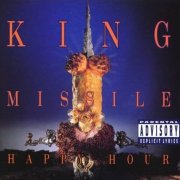 |
Happy Hour (1992, 59.26) ***/T |
|
| Intro Sink Martin Scorcese (Why Are We) Trapped? It's Saturday VvV (VulvaVoid) Metanoia Detachable Penis Take Me Home |
Ed Anywhere The Evil Children Glass And King Murdock I'm Sorry Heaven Happy Hour |
|
Current availability:
Mellotron used:
King Missile are effectively a vehicle for John S. Hall's surreal poetry and outlook on life, every lineup held together by his artistic vision. After two early albums as King Missile (Dog Fly Religion), they dropped the suffix, along with their first guitarist and released the iconic Mystical Shit. 1992's Happy Hour was the new lineup's third effort, consisting of eighteen tracks, ranging from relatively (I do say relatively) straightforward early '90s rock (Anywhere, the title track) to surreal vignettes, such as the notorious minor hit Detachable Penis. But is it any good? 'Fraid I can't tell you; that's entirely down to taste, more than most vaguely avant-garde music. Some of it amused me, some of it bored me, while some of it lost my attention completely.
The inimitable Kramer produces and plays Mellotron on the lengthyish Take Me Home, with a string part that floats through the track in a slightly threatening kind of way. Shame it isn't used more, but I'd imagine Kramer and Hall decided it would have more effect used sparingly. Or something. Anyway, an odd record, but if you appreciate the (slightly) further-out reaches of the art, you might just go for this. Not worth it for one Mellotron track, though.
See: Kramer
 |
Are You the Sick Passenger? (2004, 38.39) **/TT½ |
|
| Introduction Famous Umbrellas Meet the Maker Caveat Emptor Busman's Holiday Intermission The Sick Passenger Pistil and the Stamen |
You Were the One Am I the Same Girl? Dead and Gone Haley's Comet |
|
Current availability:
Chamberlin used:
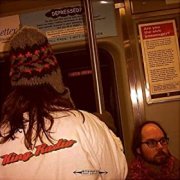
Massachusetts' King Radio (presumably in honour of the 1930s Trinidadian calypsonian of the same name) are The Divine Comedy after a lobotomy, refusing to temper their '60s-inspired loungecore with the faintest shred of wit or humour, let alone memorable songs. Is anything here worth the effort? Intermission sounds exactly like cinema intermission music from the '70s, belying what I said about humour, but drivel such as Famous Umbrellas and Am I The Same Girl? seem tailor-made for faux-'60s indie nerds.
Peter Baldwin plays Fidelitorium Studios' Chamberlin, although, with several credits for 'keyboards', not to mention real strings, it's sometimes difficult to tell where it might be. I'd say the strings and flutes on Introduction, flutes on Busman's Holiday and Intermission, vibes on The Sick Passenger itself and Pistil And The Stamen, chordal flutes on Dead And Gone and vibes on (deliberately?) misspelled closer Haley's Comet, but I could be wrong. This really is terrible. Avoid.
 |
Kings' Boards (1990, 38.45) ***½/T½Drama Composition (Motoi Sakuraba)The Maze of May (Shigetomo Hashimoto) Corde Spirale (Naomi Miura) Ladies of Green & Blue (Manabu Kokado) Hungary (Kodomo Endo) |
Current availability:
Mellotron used:
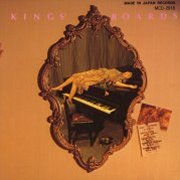
This is a bit of an oddity; not a band at all, but a project involving five different noted Japanese progressive keyboard players from the '80s from various bands including White Fang, Deja-Vu and Rosalia; the rhythm sections are mostly from White Fang and Social Tension, managing a reasonably cohesive sound across the album. All tracks are as expected; guitar-free keyboard extravanganzas with superb, lightning-fast playing from a bunch of classically-trained musicians, although technique tends to take precedence over composition in most cases, with something of an excess of nasty '80s noises on some tracks.
All concerned use a mixture of digital and analogue gear, Rosalia's Naomi Miura's equipment list featuring a Roland sampler as the only modern bit of kit. Her track, Corde Spirale, opens with what sounds like Mellotron cellos, with a snatch of flutes and a string melody before a great 'eerie discordant strings' part. There's a choir part later on, so maybe I was wrong about the cellos, or maybe she owns two tape frames. Miura's track is the most adventurous on the album and not just because of her gear... It has less of that 'smooth '80s feel' about it and is considerably more angular than anything else on offer. A few too many Emersonisms here for comfort (all concerned list their favourite keyboard player and two name him), not to mention too many spiky digital patches, but worth a listen if you don't have to fork out too much for it.
See: Rosalia
 |
The 5th Cup: A Spirit Explosion (1974, 45.28) ***½/TTT |
|
| 1984 One, One is One Ode to Life (Kiddush) To Celebrate Our Freedom First Question - Poverty Ballad Second Question - Bitter Herbs Third Question - Superstition Fourth Question - Walk Like a Free Man |
Wise Man Say What Does it Take (the Ten Plagues) Security Song/Reprise of One, One is One Then Came the Law/Grace |
|
Current availability:
Mellotron used:
 |
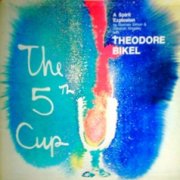
You know Popcorn - everyone knows Popcorn, even if they were born after its chart reign in 1972. But do you remember the artist? Hot Butter, for what it's worth. Who? A Danish group of synth nuts, as it happens, although the track was written by a Jewish/Catholic German/Israeli émigré, Götz Gustav "Gershon Kingsley" Ksinski (1922-2019). Kingsley settled in America after the war, becoming an electronic music pioneer in the '60s with the better-known Jean-Jacques Perry, releasing the original version of Popcorn in 1969, on Music to Moog By. It turns out he'd been releasing albums for over a decade by that point, only slowing down (not stopping) in his sixties. One of these, 1974's The 5th Cup: A Spirit Explosion, co-credited to Norman Simon and Theodore Bikel, is probably best described as Jewish rock opera, despite Kingsley's stated lack of belief. Musically, this treads a line between two different eras, his Broadway tropes sounding heavily dated, as you can imagine, bizarrely juxtaposed with his up-to-the-minute Moog experimentation. Unfortunately, one of Kingsley's influences seems to be ELP, of all bands, especially in the organ department, although his heavy Mellotron use is very unEmersonian.
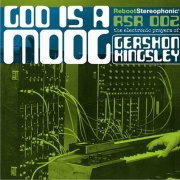
Now, I have an admission to make: I haven't actually heard the entire album, just the slightly edited version, some tracks combined, to be found on 2006's God is a Moog: The Electronic Prayers of Gershon Kingsley. It's difficult to say for sure, but it looks like this version chops just one track, Fourth Question - Walk Like A Free Man, so I've had to leave it unhighlighted, whether or not it actually featured any Mellotron, which I shall correct (if necessary), should I ever get to hear the full album. Anyway, he played Mellotron strings on 1984, flutes and strings on Ode To Life (Kiddush), strings on To Celebrate Our Freedom, flutes on First Question - Poverty Ballad, flutes and strings on Third Question - Superstition and strings on Wise Men Say and What Does It Take (The Ten Plagues), although I'm not convinced you actually need to hear it for that reason alone.
Decades later, an eighty-two year-old Kingsley, still a pioneer, opened his archives, the results being the aforementioned two-disc God is a Moog, compiled from various oddities, including Jewish devotional recordings, recorded between the late '60s and mid-'70s. Its contents are pretty bizarre; imagine a baritone vocal singing in a pre-rock'n'roll era style over early electronics, or, as I said, Jewish rock opera (disc two also includes 1971's Sabbath/Shabbat for Today), which received a far better reception at the time than he expected. A fascinating document of the work of a true maverick, you may only play this once, but I can guarantee you'll be glued to your seat for the duration. Weird, but in a good way.