




|
|
|
|
||
|
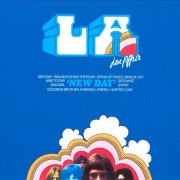 |
A New Day (1970, 44.04) ***/T½ |
|
| New Day Walking Down the Road Ge's Whiz Gypsy Goodbye Brother, Farewell Friend Hurt By Love Bad Girl Nine to Five |
Thank You Bean Speak of Peace, Sing of Joy |
|
Current availability:
Mellotron used:
The Love Affair are remembered chiefly for their early '68 UK smash, the Motown-alike Everlasting Love, although they released another seven singles and two albums in their brief career. The two members who went on to do anything much were vocalist Steve Ellis and keyboard player Morgan Fisher, who went on to record with his own band, Morgan and play with Mott the Hoople/Mott, before a lengthy solo career, highlights including 1979's deranged Hybrid Kids album and the two Miniatures releases.
1970's A New Day, released as L.A. in a brave effort to escape their teenybop past, was The Love Affair's second and last album. To be honest, it's a bit of a mess, musically, veering between the late-period psych of the opening title track, the bluesy, flute-driven Tull-alike Walking Down The Road, the vague Americana of Goodbye Brother, Farewell Friend and excellent proto-prog instrumental Ge's Whiz, despite its unnecessary drum solo. Fisher sticks Mellotron strings all over the title track and Thank You Bean, with the kind of enthusiasm missing from most albums of this type. Incidentally, Repertoire's greatly expanded version adds a plethora of singles and b-sides, a handful of the latter being actually worth hearing.
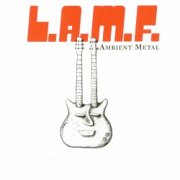 |
Ambient Metal (2001, 77.15) ***/TT½YggdrasilLike a Motherfucker The Neolithic Goddess Whole Lotta Loki Yggdrasil 2 Eckstasis - Beyond Rome The Death of the Motherculture at Mona Mam Gymru, the Wailing Shamanic Fury of the Hoeurs and Druids and the Coming of the Romans |
Current availability:
Mellotron used:
L.A.M.F. (yeah, yeah, Johnny Thunders...), are a seemingly one-off Julian Cope project which does exactly what it says on the tin; drumless, ambient metal. The end result basically sounds like a jammed-out metal album with the drums mixed out, although I'm quite sure that's how it was recorded. Like so many of the Drude's recent projects, this borders unlistenable in places, although it's a fascinating experiment in genre-splitting and no-one else has done anything similar... Oh, and spot the cheeky Deep Purple lift in the last track (Into The Fire, for what it's worth).
Three Mellotron tracks from Saint Julian, with church organ on opener Yggdrasil and overdubbed strings and choir on Like A Motherfucker and (very deep breath) The Death Of The Motherculture At Mona Mam Gymru, The Wailing Shamanic Fury Of The Hoeurs And Druids And The Coming Of The Romans, the latter with extra added pitchbend. Your tolerance for Cope's take on drone-rock may well depend on your fandom for his works in general; suffice to say, this isn't an easy listen, but should you be in the correct frame of mind (ahem...), I would imagine it does the business. Not all that much Mellotron, but you get a nice burst of church organ, for once.
See: Julian Cope | Black Sheep | Brain Donor | Queen Elizabeth
 |
Kids Fly Free (2001, 48.20) ***/½ |
|
| Holy Days Human Boy Smoking Again He Wanted to Talk About His Art The Hesitant I Love America (But She Don't Love Me) This Land is Your Land Beautiful |
Little Miss Mystery Sally's Gone Blue Secrets Theme You Better Be Good to Her Ain't it the Most A Day Without Me (Kids Fly Free) |
|
Current availability:
Mellotron used:
New Yorker Lach's (real name unknown) third album, 2001's Kids Fly Free, kicks off in powerpop mode with excellent opener Holy Days, but, all too quickly, slumps into a kind of indie slough of despair, typified by the likes of Smoking Again and You Better Be Good To Her. Other better tracks include I Love America (But She Don't Love Me) and the folky Little Miss Mystery, but this just scrapes three stars, despite featuring both Richard Barone and Television's Billy Ficca.
According to the artist, the Mellotron used was the house machine at NYC's Magic Shop, some sounds coming from various spare racks found in storage, not least the voice saying, "I don't mind where it comes from, you know as long as it's there". A custom frame? The sound FX at the end of the album are Mellotronic, but it's anyone's guess where else it might be: the vague cello and flute that crop up occasionally? More likely odd sounds, difficult to identify, although both Lach and someone calling themselves Drew Blood are credited.
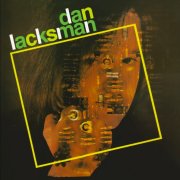 |
Dan Lacksman (1973, 38.00) **½/TTT |
|
| Love You Every Day Sunshine is Gone Jet Set Woman Happiness is a Cold Beer Monday Morning I Start a Dream Today Skylab Sad Way |
In the Middle of the Road Give it Up When We're Looking at the Barmaid For Mary |
|
Current availability:
Mellotron used:
Given that Dan Lacksman was to become a founding member of influential synthpop troupe Telex a few years hence, not to mention his synth project Electronic System, it's surprising just how bland and dated most of 1973's Dan Lacksman turns out to be. While its synth work indicates the direction in which he was headed, drivel such as Happiness Is A Cold Beer, Sad Way and the awful When We're Looking At The Barmaid are, frankly, abysmal. The album's obvious highpoint is Skylab, re-recorded in a fourteen-minute version for Electronic System's Tchip.Tchip (Vol. 3) the same year.
Lacksman plays Mellotron on several tracks, with major flute parts on Sunshine Is Gone and I Start A Dream Today, flutes and strings on Skylab, lush strings on Give It Up and more strings and flutes on closer For Mary. Sadly, reasonable Mellotron work doth not a great, or even good album make. Without Skylab, this would be a two-star effort.
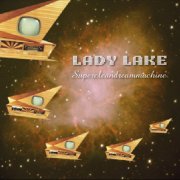 |
SuperCleanDreamMachine (2005, 54.47) ****/TT½ |
|
| The Untold Want Children's Playground Be Still! Mum?s the Word Grow up! For Heaven?s Sake Mystery Spot The Untold Want Seen From a Train Die Maienfelder Furrga A Coign of True Felicity I Don?t Mind if I Do Too Far! Too Late! Already Bolder Proggers Were at the Gate! |
Children?s Playsong Stumped Doo Dah Damage Wet Sounds Ford Theatre No One Will Ever Know (Fare Thee Well) The Chief Radio Reminiscence Children?s Playground Revisited |
|
Current availability:
Mellotron used:
Lady Lake formed in the early '70s, releasing an album, No Pictures, in '77. After many years and lineup changes, they followed it up twenty-eight years later with 2005's oddly-titled SuperCleanDreamMachine. It wouldn't be unfair to say it could be compared favourably with Camel, with maybe a hint of the obligatory Focus. Wholly instrumental, its chief melodic input comes from Fred Rosenkamp's Andy Latimer-style guitar work, solidly backed up by Leendert Korstanje's keys, including drummer Jan Dubbe's brother Berend's MkVI Mellotron, Hammond and Rhodes. Album highlights are probably the relatively short The Untold Want (sounds like a Spock's Beard title), which squeezes twelve parts into fourteen minutes and the album's second-longest track, Ford Theatre, although there are no clunkers, despite an occasional slight blues influence in Rosenkamp's guitar style.
The MkVI sounds so smooth it could almost be mistaken for samples in places, although it's definitely the real deal. A short string part somewhere towards the end of The Untold Want is bettered by the flutes in Wet Sounds and strings in No One Will Ever Know (Fare Thee Well), although the album's Mellotron highlight has to be Ford Theatre, with its full-on strings and choir parts, rising to a stunning crescendo at the end of the piece. All in all, this is a good, modern symphonic prog album; what it might lack in originality, it makes up for with tasteful and imaginative playing, not to mention some nice Mellotron work. Worth a punt.
 |
Light & Magic (2002, 59.36) ***/T |
|
| True Mathematics Seventeen Flicking Your Switch Fire Turn it on Blue Jeans Cracked LCD Black Plastic |
Evil Startup Chime NuHorizons Cease2xist Re:agents Light & Magic The Reason Why |
|
Current availability:
Mellotron used:
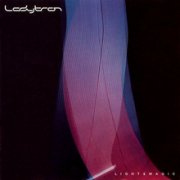
Ladytron (named for the Roxy Music classic, of course), formed by a pair of Liverpudlian producer/DJ types in the late '90s, play a female-fronted updated take on that Depeche Mode/early New Order electro sound, at least on their second album, 2002's Light & Magic. They're keen on analogue gear, using a range of old Korgs and the like (and a new Moog), producing a series of 1981-style robotic pop songs of surprising quality, highlights including Human League-alike opener True Mathematics, the early Ultravox! of Cracked LCD, the beautifully clunky string synth part that closes Re:agents and the title track itself.
The album was recorded 'in Liverpool and Los Angeles', where (presumably) Roger Joseph Manning, Jr. played Mellotron choirs on Fire and flutes, cellos and strings on Blue Jeans, isolated at the end of the track. Am I certain? No, but I've shifted this across from Samples, until/if I receive any better information. To my considerable surprise, this is a very listenable album of its type, a world away from the landfill indie I'd been expecting. Result!
 |
Japanese Tears (1980, 47.45) **½/T |
|
| Japanese Tears Danger Zone Clock on the Wall Send Me the Heart Go Now Same Mistakes Silver Say You Don't Mind |
Somebody Ought to Know the Way Lovers Light Guess I'm Only Foolin' Nothing to Go By I Would Only Smile Weep for Love |
|
Current availability:
Mellotron used:
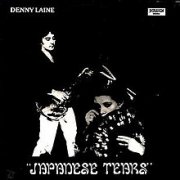
Of the several thousand albums reviewed on this site, I think it's safe to say that none of them have been reissued under as many different titles as Denny Laine's 1980 release, Japanese Tears, viz. (deep breath) Go Now, Denny Laine, Paul McCartney & Friends, In Flight, Weep for Love, Danger Zone, Send Me the Heart, Lover's Light and The Collection. Tracklistings are often mangled, sleeve 'art' is atrocious, but the contents (apparently) remain the same. Laine, of course, is a veteran of The Moody Blues (pre-Mellotron use) and Wings, this album coming right at the end of the latter outfit's existence. As you might expect, its 'rock' credentials are pretty low-key, being a mainstream pop/rock album of its era, at its probable best on the opening title track, but, overall, I'm afraid this is a little dull.
Laine, Macca, Linda and Andy Richards (Strawbs, OMD producer) are all variously credited with keys, so, without knowing any better, let's say it was probably Laine himself who played the upfront Mellotron flute and string parts (alongside real strings, strangely) on Somebody Ought To Know The Way, although the flutes (Laine) and strings on Same Mistakes are real. Very competent, but terribly unexciting.
 |
Daß Kein Reif... (1976, 39.42) **½/½Liebe im WaldSieben Zwerge Bier Komm, Weil ich Dich Brauch' Ein Alter Falter Reise Nach Prag Daß Kein Reif |
 |
Das Geheime Leben (1981, 40.27) ***/0Das Geheime LebenEs Wächst das Gras Nicht Über Alles Begierde und Hoffnung Das Unendliche Rätsel |
Current availability:
Mellotrons used:
Reinhard "Lacky" Lakomy is an East (as was) German electronic musician, whose first, eponymous album appeared in 1973. '76's Daß Kein Reif... is a very mixed bag, I have to say, opening with the passable balladry of Liebe Im Wald, suddenly shifting gear into the cheesy, female-vocalled, disco-pop horror (sorry, Angelika Mann) Sieben Zwerge, the joke number Bier, the jazzy Komm, Weil Ich Dich Brauch' (Mann on vocals again)... I think you get the idea. The side-long title track sounds like an uneasy compromise between Lakomy's progressive tendencies and his label's love of capitalistic, one-size-fits-all commercial music, the end result being an eighteen-minute soft rock ballad with an exceedingly slight progressive feel. Weird. Lakomy plays Mellotron, with mini-bursts of choir on the title track, although the album's string and other choir parts are (mostly) clearly real.
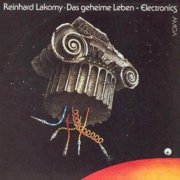
1981's Das Geheime Leben is a fairly typical Germanic electronic album of the era, despite hailing from behind the Iron Curtain. The title track is a side-long epic, Es Wächst Das Gras Nicht Über Alles being a good half that length again plus two 'shorter' tracks, covering various electronic bases, though not particularly originally, I'm afraid. Lakomy's credited with Mellotron, although I've absolutely no idea where, as I can't hear anything that obviously stems from one.
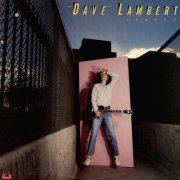 |
Framed (1979, 42.12) ***/½Take a little Bit of My LifeFramed Remember Me All Ways Dorian This is My Neighbourhood Welcome to My Dream So Lucky White Knight Crystal Virgin |
Current availability:
Mellotron used:
Dave Lambert has been, of course, The Strawbs' lead guitarist for most of their career, joining for 1973's Bursting at the Seams and playing on most releases since; 1979's Framed is his only 'proper' solo album, 2004's Work in Progress being a partial retrospective. It's not dissimilar to The Strawbs' output from the time, being largely late '70s pop/rock with the occasional nice moment, though overall, clearly not quite enough to grab the average listener's ear, not helped by Lambert's diffident voice. The best thing here (for Strawbs fans, anyway) is closer Crystal Virgin, a proggish effort for most of its length, before ending with rather ordinary guitar and synth solos.
Given that his parent band were one of the decade's heaviest Mellotron users on the quiet, it's probably not entirely surprising that Lambert chose to use one on his solo effort, despite it having been technically 'superseded' by polysynths by then. Played by Robbie Buchannan, it's only obviously used on Crystal Virgin, with what sounds like a flute part (although it could be synth) and definite choir chords, hardly the instrument's heaviest use. Strawbs completists probably need to hear Framed, although it's really not strong enough to make it worth an expensive purchase.
See: Strawbs
 |
No Bitter Smiles (2013, 36.18) **½/T½ |
|
| On Hold Diamonds for Dummies No Bitter Smiles For You Cherish Settle Forth Come Clean 11:52 PM |
Weathered Skin Ruins |
|
Current availability:
 |
Mellotron used:
I've seen Dutch quintet Lambshade described as 'post-grunge' or somesuch, but going by their second album, 2013's No Bitter Smiles, I'd say a rather unencouraging 'heavy indie' fits the bill perfectly. Is any of it any good? Parts of some tracks aren't too bad, especially their patented downtuned, picked intros, but decent entire songs seem to be beyond their grasp, sadly. Oh, go on, there must be something listenable here... Closer Ruins, perhaps?
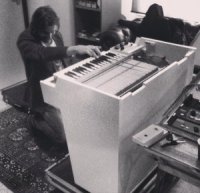
Ruud Peeters plays his own M400 on a few tracks, although it's hardly the most upfront use you'll ever hear. It enters tentatively, possibly expecting fans to disapprove, with distant strings on the title track, complete with some radical pitchbending, more strings on For You and Cherish (slightly more upfront on the latter) and a genuine full-on part on closer Ruins, rounding the album off with a solo section. Sorry I can't be more positive about this record, but... I can't. Nice Mellotron work on Ruins, anyway.
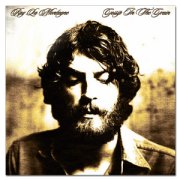 |
Gossip in the Grain (2008, 45.05) ***/T½ |
|
| You Are the Best Thing Let it Be Me Sarah I Still Care for You Winter Birds Meg White Hey Me, Hey Mama Henry Nearly Killed Me (it's a Shame) |
A Falling Through Gossip in the Grain |
|
Current availability:
Mellotrons used:
Coming from a troubled background, Ray LaMontagne was well into his twenties before he delved into the murky world of the singer-songwriter, releasing his first album at the age of thirty-one. 2008's Gossip in the Grain is his third such, showcasing his mix of American folk, country, blues and even a little jazz, its strongest compositions including the heartfelt I Still Care For You, the lengthy acoustic Winter Birds and the closing title track, not to mention his strange homage to The White Stripes' Meg White in march time.
Producer Ethan Johns plays Mellotron, with flutes on I Still Care For You, Meg White and the title track, with some noticeable 'warble', although all the album's strings appear to be real.
See: Samples etc.
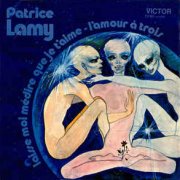 |
7" (1974) **½/TT L'Amour à Trois Laisse-Moi Médire Que Je t'Aime |
Current availability:
Mellotron used:
Patrice Lamy (a.k.a. Leman) appears to have been a small-time French singer, whose total recorded output numbers a handful of singles, spread across the '70s. Going by the third, 1974's L'Amour À Trois (although I've seen the other side listed as the 'A'), sub-Gainsbourg grunting and groaning appears to be the order of the day, in a rather late entry in the 'appearing to have sex on record' stakes, although the flip, Laisse-Moi Médire Que Je T'Aime, is a more upbeat, jazzy effort.
One Demis Visvikis plays Mellotron on both tracks, with string parts that dip in and out of the mix, almost at random. Worth hearing? Not massively, no, but both sides can be heard on YouTube.
Landberk (Sweden) see: |
 |
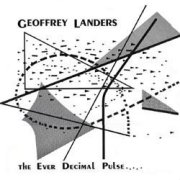 |
The Ever Decimal Pulse (1982, 43.02) ***/T½StanisloweSmooth Edges Alter Native To Aluar Work Line (Hand To Hand) The Ever Decimal Pulse Minored Birds Logarithms Brian's Having a Party |
Current availability:
Chamberlin used:
Colorado's Geoffrey Landers released at least four albums in the '80s, the first of which was 1982's The Ever Decimal Pulse, an almost entirely uncategorisable record, touching on drone music, post-punk, proto-ambient and other, er, 'non-mainstream' genres, at its least weird on dronefest Smooth Edges. Both Bob Drake and Corpses as Bedmates' Susanne Lewis (Drake was also a member) play on it, which may give you some idea where this is coming from.
Paul Haugen plays Chamberlin on eight-minute closer Brian's Having A Party, with solo female voices, squawking woodwinds and atonal strings (and vibes?); suffice to say, this couldn't sound a lot less like party music, unless you're in the habit of holding particularly strange parties. That's actually a recommendation. T½? It's pretty full-on.
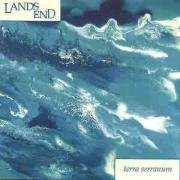 |
Terra Serranum (1995, 71.10) ***/TTTLife as We Know it...The Revolution, Like Saturn, Devours its Children For Reasons Unknown The Philosophy of Containers Terra Serranum A Castle, Mother, Nanny and a Warm Soft Bed Neptunes Last Tear Daura ...The End of Life as We Know it |
Current availability:
Mellotron used:
Lands End were one of the earlier entrants into the, er, New Wave Of American Prog (NWOAP?), following hot on the heels of Magellan, Episode and Now, amongst others, all of whom were hanging onto '80s neo-merchants North Star's coattails. After a couple of demos, their first 'proper' album was '94's Pacific Coast Highway, quickly followed by Terra Serranum. Now, it isn't a bad album, but in all honesty, nor is it that good a one, either; reasonably complex material sabotaged by simplistic neo-prog style chord sequences and frequently cheesy keyboard sounds. The album's epic, Neptunes Last Tear [sic.], holds together for a while, but slumps into a morass of neo-prog clichés after a while and would have been a great deal better heavily edited.
The band's site mentions the Mellotron, disproving my conjecture that it's early sample use; the only sound they use (from Fred Hunter) is some very wobbly strings, though, which sound like they've been put through some sort of pitch-shifting device. Anyway, there are a few chords in (deep breath) The Revolution, Like Saturn, Devours Its Children, (another deep breath) A Castle, Mother, Nanny And A Warm Soft Bed and Neptunes Last Tear, all completely upstaged by the fairly heavy string use on the title track and the (relatively) brief ...The End Of Life As We Know It.
'96's An Older Land, '97's Natural Selection and 2005's The Lower Depths all use samples and pretty ropey ones at that. So; Terra Serranum is OK, but pretty unadventurous for an album described by the band as, "We tried a bit too hard to be 'progressive'", but many of you may well like it anyway. Actually pretty good Mellotron use, even if it sounds like a dying animal in places.
See: Samples etc. | Transience
Lana Lane (US) see: |
 |
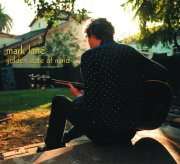 |
Golden State of Mind (2002, 52.09) ***½/T |
|
| Girl With The Clouds Drivin' Braille The One You Waited for The Chance Name In Lights Fifty Years Too Late Taste For Champagne |
Attention Span Lorelei Enough To Go Around Golden State Of Mind Ring My Bell If I Could Do It Over |
|
Current availability:
Chamberlin used:
I can't tell you much about L.A. native Mark Lane, other than that he has three releases available on Bandcamp, including 2002's Golden State of Mind. Loosely speaking, it's a powerpop album, typified by the likes of opener Girl With The Clouds or The Chance, although material such as the balladic Lorelei and the brassy Ring My Bell sit quite some way from the 'B band' mainstream.
Jason Falkner (Jellyfish) plays real-sounding Chamberlin, with chordal strings and flute flurries on The One You Waited For, although other possible use is more likely to be vibes or sampled (real) strings. A nice little effort, then, in the 'lesser-known powerpop' stakes, although not really worth it for the Chamby.
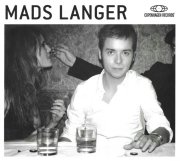 |
Mads Langer (2009, 44.33) **½/TT |
|
| Judas Kiss Last Flower Say No More Killer Remains of You This is How Love is Made Wake Me Up in Time |
Fact-Fiction Beauty of the Dark Shine Helpless |
|
 |
Side Effects (2014, 22.08) ***/½Bringing Back TomorrowChasing Comets Strangers Side Effects Fact-Fiction/Silverflame |
Current availability:
Mellotrons used:
Mads Langer is a Danish singer-songwriter, who, going by his eponymous 2009 release (actually his second), sits pretty firmly in the mainstream. Better tracks include Say No More, Fact-Fiction and Beauty Of The Dark, but cheesy opener Judas Kiss, with its 'I can do that too!' falsetto, is painful. Tim Christensen (on/off leader of the amazing Dizzy Mizz Lizzy) chips in on various things, although he doesn't play his Mellotrons, leaving it to Langer himself, who adds string and cello parts to Last Flower, less of the same to Say No More, background strings to Fact-Fiction and upfront ones to Beauty Of The Dark.
Langer and Christensen's collaborative EP, 2014's Side Effects, is a decent enough pop/rock effort, probably at its best on the near-seven minute title track and the closing acoustic 'mash-up' of Fact-Fiction and Dizzy Mizz Lizzy's Silverflame, although the other three songs veer too close to the mainstream for comfort. Tim plays a brief, orchestrated Mellotron strings part on Chasing Comets, pleasant, if inessential. Try to hear Side Effects itself, but don't go too far out of your way for the rest.
See: Samples etc. | Tim Christensen
 |
Mine Damer og Herrer (2010, 39.37) **½/T |
|
| Uden for Døren Hold Ud Studpoker Botox og Silicone Kom Igen Danser Med Dig Du er Min Næ Næ Næ |
Blå Lanterne Bitter Frugt Har du Hørt Mit et og Alt Giv Mig en Chance Mænd Med Måner |
|
Current availability:
Mellotron used:
According to Wikipedia, Kim Larsen is 'possibly the most successful artist in Danish popular music history', which could be quite a cross to bear, I suppose. During and after his considerable success with major Danish act Gasolin' in the '70s, he's conducted a very successful (if rather sporadic) solo career, 2010's Mine Damer og Herrer being his tenth release in nearly forty years. To be perfectly honest, a Danish-language singer-songwriter album is highly unlikely to appeal to anyone much outside Denmark, its mainstream pop/rock stylings almost indistinguishable from those originating in dozens of other countries, while its doubtless erudite lyrics are lost on the non-speaker.
Tim Christensen plays one of his own Mellotrons on Blå Lanterne (Blue Lantern), with an upfront string part duking it out with the track's real strings. Enough to make this worth hearing for the non-fan? No.
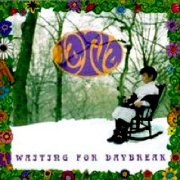 |
Waiting for Daybreak (1994, 38.53) **½/TT |
|
| Sister Word Kia Faces So Real She Said Waiting for Daybreak Abijah's Song Devotion |
Remember Me Empty |
|
Current availability:
Mellotron used:
Larva are the kind of band who mean absolutely jack shit to the vast majority of us, but almost certainly have fanatical fans dotted around the world, their numbers possibly into three figures. Their (to my knowledge) sole release, 1994's Waiting for Daybreak, is a little bit alt.rock, a little bit grunge, a little bit '90s punk and a sneaky helping of good ol' glam metal, particularly in the guitar solo department, possibly at its best on the title track and Abijah's Song. Would it help were I to tell you that Jane's Addiction have been invoked in an online review?
Brandt Abner plays Mellotron, with upfront cellos on She Said, flutes and strings on Devotion and flutes and cellos on closer Empty, clearly real, in those 'easily-available samples had only just appeared' days of the mid-'90s. I won't pretend this did much for me and its sounds has dated terribly, having precisely nothing of any originality about it, but at least the Mellotron work's nice.
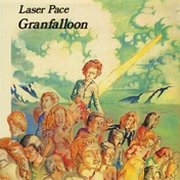 |
Granfalloon (1974, 41.22) ***½/TCloset CasualtyAvatar (Whoever) You Are (You) Sky Fell Endless Oh Yeah? Redemption Scatter |
Current availability:
Mellotron used:
Despite a certain infamy, Laser Pace are one of America's least-known recorded progressive bands, whose sole album, 1974's Granfalloon, has languished in obscurity for decades. With nine players listed on the album, it's hard to tell just how many musicians were in their live lineup, although the core of the band were a trio, with probably five in the stage version, four of whom played keyboards of one kind or another. Their 'infamy' rests on two pillars: 1) being in possession of a female lead guitarist, still considered pretty radical in the early '70s and 2) being in possession of Silver Apples' Morton Subotnick's Buchla synthesizer, with which they peppered the album with rafts of strange sounds. The album was actually released on legendary oddball John Fahey's label, Takoma, who didn't really seem to know what to do with it, so it disappeared when their catalogue was bought out by Chrysalis at the end of the decade.
So what's Granfalloon actually like, I hear you cry? Imagine experimental, jammed-out psych/prog with a funk feel and you might be getting somewhere. Most of its eight tracks are more 'song' than 'jam', although closer Scatter is about as 'out there' as the albums gets, mixing jazz, psychedelia and electronics into an unholy experimental stew. Said guitarist, Maureen O'Connor and Doug Decker (originally credited as "D. Distorto") are both credited with Mellotron, with strings and cellos all over Endless, although that would appear to be your lot, maybe surprisingly. Granfalloon is a classic case of Internet interest leading to a reissue, Decker putting it out on his own imprint, allowing a new generation of fans to discover the record for themselves.
 |
Non Stop Dancing 77 (1977, 43.27) *½/T |
|
| Run Back to Mama/Don't Go Breaking My Heart/Dancing Queen Horoscope/Silver Bird Getaway/Play That Funky Music/Heaven is in the Back Seat of My Cadillac Howzat/Dance Little Lady Dance Beautiful Noise/Monza I Only Wanna Be With You/School Days |
Disco Duck/Bump de Bump Yo Booty/New York Disco/Devil Woman Jeans on/More, More, More/In Zaire Daddy Cool/Money, Money, Money/Sweet Love Feel the Shelter/Dream Weaver Shake Your Booty (Shake, Shake, Shake) |
|
Current availability:
Mellotron used:
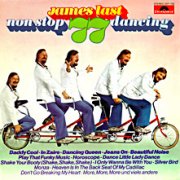
Do you believe I actually bought this album? Well, do you? I did. Jesus shit, I've finally crossed the line, haven't I? I mean, the godawful Harris Chalkitis was bad enough and I laughed my arse off when I heard about this one, but then I stumbled across a copy in an ultra-cheapo Aussie record shop and it was 'only' AU$2.00... Oh well, it gives me a(nother) chance to tell one of my favourite jokes:
Q: What's the difference between a bull and the James Last Orchestra?
A: The bull has the horns at the front and the arsehole at the back...
Boom boom! Actually, that's really unfair, isn't it. Isn't it? I dunno - Hans "James" Last's (1929-2015) oeuvre goes so far beyond all normal conceptions of good taste that he exists in a world of his own devising, where playing ultra-naff light orchestral versions of current hits actually sounds like a good idea, not some kind of sick musical joke. Non Stop Dancing 77 appears to be the eighteenth in a series of biannual releases, presumably distinct from all the other albums Last releases, or at least did at the time. The format is: medleys of current hits, sung by a small vocal group backed by a regular rock band and brass section, frequently with strings. This volume in the series features a certain Peter Hecht on synth/Rhodes/Clavinet/Mellotron; correct me if I'm wrong, but didn't Hecht play in Lucifer's Friend? Ahem... Mellotron also played by 'Hansi', a.k.a. Last himself, though I've no idea whether he'd ever used one before, or ever did again.
Musically, this album seems to be the height of pointlessness; piss-weak, abbreviated versions of not-that-good recent chart entries, presumably German, American and British, although Last toured right across Europe, as well as in the UK and US. Despite the crowd noises that crop up here and there, I suspect this is a studio album; wouldn't he use a string section if it was, though? Oh, who knows. Suffice to say that it isn't even duff enough to be really funny, succeeding only in irritating. Funnily enough, it's the mostly unison male/female vocals that really get on my nerves, even more than the steady disco beat and the largely awful material. This is about as lightweight as it gets, but then, that's the point, isn't it?
I actually expected more Mellotron than this, given that it's being used as a string section substitute, but on side one it's only to be heard near the beginning, on the Don't Go Breaking My Heart/Dancing Queen medley, while side two gets Money, Money, Money/Sweet Love (more Abba...). Apart from the minimal Mellotron, Hecht does some groovy Moog stuff on In Zaire (wasn't that Hamilton Bohannon? God, my brain's full of useless shit...) and a funky bit of Clav work in Cliffy's Devil Woman (wait till I find a copy of Cliff's Mellotron album cheaply enough... Stop press: got it...), but, well, it's like polishing a turd, isn't it? I'm not even sure why I bother.
 |
Subliminal (1994, 46.35) ***½/T |
|
| Blood From a Stone Skin Happy Crasher Sister Dawn The Drop 1313, Hallucino Drive Helmethead House of Fire |
Final Kick Zero Resistance For the Sick (a Prayer'n'a Gun) 20.000 Miles |
|
Current availability:
Mellotron used:
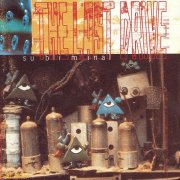
The Last Drive are one of Greece's premier garage rock outfits (THE premier?), forming in the early '80s before a mid-'90s split and a 2007 reformation. 1994's Subliminal was their final pre-split release, an intoxicating mix of different garage and psych sub-genres, from the punky Skin through the acoustic-driven Sister Dawn, the sparse The Drop and lengthy, slowburn, Trower-esque closer 20.000 Miles.
Nick Terzis is credited with Mellotron on 20.000 Miles and, I have to say, despite my serious lack of knowledge concerning working Mellotrons in Greece in the '90s (the album was recorded in Athens), the strings on the track dun'arf sound like the real thing. Yes, there were easily-available samples around by this point (just), but these sound genuine. Cue: amused e-mail from the band saying it isn't. Well worth hearing, either way.