





|
|
|
|
||
|
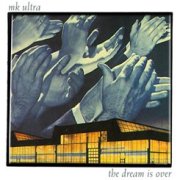 |
The Dream is Over (1999, 42.40) ***/T |
|
| The Dream is Over Goodbye, Max! Red on White on Blue Fortune Cookies Heavy Weather All We Have Interlude Coffee Girl |
Darkness and the Silver Spoon Red Cross I Miss the War What I Live for Sunday Double Fame |
|
Current availability:
Mellotron/Chamberlin used:
MK Ultra (named for some alleged dodgo CIA mind-control programme) released three albums over the course of their career, 1999's The Dream is Over being the last. It could loosely be described as 'powerpop', although with a heavy streak of 'indie' and a largish helping of 'dullness'. It's all proficient enough, but ultimately rather boring, I'm afraid, the gloomy Darkness And The Silver Spoon possibly being the best thing here, which isn't saying much. The band's one claim to Planet Mellotron fame is the involvement of John Vanderslice, himself a dedicated Mellotron user.
Adam Cohen is credited with Mellotron and Chamberlin, but it must be buried fairly well in the mix, with only cellos (as against the real ones on the rest of the record), flutes and what have to be Chamby strings on I Miss The War. Overall, then, a rather unexciting slice of late-'90s indie, with little tape-replay work. Whoopee.
See: John Vanderslice
 |
Green Blues [as MV & EE with The Bummer Road] (2007, 62.43) ***/TEast Mountain JointDrive is That I Love You Canned Happiness Mine All Troubled Blues Big Deal Grassthighs Solar Hill |
 |
Gettin' Gone [as MV & EE with The Golden Road] (2007, 65.51) **½/½ |
|
| Susquehanna The Burden Hammer I Got Caves in There Mama My Day & Night Easy Livin' Coaled Out |
Speed Queen Motorin' Country Fried Home Comfort Sweet People |
|
Current availability:
Mellotrons used:
Matt "MV" Valentine and Erika "EE" Elder have been churning out several albums a year since 2001, using a wide range of collaborators and names. Their overall style is best described as 'stoned-out psych', although they prefer 'lunar ragas', apparently. Green Blues (as MV & EE with The Bummer Road) is their first (of six!) albums of 2007 and, while it has its moments, an hour is vastly too long for such a prolific band; surely a forty-minute edit would serve their listeners better? Or am I missing the point? Valentine sounds like Neil Young in places, which is a good thing, but far too much of the album is stoned (or pseudo-stoned)-out nonsense and merely drags. Mellotronically speaking, the album opens with J. Mascis (Dinosaur Jr, of course) on strings on East Mountain Joint, reprising later in the song, alongside flutes, with more flutes on Big Deal, although I'm not convinced about the latter.
Later that year, the duo released Gettin' Gone as MV & EE with The Golden Road; the same complaints apply as with Green Blues: it's overlong and unfocussed, dragging badly by about halfway through, its material even less gripping than before. Valentine plays Mellotron this time round, with a near-atonal flute part on Country Fried that neither enhances nor detracts from the rambling piece. Sorry, I thought I might like these albums, but they both drove me mad with their complete lack of focus and insistence on highlighting the worst of the psych era's excesses. One decent Mellotron track between the pair of 'em.
 |
Jana McCall (1998, 46.06) ***/T |
|
| Today Again and Again Deep in Blue No Comfort Mother of Earth I Want You Glorious Days Gone |
Denied Walking Water |
|
Current availability:
Mellotron used:
Jana McCall's eponymous debut sits at the darker end of alt.rock, for want of a better term; Wikipedia uses the phrase, "...sorrowful yet powerful...with subtle, eerie atmospheres", which sounds about right. Highlights? Probably six-minute-plus opener Today and Mother Of Earth, although I'm afraid her relentlessly downbeat approach becomes a little wearing after a while.
Built to Spill's Robert Roth played (presumably his own) Mellotron, with heavily-reverbed strings on I Want You, just scraping a full T. A good album, but one which should possibly be consumed a few tracks at a time.
 |
Wide Prairie (1999, 52.18) *½/TT |
|
| Wide Prairie New Orleans The White Coated Man Love's Full Glory I Got Up The Light Comes From Within Mister Sandman Seaside Woman |
Oriental Nightfish Endless Days Poison Ivy Cow B-side to Seaside Sugartime Cook of the House Appaloosa |
|
Current availability:
Mellotron used:
Now, after poor Linda's untimely death, I feel really bad about saying this, but this album sucks. I've really tried to think of something positive to say about it, but I've hit a blank; poor songs, dodgy lyrics and dreadful vocals. Sorry. One thing I won't hold against it is the idea behind it; after Linda's death, Paul collected the various solo tracks she'd recorded over the years and released them in her memory. I'm not going to be cynical about this; it's a really sweet thing to do, but, unfortunately, the end result is, er, 'not that good'. By its very nature it's a little uncohesive, but that could be said of any retrospective; it might hold together slightly better if the tracks had been sequenced in chronological order, but I presume Paul had a reason for mixing them up.
Anyway, Wide Prairie has Mellotron on four tracks, played by either Linda or Paul. The title track is a faux-cowboy song, showing off Linda's vocals as you'd rather wish it wouldn't; at least we get a nice helping of Mellotron strings. Linda has the good sense to keep her contributions to Oriental Nightfish down to some narration, though once more, there's some nice Mellotron. B-Side To Seaside is, of course, the original flipside to Seaside Woman, a 7" Linda put out in the mid-'70s; more narration and a little more Mellotron strings. Unfortunately, she sings again on the rather terrible Cook Of The House, the Mellotron being inaudible this time round.
It's noticeable how good the playing is on this album; top session people all round, I suspect, while, of course, hubby Paul's contributions are always spot-on. Sadly, it's all a bit of a waste of talent; for all Paul's protestations, Linda was no great shakes musically, although she played keyboards (including two Mellotrons) in Wings throughout the '70s. As I said, I feel pretty bad about trashing this album, but I couldn't in all honesty tell you it's any good. Apart from the general musicianship, one of its few saving graces is the amount of Mellotron on offer, but don't rush out to buy it on those grounds. Please.
See: Paul McCartney
Paul McCartney & Wings (UK) see: |
  |
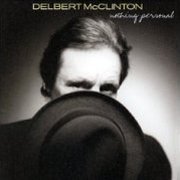 |
Nothing Personal (2001, 49.44) ***/T |
|
| Livin' it Down Gotta Get it Worked on When Rita Leaves Squeeze Me in Birmingham Tonight Baggage Claim All Night Long Don't Leave Home Without it |
Desperation Nothin' Lasts Forever Read Me My Rights All There is of Me Watchin' the Rain |
|
Current availability:
Chamberlin used:
Although I'd never heard of him before, it seems that Delbert McClinton's been around since the early '60s, playing that peculiarly Texan blend of blues, country and all stages in between. 2001's Nothing Personal is something like his seventeenth solo studio album and I'd imagine it defines his style perfectly, shifting between the blues and country ends of his oeuvre with a bunch of well-written songs that will do his reputation no harm whatsoever, not least Livin' It Down, Birmingham Tonight and the amusing All Night Long.
Benmont Tench (from Tom Petty's band) plays Chamberlin, with an 'almost fooled me' part on tear-jerker ballad When Rita Leaves, although that seems to be it. Overall, then, a good album of its type, though probably not one to excite my regular readers (yes, you lot - you know who you are).
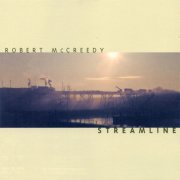 |
Streamline (2001, 32.58) ***/T½ |
|
| Diana Down Gone Again Dreams Love Without Shame Holding on Emily Float Away |
Something's Wrong Too Much Love Wrong Side of Anything |
|
Current availability:
Mellotron/Chamberlin used:
Americana outfit Volebeats' Robert McCreedy plays an appealing form of Americana on his first album (of two), 2001's Streamline, low on schmaltz, high on meaningful lyrics and decent tunes. Highlights? Down, Emily and low-fi closer Wrong Side Of Anything, maybe.
Andrew Hollander plays Mellotron and Chamberlin, with seriously upfront (Mellotron?) flutes on Down and exceedingly wobbly (Chamby?) strings on Something's Wrong, clearly as real as real can be, making a nice change, even as early as this. Recommended for Americana fans.
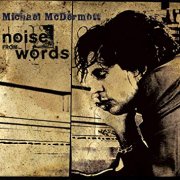 |
Noise From Words (2007, 47.10) **/T½ |
|
| Mess of Things Still Ain't Over You Yet Tread Lightly The American in Me A Kind of Love Song No Words All My Love Just a Little Blue |
Broken A Long Way From Heaven My Father's Son I Shall Be Healed |
|
Current availability:
Chamberlin used:
For all the plaudits sent his way by the likes of Stephen King, Michael McDermott's songs, at least on his eighth (?) album, 2007's Noise From Words, veer too closely to that 'Americana-lite as used on crummy TV shows' thing, complete with unnecessary overuse of falsetto, in true millennial style. Any better tracks? Possibly bonus track edition extra Antique Store.
Patrick Warren plays his Chamby M1, with background strings on Tread Lightly, All My Love, Just A Little Blue and closer I Shall Be Healed, although the strings on Still Ain't Over You Yet sound real. Sorry, not worth the effort.
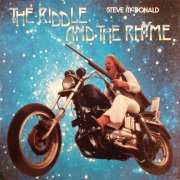 |
The Riddle & the Rhyme (1980, 34.49) ***/TT |
|
| Sentimental Boys Cause of Confusion Distant Drum (Vertical Hum) Universal Prime Force Reflection Omnipresence The Riddle and the Rhyme |
Predestination Time Identity Collision With Destiny Meltdown Creation The Tree of Life The Fall |
|
Current availability:
Mellotron used:
Steve McDonald is known these days as a highly successful Celtic musician, despite being a New Zealander; he's clearly tapped into his Scots heritage and good luck to him. He's actually been around since at least the early '70s, playing with bands such as Taylor and Timberjack and appearing on Human Instinct's final album, Peg Leg, only released in 2002. The Riddle & the Rhyme was his first solo album, featuring a rather eccentric sleeve design; not just the cover itself, but the montage of pictures inside the gatefold, showing Steve carrying what is clearly his favourite string synth around various locations, including a pub and a bus stop. And I haven't even mentioned the rear sleeve, with Steve in white evening dress (and waist-length hair), seated at a grand piano with the maker's logo replaced with a plaque displaying the album title...
Anyway, the album is a strange mixture of styles, from the pop/rock of Universal Prime Force through the soft rock schlock of Sentimental Boys and Distant Drum (Vertical Hum) to the proggy Predestination and Meltdown, which take up much of side two. Steve's Mellotron work is somewhat variable, with cellos and exceedingly murky strings on Sentimental Boys and Distant Drum, while Omnipresence has a slightly better string part and sound, with more strings and mushy choir on the title track. This leaves Universal Prime Force as probably the album's best Mellotron track, although, despite the number of songs featuring The Beast, this is some way from being a top-notch Mellotron album. Actually, this is some way from being a top-notch anything album, really, although it's interesting as a curio of late-period Kiwi (semi-) prog. Try not to pay as much as I did for a copy. Oh, and going by recent pictures, he still has the hair.
See: Human Instinct
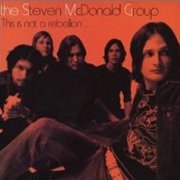 |
This is Not a Rebellion... (2002, 16.06) ***½/TAwakeGet Jimmy Strange Arrangement Something to Love Motorboat |
Current availability:
Mellotron used:
Steve(n) McDonald is better known as bassist with the excellent Redd Kross. He formed the Steven McDonald Group while the mother group were in hiatus, although they released just the one EP, This is Not a Rebellion... (or This is Not a Rebellion... This is a Mass Awakening!) before Redd Kross reformed. Despite only containing five tracks, this is a blast; powerpop bordering on bubblegum while, crucially, never quite tipping over. 'Best track' award is probably split between Get Jimmy and their cover of the outrageous/appalling Kim Fowley's ridiculous Motorboat.
Mellotron (amongst other things) from Anna Waronker (daughter of über-producer Lenny), who, it turns out, is married to McDonald. She sticks a nice flute part onto Something To Love, which, although presumably meant to back the guitar solo, ends up being higher in the mix. And I'm complaining? So; one very nice little release, one cool Mellotron track, shame they didn't do more.
See: Redd Kross | Anna Waronker
 |
Peaceful (1974, 47.31) **½/½ |
|
| Rambler Alone Again Naturally Peaceful Waltz for Tricia Follow Your Heart Break One Rusty Ships & Sandcastles Better Than Anything |
Christine's Recital Nova - the Beginning Nova That's All |
|
Current availability:
Mellotron used:
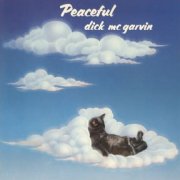
Confusingly, jazz drummer Dick McGarvin shares his name with a well-known actor, making it difficult to find much useful biographical information about him. 1974's Peaceful might be his only solo release, an instrumental album recorded with a keyboard player, a flautist/saxophonist and a percussionist, featuring a handful of covers (notably Gilbert O'Sullivan's Alone Again Naturally) and several McGarvin originals. Highlight? The lovely flute-led Waltz For Tricia is the least cheesy thing here by quite some way, but it's difficult not to see this as one of the precursors to the horrors of late '70s smooth jazz, or 'middle-aged dinner party music', as it's known around these parts.
Keys man Gus Gustavson plays Mellotron, with a background string line on opener Rambler and exceedingly background strings on Rusty Ships & Sandcastles, although that would appear to be our lot. All in all, a thoroughly professional, yet rather dull release, with only the occasional hint of the then-ongoing raging mid-'70s fusion epidemic. Not much Mellotron, either.
 |
McGear (1974, 43.48) ***/T |
|
| Sea Breezes What Do We Really Know? Norton Leave it Have You Got Problems The Casket Rainbow Lady Simply Love You |
Givin' Grease a Ride The Man Who Found God on the Moon |
|
Current availability:
Mellotron used:
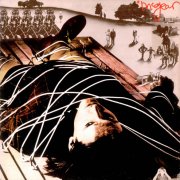
On/off Scaffold member Mike "McGear" McCartney (see: McGough & McGear, below) is, of course, Paul's younger brother, so it's no great surprise that his second solo album, 1974's McGear (on which, by Christ, he doesn't 'alf sound like his brother), features members of and sounds a lot like Wings. While the jokey likes of Norton and Have You Got Problems seem to be the album's default setting, better material includes opener Roxy's Sea Breezes, The Casket and the stomping Givin' Grease A Ride, although Simply Love You is the very worst kind of cheesy nonsense Paul (who, surprise, surprise, co-wrote) would emit like a bad smell.
Someone (Linda?) plays Mellotron here and there, with something woodwindish and flutes on Rainbow Lady and chordal strings on Simply Love You, although the strings on Sea Breezes sound real. So; mid-'70s mainstream rock-lite, harmless enough, but all rather unexciting some forty years on.
See: Paul McCartney
 |
McGough & McGear (1968, 44.52) ***/T |
|
| So Much A Little Bit of Heaven Basement Flat From 'Frink, a Life in the Day of' & 'Summer With Monika' - Prologue: Introducing - Moanin', Anji From 'Frink, a Life in the Day of' & 'Summer With Monika' - Epilogue |
Come Close and Sleep Now Yellow Book House in My Head Mr. Tickle Living Room Do You Remember Please Don't Run Too Fast Ex Art Student |
|
Current availability:
Mellotron used:
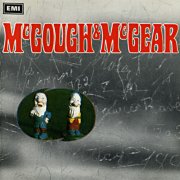
Roger McGough and Mike McCartney (younger brother of the better known... and professionally known as McGear, to avoid accusations of nepotism) were two of three members of Liverpool-based comedy troupe The Scaffold, along with John 'Tiswas' Gorman (biggest hit: the immortal Lily The Pink). They released their only album as a duo, McGough & McGear, in 1968, enlisting the help of loads of famous friends, most of whom couldn't be credited for legal reasons, including Jimi Hendrix, an inveterate jammer (that has to be him on wah guitar on closer Ex Art Student). It is, to be honest, a bit of a curate's egg, as you might expect, 'straight' songs (So Much) rubbing shoulders with sillier material (A Little Bit Of Heaven) and essentially spoken-word tracks (both parts of Frink, A Life In The Day Of).
Mellotron, apparently from Paul McCartney, although with musicians largely uncredited, one or more other players could easily be involved. Anyway, background brass on So Much and a few seconds of very obvious flutes on Frink, A Life In The Day Of (Prologue) and slightly more in the background on Do You Remember, in other words, fairly low Mellotron content. So; psychedelic music-hall? Comedy poetry? Call it what you will, it's pretty unique, but may not bear repeated plays.
See: Paul McCartney
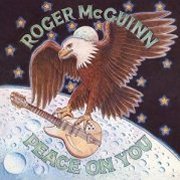 |
Peace on You (1974, 35.04) ***/T |
|
| Peace on You Without You Going to the Country (Please Not) One More Time Same Old Sound Do What You Want to Together Better Change |
Gate of Horn The Lady |
|
Current availability:
Mellotron used:
By 1974, The Byrds were well and truly history and Roger McGuinn had already released his eponymous solo album. His second such effort, Peace on You, was a decent enough, slightly country-rock effort, very recognisably McGuinn on the vocal front, although his trademark Rickenbacker 12-string only appears sporadically, notably (and ironically?) on Same Old Sound, although Gate Of Horn and probably the album's best track (probably because it sounds most like The Byrds), The Lady, feature it too. Overall, it'd be hard to argue that this is his finest work; while Byrds completists shouldn't be wildly disappointed, nothing here matches the quality of his best work with that band. Well, are you surprised?
Uncredited Mellotron here and there, apparently from Paul Harris, with strings on the opening title track, which starts nicely before going slightly honky-tonk later on and the same on (Please Not) One More Time, clearly recorded 'on the fly', as chords fade out and back in, as Harris re-triggers notes. So; passable, nowt special, for either music or Mellotron, although The Lady could well do with anthologising.
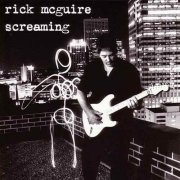 |
Screaming (2003, 41.12) **/T½ |
|
| Falling Hard Screaming I Should Know Vegas Dream Higher She Cried I Don't Mind Your Eyes Never Let Go |
Crashing Down My Song |
|
Current availability:
Mellotron/Chamberlin used:
Minneapolite guitarist Rick McGuire's Screaming contains the kind of bland, Americana-inflected pop/rock guaranteed to raise Planet Mellotron's hackles, insipid to the max, if that isn't a contradiction in terms, at its least crummy on the title track and Vegas Dream. You know you're in trouble when an artist states that they're 'influenced by Dave Matthews'...
The album's CD Baby spiel states, "...Mellotron Mark VI tape replay keyboard and the Chamberlin M1", throwing my initial 'sample' diagnosis out of the window. Not sure who plays them, mind... Possibly their owner (and album producer) Tom Herbers. Anyway, background (Chamby?) strings on opener Falling Hard, presumably Chamby strings and (Mellotron?) flutes on I Should Know and Chamby strings on Crashing Down. I think... The background strings on Never Let Go, however, are more likely to be generic.
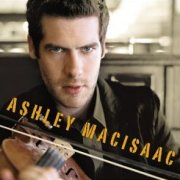 |
Ashley MacIsaac (2003, 48.40) ***/T |
|
| Cello Song Lay Me Down Save Me From Tomorrow I Don't Need This Grapes To America We Go Chorus Jig/The King's Reel Wedding Funeral |
Captain America Mull of Kintyre Bog an Login This is My Father Fairy Dance |
|
Current availability:
Chamberlin used:
Ashley MacIsaac started his career as a folk fiddler from Nova Scotia, moving into more mainstream areas as time's gone on. It seems he's also quite a controversial figure, leading a slightly fragmented lifestyle and infuriating people by being rather more open on his views regarding politics and his own sexuality than many people might like. Ashley MacIsaac is his seventh album, incorporating various very un-folklike rhythms in places; I know artists have to move on, but into commercial pop? Pretty much every track features some kind of folk influence - MacIsaac's fiddle sees to that - but it's all a bit sparse, frankly. Best track? Maybe the fiddle frenzy of Grapes, complete with monosynth and Clavinet, or possibly Chorus Jig/The King's Reel. Worst? The entirely pointless version of Wings' horrible Mull Of Kintyre. It might not be quite as awful as the original, but, y'know, why?
Paul Bryan plays Chamberlin on the album, although it's not wildly obvious where, as is irritatingly common with the Chamby. It sounds like the instrument's strings on Cello Song and This Is My Father, though I wouldn't be entirely surprised if it turns out to be nothing of the sort and they're used inaudibly elsewhere. So; a modern Gaelic folk-influenced pop/rock album. Hmmm. Listen to the real thing instead? Next to no obvious Chamby, either.
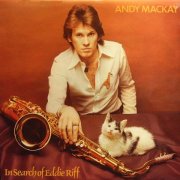 |
In Search of Eddie Riff (1974, 39.06) **½/TRide of the ValkyriesThe End of the World The Hour Before Dawn Past, Present and Future (Pyramid of Night) Walking the Whippet Summer Sun What Becomes of the Broken Hearted A Four Legged Friend An Die Musik |
Current availability:
Mellotron used:
Saxophonist/oboist Andy Mackay is best known, of course, for his tenure with Roxy Music, also doing session work and writing and recording the music for almost-forgotten UK TV series Rock Follies during Roxy's late '70s hiatus. It also turns out we attended the same school (briefly, in my case), which is just weird. 1974 saw the release of his first (of two, to date) solo albums, the near-instrumental In Search of Eddie Riff (I presume that's an uncredited Mackay singing on Summer Sun and the dreadful A Four Legged Friend), which was reissued, three years later, with a heavily-amended tracklisting, losing easily the two worst tracks (funnily enough, the two vocal ones). Better efforts include the brief, atmospheric Time Regained and the nine-minute Past, Present And Future (a.k.a. Pyramid Of Night), although the latter takes a while to get going, while Ride Of The Valkyries, rock'n'roll style, is (no doubt) intentionally hilarious (the CD-only rehearsal take is even better), but overall, it's a bit of a flop, frankly.
Two keyboard players are credited, Brian Chatton (who also worked with Mackay on Rock Follies) and then-Roxy member Eddie Jobson (Curved Air, UK etc.), but it seems likely that it's the latter who provides the album's minor Mellotron use (thanks, once again, to Mark for this one), with background choirs on Walking The Whippet (a rare example of rock'n'roll Mellotron here, folks) and Past, Present And Future. So; do you bother? Roxy completists probably already own at least one version, but I think the rest of us can go to bed tonight safe in the knowledge that we're really not missing out that much.
See: Roxy Music
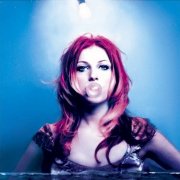 |
Trouble (2004, 49.19) **½/½ |
|
| Trouble When it All Comes Down Open Your Eyes Somebody A Voice That Carries Honey Green Grass January |
Marble Steps Sensitive Subject Matter I Hold Her Confessions of a Teenage Girl |
|
Current availability:
Chamberlin used:
Bonnie McKee was something of a child prodigy, writing the bulk of what was to become her debut album in her early teens. Said album, 2004's Trouble (the album seems to be largely autobiographical), starts off well enough, in a tough female singer-songwriter vein, but the slick production gradually overtakes the material, leaving the listener with a rather empty feeling by the end. As with so many singer-songwriter efforts, the lyrics seem to be the most important part of the package, the music often just something melodic on which to hang the words, which probably makes closer Confessions Of A Teenage Girl the best thing here, telling it just how it is (or was for Ms McKee), although I'm sure a reasonably privileged background helped no end.
Patrick Warren does his usual Chamberlin thing, near-inaudible as almost always (bloody producers), with faint, er, somethings on the album's single, Somebody, making this the kind of album you're unlikely to want to hear unless you're a member of Bonnie McKee's peer group, i.e. teenage girls. It's not that bad at what it does, but there really isn't much here for the rest of us.
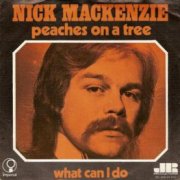 |
7" (1974) **/T Peaches on a Tree What Can I Do |
Current availability:
Mellotron used:
Nick "McKenzie" van den Broeke is a mainstream Dutch singer whose career is fairly well tied to the '70s. Like other Dutch pop stars of the era, he was chiefly a singles artist, releasing few albums, information on even their titles, never mind their contents, being difficult to trace. What I can tell you, though, is that Peaches On A Tree was his first single of 1974, a jaunty, Eurovision-style, vaguely oompah-like number with few redeeming features, its flip, What Can I Do, faring no better.
An unknown keyboard player adds pseudo-orchestral Mellotron strings to the 'A', merely giving the impression that the whole thing was done on a rather tight budget, rather than that anyone actually liked the sound. You can probably find a download of this if you're really bothered, but I can't say I am.
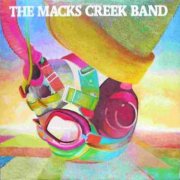 |
The Macks Creek Band (1980, 39.56) ***/TRioBertha Bryan Catfishin' Can't Make it Alone On the Missouri Move to the Country El Danzante (the Dancer) Smilin' Again Take it or Leave it |
Current availability:
Mellotron used:
The Missouri-based Macks Creek Band were a late-in-the-day Southern outfit, driven by Ron Roskowske and Terry Midkiff's ripping twin-guitar attack on their lone, eponymous album. Like several other outfits from that loose 'movement', they threw everything into the mix, from Bertha Bryan's soft rock through Catfishin's classic Allmans sound and On The Missouri's piano balladry to closer Take It Or Leave It's soulful moves. The album's at its best on opener Rio, Can't Make It Alone's high-energy boogie and guitar instrumental El Danzante (The Dancer), but its lack of consistency occasionally jars.
Tom Denman plays Chamberlin, with chordal strings on On The Missouri. I don't believe The Macks Creek Band has ever been made available on CD, but it turns up on download sites and YouTube. Mostly worth hearing.
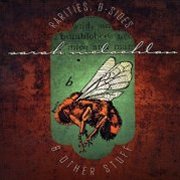 |
Rarities, B-Sides & Other Stuff (1996, 62.32) **½/T |
|
| Dear God I Will Remember You Fear (LunaSol remix) Gloomy Sunday (live) Full of Grace Song for a Winter's Night Blue Drawn to the Rhythm (live) |
Shelter (violin mix) As the End Draws Near (extended remix) Vox (extended remix) Into the Fire (extended remix) Possession (rabbit in the moon remix) |
|
Current availability:
Mellotron used:
Sarah McLachlan is possibly the archetypal Lilith Fair artist; a rather wet female singer-songwriter who over-emotes at every opportunity. There's a huge audience for this sort of thing, mostly single women, but I'm afraid to say it couldn't leave me much colder if it tried. The slightly clunkily-titled Rarities, B-Sides & Other Stuff does exactly what it says on the tin, although it's only a selection of the apparently large number of tracks she recorded for singles, compilations etc. The album has moments of genuine beauty - McLachlan's multitracked harmonies on Blue are gorgeous - but all too many tracks feel, to an outsider like myself, to be a Carole King-by-numbers for this generation.
Mellotron on a couple of tracks (from David Kershaw), starting with cellos on Sarah's take on XTC's Dear God, also found on A Testimonial Dinner, the 1995 XTC tribute album, plus a brief burst of flutes on Song For A Winter's Night, but that seems to be your lot. So; if you're a McLachlan fan, you'll probably like about half of this, if you don't already own the tracks anyway. I can't imagine who would want to listen to several crapola dance remixes of her work, as they're not going to satisfy either the dance crowd or her fans and, by all accounts, there are better rare tracks not on here, but that's compilers for you. Not much Mellotron and not a very exciting record, so the rest of us should probably discretely withdraw.
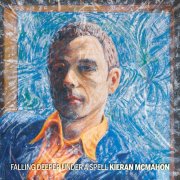 |
Falling Deeper Under a Spell (2005, 37.41) ***/T½ |
|
| Everybody's a Fool Sometimes Falling Deeper Under a Spell The Road I Have Wandered Getting Lost Inside Myself On My Way Home Gypsy Heather Love Thinkers Don't Sleep Too Far Out |
Do You Think I'm Blind Life's a Breeze Don't Want the Night to End |
|
Current availability:
Mellotron used:
Ulsterman Kieran McMahon is based in Berlin these days, although 2005's Falling Deeper Under a Spell has an indefinable Britishness about it, a pre-psych '60s thing with a contemporary feel, without slipping into indie duffness. Highlights? Opener Everybody's A Fool Sometimes, the title track and Gypsy Heather Love, maybe.
Carola McMahon plays Mellotron, with flutes all over opener Everybody's A Fool Sometimes and background (yet real-sounding) strings on Do You Think I'm Blind. Yes, I think it's genuine, yes, I could be wrong. Worth hearing for fans of the non-indie end of the singer-songwriter spectrum.