





|
|
|
|
||
|
 |
Metropolis (1973, 40.27) ***½/½BirthMetropolis Superplasticclub Dreamweaver Glass Roofed Courts Ecliptic |
Current availability:
Mellotron used:
The sole Metropolis album may actually, unlike the work of so many German bands from the '70s, fit the 'krautrock' genre, at least to an extent. A trippy mix of straightforward rock, psych and all-out experimentation, various members had links with the likes of Ash Ra Tempel, Agitation Free and Mythos and clearly had considerable interest in jamming, although much of the album is fairly conventionally structured.
Most of the strings and flutes on the album are real, easily heard on opener Birth, although a pitchbent strings part on the lengthy title track has to be Manfred Opitz's Mellotron, although it's not actually credited as such. It's easy to see how Metropolis has been labelled a 'Mellotron Album', as many (though by no means all) of the string parts are of the 'block chord' variety, with a slight lack of imagination in the arrangement department. Anyway; a good album of its type, more tuneful than the likes of Dzyan and rockier than, say, Wind, though definitely further 'out there' than Nektar and their ilk. Hardly any Mellotron, mind, so don't go buying it for that.
See: Ash Ra Tempel | Agitation Free | Mythos
 |
Half the World is Watching Me (2000, 44.24) ***/TT |
|
| Am I Wry? No Mica Saliva King Christian Her Voice is Beyond Her Years 156 Symmetry Comforting Sounds |
She Came Home for Christmas I Should Have Been a Tsin-Tsi (for You) |
|
 |
And the Glass Handed Kites (2005, 54.02) **/T |
|
| Circuitry of the Wolf Chinaberry Tree Why Are You Looking Grave? Fox Cub Apocalypso Special The Zookeeper's Boy A Dark Design |
Saviours of Jazz Ballet (Fear Me, December) An Envoy to the Open Fields Small Ambulance The Seething Rain Weeps for You (Uda Pruda) White Lips Kissed Louise Louisa |
|
Current availability:
Mellotron used:
I was under the impression that Mew were 'the new prog', so I was quite surprised, on playing 2000's Half the World is Watching Me, to hear an album of quirky pop, referencing The Beach Boys, Porcupine Tree, Sigur Rós and '70s TV themes (listen to the piano part on Saliva), amongst other influences. OK, so Comforting Sounds is nearly nine minutes long, but this isn't prog by any standard definition, unless what's meant is 'progressive pop', which is another matter entirely. Actually, a large part of this album sports the incredibly irritating type of vocal melodies that became popular in the '90s which make you want to lynch the songwriter, but seem to be popular with 'the kids', although the writing has enough quirks to keep it interesting, if not something that I'll play too often.
Produced by the obscenely talented Tim Christensen, it's hardly surprising there's some vintage kit to be heard here, not least one or more of Christensen's Mellotrons on several tracks. Going by his solo albums, there could be all sorts of obscure sounds, so apologies if this list is incomplete. It sounds like strings, sometimes doubled by a real violin on Am I Wry? No, Saliva, with its rather disturbing lyric and King Christian, plus what I'm guessing are Mellotron vibes on 156 and Symmetry. There's a very clear Mellotron string section on Comforting Sounds, followed by polyphonic flutes, probably the most obviously Mellotronic parts on the album, with real strings later on in the long-form piece.
What a difference a few years can make... 2005's And the Glass Handed Kites is a terrible disappointment, as Mew enter the indie mainstream, albeit with some rather unconventional song structures, sadly not in a good way. Less irritating material includes The Zookeeper's Boy and er, that's it. Uncredited Mellotron (from Jonas Bjerre?) on seven-minute closer Louise Louisa, with a major string part entering the fray about halfway through. It really wasn't worth it.
See: Tim Christensen
 |
Items You Won't Find Elsewhere (2004, 51.22) ***½/T |
|
| Storyteller Girl The Stars Kiss Me Goodnight Faster Simple Sensation Arms of Love Mr. Wilson Pebbles on the Window The Purest Thing |
My Solo Mary is Missing Wrapped Around Your Finger Phoenix |
|
Current availability:
Mellotron used:
Meredith Meyer is an American singer-songwriter (California via Oklahoma) who bears comparison with Aimee Mann, amongst others, which is praise indeed. Less melancholy than Ms. Mann, she beats the likes of Fiona Apple hands-down on her debut, Items You Won't Find Elsewhere and, with songs of the quality of Storyteller Girl and The Purest Thing, surely it can't be long before she comes into the orbit of the Lilith Fair crowd? Mind you, I can't see her dumbing-down for them... Was it a dream, or did people actually once buy well-crafted records that made them think? What happened?
Anyway, the inimitable Brian Kehew (Moog Cookbook, Jellyfish compatriot) produces and has been given free rein with his collection of vintage gear. Mellotron on three tracks (one uncredited), with almost-inaudible strings on Mr. Wilson and something even less identifiable on Mary Is Missing, although the strangely uncredited Pebbles On The Window makes up for it; essentially a brief (forty-five-second) Mellotron cello solo, this is quite gorgeous, though nothing like the rest of the material on offer here. A good album of modern singer-songwriter fare, then, Meredith's 'up-close and intimate' vocals giving the impression she's singing the songs for you alone. No sub-Kate Bushisms, either (take note Tori and others).
 |
Thighs and Whispers (1979, 42.30) **½/½Big Noise From WinnetkaMillworker Cradle Days My Knight in Black Leather Hang on in There Baby Hurricane Rain Married Men |
Current availability:
Mellotron used:
Hmmm... Bette Midler, eh? 'The Divine Miss M'. Actually, the world would be a duller place without Bette's raucous humour and larger-than-life persona, although neither excuse this album, or for that matter, the rest of her musical career. Always more Broadway than rock/pop, Midler's albums, as far as I can tell, were largely producer-driven, locking them forever in a prison of the time and place of their creation, her sixth, Thighs and Whispers (groan), being no exception. About half of its contents are overlong disco workouts (Big Noise From Winnetka, My Knight In Black Leather), with an excruciating version of Hang On In There Baby just to down the ante. Maybe surprisingly, the album's best track is closer Married Men and that largely for its wry lyrical observations on its subject (amusingly, written by a man).
So why the hell is this here, eh? Usual reason: Randy Kerber plays keyboards on a few tracks, with some distant (credited) Mellotron strings on the faux-S&M My Knight In Black Leather, just about recognisable amongst the general discoisms of the rest of the track's instrumentation. So; you know what I'm going to say, so I won't bother saying it and if you're thinking of asking why I've given this as high a rating as I have, well, it's Bette Midler, innit?
 |
Midnight Circus (1972, 32.54/39.01) ***/T (TT) |
|
| The Light I Had a Dream November Church Mr. Clown Indian Impression Disappointed Love Meditation |
[CD adds: Coloured Gay Get it] |
|
Current availability:
Mellotron used:
Midnight Circus were essentially the folk-rock-with-progressive-tendencies duo of Christian Bollmann and Torsten Schmitt, who made just the one self-titled album in 1972. Between them, they shared the vocal and acoustic guitar work, Bollmann adding recorder and trumpet (notably the solo on longest and best track November Church), various guest musicians filling out the sound. Midnight Circus is good, if not essential, several songs operating in 'meandering and slightly stoned' mode, although some interesting instrumentation helps to lift it out of the also-ran category.
Amongst the album's guests was Veit Madaus on keys, who played instantly-recognisable Mellotron strings on I Had A Dream, with less obvious brass on November Church and more of both on one of the CD's bonus track, Get It, with a particularly abrasive and upfront brass part. There are more essential albums in the German Progressive category, though this wins out over the likes of, say, Witthüser & Westrupp or Wind, by dint of being less stoned and containing a couple of decent songs. Not much Mellotron, although I Had A Dream's work is quite nice. So-so.
 |
Earth & Sun & Moon (1993, 53.59) ***/TT |
|
| Feeding Frenzy My Country Renaissance Man Earth and Sun and Moon Truganini Bushfire Drums of Heaven Outbreak of Love |
In the Valley Tell Me the Truth Now or Never Land |
|
 |
Redneck Wonderland (1998, 47.08) ***/T |
|
| Redneck Wonderland Concrete Cemetery in My Mind Comfortable Place on the Couch Safety Chain Blues Return to Sender Blot The Great Gibber Plain |
Seeing is Believing White Skin Black Heart What Goes on Drop in the Ocean |
|
Current availability:
Mellotrons used:
 |
Midnight Oil, or 'The Oils', have followed a path of political activism from the outset, providing a welcome antidote to the unfortunate right-wing streak that crops up all too often in Aussie politics (remember the appalling Pauline Hanson, a.k.a. the 'Oxley Moron'?). While it's easy to accuse them of being musically unadventurous, with their agenda, they weren't going to get their message across by veering too far from the mainstream, so playing radio rock is clearly their compromise, assuming they even consider it to be such. Earth & Sun & Moon was their eighth full studio album, not sounding startlingly different to their two early-'80s records I've heard (10, 9, 8, 7, 6, 5, 4, 3, 2, 1 (10 to 1) and Red Sails In The Sunset, with its apocalyptic sleeve design), being radical radio-friendly rock, concentrating heavily on their country and what will become of it, particularly on the anti-monarchist Truganini. Difficult to argue there... Guitarist/keys man Jim Moginie plays Mellotron on several tracks, with flutes and possibly strings on opener Feeding Frenzy, pitchbent strings on Renaissance Man and more regular ones on Drums Of Heaven and Outbreak Of Love. As always, it perks up almost any track, so although his use isn't especially radical (pitchbends aside), it's always nice to hear. Moginie also played it on his solo project from '96, Fuzz Face, for what it's worth.
Five years and two albums on, 1998's Redneck Wonderland takes a sharp left turn, heading into alt.metal territory for much of its length, although it's probably half-and-half new style versus old. Highlights? The opening title track slays (as I believe they say), as does Concrete, while The Great Gibber Plain might be the best of the lighter (note: er) material. Moginie adds Mellotron to three tracks, with flutes and volume-pedalled strings on Concrete, distant flutes on Cemetery In My Mind and a brief choir melody, unusually, on Seeing Is Believing.
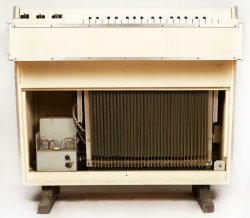
Incidentally, it seems they bought their M400 from none other than Aussie prog heroes Sebastian Hardie in 1989, finally selling it some time in the 2010s. Nice metal edging someone's added to it, he said in an unconvinced kind of way...
See: Jim Moginie | Fuzz Face
 |
Brennende Drømmer (2001, 55.11) ****/TTTT½ |
|
| Incognito City Dvergenes Palass Nostradamus Pilegrim Jublende Rekker Middelveis Berg og Dvale Døende Stein |
I Tåketimen [unlisted track] |
|
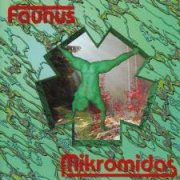 |
Faunus (2005, 49.33) ****/TTTT½Den Dagen Jeg ForsvantVirveldans Sjælernes Evige Beven Trollmann Sultekunstneren Den Gjengrodde Sti Englesangen Famle Rundt Krigsmann |
 |
Higher & Higher: A Tribute to the Moody Blues (2006) ***½/TTTT[Mikromidas contribute]Go Now |
Current availability:
Mellotrons used:
 |
Despite forming in 1995, it took Mikromidas until 2001 to release their debut, Brennende Drømmer, but it was worth the wait. I've seen comparisons to Änglagård et al., but the only real one is in their choice of instrumentation, specifically Hammond and Mellotron. Stylewise, they go for a (relatively) straightforward song format with Norwegian lyrics, although we ain't talking mainstream here, more a vaguely Uriah Heep thing, though they're not a particularly good comparison, really. Difficult to pick out the best tracks on one listen, but Jublende Rekker made me stop what I was doing.
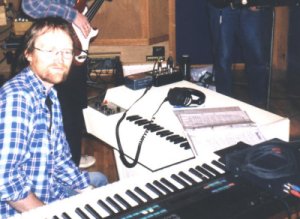
Øystein Larsen uses his very obviously real Mellotron (hurrah!) on every damn' track, with plenty of strings and choirs, with some flute and cello parts here and there. He seems to have the same problem with his as I had with mine before its last service, where some of the pinch rollers are clogging up and sticking, giving a few of the high notes that classic 'Mellotron wobble' which, while extremely authentic, isn't really any more welcome than the audible whine and instability of an old motor board. I digress... particularly strong Mellotron parts on the intro to Døende Stein and the flutes on I Tåketimen, but there isn't a bad Mellotron (or otherwise) track here. Now, an oddity is the last track: only nine are listed and no other online reviewers seem to've noticed there's a tenth, unlisted track, but it's as good as everything else on the album and features the usual Mellotron quotient.
Four years on, Mikromidas suddenly reappear with Faunus and it looks like the band have taken a turn towards the prog mainstream in the interim, although some tracks, notably Sjælernes Evige Beven and Famle Rundt, hark back towards their earlier sound. Overall, another great album, although I imagine it'll take several plays for its subtleties to become completely apparent. Loads of Mellotron, of course, including quite a bit of brass, especially on opener Den Dagen Jeg Forsvant, plus the usual strings, flute and (a little) choir; this really is a Mellotron monster, falling only just short of the full five Ts.
See: Higher & Higher
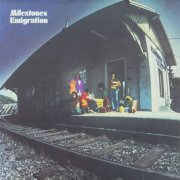 |
Emigration (1973, 37.47) **/½Nachmittag im StadtparkHamlet Apfelbaum Alle Tage Die Freunde Das Märchen Von der Sonne |
Current availability:
Mellotron used:
I know next to nothing about Milestones, other than that they were Austrian (Viennese, to be precise) and had a female singer, one Beatrix Neundlinger. Their second and last album, 1973's Emigration, is often listed as 'progressive', presumably chiefly due to its side-long track, Das Märchen Von Der Sonne. Don't be fooled. This is a dull pop/rock album of its era, bordering schlager (!), side B being no more than a long-form, orchestral soft rock piece. This really is terrible. And I had such high hopes...
Christian Kolonovits (who apparently went on to have a top-notch production career) plays Mellotron, if barely, with background strings on Apfelbaum, although the strings on Das Märchen Von Der Sonne are real. Hopeful eBay sellers use phrases such as 'rare progressive rock' and 'great Mellotron!' I can only reiterate: avoid.
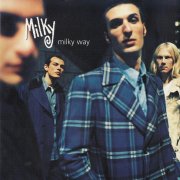 |
Milky Way (1995, 43.00) ***/TT |
|
| Majestic Heights Milky Way Uneasy Love Even Though Summer's Day Fill Me Feel Like Crying |
Down From the Sun Bluebird These Are the Days |
|
Current availability:
Mellotron used:
Milky's lone album, 1995's Milky Way, is a very acceptable indie pop/rock effort of the era, avoiding many of the genre clichés, while either being too early for the horrendous productions that were appearing around then (you know, programmed 'beats' and the like), or quite deliberately avoiding them. Best tracks? Opener Majestic Heights rocks nicely, Summer's Day is prime powerpop and closer These Are The Days' chorus melody sticks like glue, but nothing here offends, quite a rarity at the more commercial end of the scale.
Landberk's Simon Nordberg plays (presumably) their M400, with choirs and strings on the title track, beautifully-arranged strings on Feel Like Crying, a quavery string line on Down From the Sun and equally quavery flutes on These Are The Days. You can hear this on YouTube and quite possibly should. Surprisingly decent.
 |
Begin (1968, 41.38) ****/½ |
|
| Prelude To Claudia on Thursday I Just Want to Be Your Friend 5 AM I'm With You The Island Sing to Me It's You |
Some Sunny Day It Won't Always Be the Same The Know it All Karmic Dream Sequence #1 There is Nothing More to Say Anthem (Begin) |
|
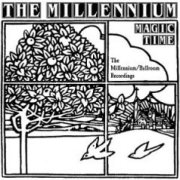 |
Magic Time: The Millennium/Ballroom Recordings [Disc 1] (2001, recorded 1966-68, 58.29) ***½/T½ |
||
| Spinning, Spinning, Spinning Love's Fatal Way Would You Like to Go Magic Time You Turn Me Around Forever It's a Sad World I'll Grow Stronger |
Musty Dusty Crazy Dreams Lead Me to Love A Time for Everything Baby, Please Don't Go Would You Like to Go (instr) Forever (instr) I'll Grow Stronger (instr) |
You Turn Me Around (instr) Magic Time (instr) It's a Sad World (instr) Spinning, Spinning, Spinning (instr) |
|
Current availability:
Chamberlins used:
The Millennium were a studio group, put together by the legendary Curt Boettcher, who was heavily involved with The Association (Beach Boys-lite, going by what I've heard), going on to sprinkle his fairy dust on several subsequent projects, none of which, sadly, made much of an impact at the time, although they've since assumed their proper place in Californian music history. 1968's Begin was also, sadly, the end, apparently due to falling between two stools; too light for the emerging rock audience and too complex for the pop mainstream. It's notorious for being Columbia's most expensive production up to that time, going on to sell diddly-squat; with over four decades' hindsight, there's no denying it's pretty light stuff, but the vocal harmonies are sublime, as is much of the material. Someone (Boettcher?) adds the tiniest smidgeon of Chamberlin strings to its bizarre closing track, Anthem (Begin), but not so's you'd actually notice.
To credit 2001's Magic Time: The Millennium/Ballroom Recordings to The Millennium alone is a misnomer; the three-disc set includes material recorded by several linked outfits, chiefly The Ballroom and The Millennium, plus odd tracks from Summer's Children, Sagittarius and Boettcher himself. Be warned: if you dislike the idea of 'sunshine pop', don't go anywhere near these recordings. This is the lightest end of vocal harmony psych-pop and can sound pretty lightweight to ears attuned to a modern aesthetic, although fans of the style/era will be in absolute rhapsodies. Disc one (The Ballroom) contains an imaginary album by said group (who included Michael Fennelly, later of Crabby Appleton, amongst their ranks), plus several instrumental backing tracks, disc two (Assorted Milk & Honey) mops up the rest of the Ballroom tracks, adding two each by Summer's Children and Sagittarius, plus a handful of Boettcher demos and instrumental Millennium tracks, leaving disc three (The Millennium) as a reissue of Begin, plus extras.
The set's Chamberlin content is concentrated on disc one, with unidentified woodwind (oboe?) and strings on Would You Like To Go (and its later instrumental version), vibes and strings on the set's title track (plus instrumental), wavery strings on the cheesily sentimental Musty Dusty and accordion on their genuinely radical take on Baby, Please Don't Go and, of course, those few seconds of strings on Anthem (Begin), not listed here. All in all, essential listening for sunshine pop aficionados, if perhaps a little lightweight for many psych fans, with enough Chamby to be worth hearing if you're listening anyway, but not enough to make a purchase necessary.
See: Curt Boettcher | Michael Fennelly
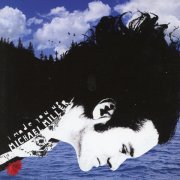 |
I Made You Up (2009, 43.38) **/TT |
|
| I Made You Up Tipsy Between Us and Them Sweetness Munkie Carolina Skyline Gomer Put Your Fist Down Sutures |
Alas I am Your Dirty Secret Million Lonely People |
|
Current availability:
Mellotron/Chamberlin used:
Despite much online acclaim, California's Michael Miller's second album, 2009's I Made You Up, complete with appearances by vaguely well-known friends, is no more than a dreary modern singer-songwriter effort, at its least dull on Tipsy, which is absolutely no recommendation.
Patrick Warren is credited with Mellotron and/or Chamberlin on six tracks, with skronky Chamby strings on Between Us And Them, background flutes (both instruments are credited) on Sweetness, more regular strings on Munkie (again, both instruments), Mellotron and Chamby flutes and strings on Carolina Skyline, aided and abetted by Brendan Buckley and Chamby strings on Sutures and Alas I Am Your Dirty Secret, including a sneaky MkII 'moving strings' sample at the beginning of the last-named. No reason to listen to this drivel, however.
See: Samples etc.
 |
Summerland (1997, recorded 1966-68, 40.05) ***/½ |
|
| Where Did it Go? The in Things Time Has No Meanings Time and Time Again Forget Me Not Who Cares About the Moon Soho Solitaire Sweet Talk Town |
Peter Pan Willow Tree Antoinette Fiesta Time Listen Girl Oh Miss Halliday |
|
Current availability:
Mellotron used:
'Big Boy' Pete(r) Miller is one of those shadowy figures that has apparently helped to quietly steer the music business since the late '50s, in his role as songwriter, engineer and producer, although his performing career has had rather less success. Well, have you heard of him? Vinyl fetishists Tenth Planet have released several albums of Miller's '60s demos, including 1997's Summerland, recorded between 1966 and '68, notable chiefly for not really sounding like anybody much else; it isn't beat, psych or folk-rock, although it has elements of all those styles, ending up sounding like, well, a Pete Miller album, I suppose. Miller's voice, while relatively tuneful, isn't the most endearing sound in the world, but the material isn't bad, so why it's taken these recordings so long to appear, I've no idea.
Derek Shepherd plays Mellotron, although the only part I can hear for definite is some background strings on Listen Girl, other possibles being covered by real instruments (oboe, brass). '60s obscurity obsessives need to hear Pete Miller now, if they haven't already done so, but the rest of you can probably limp along in your ignorance of his work without missing out on too much. Summerland certainly contains some decent songs, but their delivery isn't all it could be, so with next to no Mellotron... Maybe not.
 |
The Believer (2006, 43.20) ***½/TTT |
|
| My Valentine Help Me, Suzanne Meteor Shower Brand New Way Ain't That Strange I Believe She's Lying Fireflies Singular Girl |
I'm With Her Delicate The Believer Question |
|
Current availability:
Chamberlins/Mellotron used:
Rhett Miller is The Old 97's vocalist, although he somehow finds time to run a parallel solo career; 2006's The Believer is his third album, although the first pre-dates his involvement with his main band. It's a pleasing mix of alt.country and powerpop, although most of its contents fall into one camp or the other, rather than combining them, highlights including opener My Valentine, the rockier Ain't That Strange, Delicate and closer Question.
Patrick Warren and Jon Brion both play Chamberlin on the album; is this overkill? Thankfully not, with flutes on opener My Valentine, strings all over Help Me, Suzanne, Meteor Shower, Brand New Way and I Believe She's Lying, although I'm pretty sure the pedal steel on Fireflies is real (the Chamby's known for its emulation). More strings on I'm With Her and the title track and what sounds like solo violin (is there such a Chamby sound?) on Question. Excellent!
See: Samples etc. | The Old 97's | Pine Valley Cosmonauts
 |
Children of the Future (1968, 38.23) ***½/T½ |
|
| Children of the Future Pushed Me to it You've Got the Power In My First Mind The Beauty of Time is That it's Snowing Baby's Callin' Me Home Steppin' Stone Roll With it |
Junior Saw it Happen Fanny Mae Key to the Highway |
|
Current availability:
Mellotron used:
Steve Miller's first album, Children of the Future, is stylistically a long way from the mainstream radio rock he churned out later on in his career, sitting somewhere between blues-rock (Fanny Mae, Steppin' Stone) and psych (side one's linked tracks). It's actually pretty good and nowhere near as formative as you might expect, good musicianship all round, Miller and future solo star Boz Scaggs sharing the guitar work. The album was recorded in the UK (Olympic Studios in London, fact fans), noted engineer (and later, producer) Glyn Johns at the desk.
There were few Mellotrons in America in the '60s (although Chamberlins were more commonly used), but recording in Britain meant that Olympic's MkII found its way onto the album, played by either keys man Jim Peterman or Miller himself. It's only actually on two tracks, the chief use being on the lengthy In My First Mind on side one, strings running right through the song in a most pleasing manner, with a little more on the following The Beauty Of Time Is That It's Snowing.
 |
Adelaide (2008, 57.40) **½/T½ |
|
| Say Hello Let's Go Make Believe Who I am Man Overboard Heaven Only Knows Another Day in the Life Let Us End |
The Point Adelaide Four-Leaf Clover This Life Remember This Day |
|
Current availability:
Mellotron used:
Dallas native Tim Miller's Adelaide (reasoning behind album title unknown) is, I'm afraid to say, a rather bland country/singer-songwriter effort, at its least dull on its opening one/two salvo, Say Hello and Let's Go. This is how to be both rootsy and boring at the same time.
Nick Jay plays Mellotron, with a brief, clicky flute line on Who I Am and more of the same on Let Us End and closer Remember This Day. I sometimes wonder; how do independent artists manage to get hold of a real Mellotron for recording? Not only are machines few and far between, depending on where you live, but many hire places charge more than you'd think someone like Miller could afford. Who knows? It seems to be real, anyway.
 |
Ladies on the Stage (1977, 37.02) **/½ |
|
| Ladies on the Stage Love Brought Us Together How Can I Make it Better? Dream Desire Heaven is in Your Mind Young and in Love You Need This Woman Fantasy |
Bird in Flight So Good to Be Home |
|
Current availability:
Chamberlin used:
Fanny's Jean and June Millington made just the one album together as Millington, Ladies on the Stage, an absolutely-of-its-time Philly soul/disco-lite effort. Any better tracks? You know you're onto a loser when the bland, near-MOR of Bird In Flight is considered a highlight.
Tom Sellers plays Chamberlin, allegedly on three tracks, although if you can hear what he's doing on the title track and How Can I Make It Better?, you have better ears than me (note: very possible). That leaves the chordal flutes and volume-pedalled high male solo voices on You Need This Woman as the album's only even slightly audible tape-replay. Fail.
See: Fanny
 |
Bafflemania (2005, 47.00) ***½/TT½ |
|
| Prologue You're So Existential Arcade Love Machine Any Further Attempt to Contact Me Will Be Ignored The Sun Ain't Gonna Shine Anymore Fragments Expressions Worn in Autumn Yesterday's Garbage |
Barbecue Sauce Psychotic Episode Mighty Mouth (Version 2) Liberation Acka Raga How's Your Fuzzy Box I'll Wake Up Dead That Morning When I'm Gone Epilogue |
|
Current availability:
Mellotron used:
It's difficult to find out any hard-and-fast information regarding the Milman-Brignall Enigma, as they obscure the issue with misinformation; for what it's worth, Bafflemania was certainly not recorded between 1971 and 2007... Then again, the actual recording dates fell somewhere between those two years, so are they lying? You see what I mean... It seems likely that the band really does consist of Alan Milman (vocals and other bits) and Matt Brignall (assorted guitars and keyboards), both of whom have been around for 'a while' and are probably now headed inexorably for their fifties. Which matters not one jot when you hear the album (or indeed, at all); an insane blend of garage punk, authentic late-'60s psych and various other disparate influences, all chucked into a Magimix and sugar-coated with analogue keyboards and effects.
I'm not sure I even consider myself competent to describe the music, although some of it is actually quite straightforward. The parts that aren't, however, include fucked-up acoustic ballads, mangled psych and the new wonder of the modern world that is How's Your Fuzzy Box, veering wildly between arranged sections and anarchy. Brignall and David Will play the studio Mellotron, with strings and choirs on their suitably OTT version of the Walker Brothers' lugubrious The Sun Ain't Gonna Shine Anymore and distorted flutes (!) on Mighty Mouth (Version 2). Choir on Acka Raga and strings and flutes on the fairly random How's Your Fuzzy Box finish things off, much of the Mellotron work being original enough to earn them another half 'T'.
Mind Over Matter (Germany) see: |
 |
 |
Fly Below the Radar (2003, 48.49) **½/T |
|
| It is What it is Unstoppable New Mexico Breathe Easy Mill Smoke Black Somebody Down Here Loves You Martha Fly Below the Radar |
Badlands Fragile Snake Buckle Belt |
|
Current availability:
Chamberlin used:
Although British, Minibar relocated to their spiritual home, America (specifically the south-west) many years ago, there to practice their Americana moves without hindrance. I believe 2003's Fly Below the Radar is their second full-lengther, mostly harmless, if rather dull, at its best on a cluster of tracks towards the end, namely the energetic title track, the sparse, desertlike Badlands and Fragile.
Although not specifically credited, Rami Jaffee plays Chamberlin, with cellos on Unstoppable (first released on the previous year's Trampoline Records Greatest Hits, Vol. 1) and Somebody Down Here Loves You, albeit not to any great effect.