




|
|
|
|
||
|
 |
Been in the Streets Too Long (1983, recorded 1974-83, 46.02) ***/TBeen in the Streets Too LongSo Hard, it Hurts! So Hard, it Hurts! A Song to Separate ½ Broken Safe Inside the Fantasy Pillow-Lined Prison Both No Winning, No Losing |
Current availability:
Mellotron used:
Going by 1983's odds'n'sods collection Been in the Streets Too Long, including material recorded during a six-year hiatus in her release schedule, Annette Peacock's music is probably best described as avant-garde jazz, only (relatively) more straightforward closer No Winning, No Losing really bucking the trend. Of most interest to the (relatively) casual listener is the twelve-minute So Hard, It Hurts! (the first of two versions here) featuring backing from a band including Bill Bruford (Peacock performed on his Feels Good to Me opus), bassist Steve Cook (CMU) and guitarists Brian Godding (Blossom Toes) and the legendary Chris Spedding, the bulk of the remainder consisting of Peacock's sparse, sometimes atonal piano and whispered vocals, with contributions from various musicians.
I presume it's Peacock who plays the uncredited Mellotron on ½ Broken, with a fairly brief-yet-inventive part that's probably the most 'normal' thing about the track. Sadly, this appears to be currently unavailable; surprising, since Peacock appears to run her own label through her website. I can't really say it's worth it for twenty-odd seconds of Mellotron, but those exploring the nearer end of the further reaches of the jazz field (!) may well wish to explore.
 |
Matthew Hopkins & the Wormhole (2013, 41.41) ***½/½ |
|
| Walking Oceans Tides Freezing Brian Haw Antediluvian Tortured By Ghosts Like a Butterfly Peaceful Skies |
We've Been Lovin' Winter Atmosphere Head We Can Help Ourselves The Wormhole |
|
Current availability:
Mellotron used:
Kevin Pearce's second album, 2013's Matthew Hopkins & the Wormhole (subtitled Act One: Matthew Hopkins in the Woods), is a modern folk-rock release, its vague concept somehow involving the legendary witchfinder of the title, who hailed from rural Essex, as does Pearce. The album's twelve songs shift between more introspective material (Freezing, Brian Haw, named for the sadly late anti-war protestor, the Strawbs-esque Tortured By Ghosts, Winter Atmosphere Head) and more rhythmic, if no less mournful (opener Walking Oceans, Tides, Antediluvian, Like A Butterfly's programmed percussion), although 'top track' award possibly goes to closer The Wormhole.
Jarrod Gosling (I Monster, Skywatchers) plays his own M400, with background choirs on Freezing, although all other 'Mellotron' parts are Pearce's samples. Enough to make this a worthwhile Mellotronic purchase? Probably not, although it's a fine album in its own right. Worth hearing.
 |
vs (1993, 46.15) ***/½ |
|
| Go Animal Daughter Glorified G Dissident W.M.A. Blood Rearviewmirror |
Rats Elderly Woman Behind the Counter in a Small Town Leash Indifference |
|
 |
Vitalogy (1994, 55.22) ***/½ |
|
| Last Exit Spin the Black Circle Not for You Tremor Christ Nothingman Whipping Pry, to Corduroy |
Bugs Satan's Bed Better Man Immortality Hey Foxymophandlemama, That's Me |
|
Current availability:
Mellotrons used:
Like Alice in Chains (an ex-glam outfit) and the Stone Temple Pilots, what was it about Pearl Jam that makes them inherently 'grunge'? If 'grunge' was Mudhoney, Soundgarden and Nirvana, why was it also dodgy metal bands in lumberjack shirts and no makeup? In fairness, Pearl Jam are better than AiC or STP, which isn't to say that they're particularly good; everything's relative, you know. They certainly sucked a dead dog's dick when I saw them supporting Neil Young back in '93; what possessed him to take them on as his backing band for an album and tour I shall never know. Anyway, vs was their second effort, after the critically-acclaimed (why?) Ten (why?), seeing them already in a musical rut, doing that 'rock with emotions' thing, somewhere in between Led Zep on an exceedingly off day and, er, Neil Young, I suppose. While better than expected, I'm afraid I find this stuff terribly unexciting; not a patch on their influences, anyway. Faint (uncredited) Mellotron strings on W.M.A. from Brendan O'Brien, but that's yer lot.
Follow-up Vitalogy is both better and worse than its predecessor, full-on punk like Spin The Black Circle contrasting sharply with muckabouts such as Bugs. Guitarist Stone Gossard is credited with Mellotron, presumably the faint flutes that weave their way into the mix. Rumours have it that 2002's Riot Act also features Mellotron, but close listening has proven this to be fallacious. I find it difficult to recommend Pearl Jam, while their Mellotron use is so utterly minimal as to be almost non-existent. Go elsewhere.
See: Stone Gossard
 |
We Have This Moment Today (1982, 30.17) */T |
|
| We Have This Moment Today Thank You, Lord Old Time Preacher Man Born Again You and Me and the Lord I Saw the Light (Medley) Thanks to Calvary Making Melody |
Supper Time Jesus Feet |
|
Current availability:
Mellotron used:
More hellish '70s CCM from my 'friend' Mark Medley, folks... What can I tell you about Jim and Jody Pearson? And why would you care? 1982's We Have This Moment Today may or may not be their debut, a shatteringly bad Christian country record, every bit as bad as that suggests. Highlights? Don't be silly. Lowpoints? Other than the sleeve 'design', that is? Too many to mention, frankly, particular horrors including Jim's shaky grasp of the finer points of vocal intonation on I Saw the Light (Medley), Jody's yodelling (yes, yodelling) on the tragically inappropriately-titled Making Melody and both parties' sick-making down-home narration on Supper Time.
One Tom Smith plays Mellotron on a couple of tracks, in full-on 'we can't afford a string section' mode, with, yes, strings on the opening title track and Thanks To Calvary. As with practically everything else Mark sends me, this is to be avoided at all costs, on the remote offchance that you should run into a thrift-store copy somewhere. Absolute shite.
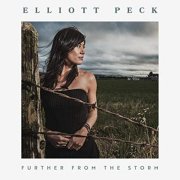 |
Further From the Storm (2018, 38.31) **½/T |
|
| River's Path Silver & Gold One of Those Days Highway Song Out Sailing Good for You I Guess Leave Me By the Sea Hard Lines |
I Lost it Another Life Ago Give it Away |
|
Current availability:
Chamberlin used:
Californian country-rock crew Midnight North's Elliott Peck (what is it about Americans and their 'boys' names used for girls'?) released her first solo album in 2018, Further From the Storm. And it's... country-rock. Not even really Americana, which suggests a level of 'alt.' This is simply rehashed '70s West Coast country, albeit a perfectly good example of the genre, if you happen to like that kind of thing. Better tracks? The slightly rockier Silver & Gold and the sparse Out Sailing, perhaps, but it's slim pickings here, folks.
Patrick Warren on Chamberlin, with distant strings on Highway Song and chordal flutes on Hard Lines and closer Give It Away, although the cellos on a couple of tracks sound real; Warren's also credited with 'strings', after all.
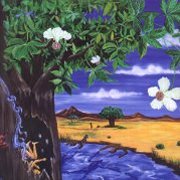 |
Under the Big Tree (1997, 63.20) ***½/T |
|
| Prologue Mouths and Frogs Writer in a Rainstorm The Teepee Morgue Into the Opera House Mars Boulder and Cactus |
The Mountain, the Mirror and the Pocket Watch The Candle Card Game Portrait/Bow in the Cabin Where Do We Connect? Finale: Into the Trunk |
|
Current availability:
Mellotron used:
Nick Peck is the ex-keyboard player for rather lightweight US proggers Episode, who released a handful of albums on various formats between the late '80s and mid '90s; their career peaked when they played Progfest 94, along with luminaries such as the mighty Änglagård and Anekdoten. Peck has recorded several solo albums, although Under the Big Tree confuses the issue by not actually mentioning him anywhere on the cover; it's so obviously his album, though, that I feel justified in crediting it to him. Lyrically/conceptually, the album is based on a profound experience of Peck's during a lengthy meditation session, while musically, it's in the 'modern prog' category, rather than Episode's typical neo-prog. The album features eleven guest musicians, including two other Episoders and, while I wouldn't put it up there with, say, Spock's Beard, it's a worthy effort in the genre.
Peck plays a variety of keys, old and new, principally a grand piano and Hammond B3, but there's a couple of snatches of Mellotron choir on Portrait/Bow In The Cabin and Finale: Into The Trunk, if nowhere near enough to make it worth buying on those grounds. If you like modern US prog, there's a good chance you'll get something from Under the Big Tree, but more 'trad' proggers might be better off going elsewhere.
See: Inner Ear Brigade
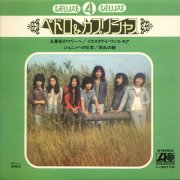 |
Goban Machi no Mari e (1974, 15.30) **/TGoban Machi no Marī eJonyi e no Dengon Yesterday Once More Wakarenoasa |
Current availability:
Mellotrons used:
Despite their female vocalist, Pedro & Capricious appear to have been Pedro Umemura and his band - I think. They used a Mellotron, if briefly, on 1973's Kareinaru Nyū Poppu no Sekai, with strings on their version of Roberta Flack's Killing Me Softly (With His Song); review forthcoming when I get to hear the whole album. Their Goban Machi no Mari e EP contains their take on the hideous Carpenters' (no, they are not a 'guilty pleasure', or any other sort) Yesterday Once More, every bit as gloopy as the original, along with three other dreary ballads.
Someone plays a Mellotron strings part on Yesterday Once More, for what it's worth. Did Pedro & Capricious use a Mellotron on anything else? Without hearing several early '70s albums, I really couldn't say and, if it's all the same to you, I'd rather avoid that particular task. I thank you.
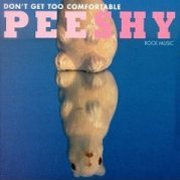 |
Don't Get Too Comfortable (1998, 42.03) **½/T |
|
| Mr. Whisper Bathroom Door Big Blue Sky Rope Waltz Greatest Show on Earth Jad Fair Much Obliged Fear |
Tree Craps Some Day Soon Too Punk |
|
Current availability:
Mellotron used:
Pee Shy were the Floridian duo of vocalist/accordionist Cindy Wheeler and clarinettist/keyboardist Jenny Juristo, other musicians coming and going. Don't Get Too Comfortable was their second and last album, best described as, well, indie, I suppose. It features both Wheeler's accordion and Juristo's clarinet on several tracks, making them distinct from their contemporaries, although the album doesn't have a great deal to recommend it to non-fans of the genre.
Brad Jones plays Mellotron, with a melodic flute part on Greatest Show On Earth, although I suspect the album's cellos are real. Generally speaking, you're probably not going to like this, unless you've found your way here as a fan of the band. Better than the subsequent non-genre of 'landfill indie', it still requires the listener to be tolerant of the low-fi aesthetic and to have a blatant disregard for the conventions of a tight rhythm section. One passable Mellotron track.
 |
Flying (2001, 65.51) **½/½ |
|
| The Seeds of the Day - 1.1, 1.2 & 1.3 Beauty & the Beats Let's Go (Deja Blue) Pedicure Golden Voices Ghost of a Plastic Bag Chinese Star in Metal Shop |
Full Stride Hi, Hi Mnemonic Hordes Falling Out Flying |
|
Current availability:
Chamberlin used:
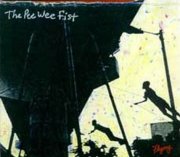
I believe Boston's Pee Wee Fist, led by Peter Fitzpatrick, released two albums, 2001's Flying being the second and last. It's an uneasy cross between jammed-out psych and indie; as AllMusic so accurately note, more psych OR indie than a combination of the two. It might just be at its best on near-nine-minute opener The Seeds Of The Day, although several tracks had me physically restraining myself from hitting the 'next' button, sadly.
Michael McLaughlin plays Q Division Studio's MusicMaster 600 Chamberlin on Let's Go (Deja Blue), with a background string part that adds little to the track, frankly. What a dreary album; no wonder they called it a day. Seriously, don't bother.
 |
Bring Back the Beatles (1977, 46.57) *½/T½ |
|
| Beatles Pledge of Allegiance Bring Back the Beatles Coconut Grove Imagine Turn Me on Lollipop Fish The Wonderful World of Abbey Road Apple Beatle Foursome |
The Ballad of James Paul McCartney With a Little Help From My Friends My Fat Budgie Keep John Lennon in America (The John Lennon Interview) B-E-A-T-L-E-S |
|
Current availability:
Mellotron used:
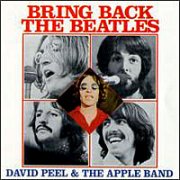
I've pondered at length upon the point of David Peel & the Apple Band's Bring Back the Beatles, as I clearly have nothing better to do with my life. It seems the estimable Mr. Peel didn't either, as the independently-released album must have consumed a considerable quantity of resources, although, going by the cheap typescript on the rear of the sleeve, maybe not that many. Basically, this is a rather odd Beatles tribute, consisting of Peel's songs, all of which reference the Fab Four in one way or another, all sung in his highly unappealing, flat tones, for no readily apparent reason whatsoever. To be fair, Peel's a street performer/political activist, on the eccentric side of an eccentric field, although I'm not sure that excuses this abortion of a record, although some reviewers see it as parody rather than shite.
Musically, we're looking at a series of poor Beatles pastiches (Lollipop Fish, the title track) intercut with decidedly average folk-rock material (The Wonderful World Of Abbey Road, The Ballad Of James Paul McCartney) and (get this) rewrites of Beatles-related material (Imagine, With A Little Help From My Friends); believe me, you've ain't heard nuthin' till you've heard Peel's 'reinterpretation' of the latter, the original lyrics 'sung' to a new, vastly inferior tune. My Fat Budgie is apparently a Lennon lyric, to which I can only say, "On a bloody off-day" and I can't say Peel's music helps its cause any. I can only imagine (ho ho) that the whole thing was basically a scam, attempting to draw people in with the Beatles titles on the sleeve, set to new 'tunes' in a doubtless failed attempt to avoid paying too many royalties, although I can't imagine this sold that many copies, or was that widely available. Or was it? Or was it simply the product of a deeply eccentric mind and should be taken in that spirit?
American sessioneer Les(lie) Fradkin plays guitar, bass, assorted keys and Mellotron here and has listed his contributions for me (thanks, Les). Nothing obvious on the title track, although Les says it's strings, background strings and apparently flutes on Coconut Grove, more strings (and apparently flutes again) on Imagine and flutes (and apparently strings!) on Turn Me On, none of which exactly set the world alight, to be honest, making this rather less than essential on the Mellotron front.
If I'm being generous, I'd describe this as a 'curio', although a more honest summation might be 'crap'. I can't imagine (ho ho again) at whom, exactly, this disaster was aimed. Mid-'70s US Beatles fans desperate for anything referencing their heroes? (See: the bizarre Klaatu debacle). I mean, who else would buy this rubbish? Its *½ rating is more for its laugh value than anything else, although it's not even really that funny, just sad, not to mention utterly interminable (the execrable Keep John Lennon In America is almost nine minutes of the title repeated ad nauseam with minor variations). The only thing here of any real interest is a brief Lennon street interview, where it seems he not only met Peel, but recorded with him. Christ, he's not on this record, is he? Maybe I'm being unkind and this is regarded as a lost classic of outsider music, but I doubt it. Fradkin's Mellotronic input is pretty minor, too, so I can't even say it's worth picking up on those grounds. Avoid. Please.
 |
Marburg (1972, 40.00) ****/T½The Clown and the QueenMoldau Friend City Monster Alone |
 |
Rhapsody (1975, 39.53) ***½/TRhapsodyFrost of an Alien Darkness Wanderer Can Can Prelude Desert in Your Mind The Riot Paris the Past |
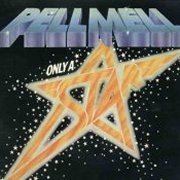 |
Only a Star (1977, 39.58) ***/TCount DownDaydreamer Only a Star Across the Universe Disillusion Trailors in Movie Halls Phoebus is Dead |
Current availability:
Mellotrons used:
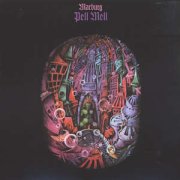
Pell Mell (not to be confused with the American avant-garde outfit of the same name) were one of many German progressive bands who 'grew out' of their Krautrock beginnings, becoming more symphonic along the way. Their debut, Marburg, named for their home town, is an intriguing mix of slightly old-fashioned UK 'proto-prog' and German Krautrock, pastoral, organ-led passages coexisting peacefully with bizarre multi-vocal parts like Focus on speed (Friend). Another occasional influence is early Pink Floyd, particularly in the organ part in Alone; in fact, the Floyd seem to be a constant in the Krautrock arena, several bands obviously getting stoned to A Saucerful of Secrets on a regular basis. Anyway, the band's violin use is notable, sometimes confusing the ear as to the album's Mellotron content, to the point where all I can hear is a string part under the violin on Moldau and a similar part doubling the organ on Alone.
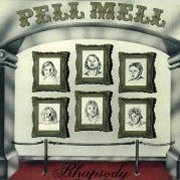
Album no. 2, From the New World, is more progressive (and Mellotron-free), while 1975's Rhapsody (with co-writing credits for Liszt and Rachmaninoff) is full-on prog, complete with eccentric interjections like the Can Can (yes, that one). Did you know it was written by Liszt? The band were a six-piece by this time and, with three people credited with keyboards, it's impossible to know who plays the rather minimal Mellotron on the album, so take your pick from Thomas Schmitt, Ralph 'Flipper' Lippmann or Cherry Hochdörfer, although my money's on Schmitt, one of the band's two main men, along with vocalist Rudolf Schön. Anyway, the only audible evidence is a few seconds of choir on part 1 of Rhapsody itself, Frost Of An Alien Darkness and a short choir part, repeated once, on Paris The Past. Not a bad album, but not one for the Mellotron enthusiast.
'77's Only a Star was noticeably more straightforward, in keeping with the times. I've seen comparisons with Kansas; there are certainly a couple of violin parts that recall Robby Steinhardt's style, but, overall, it sounds like a mainstream version of their earlier sound, although their classical influence is still apparent, particularly on side two. Again, very little Mellotron (definitely played by Schmitt this time), with faint choirs on Disillusion and the rather ropey Across The Universe (not the Beatles' song).
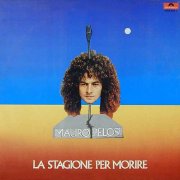 |
La Stagione per Morire (1972, 33.51) ***/TT½PauraCosa Aspetti ad Andar Via Vent'anni di Galera Vendero La Stagione per Morire E Dire Cha a Maggio Che Poi Non e Vero Caro Amico Suicidio |
Current availability:
Mellotron used:
Mauro Pelosi is an Italian singer-songwriter from Rome, who, for a brief period in the early '70s, recorded in the semi-progressive style popular at the time. He debuted with 1972's La Stagione per Morire (A Season to Die), a dark, embittered-sounding album, of the kind where not understanding the language makes a major difference to one's appreciation. While loosely 'progressive', this is never going to seriously challenge the big Italian players, or even most of the smaller ones, most of its material (nine tracks in under thirty-five minutes, note) being lyric-driven and acoustic-based.
Mike Logan and Il Balletti di Bronzo's Gianni Leone play Mellotron, with limpid string and flute parts on Vent'Anni Di Galera, more powerful strings in the closing seconds of the title track and more of the same on E Dire Cha A Maggio and closer Suicidio, although the flute part opening E Dire Cha A Maggio is clearly real. So; no classic, at least on the prog front, but a decent enough listen, with some nice Mellotron. Put it on your 'B' list.
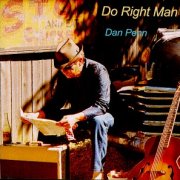 |
Do Right Man (1994, 37.10) ****/½ |
|
| The Dark End of the Street Cry Like a Man It Tears Me Up You Left the Water Running Do Right Woman Do Right Man Memphis Women and Chicken Zero Willpower He'll Take Care of You |
I'm Your Puppet Where There's a Will There's a Way |
|
Current availability:
Mellotron used:
Dan Penn, of course, is best known as a songwriter and producer, often in collaboration with Spooner Oldham; a list of artists who've recorded Penn's songs would take me the rest of the day to compile and it's only 10.30 a.m. Suffice to say; Aretha Franklin, Linda Ronstadt, Gram Parsons, Emmylou Harris... Penn generally prefers a back-room role, so, despite starting his career around 1960, 1994's Do Right Man is only his second solo album, seeing him revisit some of his most famous songs, not least opener The Dark End Of The Street. This is one of those albums that, even if you're not a fan of Penn's southern soul/blues style, it's almost impossible not to like, or at the very least, respect; it just kind of... strolls by, minding its own business, while gently letting you know it's written and performed by one of the major American songwriting talents.
Spooner Oldham turns up, of course, playing keyboards, including plenty of lovely Rhodes and Hammond work and no bloody modern synths. Credited with Mellotron, it's only even slightly apparent on He'll Take Care Of You, with a very background string part, so you're not going to be rushing out and buying this on that account. Nevertheless, an album stuffed full of soul classics played and sung by their author. More please, Mr. Penn.
Michael Penn (US) see: |
 |
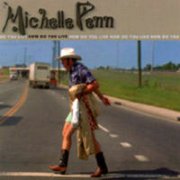 |
How Do You Live (1998, 35.51) **½/T |
|
| Good How Do You Live Here I Go Not Lovin' Anybody Save My Life House of Blues Fool Come Down Drown |
Cold World Runaround |
|
Current availability:
Mellotron used:
Michelle Penn plays a kind of Americana-influenced singer-songwriter thing, which means (naturally) she's played Lilith Fair. To be honest, 1998's How do You Live is a pretty unexciting album, but I'm sure I should be concentrating on the lyrics, rather than the run-of-the-mill music. Trouble is, I almost invariably listen to the music first... It's not rubbish, by any means, but there's nothing here that grabbed my attention, unlike the best artists of her genre.
Aaron Swihart plays Mellotron, with flutes and strings on Drown, plus one or two possible (though unlikely) string sightings elsewhere. So; a somewhat average record, although I can't fault Ms. Penn's enthusiasm. Her other 'Mellotron' album, 2001's irritatingly txtspk 2 Good 4 U (or is it meant to be referencing Prince?), turns out to feature samples.
See: Samples etc.
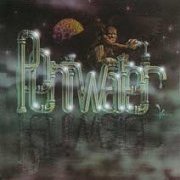 |
Pentwater (1977, 37.31) ***½/TEM 54Take Cause & Effects Necropolis Billboard Smiles Gwen's Madrigal (the Violation Version) The Journeys Oceans Kill the Bunny |
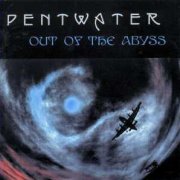 |
Out of the Abyss (1992, recorded 1973-76, 62.41) ****/T½AMLiving Room Displays Memo Orphan Girl Frustration Mass Palendrode War Gwen's Madrigal |
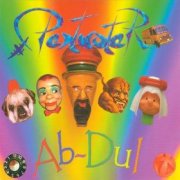 |
Ab-Dul (2007, recorded 1972-2006, 60.26) ****/T½ |
|
| It Feels Like Stealing Luncheon at the Parade Autumn Kill the Bunny The Tale of Clear Fog Sealed in Today Across the Mediterranean Somehow Feelin' Fine The Tale of Clear Fog (Reprise) |
The Cry of Eugene Entropal Pause Chasing Descends You Knew Turn the Key It Feels Like 3 a.m. Awakening |
|
Current availability:
Mellotrons used:
Pentwater were one of a surprisingly large number of US prog bands who couldn't even get a foot in the door, managing one self-financed album and never breaking out of their own region, in this case, the Illinois area (see: Leviathan, Lift et al.). Pentwater crept out in 1977, only finding its way onto CD in 2003, replete with four bonus tracks and a slightly revised running order, making it awkward reviewing the original tracklisting. It's a good album, while not really displaying the odder side of their repertoire, opening with the average hard rock of AM (moved to track five on the CD, swapping places with Frustration Mass), rarely moving into non-(prog) mainstream territory from then on. This isn't a criticism, merely to say that it doesn't especially stand out from the pack. Not that much Mellotron; I don't believe the band owned one, so keyboard man Ken Kappel would probably have decided where to use it pretty much on the spot in the studio. There are a couple of string chords on Orphan Girl and Gwen's Madrigal, with more serious use on Palendrode, but that seems to be it, with nothing on the CD's bonus tracks.
Given that very few people would've heard their sole album at the time, it was a wonder of the modern age that an archive disc, Out of the Abyss, appeared in 1992, triggering interest in the band among the newly-organised progressive community (praise be for the Internet...). It contained nine of the fifty-four (!) songs the band wrote in their lifetime, most of which are now, sadly, presumably lost to the ravages of time. It seems that their more interesting material was kept on the shelf at the time, so, going by this disc alone, you'd probably describe their sound as complex, driving prog, their Gentle Giant influences, amongst others, reminding me slightly of another obscure US outfit, Yezda Urfa. Kappel is listed as playing a wide range of 'boards, but, going by the rehearsal pic in the CD booklet, he probably owned the cheaper end of the list, the one highly visible instrument being an Elka string synth. At least they had the nous to borrow/hire some good kit for recording, unlike other bands I can think of (how much better would Fruupp have sounded if they'd hired a Mellotron?). Saying that, the Mellotron gets very little use indeed, naught but short (if intense) bursts of strings on EM 54 and Gwen's Madrigal (The Violation Version) and slightly more of the same on The Journeys.
Like many of their contemporaries, the band reformed in the 2000s and recorded some new (and old) material, combining it with more archive recordings, releasing the composite album as Ab-Dul in 2007. Bad news first: the cover. What were you thinking, guys? Even if it's meant as a joke, it's possibly the ugliest (not to mention cheapest) prog sleeve design I've ever seen; maybe I'm missing something. Anyway, the good news: it's excellent. It seems a few more of those fifty-four songs have now been made available, which has to be good news; while neither of the newly-written tracks are exactly jaw-dropping, nor are they offensive, which is a distinct result. I'm not sure if anything here is as adventurous as some of the Out of the Abyss material, but most of it is more satisfying than most of their original album. As always, very little Mellotron, but, given the number of different sessions over which it was recorded, that's hardly surprising. Near-as-dammit identical flute parts on the exceedingly short and near-as-dammit identical The Tale of Clear Fog and The Tale of Clear Fog (Reprise), plus a monophonic string line (along with a real violin) on Chasing, only just tipping the album over the one-T level.
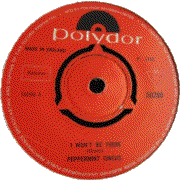 |
7" (1968) ***/T½ I Won't Be There Keeping My Head Above Water |
Current availability:
Mellotron used:
Peppermint Circus? Yup, yet another obscure late '60s British psych act who've only really come to light again due to a slew of compilations of lesser-known efforts from the era. The 'A' of their first (of four, surprisingly) singles, I Won't Be There, is a vaguely skalike effort of no great quality, but the flip, Keeping My Head Above Water, is a pretty decent number, described (correctly) on bassist Alan Tallis' website as 'the B side that should have been the A side'.
Presumably the band's keyboard player at the time (possibly Clive Hartley) plays a perfectly pleasant, if unexciting string part that runs through most of Keeping My Head..., adding to its 'worth hearing' status. Thankfully, those nice Past & Present people have included it on part two of their estimable Piccadilly Sunshine series, the 'A' being on part one.
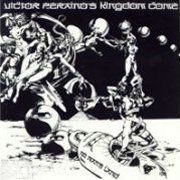 |
No Man's Land (1975, 38.31/49.43) ***½/TTTTT |
|
| Sun Sets Sail Demon of Love Empires of Steel Tru Lady of the Morning Garden of Death Run Through Your Life At Last a Crew |
[CD adds: We're Next Demon of Love Fire Athena] |
|
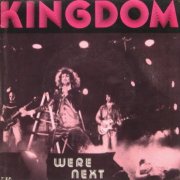 |
We're Next (1981, 9.17) ***/½We're NextDemon of Love Fire Athena |
Current availability:
Mellotrons used:
After Arthur Brown's Kingdom Come disintegrated following the release of the wonderful Journey, US keyboard player Victor Peraino somehow retained the name, releasing No Man's Land in '75 as Victor Peraino's Kingdom Come. It doesn't sound a million miles away from Journey, if you could imagine that album being played by a full band and sung by an American (go on - try). There don't seem to be any genuinely great songs on the record (although Lady Of The Morning's pretty good), but all the material's reasonable, in a hard rock/prog vein, although some of the tuning discrepancies between synths and Mellotron are enough to set your teeth on edge.
Peraino's Mellotron use is, again, quite magnificent, with lashings of strings, choir, cellos and brass all over the album. Too many individual highlights to name, although Lady Of The Morning has especially good use on all fronts. Peraino frequently used two sounds at once (strings and choir being popular choices), although I doubt if he was able to reproduce this live. To my knowledge, his Mellotron ended up on the West Coast with Syn-Phonic label owner Greg Walker, who occasionally hires it out for gigs or recording. So; not a bad album, finally out on CD, but an absolute Mellotron Monster, so highly recommended on those grounds.
Incidentally, the bonus tracks on the CD are from Peraino's 1981 EP, We're Next, in a very similar style to the album, despite being from several years later. Unfortunately, they've been 'mastered' from rather tatty vinyl, complete with distortion and considerable surface noise, no obvious attempt made to clean them up. The tracks aren't bad (OK, Victor's version of Arthur's Fire is rather ordinary), although only two of them are actually new songs, Demon Of Love being on the album in its original form. Practically no Mellotron, with only a couple of choir chords at the end of Demon Of Love, although I'm surprised there's any at all. Anyway, you won't find this on vinyl, so you've got 'em whether you want 'em or not.
See: Arthur Brown's Kingdom Come | Samples etc.