




|
|
|
|
||
|
|
Renia Return to Forever Revolver |
Kimberley Rew Emitt Rhodes Rialto |
Pau Riba Marc Ribot y los Cubanos Postizos Cliff Richard |
Miranda Lee Richards Alastair Riddell Rachel Ries |
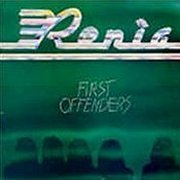 |
First Offenders (1973, 39.23) **½/TYou'd Best Believe itFriend Out on the Road Breakneck Shelter Cowboy's Dream Slow Down Drive Me Wild I Suppose it's for the Best Mighty Queen |
Current availability:
Mellotron used:
To be brutally honest, Renia weren't a very exciting band; not on record, at least. The nearest they come to any genre is 'mid-'70s rock'; more of that slightly heavy, slightly proggy, slightly several other things stuff, without being particularly anything. While far from offensive, Renia never even gets my foot tapping, I'm afraid, although the pace does pick up here and there. The one Mellotron track, Shelter (a rather drippy ballad), has some very ordinary strings on it from keyboard man Malcolm Sutherland, so it's not even worth picking up for that. For die-hards only, though of what I'm not entirely sure.
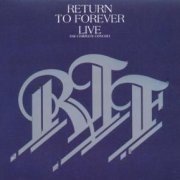 |
Return to Forever Live: The Complete Concert (1978, 151.44) ***½/½ |
|
| Opening '77 The Endless Night The Musician Stanley's Introduction Hello Again So Long Mickey Mouse Musicmagic Come Rain or Come Shine |
Serenade The Moorish Warrior and Spanish Princess Stanley's Introduction Spanish Fantasy Chick's Closing Introductions On Green Dolphin Street |
|
Current availability:
Mellotron used:
I'm sure you all know at least something about Chick Corea's Return to Forever: one of the classic fusion bands, by their third album, they'd moved away from their early influences, shifting into full-on electric jazz-rock, their classic lineup including Corea, bassist Stanley Clarke, guitarist Al di Meola and drummer Lenny White (Airto Moreira was an early member). Corea, a Scientology devotee (don't start me), disbanded that lineup after 1976's incredibly successful Romantic Warrior, only retaining then-fellow Hubbardite Clarke for the following year's Musicmagic and Return to Forever Live, released in '78. Some confusion surrounds said album: initially released as a single LP, a four-album version, The Complete Concert, seems to have been made available at the time, now available as a two-CD set. The original LP (which I haven't heard) consists of heavily edited versions of some of the expanded version's tracks, with the exception of the short Come Rain Or Come Shine; given that it's effectively a sampler of the complete concert, it's impossible to gauge from the full version how many tracks on the edited version contain Mellotron without hearing them.
Anyway, the full version is a veritable fusion marathon, no fewer than four of its fourteen tracks easily attracting the 'side-long' sobriquet, Musicmagic reaching nearly half an hour; a jazz odyssey indeed. Many tracks cross over into a kind of progressive/fusion area, highly arranged sections being bifurcated by the expected instrumental solos; indeed, a handful of its tracks feature male and female vocals, although they only serve to dilute the power of the band, augmented by a brass section. Corea's wife, Gayle Moran, played second keyboards on the album, including (allegedly) Mellotron, although there's very little here that actually sounds like it's definitely sourced from an M400, with occasional background strings on Opening '77 and The Endless Night and background choirs (backing up real voices) at the end of So Long Mickey Mouse. To be honest, the strings could easily have emitted from a string synth, while the choirs don't sound particularly Mellotronish, although I'm not sure what else might've made that sound.
Overall, fusion fans who don't already own this should go into raptures over its considerable length, although the rest of us may find ourselves twiddling our thumbs in places. There's next to no Mellotron (if any at all), so I really wouldn't bother on its account. If I ever get to hear the original one-LP version, I'll add a tracklisting; it seems likely there's a little Mellotron, as it includes most of The Endless Night and all of So Long Mickey Mouse, for what it's worth.
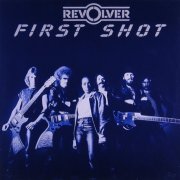 |
First Shot (1981, 36.15) ***/T½Hell's AngelGood Time People I See the Light Not Too Late Contact Rock 'n' Roller Surprise Highway Dreamer Yesterday Dreams |
Current availability:
Mellotron used:
Revolver were an (effectively) one-shot German hard rock outfit, featuring (like many of their contemporaries) English-language vocals from excellent American singer Mary B. Thompson, who really should've gone on to bigger and better. 1981's optimistically-titled First Shot sounds rather dated when put up against concurrent Scorpions albums, never mind the likes of Accept, to the point where I wouldn't have been surprised had it actually hailed from the mid-'70s. Is that a bad thing? Not in retrospect, no, but I'd imagine it seriously hampered their chances of getting anywhere in the early '80s. Best tracks? Solid, if clichéd opener Hell's Angel, the balladic Not Too Late, Highway Dreamer, which mines the same seam that King's X would exploit to perfection some years later and closing epic Yesterday Dreams, despite its descending picked chord sequence, reminiscent of both Styx and Judas Priest.
It's most likely keys man Friedel Amon who plays the Mellotron on a couple of tracks, although, given that the album was recorded in Dieter Dierks' studio, it's not impossible that Dierks himself played his own machine on the recording. Anyway, we get a lovely flute part on Not Too Late, with background strings and cellos thrown in for good measure and a nice little flute line cropping up on Yesterday Dreams, making this borderline worth hearing for Mellotron fans. The band went on (sans Thompson) to become Raindancer, although their lone album, '84's A Little Bit Confused (nice sleeve, guys), not recorded at Dierks', quite certainly contains no Mellotronic input.
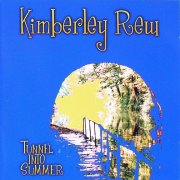 |
Tunnel Into Summer (2000, 46.12) ***½/TT½ |
|
| Simple Pleasures Heart of the Sun If There's an Answer Rosemary Jean Tunnel Into Summer Tart with the Heart Beautiful Ruth Little Ray of Sunshine |
The Truth The Radio Played Good Vibrations Plas Yn Rhiw Honey is That Love Alice Klar |
|
Current availability:
Mellotron used:
Kimberley Rew's best work may have been with the staggeringly underrated Soft Boys, but his best-known (not to mention most lucrative) was with Katrina & the Waves, for whom he wrote the mega-selling Walking On Sunshine, not to mention Britain's first Eurovision-winning entry for over 15 years, Love Shine A Light. OK, Kim, we'll forgive you. 2000's Tunnel Into Summer (title influenced by Robert Heinlein's novel The Door Into Summer?) is typically jangly, '60s-influenced pop/rock, as you'd expect from someone who's worked with Robyn Hitchcock. Too many highlights to mention, although opener Simple Pleasures is excellent, as is closing instrumental Alice Klar.
Rew doubles (triples?) on Mellotron, with a speedy, clicky flute part on Rosemary Jean, a similarly clicky string line on Little Ray Of Sunshine, wobbling at the end in a 'this one's 100% genuine' kind of way. More 'dying on their feet' strings on The Truth and a more (if not completely) stable part on Alice Klar. It's possible it crops up elsewhere (If There's An Answer?), but is too far down in the mix to say for sure and it's as likely to be Hammond as Mellotron anyway.
So; a good collection of songs with some interesting arrangements, which sounds like a recipe for a successful mainstream(ish) album to me; several good Mellotron tracks are merely a bonus. Worth hearing.
See: Robyn Hitchcock
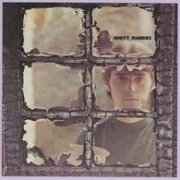 |
Emitt Rhodes (1970, 31.32) ***½/½ |
|
| With My Face on the Floor Somebody Made for Me She's Such a Beauty Long Time No See Lullabye Fresh as a Daisy Live Till You Die Promises I've Made |
You Take the Dark Out of the Night You Should Be Ashamed Ever Find Yourself Running You Must Have |
|
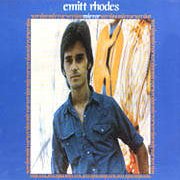 |
Mirror (1971, 30.00) ***½/½ |
|
| Birthday Lady Better Side of Life My Love is Strong Side We Seldom Show Mirror Really Wanted You Bubblegum the Blues/I'm a Cruiser (Medley) |
Love Will Stone You Golden Child of God Take You Far Away |
|
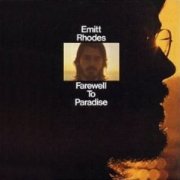 |
Farewell to Paradise (1973, 36.53) ***½/TTTT |
|
| Warm Self Sacrifice See No Evil Drawn to You Blue Horizon Shoot the Moon Only Lovers Decide Trust Once More Nights Are Lonely |
Bad Man In Desperate Need Those That Die (from "Tame the Lion") Farewell to Paradise |
|
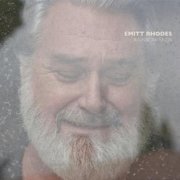 |
Rainbow Ends (2016, 34.59) ****/T |
|
| Dog on a Chain If I Knew Then Isn't it So The Wall Between Us Someone Else I Can't Tell My Heart Put Some Rhythm to it It's All Behind Us Now |
What's a Man to Do Friday's Love Rainbow Ends |
|
Current availability:
Mellotrons used:
Emitt Rhodes is one of those legendary figures amongst the cognoscenti, frequently compared to Macca, although it's not a comparison I'd personally welcome, but there you go. He recorded his three proper solo albums in his garage, on equipment bought with a record company advance, which explains their slightly low-fi nature, 1970's Emitt Rhodes being the album that made his reputation, full of material of the quality of Somebody Made For Me (that IS Paul on vocals, isn't it?), Long Time No See and Promises I've Made. Although the album's overriding keyboard sound is harmonium, unusually, the background strings on With My Face On The Floor have to be tape-driven, although whether Chamberlin or Mellotron is unknown, although the former's more likely, simply due to the lack of availability of Mellotrons in the States before the early '70s.
The following year's Mirror is, essentially, more of the same, top tracks including opener Birthday Lady, Love Will Stone You and Golden Child Of God. Minimal tape-replay again, with a brief (Chamby?) flute part on the I'm A Cruiser part of the Bubblegum The Blues/I'm A Cruiser medley, although the harmonium provides the album's chief keyboard backdrop again. My theory on this is... Rhodes knew Curt Boettcher, the maverick West Coast producer who created Sagittarius and The Millennium and mixed Rhodes' last album. Boettcher owned, or at least had access to a Chamberlin, so what are the chances it's his machine we're hearing here? Anyway, Rhodes' third album was actually the recordings he made in 1969 with The Merry-Go-Round, those chancers at A&M releasing them just after Mirror. Unsurprisingly, with a higher budget, no tape-replay here, although the material's pretty decent.
1973's Farewell to Paradise is his third and last solo album proper, as he pretty much retired from music not long after its release. Stylistically, the album's fairly typical for a singer-songwriter effort in the early '70s, being fairly soft rock, although much of the writing transcends its rather dated setting. Saying that, opener Warm Self Sacrifice and Bad Man are pretty ordinary rock'n'roll numbers, although little else disappoints, highlights being the balladry of Only Lovers Decide and the brief but beautiful Those That Die, apparently excerpted and mutated from another Rhodes song, Tame The Lion. Mellotron from Rhodes himself and lots of it (couldn't afford a string section?), with flute and string parts on See No Evil, Blue Horizon and Shoot The Moon, strings on Only Lovers Decide and Trust Once More, flutes and queasily pitchbent strings on Nights Are Lonely and finally, full-on strings on Those That Die. It's always a surprise when a previously-unknown major Mellotron album sticks its head up over the parapet and this one just has.
After decades of creative inactivity and several false starts, 2016's Rainbow Ends marks Rhodes' long, long-overdue return. Unsurprisingly, it sounds an awful lot like his early '70s albums, minus the MOR sheen, making for a superb album of heartbreaking material along the lines of the beautiful I Can't Tell My Heart or Put Some Rhythm To It. The wheel appears to have turned full circle and either his style is back in fashion, or no-one cares whether it is or not. Of course, it'll only sell to the faithful, but, given that his star has been in the ascendant for many years, I'm sure there are enough of them to make a sequel inevitable. Roger Joseph Manning Jr. plays Mellotron, with flutes and strings on the closing title track, albeit not to any great degree. Hardly a reason to buy this, anyway; leave that to the songs.
 |
 |
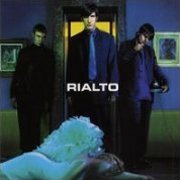
Rialto (1997, 48.19) ***/T½ |
|
| Monday Morning 5:19 Dream Another Dream Broken Barbie Doll Summer's Over Untouchable Hard Candy Quarantine Lucky Number |
Love Like Semtex When We're Together The Underdogs Milk of Amnesia |
||
Current availability:
Mellotron used:
Britpop leftovers Rialto made all the right moves; '60s influences, period instruments, mockney vocals. How could they fail? Probably because there was only ever room for one Pulp. Rialto isn't actually a bad album, with quite a few memorable songs, although they're nowhere near Pulp's level of sophistication, despite their Scott Walker fixation.
Keys man Toby Hounsham plays Mellotron on a couple of tracks. Summer's Over sounds like a Kinks outtake, with quite upfront strings and maybe cello, while the harpsichord-driven Quarantine has a startlingly similar feel about it, with some Beatles-y brass and more of those Mellotron strings. Actually, two good Mellotron tracks and, going by the evidence presented here, a better band than many of their more successful rivals (who said Oasis? Oh. Must've been me).
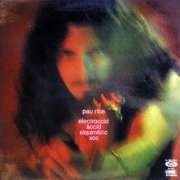 |
Electròccid Àccid Alquímistic Xoc (1975, 41.14) ***/T½Sol SoletEs Fa Llarg es Fa Llarg Esperar Cuatre Barres Blanc i Negre Brian a Clown Lluna Robada María Occident (Recepte de Cuina) Lluna Estimada Estrella de la Fortuna |
Current availability:
Mellotron used:
To my knowledge, Pau Riba's 1975 release, Electròccid Àccid Alquímistic Xoc, was his first for several years, although a lack of Spanish leaves me unable to ascertain why. Whatever, it consists of that strange variety of psych-inflected mainstream pop/rock that seems to be unique to Spain of the period, possibly due to the lifting of restrictions after the fall of the dictatorship and the general social and political upheaval of the era. Or maybe the Spanish just liked it. It's passable enough as that kind of stuff goes, but a rather unexciting listen 35 years on, to be honest, although far from offensive.
Pepe Dougan plays Mellotron, with faux-orchestral strings and flutes on Es Fa Llarg Es Fa Llarg Esperar, heavily phased strings on María and a nice flute part on Occident (Recepte De Cuina), though nothing you really can't live without. So; passable album, couple of nice bits of Mellotron, just scrapes three stars. Whatever.
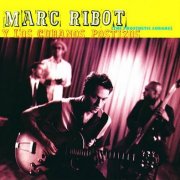 |
Marc Ribot y los Cubanos Postizos (1998, 46.41) ***½/T |
|
| Aurora en Pekín Aquí Como Allá Como Se Gozo en el Barrio Postizo No Me Llores Más Los Teenagers Bailan Changui Fiesta en el Solar La Vida Es un Sueño |
Esclavo Tristé Choserito Plena |
|
Current availability:
Mellotron used:
Marc Ribot's been around since the '80s, doing his 'weird guitarslinger for hire' thing with artists of the calibre of Tom Waits (he was Waits' guitarist of choice for some years), Cibo Matto and Elvis Costello. He's been releasing solo albums under various nomenclatures since 1990, including 1998's self-titled effort from Marc Ribot y los Cubanos Postizos (Marc Ribot and the Prosthetic Cubans). It's a wonderfully off-the-wall melting-pot of styles, Latin and otherwise, top tracks including gentle opener Aurora En Pekín and the nutzoid No Me Llores Más.
As part of the New York Weird Mafia, it's hardly surprising that John Medeski plays organ and Mellotron here (Ribot's guested with MMW), although there's just the one Mellotron track, No Me Llores Más, with a gleefully pitchbent string part alongside the organ. All in all, then, a joyful album that proves the Latin music can hold discreet liaisons with the avant-garde without losing face.
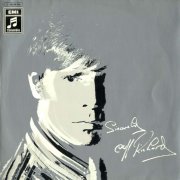 |
Sincerely (1969, 40.51) **/T |
|
| In the Past Always Will You Love Me Tomorrow You'll Want Me I'm Not Getting Married Time For Emily Whenever I May Find Her Baby I Could Be So Good at Loving You |
Sam London's Not Too Far Take Action Take Good Care of Her When I Find You Punch and Judy |
|
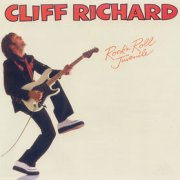 |
Rock'n'Roll Juvenile (1979, 44.09) **/½ |
|
| Monday Thru' Friday Doing Fine Cities May Fall You Know That I Love You My Luck Won't Change Rock'n'Roll Juvenile Sci-Fi Fallin in Luv |
Carrie Hot Shot Language of Love We Don't Talk Anymore |
|
Current availability:
Mellotron used:
Ah, Cliff Richard, the oldest swinger in town, not to mention the oldest confirmed bachelor, a.k.a. 'Cliffy Bastard', for anyone old enough to've seen the heavily Cliff-referencing The Young Ones in the early '80s. I should be fair here; Cliff (born Harry Webb) is Britain's first genuine rock'n'roller, releasing what's generally regarded to be the UK's first proper rock'n'roll record, Move It, in 1958, aged seventeen. In 2008, of course, he celebrates an unbelievable fifty years in 'the biz', although he's spent the vast majority of them as a family-and-Christian-friendly artiste, producing jaunty mainstream horrors such as Summer Holiday (OK, so it was a film theme), Congratulations (OK, so it was Eurovision) and Mistletoe & Wine (no excuses whatsoever - rhymes with 'children singing Christian rhyme'). We don't talk (anymore) about The Millennium Prayer. If you've never heard Cliff's music (Brit readers stop reading now), think: an even more straight-down-the-line Paul McCartney with less talent and extra added Christianity.
1969's Sincerely (or Sincerely Cliff, or, indeed, Sincerely, Cliff Richard) was Cliffy's fourteenth or fifteenth album, depending on how you're counting (does his 'live in the studio' debut count?) and is, you'll be stunned to discover, a very mainstream pop record of its time. Think: as if psychedelia had never happened (well, the horrid Congratulations was only the previous year). Soundwise, it's a typical pop production of the day, with the band in the left channel, the orchestra on the right and Cliff's voice in the middle, a little too high in the mix for comfort. If there's a best track, it's London's Not Too Far (notwithstanding its ultra-cheesy final line), although I'm Not Getting Married amused me. Indeed, Cliff. Worst? The Congratulations rewrite When I Find You. Hideous. An unknown session player adds surprisingly raucous Mellotron strings to Baby I Could Be So Good At Loving You, despite the real strings used on the rest of the record, but you really aren't going to shell out your hard-earned for this on that basis.
Rock'n'Roll Juvenile was something like his 33rd non-compilation studio album in twenty years and is, to no-one's surprise, a mainstream pop/rock album, recorded with the help of various session men and professional songwriters, including Brian "B.A." Robertson (not that one). In all honesty, while bland and faceless, it's nowhere near as bad as many, many other albums, its chief sin being the tedium it induces in any listener not inured to Cliff's unashamedly pop approach. Of the album's two hit singles, We Don't Talk Anymore, his first UK No. 1 in over a decade, is truly horrible, although Cliff's sleevenotes comment that it only went on the album as an afterthought, being clearly recorded at a different session, while Carrie is actually one of his better hits, despite its cheeso chorus (well, it was a hit). Incidentally, presumably a) to prove everyone concerned has a sense of humour and b) to see if anyone's watching, über-session man Herbie Flowers is credited in increasingly sillier ways as the album progresses, ending up with 'Hermione Fleurs' and 'Inter Flora', which, while slight, seems to indicate an attention to detail lacking in so many mainstream acts.
The joy of track-by-track instrumental credits! Since I'm quite clearly deranged enough to actually buy stuff like this (as long as it's dirt cheap), at least some artists have the good grace to enable me to skip across the tracks on their worthless pieces of shite (OK, maybe not quite) until I reach the one (usually just the one) of any 'interest' (term used loosely). In this case, it's Language Of Love, with, rather surprisingly, a short burst of fairly decent Mellotron male voice choirs, played by hit-artist-in-his-own-right Peter Skellern. However, you're not going to buy this album for that, or, I'd imagine, anything else.
See: The Shadows
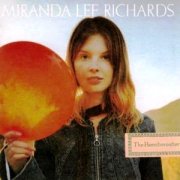 |
The Herethereafter (2001, 55.00) **/T½ |
|
| The Beginner The Long Goodbye Folkin' Hell Right Now I Know What It's Like Ella Last Solstice of the 70's Dandelion |
Beauty Queen Seven Hours The Landscape |
|
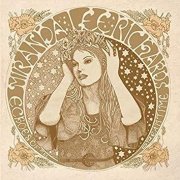 |
Echoes of the Dreamtime (2016, 46.24) ***/T½7th RayTokyo's Dancing Little Radio First Light of Winter Julian Colours So Fine It Was Given Already Fine |
 |
Existential Beast (2017, 48.10) ***½/TT |
|
| Ashes and Seeds The Wildwood Lucid I Would Dream Golden Gate Back to the Source Autumn Sun Existential Beast Oh Raven |
On the Outside of Heaven Another World |
|
Current availability:
Chamberlin/Mellotrons used:
Apparently, Metallica's Kirk Hammett taught Miranda Lee Richards how to play guitar by teaching her Mazzy Star songs, not that you can tell from her style. Her first album, 2001's The Herethereafter, is an alt.country/indie crossover effort, although it's pretty bland fare; most of the tracks are too long, while Richards' voice is rather dreary, making for a somewhat unappealing package, I'm afraid to say. The inimitable Jon Brion plays Chamberlin, with strings on The Long Goodbye, Folkin' Hell (ho ho), flutes on I Know What It's Like and strings and flutes on Seven Hours, alongside real strings on several tracks. Overall, this becomes more and more irritating as it progresses, largely due to its overriding blandness. Is it really acceptable to make music this safe?
Many years later, 2016's Echoes of the Dreamtime is a big improvement over her (in fairness, considerably) earlier work, although some slightly excessive track lengths make proceedings drag a little, better tracks including First Light Of Winter and closer Already Fine. Given that the album's produced by noted Mellotron owner/player Rob Campanella, let's hope it's his machine we're hearing; it sounds real enough, but, you know... Richards is credited on three tracks, with muted strings and upfront flutes on opener 7th Ray, more of those strings on Little Radio and flutes on First Light Of Winter, plus uncredited strings on It Was Given, none of it that overt, but always nice to hear.
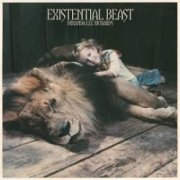
The following year's Existential Beast is even better, highlights including the intense Golden Gate, the beautiful Oh Raven and lengthy, dreamlike closer Another World. See what happens when an artist's allowed to mature at their own pace? No fewer than three credited players this time round (presumably Campanella's machine again), Rick Parker adding strings to opener Ashes And Seeds, Richards playing strings on Lucid I Would Dream and pleasingly upfront flutes on On The Outside Of Heaven, while Jon Niemann adds flutes to Oh Raven. Now, this one's worth hearing.
See: Samples etc.
 |
 |
Space Waltz (1975, 40.50) ****/TTTFraulein LoveBeautiful Boy Seabird Out on the Street Angel Open Up Scars of Love And Up to Now Love the Way He Smiles |
 |
Alastair Riddell (1978, 42.57) ***½/TSmileWonder Ones Come on Over Wear My Light Are They Real Oh Ron Eyes of Love What Good Does it Do Me I Can See Space |
Current availability:
Mellotrons used:
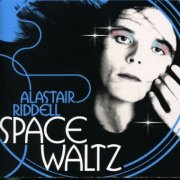
Alastair Riddell was yet another of those Kiwis who moved to Oz to attempt to find fame and fortune (see: Split Enz, Crowded House and, er, Airlord). His stock in trade, at least on Space Waltz (also the name of his band) seems to have been as the Antipodean Bowie, doing a passable imitation of the great man's voice, with a band who did a fair Spiders/Mott impersonation. I believe Out On The Street was actually a largish hit over there, too, although it sounds slightly dated for '75 to my ears. On the Mellotron front, Tony Raynor (i.e. Eddie Rayner of Split Enz) plays loads of strings on Beautiful Boy, flutes, strings and choir all over the epic Seabird, flutes on Angel and more strings on Open Up, along with various other keys. Although the Bowie influence is far too obvious to ignore, it doesn't diminish the album's qualities. It's now been reissued twice, although with new sleeves (see right and above).
 |
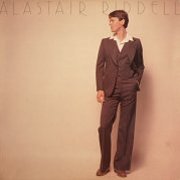
Riddell didn't record again until '78 and, despite its boring sleeve, Alastair Riddell is actually a pretty good album, rather like a toned-down version of his debut. In the interim, Riddell seems to have picked up another influence, Steve Harley, with much of his stylised diction tending towards him, although Bowie is everpresent too, of course. The songs are good without being outstanding (nothing is up to the quality of the best material on Space Waltz), but the overall sound of the album isn't unpleasing, being devoid of spiky Noo Wave influences, which probably hadn't made it as far as NZ by then. Only one Mellotron track this time round, from Riddell himself, with some fairly standard flutes and strings on Wonder Ones, but that isn't why you should pick this up if you see it. Oh and Eddie 'Raynor's name is still mis-spelt.
So; Riddell's is a largely wasted talent, with a tiny handful of releases to his name; there was a third album in the early '80s, with an unpleasant synth-pop veneer to it, but I really wouldn't bother if I were you. Space Waltz is definitely the better of these two albums (and far more Mellotron) and by far the easier to find, with two different CD issues in the last few years, but his eponymous second effort is worth hearing should you find a copy, probably in NZ.
 |
Ghost of a Gardener (2014, 35.43) ***/T |
|
| Time Words Ghost Holiest Day Where I Stand Mercy Willow You Can Go |
I See it Coming Standing Still |
|
Current availability:
Mellotron used:
Vermont native Rachel Ries' third album, 2014's Ghost of a Gardener, is a country-inflected singer-songwriter effort, louder (I use the term loosely) material - Where I Stand, Mercy - sitting alongside moments of quiet beauty. Highlights? Those quiet beauty moments have it for me: Ghost, Holiest Day, Willow and closer Standing Still, although the songwriting's strong throughout. Even the occasional indie feel isn't enough to spoil the best bits.
Mellotron? Ries plays a brief, gentle flute part on Holiest Day, while multi-instrumentalist David Vandervelde plays a longer part on closer Standing Still, sounding nicely authentic (spot the key-click). Depending on your stance, you could call this 'mournful' or 'introspective'; I'd opt for the latter, myself. Good album, nice Mellotron work.