




|
|
|
|
||
|
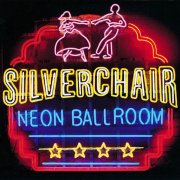 |
Neon Ballroom (1999, 50.11) ***/T |
|
| Emotion Sickness Anthem for the Year 2000 Ana's Song (Open Fire) Spawn Again Miss You Love Dearest Helpless Do You Feel the Same Black Tangled Heart |
Point of View Satin Sheets Paint Pastel Princess Steam Will Rise |
|
Current availability:
Mellotron used:
Named for C.S. Lewis' Narnia novel, Silverchair, a.k.a. 'the Australian Nirvana', only sound anything like Nirvana if you're able to forget what Nirvana actually sounded like. Going by their third album, 1999's Neon Ballroom, this bunch certainly fit the 'grunge' template, albeit with a string section, but lack the anger, the melodic sense, the sheer joyous fury of the real deal. Grunge-lite, anyone? Better tracks? Pushing it a bit, but Anthem For The Year 2000 and Point Of View are above average.
Midnight Oil's Jim Moginie ('Moegenius') plays keys on around half the album, including what I take to be his Mellotron on three tracks, with cellos and flutes on Ana's Song (Open Fire) and Point Of View and flutes on Miss You Love, although the strings are real throughout. To be honest, unless you're already a fan (in which case you'll have it anyway), you're probably not going to get much out of this, while its tape-replay work is minimal. Perhaps not.
 |
Black Leather Mojo (2001, 47.29) ***½/T |
|
| Sonic Shake Divine Imperfection Anyway But Maybe Girls Are Better Than Boys Brain Sugar (Whatever Happened to) Rock'n'Roll Girls The Monkey Zoo Too Many Hippies (in the Garden of Love) |
Inside Out I Wanna Be New Church of the Broken Hearted Take it All Why Don'tcha |
|
Current availability:
Mellotron used:
The clue's in the name; SilverGinger 5 are another Ginger side-project, when he's not wrestling with trying to keep a Wildhearts lineup (not to mention himself) drug-free. As with everything he does, seemingly, Black Leather Mojo is an album of catchy pop songs played through a distortion box on eleven; think: Cheap Trick with attitude. OK, more attitude. While this isn't 100% my bag, it seems to be more than competent at what it does and should probably have sold many more copies than it undoubtedly did.
The reason this is here is that my Mellotron was used on it. Ginger's a huge Cardiacs fan (good man!) and got Tim Smith to produce it, who brought in his old mucker Bill "William D." Drake to play keyboards. Tim rang me and I asked if I could bring the ol' M400 down and (as I've said somewhere else around here), you don't say no to Tim... Credited with 'piano and organ', Bill actually sticks the Mellotron on a couple of tracks, with strings on (Whatever Happened To) Rock'n'Roll Girls, then lovely 'Strawberry Fields'-style flutes and choirs on Church Of The Broken Hearted.
See: Ginger
 |
Mothertongue (1997, 43.25) ***½/TT |
|
| 2000 Slumber Away Whale Merry Go Round Through the Gates of Morning Bright I'm Over You Sulphur Redrum |
Wilson (I Can't Get You Out of My Head) If She Says Suffering Jesus Tidepool |
|
Current availability:
Mellotron used:
Difficult to know quite how to describe Simmer's music; sort of indie-ish, but somehow better, with material that, in places, beats yer standard indie-mongers hands down. Maybe being Dutch helps, not having the manipulative UK music press (or what's left of it) breathing down your neck the whole time. Anyway, songs like Slumber Away and Through The Gates Of Morning Bright make Mothertongue a decent enough listen, although if you're not into modern guitar pop you probably aren't going to go wild about this.
On the Mellotron front, from guitarist Theo de Jong, the excellent Slumber Away has a string melody following the guitar line, until the rest of the band drops out, leaving the Mellotron playing solo for eight bars, reiterating at the end of the song. Fantastic! The strings on Redrum are almost inaudible, but the upfront Mellotron on Suffering Jesus makes up for it, leaving their use restrained but effective. All in all, it's a bit of a shame Simmer seem to have disappeared; well, this album is seven years old at the time of writing and I can't trace anything else by the band. Anyway, those of you into the indie thing may well like this, although the Mellotron use isn't essential.
 |
Stairpenstation (2010, 52.42) ***½/T |
|
| Nobody Won Nobody's Gonna Feel the Pain Have a Good Time Cannonball Queen Something to Say Get Through This Problem Persona November |
Think About You I Never Knew War Room [hidden track] |
|
Current availability:
Mellotron used:
Jeffrey Simmons's Stairpenstation is a distinct improvement over his earlier albums (two of which are reviewed in samples), veering between the classic powerpop of Problem Persona and Think About You, the upbeat pop/rock of Nobody's Gonna Feel The Pain and I Never Knew and several slower, more thoughtful offerings.
Simmons is credited with Mellotron on two tracks, although the sleevenotes state, 'Mellotron on 3 [i.e. Have A Good Time] recorded at Zippah', with no similar credit for Think About You. And, indeed, only the former features the Real Deal, with decent string and flute parts, the latter's strings being fairly obviously sampled.
See: Samples etc.
 |
Harper Simon (2009, 30.18) ***/T |
|
| All to God Wishes and Stars The Audit Shooting Star Tennessee Ha Ha Cactus Flower Rag All I Have Are Memories |
The Shine Berkeley Girl |
|
Current availability:
Mellotron/Chamberlin used:
Harper Simon (presumably named for his mother, Peggy Harper) is Paul Simon's first child, born in 1972; despite working as a musician since his teens, he has taken until 2009 to release his eponymous solo album. Unsurprisingly, it's not a million miles away from something his dad may have recorded in the '70s, with the addition of several country tracks, recorded with a crack team of Nashville sessioneers, although the bulk of the short album falls into the singer-songwriter bracket. To be honest, I can't say I found it particularly engaging, but what do I know? It seems to do what it does well enough, although its popularity is unlikely to match most of dad's records, with the possible exception of Songs From Capeman (cue unwarranted snigger). Actually, is it unwarranted? We're talking about the man who copyrighted the ancient folk tune Scarborough Fair, learned from Martin Carthy during Simon's British sojourn in 1965.
Er, anyway... Yuka Honda (Cibo Matto) plays (real?) Mellotron flutes on The Audit, although the strings sound real, while Patrick Warren adds his usual Chamberlin, with irritatingly real-sounding flutes and strings on Ha Ha. Overall, then, a decent enough effort, actually quite timeless (always a good move), although unlikely to excite anyone very much, including tape-replay enthusiasts.
See: Samples etc. | Heavy Circles
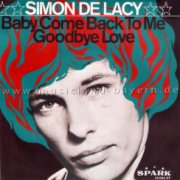 |
7" (1968) **½/TT½ Baby Come Back to Me Goodbye Love |
Current availability:
Mellotron used:
Despite the presence of bassist Charles de Lacy, Simon De Lacy appears to be the name of a London-based band, rather than an individual, the other members being vocalist Chris Jennings, guitarist Peter Thorp and drummer Tony Newman, for what it's worth. Their sole (?) single, 1968's Baby Come Back To Me c/w Goodbye Love, makes the cardinal psych-era error of bearing hallmarks of Dusty Springfield-style pre-psych songwriting, sounding like a Tin Pan Alley effort squeezed into Carnaby Street threads, undoubtedly what it is.
The usual unknown session player adds MkII Mellotron to the 'A', overloading to the point of distortion around the 2:39 mark, making this possibly worth hearing for that reason, if not the actual composition.
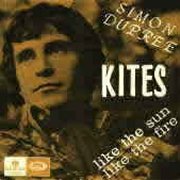 |
7" (1967) *****/TTT Kites Like the Sun Like the Fire |
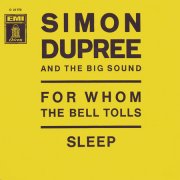 |
7" (1968) ***/TT For Whom the Bell Tolls Sleep |
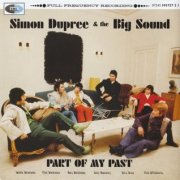 |
7" (1968) ****½/TTT½ Part of My Past This Story Never Ends |
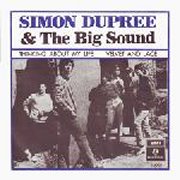 |
7" (1968) ****/TTT Thinking About My Life Velvet and Lace |
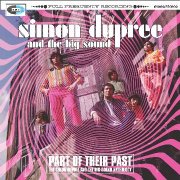 |
Part of My Past (2004, recorded 1966-69, 151.18) ****/TTTT |
|||
| I See the Light It is Finished Reservations You Need a Man Day Time, Night Time I've Seen it All Before Medley: 60 Minutes of Your Love/A Lot of Love Love Get Off My Bach There's a Little Picture Playhouse What is Soul Teacher, Teacher Amen Who Cares |
Kites Like the Sun Like the Fire For Whom the Bell Tolls Sleep Part of My Past This Story Never Ends Thinking About My Life Velvet and Lace We Are the Moles (part 1) We Are the Moles (part 2) Broken Hearted Pirates She Gave Me the Sun The Eagle Flies Tonight Give it All Back Stained Glass Window Please Come Back |
Light on Dark Water What in This World What Cha Gonna Do Don't Make it So Hard (on Me Baby) Kindness Castle in the Sky Loneliness is Just a State of Mind Laughing Boy From Nowhere You Can't You See Now Rain Something in the Way She Moves I'm Going Home |
Medley: 60 Minutes of Your Love/A Lot of Love Love Get Off My Bach There's a Little Picture Playhouse Day Time, Night Time I See the Light What is Soul Teacher, Teacher Amen Who Cares Reservations |
|
Current availability:
Mellotrons used:
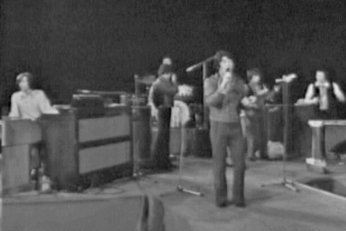
'Simon Dupree' (an entirely fictitious individual) and his Big Sound were in fact a Portsmouth-based soul/R'n'B band formed around the mid-'60s, led by the three Shulman brother, Derek, Ray and Phil. They played the obligatory hundreds of gigs a year, covering well-known US soul numbers to crowds of sweaty revellers up and down the country and doubtless made a decent living for a while. Their sole album proper (excuse the pun), 1967's Without Reservations was presumably the cream of their current stage set and correspondingly is of little interest to all but UK '60s soul fans, to be honest.
Like so many of their contemporaries, though, their management caught the whiff of joss-sticks and patchouli on the air and insisted they reinvent themselves as a psychedelic combo. The band hated the idea, but went along with it, producing a cast-iron psych classic in Kites. Recorded at Abbey Road, they experimented with various exotic instruments, including the studio's new Mellotron, heard to superb effect on the track (played by Eric Hine, I believe). Even without it, the record would be wonderful, complete with Japanese (or is it Chinese?) poetry recited by an oriental-sounding female in the middle eight, wind chimes, gongs, you name it really. I can't believe I only first heard this a few years ago; it completely sums up its era, every bit as well as Strawberry Fields or Nights In White Satin. Wonderful.
 |
The band released another five singles before their eventual demise, or six if you count the one credited to The Moles, with variable Mellotron content. For Whom The Bell Tolls was a minor hit (their only other one), but while good, with reasonable Mellotron strings, it's nowhere near the standard set by Kites. Part Of My Past is vastly better and should, by rights, have been huge; mucho Mellotron flutes this time round. Thinking About My Life is excellent, too, if Mellotron free, although its equally good b-side (why wasn't this a single?), Velvet And Lace, has some great Mellotron string work. Although it's not relevant here, particular praise must go to the rather jolly Broken Hearted Pirates, from early '69, which I would guess was a paean to the pirate radio stations, though that's no more than speculation.
As far as I can work out, although their last recording session was in October '69, the band must have effectively dissolved by then, with the Shulmans reinventing themselves without managerial 'help', recruiting some extra members and becoming '70s prog gods Gentle Giant, themselves minor-league Mellotron users. But then, you knew that already, didn't you?
Various compilations slipped out across the years, including Kites, from the early '80s, which is particularly pointless, consisting of all their r'n'b material plus the Kites and Bells a- and b-sides. Avoid. Finally, in early 2004, over 35 years after the event, a comprehensive roundup of the band's career was announced. Part of My Past appears to be sequenced in chronological order of recording, opening with their first three singles a's and b's, followed by the remainder of Without Reservations. The rest of disc one comprises their subsequent singles, starting with Kites and including both sides of The Moles' single. The last eleven tracks on disc two are the original LP, sequenced correctly, which leaves 16 tracks which appear to be previously unreleased. I believe a second Dupree album was recorded in 1968, provisionally titled Once More Into the Breach Dear Friends, but remained unreleased after their post-Kites singles flopped, so it would appear that this less-legendary-than-it-deserves 'lost' album has finally surfaced.
Highlights of the previously-unheard material are the brilliant, melancholy Please Come Back, What Cha Gonna Do (an early version of Part Of My Past) and Castle In The Sky, but to be honest, most of the first half of disc two (which starts with Stained Glass Window) is excellent, although the quality drops off a little after Laughing Boy From Nowhere (where the Mellotron part may possibly be played by Elton John). On the Mellotron front, most of the relevant tracks have the typical Mark II strings'n'flutes, but the excellent What In This World is splattered with brass and the even better What Cha Gonna Do opens with a killer polyphonic flute part, with loads more during the song, not to mention the seriously upfront strings part on Don't Make It So Hard (On Me Baby). Just about every highlighted track above features loads of Mark II, making this something of a Mellotron-lover's delight, especially considering how unexpected the unreleased tracks are. OK, you may be thinking "Only 13 tracks out of 55?", but when you consider that 11 of those are duplicates and at least 25 of the 55 are deeply inessential, it starts to look rather more worthwhile. I shall be compiling my own single-CD of everything from Kites to somewhere around Something In The Way She Moves, which should cut the crap fairly decisively.
So; any previous compilations are rendered utterly redundant by the excellent Part of My Past, which I urge you to buy at your earliest convenience. The only reason it doesn't get a higher star rating is its high level of track redundancy, although I'm all in favour of releasing bands' entire oeuvres and you can't have it both ways, can you? So, the boring stuff's boring, but the brilliant stuff's, er, brilliant, with stacks of wonderful Mellotron work. Buy. Or, if you're still a bit wary, track down Kites and hear what you've been missing.
See: The Moles | Gentle Giant
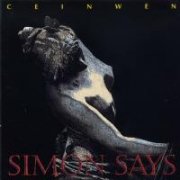 |
Ceinwen (1995, 53.34) ***½/TTT½Hey!Under the Seal A Bedtime Story Devonian Forest Pilgrim's Progress B.A.J.S. Radio Kadazan |
Current availability:
Mellotron used:
Despite their being Swedish and existing in the '90s, I can't say I know an awful lot about Simon Says. Various online interviews confirm that they started as the brainchild of bassist/keyboard player Stefan Renström and vocalist Daniel Fäldt, recording their debut, Ceinwen, before they were in a position to play live. They turned down most of the gigs they were offered and were put on the back-burner after a while, as life overtook various members. Seven years later, after working on an electronic project, Renström realised he'd written enough Simon Says-style material for a new album and after tracking Fäldt down, reformed the band, releasing Paradise Square in 2002 (reviewed here). Both albums are reasonable progressive releases, with occasional inspired moments, although lacking the spark of the best Swedish bands of the '90s (and no, I'm not talking about The Flower Kings...).
The problem with Simon Says' keyboards is that, alongside a (confirmed) real Mellotron and what almost certainly isn't a real Hammond, lurk some digital things Whose Name We Dare Not Speak. Actually, I've heard an awful lot worse use of modern synths, not least dodgy Swedes Manticore and as for Italians the Romantic Warriors, let's not even go there... Anyway, as far as Renström's Mellotron use goes on Ceinwen, the strings are murky, the choirs murkier, but the choir chord at the end of A Bedtime Story does the 'Mellotron ripple', shifting inversions to sustain the sound, as if to prove its veracity. Strings all over Pilgrim's Progress, plus the unmistakable rasp of the low cello notes, which are in fact a double bass (don't ask). Flutes in B.A.J.S. Radio, which means they had two tape frames (again confirmed), with more strings in Kadazan, making this actually quite a passable Mellotron album.
See: Samples etc.
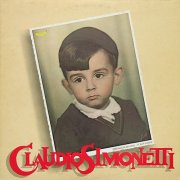 |
Claudio Simonetti (1981, 37.56) **½/½ |
|
| Planet Isabel Robin Hood Astrology A Symphony Kasso Vamos Amigos Staten Island Out of Time |
Under the Stars Profondo Rosso |
|
Current availability:
Mellotron used:
Goblin's de facto leader, Claudio Simonetti, released his first, eponymous solo album in 1981, three years after the band effectively disintegrated. To be honest, it's a right mixed bag, probably fairly accurately reflecting Goblin's wide range of film work, from horror, through gangster flicks to crummy late '70s disco soundtracks. After a slightly shaky start, synth piece Astrology's worth the price of admission; sad to say, that's about it, as A Symphony is a terrible, cheesy MOR ballad and Kasso is a disco horror (so to speak), so, although it picks up towards the end (finishing with a reworking of Profondo Rosso was a good move), this fails to even make three-star grade.
Simonetti plays Mellotron, amongst other keys, with faint choirs on opener Planet Isabel and Astrology, if only just. Given that Claudio Simonetti is long out of print, do you make the effort? It's available as a dodgy download, but even so, I'm not sure it's really worth your time. Play your old Goblin albums instead.
See: Goblin
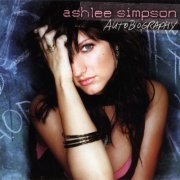 |
Autiobiography (2004, 43.59) **½/T |
|
| Autobiography Pieces of Me Shadow La La Love Makes the World Go Round Better Off Love for Me Surrender |
Unreachable Nothing New Giving it All Away Undiscovered |
|
Current availability:
Chamberlin used:
I was expecting Ashlee Simpson to be one of the ten million or so American country divas I've never heard of, so was quite surprised to hear rockin' guitar on the first track of her debut, 2004's Autobiography. The album actually treads a fine line between rock, pop and a hint of country, which is more a description than a recommendation, although I've heard far (far) worse. Saying that, I've heard far better, too; it's about as anodyne as you'd expect of a twenty year-old female singer signed to Geffen, but I suppose people who don't really like music have to have something to listen to, eh?
Patrick Warren does his usual hired hand Chamberlin thing, with (credited) nicely audible string parts on Shadow and closer Undiscovered; nice to actually know for sure where it's used for once... Anyway, all terribly mainstream, but at least it isn't 'R&B' and doesn't obviously use Autotune.
 |
Peace & Love (2000, 68.45) **½/½ |
|
| Which Way (Intro) 100 A New Jam When You Go Summer Write One This Way Alone The Way it Used to Be |
Coming Home The Ballad of Sophie It Don't Matter Love's Patience Peace and Love Which Way (part 2) |
|
Current availability:
Mellotron used:
Tommy Sims is probably better known for his production and sideman duties as for his singing career; in fact, he's only released the one solo album, 2000's Peace & Love. Far too varied for the mass market, the album throws R&B, soul, jazz, folk and various other styles into the melting pot, although it's broadly categorisable as a soul record; Alone has something of a (Sittin' On) The Dock Of The Bay feel about it, while Coming Home is more early Jacksons, although opener Which Way (Intro) and its closing counterpart have a distinct and unexpected Dylan feel to them.
Phil Madeira plays Mellotron, with flutes on The Ballad Of Sophie, alongside real strings, although I can't detect any other useage. It's a shame Sims hasn't recorded again in the decade since this album's release, as his excellent soul voice and eclectic tastes would be a breath of fresh air in a stultifyingly rigid scene, but then, is anyone interested? He refuses to bow to the lowest common denominator and as such, will never be as successful as he deserves.
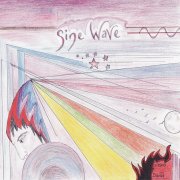 |
Sine Wave 1 (2008, 46.08) ***/TTT |
|
| Horizons Edge The Darkness of Light Decaying Universe Symmetry of Mirrors Count Saint-Germain Fear of the Unknown Future Song Eternal Visions |
The Ouija Board In the Realm of Supernatural Possibilities |
|
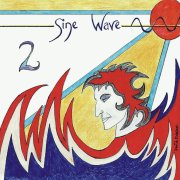 |
Sine Wave 2 (2010, 53.45) ***/TT½SheBirth of the Sun The Singing Ringing Tree Ice Train [Zuruck Nach Deutschland] Third Planet From the Sun Within the Slumber of Galactic Nightmares Mirage Infinite Desire |
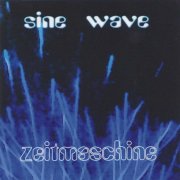 |
Zeitmaschine (2012, 40.27) ***½/TForeverSine Waves Zeitmaschine |
Current availability:
Mellotrons used:
Dave Eveson lives in Streetly, Birmingham, the original home of the Mellotron, so it's quite fitting that his solo electronic project, Sine Wave, should feature his M400. He debuted with 2008's low-fi Sine Wave 1, recorded over the preceding four years, an unusual combination of grimy guitar work and meditative keyboards, probably at its best on twenty-three-minute closer In The Realm Of Supernatural Possibilities. Mellotronically speaking, opener Horizons Edge is a brief string section solo, with more of the same on Decaying Universe, Symmetry Of Mirrors is a strings improv, Count Saint-Germain and The Ouija Board layer strings over guitars and In The Realm Of Supernatural Possibilities kicks off with more of that string section, although the bulk of its length is Mellotron-free.
Two years on, Sine Wave 2 has a more professional, if still clearly home-recorded sound, highlights including The Singing Ringing Tree (presumably named for the 1957 East German children's film, based on one of Grimm's grim fairy tales) and sequencer piece Ice Train [Zuruck Nach Deutschland]. Less Mellotron this time round, although the album opens with a two-minute piece for flutes and synth, She, with a full-on string section appearing halfway through Ice Train and wobbly flutes and more string section on closer Infinite Desire.
Online reviews say that 2012's Zeitmaschine really is a time machine, one leading directly to the Ash Ra Tempel continuum, two of its three tracks lengthy electronic jams, Sine Wave itself being (unsurprisingly) massed synth effects and the title track combining synth noise and duelling guitars. Even less Mellotron, merely string section on five-minute opener Forever and a brief strings part on the title track, closing proceedings.
 |
For Once in My Life (197?, 33.31) ½/T½ |
|
| For Once in My Life Something Beautiful/Through it All I Could Never Out-Love the Lord Sheltered in the Arms of God Redemption Draweth Nigh I Wish You All Could Know Him (Like I Know Him) Ten Thousand Years I Saw a Man |
Because He Lives The King is Coming |
|
Current availability:
Mellotron used:
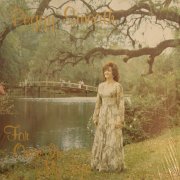
Aaarghh! My pal Mark has sent me some more carefully-converted-to-digital thrift-store horrors, including this effort. Peggy Sineath was (and is) a S.Carolina-based 'gospel' singer, who seems to've released an indeterminate number of appalling records on local labels, including the undated For Once in My Life, although, going by the sleeve, I'd guess it's from the mid-to-late '70s. This has to be the nadir of Christian music of the era; unbelievably slushy, MOR slop, with zero connection to anything resembling black gospel music. This is a stern, joyless drudge of an album, Sineath's respectable but anonymous voice warbling its way through ten funereal grinds, making the whole worship business sound as much fun as an invitation to your own funeral. Funny, that. Maybe the happy-clappies got it right after all? Worst track? The King Is Coming starts with a bright fanfare (best moment), before slumping back into the album's default slough of despond, overlaid with some truly vile lyrics.
Instrumentally speaking, it's exactly what you'd expect: tinkly piano, tea-dance strings and tippy-tappy percussion, with some particularly obnoxious harp playing on Something Beautiful/Through It All. Otis Forrest is credited with Mellotron, playing pseudo-orchestral strings on Something Beautiful/Through It All, I Could Never Out-Love The Lord, Sheltered In The Arms Of God (Christ, these titles!) and Ten Thousand Years, with real strings elsewhere. The choir on Redemption Draweth Nigh sound a little peculiar, but as Mark says, it sounds more like a real choir 'sounding like a Mellotron' than the real (?) thing. Incidentally, sleevenote author the Rev. Jay Snell (Pastor) could have done with learning how to spell before he opted to splatter his purple prose all over the back of the sleeve: "She looses herself in her presentation..." 'Looses', Reverend? Absolutely, totally appalling.
 |
The Singing Saints Quartet (197?, 30.19) *½/T½ |
|
| Beyond Tomorrow Don't Try to Tell Me God is Dead Lighthouse He's Living in My Soul He Looked Beyond My Faults (and Saw My Needs) Time Has Made a Change I'll Be in the Rapture He Did it All for Me |
I'm Founded on the Rock Most of All Heaven is Awaiting I'll Soon Be Gone On the Jericho Road |
|
 |
The Saints Sing Gospel (197?, 28.33) *½/TT |
|
| While Ages Roll One Day I Will When I Wake Up to Sleep No More Living on Higher Ground Old Time Religion I'll Wake Up in Glory Some Day Sometime a Mountain You've Been an Inspiration |
Hallelujah Square I'm on My Way |
|
Current availability:
Mellotrons used:
 |
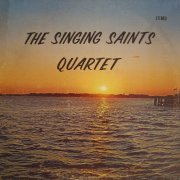
I can tell you next to nothing about The Singing Saints Quartet (right, terrifyingly), although, unlike many similar, at least this bunch sound like they're enjoying themselves in places, even though their hideously out-of-tune harmonies seem to be a characteristic of this kind of stuff; you know, someone's sainted godliness is rather more important than the unimportant ability, as a member of a singing group, to sing in fucking tune.
'Not quite as bad as some other stuff' doesn't make the undated The Singing Saints Quartet any better in real terms; only relatively. The more upbeat material can at least claim some distant relationship to 'gospel', but it's pretty distant. I'm having trouble commenting on the material at all; the oddly-titled Don't Try To Tell Me God Is Dead made me laugh. Multi-instrumentalist Mel(vin) Pierce (Jerry Cline) opts to play sitar on a couple of tracks (notably on Time Has Made A Change), for no obviously good reason, but that's about it. Incidentally, has anyone else noticed a strong narcissistic streak running through not only this album, but the entire genre?: 'I' this, 'I' that... What about other people, you fucking solipsists?
Pierce plays either his own or the label/studio's Mellotron, with pervasive-yet-strangely-empty string parts on opener Beyond Tomorrow, Lighthouse, He Looked Beyond My Faults (And Saw My Needs), He Did It All For Me and Heaven Is Awaiting. More narcissism, then. Possibly the funniest thing about this album, even better than the horrible harmonies or That Picture, is the last sentence of Pastor Don Grice's sleevenotes: "Take this album, play it for your unsaved friends [you're allowed any?] and they too can experience the Joy [note capitalisation] of Christ through singing." That'll make all the difference, eh? Priceless!
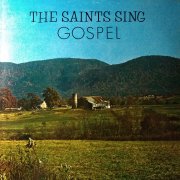
To my abject horror, my 'friend' Mark Medley (some friend) has unearthed another Singing Saints Quartet LP, The Saints Sing Gospel. Depends on your definition of 'gospel', I'd say. To be honest, after listening to another of Mark's horrific LP rips, this rubbish sounds quite benign; I mean, they've even learnt to sing in tune. Either that, or they replaced the tone-deaf idiot from their debut. Material? Universally dull, the quartet largely accompanied by what I'm forced to term 'church hall piano'. Jay Petach (Gospel, Regals, various Tomes) on the studio M400 this time, with cellos and strings on opener While Ages Roll and strings on Old Time Religion, I'll Wake Up In Glory Some Day, Sometime A Mountain and I'm On My Way. All you need to know, really. Probably more than you need to know, actually, but there you go.