




|
|
|
|
||
|
|
Tesseract Testbild! Theophilus Therion |
They Might Be Giants Thieves' Kitchen Thighpaulsandra |
Thin Lizzy Thinking Plague Third Eye |
Third Eye Blind Thirsty Moon Thirty Days Out |
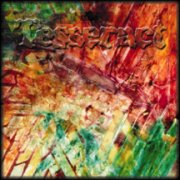 |
Tesseract (1997, 39.32) ****/T |
|
| Entrance Heisenberg's Daughter Cast of Thousands Introduction The Cast The Vitamin Mine The Spinach Allegro Assai (Bach Violin Concerto in A Minor, 3rd Movement) |
Rice Cymbal Dance Vantage Point Instrumental |
|
 |
BayProg: Progressive Rock From the San Francisco Bay Area (2002, 5.29) ***½/TTT[Tesseract contribute]On the Edge of an Eclipse |
Current availability:
Mellotrons used:
Tesseract (a four-dimensional shape, in case you were wondering) appear to be run by Mellotronists Yahoo! Groups list moderator Don Tillman, who also plays guitar and other keyboards. Tesseract is a good, varied album, with a strong American feel about it, Karen Bentley's violin making for an inevitable Kansas comparison, although there are considerable differences between the two bands. It's hard to pick out highlights, although they tackle the Bach piece particularly well, given how difficult it can be to do classical music justice in a rock setting. Heisenberg's Daughter and Vantage Point Instrumental are particularly good on the melody front, but there isn't a bad track on the album.
Maybe surprisingly, the only obvious Mellotron on the album is a little strings and choir on Heisenberg's Daughter, to the extent that a whole 'T' might be overstating the case a bit, so although this isn't exactly what you'd call a Mellotron album, it's more than worthy of the progressive fan's time. What's more, if you're an American resident, you can get it from the band's website for a fantastically reasonable $12. Buy.
Incidentally, Tesseract got a Mellotron track onto 2002's BayProg various artists CD, with cellos and strings on the Crimson-esque On The Edge Of An Eclipse.
See: BayProg
 |
Stad (2018, 45.57) **½/TTStjärnor SomSkymningens Kritiska Punkt Vita Staden Under Paraplyet Stram Arkitektur Stad Betongens Form Ett Öppet Slut |
Current availability:
Mellotron used:
On 2018's Stad, Testbild! play a kind of hipsterish indie take on pre-psych '60s pop, with occasional diversions into pseudo-proto prog, better tracks including the gentle Skymningens Kritiska Punkt, Under Paraplyet and Betongens Form, while the sixteen-minute experimental title track at least breaks the mould.
The band used a Swedish MkVI Mellotron, played by keys man Petter Samuelsson and guest Dan Olsson, with distant choirs on opener Stjärnor Som and closer Ett Öppet Slut, chordal flutes on Skymningens Kritiska Punkt, distant strings on Vita Staden and flutes on Betongens Form plus presumably sampled Chamberlin solo male voice on the title track, while the flute melody on Under Paraplyet is clearly something else.
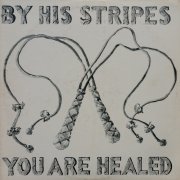 |
By His Stripes You Are Healed (1979, 31.05) *½/T½He Stands at the Door KnockingI Give it to My Jesus Give Thanks to the Lord The Way I Love You Thank You Lord (Clara's Song) Living Water One Way Ticket |
Current availability:
Mellotron used:
I only know of one album by Theophilus, 1979's By His Stripes You Are Healed, for which I'm exceedingly grateful. Each of its eight tracks begins with a piece of spoken scripture from a terribly earnest young man, before lurching into another schlocky piece of heartfelt balladry (opener He Stands At The Door Knocking, I Give It To My Jesus (stop laughing)), or, even worse, sub-Jesus Christ sodding Superstar crap (The Way, closer One Way Ticket).
No-one's credited with Mellotron, or, for that matter, anything else; perhaps putting your name on an album was considered unchristianly egocentric, or something? Anyway, the unknown player's generally kept well in the background, with strings on He Stands At The Door Knocking, The Way, I Love You, Thank You Lord (Clara's Song) and One Way Ticket, which, with its widdly synth work, sounds like a low-rent, Christian version of Styx, for its sins. The flutes on several tracks sound real, however. Hideous though this is (and it is), it has one genuine use: illustrating Christianity's obsessions with guilt, fear and pain for the uninitiated, who, if they have any sense at all, will steer well clear of this horrible death cult. Amusingly, the same Biblical quote named ludicrous '80s hair-metal Christians Stryper, they of the yellow and black striped spandex. I'm not even going to say, "Stop laughing". Laugh all you like. If you can.
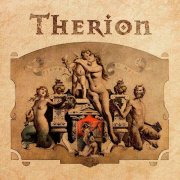 |
Les Fleurs du Mal (2012, 45.36) ***/½ |
|
| Poupée de Cire, Poupée de Son Une Fleur dans le Cœur Initials B.B. Mon Amour, Mon Ami Polichinelle La Maritza Sœur Angélique Dis-Moi Poupée |
Lilith En Alabama Wahala Manitou Je N'ai Besoin Que de Tendresse La Licorne d'Or J'ai le Mal de Toi Poupée de Cire, Poupée de Son |
|
Current availability:
Mellotrons used:
2012's Les Fleurs du Mal reduces Therion's viking quotient, while retaining most of their earlier albums' insanely overblown elements. In an unlikely turn of events, it seems the album consists entirely of covers of French-language songs from the '60s and '70s, many written by Serge Gainsbourg, original performers including France Gall, Léonie, Victoire Scott and Sylvie Vartan. As a result, despite the metal backing on most tracks, their chanson origins frequently leak through, notably on the upbeat Je N'ai Besoin Que De Tendresse and bonus track Les Sucettes.
Mattias 'Änglagård' Olsson plays Mellotron on three tracks, with, er, something on Mon Amour, Mon Ami: mandolins? Brass? We also get background strings on Lilith, although whatever he adds to En Alabama is effectively inaudible.
See: Samples etc.
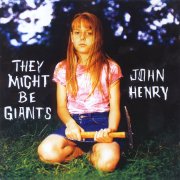 |
John Henry (1994, 57.18) ****/T |
||
| Subliminal Snail Shell Sleeping in the Flowers Unrelated Thing AKA Driver I Should Be Allowed to Think Extra Savoir-Faire Why Must I Be Sad? |
Spy O, Do Not Forsake Me No One Knows My Plan Dirt Bike Destination Moon A Self Called Nowhere Meet James Ensor Thermostat |
Window Out of Jail Stomp Box The End of the Tour |
|
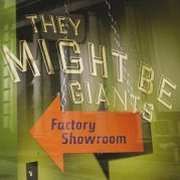 |
Factory Showroom (1996, 42.33) ***½/T |
|
| S-E-X-X-Y Till My Head Falls Off How Can I Sing Like a Girl? Exquisite Dead Guy Metal Detector New York City Your Own Worst Enemy XTC vs. Adam Ant |
Spiraling Shape James K. Polk Pet Name I Can Hear You The Bells Are Ringing |
|
Current availability:
Mellotrons used:
They Might Be Giants certainly have a way with a tune; I hadn't played John Henry in several years when I played it for review and many of the melodies have obviously stuck like glue. Their fifth release, it was the first to feature a 'proper' band playing alongside Johns Flansburgh and Linnell and the difference is immediately apparent, with a cohesive 'band' sound and little of the accordion that plagued their earlier records. The lyrics (and tunes, for that matter) are as quirky as ever, with highlights including Snail Shell, I Should Be Allowed To Think and Meet James Ensor, but there isn't actually a bad track on the record, which is an achievement in itself. Although it's not credited in the CD booklet, Linnell has admitted that he stuck some Mellotron onto a couple of tracks. Window has some flute chords, while The End Of The Tour features some lovely string chordal work, though neither track is exactly smothered in the thing.
The band followed up with a shorter effort, '96's Factory Showroom, featuring a similarly quirky combination of styles as on John Henry, including the 'typical' TMBG of Metal Detector, New York City and their ode to the 11th president of the US (apparently), James K. Polk, replete with Theremin. Battling it out with them are the cod-Philly soul of S-E-X-X-Y and the noo wave of Till My Head Falls Off, while the outrageously murky I Can Hear You was recorded on an Edison cylinder machine. Linnell on Mellotron again, with a 'stabby' choir part, complete with very real-sounding key-click on How Can I Sing Like A Girl? and flutes on the preposterous XTC Vs. Adam Ant (like, there's a contest?).
There's supposed to be some Mellotron on 2000's main theme for Malcolm In The Middle, but not to my ears, while 2002's No! uses samples. Two reasonably satisfying albums of great, quirky (that word again) little songs, then, although neither are really worth purchasing for their Mellotronic content. Buy anyway.
See: Samples etc. | Mono Puff
 |
The Water Road (2008, 73.11) ****½/TTTT½The Long FianchettoReturglas Chameleon Om Tare Tacenda for You When the Moon is in the River of Heaven Plaint The Water Road |
Current availability:
Mellotrons used:
Thieves' Kitchen fell on their feet the day Thomas Johnson (a.k.a. Tomas Jonsson) joined. Those of you who've been watching/listening will have already made the connection; he was Änglagård's keyboard player for both their periods of activity and recommendations don't come much higher than that. At the time of writing, he's living and studying in the UK, although I'm not entirely sure whether the band pursued him, or he answered a 'keyboard player wanted' ad; either way, his arrival is the musical step up they need to take them to the next level. Artistically speaking, of course, there's no money to be made in the wild'n'wacky world of prog and everyone involved knows it, which hasn't stopped them from making an album as good as their fourth, The Water Road.
Thieves' Kitchen specialise in a slightly fusionesque form of prog, interestingly managing to sound like no-one else particularly in the process; Johnson's arrival (he writes or co-writes most of the album's material) shifts the balance towards the prog end of the spectrum, unsurprisingly, although some tracks retain a jazzy edge. By and large, though, we're talking symphonic prog as it was, is and ever shall be, with several guests to spice things up a little, not least Änglagård's erstwhile flautist, Anna Holmgren, as if the connection needed reinforcing. Vocals on most tracks from Amy Darby, so this isn't that much like Änglagård, although the band must realise comparisons are inevitable.
Thomas flew over to Mattias Olsson's Roth-Händle studio in Stockholm to overdub many of the album's keyboard parts; aside from the Mellotron, there are apparently various Optigan and Orchestron interjections, though they're not that easy to spot. As for the Mellotron, lengthy opener The Long Fianchetto has a few short string parts, plus what sounds like Mellotron vibes, but Thomas goes to town properly on his own Änglagårdesque composition, Returglas, with strings, cellos and brass all over. The strings crop up everywhere on the album, with other sounds dropping in and out as needed; choirs on Chameleon, church organ on Om Tare, flutes on the title track... A veritable Mellotron-fest, in fact.
So; do you like progressive rock? Do you like Mellotrons? Then buy this album, pronto. Thieves' Kitchen have come on leaps and bounds from their debut and that wasn't bad... One criticism? It's too long, but that seems to be standard practice in the age of the 80-minute CD. Anyway, this really is one of the best new prog albums I've heard in a long time and certainly one of the best from the UK. Buy. Now.
See: Samples etc. | Änglagård
 |
I, Thighpaulsandra (2001, 136.15) ***/T |
|
| Lycraland The Angelica Declaration Optical Black Abuse Foundation IV Michel Publicity Window Terrible We, the Descending |
Limping Across the Sky Home Butt Club Celine and Julie Go Boating Beneath the Frozen Lake of Stars |
|
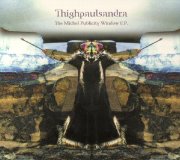 |
The Michel Publicity Window E.P. (2001, 23.39) ***/TMichel Publicity Window (Remix)Paralysed Hovercar Von Düsseldorf Fouled |
 |
Double Vulgar (2003, 76.48) **½/TThe Bush Administration ProjectSlammer On the Horns of Magda Reuth The Circumcision of Christ Double Vulgar He Tastes of the Sea His Royal Highness the Prince of Wales Breaches Reality |
 |
Rape Scene [as Thighpaulsandra with Siôn Orgon & Martin Schellard] (2004, 46.18) **½/½Joyful Misuse of the Gomco ClampThe Busy Jew His Lavish Showroom |
 |
Chamber Music (2005, 49.10) **½/½Cast in Dead HomesA Blizzard of Altars Bleeding Text for the Cripplethrush The Unwilling Wardens of Ice |
 |
The Golden Communion (2015, 116.59) ***/½ |
|
| Salute Did He Fall? The Foot Garden A Devil in Every Hedgerow The Golden Communion Misery Valerie The Sinking Stone |
On the Register The More I Know Men, the Better I Like Dogs |
|
Current availability:
Mellotrons used:
Tim "Thighpaulsandra" Lewis has worked with several main players in the '90s UK experimental scene, not least Spiritualized, Coil and Julian Cope. His first solo release was 2000's Some Head EP, followed up a year later by the portentously-titled sprawling double-disc set I, Thighpaulsandra. In the same ballpark as his Cope collaboration, Queen Elizabeth, its track lengths vary from three minutes to over half an hour, ranging stylistically from piano balladry through Copeian heavy psych to avant-noise, although its default setting is a kind of Spiritualized-esque krautrock that's likely to incite either jubilation or despair in the listener (or both?).
Yer man plays Mellotron, amongst other synthetic devices, with strings on The Angelica Declaration, Home Butt Club and the 32-minute Beneath The Frozen Lake Of Stars, all to passable, if not ecstatic effect. All in all, I, Thighpaulsandra is a massively ambitious album that probably achieves its objective, whatever that might be. Whether it's particularly listenable, at least in one sitting, is another matter... It's not for everyone, but it's definitely for someone. Not much Mellotron, in the way of Cope's similar albums, but it's hardly the album's defining feature, anyway. The contemporaneous The Michel Publicity Window E.P. adds one extra Mellotron track, Fouled, with background strings though, sadly, nothing on its finest moment, Hovercar Von Düsseldorf.
Lewis and Cope fell out over the latter's adverse reaction to the homoerotic S&M imagery on the former's 2003 release, Double Vulgar, an act I've seen described as 'homophobic', although having seen the images, I can understand, if not fully endorse Cope's alleged outburst. Suffice to say, the boundaries of good taste are not so much crossed as left in the same near-death state as some of the sleeve's 'models' appear to be. None of which has anything to do with the album's contents, which aren't dissimilar to those of I, Thighpaulsandra, which is another way of saying he doesn't seem to have progressed much in two years. On the subject of poor taste, the only Mellotron here is an atonal string part towards the end of The Circumcision Of Christ, which all seems a bit unnecessary, even to a known non-God-botherer such as myself.
To my surprise, given the bust-up with Cope, there are more Thighpaulsandra Mellotron albums, beginning with 2004's charmingly-titled Rape Scene. It sounds like more of the same, basically, defining features including the raucous bass solo on The Busy Jew, the tuneless distorted guitar on closer His Lavish Showroom and more of that genital-mutilation obsession on opener Joyful Misuse Of The Gomco Clamp. The album's only Mellotron use, from yer man again, is some occasional choir chords on the last-named, hardly enough to make it worth hearing on those grounds alone.
Ludicrously, I've seen the following year's Chamber Music listed as an EP, doubtless due to its mere four tracks, but at nearly fifty minutes, I think we can safely discard that particular misnomer. Guess what? It's another Thighpaulsandra album, sounding pretty much like every other Thighpaulsandra album, frankly, its best moment being when Martin Schellard suddenly breaks into a Frippish guitar part towards the end of Bleeding Text For The Cripplethrush. And who are those likely-looking lads in the sleeve photo? I think we should be told. Mr. T is credited with Mellotron, but the only possible sighting is the rather un-Mellotronlike choirs heard briefly in closer The Unwilling Wardens Of Ice, making this another 'barely worth it on that front'er.
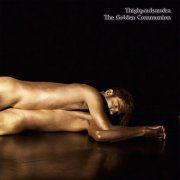
After a ten-year gap between releases, 2015's The Golden Communion is almost two hours of avant-... what? Occasional bursts of metal guitar or straightforward, techno-inspired electronics are about the nearest this gets to 'normal', but there's little familiar enough here for the vast majority of listeners to grasp, which is clearly how Mr. Lewis likes it. Yer man's credited with Mellotron on The Foot Garden, but all I can hear is a few choir stabs towards the end of the track, although it's possible there are other Mellotronic sounds here and there. Real? Hard to say.
So, Mr Lewis... Pretty avant stuff, I'll give you that, although how objectively good it actually is can only be determined by the listener, I fear; admittedly, you could say the same about most music, but it particularly applies here. For those into the further reaches of Copeiana, I think, so without that much Mellotron, I have difficulty really recommending any of these to the casual listener.
See: Julian Cope | Coil | Queen Elizabeth | Loka
 |
Thin Lizzy (1971, 39.12) ***/T |
|
| The Friendly Ranger at Clontarf Castle Honesty is No Excuse Diddy Levine Ray-Gun Look What the Wind Blew in Eire Return of the Farmer's Son Clifton Grange Hotel |
Saga of the Ageing Orphan Remembering |
|
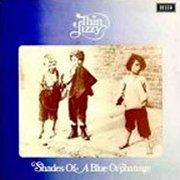 |
Shades of a Blue Orphanage (1972) ***/TThe Rise and Dear Demise of the Funky Nomadic TribesBuffalo Gal I Don't Want to Forget How to Jive Sarah Brought Down Baby Face Chatting Today Call the Police Shades of a Blue Orphanage |
Current availability:
Mellotrons used:
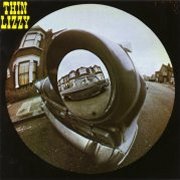
Thin Lizzy's first two albums bear practically no relation to the Lizzy everyone knows from later in the decade, the material being bluesy, laid-back and extremely lyrical, although I believe they always rocked more on stage. After an initial (and fantastically rare) single, followed by the still very rare New Day EP, the band released their eponymous debut, with poignant numbers like Diddy Levine, Look What The Wind Blew In and Remembering, heavily influenced by Phil Lynott's Dublin upbringing. Honesty Is No Excuse is the sole Mellotron track here, with an orchestrated string part put down by Ivor Raymonde. The song isn't the best on the album, being a 3/4 acoustic strumalong and the Mellotron part doesn't really enhance it much, I'm afraid to say.
Shades of a Blue Orphanage's title track, yet another Lynott homage to his hometown childhood, is another gentle acoustic number with Mellotron strings, this time played by rather excellent Irish folk-rockers' Mellow Candle's Clodagh Simonds and rather less orchestrated than on their preceding album. Yet again, the Mellotron doesn't really add much to the track and you wonder whose decision it was to bring one in. Incidentally, rumour has it that the odd selection of song titles on display here are due to Lynott receiving a call from Decca asking for the new album's tracklisting. Having not actually written anything yet, Phil spouted the first things that came into his head, saddling the poor band with The Rise And Dear Demise Of The Funky Nomadic Tribes, I Don't Want To Forget How To Jive et al.
David 'Kid' Jensen, at that time a Radio Luxemburg DJ, was Lizzy's first real champion and was invited to perform the rather silly narration on their third album, Vagabonds of the Western World (****½), a massive improvement over their first two. In an early book on the band, written in the mid-'70s, he remarks that when original guitarist Eric Bell left, they maybe should've replaced him with one guitarist 'and a Mellotron player', instead of the legendary twin-guitar lineup they embraced. Now, much as I'm one to champion Mellotron use almost anywhere, I have to say that I think they made the right decision. Sorry Kid, twin guitar lead cuts it rather better than the extremely average Mellotron on display here...
So; neither album's that great and the Mellotron use is fairly dismal, so I'd say these are really for Lizzy completists only. Don't expect anything like their later sound, although they do have their moments and it's interesting to hear where Phil's vocal style originated.
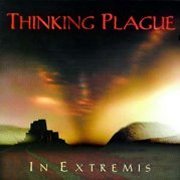 |
In Extremis (1998, 52.33) ***½/TDead SilenceBehold the Man This Weird Wind Les Etudes d'Organism Maelstrom The Aesthete Kingdom Come |
Current availability:
Mellotron used:
Thinking Plague fall defiantly into the 'weird' end of prog, sharing musicians with the likes of the 5uu's and bearing strong comparison with the Art Bears and Henry Cow. Guitarist Bob Drake is a member, which, if you've heard any of his work, probably tells you all you need to know about them. They're actually a bit too left-field for my personal taste, but are obviously masters in their chosen field, In Extremis apparently being fairly typical of their output. Oddly, the album becomes slightly more 'normal' as it goes along, or did I just start getting used to their style?
Keys man Shane Hotle plays on three tracks only and Mellotron on just one, the lengthy closer Kingdom Come, with string and flute interjections at various points throughout the track. You can actually hear him doing the 'Mellotron crawl', shifting notes about within a chord to sustain it past the eight-second mark, proving either a) it's real, or b) he's fanatically 'authentic' with his samples. I choose a).
So; one for all you Univers Zero and Present fans, along with the others bands named above. In Extremis is good at what it does, but don't go too far out of your way for the Mellotron content.
See: Bob Drake
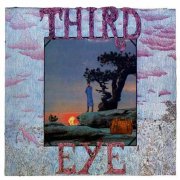 |
Third Eye (1976, 36.24) ***½/TTTProtuberansSound Circle All About Us Eichendorff 8 Serious Basic Train Bloodstream Arco Bass Raga |
Current availability:
Mellotron used:
Third Eye were a mid-'70s Dutch prog/fusion outfit, popular in Germany, not entirely dissimilar to the likes of Germans To Be. They released three albums, although the last of these, 1982's Third Eye Live! seems to have a completely different lineup to their eponymous debut, including no less a personage than Tony Levin. Third Eye itself finds a happy middle ground between the two genres, which I usually find to have far less in common than you might expect. Eichendorff 8 is a piece for jazz piano, Serious is more of a classical piano piece with extra instrumentation, while other tracks feature drum solos (Arco), jazzy Rhodes work (Basic Train) or a tabla-driven bass and Mellotron flute duet (Bass Raga).
Mellotron from two members, keys man Jan Huydts and drummer Frank Kollges; Sound Circle features a pretty full-on Mellotron flute solo, along with what sounds like strings mixed with their Hohner string synth, with strings and choir on All About Us. Not sure who plays the skronky violin on Bloodstream, but there are more of those strings and another flute solo, plus, as previously mentioned, more flutes on Bass Raga; a nicely set-up machine, I have to say; those of you who delight in well-played Mellotron flute will be in ecstasies.
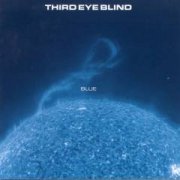 |
Blue (1997, 52.00) **/T |
|
| Anything Wounded 10 Days Late Never Let You Go Deep Inside Of You 1000 Julys An Ode To Maybe The Red Summer Sun |
Camouflage Farther Slow Motion Darkness Darwin |
|
Current availability:
Mellotron used:
To my (doubtless uneducated) ears, Third Eye Blind sound like a slightly more interesting version of Nickleback, though only slightly. You know, the middling sort of hard rock/pop peddled by any number of very successful American bands that seems to pass for 'passion' in many people's lives, while actually being soulless, overblown and empty. In my humble opinion, of course. Blue is their second album and the general consensus seems to be that it's less immediate than their debut, but after a few listens it becomes apparent that it's every bit that album's equal, if not superior, which makes me wonder just what Third Eye Blind itself sounds like. But not that much. Opener Anything actually provides a glimmer of hope, but they sink into a mire of bland, faceless 'alternative' rock almost immediately and stay there for the next fifty minutes, which is time I'll never get back.
One Mellotron track, with a fairly standard but nicely upfront string part on The Red Summer Sun from Arion Salazar, after which the song speeds up into what sounds like a pastiche of '77 punk crossed with AC/DC, although I've seen vocalist Stephan Jenkins' performance here compared to Aerosmith's Steven Tyler. Anyway, you really want to avoid this album and so do I. Next.
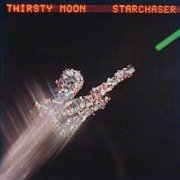 |
Starchaser (1981, 41.51) **/TTLovers on the RunWho's Gonna Save the World? The Seals Do You Believe in Flying Saucers? Road to Freedom Starchaser |
Current availability:
Mellotron used:
This is a very odd one indeed. Thirsty Moon's fifth album, Starchaser, has a rock-end-of-jazz-funk sound which keeps veering off into pseudo-proggy territory, with two of the tracks coming in at over ten minutes. The first of these, Who's Gonna Save The World?, is awful; ten minutes 45 of four-to-the-floor drums, like some terrible 12" version of a bargain-basement disco single, but Do You Believe In Flying Saucers? has some nice drifty bits in amongst the failed attempt at a dance remix. Probably the oddest thing about this album is the presence of guitarist/keyboard man Jürgen Drogies' Mellotron; it's not too out of place on the slower material, but the choirs on the aforementioned Who's Gonna Save The World? don't work at all. The Mellotron use is at its best when they use single-note flute lines, which fit into a couple of songs quite well.
I'm afraid I find it quite difficult to say anything particularly nice about Starchaser, although the band's earlier work may well be better; Thirsty Moon seem to be trying to be all things to all men here and fall flat on their faces. There are a few nice moments on the album, but I really can't recommend it either musically or on the Mellotron front.
 |
Miracle Lick (1972, 38.35) **½/½Honey I DoI Need You Any Other Day Tupelo The Sun Keeps Right on Shining Everybody's Got to Have a Song Phoenix Never Felt Better Take a Look at Yourself |
Current availability:
Mellotron used:
Despite originally hailing from New York, Thirty Days Out's two albums are more West Coast than Lower East Side, coming across as an uneasy amalgam of post-hippy folk and Midwest boogie-lite. Their eponymous '71 debut has an acoustic Christian-rock feel, but the following year's Miracle Lick ups the rock content, if only slightly, better tracks including mini-epic Everybody's Got To Have A Song, the REO Speedwagon-alike Phoenix and closer Take A Look At Yourself, although excitement's in pretty short supply here, sadly.
Ted Taylor plays a waiflike Mellotron string part on The Sun Keeps Right On Shining to no particular effect, while the strings on Everybody's Got To Have A Song are real. So; pleasant enough, but wispy and generally unengaging to ears attuned to rock of a slightly more solid nature. The band quietly faded away after Miracle Lick's commercial failure; amusingly, bassist Monte Melnick went on to tour-manage the mighty Ramones for many years, which might just be their premier contribution to the World Of Rock.