





|
|
|
|
||
|
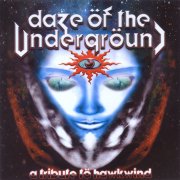 |
Daze öf the Undergröund: A Tribute tö Hawkwind [Disc 1] (2003, 72.20) ***/T |
||
| Tim Blake: Spirit of the Age Litmus: Paradox Amorphis: Levitation Spacehead: The Right Stuff Meads of Asphodel: Utopia |
Enchanted: Song of the Sword Bedouin: Sword of the East Silver Machine: Silver Machine Murkins: Psi Power Quarkspace: Quark Strangeness and Charm |
OverMars: Magnu Alpha Omega: Reefer Madness ST37: Orgone Accumulator History of Guns: Magnu Reprise |
|
Current availability:
Mellotron used:
I don't know when the first single-artist tribute album appeared - probably far earlier than any of us would expect - but the genre hit top gear in the '90s, showing no signs of slowing down yet. 2003's Daze öf the Undergröund: A Tribute tö Hawkwind (umlauts optional) is by no means the first of its kind (1995's Assassins of Silence/Hundred Watt Violence may or may not be the first Hawks tribute), but it may be the longest, available in 27-track 2-CD and 28-track 3-LP versions, with a total of 32 tracks spread over the two issues, irritatingly.
Like pretty much every tribute album ever, Daze öf the Undergröund's something of a mixed bag, highlights including Acid King's half-speed Motorhead, Spirits Burning's excellent High Rise (it actually sounds like Calvert on vocals) and the Universal Totem Orchestra's jazzy vinyl-only Alien (I Am), while with no fewer than five members/ex-members (membership of Hawkwind has always been a rather fluid matter) between the two versions, Tim Blake's Spirit Of The Age and Simon House's vinyl-only Hall Of The Mountain Grill are worth hearing, although I'm not so sure about Alan Davey's Bedouin's take on Alan's Sword Of The East, featuring Davey's best (cough) Lemmy impersonation. Other 'known' artists include Finland's Circle, Sweden's Darxtar (who have actually collaborated with Hawks members as Hawxtar), Japan's very own psychedelic warlords Acid Mothers Temple, Australia's Brainstorm and Britons Spacehead, who've subsequently provided Hawkwind with current bassist Mr. Dibs. The other ex-Hawks present are Huw Lloyd-Langton, with a decent enough studio take on his own Moonglum (there's only a live Hawkwind version) and Harvey Bainbridge, albeit only on the CD.
And why is this here? Litmus, of course... I played in the band from 2001-7, our version of Paradox being recorded the year before our debut album. I think we did a pretty decent job, listening to it several years on, harder than the original, my Mellotron strings higher in the mix than on some of our own material, although, as you'd expect, it's the only Mellotron use on the album, few people even equating the machine with Hawkwind, despite Warrior on the Edge of Time's mighty Assault & Battery/Golden Void twofer.
So; assuming you're a Hawkwind fan, do you buy this album? And if so, which version? Most of you will default to the CD set, but the four tracks chopped for the vinyl version are four of the least good, making it appear, at least to me, that the triple-LP is regarded as the 'real' version, the CD being produced for the sake of commercial restraints. I'm not sure I can actually fully recommend either version, with too many half-arsed takes (Brainstorm's Master Of The Universe, Marshan's Hurry On Sundown) or lumpen, straight copies (UK tribute Silver Machine's, er, Silver Machine, Spacehead's The Right Stuff), but it's an awful lot better than many similar efforts I've had the misfortune to hear, so if you love the original band enough to own thirty or more albums (not that difficult a feat), you may wish to add Daze öf the Undergröund to your collection, our one genuine Mellotron track merely being the icing on the not-that-tasty cake.
 |
Disco Sound (Hits in Instrumentalfassung) (1978, 42.36) **½/T |
||
| Gruppe "Kreis": Sie ist Immer Noch Allein Puhdys: Alt Wie ein Baum Stern-Combo Meißen: Der Alte auf der Müllkippe Engerling: Mama Wilson Orchester Hartmut Schulze-Gerlach: He, Kleine Linda |
City: Am Fenster 4 PS: Ich Würde, Wenn ich Wüßte, Daß ich Könnte Veronika Fischer & Band: Und Sprach Kein Wort Gruppe "Excentra": Komm Doch SBB: Nervöser Nikolaus |
||
Current availability:
Mellotron used:
It's difficult to work out exactly what purpose 1978's East German various-artists collection Disco Sound (Hits in Instrumentalfassung) is supposed to serve. My cynical guess would be that since 'disco' was popular in the dissolute, capitalist West, Amiga reckoned that they might as well try to slip a little of that capitalist spirit past the Stasi and shift a few copies of a compilation with 'disco' in the title onto their unsuspecting public. It appears to consist of otherwise-unavailable material, going by Stern-Combo Meißen and SBB's contributions, although perhaps four of its ten tracks actually have any real four-to-the-floor action, amusingly including SBB's Nervöser Nikolaus. Best track? No contest: Stern-Combo Meißen's fab, synth-heavy Der Alte Auf Der Müllkippe, which would do very nicely as a bonus track on a future reissue of, say, Der Weite Weg.
Gruppe "Excentra"'s Johannes Schlecht plays an upfront Mellotron flute melody on their vaguely danceable Komm Doch, but that's it on the Mellotron front. Long out of print (of course), if you really must, you might be able to find this on download sites, which is where I, er, found it myself.
 |
Down in a Mirror: A Second Tribute to Jandek (2005, 77.27) ***/T |
||
| Jeff Tweedy: Crack a Smile Live Show Rabbits: You Painted Your Teeth Eric Gaffney: The Dunes Okkervil River: Your Other Man Brother JT: Message to the Clerk Six Organs of Admittance: I'll Sit Alone and Think Alot About You Home for the Def: Cave in on You/European Jewel (incomplete) |
The Marshmallow Staircase: Down in a Mirror The Mountain Goats: White Box George Parsons: Aimless Breeze Lewis & Clarke: Nancy Sings Jack Norton: Naked in the Afternoon Rivulets: Sung Makoto Kawabata: Babe I Love You |
Wayside Drive: The Spirit A Real Knife Head: Just Die Ross Beach: Van Ness Mission Multi Panel: I Found the Right Change Dan Melchior: Babe I Love You Pothole Skinny: You Painted Your Teeth Dirty Projectors: With U Icon (an Homage) |
|
Current availability:
Mellotron used:
When it comes to outsider musicians, Jandek (probably, but not definitely a.k.a. Sterling Richard Smith) possibly has your Wesley Willises and your Daniel Johnstons beaten hands down, if only on grounds of anonymity and prolificity (?). Prolificness? Whatever. I think a man who only began to play live twenty-five years into his career, having released well over thirty albums, is a pretty suitable candidate for a tribute album, so he gets two: 2000's Naked in the Afternoon and, five years later, Down in a Mirror.
The artists on the album (few of them well-known) tackle the material in a variety of styles, from straight sort-of-Americana to fairly 'out there' interpretations (possibly closer to the originals?), the more listenable to the non-fan including Wilco's Jeff Tweedy's Crack A Smile, Eric Gaffney's The Dunes and Okkervil River's Your Other Man, although I'll admit that list is relatively conservative (it's not often I'll admit to being a conservative anything, either). Tweedy adds a unison Mellotron string and flute line to Crack A Smile, although that's your lot on the tape-replay front. I can't honestly recommend this to anyone hoping to hear filthy great slabs of Mellotron, but fans of Jandek and/or some of the artists concerned may wish to splash out.
See: Jeff Tweedy
 |
Dry Lungs II (1986, 45.09) ***/T |
|
| Croiners: Untitled Jeff Greinke: Uprising Randy Greif: The Hole to Heaven Monochrome Bleu: Ballerinas of Manaus Tim Story: Untitled Controlled Bleeding: Letters To The Life Cycle (Part 3) Severed Heads: Clairaudience |
If, Bwana: Beauty and the Beast Un Drame Musical Instantané: French Resistance Asmus Tietchens: Medienlandschaft 2 Jarboe: A Song in the Dark (excerpt) Ybo²: Trash! Crash! Hijoh Kaiden: Deschapelles Coup |
|
Current availability:
Mellotron used:
Paul Lemos of avant-noiseniks Controlled Bleeding compiled the Dry Lungs sets in the mid-'80s, involving like-minded musical experimentalists including Japanese lunatics Ybo² and members of Swans. Dry Lungs II was released on the Placebo label, its contents veering between Croiners' electronica, Jeff Greinke's ethno-experimentalism, the dark ambience of Swans' Jarboe, Ybo²'s manic jazz-insanity and the feedback frenzy of Hijoh Kaiden's Deschapelles Coup, rounding the set off appropriately.
Ybo² provide the set's one Mellotronic moment, with a skronky string part on the brief Trash! Crash! from Masashi Kitamura. This is long-unavailable, of course, although you'll find downloads if you look hard enough. I've also found Ybo²'s track added to a file of one of their full releases, should you only be interested in their contribution.
See: Ybo²
 |
...E Tu Vivrai Nel Terrore (1998, 156.58) ****/T |
||
| Eugenio Mucci: Intro Death SS: Ave Satani Tenebre: Where Dreams and Nightmares Collide Northwinds: Mask of Satan Malombra: Devils Akron: Il Mulino delle Donne di Pietra Al Festa: Candles in the Night Wounded Knee: Phenomena Presence: The Exorcist Iconae: Mater Tenebrarum |
Sun Dial: Theme From Psychomania God.Zilla: I Compagni di Baal A Piedi Nudi: La Casa dalle Finestre Che Ridono Standarte: Necropolis incl.Verso l'Ignoto Claudio Simonetti: LV-426 Ars Nova: Ainsel Lingam: Devo Ma Non Posso Helden Rune: Nocturnal Voices Humus: El Vampiro Morte Macabre: Irrealtà di Suoni |
Abiogenesi: Belfagor Il Segno del Comando: Macabro Suite Bevis Frond: Dead of Night Somnambulist: Laudenam Una Stagione all'Inferno: La Ballata di Carini The Black: Suspiria et... Nekropolis: The Curse of Tut-Anch-Amun Mottorismus: Klub 99 Maethelyah: Outro |
|
Current availability:
Mellotrons used:
...E Tu Vivrai Nel Terrore is the excellent Black Widow label's 2-CD tribute to the whole Italian horror movie genre, with nearly 30 contributing artists, from the (relatively) well-known (Death SS, Sundial/Sun Dial, Bevis Frond) to "who they?" territory (Wounded Knee, Helden Rune, Nekropolis). Contributors have based their tracks on specific films (although most have steered clear of using music from the film), mostly Italian, although both the British and American genres are represented, too, with efforts such as Ken Russell's The Devils, Friedkin's overrated The Exorcist and Ridley Scott's Alien all honoured. Although most contributing artists are Italian, Arsnova (Japan), Sundial (UK) and Somnambulist (US) fly the flag for their respective countries, amongst others.
Unusually for a various artists project, the standard of music on ...E Tu Vivrai Nel Terrore is almost universally high, maybe because every band involved is 'pulling in the same direction' and the shared subject matter appears to be particularly inspirational. Highlights include Northwinds' almost NWOBHM-style hard rock epic, Mask Of Satan, Presence's The Exorcist, complete with samples from the film (a tactic avoided by most contributors) and A Piedi Nudi's La Casa Dalle Finestre Che Ridono. You'd be hard-pushed to find anything of unacceptably low quality anywhere in the set's 2½ hours, although The Black's Suspiria Et... is a little tedious and the Bevis Frond's track, while perfectly good, is likely to be an acquired taste. And I haven't even mentioned the accompanying book... 80 A5 pages, with several essays on the subject in Italian and English, a detailed track-by-track run-through, including lineups and a resumé of each one's inspirational film, loads of pics, both artists and film stills...
Standarte are one of two credited Mellotron users here, with plenty of flutes,strings and choir on their track, Necropolis Incl.Verso l'Ignoto, while Swedes Morte Macabre's Irrealtà Di Suoni (also the bonus track on the vinyl version of their sole album, Symphonic Holocaust) features choirs and flutes from Niklas Berg (Anekdoten) and Reine Fiske (Landberk/Dungen); aren't those choirs heavily over-extended, chaps? I know you were using a real Mellotron, so I can only assume you used the technique I've also developed, where you take advantage of the fact that the male voices drop an octave ⅔ of the way up the keyboard and you can effectively sustain the same note for ever? Anyway... Sundial's Theme From Psychomania has an uncredited cello part, though it's hard to tell whether or not it's Mellotron (given that they own one) and Abiogenesi's Belfagor has strings and choirs that sound like they're not only samples, but possibly not even of a Mellotron. Somnambulist (also Mellotron users, though whether real or not is unknown) are definitely using samples and The Black's choirs sound more like generic samples than anything, so it seems it's just the two tracks.
So; a somewhat dour listen, especially if you sit through the whole thing in one go (I didn't), but with this much quality music on one double CD, you really can't go too far wrong. Most of the tracks seem to be otherwise unavailable, too, so if you do that hardcore prog fandom thing, I rather suspect you're in need of a copy of this set. Not much Mellotron, but that's not why you'd buy it. Excellent.
See: Standarte | Morte Macabre
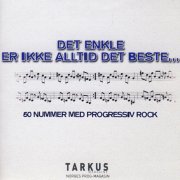 |
Det Enkle er Ikke Alltid det Beste...: 50 Nummer Med Progressiv Rock (2009, 20.34) ***½/TTWhite Willow:Headlights Tribute: Poem för Vandrare Panzerpappa: I Forgot to Push it Rhys Marsh: In the Afterglow |
Current availability:
Mellotron used:
Det Enkle er Ikke Alltid det Beste...: 50 Nummer Med Progressiv Rock was given away with Tarkus magazine, issue 50, in 2009, featuring four tracks from Scandinavian progressive artists, some of which were exclusive to the release, not least White Willow's Headlights, a surprisingly heavy number, although mainman Jacob Holm-Lupo is known to have a fondness for old-school hard rock.
Rhys Marsh's In The Afterglow was lifted from the same year's Dulcima, Mellotron parts an' all, but Headlights was exclusive to this release until being added to various reissues of 2004's Storm Season, complete with its Mellotron strings part. You're not going to find this especially easily (probably an understatement), but most of its contents are on YouTube.
See: White Willow | Rhys Marsh
 |
Epic Records: A Season of Soul & Sounds (2001, 52.41) ***/T |
|
| Ginuwine: Christmas Day Glenn Lewis: This Christmas Ruff Endz: Christmas With You Brad Young: Joyful, Joyful Macy Gray: Winter Wonderland Best Man: The Christmas Song Jordan Brown: Silent Night |
Collin: Spend it With Me Amel Larrieux: Believe in Love B2K: Why'd You Leave Me on Christmas Jhene: Santa Baby Muet: Happy Holidays Sarai: Here Comes Christmas |
|
Current availability:
Chamberlin used:
By sheer fluke, I'm listening to 2001's Epic Records: A Season of Soul & Sounds a few days before Christmas, as I had no idea it was a 'holiday' album, the clue being in the word 'season'. Yes, it's an album of Christmas songs, old and new, by soul artists, two things not especially guaranteed to fill my heart with joy, which isn't to dismiss the style, merely to comment on my personal tastes. While I can't fault its contents (except for their seasonal gloopiness), nor can I actually pick out any obvious highlights.
Somewhere between the Chamberlin's relative sonic accuracy and Patrick Warren's mastery of the instrument, it's hard to tell where it might be, but my guess is Macy Gray's Winter Wonderland, not least due to his then-recent work with her, with what are probably string, flute and woodwind parts on the track.
See: Macy Gray
 |
Exult1 (2015, 47.55) ***½/T½ |
|
| Throne of Galaktus: Disco Infernal Zoltan: March of the Psyclos Necro Deathmort: Furor Teutonicus Grump: Despondent |
Cremator: Alien Funeral Throne of Galaktus: Dread Transmitter Paul Catten: Bedwetter Dead Fader: Lepflop |
|
Current availability:
Mellotron used:
I believe the cunningly-titled Exult1 is the first release from cassette label Exult, a compilation of previously-unreleased tracks from the likes of Throne of Galaktus (Chrome Hoof/Cathedral/Guapo connections) and Necro Deathmort, not to mention Zoltan and Cremator, both featuring my brother Matt. The material ranges from Grump's filthy, rhythmless ultra-distorto guitar through Throne of Galaktus' two fucked-up space jams to Dead Fader's hissy electronica, with more synths than you can shake a stick at and next to no vocals. Although March Of The Psyclos is credited to Zoltan, it's actually Matt's demo for the end section of The Tall Man from our debut album, while Cremator's superbly-titled Alien Funeral sounds not unlike parts of Matt's first album under that name, all analogue bleeps and sequencer runs.
Matt plays my Mellotron on both of his contributions, with choir chords and discordant strings on March Of The Psyclos and a relatively brief pitchbent string part on Alien Funeral. All in all, then, a pretty decent collection of synth weirdness; think: 'a robot's nightmare' and you won't be too far off the mark. While the highly limited cassette version has long sold out, the music is still available from Bandcamp.
 |
Festival Lagu Populer Tingkat Nasional VIII/'80 (1980, 37.54) *½/TTT |
|
| Bob Tutupoly: Symphony Yang Indah Hetty Koes Endang: Pra Geronimo V: Indahnya Musik Kami Berlian Hutauruk: Kau, Dia, Aku Marini: Senja Merah |
Gito Rollies: Sederhana Tapi Nyata Zwesty Wirabhuana: Mistery Harvey Malaiholo: Surya Khatulistiwa Melky Goeslow: Bulan di Atas Telaga |
|
Current availability:
Mellotrons used:
Indonesia's Festival Lagu Populer Tingkat Nasional (National Popular Song Festival) ran from 1973-91, its object being to find the song to represent the country in the World Pop Song Festival, which, although I've never previously heard of it, sounds like some hellish South-East Asian version of Eurovision. So, an Indonesian version of the UK's A Song for Europe, then? Just what the world needs, I'm sure. To absolutely no-one's surprise whatsoever, the music is utterly anodyne, cheesy, mainstream Western-sounding pop of the era, albeit sung in Indonesian. Are there any best tracks? No, of course there aren't. Worst? Er, all of it? Geronimo V's Indahnya Musik Kami is particularly bad, sounding like an unholy cross between Cliff Richard's Congratulations and open heart surgery, while Melky Goeslow's Bulan Di Atas Telaga made my eyes bleed. Does that give you some idea?
Given the obscurity of the location, my guess is that we're hearing the same Mellotron as used on the Harry Sabar Friends album of the previous year, not least due to its odd sound, kind of like and yet unlike a Mellotron, although I can't imagine what the hell else would make that sound at that point in time. Anyway, we get strings all over Bob Tutupoly's cheesy Symphony Yang Indah and Berlian Hutauruk's Kau, Dia, Aku (alongside string synth?), a mental flute part, plus strings on Marini's Senja Merah, strings and cellos on Zwesty Wirabhuana's Mistery and more strings on festival regular Harvey Malaiholo's Surya Khatulistiwa and Melky Goeslow's Bulan Di Atas Telaga. Do you need to hear this? Even for the Mellotron? You do not.
 |
Flyin' Traps (1997, 49.07) ***/½ |
||
| Matt Cameron & Taz Bentley: Theme From Wrong Holy-O Mike Musburger: Noodles Steven Drozd: Headphones Theme From Seemingly Infinity Stephen Perkins: Monkey in Brazil Dan Peters Combo: Do You Remember Walter? |
Brian Reitzell: Snake and Mongoose J Mascis: Carl Alexis Fleisig: Don't Ruin Me Gorgeous Barrett Martin: Barnburner Joey Waronker: Chorkle is Dead |
Josh Freese: The Gay '90s Tim Alexander & Mike Bordin: Choked Mac McNeilly: Lime Chris Vrenna: The Steel Box Dale Crover: Vomit & Orange Juice |
|
Current availability:
Mellotron/Chamberlin used:
Flyin' Traps is an album made by drummers and, I'm tempted to say, for drummers. A who's who of the '90s American 'alt.' scene, contributors include members of Jane's Addiction, Melvins, Mudhoney, Soundgarden... I think you get the picture. Some of its contributors take the compilers literally at their word, not least J Mascis, Mac McNeilly and Dale Crover, while most of the others either write their own, generally percussion-heavy pieces, or, in the case of the Dan Peters Combo, cover The Kinks' excellent Do You Remember Walter?
Brian Kehew plays his M400, while Brian Reitzell plays Chamberlin (presumably also Kehew's) on his Snake And Mongoose, with what sounds like a Chamby brass and Mellotron strings mix, though it's hard to tell amongst the raft of mostly analogue synths, mostly not that audible. The Flaming Lips' Stephen Drozd is also credited with Mellotron, but, as on his band's own recordings, it's nothing of the sort.
 |
Freezone (Seven is Seven is) [Disc 1] (2001, 66.51) **/T |
|
| DJ Venom: Neon Dawn Cibelle: Álcool Fauna Flash: Coast to Coast Sonar Lodge feat. Max 404: Celsius Bigga Bush: Soulsisters Landslide feat. Victor Davies: Tumbling (Land Mark mix) |
Quant: Mahbah Baby Mammoth: Frank's Angels (Tetris remix) Juryman: East of Here Sebo K vs. Kosma: El Niño Robert Hood: And We Build Kid Koala: Prelude and the Kiss |
|
Current availability:
Mellotron used:
I believe 2001's Freezone (Seven is Seven is) is a 'mix album', a genre wholly unto itself, meaningless to most outsiders, consisting of mixes, remixes, re-remixes... Why not simply produce a new piece of music, guys? In fairness, I get the impression that a lot of this two-disc set is actually original material, while its twenty-plus tracks cover a lot of stylistic ground within the electronica field, almost certainly making this a good listen for genre fans.
Brazil's Apollo Nove does his usual Mellotron thing on Cibelle's Álcool, further persuading me that he actually owns a real machine, although the strings on Juryman's East Of Here are presumably sampled. But do you actually need to hear this? Probably not, no.
See: Cibelle | Apollo Nove
 |
Gainsnord: Serge's Songs Revisited By Bands From the Lowlands (2009, 56.17) ***/T |
||
| Juicebox: Chatterton Suarez: Sensuelle et Sans Suite Eddy De Clercq Quartet: Sea, Sex and Sun (bossa 2009 mix) Tom Barman & Guy Van Nueten: Le Poinçonneur des Lilas Yaso: Requiem pour un Con Leine: Ford Mustang |
Liquid Spirits: Couleur Café Marine Boréale: Une Chose Entre Autres Zeker Weten: Hoe Moet Dat Nu (Shush Shush Charlotte) Monsieur Dubois: Pauvre Lola Saule: La Chanson de Prévert Sioen: Initials BB |
The Spinshots: Qui Est "in", Qui est "Out" Benjamin Herman: Indian Hay Lilli Mono: Comment Te Dire Adieu/Metra Tutino (Barbarella mix) Janne Schra: Les Amours Perdues Flux: Jane B. West Hell 5: Je T'Aime... Moi Non Plus |
|
Current availability:
Mellotron used:
Serge Gainsbourg is yet another 'iconic' artist of whose work I am largely ignorant, mostly because it operates with a pre-rock'n'roll sensibility, which doesn't sit comfortably with my taste. Anyway, everyone says he's brilliant, so I'll have to take their word for it. 2009's Gainsnord: Serge's Songs Revisited By Bands From the Lowlands is pretty much what it says: Gainsbourg as played by Dutchmen. Any good? Well, the bulk of the material here probably doesn't sound too wildly different from the originals, so anyone expecting a Belgian gabba version of Melody Nelson should probably head elsewhere, although to where, I'm not entirely sure. More obviously listenable versions herein include Zeker Weten's reggae Hoe Moet Dat Nu (Shush Shush Charlotte), the all-out dub of Monsieur Dubois' Pauvre Lola and West Hell 5's Dylanesque take on the infamous Je T'Aime... Moi Non Plus.
Of all people, Paul Weller plays Mellotron on Benjamin Herman's Indian Hay, with background flutes and occasional upfront strings, although you can also hear the flutes on the following track, Lilli Mono's Comment Te Dire Adieu/Metra Tutino (Barbarella Mix); whether or not Weller's responsible can only be a matter for conjecture, however. Anyway, one for Serge fans who'd like to hear a slightly different slant on their hero's work or Wellerites who have to have everything.
See: Paul Weller
 |
Great Jewish Music: Burt Bacharach (1997, 86.26) ***/T |
||
| Wayne Horvitz: Close to You Marc Ribot: Don't Go Breaking My Heart Dave Douglas: Wives and Lovers Guy Klucevsek: Who Gets the Guy?/This Guy's in Love With You Kramer: Walk on By Erik Friedlander: Promises, Promises Joey Baron: Alfie |
Zeena Parkins: Freefall Marc Ribot Ensemble: Don't Go Breaking My Heart Fred Frith: Trains and Boats and Planes Medeski Martin & Wood: Do You Know the Way to San Jose Elliott Sharp: The Man Who Shot Liberty Valance Marie McAuliffe: I Say a Little Prayer Mike Patton: She's Gone Away |
Lloyd Cole & Robert Quine: I Just Don't Know What to Do With Myself Anthony Coleman/Selfhaters: A House is Not a Home Yuka Honda & Sean Lennon: The Look of Love Shelley Hirsch: What's New Pussycat Bill Frisell: What the World Needs Now is Love Eyvind Kang: I Took My Strength From You (I Had None) |
|
 |
Great Jewish Music: Jacob do Bandolim (2004, 52.37) ***½/½ |
|
| Cyro Baptista: Noites Cariocas Ben Perowsky: Perolas Rob Burger, Mauro Refosco: Assanhado Rashanim: Reminiscenscias Anat Cohen: Migalhas de Amor Pharoah's Daughter: Sapeca |
Shanir Ezra Blumenkranz: Santa Morena Davka: Receita de Samba 2 Foot Yard: Falta-Me-Voce Tim Sparks: Sempre Teu Carol Emanuel: Mimosa Jamie Saft: Ciumento |
|
Current availability:
Chamberlin used:
Avant-gardener John Zorn's NYC-based Tzadik Records are chiefly dedicated to releasing experimental music in a variety of hues, which isn't to say that everything they release is in the avant-garde line. A subset of their Radical Jewish Culture series, Great Jewish Music, seeks to reinterpret the catalogues of various famous Jewish musicians, alive and dead, artists covered to date including Serge Gainsbourg and Marc Bolan.
1997's two-disc Burt Bacharach targets a fairly obvious recipient of the honour, in, to be blunt, a fairly obvious manner, most of the twenty versions of Saint Burt's work here being deconstructions of his trademark style. Erik Friedlander's almost-avant take on Promises, Promises is fairly low-key compared to some of the tracks to come, not least Joey Baron's Alfie, reinterpreted as a drum solo, for reasons known only to himself. I don't like to be down on inventive covers, but a good few of the contributions are simply hard work. One Mellotron track, with Medeski Martin & Wood's John Medeski's typically skronky, distorted string and flute parts on Do You Know The Way To San Jose.
A less widely-known recipient of Tzadik's patronage is Brazil's Jacob do Bandolim, "Mandolin Jacob", born Jacob Pick Bittencourt. Bandolim (who died in 1969) was a master of the indigenous choro style, a Brazilian form of jazz, which might not, you might think, immediately lend itself to the radical New York treatment, but Great Jewish Music: Jacob do Bandolim actually works rather well, although most of the participants stick fairly closely to Bandolim's original template. The two glaring exceptions are Shanir Ezra Blumenkranz' avant-metal take on Santa Morena and Jamie Saft's detuned upright piano take on Ciumento that closes the album. Perversely, Blumenkranz' piece is one of my favourite tracks here, along with the gentle Sapeca (beautiful tonalities) and Tim Sparks' guitar piece, Sempre Teu. Rob Burger adds Chamberlin flutes to his and Mauro Refosco's Assanhado, although that seems to be it on the tape-replay front. Overall, this is less an album for fans of Tzadik's approach and more one for those looking to expand their knowledge of South American music, without wishing to dive straight into hearing the originals (there are plenty of Bandolim titles available on CD). Good, yet strangely inessential.
See: Rob Burger