





|
|
|
|
||
|
|
Joe Walsh The Walter Eugenes Wang Chung Waniyetula War |
War & Peace Wasa Washed Deborah Washington |
Watchmen The Waterboys Sara Watkins Sean Watkins |
Natalie Wattré Band Wave Joe Wayman/Don Mitchell Web |
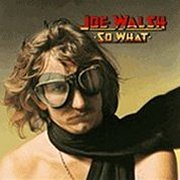 |
So What (1974, 36.42) ***/½Welcome to the ClubFalling Down Pavane of the Sleeping Beauty Time Out All Night Laundry Mat Blues Turn to Stone Help Me Through the Night County Fair Song for Emma |
Current availability:
Mellotron used:
The trouble with Joe Walsh solo albums is that I always expect them to rock rather more than they do; he's written a few genuinely great songs, but seems to restrict himself to one per album, which gives him about half-an-hour's worth over his entire career. So What's classic is Turn To Stone, with other highlights being Walsh's version of a Ravel piece, Pavane, played entirely by himself on synths, which actually works far better than you might expect and the epic-ish County Fair.
Its sole Mellotron track (played by Walsh himself, incidentally) is the rather ordinary opener Welcome To The Club, with a single-note string line near the end turning into a decent enough chord sequence, but hardly in the 'classic' league. Since there was a Mellotron in the area, it's a shame Walsh didn't put it on a couple of other tracks; Turn To Stone would definitely have benefitted from its inclusion, but there you go. So, so-so album, minimal Mellotron usage. Buy the double Look What I Did! The Joe Walsh Anthology (***½) instead, with most of his best stuff and Welcome to the Club.
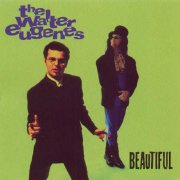 |
Beautiful (1995, 45.02) ***/T |
|
| Clear My Head Beautiful I Need You Hole for a Heart Joy Farmer and the Crow America Talk to Me |
Hands That Feed Us Crawl |
|
Current availability:
Mellotron used:
The Walter Eugenes seem to have effectively been an enhanced CCM duo, with Rick Eugene May singing and Walter Paul Robinette doing pretty much everything else, plus guests. Actually, this is vastly less offensive than the bulk of the Christian albums I've endured for the sake of you, dear reader; while not really sounding very much like, say, Daniel Amos, they share with them an ability to make Christian music than doesn't make the non-believer want to retch. I've just worked out who they're trying to sound like, amongst other funk/rocksters: King's X. A nominally Christian band at the time, their Hendrix-inspired chord work is a distinct influence here, although Houston's best band have a vastly better vocalist (in fact, three of 'em), vastly better material and would never produce songs as drippy as I Need You.
Mellotronist-to-the-Christian-community, Phil Madeira, does his usual thing here, with stabbed choir chords and a flute melody on opener Clear My Head and the occasional pitchbent string chord on Joy. So; much better than I'd expected, but not actually that good, just not that bad. Not much Mellotron, either, but given its genre (lyrically speaking), it could've been so much worse.
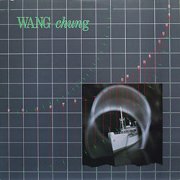 |
Points on the Curve (1983, 43.16) ***½/T |
|
| Dance Hall Days Wait True Love The Waves Look at Me Now Don't Let Go Even if You Dream Don't Be My Enemy |
Devoted Friends Talk it Out |
|
Current availability:
Novatron used:
Huang Chung formed in 1980 and released their eponymous art-rock/pop debut two years later, before signing to Geffen and being persuaded to change their name to the supposedly more-pronounceable Wang Chung. They hit immediately with the propulsive new wave/pop of Dance Hall Days and its attendant album, 1983's Points on the Curve, although they were always more popular in the States than their homeland. Like a slightly watered-down version of their debut, the album displays a keen sense of melody and harmony (front man Jeremy "Jack Hues" Ryder had a music degree), which, somehow, manage to ride over the borderline-distressing production techniques employed. Top tracks? Dance Hall Days, of course (whadd'ya mean you hate it?), the angular The Waves and the fractured white-boy funk of Even If You Dream. It's notable how every track sounds completely individual, while still sounding like Wang Chung, making a cohesive album out of what could have been a terrible mess.
Three musicians are credited with keys, although I suspect Hues (later to work with Tony Banks and play Mellotron with Gene) who adds the occasional burst of Novatron to the album, with string swells in Dance Hall Days' chorus and what I very strongly suspect are Mellotron church organ tapes on Wait and Look At Me Now (listen to the chorus). String lines on another couple of tracks might be Mellotronic, but then again, they might not be. Although Points on the Curve is stuck fast in its era, it's perhaps worthy of reappraisal, although I wouldn't bother for the Mellotron.
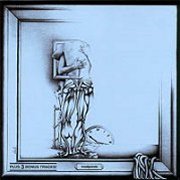 |
A Dream Within a Dream (1983, 44.38) ***½/TThe ForebodingAlone Feathery Bird Valley of Unrest A Dream Within a Dream Song of Master and Boardswain If I Could Tell You Dreamland Yessertronics |
Current availability:
Mellotron used:
Waniyetula's history is rather confused, encompassing forming in 1969, recording an album in '75, released three years later under a different name, then finally getting something out under their own name fourteen years after forming. Not to mention frequently being considered Swiss... The story goes, their '78 release, Nature's Clear Well, was released by a moronic US label under the name Galaxy and, while it sounds little like the band's later work, it's worth hearing for what it is. '83's A Dream Within a Dream (a Poe quote) sounds like deceptively commercial-sounding Canadians Saga across most of its length, with the odd un Saga-like touch such as unusual time signatures and the occasional burst of Mellotron. Heinz Kühne does his very best Michael Sadler impersonation (a German trying to sound like a Canadian trying to sound like an Englishman?) and the band have their twiddly synth hooks down to a tee, making for an actually very pleasing end result, assuming you like Saga, of course.
Norbert Abels gets a distant Mellotron flute melody in on Valley Of Unrest and a far more overt one, key-click and all, on Dreamland, although that's definitely it on the Mellotron front. A grinding Hammond on If I Could Tell You is also very non-Saga, but otherwise, they stick fairly closely to the Canucks' template, featuring mainly early '80s polysynths, from the era just before interesting keyboards dissolved in a huge vat of digital unpleasantness. This is actually a very decent album, deserving wider recognition amongst Saga and UK fans. It isn't easy to write this kind of stuff without morphing into pure cheese, but Waniyetula manage to keep on the right side of the dairy debate, making an album that should keep Saga fans happy, in lieu of any more archive releases from the real thing.
Incidentally, an archive release from Waniyetula themselves appeared in 2006, entitled Iron City, featuring early versions of Alone and Valley Of Unrest from A Dream Within a Dream, although it turns out to be Mellotron-free.
See: Galaxy
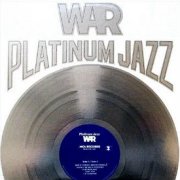 |
Platinum Jazz (1976, recorded 1971-76, 77.44) ***/T |
|
| War is Coming! War is Coming! Slowly We Walk Together Platinum Jazz I Got You L.A. Sunshine River Niger H2Overture City, Country, City |
Smile Happy Deliver the World Nappy Head (Theme From 'Ghetto Man') Four Cornered Room |
|
Current availability:
Chamberlin (?) used:
War began in 1962 as The Creators, meeting ex-Animals wildman Eric Burdon at the end of the decade, triggering a name-change and commercial success at last. After two albums, including one which has to have one the best titles ever, The Black-Man's Burdon, Burdon left in 1971 after his friend Jimi Hendrix's death (he had jammed with the band the night he died), leaving the band to carry on perfectly well without him. After a run of jammed-out funk/soul/jazz records, someone opted to release the double part-compilation Platinum Jazz in 1976, in a gap between proper releases. Featuring a mix of edited earlier material (for contractural reasons), current stuff and possibly unreleased older tracks, it's a bit of a curate's egg, mangling some of their best jamming work, not least the mutilated City, Country, City, although its unreleased element makes it a must-have for fans of the band.
I wasn't at all convinced I was going to hear anything Mellotronic here, to say the least, but keys man Lonnie Jordan plays either Mellotron or (more likely) Chamberlin strings on one of the previously-unreleased tracks, I Got You, although it does a good job of simulating the real thing, making me think a Chamby's more likely. You're not going to buy this for its limited tape-replay, while it probably isn't the best place to become acquainted with War, but the unreleased material is worth hearing if you're into their style anyway.
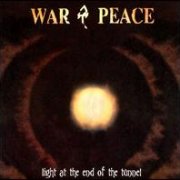 |
Light at the End of the Tunnel (2001, 54.07) ***½/T½ |
|
| What Cost War The Night You Walked Away Wrong Place, Wrong Time Playing God Again Solitary World In the Dead of Night Sweet Release End of the Tunnel |
Stay Out of My Mind Cast the Stone |
|
Current availability:
Mellotron used:
War & Peace were originally formed by Dokken bassist Jeff Pilson (later of Lynch/Pilson) around 1990, splitting two years later. After an archive release in '99, he regrouped a version of the band and recorded Light at the End of the Tunnel in 2001. It's actually a fairly good modern hard rock release, featuring a couple of surprisingly proggy tracks closing the album, Stay Out Of My Mind and Cast The Stone. The former obscurely reminds me of a couple of Gillan's underrated early '80s prog/hard rock crossovers, while the latter has touches of The Beach Boys and Queen, particularly in the vocal department. The album's oddest track, though, is Sweet Release, consisting of just vocal and (synthetic) strings, ensuring that hidebound rock dudes will probably avoid this like the plague, leaving it to the slightly more discerning listener to mop up unsold copies.
Pilson plays (real?) Mellotron, with strings on opener What Cost War, a handful of string chords on Playing God Again and a more upfront part on Stay Out Of My Mind, although the rest of the album's string sounds appear to be synth-generated. Overall, then, a relatively mediocre album with two or three excellent tracks, their combined weight adding a half star to its rating, although I wouldn't really bother for its Mellotron use.
See: Dokken | Lynch/Pilson
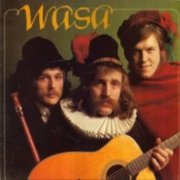 |
Wasa (1975, 31.18) **½/T |
|
| Har du Glömt Som en Sparv Bocka, Bocka, Plocka Mama Jango Sista Natten Hos Birgitta Han Red Ut När Sommaren Kommer Alla Barn är Födda Barn |
Tom Boy Då Lyser en Sol Segla Långsamt Lotusblomma |
|
Current availability:
Mellotron used:
Wasa look like your classic 'studio pros form a band' project, releasing just the one, self-titled album in 1975. Of course, being Swedish in the '70s means there's an Abba connection; a major one, in fact, the album's producers being Björn, Benny and Abba studio whizz Michael B. Tretow. As a result, most of the album's contents are the kind of lightweight pop that history has deservedly left behind, better efforts including the glammy Mama Jango (well, it was 1975) and perfectly acceptable acoustic effort Sista Natten Hos Birgitta.
Benny Andersson plays (presumably) his own Mellotron, with background strings on När Sommaren Kommer and Tom Boy (despite the real ones to be heard elsewhere), a nice little flute part on Då Lyser En Sol and radically pitchbent flutes on Segla Långsamt. Do you need to hear this? Not really, no.
See: Abba | Michael B. Tretow
 |
Washed (1975, 40.34) **/T |
|
| Roll on My Father Gentle Jesus There's Alot in the Bible He Smiles at Me The Resurrection Revival Train Latter Rain |
Israel Cain Killed Abel Man From Galilee I Walk Beside You |
|
Current availability:
Mellotron used:
Appallingly-named Christian outfit Washed's eponymous 1975 effort features a Biblical quote on the rear sleeve, He That Hath an Ear, Let Him Hear..., that could possibly be taken as the title instead. Either way, Washed were four godly girlies with rather, er, 'untutored' vocal styles and some unpictured backing musicians, whose rather bland, country/folk album contains few surprises. Its most uncharacteristic track is opener Roll On, a truck driver paean in the grand tradition, the rest being split between gentle folky efforts and more upbeat countryish things, mostly featuring overtly Christian lyrics and rather flat voices. Oh joy. There's 'alot' of bad grammar around, too; There's Alot In The Bible indeed...
Aside from piano, Jeff Lass also plays Mellotron, with fittingly watery strings on Latter Rain and a brief flute part on Cain Killed Abel, neither of which should be enough to tempt the heathen Mellotron obsessive, even though Washed can be found on download sites. Not entirely rubbish, then, merely rather dull.
 |
Love Awaits (1979, 37.12) **½/TBoogie BabyBack in Love Again Can't Be a Fool for Love Rock it Loving You World of Pain For the Love of Him Loneliness |
Current availability:
Mellotron used:
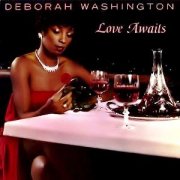
The sleeve and title of Deborah Washington's second (and last) album, 1979's Love Awaits, led me to expect the worst, in a slushy soft-soul kind of way, so it comes as a pleasant surprise to be able to tell you that it's an upbeat funk record. A 'pleasant surprise', I hear you cry? Yes. I've just listened to a Westlife beyond-pain release, so something this lively actually comes across pretty well in comparison. It's actually perfectly ordinary funk/soul/disco, but at least it's excellent played and doesn't make we want to kill someone.
Mike Piccinillo plays Mellotron, with volume-pedalled and pitchbent chords on World Of Pain and 'regular' ones on closer Loneliness, although all string parts sound real. Overall, one for the disco queen (of either sex) in your life, although I doubt whether the rest of us will get too much from this.
The Watch (Italy) see: |
 |
 |
McLaren Furnace Room (1992, 51.33) **/T |
|
| Cracked Run & Hide Try it Sometime Sleep Must to Be Free Falling Mister Anything But That |
I'm Still Gone Soul Stealer Crazy Days Make You Go Down |
|
Current availability:
Mellotron used:
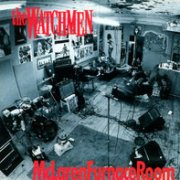
Canucks The Watchmen play a particularly tedious and unoriginal variety of alt.rock, going by their 1992 debut, McLaren Furnace Room. The album's full of the kind of faux-rootsy songs that probably work well on stage, but lose their mojo entirely the minute they're committed to tape, Soul Stealer being the best of a bad bunch. No one song made me reach for the sick-bag, but nor did any inspire me to give them more than a cursory listen.
Noted Canadian businessman/musician Jason Sniderman plays Mellotron on Must To Be Free, with a repeating sequence of string chords at the end of the track, which wouldn't honestly be missed were they not there. I'm sorry to be so hard on this album; I'm sure I'd have given it a better rating had I attempted to review it from hearing two or three random tracks, but fifty-odd minutes ground me down.
 |
A Rock in the Weary Land (2000, 58.24) ***½/T |
|
| Let it Happen My Love is My Rock in the Weary Land It's All Gone Is She Conscious? We Are Jonah Malediction Dumbing Down the World His Word is Not His Bond |
Night Falls on London The Charlatan's Lament The Wind in the Wires Crown |
|
Current availability:
Mellotron used:
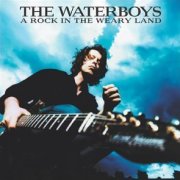
Mike Scott and his band, the Waterboys, are essentially interchangeable, although he didn't use the band name for the bulk of the '90s. Many fans still consider their early 'big music' albums to be their best and I'd personally quote Red Army Blues, from 1984's A Pagan Place as his/their best song, bar none. 2000's A Rock in the Weary Land was the first album under the Waterboys name for seven years and, although I've seen it described as 'inspired by alternative music', it sounds to my ears like an update of the band's early sound, with a strong Dylan influence pervading the record. About the only real criticism I'd level at it is that most of the tracks are too long; not because Scott's singing reams of lyrics, but because the band insist on 'stretching out' on almost every track, even when doing so can be to the detriment of the music.
Spiritualized member and frequent Julian Cope collaborator Tim "Thighpaulsandra" Lewis guests on the album, playing various keyboards, including Mellotron on three tracks. Well, two actually, as the distorted strings on Dumbing Down The World ('recorded in Hell') are credited to 'Slubgob', but as everyone playing on the track is graced with pseudonyms (Scott's is 'Screwtape', wittily referencing noted Christian C.S. Lewis' The Screwtape Letters), but it's almost certainly Thighpaulsandra here, too. On his two credited tracks, there are somewhat background strings and choirs on My Love Is My Rock In The Weary Land and, er, not sure, but possibly distant choirs and upfront brass on closer Crown.
So; Waterboys fans of old who gave up on the band years ago should probably give A Rock... a chance, although there's nothing here sounding anything like The Whole Of The Moon or their other early-'80s efforts. Mellotron nuts (yes, YOU!) probably don't need to bother, but anyone wishing to hear good songwriting in an age of fakery would do well to invest. Incidentally, Scott used Mellotron (amusingly spelt 'Melletron') on 1997's Still Burning solo album and Love Anyway EP, with the (presumed) Floyd homage/tribute/pastiche Careful With That Melletron, Eugene.
See: Samples etc. | Mike Scott | Thighpaulsandra | World Party
 |
Young in All the Wrong Ways (2016, 41.20) ***½/T |
|
| Young in All the Wrong Ways The Love That Got Away One Last Time Move Me Like New Year's Day Say So Without a Word The Truth Won't Set Us Free |
Invisible Tenderhearted |
|
Current availability:
Mellotron used:
Californian and sister of fellow Nickel Creek member Sean (below), Sara Watkins' third release, 2016's Young in All the Wrong Ways, is a rather more potent effort than I'd expected from the description 'singer-songwriter', several tracks, not least the opening title track, Move Me and The Truth Won't Set Us Free being anything from upbeat country to full-on roots rock. Saying that, the album's default position is well-crafted Americana, heard to its best advantage on One Last Time and Invisible, perhaps.
Jon Brion and Tyler Chester are credited with Mellotron, with what I presume are vibes on Brion's lone contribution, The Love That Got Away. Given that Brion's involved, I think we have to assume that Chester's credits are genuine, with a handful of string notes on the title track, even fewer string notes on One Last Time, flutes and cellos on Move Me and, with nothing obvious on Say So, this has to be considered a musical success, but a relative Mellotronic dud.
 |
26 Miles (2003, 44.09) ***½/T½ |
|
| On Ice Chicago Letters Never Sent N.M.I. Hiding Through the Spring Chutes & Ladders Take it Away |
Locking Doors 26 Miles Creeping Beauty Brick Window Carousel |
|
Current availability:
Chamberlin used:
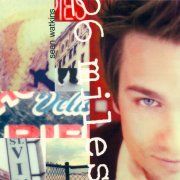
Sean Watkins is a member of folkies Nickel Creek (nothing to do with Nickelback, before you ask), 2003's 26 Miles being his second solo release. It comfortably straddles the folk/singer-songwriter divide, combining gentler and more upbeat material, at its best on the acoustic guitar/fiddle interplay on N.M.I., the ever-so-slightly XTC-ish title track, the instrumental Creeping Beauty and closer Carousel.
Jon Brion plays Chamberlin, with a variety of horn solo on Chicago, before Tripp Sprague's actual tenor sax and a chordal part on the same sound on Locking Doors, followed by more typically Chamberlinic strings. 26 Miles isn't the kind of album that's strip-mined by producers of crappy TV shows and is all the better for it. Worth hearing.
 |
Break (2000, 59.49) ***/TT |
|
| Lost Tarnished Coming Undone Break Wayside Unconditional Love I Will Comfort You Nothing |
Reeling Everything Changes How Does it Feel Calm Humor Me Backseat Without You Shine |
|
Current availability:
Chamberlin used:
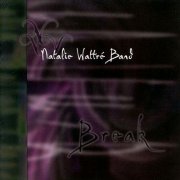
Natalie Wattré debuted with 2000's Break, a rootsy, soulful singer-songwriter/blues rock album, characterised by Wattré's gravelly tones, at its best on the punchy title track, Wayside and Backseat. I get the impression that, while extremely competent, this fell between too many stools, which could be why she isn't better known.
Patrick Warren's Chamberlin makes its presence felt immediately, with a warbly flute part and chordal strings on opener Lost, the only other obvious use being the background horn part on Reeling. Unfortunately, the waters are muddied by the Chamby's 'sits in the mix' chameleon-like string sound. Is that what we're hearing on all the highlighted tracks above? There's no credit for a string section, but that may not mean anything, so the highlights remain until/if I should learn any more.
 |
Wave (1972, 32.21) ***/½ |
|
| In Vain Season of the Witch Summerday Carry on Fun of the World A Thousand Times Double Dutch Certain Kind of Sadness |
The Little Snowball Suicide of Hatred |
|
Current availability:
Mellotron used:
Dutch one-shot outfit Wave were one of those 'not really sure what they wanted to be' kind of bands; I concur with the Discogs comment regarding their lack of real 'progressive' or 'psych' credentials, despite hints of both styles. They were the duo of Loubèr Van Der Swart and Paul Adriaansens, whose eponymous album is closer to American soft rock than any more interesting genre, probably at its best on their eight-minute take on Donovan's Season Of The Witch, A Thousand Times and the gentle Certain Kind Of Sadness.
Adriaansens plays Mellotron, with a probable (it's hard to tell) strings/brass mix on Carry On and The Little Snowball, sounding a lot like Phonogram Studios' much-recorded M300. For all its lack of any real identity, Wave is actually a very pleasant album, if a little lightweight. Just don't come here expecting any major prog moves.
 |
Wake Up to Your World (1976, 35.22) */T½ |
|
| Wake Up to Your World When Was the Last Time Ride a Wild Horse Share Your Love Diana Lord, You Made Me a Traveling Man Give Me the Grace Turn Yourself Around |
Can You Remember The Best Part of Love |
|
Current availability:
 |
Mellotron used:
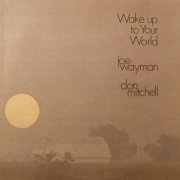
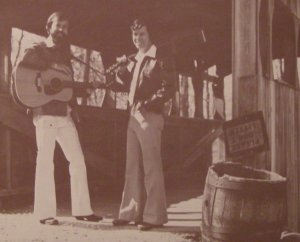
Going by the picture on the rear sleeve of 1976's Wake Up to Your World (at least their second album), Joe Wayman and Don Mitchell were a couple of likely-looking lads, probably country dudes. Correct, to a degree; this is actually super-cheesy Christian country (well, all country tends towards God, but you know what I mean) crossed with the easy listening of around a decade earlier, Wayman(?)'s voice as smooth and taste-free as a velvet Elvis. Horrible? You're not wrong. The album's at its least hideous when the pair aim for upbeat country (the title track, Share Your Love, Turn Yourself Around), the remainder being appallingly schmaltzy balladry with Christian-lite lyrics; believe it or not, this actually gains a half star for not being too God-bothering.
With four credited keyboard players (no Mellotron credit), it's impossible to know who's doing what, but given that Tom Brooks went on to play Chamberlin for Doris Frazier a couple of years later, it might just be him on Mellotron. Anyway, although most of the album's strings are real, the ones on Lord, You Made Me A Traveling Man sound Mellotronic, while the choirs (in suitably 'heavenly' mode) on When Was The Last Time and Share Your Love are quite definitely so. Anyway, not only is this pretty obscure (once again, thanks, of a strangely twisted kind, to Mark for supplying this), but you really, really don't want to hear it. Believe me. It seems the pair made children's records, too; might there be any Mellotronic involvement on them? I think we need to know.
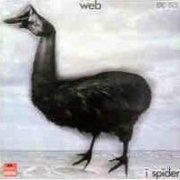 |
I Spider (1970, 39.54) ***½/TTConcerto for BedspringsI Spider Love You Ymphasomniac Always I Wait |
Current availability:
Mellotron used:
Web are one of the lesser-known of the 'proto-prog' very early '70s UK bands, characterised by a bluesy and/or jazzy feel to much of their material (see: Cressida, Titus Groan et al.). I Spider is notable for being one of Dave Lawson's pre-Greenslade projects and you can hear at least vague similarities between the two bands. Apart from the usual instrumentation, the album features sax and vibes, adding to its general slight air of jazziness. The material is reasonable, but you can see why they never really took off and aren't regarded as highly as, say, Gracious! these days.
Lawson's Mellotron use (probably a MkII) seems to be limited to the ubiquitous strings, with the one outstanding part being some interesting dissonance at the beginning of Ymphasomniac, but probably not enough over all to make it an essential purchase, unless you're particularly into this era of UK prog.
See: Greenslade