





|
|
|
|
||
|
|
Leslie West West Coast Consortium Steve Westfield Slow Band Wet |
John Wetton Wganda Kenya What the...? |
Jim Wheeler Whipping Post Whiskeytown |
Alan White Clarence White Ike White |
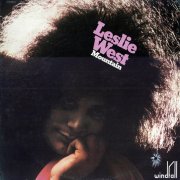 |
Mountain (1969, 35.50) ***½/½ |
|
| Blood of the Sun Long Red Better Watch Out Blind Man Baby, I'm Down Dreams of Milk & Honey Storyteller Man This Wheel's on Fire |
Look to the Wind Southbound Train Because You Are My Friend |
|
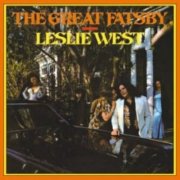 |
The Great Fatsby (1975, 33.58) ***/TTT |
|
| Don't Burn Me House of the Rising Sun High Roller I'm Gonna Love You Thru ESP Honky Tonk Women If I Still Had You Doctor Love |
If I Were a Carpenter Little Bit of Love |
|
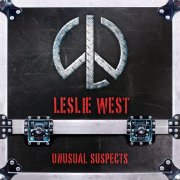 |
Unusual Suspects (2011, 47.48) ***½/T |
|
| One More Drink for the Road Mud Flap Momma To the Moon Standing on Higher Ground Third Degree Legend Nothing's Changed I Feel Fine |
Love You Forever My Gravity The Party's Over I Don't Know (the Beetlejuice Song) |
|
Current availability:
Mellotrons used:
While a member of the NYC-based The Vagrants, Leslie "West" Weinstein met producer Felix Pappalardi, who had also worked with Cream; hitting it off, Pappalardi produced West's first solo album, 1969's Mountain, a blueprint for the band of the same name the duo immediately went on to form, playing Woodstock that summer. The album's a decent enough effort, if a little formative, although when you consider when it was recorded, its combination of proto-hard rock and blues with the occasional acoustic interlude was groundbreaking, better tracks including future Mountain classic Blood Of The Sun, Blind Man and West's take on Dylan's This Wheel's On Fire. Pappalardi (a great fan of the Mellotron for some years) plays a string part on the excellent Look To The Wind, almost fooling the ear into thinking it's real until the key-clicks near the end of the track.
The Great Fatsby (ho ho) was West's first post-Mountain effort, promoted with a campaign that greatly upset the then-heavily overweight man, including 'speak your weight'-type machines and the like; I have no idea whether or not the title was his idea. It's not a bad album, though mostly rather pedestrian, with little of the 'rock' really, er, rocking that much. Highlights are probably the instrumental ESP and, maybe surprisingly, his take on the Animals' version of old warhorse House Of The Rising Sun. If I Were A Carpenter isn't bad, but West insists on realigning the vocals so they scan differently, which has the effect of reducing the song's magic, unfortunately. Probably seemed like a good idea at the time. Most surprisingly, loads of Mellotron from Howie Wyeth, being joint main keyboard along with the piano, with background strings on Don't Burn Me and a chordal flute part under real flute opening House Of The Rising Sun, while I'm Gonna Love You Thru features string and choir parts. More flutes and strings on the ESP, very full-on strings on If I Still Had You and another string part on closer Little Bit Of Love wrap things up nicely, making this a most unexpected addition to the ranks of halfway-decent Mellotron albums. The following year's The Leslie West Band (***) was a decent enough effort, if slightly uninspired (again), although it's saved by a few good acoustic tracks, not least a version of The Beatles' Dear Prudence, although, sadly, no Mellotron.
Moving on several decades, West's 2011 release, Unusual Suspects, is a blues/rock guitar album par excellence, featuring yer man jamming with a clutch of top players, including Slash, Billy Gibbons, Joe Bonamassa and Zakk Wylde, on a selection of originals and covers. Top tracks include To The Moon, the piano-based Legend and My Gravity, the album's only minor failing being a couple of slightly extraneous tracks. The legendary Phil Parlapiano does his Mellotron thing on To The Moon, with a chordal flute part, although that's yer lot.
So; Mountain is more one for, er, Mountain fans than those of the Mellotron, The Great Fatsby is only average musically, although it's probably worth it for the Mellotron nut (and it's not too often I say that) and Unusual Suspects is a great modern guitar album with one decent Mellotron track.
See: Mountain | Dana Valery
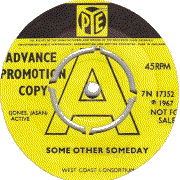 |
7" (1967) ***/TT½ Some Other Someday Looking Back |
 |
Looking Back: The Pye Anthology (2003, recorded 1967-71, 78.31) ***/TT |
||
| Some Other Someday Looking Back Indigo Spring Listen to the Man Colour Sergeant Lillywhite Lady From Baltimore All the Love in the World Spending My Life Saying Goodbye When the Day Breaks |
The Day the Train Never Came Beggar Man Cynthia Serenity I Don't Want Her Anymore The House Upon the Hill Melanie Cries Alone Copper Coloured Years To Please Louise Amanda Jane |
Cindy in Love Willow Wood I'll Always Love You Soldiers in the Rain Live and Let Live Once Upon a Time What Are They All Singing About Today Scarlet River One Day the Train Never Came |
|
 |
Mr. Umbrella Man: A Collection of Demos, 1967-1969 (2008, 78.04) ***½/TT |
||
| Amanda Jane Willow Wood One Day the Train Never Came To Please Louise Elastic Band We All Love You Baby Oh! What a Feeling Ginny Stop (Don't Go 'Way) Rings and Things |
Mr. Umbrella Man House Upon a Hill Aimie (Sing Your Song for Me) Santa Monica Bay When the Day Breaks Cindy in Love Come on Into the Warm Rest of Your Life (Down Lonely Street) Cynthia Serenity |
Take a Round Trip Fairground Playboy Money Matters Windmill Hill All the Love in the World What Are They Singing About Today? Whatever Became of Emily Jane? One Six Two Copper Coloured Years |
|
Current availability:
Mellotrons used:
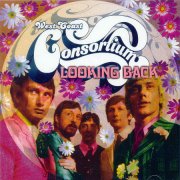
The West Coast Consortium were a British Association-style outfit, although that outfit would never have countenanced some of this lot's slightly ropey vocal harmonies. Their vinyl debut was 1967's Some Other Someday, backed with Looking Back, two pleasant enough efforts, if infused with little of that year's psychedelia, guitarist/keyboard player Geoff Simpson's pseudo-orchestral Mellotron strings enhancing both sides nicely.
Thirty years after the band's eventual, mid-'70s implosion and having been neglected for several decades, they were officially pushed, kicking and screaming, into a small corner of the limelight in 2003, with the release of Castle's Looking Back: The Pye Anthology, mopping up most of their single sides and some demos. Top track? Their lone psych single Colour Sergeant Lillywhite, most of the rest being perfectly competent but rather unexciting late '60s vocal harmony pop (representative examples: Lady From Baltimore, Melanie Cries Alone), although Willow Wood sounds like psych-era Status Quo, of all bands. Simpson adds Mellotron to a handful of tracks, with reiterations of the parts from their first single, an occasional flute line (with real strings) on I Don't Want Her Anymore, a background string line on Copper Coloured Years, upfront strings on Amanda Jane and phased ones on Once Upon A Time.
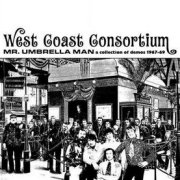
To my great surprise, 2008's Mr. Umbrella Man: A Collection of Demos, 1967-1969 turns out to be a better listen than their official recordings (in my humble opinion, of course). Top tracks include Mellotron-laden opener Amanda Jane, the melancholy One Day The Train Never Came, We All Love You Baby, the slightly jazzy title track, Whatever Became Of Emily Jane? and Copper Coloured Years, amongst many others. Several Simpson Mellotron tracks, even though these are only demos, with a major string part on Amanda Jane, background flutes on To Please Louise, background strings on We All Love You Baby, more upfront strings on House Upon A Hill and so-loud-they-almost-distort strings and vibes on All The Love In The World.
Don't buy Looking Back expecting to hear some lost Brit-psych classics - Colour Sergeant Lillywhite is the nearest to that description and it's already been heavily anthologised - but hardcore fans of the era could do worse than to pick a copy up. Mr. Umbrella Man might actually be a better bet, but with several decent Mellotron tracks apiece, era fans should possibly go for both.
 |
Underwhelmed (1997, 53.01) **/T |
|
| Lies Happy Birthday World Underwhelmed Nothing Left to Give Monument Leaving Town Riding With the Flood Have No Fear |
Life is Too Long A Friend |
|
Current availability:
Mellotron used:
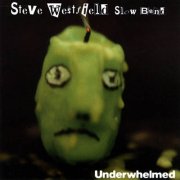
Steve Westfield's a busy man, helming several different outfits over the years, including his Slow Band. To be perfectly frank, 1997's overlong Underwhelmed is exceptionally well-titled, as it perfectly describes my feelings towards it. Whiny indie/singer-songwriter stuff, anyone? Thought not. Any better tracks? Possibly Have No Fear, but that's clutching at straws.
Peter Weiss plays long, drawn-out, genuine-sounding Mellotron string notes on Leaving Town, easily the best bit of this dreary album. Fuck me, I hope Westfield's other projects are a little more cheerful than this; I've nothing against the darker end of the musical spectrum - in fact, usually the opposite - but this is awful.
 |
Wet (1980, 20.32) ***/TTo Be a ManBabies of the Night The Dreamer Sunday's Girl |
Current availability:
Mellotron used:
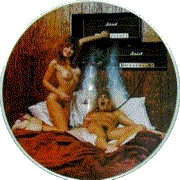 |
Way, way back in 1981, the then-new Kerrang! featured an article by future 'ed 'itter Geoff Barton, extolling the virtues of a self-titled EP by a certain Kevin "Wet" Mullay, even remarking on its Mellotron usage, amazingly. It has to be said, though, that Barton got just as (if not more) excited by the sleeve, featuring (as you can see) two essentially pornographic pictures of his girlfriend (Wet's, not Barton's, you clot) and her mate, although at least a sense of humour makes itself apparent in both shots, especially the 'back' one (right). Although often referred to as a picture disc, the EP was actually clear vinyl with the dodgo pics on a sheet of card.
Anyway, thirty years later, said EP finally turns up on a download blog, to my great excitement. So, is it any good? Er, it's probably best described as a rather turgid attempt at 'epic' hard rock, tracks like Babies Of The Night (the one Barton, inexplicably, went apeshit over) and the rather incoherent seven-minute Sunday's Girl having a decent stab at sophistication, sadly falling rather short. To add to the record's woes, it has to be one of the worst productions I've ever heard; although Wet's vocals are clear enough, instrumental balances are all over the shop and as for the Mellotron...
I believe it's played by either Wet himself or Mark Jelenski, with exceedingly muffled choirs on every track except Babies Of The Night, although I couldn't honestly say it enhances the EP that much, due to the awful recording. Do you need to hear this? Probably not, no - my three-star rating above errs on the generous side - but hard rock (as against metal) obsessives will probably go for it anyway, if only for its rarity value. And Barton's copy? According to a rather confessional column he used to write for Classic Rock mag, he had what sounds like a mini-breakdown sometimes in the '80s and ditched his entire vinyl collection at the local tip, so it's presumably mouldering away in a landfill site somewhere. Nice one, Geoff.
Incidentally, there was another Wet EP the following year, Hard Attack, although two of its five tracks were first EP remixes, so, although the Mellotron's audible, again, on The Dreamer, it isn't enough to get it a separate entry. Also incidentally, one of the three new tracks is titled I Want To Be KISSed; yes, it's a song about how great Kiss are. Now we know why legendary mega-fan Barton liked Wet so much. And yes, the remixed tracks sound clearer, for what it's worth.
 |
 |
Caught in the Crossfire (1980, 41.50) **½/T |
|
| Turn on the Radio Baby Come Back When Will You Realize? Cold is the Night Paper Talk Get Away Caught in the Crossfire Get What You Want |
I'll Be There Woman |
||
 |
Monkey Business, 1972-1997 [as John Wetton & Richard Palmer-James] (1998, 60.48) ***/T |
||
| Flourish Too Much Monkey Business Confessions Easy Money The Night Watch (live) Woman (False Start) Untitled |
Rich Man Lie Cologne 1977 The Laughing Lake 1 The Good Ship Enterprise Book of Saturday (demo) Book of Saturday (live) The Glory of Winning Starless 1 |
The Laughing Lake 2 The Laughing Lake 3 The Laughing Lake 1977 Magazines Starless 2 Cologne 1977 Doctor Diamond 1997 Starless 1997 |
|
 |
Progfest '97 (1997, 21.03) ****/TT[John Wetton Band contribute]In the Dead of Night Rendezvous 6:02 Starless |
Current availability:
Mellotrons used:
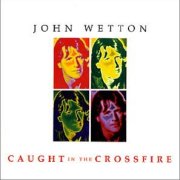
John Wetton really shouldn't need any introduction, having played with (deep breath) Family, King Crimson, Roxy Music, Uriah Heep and UK and that was before the reprehensible Asia in the early '80s. Caught in the Crossfire can actually be seen as a precursor to said band, sadly, being a pretty commercial effort, Wetton having taken the poppier side of UK and run with it, certainly going by the Jobson-alike piano parts on some tracks. Actually, this is pretty duff, if I'm going to be honest (and when am I not?). Cheesy and 'commercial', but with few memorable songs, although I've got a nasty feeling opener Turn On The Radio could stick like glue. About the best moment here is Cold Is The Night, a reasonably atmospheric ballad with shitloads of Mellotron, a flute part being replaced by choirs and overdubbed strings, although that's it for the album. Y'know, you really don't need to own a copy of this; I paid a fiver for it, four quid too much - more fool me. This was probably the last time Wetton used a Mellotron, although he actually brought one along to Heep, who let him play it occasionally.
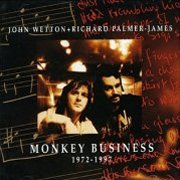
'94's Battle Lines and 2003's Rock of Faith both feature samples, leaving the only other solo Wetton Mellotron as Monkey Business, 1972-1997, credited jointly to him and lyricist Richard Palmer-James, who wrote the iconic lyrics to Mark 3 Crimso tracks like The Night Watch and Starless. Versions of both appear on the album, the former live in Brazil, '91, the latter in heavily edited form as a studio cut from '97. Many of the remaining tracks are brief snippets of studio and live work - the kind of stuff that's usually denoted as being 'for completists only', which is how 24 tracks fit onto a one-hour disc. Actually, Wetton completists really do need this, given that it contains versions of several tracks that (to my knowledge) aren't available anywhere else, not to mention a long-overdue studio take on Crimson's Doctor Diamond. Wetton plays Mellotron on The Good Ship Enterprise, recorded early '76 with Bill Bruford on drums, opening with cellos, before shifting into a lovely strings part under the double-tracked guitar solo. With only one Mellotron track, this archive release is probably about as essential as Caught in the Crossfire, although a better listen all round.
Incidentally, John played at Progfest '97 with a band including IQ's Martin Orford, who was persuaded to play a real Mellotron on the night. They get three tracks on the album, with (unsurprisingly) nothing on UK's In The Dead Of Night and Rendezvous 6:02, but the expected string part on a slightly truncated Starless. It doesn't seem likely that the rest of their set will appear at any stage in the near future and I've no idea what else may be on it Mellotronwise, sadly.
Postscript: John, by all accounts (including first-hand) a thoroughly decent chap, died on January 31st 2017. R.I.P., John.
See: Asia | Family | King Crimson | Roxy Music | Uriah Heep | Progfest
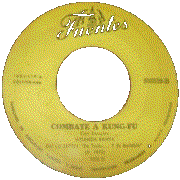 |
7" (1975?) ***/TTT Combate a Kung-Fu Por una Negrita |
Current availability:
Mellotron used:
Wganda Kenya appear to have been prime proponents of Colombia's Afrosound, a highly-danceable merging of South American and African musics, huge in its native land, although (at the time) almost unknown elsewhere. Hard-and-fast info on the band is pretty hard to trace in any language, it seems, to the point where I'm not even sure whether the actually-rather-good Combate A Kung-Fu (a largely instrumental cover of Carl Douglas' massive 1974 worldwide hit Kung-Fu Fighting), possibly released the following year, is the 'A' or 'B' side, as sources vary.
I've no idea where the band sourced a Mellotron in '70s Colombia (was there one in a studio?), unless, of course, they recorded in, say, Miami or similar. Anyway, the track's smothered in block chord strings and flute melodies, although there's nothing on the flip. This is now easily available on Spanish label Vampi Soul's Afrosound of Colombia, Vol. 1, should you wish to hear it, alongside Afrosound's Cumbia De E.T. El Extraterrestre and, possibly, others.
 |
You Have No Idea! (2006, 39.52) ***/T |
|
| Theme From What the...? Listen to Me! Ball is in Your Court Blindsided Nobody Said a Word I'm So Glad I Don't Wanna Talk to You Everything is Fine |
Better Him Than Me Theme From What the...? (Reprise) Nothing Left to Dream |
|
Current availability:
Mellotron used:
Let's be honest, What the...? isn't a very good name for a band, especially in a Google-searchable world, although it hasn't stopped me finally tracking this down. 2006's You Have No Idea! was the second of the Atlanta-based trio's two albums, their garage/powerpop sound possibly containing a little too much indie for my good self, at its best on Ball Is In Your Court's pure powerpop, Better Him Than Me and epic closer Nothing Left To Dream. And yes, I did catch the distant yell of 'Free Bird!' at the end of Everything Is Fine...
Joey Huffman (Soul Asylum, others) plays the album's keys, including a major Mellotron part on closer Nothing Left To Dream, with flute, cello and string parts all over the five-minute song, including a false ending and a strings-heavy coda. A couple more tracks of this quality (not to mention its Mellotron usage) and we'd be looking at another half star here.
 |
7" (196?) */TTT Remember the Alamo The Beautiful Texas Waltz |
Current availability:
Chamberlin used:
It's hard to say exactly who Jim Wheeler may have been, although 'song-poem' god Rodd Keith seems like a good bet. He certainly didn't write either side of this horror, Remember The Alamo and The Beautiful Texas Waltz (released on the 'legendary' Film City imprint), so a nom de plume seems most likely. Both songs are, of course, utterly cheesy, '50s-style patriotic ballads, of the kind that'll have you either howling with laughter or puking into a bucket, on the offchance you should ever get to hear them.
The label splendidly credits the "Swinging Strings", which, of course, turn out to be the same Chamberlin as can be heard on every other Film City release that's come my way (more than I'd like, frankly), with clunky rhythms, even clunkier guitars and weeping strings everywhere you look. Someone may well upload this to a song-poem enthusiast site one day (don't look at me), but until then, these classics of the genre will have to exist only in your imagination. Best place, really. Incidentally, the single's fluorescent yellow vinyl really has to be seen to be believed.
See: Rodd Keith
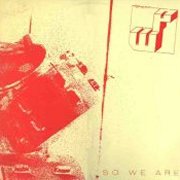 |
So We Are (1980, 41.58) ***½/TTTT½ReturnFreedom in Me Saturday'n Sunday Preball Your Love So We Are Gimme a Shine Gonna Be Wild Pioneers |
Current availability:
Mellotron used:
So We Are was Whipping Post (presumably named for the Allmans song)'s second album, after their eponymous debut and, unsurprisingly, has quite a blues influence running through it. In fact, I'd go as far as to call it a late-period blues/prog album, a style that fell out of favour in the UK in the early '70s. It's not a bad record, but lacks anything to make it particularly stand out, apart, of course, from its Mellotron work. C.B. Busser goes absolutely hell-for-leather with the thing; in fact, I can't detect any other keys on the album, which rescue it somewhat from blues/rock anonymity.
Freedom In Me sounds like nothing less than a prog version of Neil Young's incomparable Like A Hurricane, with Mellotron strings replacing the original's Stringman; Christ, they even use the same guitar tricks! Saturday'n Sunday has some distant choirs, more strings on Preball, brass on Your Love, then back to the choirs for the title track and Gimme A Shine. Strings on Gonna Be Wild, finishing with choirs again on Pioneers, making for a ridiculously Mellotron-heavy record, although little of the use is that outstanding. If you want to hear OTT Mellotron laid over blues/rock, though, this is going to become your favourite album.
Incidentally, although one Astrid Cotti is credited with Mellotron on 1978's Live, I can report back that you won't hear anything more exciting than a cheap string synth on the record.
See: C.B. Busser
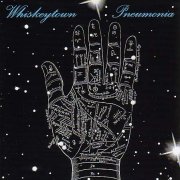 |
Pneumonia (2001, 53.34) ***/T |
|
| Ballad of Carol Lynn Don't Wanna Know Why Jacksonville Skyline Reason to Lie Don't Be Sad Sit and Listen to the Rain Under Your Breath Mirror Mirror |
Paper Moon What The Devil Wanted Crazy About You My Hometown Easy Hearts Bar Lights |
|
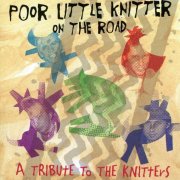 |
Poor Little Knitter on the Road (1999, 3.53) ***/½[Whiskeytown contribute]Silver Wings |
Current availability:
Chamberlins (?) used:
Whiskeytown were formed by ex-punk Ryan Adams (who gets very, very angry when he's confused with Bryan) and Caitlin Cary in 1994. Along with The Jayhawks and a handful of others, they can probably be said to have invented alt.country, mixing pre-Nashville schmaltz country with rock and even punk, reinventing the genre and actually making it at least semi-palatable to non-country fans. Pneumonia was their third and last album, released two years after the band's premature split, which probably contributed to that event. It's a good record, although I can't say I hear any classics, although I'm sure fans would disagree. Maybe the almost-powerpop of Don't Be Sad?
Now, no tape-replay instruments are actually credited on the album, but given various peoples' involvement, not to mention the evidence of my own ears, it seems likely that something was used, probably a Chamberlin, with strings on Don't Be Sad and flutes on Mirror Mirror, with a couple of vague possibles elsewhere. Played by...? Unknown, although Ethan Johns is a possibility, given his work on subsequent Adams albums. Anyway, given the lack of any actual credits here, it could be generic samples dirtied up until they sound like a tape-replay instrument. Who knows?
See: Ryan Adams | Caitlin Cary | Poor Little Knitter on the Road
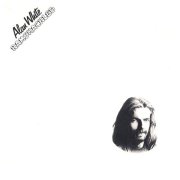 |
Ramshackled (1976, 38.51) **/½Ooooh Baby (Goin' to Pieces)One Way Rag Avakak Spring-Song of Innocence Giddy Silly Woman Marching Into a Bottle Everybody Darkness, Pts. 1-3 |
Current availability:
Mellotron used:
As I'm sure you all know, Alan White replaced Bill Bruford in Yes in 1972, remaining with the band through all of their subsequent lineup trials and tribulations. I don't think it's that contentious to say that, while as solid a player as you like, he is in no way a stylist, playing workmanlike parts where Bruford would shine, which isn't to denigrate his contribution to the band over the decades.
Anyone who knows anything about the band will be aware of the 'solo albums project' of 1975-6, which brings us to a lesser contribution to the canon, Ramshackled, one of the later releases (Jon Anderson's jaw-dropping Olias of Sunhillow was last). I've heard bad things about this over the years, while having never actually heard it for myself. Well, they weren't wrong: White recruited his old buddies from an unsigned outfit named Simpson's Pure Oxygen; while the playing is perfectly competent, the material leaves a great deal to be desired, unless you have a yen for bland, r'n'b-influenced mid-'70s rock. Opener Ooooh Baby (Goin' To Pieces) is fairly typical, grinding its way through over five minutes of faceless, funk-free funk, while One Way Rag's middling rock is about as dull as it gets (unbelievably, Yes, briefly played this one live). More listenable moments include Spring-Song Of Innocence (the nearest the album gets to sounding like Yes), the flute/clarinet-led Marching Into A Bottle and (presumably) part two of closer Darkness, but to be blunt, this is an artistic disaster.
Many thanks (I think) to Max for spotting the album's Mellotronic content: we get a few seconds of strings opening Spring-Song Of Innocence, presumably from album keys man Kenny Craddock, distinctly different to the real strings on Giddy, but that really is your lot. Do you need to hear this? I don't think so, no; it was finally made available on CD by Wounded Bird a few years ago, but I can't imagine they've sold that many copies, even allowing for White's history. It has its moments, but you can easily live without them.
See: Yes
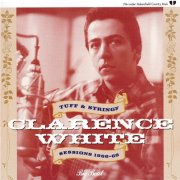 |
Tuff & Stringy: Sessions 1966-68 (2003, 56.02) ***/½ |
||
| Clarence White: Hong Kong Hillbilly (a.k.a. Nashville West) Gary Paxton: Mother-in-Law The Spencers: Make Up Your Mind Clarence White: Grandma Funderbunk's Music Box Wayne Moore: Guitar Pickin' Man The Sandland Brothers: Vaccination for the Blues Darrell Cotton: Don't Pity Me Leon Copeland: Gotta Go See the World The Kentucky Colonels: Everybody Has One But You |
Gib & Jan: She's Gone Clarence White: Tuff and Stringy Richard Arlen: I'm Tied Down to You Wayne Moore: Hey Juliana Clarence White: Last Date Dennis Payne: I'll Live Today Jack Reeves: Not Enough of Me to Go Around Clarence White: Riff-Raff Darrell Cotton: If We Could Read |
Wayne Moore: Rocks in My Head The Kentucky Colonels: Made of Stone Clarence White: Buckaroo Adam & Eve The Great Love Trip: Why Can't We Be Jan & Clarence: Nature's Child Clarence White: Tango for a Sad Mood Darrell Cotton: If We Could Read (backing track) |
|
Current availability:
Chamberlin used:
Clarence White (the family name was Anglicised from LeBlanc when they moved to California) is best known for his time with The Byrds, although he spent much of the late '60s working with musician/producer Gary Paxton, a time documented on 2004's Bakersfield Rebels. The previous year's Tuff & Stringy: Sessions 1966-68, released under White's name (he is, of course, featured on every track), seems to be the first compilation of various singles and session tracks from the era, recorded at the Bakersfield International studio. Highlights include the amusing Mother-In-Law (Paxton) and Guitar Pickin' Man (Wayne Moore), more for their lyrics than the music, although White's fans will swoon over some of his subtle string-bending (he co-invented the Telecaster string bender, later used by Jimmy Page, amongst others) and instrumental layering.
Someone, possibly organist Carl Walden, plays what I'd imagine is the studio's Chamberlin (as likely as not a MusicMaster 600) on White's own Last Date, with what seems to be a single string note at the beginning of the song, held for the full eight seconds, never to be heard again. Fans of White's groundbreaking playing probably already own this, but I can recommend it to anyone who loves his playing on the several Byrds albums on which he played. Tragically, White was killed by a drunk driver in 1973, robbing the world of a major guitar talent; this album fills in some of the gaps in his short career.
See: Bakersfield Rebels
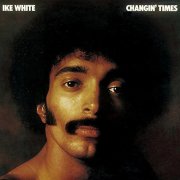 |
Changin' Times (1976, 43.19) ***½/TTTChangin' TimesComin' Home Antoinette I Remember George Happy Face Love and Affection |
Current availability:
Mellotron used:
Ike White's life story is one of the strangest you'll encounter on this site: imprisoned for murder in 1964, recorded Changin' Times in prison in '74, issued in '76, released (from prison) in '79, disappeared, tracked down in 2014, having led a deeply chaotic life, interviewed for a documentary (The Changin' Times of Ike White), tragically committed suicide two weeks later. So how, exactly, did he record this in prison? Because War producer Jerry Goldstein took a mobile studio, amongst other equipment, into the 'facility', having heard (accurate) stories regarding White's talents. The end result's soul/funk moves, helped by members of Santana and Sly & the Family Stone, are as good as, if not better than many far better-known names. This is that rarest of things, a collectable obscurity that deserves its status, its diverse contents screaming 'quality' at the listener, from the opening title track's lengthy soul jam, Comin' Home's Midwest rock, the Santana-esque Antoinette, which gives White a chance to show off his guitar chops (better than Carlos, says I), the ten-minute, jammed-out I Remember George... Top-notch.
Aside from singing (he had a superb voice), White played all guitar and keys, including the Mellotron, with volume-pedalled 'orchestral substitute' strings on the title track, more upfront ones on Antoinette, several minutes of strings on I Remember George and a nice flute arrangement and strings on Happy Face, making this a rather unlikely candidate for 'best Mellotron rarity I've heard in a while'. Released on Goldstein's own label, this remained thoroughly obscure until the documentary aired in 2019 and has still only gained a reissue in Japan. Luckily, it's also easy to find on t'Internet, so I'd do that, if I were you. Recommended.