




|
|
|
|
||
|
||
|
|

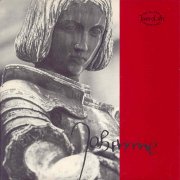 |
7" (1981) ***½/T½ Joan of Arc The Romance of the Telescope (unfinished) |
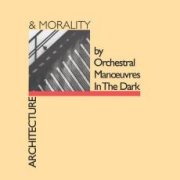 |
Architecture & Morality (1981, 38.47/61.24) ***½/TT½ (TTT) |
|
| The New Stone Age She's Leaving Souvenir Sealand Joan of Arc Joan of Arc (Maid of Orleans) Architecture and Morality Georgia The Beginning and the End |
[CD adds: Extended Souvenir Motion and Heart (Amazon Version) Sacred Heart The Romance of the Telescope Navigation Of All the Things We've Made Gravity Never Failed] |
|
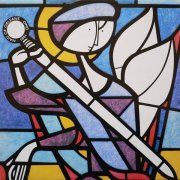 |
12" (1982) ****½/TTT½ Maid of Orleans (the Waltz of Joan of Arc) Of All the Things We've Made Navigation |
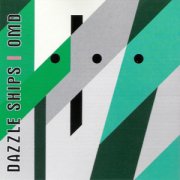 |
Dazzle Ships (1983, 34.43) ***½/TT | |
| Radio Prague Genetic Engineering ABC Auto-Industry Telegraph This is Helena International Dazzle Ships (Parts II, III & VII) The Romance of the Telescope |
Silent Running Radio Waves Time Zones Of All the Things We've Made |
|
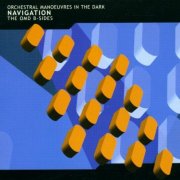 |
Navigation: The OMD B-Sides (2001, recorded 1979-91, 73.01) ***½/T½ |
||
| Almost I Betray My Friends Waiting for the Man Annex Sacred Heart The Romance of the Telescope Navigation 4-Neu |
66 & Fading (edit) Her Body in My Soul The Avenue Garden City Concrete Hands Firegun This Town Gravity Never Failed |
Burning Sugar Tax (The Angels Keep Turning) the Wheels of the Universe |
|
Current availability:
Mellotrons used:
Orchestral Manoeuvres in the Dark. A ludicrously pretentious name for a band, thankfully usually shortened to 'OMD'; even the band later dropped the 'in the Dark' bit, although the damage had been done by then. I remember liking their synth-pop classic Enola Gay at the time, though I never really heard anything much more by them until recently. What had passed me by was their rather major Mellotron/Novatron use on their third and fourth albums from the early '80s. Paul Humphreys and Andy McCluskey both played Mellotron, along with just about everything else, which sort of makes them a synth-pop duo, I suppose, though they broke out of that particular mould pretty early on. Incidentally, I'm amused to see that they were managed by 'Gordian' Troeller, Peter Hammill associate extraordinaire.
Architecture & Morality's the album that laid bare the duo's Joan of Arc fixation, two songs named after her (thank God for subtitles, eh?!), both of which, startlingly, were UK hit singles. Its drum machine/synth sound is sadly dated these days, though there's all sorts of interesting keyboards in there to spice things up a bit; Farfisa, anyone? (Or is it a Vox?). The most memorable tracks tend to be the singles, with Souvenir featuring a nagging/irritating (delete according to taste) synth hook, making it their biggest UK hit. I can only definitely hear Mellotron on three tracks, which isn't to say it isn't hidden away elsewhere, too. The lengthy Sealand has Mellotron cellos, while the excellent Joan Of Arc (Maid Of Orleans) (the single was titled Maid Of Orleans (The Waltz Joan Of Arc), presumably to distinguish it from the other track, released three months earlier) has not only female voices (?), but a highly distinctive high string melody, making it one of the most Mellotron-heavy singles ever, I reckon. To finish things off, the title track opens with mixed choir chords, reiterating throughout. It's possible I'm missing other bits; I don't know what produces the high female voice in The Beginning And The End (a high female voice, perhaps?), but it may well be the MkI Emulator they were using at the time.
Both Joan of Arc singles features Mellotron on their flips, Joan Of Arc having an early version of Romance Of The Telescope, complete with choirs, while Maid Of Orleans is backed with Navigation (which has also lent its title to a recent-ish compilation of b-sides), with some very upfront strings. In 2003, Virgin finally released an expanded version of the album, containing various b-sides and the like, both tracks included, also available on the aforementioned Navigation.
Dazzle Ships is far more experimental than its predecessors and, for that matter, its successors (the title, by the way, refers to a British experiment at camouflaging naval vessels). They used various non-standard equipment, including a Speak-and-Spell toy, a shortwave radio and a typewriter, although the results (ABC Auto-Industry, Dazzle Ships itself) sometimes sit awkwardly alongside the more mainstream tracks (Genetic Engineering and Telegraph were both hits). On the Novatron front, again, I can only hear three tracks, as I believe some of the murkier choir sounds are Emulator, both being used on The Romance Of The Telescope. As for the others, International has some 'stabbed' string chords running through it, while Silent Running (title inspired by, but nothing to do with the film) has layered string chords alongside various contemporary synths. Incidentally, none of the six bonus tracks on the expanded CD feature any Mellotron.
As previously mentioned, 2001's Navigation: The OMD B-Sides mops up all of their Mellotron rarities. Unsurprisingly, it's a bit of a ragbag of tracks, the duo's 1980 cover of Waiting For The Man (on the flip of Messages) and the dullsville Sugar Tax (from '91) are fairly unnecessary, while many of its tracks are now available on expanded CD versions of the band's catalogue, although it provides a fascinating alternative look at their career.
Anyway, Architecture & Morality is more straightforward and Dazzle Ships is more experimental, although the band's synth-pop beginnings lie at the core of both albums, so whether or not you'll like them is largely down to how you feel about this. They do provide an unusual opportunity to hear the Mellotron alongside various early-'80s machines, the results being surprisingly good, as the Mellotron mixes pretty badly with later, digital synths. Anyway, cautiously recommended. Incidentally, despite covering their brief Mellotronic period, 2000's Peel Sessions 1979-1983 appears to be Mellotron-free, although, in fairness, it contains none of their studio Mellotron tracks, or, for that matter, anything from the original Architecture LP at all. Also incidentally, I met Andy Richards (ex-Strawbs) recently, who co-produced 1991's McCluskey-only Sugar Tax, who said that they'd, "Hired a Mellotron in, but couldn't get it to work".

By the way, I found this Andy McCluskey (I think) posting on an OMD online message board:
We used a Mellotron Mk1 [note: he presumably means an M400] on Architecture & Morality but were advised that if we were going on the road to get a Novatron. The Mk1 had a very bad whine created by the power supply. Streetly told us it was a design fault.
I still own the Novatron and OMD tapes for it.
Romance is actually a Prophet Five factory preset for the out of tune brass sound but the choir is Mellotron.
Streetly made us some special tape sets for live so that we could use only the sounds that we needed without changing tape sets during the gig. As you probably know it takes about 5 mins to change the tapes... also we had other things sat on the Mellotron on stage, so opening the top was not an option [note: I've only ever heard of ONE band who did!].
Our only real problem that we ever had on stage with the Novatron was in Italy at a gig in a large tent. All the power was from a small generator and every time the lights got really bright on stage the power supply to equipment reduced making the Novatron flywheel slow down so the notes went very flat. Once our lighting guy realised the problem we did the rest of the show with reduced lights to keep the Novatron in tune.
We had many more problems later on with the instruments that replaced the Novatron... The bloody Emulator Mk2...

OMD followed Dazzle Ships with the following year's Junk Culture, a very different, more mainstream record, although hints of their avant- past crop up in material such as Never Turn Away (an album highlight) and closer Talking Loud And Clear (which isn't). Sadly, the overall vibe is of a band heading quite determinedly for arena pop success, with a concomitant loss of musical quality, but then, who could expect any more in 1984? The duo also appear to have gone sample-mad, as did so many other acts at the time, suddenly handed seemingly amazing new technology, although there's absolutely no excuse for the steel drum patch heard on a couple of tracks. Yes, a couple.
The opening title track features what I suspect are the world's first Mellotron samples; the standard eight-voice choir, but played too fast and clearly 'stretched' towards the lower end. My guess is that they sampled their own machine onto an Emulator II, although I'm not sure why they couldn't coax their M400 into service in the studio. Maintenance issues? Streetly Electronics were about to go under, but, to my knowledge, they were still operational in '84. What's more, they still used one of their machines on stage until the following year. Oh, who knows? Pushy producer? Anyway, the choirs (male this time?) also appear on Apollo, Love And Violence (extended beyond the eight-second tape limit) and White Trash.
On the same basis, two non-album tracks from the sessions also feature those early samples, The Avenue (on the Locomotion 12") and the truly excellent (The Angels Keep Turning) The Wheels Of The Universe, a one-sided single included with early copies of the album, murky choirs on the former and full-on ones on the latter. Incidentally, Wheels... reminds me, more than anything of a Pallas b-side from the same year, bizarrely (March On Atlantis, for what it's worth), although I consider it fairly unlikely that either band member might have heard said track.
Fast-forward over two decades to the reformed band's first outing, 2010's History of Modern, highlights including History Of Modern (Part II), the excellent The Future, The Past, And Forever After and the Enola Gay-esque Sister Marie Says. Although several of the choir sounds could be Mellotron samples, the solo cello on New Holy Ground and watery strings on Green are the only definite samplotron use.

Rome, 27th January 1982 (67.22) ***/TT |
|
| Architecture and Morality The Romance of the Telescope Sealand Pretending to See the Future Messages Almost Mystereality Joan of Arc Motion and Heart |
Joan of Arc (Maid of Orleans) Statues Souvenir The New Stone Age Enola Gay Bunker Soldiers Electricity Stanlow |
 |
Apollo, Glasgow, 28th April 1983 (53.47) ***/T½ |
|
| Genetic Engineering Messages She's Leaving Georgia Julia's Song Joan of Arc Joan of Arc (Maid of Orleans) The Romance of the Telescope |
Souvenir Telegraph Radio Waves Bunker Soldiers Enola Gay Silent Running |
|
 |
Odeon, Hammersmith, London, 3rd October 1984 (60.35) ***/T |
|
| Messages Tesla Girls Love and Violence Julia's Song White Trash She's Leaving Joan of Arc Joan of Arc (Maid of Orleans) |
Talking Loud and Clear Hard Day Souvenir Telegraph Radio Waves Enola Gay Locomotion |
|
 |
Cabaret Metro, Chicago, 2nd September 1985 (46.58) **½/T |
|
| Messages Tesla Girls Secret Motion and Heart Joan of Arc (Maid of Orleans) Souvenir So in Love Telegraph |
Locomotion Enola Gay Women Three |
|
Mellotrons used:
Given the complete lack of any official live recordings from OMD's 'Mellotron-use' period, a handful of bootleg reviews from early '80s gigs seems right and proper. The band were rumoured to own two M400s (Novatrons, rather than Mellotrons), but pictorial evidence seems to put the kibosh on the theory, although we now seem to have audio evidence to back it up. My guess is that they ended up only taking one of them on the road, before retiring that, but it's hard to tell.
Unsurprisingly, a set from Rome in January '82 features a large chunk of the previous year's Architecture & Morality, alongside crowd favourites from their first two releases. I presume Paul Humphreys and Martin Cooper both play Novatron, with upfront choirs and sometimes simultaneous strings (and cellos) on opener Architecture And Morality, seemingly proving that the band had two machines on stage, choirs on The Romance Of The Telescope, cellos on Sealand and rather flat strings on Joan Of Arc (Maid Of Orleans). Yes, sometimes Mellotrons (and even Novatrons) have tuning issues. A Glasgow gig from April on the following year's Dazzle Ships jaunt features fewer new numbers than you might expect, although I'm not convinced I've heard their entire set. On the Novatron front, we get pretty much identical Mellotron parts on Joan Of Arc (Maid Of Orleans) and The Romance Of The Telescope as before, plus strings on the only 'new' track here, their encore version of Silent Running.
A BBC broadcast from the Hammersmith Odeon in October '84 (thus the one hour running time) documents their Junk Culture tour, showcasing some new equipment, not least an Emulator (II?) and a Fairlight. Like any band touring their fifth album, much early material, barring the hits, is dropped in favour of newer compositions, although this set's slanted more towards crowd favourites than newies, going by this excerpt. On the Novatron front, although the choirs on Love And Violence could, just possibly, be the Emulator, the obviously synthetic choirs on the following Julia's Song make me think not. A few seconds of the Love And Violence choirs on White Trash and the usual Maid Of Orleans parts (partially played on the Emulator?) aren't enough to give this recording more than a single T, sadly. A US radio broadcast from Chicago in September '85 only gives us a partial picture of that year's set, but the band's gentle decline into bland '80s fare is becoming apparent on the new tracks here. What's more, after listening to four OMD boots, Andy McClusky is a terrible communicator, forever attempting the audience 'matey chat' technique and forever failing. Sorry, Andy. Little Mellotron, with the usual parts on Maid Of Orleans and occasional choirs (which could, admittedly, be samples) on Women Three.
An '86 set from New York not only displays a further musical decline, but the Mellotron is almost definitely nowhere to be seen/heard. Almost? Maid Of Orleans has the usual choir and string parts, but... they're clearly sampled. Does this make OMD the first band to sample a Mellotron? Quite possibly, yes. Does that mean those are samples on the '85 set, too? I need pictorial evidence. Saying that, a YouTube video from '85 shows a real machine... Pity I can't source a full '85 set that includes 88 Seconds In Greensboro. Anyway, despite occasional not-on-LP Mellotron use, I can't honestly say that the live OMD experience really adds anything to their Mellotron canon.