




|
|
|
|
||
|
 |
Clotho's Web (1972, 38.42) ***½/T½ |
||
| Clotho's Web Windy Morning Fire Water Earth & Air Clickety Clack Beside the Still Fjord The Ballad Of San Andreas Hills of May Moonlight |
Happiness The Lean Years Summer on Fire Lady |
||
Current availability:
Mellotron used:
Julie Felix (1938-2020) is most often thought of as British, but is actually American, having come over to Europe in the early '60s. Her career kicked off soon after and, by 1967, after several successful albums, she had a regular gig singing on The Frost Report; she even had her own show towards the end the end of the decade, in that '60s 'variety' kind of way, featuring Jimmy Page (does this footage still exist?), amongst many others. 1972's Clotho's Web was her ninth album in under a decade, definitely sounding more '70s than '60s, largely due to the arrangements, which forego the cheesy orchestral accompaniment that ruin so many '60s singer-songwriter albums. Musically, it's pretty much what you'd expect; folky singer-songwriter stuff, several tracks being solo Felix, nothing particularly outstanding, but perfectly good at what it does, particularly the title track.
Released on Mickie Most's RAK label, the album features various RAK alumni (Cozy Powell) and the ubiquitous Danny Thompson and John "Rabbit" Bundrick. Rabbit plays Mellotron as well as other 'boards (big surprise there, then), with background strings on Fire Water Earth & Air and a much more upfront part on Clickety Clack. A few string chords on Happiness finishes off the album's Mellotron input, with nothing on the CD's bonus tracks, although there's a synth part on Felix's beautiful take on Scarborough Fair. Speaking of bonus tracks, Father Of Night is the same Dylan song that Manfred Mann's Earth Band progged up on Solar Fire the following year.
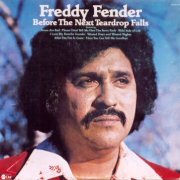 |
Before the Next Teardrop Falls (1974, 30.46) **½/TT½ |
|
| Roses Are Red I'm Not a Fool Anymore Please Don't Tell Me How the Story Ends You Can't Get Here From There I Love My Rancho Grande Wasted Days and Wasted Nights I Almost Called Your Name Before the Next Teardrop Falls |
Wild Side of Life After the Fire is Gone Then You Can Tell Me Goodbye |
|
Current availability:
Mellotron used:
Baldemar Garza "Freddy Fender" Huerta (1937-2006) began his career in 1947, aged ten, changing his name a decade later, allegedly because it would 'sell better with Gringos!' (thanks to Wikipedia for that little gem). After 1959's Wasted Days And Wasted Nights, Fender ran into trouble with the law, eventually putting his recording career on hold for fifteen years. He returned in 1974, recording no fewer than twenty-one country hits over the succeeding eight years, several crossing over into the pop charts. Before the Next Teardrop Falls was his first album, although he was known more as a singles artist, which might explain why it's no longer in print. It eventually coughed up three hits, the bulk of its contents being schmaltzy country ballads, although I Love My Rancho Grande is more Tex-Mex, while several tracks feature Fender singing different verses in English and Spanish.
Leo O'Neil plays Mellotron, with strings on all highlighted tracks above, generally arranged to ape orchestral ones, the best example being You Can't Get Here From There. I suspect a low budget. I can't honestly recommend this album to you, unless you have a yen for cheesy country ballads, although at least he avoids the worst Nashville trappings of the era. A reasonable Mellotronic presence, although not exactly in a prog kind of way. Sadly, Fender died in 2006, after a few years of rock'n'roll lifestyle-related ill health, aged 69.
See: Los Super Seven
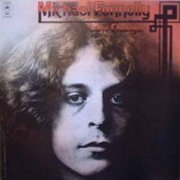 |
Lane Changer (1974, 39.47) ***/T |
|
| Lane Changer Touch My Soul Won't You Please Do That Over My Dead Body Dark Night Easy to Love Shine a Light Bad Times |
Flyer Watch Yerself Give Me Your Money |
|
Current availability:
Mellotron used:
Michael Fennelly was one of legendary '60s producer Curt Boettcher's studio musos, also fronting turn-of-the-'70s hopefuls Crabby Appleton, before going solo and moving to the UK. His first solo effort, Lane Changer, is, at heart, a hard rock album, in that rather unexciting way in which many '70s artists felt compelled to play, although every other track is in a more acoustic vein; 'something for everyone', no doubt. Touch My Soul is vaguely country rock, Over My Dead Body is 3/4 time balladry, Easy To Love is an acoustic blues... You get the picture. Not a bad album, yet also not an especially good one. I think this is the dictionary definition of 'mediocre'.
Guest Rod Argent plays Mellotron strings on Dark Night, with a reasonable but slightly inessential string part. Rumoured other Mellotronnisms from Casey Foutz, although there's nothing obvious to be heard. This isn't something you should rush out and track down, to be honest; it has its moments, but they're few and far between and with one minor Mellotron track, we're not exactly talking 'essential'.
See: The Millennium
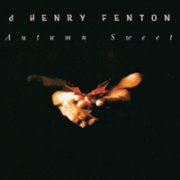 |
Autumn Sweet (2002, 42.41) ***/T½ |
|
| Trouble Comes Autumn Sweet Over n Over Sleep I'm Not Ready for You Lightning Love Only Lies Half Naked Next to Me Slow Down Dixie |
New York Song Only Angels Can Fly The Many Faces of Esther Sad Hotel Jericho's Horse |
|
Current availability:
Chamberlin used:
Aussie D Henry Fenton relocated to the States in 2000, so it's not so surprising that Autumn Sweet has an Americana streak a mile wide, although elements of intelligent pop (notably on Sad Hotel) creep in here and there, too. While diversity is good, the mish-mash of styles on the album can be confusing; just as you think you've got Fenton labelled, he steps one pace to the left and switches genre. Unfortunately, his Americana leanings are more of the Ryan Adams variety than the Beachwood Sparks one, although at least he beats the tedious Dave Matthews into the ground.
Fenton and producer Mitch Easter (R.E.M.) both play Chamberlin on the album, the standout track being opener Trouble Comes, with nice, upfront flutes and high-end cellos. The only other obvious Chamby track is The Many Faces Of Esther, with a high string part, while Over N Over can only manage almost non-existent flutes and there's nothing audible on Sad Hotel at all.
See: Samples etc.
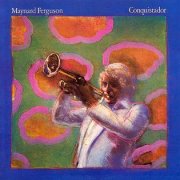 |
Conquistador (1977, 35.57) ***/½Gonna Fly Now (Theme From "Rocky")Mister Mellow Theme From Star Trek Conquistador Soar Like an Eagle The Fly |
Current availability:
Mellotron used:
Canadian jazz trumpeter Maynard Ferguson began his career as a sideman with Stan Kenton, before forming his own band in the mid-'50s. 1977's Conquistador was something like his forty-second album as band leader in twenty-odd years (they work at a different pace in the jazz world...), a rather cheesy soul/disco-infused effort, probably at its best on the title track. Its worst? Undoubtedly the two covers, Gonna Fly Now (Theme From "Rocky") and Theme From Star Trek, the latter bringing out the piece's inherent jazziness, if not in an especially welcome way.
With three credited keyboard players, it's impossible to know who played the Mellotron, although Ken(ny) Ascher's 'previous' on the instrument makes him a more likely candidate than Biff Hannon or Bob James. Whoever it is, they add an occasional male choir part to the title track, although that's our lot. This gets three stars for the talent on display, but I can't honestly recommend it as a meaningful listening experience.
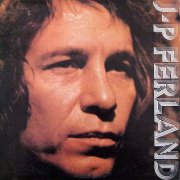 |
Le Showbusiness (1974, 29.28) ***/TTT |
|
| Le Showbusiness Le Pap-pi-Douz Maman, Ton Fils Passe un Mauvais Moment Swingnez Votre Compagnie Une Peine d'Amour Ce Soir-là... Le Système Métrique Une Femme Extraordinaire |
820-0822 La Soucoupe Volante |
|
Current availability:
Mellotron used:
Ferland had been around since the late '50s and, by the mid-'70s seems to have settled into a comfortable musical middle age of mainstream folky pop/rock, with a country edge in places. Le Showbusiness, confusingly sometimes referred to as L'Autobus du Showbusiness, typifies his approach, with, like some many of his Québecois contemporaries, a distinct nod towards the French chanson tradition.
Plenty of Mellotron here, played by Mario Provençal, with flutes all over the title track and more of the same on Maman, Ton Fils Passe Un Mauvais Moment. Une Peine d'Amour and Ce Soir-Là... have orchestrally-arranged Mellotron strings, along with the flutes and is that Mellotron cello I can hear on the latter? More of the same on the last two highlighted tracks, with probably the best use being the slightly menacing chords under the spoken-word section at the beginning of the weird-synth laden La Soucoupe Volante, with what sounds suspiciously like backwards Mellotron flutes further into the song.
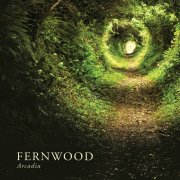 |
Arcadia (2015, 42.09) ***½/½ |
|
| Bells Spring The Pan Chaser Vision at Vasquez Rocks Red Hill Trail The Lost Night Crossing the Divide Owens Hideaway Young Mountain Memory |
After the Big Sky Falls Escape From Sycamore Canyon Winter Way |
|
Current availability:
Mellotron used:
Fernwood consist of Todd Montgomery and Djam Karet's Gayle Ellett, their sound an amalgam of acoustic styles from a myriad of cultures, although (unsurprisingly) the Western folk tradition prevails. Their third release, Arcadia, is a beautiful album, shifting from opener Bells Spring's Irish feel through the accordion of Vision At Vasquez Rocks, The Lost Night and Owens Hideaway's sitar work and Young Mountain Memory's quintessentially American banjo.
Ellett plays Mellotron, but only just, with naught but occasional distant strings on The Lost Night, which also features a sample of a really familiar synth effect that I can't quite place (Pink Floyd?). Not an innovative record in a Djam Karet vein, then, but to expect one would be to miss the point. Quietly beautiful.
See: Djam Karet
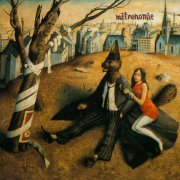 |
Métronomie (1971, 32.12) ***/TTT |
|
| Métronomie Organum Homo-Modernicus Contre Flying Dutchman Bertha Les Enfants de la Patrie Métronomie II Cannabis La Maison Près de la Fontaine Isabelle |
Freak Pour Oublier Qu'on S'est Aimes |
|
 |
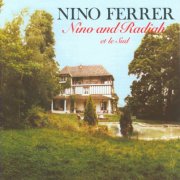 |
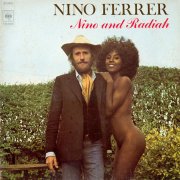
Nino & Radiah (1974, 40.33) ***/TSouthMoses Vomitation Hot Toddy Mint Julep The Garden Looking for You New York |
Current availability:
Mellotrons used:
Nino "Ferrer" Ferrari (1934-1998) was one of France's better-known singers, if not top-echelon, starting his career in the early '60s, already over thirty. He was famous by the time he released Métronomie in 1971, which almost certainly confused his legions of fans by being a bizarre cross between the ye-ye style in which he'd previously worked and... progressive rock. Admittedly, most of its tracks fall into one camp or the other (mostly the other), the nine-minute, three-part title track obviously being the flag-bearer for his new passion, while second track in, Les Enfants De La Patrie is the worst thing here, children's chorus and all. Métronomie II is jazz/prog, Cannabis is jazzy blues, while closer Pour Oublier Qu'on S'est Aimes is more blues/prog, making the album sound more of a blues experiment than anything, which it isn't.
(Presumably) Brit keyboard player Allan Reeves adds Mellotron to several tracks, model unknown, although an M300 is a distinct possibility. We get a single, long string chord and what sounds like muted brass on the title track, flutes, strings and brass on Les Enfants De La Patrie (that children's chorus is real...), ethereal strings on La Maison Près De La Fontaine and Freak and strings and brass on Pour Oublier Qu'on S'est Aimes. Overall, this is one for the Prog Fan With Everything, happy to spend money on an album containing only one or two satisfying tracks, with far more Mellotron than expected, to the point where some of you lot may feel like getting hold of this for that alone.
Luckily, Allmusic gives such a good rundown on 1974's Nino & Radiah that I don't have to do any other research on the album. Ferrer opted to collaborate with African-American actress/singer Radiah Frye, the end result, Nino & Radiah (complete with exceedingly rude sleeve, replaced on later editions), being closer to New Orleans funk than anything especially French. However, its lead-off track, South, was (to Ferrer's fury) reworked into French as Le Sud (added to later editions of the record), becoming a huge hit in the process. Difficult to pick out highlights, unless you're into the album's overall vibe, in which case, it's all good. Maybe Looking For You? Anyway, discreet Mellotron on two tracks from keys man Franck Abel, with background strings on Hot Toddy and closer New York, occasionally giving themselves away when playing chords. Is it that phantom M300 again, I wonder? Thanks to Gilles for pointing me at this one, by the way.
Ferrer's follow-up to Métronomie, '73's Nino Ferrer & Leggs (Leggs being his faithful backing band) has rumoured Mellotron, but it's not only not credited, but hidden away to the point of inaudibility if present at all. Sadly, Ferrer, always unpredictable, shot himself in 1998, ending a career with more ups and downs than the French Alps. RIP.
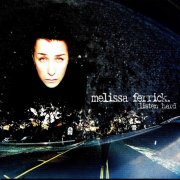 |
Listen Hard (2002, 39.12) ***/T |
|
| Burn This Guitar Shatter Me Back in Love You All for Me Fighting Chance Selfish Side Marie in the Middle |
Let's Fly Thinking |
|
Current availability:
Mellotron used:
After two major-label albums in the early '90s, Melissa Ferrick has spent the last two decades working independently, 2002's Listen Hard being her fifth self-release. It's a fairly typical early 2000s singer-songwriter album, lyrics clearly of more importance than music, although stronger material includes opener Burn This Guitar, Marie In The Middle and closer Thinking.
Wil Masisak plays his own M400 on Marie In The Middle, with muted strings and more obvious flutes; at least, unlike some of the other albums on which he's played, he actually ended up in the mix. I wasn't sure what to expect from this, so its positivity and musicality come as a pleasant surprise.
See: Samples etc.
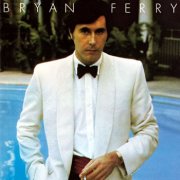 |
Another Time, Another Place (1974, 42.07) ***/T |
|
| The 'In' Crowd Smoke Gets in Your Eyes Walk a Mile in My Shoes Funny How Time Slips Away You Are My Sunshine (What a) Wonderful World It Ain't Me Babe Fingerpoppin' |
Help Me Make it Through the Night Another Time, Another Place |
|
Current availability:
Mellotron used:
Bryan Ferry wasted no time in running a solo career in parallel with his rise to fame with Roxy Music, following 1973's These Foolish Things with the following year's Another Time, Another Place. Another covers set, better tracks include his Roxyfication of Dobie Gray's The 'In' Crowd, Dylan's It Ain't Me Babe and Ferry's only composition here, the closing title track, although we could really have done without the near-seven minute take on the dreary You Are My Sunshine.
Someone (most likely Ferry himself) plays uncredited Mellotron on It Ain't Me Babe, with strings in Ferry-approved fifths appearing around two-thirds of the way through the song. That seems to be it for early solo Ferry Mellotron, as there's nothing on either These Foolish Things or 1976's Let's Stick Together.
See: Samples etc. | Roxy Music
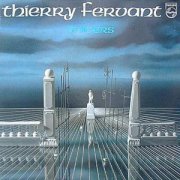 |
Univers (1980, 37.31) ***½/TT½The Garden of FablesUnivers Empyrée Night Ring Spiral Le Château De Feuilles Animals Dance In Fine |
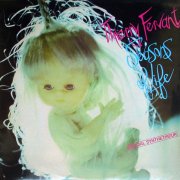 |
Seasons of Life (1981, 39.37) ***/T½OriginsPremices Metamorphosis Initiation Voyages Zenith Chronos Perigree Epode |
Current availability:
Mellotrons used:
Thierry Fervant's an experimental Swiss musician, whose first album (to my knowledge), L'Aube Ne S'est Pas Encore Levée, was released as far back as 1972. Also to my knowledge, he didn't follow it up until 1980, for whatever reason(s), with an instrumental electronic effort titled Univers, unusual acoustic instruments (including a crumhorn) thrown into the mix. There's a distinct Jean Michel Jarre influence in places, particularly during the more rhythmic parts (notably on the title track and, particularly, Night Ring), although the more contemplative pieces are more original, not really sounding like any of the genre's leading lights.
Best tracks? Entirely down to personal taste, of course, but I especially like classical-ish opener The Garden Of Fables, Empyrée and closer In Fine. Although there are no instrumental credits on the sleeve, a very specific online reference leads me to believe that the album was recorded using principally a modular synth, a Mellotron and a Prophet 10, new out at the time. Mellotronically (from Fervant), we get faint choirs and upfront church organ on The Garden Of Fables, choir and strings on the title track, choir on Night Ring and Spiral and church organ and choir again on In Fine, although the church organ's the only sound that's used in any kind of upfront way.
Seasons of Life appeared the following year, utilising real strings, although the overall effect seems rather lesser than on Univers (and rather more Jarre), better tracks including Premices, Initiation and lengthy closer Epode. The only Mellotron use this time round is the background choirs on opener Origins, Perigree and (particularly) on Epode, although I presume the long, drawn-out choir chord at the end of Zenith is something (although I've no idea what) else. Univers is the more inventive of these two albums and also contains more Mellotron, but both of them are worth hearing for the EM fan who has everything.
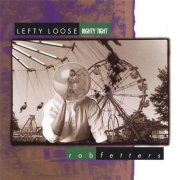 |
Lefty Loose Righty Tight (1997, 42.11) ***½/T |
|
| Try I Don't Fit History Retrofit Your Favorite Guitar Player Every Day Salamander Career Move |
mylifeinadvertising The Blame Game Age of Miracles Where's Dad? Everything's Gonna Be Alright |
|
Current availability:
Mellotron used:
Rob Fetters has played in bands since the early '70s, not least The Bears and Mellotron users Psychodots, first recording in the early '80s. His solo debut, 1997's Lefty Loose Righty Tight (of course you know the reference), is an appealing powerpop album that avoids the more obvious genre tropes, highlights including opener Try, History, Every Day and Age Of Miracles, although, with no duffers, this can be firmly recommended to anyone who appreciates well-crafted intelligent pop.
Fetters' Mellotron finally turns up on Where's Dad?, with wobbly, upfront cellos, flutes and strings that have to emanate from a real machine ('standard' tapeframe sounds, too), although the radical strings pitchbend at one point sounds like a studio effect. Fetters has released another two solo albums in the subsequent two decades, admitting to samplotron use on the latest, 2014's Saint Ain't.
See: Psychodots
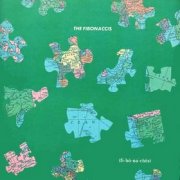 |
Fi-Bo-Na-Chez (1982, 19.15) ****/TTTSergio LeoneSomnambulist The Ordinary Women The Genius Second Coming Maculae Rice Song |
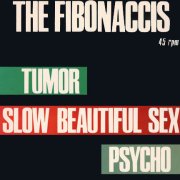 |
Tumor EP (1983, 9.29) ****/TTT½TumorSlow Beautiful Sex Psycho |
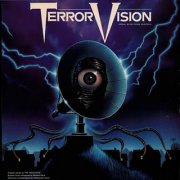 |
TerrorVision (1986, 15.03) ***/T½[The Fibonaccis contribute:]TerrorVision The Friends of Crime Sack of Suit Suite Advice to a Mutant He Can't Stop Laughing |
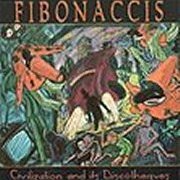 |
Civilization and its Discotheques (1987, 40.25) ***½/TTT½ | |
| March to Heaven Narcissist Had it With Girls Crickets Leroy The Thread Stay Home Medicine Waltz |
Some Men Old Mean Ed Gein Romp of the Meiji Sycophants The Snap |
|
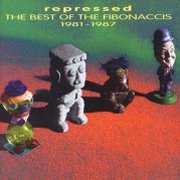 |
Repressed: the Best of the Fibonaccis, 1981-1987 (1992, 79.33) ****/TTTT½ |
|||
| Stay Home Somnambulist Narcissist Ordinary Women The Genius Tumor Anti-Oedipus Sergio Leone Medicine Waltz |
Maculae Rice Song Some Men Lisbon Had it With Girls Psycho Old Mean Ed Gein Tiny Pizzas The Thread |
TerrorVision Leroy Dancing With the Bears March to Heaven Romp of the Meiji Sycophants The Snap Purple Haze Manifesto |
||
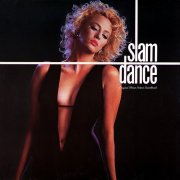 |
Slam Dance (1987) ***½/T[The Fibonaccis contribute]Art Life |
Current availability:
Mellotrons used:
The Fibonaccis were an early-'80s US band who stubbornly resisted categorisation, but who can probably be placed at the weird end of 'New Wave', whatever you take that to mean. Their first EP's title, Fi-Bo-Na-Chez, amusingly told their countrymen how to pronounce their name, not to mention showing them how to be weirder than the weirdest band they could think of, all the while avoiding 'wacky'. Apart from the originality of the music, with a strange cabaret-cum-fairground feel, there's some excellent Mellotron to be heard, with cellos and strings on The Ordinary Women, flutes on The Genius and a creepy string part on Second Coming. A high-speed flute run on Maculae shouldn't be possible on the machine, with more of the same and those creepy strings again on Rice Song, making this something of an obscure Mellotron gem. It was quickly followed by the following year's three-track EP, Tumor, which deals with that very subject in its title track. More Mellotron, especially good on the notorious Psycho theme (a live favourite, apparently), with its discordant strings.
In 1986, the band contributed a handful of tracks to schlock-horror effort TerrorVision, a Z-movie about alien invasion, their songs sharing the soundtrack album with Richard Band's actual soundtrack work. None of their contributions are that jaw-dropping, although the title track and He Can't Stop Laughing are worth hearing. Mellotronically speaking, TerrorVision itself has a choppy choir part, there's a few seconds of something (cellos?) at the end of Advice To A Mutant and a murky choir part on He Can't Stop Laughing. While not the band's finest hour, I still suspect their contributions are easily the best thing about the film.
Never the most prolific of bands, it took The Fibonaccis five years to produce a full-length album; the wittily-titled Civilization and its Discotheques doesn't disappoint, although they had (slightly) curbed the weirdness by this time. Saying that, there are some superb lyrics to be heard, particularly on the sardonic Old Mean Ed Gein. I have to say, it's good to hear an American band, particularly from the '80s with such a well-developed sense of humour (is that patronising? Sorry). Again, plenty of Mellotron to be heard, along with some more straightforward instruments, including a rare sighting of someone doing something interesting with a DX7. Apparently keys man John Dentino used to change his Mellotron tapes several times during gigs in an effort to replicate his studio sound as closely as possible, although he admits "There were maybe two people in the audience who really cared". Strangely, he sold it after the album's release, later regretting his decision.
I rarely review compilations, for the obvious reasons, but in this case it's quite relevant. A few years after their untimely split (never a band for the awful '80s, those Fibonaccis), a CD appeared titled Repressed (ho ho). Six of Fi-Bo-Na-Chez's seven tracks (including all but one of the Mellotron ones) and two of Tumor's three are present and correct (both Mellotron tracks this time), plus nine of Civilization and its Discotheques' twelve, live radio session versions of two more and two compilation appearances, including their, er, 'breathtaking' version of Purple Haze. This leaves five entirely unreleased pieces, plus the two different versions of the Civilization tracks, making this CD worth reviewing, not to mention that it's also the easiest way to get hold of the bulk of the band's back-catalogue and even appears to still be in print. On the Mellotron front, TerrorVision has the choir part referred to above, their bonkers take on Purple Haze manages a few piercing string chords, while of the previously unreleased stuff, the choirs on Anti-Oedipus and strings on Lisbon and Leroy prove that they dragged their Mellotron into KPFK's studios in 1982.
My good friend Mark Medley has put me onto the band's contribution to Mitchell Froom's soundtrack to '87's Slam Dance flick, a brief effort entitled Art Life. Very typically Fibonaccian, its angular weirdness fails to conceal a brief, choppy Mellotron flute part repeated a couple of times. Shame this didn't make Repressed, but I imagine copyright issues intervened. Incidentally (and I have to include this), the guy who wrote the long review of the album on Amazon commented that he'd heard a snippet of the Fibonaccis on a Star Trek TNG episode, representing an alien culture's music, which just about says it all. In the nicest possible way, of course.
 |
Dear Shanghai (2014, 22.05) ***/TOde to SpringDear Shanghai Manli Look at Me Plum Blossom Daydream Wind and Rain Lullaby |
Current availability:
Mellotron/Chamberlin used:
Although Jessica Fichot's usual field is, I'm told, French chanson, Dear Shanghai celebrates her mother's hometown, the end result being a brief, yet pleasing run-through of various flavours of '40s jazz. Sung in Mandarin Chinese. The funny thing is, were I not listening closely, I probably wouldn't have noticed, as her vocal delivery is Western, rather than Oriental, avoiding the innate nasality of the language. The material is a mixture of standards and originals, although, for the uninitiated, it's difficult to tell which is which. Best track? Possibly exuberant opener Ode To Spring (the titles are all, incidentally, translations. Not mine).
Paul Bryan plays Mellotron and Chamberlin, with strings and flutes on the title track, most likely the strings from the Chamby and flutes from the Mellotron, although it's rather difficult to tell.
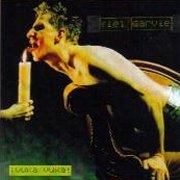 |
¡Vuka Vuka! (2000, 46.02) ***/TT½ |
|
| Right Out and Forced Risk Hold on Better Gaze Than Fear A Man Glass Faced Warrior Dress Down Difference of Me |
Shuffle Deliberately Alright For What I Love OK K |
|
Current availability:
Mellotron used:
Norwich's Fiel Garvie have been compared to P.J. Harvey, Tricky and even Björk, but to my ears they strongly resemble a more electronic version of yer typical UK indie thing, at least on debut ¡Vuka Vuka!. Online reviews seem split on whether or not they're any good, one notably dismissing them as goth-wannabee rubbish and others praising their ethereality and Anne Reekie's downbeat vocal stylings. What do I think? Dunno, mate - this sort of thing really isn't my department, but what I will say is that despite their playing a style with which I'm pretty unfamiliar and in no way a fan, the album didn't distress or even especially bore me at all, which you can probably read as some sort of recommendation.
Reekie also plays guitar and keys, with a specific 'Mellotron' credit and she's as good as her word, getting it onto five of the album's twelve tracks. Better Gaze Than Fear has cellos stuck through an effect (tremolo? Synth modulation?), with more cellos on Glass Faced Warrior and Dress Down, plus an upfront string part on the latter. Cellos again on Deliberately Alright and For What I Love, with extra flutes on the former, making for a reasonably fulfilling Mellotronic experience, particularly if you're into (for once) very audible cellos. So; not exactly one for the prog fan, or indeed, anyone into rock as against pop, but not a bad listen and some very nice (and seemingly genuine) Mellotron work.
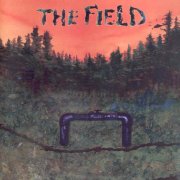 |
The Field (1996, 43.08) ***/TTT |
|
| A View Here I am Goodbye to Innocence A Glimpse Take Back Your Poison Same Old Seed The Owners Hydroplane |
Attention Residents The Field |
|
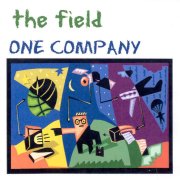 |
One Company (2000, 53.48) ***/TT½One CompanyAs Above, So Below Knee Jerk Reaction Alley/Boardroom Out in the Flats Dogma Laying Low Who Are the Men? The Little Things... Exploiters Exploited |
Current availability:
Mellotrons used:
The Field by The Field. How are you supposed to find any references for that on the 'Net? The Internet was well on its way to its current ubiquity in the '90s, so the band were either being dim or simply not giving a toss. Anyway, the album's loosely 'progressive', although there's something of a dearth of ideas on many tracks, leaving a handful of better efforts such as The Owners to rescue the project. It's an ambitious work that seems to have some kind of concept, but a lack of great material hampers it badly. Steve(n) Sofranko plays Mellotron, although it's been recorded so badly, you have to listen closely at times to realise that's actually what it is. Assuming it's real, that is and not some crummy samples... Anyway, strings on the first three tracks, flutes on A Glimpse and Take Back Your Poison, then strings on the last two tracks, with a wonderfully cranky part on Attention Residents. Overall, this album's obscurity is surprising, given its relatively recent release, but while it has its moments, it doesn't really cut it in the world of the professional progressive album. Not bad, but not that good, either.
One Company (apparently only ever available on CD-R) is dated 2000, but like their debut, it seems likely that it's never received an official release. Like that album, it seems to be a concept work and like its predecessor, it's a little short on good musical ideas. Parts of it are actually better produced than The Field, but a more 'metal' sound, with a couple of superfluous guitar solos, has not dated well. Sofranko on keys again, Mellotron on most tracks, with choirs on the first two parts of the title track and strings on the third, strings and choir mixed on Out In The Flats, strings on Laying Low, flutes and a choppy choir part on Who Are The Men? and choirs on The Little Things... Unfortunately, as on its predecessor, the Mellotron is recorded fairly badly on most tracks and isn't used that heavily, making for a relatively low 'T' rating. Overall, then, a better sound than their debut, but mostly less good material, evening out in the long run. 'Fraid I've no real idea where you can get this, although the band might just send you a copy if you can get hold of them.
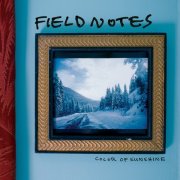 |
Color of Sunshine (2005, 40.45) ***/TRacing the LanesSister Says Full Circle Strangest Things Color of Sunshine These Days Always Who's Fooling Who Lonesome Microphone |
Current availability:
Mellotron used:
While incontrovertibly indie, Chad Hanson's Field Notes' Color of Sunshine succeeds where so many others fail, marrying mournful vocal melodies to sparse instrumentation, mostly without becoming monotonous. Highlights? Probably Sister Says, the title track and closer Lonesome Microphone, although a couple of lesser tracks slightly outstay their welcome.
Hanson plays upfront, exceedingly real-sounding Mellotron cellos and clicky flutes on Lonesome Microphone, to good effect; why not use such a distinctive sound a little more often? Perhaps it's too distinctive. Not the best album you'll ever hear, but a superior indie effort.
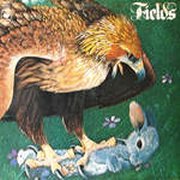 |
Fields (1971, 40.16) ***½/½ |
|
| A Friend of Mine While the Sun Still Shines Not So Good Three Minstrels Slow Susan Over and Over Again Feeling Free Fair-Haired Lady |
A Place to Lay My Head The Eagle |
|
Current availability:
Mellotron used:
Fields consisted of keyboardist Graham Field, ex-Rare Bird (of Sympathy fame), drummer Andrew McCulloch (ex-King Crimson and future Greenslader) and Alan Barry, who covered vocals, guitar, bass and Mellotron, so God alone knows how they reproduced their material live. I've always been under the impression that Fields' sole album was going to be a rather laid-back dated effort and, indeed, some of it is, but opener A Friend Of Mine powers along very nicely indeed, with some unusual (for the time) double-kick drumming, several other tracks confounding expectations by being far more dynamic than expected.
Despite Barry's 'Mellotron' credit, unless I'm very mistaken, there are about two string chords near the beginning of The Eagle and that's yer lot, so not exactly a Mellotron album, then. Fields is a varied and interesting record, though and I'm surprised it doesn't have a higher profile amongst progressive fans, so try to hear it anyway.
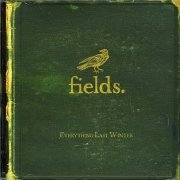 |
Everything Last Winter (2007, 49.11) ***/T |
|
| Song for the Fields Charming the Flames You Don't Need This Song (to Fix Your Broken Heart) Feathers Schoolbooks The Death You Brought This on Yourself Skulls and Flesh and More |
If You Fail We All Fail Parasite |
|
Current availability:
Mellotron used:
How do you describe Fields? Transcendent indie? Folk electronica? All of the above? There was apparently a great deal of hype surrounding their debut album, 2007's Everything Last Winter, after a run of lauded singles; opinion seems divided on whether or not it lives up to it. As a neutral outsider, I can say that at its best (Song For The Fields, Charming The Flames), it really is quite transcendent, but at its worst (The Death, Skulls And Flesh And More), it merely bores the casual observer.
You Don't Need This Song (To Fix Your Broken Heart) features some very real-sounding Mellotron flutes (and something else?), key-click and all, from either Nick Peill or Icelander Þórunn Antonía and, despite some other Mellotronlike sounds here and there, I believe that's it on the tape-replay front. Generally speaking, this isn't worth buying for one Mellotron track, but those who like some folk with their indie (or vice versa) may well go for this.
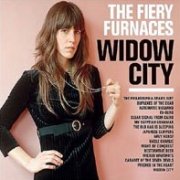 |
Widow City (2007, 59.05) ***/TTTTT |
|
| The Philadelphia Grand Jury Duplexes of the Dead Automatic Husband Ex-Guru Clear Signal From Cairo My Egyptian Grammar The Old Hag is Sleeping Japanese Slippers |
Navy Nurse Uncle Charlie Right By Conquest Restorative Beer Wicker Whatnots Cabaret of the Seven Devils Pricked in the Heart Widow City |
|
Current availability:
Mellotron/Chamberlin used:
I've been aware of indie darlings the Fiery Furnaces for some time, but I've been caught on the hop with their sixth album, Widow City. For some unknown (though far from unwelcome) reason, the 'musician half' of the brother/sister duo, Matthew Friedberger, has opted to slap Chamberlin all over the album and I mean ALL OVER. I will admit to not being so keen on the music; in all honesty, I really don't understand where they're coming from, to the point where I couldn't even name their influences, although the music press seem to be all over them like a rash. The 'singer half', Friedberger's younger sister Eleanor, makes up for a less-than-arresting voice by half-speaking many of the lyrics, although she copes admirably well with her brother's offbeat compositional twists. Is this the New Prog? (Pt. 96). I can see how this grabs people, although I'm afraid it's failed to grab me; my fault, I'm sure, but I just can't warm to this record.
Although I've seen references to Friedberger Major playing both Mellotron and Chamberlin on the record (notably on Discogs), I've seen others, including an official record company one, that only mention the Chamby, so who knows? Whatever it is, or they are, it's/they're on almost every damn' track and, unlike so many supposedly Chamby-heavy albums, it's never lost in the mix. Several near-solo sections, too, like the brass on Automatic Husband or the beautifully clunky string intro to Restorative Beer, but to be honest, it's only ever a brief wait before another woodwind or string line appears. Do you want to know what a Chamberlin actually sounds like? Buy this album; like a tiny handful of others I've heard, it's practically a demo record for the instrument. And who knows? It may yet grow on me.
See: Matthew Friedberger
 |
 |
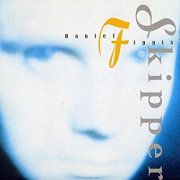
Skipper (1994, 39.22) ***/½ |
|
| Peasoup'r Glimmerer My Poor Little House Without Me in it Alison Creaking The Please Front Egg & Anchor Lucky's Bad Day Foghorn |
Bolted Seventythree |
||
Current availability:
Mellotron used:
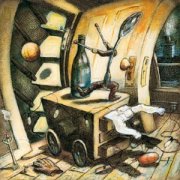
Unsurprisingly, I've seen Daniel Figgis described as a 'film soundtrack composer'. His first album, 1994's Skipper, picked up press accolades along the lines of 'like a collaboration between Claude Debussy and Peter Gabriel', 'an aural kaleidoscope' and 'flush with melody yet tirelessly inventive'. In précis, it takes traditional Irish sources and combines them with elements of '90s electronica, jangly indie and others, creating a fascinating soundscape in the process. I can't honestly say it's something I'll return to in a hurry, but that says more about my taste than it does about this strangely timeless music.
Figgis is credited with Mellotron on Glimmerer; given when this was recorded, sample use seems rather less likely than from even a year or two later, so perhaps it's real? The album was partially recorded in London (I don't believe there are any Mellotrons in Ireland), so they may well've hired one in. Anyway, occasional, near-dissonant flutes on the track, clearly not the actual credited flute, in a 'don't go out of your way on that account' kind of way. So; good at what it does, if you like what it does. If you get my drift.
 |
Low-fi at Society High (1994, 45.38) ***/T |
|
| Step Back Let's Go Pop Favorite Shirt Wasted Pretty Bus Slowdown Chevy Nova Ginger Shut |
Cherry Blow Pop Jump Start Stood up! Asphalt Waltz for Bob Charlotte Pipe Tint |
|
 |
Banda Macho (1996, 44.30) ***/T |
|
| Blame it All Senseless Mold Bad Luck Sammie Supreme Fashion Hey! Mr. Moonman Girl, Kill Your Boyfriend FTMU Slugwig Choker |
Reject Red Bank Queen This Copy's Mine Another View Dandruff (You've Got a Lot of Friends) Powder King Kiss Off Baby Every Night |
|
 |
Sucking in Stereo (2000, 31.10) ***/½ |
|
| Opening Night The Daylight Strong Reaction Somethings Wrong Racing Around Set the Stage The Wrong Chord Gonna Get Out |
Running in Place Dance Lesson Do the Bounce Cheap Cassettes (untitled) |
|
Current availability:
Mellotrons used:
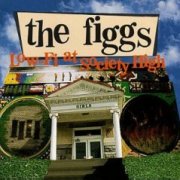
Low-fi at Society High was The Figgs' first non-cassette release, showcasing their passable take on pop-punk, apparently sounding not a million miles away from The Replacements (I really must listen to them one day). This really is the kind of stuff you need to be into to appreciate, I suspect, as I like some of their forbears, not least The Buzzcocks, but this doesn't really grab me. Jump Start is more appealing than the bulk of the record, which is too long for the style, despite still being 'vinyl length', while being far too samey to hold the attention of anyone not heavily attuned to the genre. Mellotron on two tracks from Pete Donnelly, with a brief string part, mixed far too low, on Wasted Pretty and flute and string parts on Waltz For Bob, again, too low in the mix.
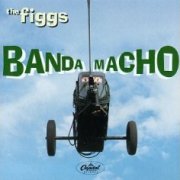
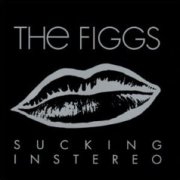
Two years on and their only major-label album, Banda Macho, is more of the same, basically, albeit with a slightly wider influence base, little bursts of near-country making themselves apparent here and there. Mellotron from Donnelly and Mike Gent this time round, with (presumably) Donnelly playing a handful of flute notes on Girl, Kill Your Boyfriend and Gent adding high flutes to FTMU, though that would appear to be your lot. Four years and three albums later, Sucking in Stereo appeared. What impulse makes bands give albums titles that are so easy to deliberately misinterpret? OK, this doesn't actually suck, but the pun is too obvious for words. The Figgs seem to have developed their pop sensibilities a little in the intervening years; the album's certainly more melodic than its predecessors, although it isn't much more interesting, unfortunately. Just Gent on Mellotron this time, with flutes and stabby strings on The Wrong Chord.