




|
|
|
|
||
|
 |
Collisions (2020, 57.23) ***/T |
|
| On the Green Moor The Armrests Are Down The Boston Holler Friend From the Fields Saucer and Cup Sally Free and Easy Snowy Wood Hurtin' |
After Lunch Enter My Cave Green on Redd Homecoming |
|
Current availability:
Mellotron used:
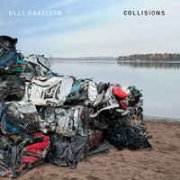
What is it about Scandinavia and Americana, in its wider sense, Finland in particular? Noted Finnish pedal steel player Olli Haavisto could very easily be American on 2020's largely instrumental Collisions, even on his occasional vocal numbers, album highlights including mournful opener On The Green Moor, After Lunch, which powers along nicely in an unusual country/drone rock crossover zone and acoustic-and-harmonica closer Homecoming.
Esa Kotilainen plays one (or both?) of his M400s, with a flute line on On The Green Moor and wafting strings (no, they really do) on Enter My Cave. Very accomplished, if aiming for a specific market, but not really enough Mellotron to be of much interest here.
See: Esa Kotilainen
Steve Hackett (UK) see: |
 |
 |
Beau Haddock (1979, 32.17) ***/TStreets and FactoriesA Parting Song Song to the Sea Autumn Song The Band |
Current availability:
Mellotron used:
Charles R. "Beau" Haddock (1953-2018) played in a Kentucky-based folk/rock outfit called The Little River Band in the '70s. A thought: did they split just because, y'know, they split, or was pressure applied by a slightly better-known Aussie outfit of the same name? Anyway, according to Discogs, his eponymous 1979 debut was the first of three, widely-spaced releases, a strangely out of time recording of mildly psychedelic, folky singer-songwriter material. Highlights? Eleven-minute opener (told you it was mildly psychedelic) Streets And Factories, maybe, complete with warbling flute throughout, and Autumn Song, although A Parting Song slips seamlessly into a light jazz/MOR crossover, but the overall mood is, at worst, harmless.
Ed Dansereau plays Mellotron, with a carefully-arranged cello part running through Autumn Song. Not psych or prog enough to excite the reissue labels, this only escapes utter obscurity due to YouTube's largesse (again). Nothing special, but the Mellotron track's worth hearing.
 |
Devoted (2007, 44.29) **/½ |
|
| Light of Day Devoted Show You the Way Discontent Broken Heart Do it Again Drifting Want You So Bad |
Hallelujah Love You More Salvation |
|
Current availability:
Mellotron used:
Josh Haden is a New Yorker, vocalist/bassist with Spain, from LA; no, I've never heard of them, either, but they've released a raft of albums, so someone must like them. 2007's Devoted is his sole solo album to date, difficult to describe: hip-hop-infused jazz/indie? Told you it was difficult... Haden's upfront, confessional voice is something you'll most likely either love or hate. Guess how I feel? Musically, this sounds like looped sections of melodic phrases, played on various instruments, rather than an actual band, resulting in an uneasy mashup of hip-hop and the wetter end of the indie spectrum. There are no obviously better tracks.
John Medeski plays (presumably) his own M400, with a high, deliberately wobbly string line on Drifting, although all other potential sightings are most likely something else. I didn't like this album. I didn't like this album one little bit. I expect it shows.
 |
Abandoned Luncheonette (1973, 37.14) ***/TWhen the Morning ComesHad I Known You Better Then Vegas Turnaround (The Stewardess Song) She's Gone I'm Just a Kid (Don't Make Me Feel Like a Man) Abandoned Luncheonette Lady Rain Laughing Boy Everytime I Look at You |
 |
War Babies (1974, 43.25) ***½/½ |
|
| Can't Stop the Music (He Played it Much Too Long) Is it a Star Beanie G. and the Rose Tattoo You're Much Too Soon 70's Scenario War Baby Son of Zorro I'm Watching You (a Mutant Romance) Better Watch Your Back |
Screaming Through December Johnny Gore and the "C" Eaters |
|
 |
Daryl Hall & John Oates (1975, 34.57) **½/½ |
|
| Camellia Sara Smile Alone Too Long Out of Me, Out of You Nothing at All Gino (the Manager) (You Know) it Doesn't Matter Anymore Ennui on the Mountain |
Grounds for Separation Soldering |
|
Current availability:
Mellotrons used:
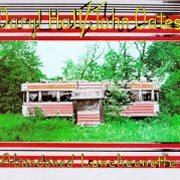
By Hall & Oates' second album, 1973's Abandoned Luncheonette, they'd already got their white-boy soul thing down pat, although they were (thankfully) nowhere near as slick as the Philly Soul sound emanating from their hometown. In fact, with different arrangements, most of the songs here would be standard singer/songwriter fare; they're soul more because the duo wanted them to be than because they inherently were. Actually, there's more variety here than I'm giving them credit for; as side two progresses, the duo move further and further from their remit, until by the (relatively) lengthy Everytime I Look At You, there's a full-on country fiddle hoedown in action. Christopher Bond plays Mellotron on a couple of tracks, but the album's string arrangements make it difficult to identify most of the time; are the flutes on When The Morning Comes Mellotron or real? The strings on the album's hit, She's Gone, are largely real, until a huge pitchbend that has to be tape-replay generated, while the polyphonic flute part on I'm Just A Kid (Don't Make Me Feel Like A Man) is definitely Mellotron. I'm not 100% on this one, but it doesn't half sound like Mellotron strings on Everytime I Look At You, too.
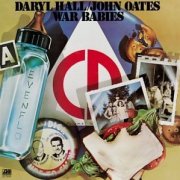
The duo have apparently effectively disowned the following year's Todd Rundgren-produced War Babies, which, like so many Todd productions (Meat Loaf, Grand Funk), ends up sounding like a Todd album with someone else singing. Of course, that doesn't make it a bad album (at least to everyone else), just a not bad Todd album. Better tracks include Is It A Star, War Baby Son Of Zorro and the bizarre, space-soul Screaming Through December, although the overall effect for this non-fan is of a better album than its predecessor, probably because this non-fan actually prefers Todd Rundgren. War Baby Son Of Zorro is the album's only Mellotron track (from Hall or Don York), with a repeating flute part somewhat buried in the mix, the descending string line on Is It A Star sounding more like a string synth.
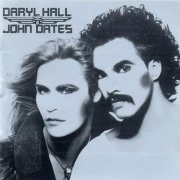
The duo were back on white-boy soul track for '75's Daryl Hall & John Oates, camp sleeve art and all. To be honest, while it's obviously more in line with their vision, it's also rather more dated than War Babies, not to mention rather less interesting, with no obvious standout tracks. Mellotron from Hall or Clarence McDonald, with a string part on Alone Too Long that sounds like it should've been a real string part, so I've no idea why they elected to play it on the keyboard. It's possible it rears its head on another track or two, but it's pretty hard to tell when real strings are also utilised.
See: Samples etc.
 |
In This (2011, 39.58) **½/T½ |
|
| I'll Follow Green and Blue When We Were Good Wash Away Please Leave Forget My Name Too Busy Dreaming Young Things |
Like I Lie to You Oceans Please Leave (reprise) |
|
Current availability:
Mellotron used:
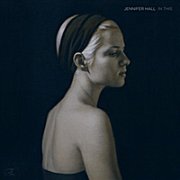
Chicagoan Jennifer Hall's debut, In This, is a singer-songwriter album with a noticeable jazz and soul influence, probably at its best on the energetic When We Were Good and the gentle Oceans, while Please Leave (Reprise) picks the best bits out of the original song.
Jim Licka (The Luck of Eden Hall, Umbra & the Volcan Siege) adds his M400 (I don't think he owned his M4000 at this point) to a couple of tracks, with heavily-reverbed strings and flutes on Please Leave (and its reprise, that closes the album) and strings on Young Things. Not that exciting, I'm afraid, but some decent (and absolutely genuine) Mellotron work.
 |
Hello it's Me (1975, 32.22) **½/½ |
|
| Hello it's Me Peace in the Valley Time Will Tell Banquet Wheelers and Dealers Happy Woman Exclusively for Me Save the Sunlight |
Sweet Jams and Jellies Corrida de Jangada |
|
Current availability:
Mellotron used:
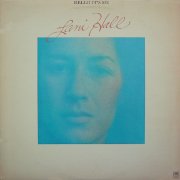
Lani Hall wife of A&M's inimitable Herb Alpert, broke through after being spotted by Sérgio Mendes and asked to join his bossa/pop project Brasil '66. 1975's Hello it's Me was her second solo album, a fairly middle-of-the-road run through songs by Todd Rundgren (the title track, of course), Joni Mitchell (the caustic, oddly out-of-place Banquet), Chicago's Peter Cetera (Happy Woman Happy Man) and ex-Zombie Colin Blunstone (Exclusively For Me). Hall's excellent voice carries all the material, although I'd be lying if I said the album contained an awful lot of excitement.
Clarence McDonald plays keys on several tracks, including Mellotron on Hall's lone composition here, the balladic Sweet Jams And Jellies, with a gentle polyphonic flute arrangement that neither adds to nor subtracts from the song. Overall, a perfectly respectable album of its type, if a little dated and, frankly, rather dull to ears attuned to the era's rock output.
 |
Travelin' (1975, 45.00) ***/T |
|
| Travelin' Pay the Penalty Pass Me By City Life Roseport 5:05 Travelin' (All Together) Peaches Bonnie & Ödie |
Ballad of a Poor Man Glaciers |
|
Current availability:
Mellotron used:
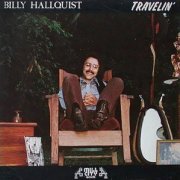
If Minnesotan Billy Hallquist (1949-2015, ex-Thundertree) can be said to be known at all, it's for his first album, the 'druggy psych-folk' 1973's Persephone. I haven't heard it, but, unfortunately, by his second (and, seemingly, last) album, '75's Travelin', Hallquist had dropped any psychedelic inclinations, ending up with a perfectly pleasant, if unremarkable folky singer-songwriter album, possibly at its best on its opening title track, the balladic Pass Me By and Ballad Of A Poor Man.
Keith Gause plays Mellotron on Pass Me By, with a gentle, wavery string part overdubbed with a splendidly out of tune flute melody. Although good at what it does, I'd struggle to really recommend this, although you can hear it on YouTube or Spotify. What did I say? "Perfectly pleasant, if unremarkable".
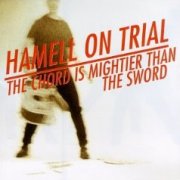 |
The Chord is Mightier Than the Sword (1997, 44.25) ****/T½ |
|
| Mr Fear No Delays The Vines Red Marty Confess Me New World Decisions John Lennon |
Mark Don't Go In a Bar The Meeting |
|
Current availability:
Mellotron used:
When is a punk not a punk? When he's Hamell on Trial's Ed Hamell, who, for all his insistence on being a 'punk', plays acoustic guitar and sings confessional songs in a good, non-Carole King kind of way. The 'punk' bit clearly refers to his attitude, which is an awful lot more 'punk' that, say, those fakers The Clash, who were about as 'punk' as my arse. Less, actually. Funnily enough, Hamell namechecks them on his fourth album, 1997's The Chord is Mightier Than the Sword's final track, The Meeting, one of an excellent album's best tracks, along with John Lennon (heartfelt) and The Vines (just plain odd).
Phil Nowlan and Randy Cantor play obviously real Mellotron, with flutes and strings on The Vines and strings on In A Bar, including a solo section at the end of the song. Despite a couple of reasonable Mellotron tracks, this isn't something you'd think about buying for that alone, but as a punk/folk (for want of a better term) album with a smattering of Mellotron use, it's a winner.
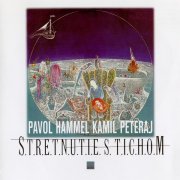 |
Stretnutie S Tichom (1977, 40.39) **½/TT½ |
|
| Stretnutie S Tichom Poklony L'Ahký Kabát Mladosti Na Snehový Hárok Pieseň o Stratenej Vianočnej Rozprávke S Úsmevom Podnájom Zrkadlenie |
Pieseň o Vtákovi V Hlbokej Noci Detský Plač Dievčatá v Oblakoch |
|
Current availability:
Mellotron used:
Going by 1977's Stretnutie S Tichom (Meeting With Silence), Pavol Hammel is a Slovak singer-songwriter, Kamil Peteraj being his lyricist. The album is terribly tame, but then, I'm sure that was precisely the idea, mainstream pop/rock being a reliable way to an audience's heart (and wallet). It's probably at its best on the vocally inventive S Úsmevom and the heavy(-ish) Podnájom, but I'm afraid it's all a bit unexciting.
Karol Slavkovský plays Mellotron, although I've no idea whether Opus Studio owned a machine or not. Anyway, we get occasional strings on the opening title track, flutes and strings on L'Ahký Kabát Mladosti and Detský Plač, occasional flutes on Podnájom and Zrkadlenie and upfront strings on closer Dievčatá v Oblakoch, making for a surprisingly satisfying Mellotron album, all things considered.
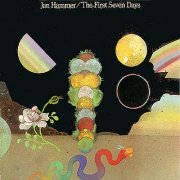 |
The First Seven Days (1975, 39.36) ****/TTTTDarkness/Earth in Search of a SunLight/Sun Oceans and Continents Fourth Day - Plants and Trees The Animals Sixth Day - the People The Seventh Day |
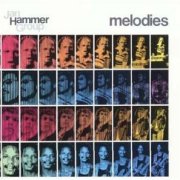 |
Melodies (1977, 41.29) ***/T½ |
|
| Too Much to Lose Peaceful Sundown I Sing Honey 5379 Window of Love What it is Don't You Know Just for Fun |
Hyperspace Who Are They? Your Love |
|
Current availability:
Mellotrons used:
Yeah, yeah, I know Jan Hammer made it big in the States, but he's from Prague. (In)famous in the '80s for his cheesy TV themes (Miami Vice springs to mind), Hammer was/is a consummate jazz musician, having played in the original Mahavishnu Orchestra and with Jeff Beck, on top of his solo output. The First Seven Days was his first solo release and states on the rear sleeve, "For those concerned: There is no guitar on this album". Indeed there isn't. There are, however, swathes of excellently-played keyboards of a pleasingly mid-'70s variety, with Hammer making noises with his MiniMoog that just shouldn't be possible; no, that isn't slapped fretless bass on The Animals. The material is surprisingly unjazzy most of the time, although the occasional Mahavishnuesque lead line gives the game away. About the best description I can come up with for most of the album is instrumental keyboard-led, largely drumless progressive, so don't let Hammer's reputation put you off.
Much Mellotron abounds, particularly cello, with top-end-of-the-keyboard polyphonic parts on more than one track, not to mention the inimitable strings, particularly on Darkness/Earth In Search Of A Sun and Sixth Day - The People. The latter track features what sounds like both male and female choirs and I'm sure there's some Mellotron flute in there, too, so I presume he had more than one tape frame. I was led to believe that there were only a couple of Mellotron tracks here, although some of his use is so subtle that it could almost be mistaken for actual orchestral instruments.
Melodies, from two years later and billed as The Jan Hammer Group, is another matter entirely. Not only does it contain guitar (from Steve Kindler), but Hammer's style had largely shifted into the proto-fuzak for which he's known and loved (?) to this day. Saying that, I Sing is an acoustic guitar/vocal number (there are vocals all over the album, mostly from drummer Tony Smith), with nowt but a trademark MiniMoog solo to indicate Hammer's input, sounding remarkably like Happy the Man, strangely enough. Kindler also plays some killer electric violin on Hyperspace, almost certainly the album's best track, as it's almost the only one that doesn't sound like it's striving to be played in a lift somewhere, albeit a fairly weird lift. Hammer keeps the Mellotron to a minimum this time round, with strings and (mixed?) choir on opener Too Much To Lose, though well in the background, with an even more background strings part on Don't You Know. Closer Your Love has definite flutes and maybe strings, alongside Kindler's violin and (presumably) real cello, but that's your lot.
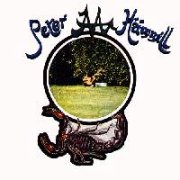 |
Chameleon in the Shadow of the Night (1973, 48.52) ****/TGerman OverallsSlender Threads Rock and Rôle In the End What's it Worth Easy to Slip Away Dropping the Torch (In the) Black Room The Tower |
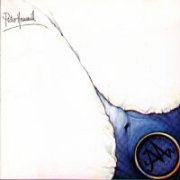 |
The Silent Corner & the Empty Stage (1974, 49.50) ****/TTModernWilhelmina The Lie (Bermini's St. Theresa) Forsaken Gardens Red Shift Rubicon A Louse is Not a Home |
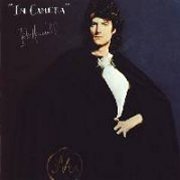 |
In Camera (1974, 48.01) ****/TFerret & Featherbird(No More) the Sub-Mariner Tapeworm Again Faint-Heart & the Sermon The Comet, the Course, the Tail Gog Magog (in Bromine Chambers) |
Current availability:
Mellotrons used:
Peter Hammill was, of course, mainman of one of the greatest (relatively) unsung heroes of the prog world, the mighty Van der Graaf Generator, who finally split in 1978, after a turbulent ten years, including a several-year period of inactivity in the mid-'70s. Hammill had already kick-started his solo career alongside VdGG, although he was also their chief writer; Fool's Mate (***½) was a reasonable start, but many of the songs strike me as uncharacteristically cheerful, presumably because he utilised his material that didn't work for Van der Graaf.
Recorded in the middle of Van der Graaf's down-period, Chameleon in the Shadow of the Night is more what we've come to expect from the man; doom, gloom and a scorpion on the sleeve. Despite the intensity of the instrumental work, Hammill's music is essentially singer-songwriter material, making little sense without a lyric sheet and enough commitment from the listener to actually listen to the words. German Overalls namechecks other band members, giving vital clues to the band's initial breakup, while pretty much every other lyric on the album delves deeply into his psyche, dredging up sorrow, regret, pain... Yup, this is full-on miserablist stuff, but by God, it works! Hammill credits himself with 'one flight of Mellotrons', which come blasting in halfway through Easy To Slip Away (namechecking Mike and Susie from VdGG's Refugees), with a highly effective string part, close to distortion. Not a Mellotron album as such, but essential listening for progressive rock fans who wish to dive below the surface.
The Silent Corner & the Empty Stage is more of the same, unsurprisingly, although track lengths are increasing, closer A Louse Is Not A Home topping the twelve-minute mark. There's very little drumming on the album, which sounds slightly odd until you get used to it, but it gives the rest of the instruments space to breathe, without having to compete with the relentless rhythm the whole time. Two Mellotron tracks this time round; opener Modern has string chords here and there, while Wilhelmina has more of the same, but much more so, not to mention what could be something from the Mellotron brass family. Saxes? I'd be surprised, because VdGG's David Jackson tends to deal with that end of things on Hammill's albums. Whatever. In Camera ups the intensity stakes yet again, with an excellent multi-monosynth arrangement on (No More) The Sub-Mariner and Hammill's most out-there piece ever, the second half of the lengthy Gog/Magog sequence that closes the album. Side one closes with Faint-Heart & The Sermon, layered in Mellotron strings, with cellos on the intro; a real tour-de-force on every front.
My brother and I have argued long and loud over whether or not you can hold Peter Hammill responsible for the atrocities subsequently committed in his name, namely, Marillion and Fish's appalling lyrics generally (strange, for such an intelligent man). Of course you bloody can't; you might as well blame Green Day on the Sex Pistols; OK, so Hammill's lyrical style is way over the top and melodrama's his middle name, but is it his fault if lesser mortals only scrape the surface of his talent, collect the handful of dust thus obtained and call it 'art'? Or am I just being totally pretentious? Many critics would level that accusation at Hammill, but it's no crime to bare your soul in public, however uncomfortable it may make your audience feel. No-one made them turn up...
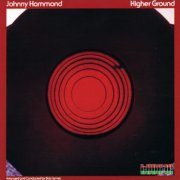 |
Higher Ground (1974, 37.05) ***½/TCatch My SoulSummertime/The Ghetto Higher Ground Big Sur Suite |
Current availability:
Mellotron used:
I don't know if Higher Ground is a typical Johnny "Hammond" Smith album, but if so and you're allergic to jazz, you should probably vamoosh right now. Actually, it's more a blues/jazz jamming record, rather than straight bebop or whatever, with Hammond on, er, Hammond and plenty of brass scattered about (would jazz ever have happened without the development of the saxophone? Discuss) and a complete lack of vocals, which going by most jazz vocal work, has to be a bonus. Three of the four lengthy tracks are covers, with the overly-familiar Summertime getting an airing, here interwoven with The Ghetto, while the title track is a Stevie Wonder composition, only closer Big Sur Suite being Hammond's own work.
Bob James plays Mellotron on one track, with an occasional cello line and some volume-pedalled string chords on Summertime/The Ghetto, although the rumoured use on Big Sur Suite turns out to be no more than rumour. So; an album for jazzers and/or Hammond (organ or man) enthusiasts, less so for Mellotron nuts, although there's passable use on one track.
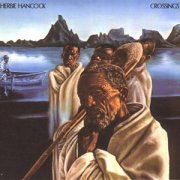 |
Crossings (1972, 46.10) ****/TSleeping GiantQuasar Water Torture |
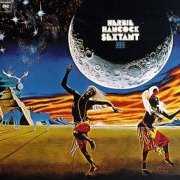 |
Sextant (1973, 39.12) ****/T½Rain DanceHidden Shadows Hornets |
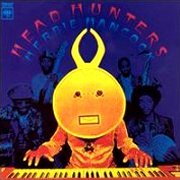 |
Head Hunters (1973, 41.49) ****/½ChameleonWatermelon Man Sly Vein Melter |
Current availability:
Mellotrons used:
By 1972, keyboard whizz Herbie Hancock had already proved himself in the jazz field many times over, refusing to stick to any one style for long, infuriating purists in the process. Five years in Miles Davis' mid-'60s outfit set him on the road to solo success, forming one of the first fusion outfits at the tail end of that decade. By 1972's Crossings, Hancock was playing a largely improvised form of guitarless jazz/funk/rock, covering acoustic and electric pianos himself, while leaving the album's synth work to Patrick Gleeson. The playing is, as you'd expect, absolutely phenomenal and, while jazz is most definitely not my area, you'd be a fool not to be knocked back by the expertise shown here. The highest praise I can give the album is that over forty-six minutes, it didn't bore me once, although I doubt if I'll ever feel any real affinity with the melodic and harmonic core of the music. After the full-on twenty-four minutes of side one's Sleeping Giant, the gentler Quasar and Water Torture come as a slight respite, which isn't to say they're exactly smooth jazz... Hancock's credited 'Melotron' only crops up on the latter, with a few volume-pedalled string chords here and there and a striking pitchbent part, although it's not the heaviest use you're ever going to hear, barely earning one 'T'.
The following year's Sextant is, quite frankly, bonkers. Brilliant, but bonkers. Much of its length couldn't really be called 'jazz' at all, as the music heads off into the avant-garde, with discordant ARPs, squalling saxes (OK, so maybe there is some jazz in there) and, on side two's Hornets, some seriously blaxploitation hi-hat work and a superb trumpet impression of the insect in question. This is not an album for the faint-hearted, although I imagine it's fairly tame compared to Coltrane and the other bebop giants of the '60s. Hancock adds a Clavinet to his keyboard arsenal this time round, making a fine old racket on Hornets, but again, only uses the Mellotron on one track. Hidden Shadows features more of those volume-pedalled and/or pitchbent strings, but adds flute chords to the mix, adding another half 'T' to the album's rating.
Hancock split his band after Sextant, forming a new one with the same name as their first album, Head Hunters. It caught him on the cusp between jazz credibility and commercial success, having a decidedly funky feel about it, while still being entirely instrumental and with two tracks in the ten-minute plus area. Hancock admits to a Sly & the Family Stone influence in the sleevenotes, so I suppose this album marks the inception of jazz-funk, without the cheesy commercialism of that genre. Every track has a different feel, from the freneticism of Sly (named in honour of), the all-out funk of Chameleon to the laid-back grooves of the superbly-titled Vein Melter; suffice to say, this is regarded as a fusion classic, although as with all these albums, I'd advise caution if you don't really 'do' jazz. Hancock is listed as playing a Rhodes, a clavinet, an ARP Odyssey and Pro-Soloist, but you can also quite clearly hear a string synth of some description on Chameleon, then a not-easily identified string sound in Vein Melter. I used to think it was uncredited Mellotron, then changed my mind; an interview confirms that it's Mellotron mixed with string synth, although there can't be more than thirty or forty seconds of it on the whole track and I've no idea why he didn't credit the instruments. Hardly a Mellotron classic then, though an outstanding album in its field.
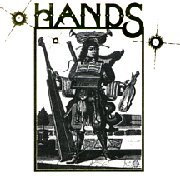 |
Hands (1996, recorded 1977, 70.38) ****/T |
|
| Zombreroch Prelude #2 Triangle of New Flight Mutineer's Panorama Worlds Apart Dreamsearch Left Behind Mindgrind |
Greansoap I Want One of Those Antarctica The Tiburon Treasure Hands in the Fire Castle Keep |
|
 |
Palm Mystery (1999, recorded 1977, 62.44) ***½/T |
|
| Mystic Cross Candor Whorl King's Mischief Murderer's Thumb New Skies Phalanges Abbracadaver Loop of Humor |
Ditty Zone of Balance A Narrow Bridge Mount of Luna I Foreign I Complete Survival Sooner Than You Think Arduous Ventures |
|
 |
Caviar Bobsled (2015, 72.31) ****/TT |
|
| The Last Song Heavy Lifting Discourse on Method Drum Roe Halfway to Salem Still Life Talking Points Like Me |
Into the Night Shards Alis Volat Propiis This and That Busy Signal |
|
Current availability:
Mellotrons used:
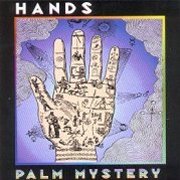
Hands were yet another US prog outfit who recorded loads of material, but were unable to release it in any form at the time. Nearly twenty years later... Shroom Records do the decent thing and make the contents of Hands available to the general public and very good it is, too. The material appears to've been recorded over a three-year period, covering a variety of styles, the first several tracks on the album being instrumental, some with violin. Variety is good, but at times they sound like more than one band. More than one very good band, though; there isn't a bad track here, although I think it'll take several listens for the best compositions to seep through. As a general rule, though, think Gentle Giant crossed with Kansas, although there's a lot more to them than that. I was convinced there wasn't going to be any Mellotron on the album, until Shannon Day's strings on Mutineer's Panorama cut in, with a smidgeon more on Antarctica. Shannon contacted me to tell me that at one time or another he has owned nine different machines, with this particular one being an ex-Elton John machine, so it's a shame it wasn't used a little more.
Shroom's follow-up archive release, Palm Mystery, originally had me thinking it was entirely bereft of Mellotronic input, but Shannon tells me there's actually more relevant tracks than on its predecessor. The album itself is very good, but sounds like it consists of the leftover tracks that didn't make the grade for Hands, including several short musical sketches. There are apparently backing flutes and strings on both New Skies and A Narrow Bridge and a short background string part on I Foreign I, too, but, going with my original assessment of its relevant content, while it's a good album, it's rather inessential for the Mellotron fan.
Hands reformed in the early 2000s, so after a couple of Mellotron-free releases, it's a pleasant surprise to be sent 2015's Caviar Bobsled, Shannon Day back on board. Stylistically, the album covers a fair bit of ground, from the relative safety of opener The Last Song, through the initially gentle Halfway To Salem (before King Crimson inexplicably muscle in for the middle section, in a welcome kind of way) to innovative cello piece Into The Night, the cello-and-multiple-vocal-led Shards and epic progressive closer Busy Signal. Mostly Shannon on Mellotron, with a flute part in opener The Last Song, chordal strings in Heavy Lifting, Like Me and Alis Volat Propiis and string melodies in Talking Points and Busy Signal. Perhaps surprisingly, the album doesn't outstay its welcome, despite its length, its variety and eclecticism working in its favour.
 |
Last Days of Wonder (2006, 43.23) ***/T½ |
|
| Your Great Journey Tesla's Hotel Room These Golden Jewels After We Shot the Grizzly Flapping Your Broken Wings Beautiful William All the Time in Airports White Lights |
Bowling Alley Bar Hunter Green Our Blue Sky Somewhere Else to Be |
|
Current availability:
Mellotron used:
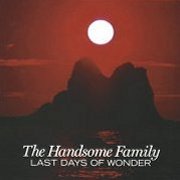
The Handsome Family are effectively the husband-and-wife duo of Brett and Rennie Sparks, aided and abetted by other musicians as and when. 2006's Last Days of Wonder is their eighth album, consisting mostly of traditional acoustic folk/country, although All The Time In Airports cranks it up a bit, presumably harking back to their earlier records. Like so much country music, the stories behind the lyrics are probably more important than the actual music, making it difficult to pinpoint standout tracks; suffice to say, they're all of sufficiently high quality to keep genre fans happy.
Someone (presumably Brett) plays Mellotron on Beautiful William, with a ragged but heartfelt flute part that enhances the song nicely, plus what I take to be Mellotron strings right through closer Somewhere Else To Be. Overall, then, not a classic Mellotron album, but nice use on a couple of tracks on a reasonably good country album that straddles the line been 'trad' and 'alt'.
 |
Let Us Go to Bethlehem: Ten Simple Love Songs (1975, 41.53) **/T |
|
| Christmas Song I Don't Know What to Do Journey to Bethlehem A Place to Stay Shepherd's Song Lullaby Let Us Go to Bethlehem Traveler's Song |
On the Run Maranatha |
|
Current availability:
Mellotron used:
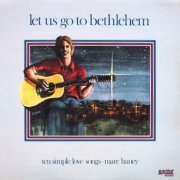
Yet another low-budget mid-'70s Christian artist (see: Morning Star, Pete Giardina), Marc Haney's Christmas epic, Let Us Go to Bethlehem: Ten Simple Love Songs, lays out 'the Christmas story' in song, unquestioningly, from a late 20th-century American viewpoint, making the whole thing even more ridiculous than it already is (Joseph's 'thoughts' in I Don't Know What To Do are particularly amusing). Musically, it's the usual slightly folky acoustic approach with an extra-special layer of cheese in the narrated passages, although the occasional countryish flourish (notably on Traveler's Song) ups the schlock factor without help.
Matt Spransy (apparently from a band biliously named Servant) plays Mellotron, with a strangely low-in-the-mix string solo in Journey To Bethlehem, including a bum chord as the guitar/bass accompaniment shifts, with more 'deep background' strings on closer Maranatha. Er, is this actually a Mellotron at all? It has a Mellotronic feel to it, but could be a sympathetically EQ'd string machine. Oh well, it stays here until I found out otherwise. Do you really want a copy of this? Why? Download it, then.