


|
|
|
|
||
|
||
|
|

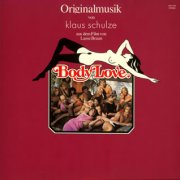 |
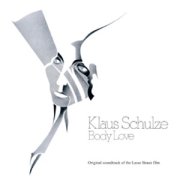 |
Body Love (1977, 52.44) ***½/T½StardancerBlanche P.T.O. |
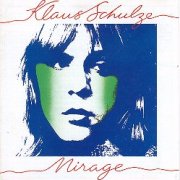 |
Mirage (1977, 57.32) ***½/T |
|
| Velvet Voyage 1984 Aeronef Eclipse Exvasion Lucid Interspace Destination Void |
Crystal Lake Xylotones Chromewaves Willowdreams Liquid Mirrors Springdance A Bientot |
|
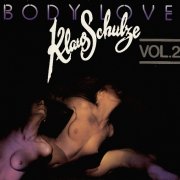 |
Body Love Vol. 2 (1977, 56.20) ***½/TT½Nowhere - Now HereStardancer II Moogetique |
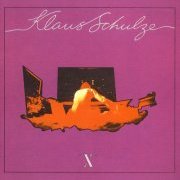 |
X (1978, 116.18) ***½/TTT½Friedrich NietzscheGeorg Trakl Frank Herbert Friedmann Bach Ludwig II. Von Bayern Heinrich von Kleist |
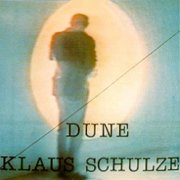 |
Dune (1979, 56.50) ***½/TTTDuneShadows of Ignorance |
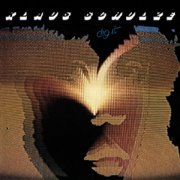 |
Dig it (1980, 49.16/77.36) ***½/0 (½)Death of an AnalogueWeird Caravan The Looper Isn't a Hooker Synthasy [CD adds: Esoteric Goody] |
 |
 |
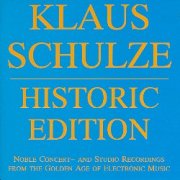
Historic Edition, Disc 1 (The Ultimate Edition, Disc 11)From and to |
 |
|
Historic Edition, Disc 4 (The Ultimate Edition, Disc 14)Electric Love-Affair |
 |
 |
Jubilee Edition, Disc 2 (The Ultimate Edition, Disc 22)Re: People I Know |
|
|
Jubilee Edition, Disc 6 (The Ultimate Edition, Disc 26)The Real Colours in the Darkness |
|
|
Jubilee Edition, Disc 8 (The Ultimate Edition, Disc 28)Vie de Rêve |
|
 |
Jubilee Edition, Disc 23 (The Ultimate Edition, Disc 44)Der Ursprung der Welt |
|
 |
Jubilee Edition, Disc 24 (The Ultimate Edition, Disc 40)Linzer Stahlsinfonie |
|
The Ultimate Edition, Disc 41 (2000, recorded 1976-85, 78.06) ***/TWalk the EdgeDarkest Steglitz Berlin Schöneberg |
|
The Ultimate Edition, Disc 47 (2000, recorded 1978, 71.16) ****/TTT½Discover TraklCrazy Nietzsche |
Current availability:
Mellotrons used:
Klaus Schulze's early career was spent drumming with various 'Krautrock' outfits, principally Tangerine Dream and Ash Ra Tempel, before kickstarting his solo career with 1972's Irrlicht. Harder-edged and starker than his erstwhile Tangs colleagues, Schulze's music doesn't so much wash over you as unnerve you in a quietly unsettling manner, to an extent carrying on the Tangs' early work on Alpha Centauri and Zeit, although he played on neither album. Somewhere along the way, Schulze picked up a double-manual Mk V Mellotron (introduced in '75), although he seems to use little except choirs, often buried deep in the mix.
His first obvious use is on 1977's Body Love, surreally, a porn film soundtrack - huh? It seems 'erotic' film director Lasse Braun asked Klaus to write some original music to soundtrack his smut film, ending up, of course, with a typical Schulze album, fitting three long tracks into its fifty plus-minute length. The shorter pieces, side one's Stardancer and Blanche, are pretty much what you'd expect if you're at all au fait with his music, while side two's P.T.O. pulls a classic Klaus trick, taking a radical right turn two thirds of the way through its considerable length, from sequencer-driven madness into a meditative section to close the album. Klaus adds Mellotron choirs (mixed and mens'?) on all three tracks, used tastefully and with restraint, although there's nothing on the remastered CD's bonus track, Lasse Braun.
Mirage, from a few months later, is unusual in that each side-long track is split into six parts, although, as you might expect, it's not that easy to work out where one ends and the next begins. More classic Klaus, anyway, sequencer sections intercut with more ambient ones in a way that sounds easy but probably isn't. Fairly minimal Mellotron choirs on side one's Velvet Voyage, while side two's Crystal Lake finally gets some in on its last part, A Bientot, although, once again, nothing on the CD's bonus track, In Cosa Crede Chi Non Crede? Plenty of Mellotron on the year's third effort, Body Love Vol. 2 (little to do with the soundtrack, apparently), however, with choirs all over side one's Nowhere - Now Here, with less of the same, plus strings on Stardancer II and faint choirs on Moogetique. Incidentally, the previous year's Moondawn only features it on the CD version, apparently added for the 1990-ish release. Something there screams 'samples' at me, but then, I'm a cynic.
 |
|
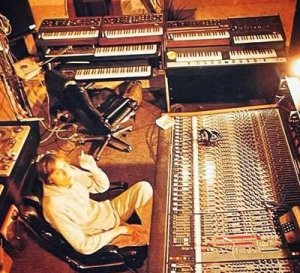
| Klaus with ever-present cigarette and MkV | |
The only album from Schulze's vast catalogue that actually credits the Mellotron in its equipment list is 1978's sprawling double, X, where he uses it with abandon. The album would appear to be a tribute to various figures, historical or otherwise whom Schulze obviously admires, though I'm afraid the finer points of the music are lost on me, as with most electronic stuff. Friedrich Nietzsche powers along very nicely, with excellent drumming from either Harald Großkopf or Schulze himself and layers of Mellotron choir as the main chordal instrument, as indeed does Frank Herbert. Most of the rest of the album is fairly heavy-duty stuff, with Ludwig II. Von Bayern being nearly half an hour of what sounds like (uncredited) real strings, bordering dissonance, although Heinrich Von Kleist is slightly easier going, with more of those Mellotron choirs. Given that Schulze was playing a MkV, there may be other Mellotron parts on the album; some of the strings could be Mellotron, but it's rather hard to tell. As it is, three of the six tracks feature choir heavily, but please don't buy this expecting a minor variation on the Tangs template. Some of X is a relatively easy listen, but much of it is anything but relaxing; all power to Schulze for not taking the easy route, although it's easy to see why the Tangs were more of a commercial proposition.
Speaking of Frank Herbert, the following year's Dune is anything but easy listening, with the title track being almost half an hour of Mellotron choirs and bell-like polysynth (pre-digital, so I don't know what's doing it. A CS-80?). Side two's Shadows Of Ignorance is another rhythmic piece, with what may or may not be Mellotron strings and flutes, although the choirs are definite. It's also notable for having Arthur Brown intoning some suitably doomy verse, which apparently went down pretty badly with Klaus' fans at the time. Can't really call this one a Mellotron album, although it's a good demo disc for what sounds like two or three different choir sounds.
Although Schulze stopped using the Mellotron after Dune, 1980's Dig it features it on the CD's bonus track, Esoteric Goody (recording date unknown). At nearly half an hour, this is long even by Schulze studio standards, doing the usual atonal synth stuff for most of its length, with a minute or two of Mellotron choir and string parts somewhere in the middle of the piece. The rest of the album's bang up-to-date for 1980, with one or more polysynths being utilised, sounding almost digital in places. Definitely one for Klaus fans, less definitely for anyone wishing to hear him use a Mellotron. You'll also find his machine pictured on the rear sleeve of 1981's Trancefer, although it's nowhere to be heard on the record.
In 1993, Schulze took the then unheard-of step of releasing a ten-CD set of unreleased material, Silver Edition, much of it recent recordings, although three discs contained material from the early to mid-'70s. Of course, multi-disc sets are now, if not actually commonplace, no longer unheard-of, but once again, Schulze was ahead of the game. The set's success led to another, '95's Historic Edition (ten discs), covering the 1970-85 period, then a third, '97's Jubilee Edition (25 discs), ranging right across his career to date. All three sets were limited editions, so in 2000, Klaus released The Ultimate Edition, an aptly-named (wait for it) FIFTY-disc set that incorporated the (occasionally slightly and irritatingly amended) contents of the previous three boxes, adding five new discs, doubtless pissing off his hardcore fanbase, making them splash out for over forty discs they already owned all over again. That set was also, of course, limited and while a handful of discs have subsequently appeared as three-disc sets, the bulk of this huge archive of material is currently unavailable. Many of the discs are irrelevant to this site, including the entire Silver Edition (discs 1-10 of The Ultimate Edition), so each Mellotron-containing disc is reviewed in its own right here, with both its 'titles' given, where relevant.
A quick caveat here: as I've stated elsewhere, a lot of 'EM' passes me by rather and Schulze is high on the list of 'I really don't get this stuff', sad to say. Why? Dunno, really; unlike the Tangs, there's rarely even any pretence at writing boring, old-fashioned things like tunes, mood obviously being far more important. And who am I to argue? It's just a different way of making music and just because I find the bulk of it a bit, well, boring, is my problem and neither Klaus' nor that of any of his legions of devoted fans. On with the reviews...
Historic Edition, Disc 1 became The Ultimate Edition, Disc 11 and while its first track, From And To ('81) is all synth, the ridiculously long (around fifty minute) Zeit Geist ('77) comes to a natural end after about half an hour, then carries on for another twenty minutes, all Mellotron choir with burbling and whooshing synths. Oh dear, have the EM clichés started already? Anyway, not that much Mellotron compared to the piece overall, but quite a lot when taken in isolation. Nothing exists in isolation, though, so the relatively low T rating given here refers more to the percentage of Mellotron use over the disc as a whole, rather than a representation of the actual number of audible minutes. Historic 4/Ultimate 14 delves back into Schulze's early history for its second track, Tempus Fugit, recorded 'around 1970', so clearly Mellotron-free. Ditto '74's Electric Love-Affair (basically a lengthy organ drone), although the remaining two tracks, The Future and Gewitter, both from '78, feature male choirs in varying amounts, though not enough to actually excite or anything.
Jubilee Edition's Disc 2 is The Ultimate Edition's Disc 22 and is rather more appealing, with a 40-minute rhythmic piece, Re: People I Know from '77, containing Mellotron male choirs, although the disc's other piece, '79's Avec Arthur, is what it says on the tin, with much Arthur Brown wailing and no Mellotron. Disc 6 (Ultimate 26) starts with a short(er) piece from '85 before the disc's epic, the forty-minute Hitchcock Suite, from '77, in several distinct parts. It's possible that's a solo male voice near the beginning, although I wasn't aware one was ever recorded for the Mellotron library (although the Chamberlin has one). Custom recording? Anyway, the more familiar male voices creep in a little later, cutting out around the ten-minute mark then reappearing later on, complete with pitchbends, ultimately appearing in the bulk of the piece. Unsurprisingly, nothing on the two '75 tracks, but the highest Mellotron rating of any box set discs yet.
Jubilee Edition 8 (Ultimate 28) has a lengthy live piece from '76 followed by a less lengthy one from '79, finishing up with obviously all that was recorded of another live Arthur Brown collaboration, There Was Greatness In The Room (Fragment), with only four minutes of music in an eight-minute track. A little Mellotron male choir, but nothing groundbreaking; Klaus may have carried on using it in the piece, but we shall probably never know. A huge Mellotron-free drought in the set is quenched on Jubilee 24 (Ultimate 40), with male choirs and strings (nice to have a twin-manual MkV, eh?) on the percussion-heavy hour-long (I kid you not) Linzer Stahlsinfonie from 1980, although there's nothing on polysynth epic Bona Fide from the previous year.
Just to confuse the issue, the last ten discs of the Ultimate set are a mish-mash of previously-released and unreleased recordings, some featuring tracks drawn from various Jubilee discs. As a result, Ultimate 41 consists of one lengthy track from Jubilee 21, a mid-'80s soundtrack piece, plus two previously-unreleased 1976 live tracks, with background Mellotron choirs on Berlin Schöneberg. Ultimate 44 is actually Jubilee 23, containing three tracks, all from '77, although only the last (and longest), Totally Wired, has any Mellotronic involvement and then only background choirs. Finally, Ultimate 47 contains two studio tracks from '78, the suitably manic Crazy Nietzsche (a variation on X's Friedrich Nietzsche?) featuring shedloads of the usual choir chord backdrop from that album, plus strings, making this the most Mellotron-heavy album of Schulze's career.
To heavily complicate matters discographical, Klaus has dismembered the contents of the Jubilee Edition, releasing a slew of shorter sets entitled La Vie Electronique, starting in 2009. The complexity of listing which of the above tracks are now available on the new sets is currently beyond my patience; suffice to say, checking the detailed discography on his website will give you some idea of which sets are worth getting for their Mellotron input (clue: almost none). So; Klaus Schulze: despite the number of albums listed here, he isn't exactly what you'd call a major Mellotron artist, only ever really using it as a chordal choral backdrop, the unavailable-until-recently Crazy Nietzsche (now available on 2010's La Vie Electronique 7) being the Mellotronic highlight of his career and X his most Mellotron-heavy individual release.

There seems to be a rather convoluted series of events surrounding Klaus' sixth album, 1976's Moondawn: the original one-track-per-side LP was messed about with by Klaus for CD reissue in 1995, generally (and ironically) known as 'The Original Master'. The tracks were slightly edited and had (presumably) sampled Mellotron and reverb added, not to mention the addition of a bonus track, all of which annoyed his fans considerably. They wanted the original version, warts and all, so the 2005 issue was more faithful to the original release. It's actually a fab album, in whichever version you get to hear it; Wallenstein's drummer Harald Großkopf approached Klaus and asked if they might play together, his robotically precise drumming reinforcing the sequenced rhythms on Floating and bolstering the organ work on Mindphaser, lifting the album to another level entirely. Klaus' first use of a Moog modular, the 'Big Moog', made the recording far more expansive than before, too, all these factors (along with inventive material) coming together to produce his best album yet.
Now: those Mellotrons. According to the booklet notes on the 2005 version, Klaus was unhappy with some minor electronic glitches on the original tapes of side one, Floating and asked Georg Stettner to play some Mellotron choir chords over the offending section (also heard later on in the piece), while Schulze rode the faders. Was this Klaus' old MkV, still working in the mid-'90s, or early samples? With this much reverb, it's impossible to tell, but I'm going to go with samples until/if I hear otherwise. I have to say, as someone who tends to prefer the Tangs' approach to the Schulze one, this is an excellent album, largely due to Großkopf's superb drumming. Why did he sound so undynamic in Wallenstein? Undynamic band, probably. Anyway, if you're specifically after the 'Mellotron' version, keep an eye out for the Manikin CD with bonus track Supplement. The later issue is on Revisited and the bonus has changed to Floating Sequence.

Do any Klaus boots exist? Or at least, ones he hasn't reissued himself? Hard to say, but I'm not sure I see any point in trying to track anything down from his brief Mellotron-using period, chiefly due to his recklessly archivistic behaviour of the last decade or so.

See: Tangerine Dream | Ash Ra Tempel | Arthur Brown | Cosmic Jokers | Sergius Golowin | Pete Namlook & Klaus Schulze | Walter Wegmüller