




|
|
|
|
||
|
|
Go-Go's Goapele God Help the Girl Robert John Godfrey |
Godiego The Gods Gods Child Godstar |
Golden Earring Golden Smog Golem |
Sergius Golowin Gomez Gong |
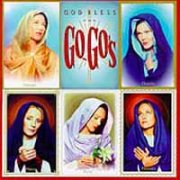 |
God Bless the Go-Go's (2001, 45.14) ***/T½ |
|
| La La Land Unforgiven Apology Stuck in My Car Vision of Nowness Here You Are Automatic Rainy Day Kissing Asphalt |
Insincere Sonic Superslide Throw Me a Curve Talking Myself Down Daisy Chain |
|
Current availability:
Mellotron/Chamberlin used:
It's a pretty sad state of affairs when the Go-Go's (dodgy punctuation, ladies) are fêted for being the first US chart-topping all-female band who not only played their own instruments, but wrote their own songs. Shocker, eh? On the offchance you've got the wrong end of the stick, I'm not having a go at the band, but at the industry that surrounds them, not to mention the society that allows (encourages?) this situation. Whatever you may think of their music (perfectly respectable powerpop, as it turns out), Belinda Carlisle, Jane Wiedlin et al. are due kudos for battling their way through the problems women face in a male-dominated industry/world.
They only actually released three albums in the band's original lifetime; God Bless the Go-Go's is the first and to date, only, album produced by the reformed 'classic' lineup. They wear their influences on their collective sleeves, not least The Byrds' guitar jangle, the Shangri-Las' vocal harmonies and The Buzzcocks' energy - oh, and Blondie, of course. I personally prefer many other less 'commercial' powerpop acts, but they do a decent enough job of producing an album of hook-laden melodic pop/rock, although it may not necessarily appeal to those brought up on their early-'80s material.
Various tape-replay instruments from two different musicians, with Mellotron and Chamberlin on the balladic Here You Are from Rami Jaffee, with flutes from one of them, although the other's use remains a mystery, as the cellos are clearly real. Roger Manning plays Mellotron on closer Daisy Chain, with an inventive cello part plus flutes later on, making for a fairly typical minor-use album with one standout Mellotron track.
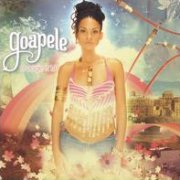 |
Change it All (2005, 61.55) **/½ |
|
| Intro Change it All First Love Love Me Right 4 AM Different Crushed Out Fly Away |
Find a Way If We Knew You Good Love Battle of the Heart Darker Side of the Moon Closer |
|
Current availability:
Mellotron used:
Goapele Mohlabane joins the ever-growing list of female performers known by their first name alone, probably, in her case, as she (correctly) ascertained that people wouldn't be able to pronounce her surname. You could say the same for Madonna too, I suppose... Change it All is Goapele's second album proper, following Even Closer, an expanded version of her first release, Closer. She sits firmly in the 'R&B' camp to my ears, although I've seen her described as 'neo soul' (yer wot?), trip hop and even jazz. Basically, melodic soul vocals over largely dull, repetitive backing tracks, although in this case, at least most of it's actually played. I'm sure the young lady is totally sincere; she's known for her human rights work and Find A Way features a great 'phone tap' intro, where some dude calmly tells a prison worker that he wants people to be 'more rebellious', but most of this album is so... safe, it almost defies description.
Surprisingly, it does actually feature occasional moments of musical innovation, notably the unusual all-played-on-the-low-B bass notes on 4 AM and the portamento synth on Fly Away, but they're pretty few and far between. Not as few and far between as the album's Mellotron moments, played by producer Linda Perry, ex- of 4 Non Blondes, with a background string part on Darker Side Of The Moon, only properly audible right at the end of the song. There's not even really any point in my slagging this off; it's an R&B record, therefore I hate it, but Goapele has a social conscience and a platform from which to exercise it, which is difficult to dismiss lightly. Tell you what, support her work, but don't bother with her records. Good compromise?
Goblin (Italy) see: |
 |
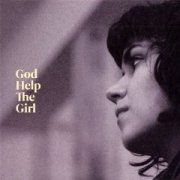 |
God Help the Girl (2009, 44.29) ***/½ |
|
| Act of the Apostle God Help the Girl Pretty Eve in the Tub A Unified Theory Hiding Neath My Umbrella Funny Little Frog If You Could Speak Musician, Please Take Heed |
Perfection as a Hipster Come Monday Night The Music Room Window I Just Want Your Jeans I'll Have to Dance With Cassie A Down and Dusky Blonde |
|
Current availability:
Mellotron used:
God Help the Girl is Belle & Sebastian's Stuart Murdoch's side-project, apparently due to be filmed in 2010, although the soundtrack appeared the previous year. Strange... Unsurprisingly, the album's full of faux-pre-psych '60s, mostly female-vocalled material, giving next to no musical hints that it actually hails from forty-five years later, making it an ideal listen for those captivated by the era of Burt Bacharach and orchestral pop. As for the rest of us... Hiding Neath My Umbrella is possibly the album's best track, bringing The Hollies' sublime Graham Gouldman-penned Bus Stop to mind, at least lyrically.
Murdoch himself plays Mellotron on one track, with a high flute part on I Just Want Your Jeans, making a welcome change from the otherwise ubiquitous orchestra. It isn't, however, anything like enough to persuade anyone not already enchanted by the project's sound to splash out the readies. Good at what it does, as long as you like what it does.
See: Belle & Sebastian
Duncan Goddard (UK) see: |
 |
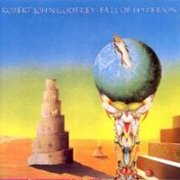 |
Fall of Hyperion (1974, 41.33) ***½/TTTThe RavenMountains Water Song Isault The Daemon of the World The Arrival of the Phoenix Across the Abyss The Daemon The Wanderer Ihs Tuba Mirum |
Current availability:
Mellotron used:
You want overblown? You've got it! By 1974, Robert John Godfrey was some years out of Barclay James Harvest (not that he was ever a full member, but you know what I mean) and just about to form The Enid. He's also rumoured to've been the brains behind 1972's Don Bradsham Leather opus, although it seems pretty unlikely. Fall of Hyperion was a solo effort he recorded for Charisma, effectively laying out his ground rules for The Enid on a major(-ish) label budget. All the elements were already in place; all he needed was a band to realise them properly. Instead, he recorded this rather odd album which was probably never really going to appeal to the record-buying public, with its operatic vocals and drumless symphonic epics. The lyrics are, frankly, ludicrous and, although Christopher Lewis is the featured vocalist, he sounds almost exactly like Robert. Hmmm.
So, you get five tracks of slightly indigestible, vaguely operatic prog (a term Robert loathes, incidentally), with a fair bit of Mellotron, mostly strings, nothing outstanding, but better than many. Mountains and Water Song (in reversed order) ended up on an Enid fan club LP retitled Hyperion, while opener The Raven morphed into The Sun on The Enid's debut, which is all that most Enid fans have heard of this hard-to-find album, now finally easily available on the Operation Seraphim imprint. Good, but not great.
See: Barclay James Harvest | The Enid
 |
Suite: Genesis (1976, 42.59) **½/T |
|
| If You Are Passing By That Way Yellow Center Line Magic Painting It's Good to Be Home Again Salad Girl |
Suite: Genesis Creation Queen's Song Lover's Lament (Sacrificial Blues) Mother and Son The Huddle Buddha's Song |
|
 |
Dead End (1977, 36.39) **½/½ |
|
| Millions of Years In the City Stop & Look Around Dead End - Love Flowers Prophecy The Last Hour Panic-Images Under Underground A Face in the Crowd |
(Crime is) the Sign of the Times Mikuni |
|
 |
House [OST] (1977, 42.25) **½/T |
|
| Main Theme Buggy Boogie Hungry House Blues Eat Sweet Dreams of Days Gone By A Letter in the Past Cherries Were Made for Eating Eat Eat |
In the Evening Mist Oriental Melon Man Eat Eat Eat Love Theme |
|
Current availability:
Mellotrons used:
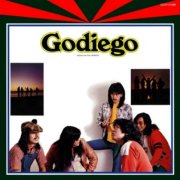
Godiego are best known outside Japan for their music for cult late '70s TV show Monkey, although that was just one of the band's many, often soundtrack-themed releases of the era. It's hard to say for certain (discographies disagree heavily), but 1976's Suite: Genesis looks like it might be the band's second album. It's a pretty mainstream effort, frankly, material such as West Coast-ish opener If You Are Passing By That Way and Yellow Center Line, or the balladic It's Good To Be Home Again sounding terribly dated these days; even the side-long title track's something of a damp squib, being more of a series of musically unconnected pieces than yer actual prog epic. I presume it's Yukihide Takekawa on Mellotron, with flute and choir parts on Magic Painting (the nearest the album gets to a 'best track'), although the strings on the title track are real.
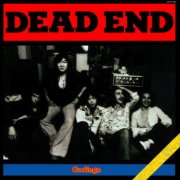
The following year's Dead End probably wasn't actually their next release, nor did it sound that much like Suite: Genesis, its mainstream pop/rock having far less of a West Coast vibe about it. Highlights (such as they are) include Beatlesesque opener Millions Of Years, the rocky intro to Panic-Images (presumably the 'Panic' part) and the punchy (Crime Is) The Sign Of The Times, despite the drum solo on the latter, but it's not really enough to add even a half star, frankly. Once again, very little of Takekawa's Mellotron, with naught but drifting choirs on closer Mikuni, although the track's strings are real.
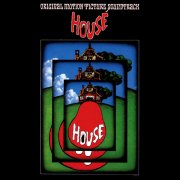
The same year's House soundtracks the Japanese horror flick of the same name, although the music is, once again, disappointingly mainstream, from the twee Main Theme through dirty acoustic blues pastiche Hungry House Blues, the full-on fusion of Eat and A Letter In The Past's cheesy piano balladry. OK, it's a soundtrack, but it's not a very exciting one, frankly. Mickey Yoshino plays Mellotron choirs, with volume-pedalled ones on Oriental Melon Man and 'infinite sustain' ones on the brief Eat Eat Eat, although the voices on closer Love Theme sound real.
See: Yuji Yokokura
 |
Genesis (1968, 37.44) ***½/TT |
|
| Towards the Skies Candles Getting Shorter You're My Life Looking Glass Misleading Colours Radio Show Plastic Horizon Farthing Man |
I Never Know Time and Eternity |
|
 |
To Samuel a Son (1970, 43.39) ***/TT |
|
| To Samuel a Son Eight o'Clock in the Morning He's Growing Sticking Wings on Flies Lady Lady Penny Dear Long Time, Sad Time, Bad Time Five to Three |
Autumn Yes I Cry Groozy Momma I Need Candlelight Lovely Anita |
|
Current availability:
Mellotrons used:
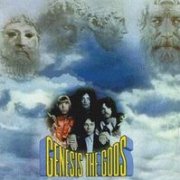
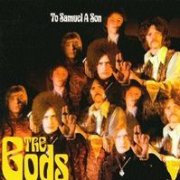
The Gods (bet that name caused some upset in the '60s) can be seen as a precursor to Uriah Heep, although that band actually metamorphosed from the earlier Spice, while their first lineup contained only one musician even briefly associated with The Gods (bassist Paul Newton). For all that, Genesis sounds like an earlier version of Heep, largely due to Ken Hensley's already distinctive-sounding Hammond and drummer Lee Kerslake's falsetto backing vocals, although he didn't join Heep until their fourth album. Genesis also features later Carmen and Jethro Tull bassist John Glascock, tragically to die of a congenital heart defect before the age of thirty. Being recorded in '68, it naturally sounds more like a late-period heavy psych album than a proto-hard rock one, although it's almost a primer for seeing how one style morphed into the other, rockier efforts like opener Towards The Skies and You're My Life reminding the listener of first three album-Deep Purple. Hensley doubled on Mellotron on a handful of tracks, with nice upfront flutes and strings on Candles Getting Shorter, beautiful strings on I Never Know and lesser use on You're My Life and Plastic Horizon. The Repertoire CD adds both sides of their second and third singles (no Mellotron), the first obviously being deemed too atypical of their style. Either that, or someone's lost the tapes.
Their second and last album was released in early 1970, by which time the band was no more, having essentially turned into Toe Fat. Hensley jumped ship from them soon after, joining Heep, replacing Colin Wood. To Samuel a Son seems to be a concept effort, based around the life of, er, Samuel's son. Remind you of anything? The Pretty Things' groundbreaking '68 classic SF Sorrow, perhaps? While The Gods' debut sounds quite forward-looking for 1968, To Samuel a Son is curiously dated, although clearly recorded only the year after. You can see why the band fell apart and most of the members moved on to pastures new, the exception being guitarist Joe Konas, who, post-Toe Fat, retired from full-time music. On the Mellotron front, Hensley adds a few string chords to the opening title track and some rather clunky trombone to Penny Dear, although the album's standout Mellotron track is Autumn, opening with a flute part, reiterating throughout the song, plus full-on strings on the chorus. More strings and possibly brass on Yes I Cry and minor flute and string use again on Momma I Need, but that's yer lot.
See: Uriah Heep
 |
Everybody (1994, 55.47) **½/T |
|
| Wolf Everybody's 1 14th St. Stone Horses Crucial Milk Silver Sky Pilot Monkey Pin-Ups |
Slide Reachin' Sey Watching the Dog Stars |
|
Current availability:
Mellotron used:
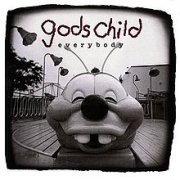
NYC's Gods Child [sic.] played a kind of Velvets-influenced powerpop, if that isn't a contradiction in terms. While their second album, Aluminum (reviewed here) wasn't too bad, I can't say their debut, Everybody, did much for this listener. Whoever wrote their Wikipedia page has pointed out that the album was mixed by a guy who worked on U2's Zooropa and it shows, its sloppy attempts at funk end up sounding like what they were: an indie band out of their depth.
Vocalist Chris Seefried plays obviously real Mellotron; opener Wolf is smothered in strings, its final note choking off most authentically, with flutes on Silver Sky Pilot's intro, although other possible sightings are either string synth or generic string samples. Not only did this bore me, but it's at least ten minutes too long. Nice to hear a genuine Mellotron on a post-'93 release, though.
See: Samples etc.
 |
Sleeper (1993, 39.51) ***/T |
|
| Ersatz Bad Bad Implication Little Bit About Single Everything You Give Me Breaks Wigram Forgotten Night Lie Down Forever |
The Brightest Star Had the Time of My Life Stranger Days Gone By Something Unplanned Every Now & Again |
|
Current availability:
Mellotron used:
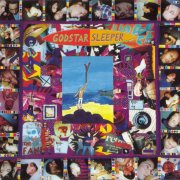
Sleeper was Aussie powerpop/punk outfit Godstar's stylistically diverse debut album (of two), veering schizophrenically from frenzied under-a-minute opener Ersatz to the acoustic Forgotten Night or the pure powerpop of Single. It's a reasonably appealing effort, although some of the songs lack the kind of memorability you'd expect from an album of this type and, maybe surprisingly, at all of forty minutes, it's probably a couple of tracks too long.
One of the band's two consistent members, Nic Dalton, plays Mellotron flutes (and cellos?) on Wigram, with a rather skronky part running right through the song, which I take to be real, given the recording date. A decent enough powerpop-pop/punk crossover album, then, which may grow on me given the time I don't have, one passable Mellotron track.
 |
Golden Earring [a.k.a. Wall of Dolls] (1970, 38.55) ***½/TYellow and BlueThe Loner This is the Time of the Year Big Tree, Blue Sea The Wall of Dolls Back Home See See I'm Going to Send My Pigeons to the Sky As Long as the Wind Blows |
Current availability:
Mellotron used:
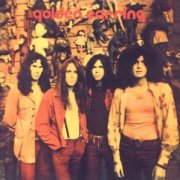
Golden Earring have a long and honourable history, kicking off in the pre-beat era as The Golden Earrings. Two of their four members (guitarist George Kooymans and bassist/keyboard player Rinus Gerritsen) have been there ever since, while newcomers Barry Hay (vocals/flute) and Cesar Zuiderwijk (drums) joined in 1967 and 1970 respectively. Wonder what the Dutch is for 'new boy'? The band's chief strength has always been their ability to roll with the punches, their style shifting from album to album, never entirely either fashionable nor unfashionable, always popular in their home country, the occasional international hit keeping their name current. Depending on your age, you may know them for Eight Miles High (1969), Twilight Zone (1982), or their deathless glam-rock era classic, 1973's Radar Love, but chances are you'll know them, which is more than you can say for most Dutch groups.
Their eponymous 1970 album, often known as 'Wall of Dolls' after the track of the same name and its cover design, was their sixth release, following 1969's successful Eight Miles High, featuring their side-long version of The Byrds' song. It's a bit of a mixture, best described as folky proggish bluesy hard rock (!), with the very Jethro Tull-ish Big Tree, Blue Sea, the straightforward 'good time' rock of Back Home, the folk/prog of Yellow And Blue and a credible blues in closer As Long As The Wind Blows. This could be seen as diversity or lack of focus (speaking of Dutch groups), depending on your viewpoint, but it gives the album the advantage that you're probably going to like something on it, although you'll probably dislike something as well. Best track? Always a matter for individual taste, particularly with The Earring, but the clumsily-lyric'd hard rock of I'm Going To Send My Pigeons To The Sky takes my personal vote. Anyway, as on so many of their records, Rinus Gerritsen sticks mainly with bass, adding keys where necessary, with organ on a couple of tracks and Mellotron on a couple of others, helped out by Cees Schrama (from Casey & the Pressure Group). Nothing to get too excited about, sadly, with a few string chords (Hilversum's Phonogram Studios' famous M300, maybe?) on opener Yellow And Blue and See See, barely tipping the album into one full T status.
Rumoured (though uncredited) Mellotron on their follow-up, Seven Tears, but the reason it's uncredited is that it isn't there; I suspect someone got a bit over-excited upon hearing Hays' double-tracked flute. Ditto 1968's Miracle Mirror, which sounds like a regular string part.
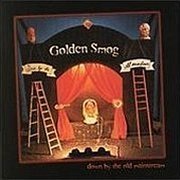 |
Down By the Old Mainstream (1995, 49.44) ***½/T |
|
| V Ill Fated Pecan Pie Yesterday Cried Glad and Sorry Won't Be Coming Home He's a Dick Walk Where He Walked |
Nowhere Bound Friend She Don't Have to See You Red Headed Stepchild Williamton Angel Radio King |
|
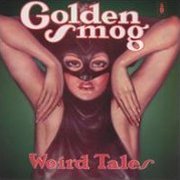 |
Weird Tales (1997, 54.55) ***½/T |
|
| To Call My Own Looking Forward to Seeing You Until You Came Along Lost Love If I Only Had a Car Jane Keys I Can't Keep From Talking |
Reflections on Me Making Waves White Shell Road Please Tell My Brother Fear of Falling All The Same to Me Jennifer Save Me |
|
Current availability:
Chamberlin/Mellotrons used:
Golden Smog (an obscure Flintstones reference) are, essentially, a pick-up alt.country supergroup, featuring, at different times, members of The Replacements, The Jayhawks, Soul Asylum, Wilco, et al. They began in the late '80s as a covers band side-project for a group of like-minded individuals, only becoming a 'proper' band with the release of their debut album, 1995's punning Down By the Old Mainstream. As is the way with such bands, personnel come and go, sometimes due to outside commitments, sometimes not, but the lineup on this album includes The Jayhawks' Gary Louris and Wilco's Jeff Tweedy, amongst others, all credited under pseudonyms for contractural reasons. It's a fine album in its genre, although at fifty minutes, it slightly outstays its welcome. Best tracks? Classic Americana opener V, Won't Be Coming Home and the rocky Red Headed Stepchild, maybe. 'Jarret Decatur' (Jayhawks' Kraig Johnson) plays Chamberlin, with a Mellotron-soundalike string part on Yesterday Cried and less of the same on closer Radio King, to reasonable effect.
Their second album, Weird Tales, featured Louris, Tweedy and Jody Stephens of Big Star. The CD is beautifully packaged to look like a '50s pulp SF mag, complete with bad fantasy art framing the credits and adverts of the 'Charles Atlas' variety disguising the lyrics, echoing Hawkwind's Astounding Sounds, Amazing Music from two decades earlier. The album features a mixture of country-related styles, without ever sinking into mawkish Nashvilleisms; putting the 'alt.' into 'alt.country' is akin to putting the boot into the Grand Ole Opry, I'm glad to say. Strongest tracks? Hard to say, but both If I Only Had A Car and White Shell Road stand out on initial listens. Ardent Studios' Mellotron on three tracks, with cellos on Jane from Louris and flutes on Reflections On Me from Soul Asylum's Dan Murphy, although nothing audible on Fear Of Falling, despite Murphy's credit.
See: Samples etc. | The Jayhawks | Soul Asylum | Wilco | Big Star
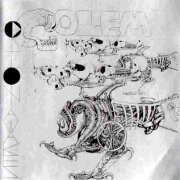 |
Orion Awakes (1973, 43.51) ***½/½Orion AwakesStellar Launch Godhead Dance Signal Noise Rebirth Jupiter and Beyond The Returning |
Current availability:
Mellotron used:
Golem's Orion Awakes is full-on krautrock, though in a rather more tuneful way than, say, the quite bonkers Floh de Cologne, being more an album of trippy, jammed-out psych than a wildly experimental journey of exploration into the inner reaches of the psyche. Or something. Actually, much of this record out-Hawkwinds Hawkwind, particularly the manic, driving, three-part Godhead Dance, if you can imagine the Hawks as a more controlled, instrumental ensemble, synths exchanged for organ. The whole is probably better experienced at crushing volume in a sweaty club than in the cold light of day, but the fact that it stands up pretty well in that environment all these years later is a testament to this record's power.
Manfred Hof plays Mellotron on the album, if not a lot, with naught but echoed flutes on Stellar Launch to prove his credentials. I can heartily recommend Orion Awakes to freak flag-flyers of all dispositions, but Mellotron nuts looking for a new fix should probably go elsewhere.
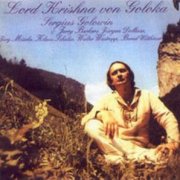 |
Lord Krishna von Goloka (1973, 42.45) ***½/TTDer ReigenDie Weisse Alm Die Hoch Zeit |
Current availability:
Mellotron used:
Sergius Golowin (1930-2006), a Swiss-German esoteric writer, was drawn into the orbit of Cosmic Jokers mainman Rolf Ulrich Kaiser after the latter's Tarot project with Walter Wegmüller. Like Wegmüller, he released just the one album, Lord Krishna von Goloka, revered today as a classic example of the acid folk/krautrock crossover, featuring all the usual suspects; Witthüser and Westrupp, Klaus Schulze and Jürgen Dollase from the more mainstream Wallenstein, the latter two on Mellotron, amongst other things. It's one of those records that was made under the influence of psychedelics and should probably be listened to in the same way, so for me to review it accurately isn't really an option. From a clear-headed viewpoint, it's an intriguing mix of ethereal, reverbed acoustic guitars, keyboards and Golowin's hushed, spoken German-language lyrics; a great deal, in fact, like Tarot from the year before, right down to the nationality of its chief instigator.
It's impossible to know whether it's Schulze or Dollase on the Mellotron at any given point, but within two minutes of the album's opening shots, distant Mellotron choirs echo across the soundscapes of Der Reigen (The Roundelay), although the track doesn't feature them a great deal more. Shortest track Die Weisse Alm (The White Pasture?), on the other hand, is all plucked acoustic, Golowin's narrative and ethereal (sorry) choirs throughout its length. Side two's Die Hoch Zeit (The Wedding, literally 'the high time') adds strings to the everpresent choirs, although apart from on Die Weisse Alm, it would be fair to say that the Mellotron is one of the album's lesser components.
See: Cosmic Jokers | Witthüser and Westrupp | Klaus Schulze | Wallenstein
 |
Liquid Skin (1999, 55.35) ***/T |
|
| Hangover Revolutionary Kind Bring it on Blue Moon Rising Las Vegas Dealer We Haven't Turned Around Fill My Cup Rhythm & Blues Alibi |
Rosalita California Devil Will Ride |
|
 |
Machismo (2000, 26.50) ***/T½MachismoDo's and Don'ts Touchin' Up Waster The Dajon Song |
 |
Abandoned Shopping Trolley Hotline (2000, recorded 1996?-1999?, 49.42) ***/T½ |
|
| Shitbag 9 Bring Your Lovin' Back Here Emergency Surgery Hit on the Head Flavors 78 Stone Shuffle We Haven't Turned Around (X-Ray) Buena Vista |
Shitbag Steve McCroski Wharf Me High on Liquid Skin Rosemary The Cowboy Song Getting Better |
|
Current availability:
Mellotrons used:
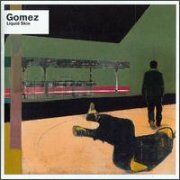
Gomez hail from the environs of Southport, near Liverpool, having the distinction of being the only successful British band of the last few decades to play authentic swamp-blues, albeit with contemporary influences. Confused? So are they, I suspect. Their career took off after winning the prestigious (it says here) Mercury Music Prize for their debut, Bring it on, in 1998, which they followed with Liquid Skin a year later. I remember being deeply irritated by them at the time, but, with a few years' distance, they aren't that bad. Ian Ball's vocals (assuming it is he) bring a bit of delta blues into your living room; pity it's the Mersey delta, but there you go... The rest of the band know how to play acoustic guitars, which is a plus point and don't use nasty digital synths, which is another one.
After saying all this, the music isn't really my bag, so I'll leave picking out highlights to those more in tune with their sound. For some strange reason, they apparently actually bought a Mellotron, although you can't say they've over-used it. Rhythm & Blues Alibi is the sole use here, a solo string part opening the track (don't get too excited; it's only three seconds long. Watcher Of The Skies it ain't) and cellos throughout the rest. The following year's Machismo EP was business as usual, it seems, with more of that futuristic swamp music. More Mellotron, too, with flutes (and overdubbed strings?) on the title track and Do's And Don'ts, although the various strings on Touchin' Up are real. Final track The Dajon Song is Gomez' first epic to date (may there be more? Who knows?) at over thirteen minutes, with an almost Neil Young flavour in places; very listenable, chaps, although they resist the temptation to stick any Mellotron on it.
Later the same year, Gomez released the odds'n'sods collection (so soon?) Abandoned Shopping Trolley Hotline, actually very palatable indeed, Bring Your Lovin' Back Here being the second of their songs to really catch my ear. Given that these are outtakes, it's a very good collection indeed, although I'm not sure why they bothered covering Getting Better, in a style similar to the original. Two Mellotron tracks: We Haven't Turned Around (X-Ray) is a full-on Mellotron-fest, no less, opening with 'Strawberry Fields'-style flutes, before switching between flutes and cellos for the rest of the song, while High On Liquid Skin has a squeaky string part, underpinned with cellos, making this their best Mellotronic effort yet.
Although I managed to miss it, I hear they turned up on Later With Jools Holland (popular UK music show for non-Brits) with their M400, to which Jools apparently bade a fond farewell on-air. Strange... Incidentally, I've listened to Gomez' five subsequent albums (yes, they're still going), only to hear not a jot of Mellotron. Have they sold it? Is it languishing in storage somewhere, unloved and forgotten? Who knows? Well, the band, presumably, but I doubt whether anyone's actually asking.
 |
You (1974, 44.19) ****/TTThought for NaughtA P.H.P.'s Advice Magick Mother Invocation Master Builder A Sprinkling of Clouds Perfect Mistery The Isle of Everywhere You Never Blow Yr Trip Forever |
Current availability:
Mellotron used:
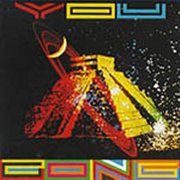
Gong began as an Anglo-French-Australian collective in the late '60s, legendary for their heroic hallucinogen intake and their exceedingly strange music. Some fans believe they're the ultimate trip, but I've known others who claim that 'tripping to this stuff just doesn't work'; one man's meat, I suppose. Anyway, by the early '70s, they'd concocted a strange tale of Pothead Pixies, Octave Doctors and the estimable Zero the Hero, known as the Flying Teapot Trilogy, consisting of Flying Teapot, Angel's Egg and You.
If you're at all familiar with Gong's working methods, you'll be on familiar territory with You, although it's probably the least manic of the trilogy, presaging the band's later move into jazzier realms, with more groove-based material, not least A Sprinkling Of Clouds or the lengthy and excellent The Isle Of Everywhere. The only jarring note is the rather silly Perfect Mistery, but where Gong are concerned, you have to take the rough with the smooth... Anyway, for the only time in their career, they opted to use a Mellotron, amusingly credited as 'Mellowdrone', played by Hi T Moonweed (a.k.a. Tim Blake). It's used chiefly as a background wash, with a subtle string line on Master Builder and choir and string chords on A Sprinkling Of Clouds. It's hard to say, but the best use is probably on You Never Blow Yr Trip Forever, but none of it's especially overt.