




|
|
|
|
||
|
This page is an attempt to mop up various unreleased Mellotron recordings across the years, including artists who never released an album, unreleased soundtracks etc. It's not a page for bootleg recordings of otherwise released bands, which can be found either at the band's dedicated page (if they have one), or in Bootlegs.
Highlighting in album tracklistings denotes 'contains Mellotron'. On 'multi-part' tracks I've tried to indicate which parts contain Mellotron, although this isn't always possible.
Ratings:
The * rating (½-5) is my personal, entirely subjective and completely partisan rating of the music.
The 'T' (Mellotron, of course...) rating (0-5) is an only slightly more objective indicator of an album's Mellotronness.
By the way, if you know of any Mellotron albums that aren't listed here, please look at my albums page first
|
Charisma Giallos Flame |
Kill Tim's Grass The Mynd |
Systems Theory Yeti |
Grizzly Adams Picnic at Hanging Rock |
 |
Unreleased sessions (1973-6, 68.36) ***/TT |
|
| Uh-oh (John Rinaldo) Soufflee Shuffle (live) Soufflee Shuffle (studio) Bread and Circus I Celebrate the Seconds The Sun is Always Out It's All the Same She's a Good Woman |
Do it Now Two Fly Lightfooted Fricassee |
|
Current availability:
Mellotron used:
New England soul outfit The Mantiques became Charisma after signing with the obscure Roulette Records in 1969. They were effectively signed as a tax write-off, so it's hardly surprising that they were treated pretty much as you'd expect, not least with regard to their new name, which they hated. They released two albums, Charisma in 1969 and Beasts and Fiends the following year, then spent the first half of the '70s playing 'commercial' gigs for a living, while recording the material they really wanted to play. An unknown member of the band put up a webpage (singular) detailing the band's history and providing free downloads of their entire oeuvre, including the unreleased material. Now, if only more little-known bands would do the same, the need for trading obscurities might recede a little, despite the crummy sound of MP3s...
And they sounded like...? Frank Zappa, basically. I'm sure they would never have been mistaken for The Mothers, but the bulk of Charisma's unreleased material has that jazzy, misplaced-humour thing out of which ol' Frank made a career, with ridiculous lyrics (Soufflee Shuffle) and bizarre vocal interjections (the lengthy Bread And Circus), though without the fiery musicianship of Zappa's various lineups. About the most straightforward thing here is a proposed single, She's A Good Woman (b/w Do It Now), which betrays their soul roots and could even have been a hit had it been released.
Of course, there's only one reason this is here at all. Mike Reynolds spent most of his time on these recordings playing a rather cheesy organ, but gets a bit of Mellotron strings in on most tracks, though never for very long, reflected in the relatively low T rating. The aforementioned She's A Good Woman is the set's chief Mellotron track, where you get the feeling that they might've preferred to use real strings, but didn't have the budget. Given that this is freely available, you might as well download it to see what you think for yourself; I'm not blown away by the material, but that's merely my personal taste.
|
Sacrament of the Blind Dead (2005, 30.23) ****½/TTT½ |
|
| Introducción Antigua Tema Principal La Subida Muerte Funcione Rápidamente Iglesia Escape La Torre de Bell La Muerte del Sacerdote |
Tema del Final Tema Alterno del Final |
|
Current availability:
Mellotron used:
It seems there's something of a story surrounding The Giallos Flame's Sacrament of the Blind Dead, not least whether the project's Italian or British, as I've seen both quoted, never mind whether or not the album ever officially saw the light of day. It was apparently (I do say apparently) commissioned (and I quote), "By Indie Gods Publishing to be released in conjunction with a planned graphic novel entitled Sacrament of the Blind Dead", which never appeared, due to the company going bust. It's actually a fab Goblin/Fabio Frizzi-style faux-horror soundtrack, every bit as good as some of those artists' work, highlights including the ultra-creepy Funcione Rápidamente, the (pseudo-?) analogue synth-heavy Iglesia and the percussion/church organ/choir jam on La Torre De Bell.
Someone (a British chap called Ron Graham?) plays Mellotron on most tracks, mostly male choirs, with strings on Funcione Rápidamente and Iglesia and cellos on Introducción Antigua, although I'm not entirely convinced it's genuine. However, the church organ on La Muerte del Sacerdote wobbles all over the place in a very 'real' and fairly unfakeable manner, although it's rather more stable (alongside a string part) on Tema Del Final. Since this has finally cropped up on download sites, I can only urge you to make the effort to track it down. A minor masterpiece.
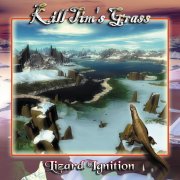 |
Lizard Ignition sessions (2007, 29.10) ***½/TDaisy's Blind DateThe Deli Tray Disaster Stout & Porter Straps |
Current availability:
 |
Mellotron used:
Kill Tim's Grass were another Sprawling Productions act, alongside St. Elmo's Fire, Brain Forest, Vasil Zook and others, albeit more jammed-out than any of them. After several lineup changes, they settled into a power-trio format, including Paul M. Kollar (of course) and Miner Gleason, although, after recording part of an album in 2007, reality intruded and they split. There was Internet talk of finishing the record the following year, but, a decade later, nothing's happened, making it rather unlikely now that it will. And it sounds like...? Jammed-out, instrumental heavy prog, basically, with some pretty outrageous bass work, possibly at its best on the nine-minute Straps.
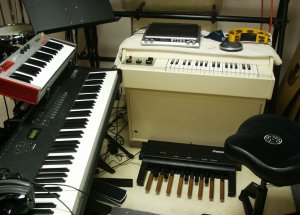
Two gentlemen calling themselves Dexter Goosechop and Noodles Ramanoff (a likely story) played Mellotron, with sustained string notes on The Deli Tray Disaster, although that would seem to be our lot. Is there any more KTG material online? If anyone finds anything else, please let me know.
See: St. Elmo's Fire | Brain Forest
|
Unreleased Sessions (1972-78, 78.29) ***½/TTTT |
|
| Lost in a City (live) The Sorcerer (live) Underwater (live) I am a River (live) Travelling Blind (live) No Way Out (live) Indian Giver Skinch |
Herman's Boys Maybe There's Somebody |
|
Current availability:
Mellotron used:
I've written a potted resumé of The Mynd's career for their Bandcamp album review. Suffice to say, they played the usual UK circuit throughout the '70s, while never really making much of an impact, let alone releasing anything. Main chap Billy Surgeoner gave me three discs'-worth of material, of which around half is now officially available, so here's my thoughts on the rest. Lost In A City might just be their best song, with a marvellous dynamic guitar/Mellotron motif, although most of the material here is more memorable than their Bandcamp tracks, ironically. They specialised in long, slowish songs, rather than risking falling flat on their faces going for 100 m.p.h. stuff, giving even their mid-'70s material a slight late-'60s ambience.
The four studio tracks here come from the band's last session, later in the decade, containing noticeably shorter (note: not short) and more high-energy material, opening track Indian Giver having a more straightforward hard rock vibe about it, with a scorching Bob Surgeoner guitar solo for good measure, while closer Maybe There's Somebody rocks out more than anything else here. Mellotron? As with their available material, these tracks are absolutely smothered with the thing, not least as it was Billy's main keyboard for most of their career, strings and flutes everywhere you look. With any luck, some (all?) of these will be made available at some point. Until then...
OHO (US) see: |
 |
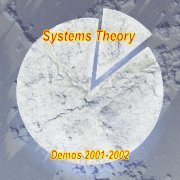 |
Demos 2001-2002 (2002, 55.34) ****/TTTT½Silent ServiceOne Step to Freefall Serengeti Surprise The Cool Vibe of Asia C (I am) the Reluctant Plumber Red Sun Fading |
Current availability:
Mellotron used:
For the Systems Theory story, go to their main reviews. Their first set of demos is now available as a download from Mike Dickson's site; they've opted not to post their second set, but as they've been available in the past, here they are.
The craftily-titled Demos 2001-2002 has no cause to worry the trades description people and, if anything, improves on their first demo collection (which is as it should be, really). More of Mike's Mellotron, of course: Silent Service has some distant choirs early on, shifting into an upfront string part, with some pipe organ later on. One Step To Freefall opens with the famous 'Dickstrings', while after a regular string part, Serengeti Surprise doubles up one of the Mellotron brass sounds with flanged 'Steve Hackett' Mellotron guitar, before slipping back into a faintly disturbing string part over a vaguely African rhythm, then more of that brass/guitar duetting. The Cool Vibe Of Asia C has much string/choir doubling, with occasional counterpoint, while (I Am) The Reluctant Plumber doubles the standard 8-choir with more of that Hackett guitar and the next-to-never heard Mellotron Fairlight (yes, really...). Finally, Red Sun Fading has what I presume to be Mellotron oboes, along with the 8-choir again, not to mention even more of that Hackett guitar and brass.
These are worth hearing if you can find them, but several of the tracks appeared, reworked, on the band's first album 'proper', 2004's Soundtracks for Imaginary Movies.
See: Systems Theory | Mike Dickson
Wobbler (Norway) see: |
 |
|
Demonstration CDR (1999, 25.40) ***/TTInterstellar BiplaneEst Mort |
|
Demonstration CDR II (2002, 34.49) ***/T½Strangled By LightBlack Pills |
Current availability:
Mellotron used:
Yeti's two 'regular' releases are reviewed here, where you'll find a description of what they do. Suffice to say, it's a prog/space-rock combination you won't have heard too often before, which works sporadically. Demonstration CDR contains early versions of two of the tracks on their first album, 2000's Things to Come..., with a slightly longer version of Interstellar Biplane and a shorter one of Est Mort. To be honest, apart from minor arrangement differences, unless you're a total fanatic, you probably don't need to track this down if you've got the album. As on the later versions, there's a smattering of Doug Ferguson's Mellotron choirs on Interstellar Biplane, while Est Mort hit the flutes several minutes in, eventually followed by strings, but without the official version's choirs.
Demonstration CDR II again demos two of their forthcoming album's four tracks, in this case, Strangled By Light and Black Pills, that ended up on 2004's Volume, Obliteration, Transcendence. Again, slightly different track lengths, with Strangled By Light being shorter than its final version and Black Pills being slightly longer, but otherwise pretty similar. Tragically, Doug Ferguson died in early 2002, so I presume the Mellotron on the demo is played by bassist Tommy Atkins, with choir parts on both tracks, though with less variety than Ferguson may've used.
These are knocking around the 'Net as downloads, although not only are they probably not available from the band now, but they were probably only ever on very limited release. Good, but buy the albums if you really want to hear where they're coming from.

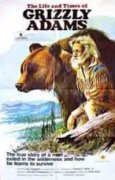 |
The Life & Times of Grizzly Adams (1974) ***/TTTTMain ThemeVarious untitled tracks |
Current availability:
Mellotron used:
Not to be confused with the later TV series, this cheapie film's budget obviously didn't run to an orchestra, so the bulk of the soundtrack is played on a Mellotron, loaded with the 'standard' strings/flutes/cellos frame. And very nice it is, too; several excellent themes, including a very impressive 'Indian falls down a cliff' sequence. No, really. Shame about the ultra-cheeso title theme, but there you go. Like so many similar, it doesn't seem likely that anyone's going to bother putting the soundtrack out in its own right, which is a shame, as there are some lovely Mellotronic moments contained therein. I've compiled a half hour or so from a crummy old VHS of the film, but now that it's out on DVD, even if only in the States, hopefully I'll get a chance to upgrade my recording at some point.
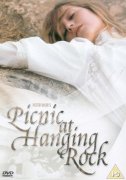 |
Picnic at Hanging Rock (1975) ***½/T½Main ThemeVarious untitled tracks |
Current availability:
Mellotron used:
Picnic at Hanging Rock is Peter Weir's extraordinary film of Joan Lindsay's novel detailing a bizarre multiple disappearance in turn of the century Australia, beautifully directed by Peter Weir. Strangely, for such an iconic film, the soundtrack remains unavailable, although its noted pan-pipe player, Gheorghe Zamfir, recreated two of its themes a year later on his A Theme From "Picnic at Hanging Rock". The soundtrack budget obviously didn't run to orchestras and the like, making composer Bruce Smeaton work with whatever he could find, namely, a mid-'70s synth (ARP 2600, maybe?) and a Mellotron, on top of the ubiquitous piano and pan-pipes.
The Mellotron is used solely for its choirs and not that much, really, with a recurring theme that can only be described as 'soundtrack-like' in its use of multiple minor chords modulating between keys with abandon. It's a shame it wasn't used more, but, of course, the soundtrack is subservient to the action, so it only crops up when needed, helping to create the film's eerie atmosphere.