




|
|
|
|
||
|
|
Sailor Free St. Elmo's Fire Saint Etienne |
Bridget St. John Saint Just St. Mikael |
Kazuyoshi Saito Salad Stevie Salas Colorcode |
Ron Salisbury & J.C. Power Outlet Jacques Salvail Samarkande |
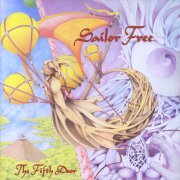 |
The Fifth Door (1994, 51.20) ***½/TT |
|
| Intro II Wild The Token Safe Havens Revolution is at Hand The Fifth Door Fairy Queen A Miracle |
Tears The End of the Day [unlisted track] |
|
Current availability:
Mellotron used:
Sailor Free were an early-'90s hard rock/psych outfit from Italy, who would almost certainly have ended up on the excellent Black Widow label had they hung around any longer. I haven't heard their self-titled debut, but what appears to be their last album, The Fifth Door, is a pretty good effort within its chosen genre, combining riffing guitar with a spacey feel in places, sounding remarkably like an update of that whole Uriah Heep/Stray thing circa '71. Difficult to pick out highlights on one listen, but the atypical Intro II stands out, as does Wild, for totally different reasons. The violin solo from guest Barbara Barbatelli that closes Safe Havens is a nice touch, as is the slightly Van der Graaf-y sax on Fairy Queen both of which add to the album's psych credentials.
Vocalist/keys man David Petrosino plays a Vox rather than a Hammond, dragging the overall sound back into the late '60s in places, though that's not actually a problem. His (obviously real) Mellotron work is to the fore on relaxed opener Intro II, with a melodic flute part, with background strings on Fairy Queen and more upfront strings and flutes on Tears. The unlisted final track seems to be part of Intro II reversed, with the Mellotron flute part sounding remarkably similar backwards. Now, I have a theory: these three/four tracks are credited as being recorded in a different studio to the rest of the album. Studio Mellotron?
The band would seem to be long gone, but if that early hard rock sound's your thing (and I have to admit that sometimes it's mine), at least some of The Fifth Door is worth a spin. I doubt whether there's any Mellotron on their debut, especially if it's only here for the reason guessed at above, but I'll report back should I ever hear a copy.
 |
 |
Live at the Cleveland Agora [a.k.a. Splitting Ions in the Ether] |
|
| Searching for Food Gone to Ground in the Khyber Pass The Balrog Parasites and Bureaucrats Aspen Flambe The Reluctant Bride Fantasy Come Reality |
The Abduction The Nuremberg Waltz [Italicised tracks added to CD] |
||
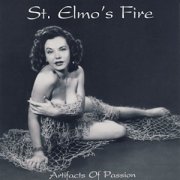 |
Artifacts of Passion (2001, 63.25) ****/TTTThe Dead Sea ScrollsNorth-West Territory Contortions of the Balrog Esmerelda The Nemo Syndrome Erin and the Green Man The Abduction of the Adolescents Lake Effect Dog-Eared Page |
Current availability:
Mellotrons used:
I've always found it strange that although prog was huge in the States in the '70s, such a vast country produced hardly any major acts in the field. St. Elmo's Fire, from Ohio, were one of many hopefuls who managed to get one album out before folding due to public indifference. Unlike many of their contemporaries, however, the band reformed in the late '90s, reissuing their sole album with bonus tracks and recording both previously-unrecorded and new material, while staying true to their original intentions.
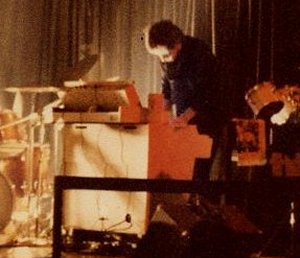 |
Live at the Cleveland Agora was apparently originally meant to be a 10" mini-album, but was mispressed as a 12" and is now impossibly rare in its original form. Reissued as Splitting Ions in the Ether (from an Eno lyric, fact fans), it now begins with a drifting polysynth piece, Searching For Food, before letting rip with Mellotron and Moog Taurus on Gone To Ground In The Khyber Pass. The music is largely instrumental, more Crimson than Yes (they covered Crimson in their early days), with a fusion edge in places; oddly, I'm occasionally reminded of Canadian trio FM, maybe because of the turn-of-the '80s synths the band utilised. Laid-back this isn't and is all the better for it if you ask me (or even if you don't). Steve J. Stavnicky's Mellotron use is fairly sparse but effective; mostly strings, although there's an unidentified brass (?) sound on the last two tracks, with heavy key-click to the fore, along with more of those ubiquitous strings on The Nuremberg Waltz. You're never going to find an original copy, but this timely reissue is well worth the effort.
In the late '90s, four fifths of the original band reformed and having sidestepped the hideous '80s, sensibly realised that a large percentage of the modern prog audience values 'authenticity' over misguided attempts to sound 'contemporary', which isn't to disparage genuine progression, of course. In other words, the Mellotron and Taurus pedals are right at the front of the mix, having obviously been kept safe and sound in the intervening decades. Like so many reformed bands, St. Elmo's had a considerable stock of unrecorded music from first time round (two of the pieces are rewrites of material from Splitting Ions), making their first album a little easier to write, with only three completely new tracks included on the hour-long Artifacts of Passion. It's a good album, recognisably by the same band that produced Splitting Ions, although with a more mellow, quite folky edge in places, particularly on the fiddle piece Esmerelda. The rustic fiddle parts inescapably remind one of Kansas, though there's little real similarity; again, Crimson are an influence in places, but generally, St. Elmo's sound more like themselves than anyone else. The bulk of the album's Mellotron work (this time by bassist Paul M. Kollar) is on the two opening tracks and Lake Effect, with particularly heavy use on The Dead Sea Scrolls, with a fantastic string part running right through the piece, although there's more of those 'what is that sound?' moments in The Abduction Of The Adolescents.
All in all, two very good albums, if US prog with a Crimso influence is yer thang, but be aware that there's quite a bit of country blues-style guitar on Artifacts of Passion. A compilation of demos, Antiquities (***½), appeared in 2004, but is surprisingly Mellotron-free, although the Taurus is used as heavily as ever. Anyway, nice Mellotron work all round on the first two. Buy.
See: Brain Forest
 |
Tiger Bay [Deluxe ed.] (1994, 46.17/99.41) **½/T (TT) |
||
| Urban Clearway Former Lover Hug My Soul Like a Motorway On the Shore Marble Lions Pale Movie Cool Kids of Death Western Wind/Tankerville/Western Wind |
The Boy Scouts of America [Deluxe ed. adds: Urban Clearway (demo) Black Horse Latitude I Buy American Records Hate Your Drug You Know I'll Miss You When I'm Gone Sushi Rider Hug My Soul (demo) |
The Wedding of Stacy Dorning Deborah's French Feast Western Wind (demo) Pale Movie (demo) La Poupee Qui Fait Non (No No No) Highgate Road Incident My Christmas Prayer I Was Born on Christmas Day] |
|
 |
Good Humor [Deluxe ed.] (1998, 43.43/97.50) **½/T |
||
| Wood Cabin Sylvie Split Screen Mr. Donut Goodnight Jack Lose That Girl The Bad Photographer Been So Long Postman Erica America |
Dutch TV [Deluxe ed. adds: Hill Street Connection Hit the Brakes Madeleine Swim Swan Swim 4.35 in the Morning Clark Co. Record Fair Zipcode My Name is Vlaovic |
Afraid to Go Home La La La Do You Love Me? Cat Nap Jack Lemmon Constantly The Emidisc Theme 4.35 in the Morning (original version)] |
|
 |
Finisterre [Deluxe ed.] (2002, 47.43/105.38) **½/TT (TTT½) |
||
| Action Amateur Language Lab Soft Like Me Summerisle Stop and Think it Over Shower Scene The Way We Live Now New Thing B92 |
The More You Know Finisterre [Deluxe ed. adds: Primrose Hill Anderson Unbound Seven Summers Gimp Crisis Abby I Hardly Knew You So Mystified White Dress |
Time and Tide Shock Corridor Stop and Think it Over Mountain Rain Queen of Polythene Ballade de Saint Etienne Stevie Got it Together Again Fascination There There My Brigadier] |
|
Current availability:
Mellotrons used:
Saint Etienne are the British trio of Sarah Cracknell, Bob Stanley and Pete Wiggs, active since the beginning of the '90s. Stylistically, they combined '60s pop with the then-current dance scene, later moving across to other forms of electronica. Fêted by the music press at the time, they're the kind of pop group it's OK for intellectual, arty types to like, it seems (along with the tedious Stereolab), with their samples from '60s British realist cinema and spoken-word interludes.
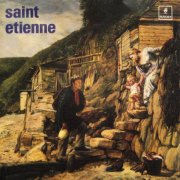
I'm afraid 1994's Tiger Bay highlights everything I don't like about Saint Etienne: their weak-as-water rhythms, their faux-'60s Gallicisms, their unerring devotion to making lightweight-yet-hip pop for young urban professionals (remember them?). In fairness, the album has its moments, not least opener Urban Clearway, which channels Kraftwerk via ye-ye pop, but the likes of Hug My Soul and Marble Lions make my toes curl. On the Mellotron front, we get drifting, chordal strings on On The Shore, from any one of Bob Stanley, Pete Wiggs or Ian Catt, while the deluxe edition adds strings on Black Horse Latitude, strings and flutes on I Buy American Records and what sounds like a string line following the piano on The Wedding Of Stacy Dorning, although the polyphonic flutes on the Pale Movie demo sound like generic samples.
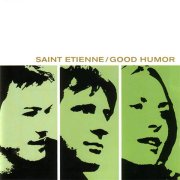
Good Humor's uncharacteristic American spelling was apparently a band backlash against being seen as so 'quintessentially English', which sounds a bit like the 'protest vote' argument to me, i.e. drivel. Anyway, the four-year gap between albums seemed to have little effect on their sound, which, I've realised, I can only really describe as suburban. I've also realised that Sarah Cracknell can't really sing, her pitching often way off the mark and not in a deliberate kind of way. Better moments include the odd time signature on Goodnight Jack and but they're few and far between. Stanley, Wiggs or Gerard Johnson presumably played the minimal Mellotron parts, with occasional string chords on Been So Long and Erica America, plus flute and string lines on Deluxe ed. extra La La La, although several other possibles sound more like either the actual instruments or generic samples, while Cat Nap seems to be Mellotron samples.
I've deprecated 2001's Interlude, not even released outside North America, for reasons unknown, as its contents can all be found on the expanded editions of their regular releases. It's actually a collection of B-sides from the previous year's Mellotron-free Sound of Water, plus four otherwise-unavailable tracks and a couple of remixes on the CD version. It displays a variety of styles, some probably put aside for non-album tracks, as they don't easily fit into the band's house style (pun intended), not least the stark electronica of Bar Conscience.
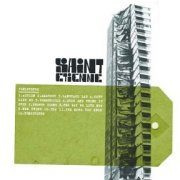
The following year's Finisterre (their sixth album 'proper') might be arty, but it's almost as lightweight as it's possible to be, drifting past in a cloud of female vocals, 'lite' beats and analogue (or pseudo-analogue) synths. There's barely any point in my trying to critique the music; suffice to say, if you like what they do, chances are you'll like this. The unknown Mellotron player strikes again (Saint Etienne don't do anything as gauche as crediting musicians), with strings on Amateur, flutes on Soft Like Me and more strings on the closing title track; it might be elsewhere, too, but it's hard to tell. The expanded ed. adds several Mellotron tracks, with flutes on the pleasant, acoustic instrumental Primrose Hill, strings on Anderson Unbound, string chords and a flute line on Seven Summers and strings on So Mystified, Time And Tide, Ballade de Saint Etienne (also available on Interlude, along with several other tracks here) and the amusingly-titled, Dr. Who-themed There There My Brigadier. Now, I'm not sure about this, but Duncan Goddard from Radio Massacre International hired his M400 out to the band at least once, so there's a good chance that's what we're hearing here. Incidentally, the cover picture is an iconic shot of Ronan Point, a jerry-built British tower block that partially collapsed two months after it was finished, in 1968, killing several (though mercifully few) of its residents.
So; not a particularly edifying listen for anyone who likes at least a little rock in their diet; this is pure pop in a '60s-cum-'90s vein, more the latter than the former. There isn't enough Mellotron on these albums to be worth bothering with unless you're already a fan of the band. Incidentally, listening to a whole raft of this stuff in a short space of time has inspired me to scrawl some doggerel in their honour, with apologies to Tom Brown. [n.b. pronounce 'Etienne' correctly, as in the original French and this rhymes. Kind of].
I do not like thee, Saint Etienne,
Despite your use of Mellotron,
But this I know and know again,
I do not like thee, Saint Etienne.
See: Samples etc. | Sarah Cracknell
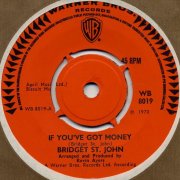 |
7" (1970) ***/T½ If You've Got Money Yep |
Current availability:
Mellotron used:
Much fêted by the sainted John Peel, Bridget "St. John" Hobbs' popularity peaked around 1974, after which she virtually disappeared for twenty years. Her handful of early '70s albums are almost trade secrets these days, although much of her work has crept out on CD over the last couple of decades. I haven't actually heard 1970's Kevin Ayers collaborative 7", If You've Got Money (apparently released as 'St. John', at least in the UK), but its flip, Yep, is a lovely little singer-songwriter effort, with some interesting key-changes thrown in for good measure.
An unknown musician (Ayers, perhaps?) adds Mellotron flutes to Yep, in very pleasing fashion. This track's general unavailability has triggered some kind soul into uploading it to Soundcloud, where it can be enjoyed until/if some spoilsport removes it.
See: Kevin Ayers
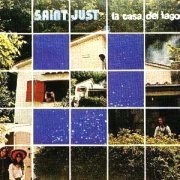 |
La Casa del Lago (1974, 39.15) ***½/TTristanaNella Vita, un Pianto Viaggio Nel Tempo La Casa del Lago Messicano La Terra della Verita' |
Current availability:
Mellotron used:
Saint Just were yet another of those Italian one- or two-shot bands that emerged in the early '70s, often splintering into other outfits, while making music frequently every bit as good as that emanating from bigger artists. La Casa del Lago was their second and final release, following their folkier self-titled debut. It still has many folk elements about it, with much use made of acoustic guitar, while Jane Sorrenti's clear voice reminds you of British folk-rock stalwarts such as Fairport Convention or Steeleye Span. While perfectly good, it's nowhere near the quality of the likes of Celeste, its best track probably being the longest, Nella Vita, Un Pianto, while others, such as the title track, tend to drag a little, although the overall quality is pretty high.
The uncredited Mellotron on Nella Vita, Un Pianto was presumably played by pianist Andrea Faccenda, with a pleasant repeating string line over the last minute or so of the song, although it's not exactly groundbreaking, to be honest. There is a little confusion over the Mellotron use, due to the (also uncredited) violin and cello parts, but I'm pretty certain it's the real deal (oh, the irony) on this track.
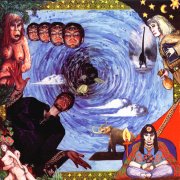 |
Claustromania (1991, 47.10) ****/TTT½ |
|
| Prisoner Vault Claustromania Spirit 1 Venus and Beyond Before Your Eyes Time Caravan Spirit 2 |
Polaris Soul Ritual A New Era Androgyno's Song |
|
Current availability:
Mellotron used:
Sweden's St. Mikael (a.k.a. Mikael Sundström) apparently spent the '80s trying to find like-minded musicians, eventually resorting to recording his material on his own, in classic 'one-man band' style. After 1990's Visions of a Trespasser and the following year's cassette-only The Unknown, Claustromania appeared later in 1991 and sounds, quite literally, as if it could've dropped out of 1968. Its contents cover a good chunk of the psychedelic spectrum, mixing slightly Moodies-esque material (Venus And Beyond, Androgyno's Song) with shorter instrumental pieces (Spirits 1 and 2) and other general weirdness in a generally pleasing manner.
Mikael sticks some Mellotron on the album - a real one, as samples weren't really on most players' radar that early. Thankfully. The title track has a brief flute part near the end, while Spirit 1 is basically a Mellotron flute solo, although it sounds like it's been stuck through some kind of distortion, barely sounding like a Mellotron in its upper registers. Strings on Venus And Beyond and Time Caravan, with ghostly-sounding flutes on Polaris and more strings on the final two tracks, particularly on A New Era, making for a reasonably hefty Mellotron album.
This doesn't appear to be on CD and isn't going to be easy to find, at least as a physical artefact, but is worth hunting down for psych fans and Mellotron nuts alike; no fighting over copies, now... St. Mikael has released several albums since Claustromania, but I don't believe he used a Mellotron again. I shall report back should I be proven wrong.
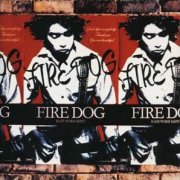 |
Fire Dog (2008, 51.09) ***/T½ |
|
| Fire Dog Sabaku ni Akai Hana Otoko yo Sore ga Seijōda!! Doko e Ikou Boku wa Nemui Sora ni Hoshi ga Kirei - Kanashī Kichijōji Daijōbu Sakura |
Ano Takai Basho e Rōjin no Uta Tōri ni Tateba (Tobasu Ze! Miya Nyi) |
|
Current availability:
Mellotron used:
Kazuyoshi Saito's Fire Dog, kicks off as if he's the Japanese Stevie Salas - the opening title track has something of Aerosmith about it - but it quickly devolves into mainstream pop/rock, sadly. Better tracks include that title track, Otoko Yo Sore Ga Seijōda!! and Ano Takai Basho E, although the likes of Doko E Ikou and the twee Daijōbu do the album few favours.
Saito's Mellotron work sounds genuine, with flutes and strings on Sakura and flutes on Rōjin No Uta. Mellotron in Japan in 2008? Who knows? File under 'good in places'.
 |
Drink Me (1995, 47.09) ***/T½ |
|
| Motorbike to Heaven Drink the Elixir Granite Statue Machine of Menace Overhear Me Shepherds' Isle Muscleman Your Ma |
Warmth of the Heart Gertrude Campbell Nothing Happens No 1.'s Cooking A Man With a Box Insomnia |
|
Current availability:
Mellotron used:
Salad appeared towards the end of the largely deservedly-maligned Britpop movement, releasing their debut, Drink Me, in '95. It's fairly generic female-fronted stuff, to be honest, although nowhere near Oasis and their ilk for that all-out irritation factor.
Drummer Rob 'no relation' Wakeman doubled on keys, including Mellotron, with quite upfront choirs at the end of Motorbike To Heaven and flutes and more choirs on Granite Statue, although that would appear to be it. If you're into the style, you'll probably like this, but the converse is also true, while the Mellotron's fairly minimal.
 |
The Electric Pow Wow (1993, 59.08) ***½/T½ |
|
| The Grooveline Too Many Mountains I Was Made to Love Her I Dont Want to Be With Nobody But You I Dont Want to Waste Your Time Good to Your Earhole Trail of Tears Little Things |
Too Rolling Stoned Wild Ride You Cant Judge a Book Teenage Love Affair Dodo Chant of the Ever Circling Skeletal Family |
|
 |
Back From the Living (1995, 50.42) ***/T |
|
| Tell Your Story Walkin' Start Again I Once Was There Wonderin' Crack Killed Applejack Born to Mack The Lying Truth Amelia |
God I'm Going Down Much Ado About Buttin' Shake This Town Start Again (live) |
|
 |
The Sometimes Almost Never Was (1998, 40.12) ***/TTT |
|
| Dedication Kickback Overground My Somebody's Coming Caught in a Moment Superball Bring it on A Dedication to You |
You and I Morning Song The Turquoise Warrior Spirits |
|
 |
Viva la Noise [as Stevie Salas] (1998, 56.22) ***/TT½ |
|
| Cover Me in Noise Break it Out Make Me Blank Fear I'm Missing You Hoochie Toad Do Your Own Thang Awake |
Moving Through Sound May God Bless You Turquoise Warrior Spirits Alright is (Part I and Part II) Alter Native Hold on Believing is Seeing |
|
Current availability:
Mellotrons/Chamberlin used:
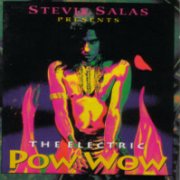
Stevie Salas burst onto the scene in the late '80s as the latest hotshot guitarist, mixing a heavy dose of funk in with his metal, in then-fashionable style, although you always got the impression that he meant it a little more than many of his contemporaries. An artist's second album is probably a little early to tackle a covers project, but 1993's The Electric Pow Wow is largely that. Apparently, it started off as a full covers album, then Salas began writing material in a similar vein to the tracks he was covering, ending up combining the two lots of material. Generally speaking, it all works pretty well, although some of it's a bit too close to funk/soul for this reviewer's taste, Salas' guitar work saving most of the dodgier tracks. Vow Wow's Rei Atsumi plays Mellotron, with a lovely string part on I Was Made To Love Her, plus flutes at the end, under Salas' feedback, with more of the same on his version of David Bowie's Dodo, plus overly-sustaining choirs at the end. Samples? Studio trickery? No idea.
1995's Back From the Living was his third solo effort, some years after all the fuss over his eponymous debut had died down and it's... OK. Not bad, not stunning, just OK. Reasonable material, but I'm afraid it's all forgotten as soon as it finishes playing. Atsumi on Mellotron again, with some rather weary sounding flutes and strings on Amelia from a machine that was probably way overdue a service (bad times for Mellotrons, those). It's nowhere near enough to make the committed Mellotronhead want to buy the record, crappy early computer graphic-ridden sleeve and all. Ordinary. '98's The Sometimes Almost Never Was is, well, it's another Salas album, better tracks including Overground and the inventive A Dedication to You. This time round, Patrick Warren adds his Chamberlin to a good few tracks, with strings (and male voices?) all over Overground, very upfront strings on My Somebody's Coming, more of the same on Caught In A Moment, a pseudo-orchestral string part at the end of A Dedication to You and flutes and strings on Morning Song, possibly the album's top Chamby track.
1998's Viva la Noise (credited to just Salas) seems to be an odds'n'ends-type release, containing various remixes, previously-unavailable tracks and the like; unsurprisingly, it's a bit of a mixed bag, closing instrumental Believing Is Seeing being about the best thing here. As a result of its varied gestation, I've no idea when any of it was actually recorded, although I suspect the tracks featuring Rei's Mellotron date from the sessions from the two above titles. Anyway, we get quite overt strings and background choirs on Fear, choirs on I'm Missing You, strings on God Bless You, strings and cello on Alter Native and heavy-duty strings on Believing Is Seeing.
So; The Electric Pow Wow's surprisingly good, Back From the Living and The Sometimes Almost Never Was are unsurprisingly average and Viva la Noise is yer typical 'mopping up' release, only the last two worth it for their tape-replay content.
See: Nicklebag
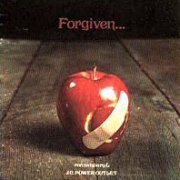 |
Forgiven... (1974, 33.22) **½/TT |
|
| Peace and Power Oh My Jesus Too Bad My Friend I Choose to Follow You Give Him Your Love Goodbye My Sign |
Don't Let Jesus Pass You By Open Your Spiritual Eyes |
|
Current availability:
Mellotron used:
Jesus rock. Yup, you read that right. Jesus rock was big (in a Christian kind of way) in the '70s, before the current CCM scene rode roughshod over just about any other form of musical expression within the faith community. And it sounds like...? Unsurprisingly, generally speaking, a dull, neutered version of the kind of mainstream rock that did the business at the time, with horribly godly lyrics added and any real vestiges of 'rock' removed, probably in case anyone got too excited and started thinking about sex or something.
The determinedly obscure Ron Salisbury and his estimable J.C. Power Outlet (oh, barf) released Forgiven... in 1974 on some local Christian label and would you know, it's not quite as bad as I'd expected? That isn't actually a recommendation, but tracks like gently rocking opener Peace And Power, the almost-hard rock of Too Bad, the funky, Clavinet-driven My Friend and the brass rock of My Sign really aren't too bad, although slushy God-Squad ballads like Oh My Jesus and I Choose To Follow You let the side down badly, being exactly the kind of pious mush that you'd expect from such a project.
The unknown Mellotronist adds strings to all four of the album's ballads: Oh My Jesus, I Choose To Follow You, Goodbye and Open Your Spiritual Eyes, all in a 'we can't afford a string section' kind of way. Y'know, you really aren't going to find the vinyl of this too easily, but downloads are about, should you really wish to hear this. Predictably, the Mellotron's only heard on its worst tracks, neither for the first time nor the last.
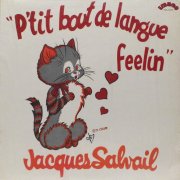 |
P'tit Bout de Langue Feelin (1975, 32.01) ***/TTT |
|
| Frère Jacques P'tit Bout de Langue Feeling La Plymouth Bingo Y'a Pas de Mal Pour les Enfants J'ai Besoin de Toi La Bugatti |
Rock'n Roll Toujours Plus Haut Ram Dam di la Dam Frère Jacques |
|
Current availability:
Mellotron used:
Jacques Salvail's career lasted from the early '70s to the mid-'80s, it seems, 1975's P'tit Bout de Langue Feelin (or feeling) being his fourth album. There's an odd credit on the rear sleeve: "arr: Christian Simard, orch: Morse Code". Basically, this is Salvail backed by most of the mighty Morse Code, caught at the point where they were reinventing themselves as a prog outfit (aided by Québecois guitarist and Mellotron user Germain Gauthier), almost all songs co-written by Salvail and Simard. Unsurprisingly, though, this is about as prog as Morse Code's mainstream pop/rock single from the previous year, Prends Ton Temps, better efforts including the rocky title track, La Plymouth's funky Clav work, J'ai Besoin De Toi's superior balladry and the powerful Toujours Plus Haut, but it's fairly slim pickings, frankly.
Simard plays (presumably his own) Mellotron, with some big string pitchbends on the title track, chordal strings on Bingo, Y'a Pas De Mal and La Bugatti, flutes, cellos and a string line on Pour Les Enfants and a major string part on J'ai Besoin De Toi, making this a pleasingly Mellotron-heavy effort, even if the music's a little anodyne. If anyone feels like arguing the toss over my 'not on CD' remark above, the 2000 Discques Mérite release P'tit Bout de Langue Feeling is a compilation, featuring about half of this album's tracks.
See: Morse Code
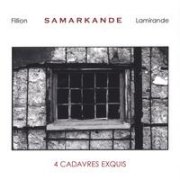 |
4 Cadavres Exquis (2002, 51.53) ***½/TTTCadavre No 2 (Samarkande)Cadavre No 3 (Koninkrijk der Dode Zielen) Cadavre No 5 (Surmenage et Désordres Mentaux) Cadavre No 4 (L'Avènement) |
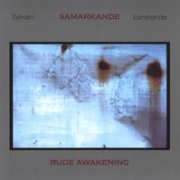 |
Rude Awakening (2004, 69.25) ***/TÉpisodesAnalgésique Analogique Rude Awakening Présences Les Dépossédés |
 |
Douglas' Basement (2006, 59.14) ***½/TTCatharsisDouglas' Basement Pray Hard But Pray With Care... Cadavre Exquis No 8 (1<1) Cadavre Exquis No 7 (L'Arrache-Cœur) |
 |
3 Synapses (2008, 52.02) ***½/TSynapse No. 1Synapse No. 2 Synapse No. 3 |
Current availability:
Mellotrons used:
Samarkande are, generally speaking, the French-Canadian electronic duo of Sylvain Lamirande and Éric Fillion, although their second album is credited to Lamirande plus guest musicians, including Fillion. Their brand of EM seems to be the 'quiet but menacing' variety, with little rhythm but plenty of unsettling sounds and an ominous feel to the proceedings. They're actually an improvisational outfit, avoiding the usual EM clichés by refusing to use step sequencers and/or Froese-ish guitar lines, preferring to take inspiration from the ancient city for which they're named, once the most cosmopolitan in the world, by utilising influences from anywhere and everywhere.
Their debut, 4 Cadavres Exquis, sits firmly in the above category, with only the last track, Cadavre No 4 (L'Avènement), featuring any sort of rhythm and then not exactly in a Berlin School kind of way. Fillion uses his M400 subtly, frequently fading a chord in and back out almost before you've noticed, or adding no more than an echoed flute line that far from overwhelms the piece. Cadavre No 2 (Samarkande) is typical, with a few string chords early on preceding a 'perpetual motion'-style descending choir line that rolls round and round before eventually fading from view.
Lamirande's near-solo effort, Rude Awakening, is well-titled; when people talk about 'industrial' music, they usually mean the posturings of the likes of Marilyn Manson (whatever happened to?) or Nine Inch Nails. This is real industrial music. It sounds like heavy machinery running amuck, full of the clanks, groans and whistles of an aging and ill-maintained factory grinding to a halt. Whether or not it's even music has to be a matter of opinion; there's next to nothing on the album resembling a tune, or even anything tuned, with the possible exception of Karoline Leblanc's harpsichord and Fillion's Mellotron on the near-20 minute Présences. Fillion adds the odd flute note here and there and some dissonant choirs, well in keeping with the piece (and the album), but don't get your hopes up for any sort of Mellotron-fest here.
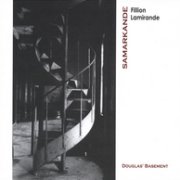
Back to business as usual for 2006's Douglas' Basement, another full Lamirande/Fillion collaboration, although a rather more rhythmic one this time. Not as in Tangerine Dream rhythm, mind, more a less discordant version of Rude Awakening's industrial clattering. Actually, thinking of this as a cross between the duo's two previous albums is probably a fairly good approach; it's certainly more listener-friendly than its predecessor, but more upfront than their debut. Fillion gets a bit of Mellotron in everywhere except the uncharacteristically short title track, with a flute harmony suddenly appearing from nowhere on Catharsis, with a similar string part cropping up a minute or two later and brief string and/or flute parts on the last three tracks, not least the flutes at the end of Cadavre Exquis No 7.
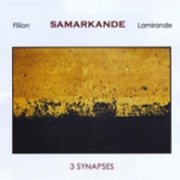
After the by-now requisite two-year gap, mid-2008 brings 3 Synapses, consisting of, er, Synapses 1-3. No change on the style front, with all three parts falling into the 'challenging' category, although I'm sure I heard a brief step-sequencer line in No. 1. Careful now, chaps... Lamirande's mad sax overdubs at the end of No. 2 are a minor deviation, but fit in with the album's overall vibe, while the rest of the sonic maelstrom is exactly what we've come to expect from the duo. Little Mellotron, as usual, with a repeated background choir part in No. 1, even fainter choirs (and possibly strings) in No. 2 and nothing apparent in the last track.
Samarkande are for the EM fan who feels he (they're invariably 'he') will go insane if he hears another bad Tangs rip-off; they actually have something new to say in the genre, largely by approaching it from a new angle and refusing to follow well-worn paths to electronic righteousness. The newcomer to their work might be best off starting with 4 Cadavres Exquis, moving on to Douglas' Basement and 3 Synapses, then approaching Rude Awakening if he's feeling brave. There isn't that much Mellotron on any of them, but 4 Cadavres should probably be your first port of call for that, too.