

Home
reviews
album list
OHO
Pascal Obispo
Obrero
Ocean
Ocean Colour Scene
Oceana Company
James O'Connell
Octopus
Erin O'Donnell
Rosie O'Donnell
of Montreal
Ogre
Ohio Players
Ohm
Danny O'Keefe
Okkervil River
Old Hickory
Old 97's
Mark Olson
Omega
Ominous Seapods
Onion Band
Only Children
Yoko Ono/Plastic Ono Band
Opium Cartel
Orange Humble Band
Orange Peels
Orange Wedge

Bobby O  (US)  see: Samples

OHO  (US)

OHO, 'Okinawa' OHO, 'Okinawa' reissue

Okinawa  (1974,  40.47/73.55)  ***½/TT (TT½)

Laughing
Duva
Hyphenate Iceless
Horse Remorse
Parts & Ponds
Ain't Life Dumb?
A Frog for You
Hogshead
Manic Detective
Brown Algae is Attractive
Plymouth Ascendants
The Salient Sickle Sucker
Hairy Bag
Fast Bananas
The Unfortunate Frankfurter Vendor
Last Dance
Fill the Sheet
The Still Nite (sic)

Dance of the Ivy Dog
Gotta Write a Poem
The Insipid City of York
Board Organ (edit)

The Continuing Story of Cragwheel
  the Corpse, part 2
Lemon Flowers
Corrective Shoes

Pale Hippo
Sorry
Chess is Boring

The Plague
OHO, 'Vitamin OHO'

Vitamin OHO  (1991, recorded 1975,  39.35)  ****/TT½

Seldom Bought
Hyphenate Ice-less
Lemon Flowers
No Fewer Days
Fwombat
Lois Jane

Hogshead
Nocturnal Recurrence
Tinker's Damn
OHO, 'Ecce OHO'

Ecce OHO!  (1998, recorded 1974-5,  42.44)  ***½/TT

On
Motion of Motion
The Plague
Per Ipsum
Here Come(s) the Oysters
Maiden Voyage

Duva [live]
Rock Song (a.k.a. We Never Wanted This)
Cragwheel
Hogshead [live]
OHO, 'Recollections'

Recollections (1974-1976)  (2002, recorded 1974-76,  73.07)  ****/TTT½

Tinker's Damn
Parade/Charade
The Salient Sickle Sucker
The Three
Lez Lee
Hyphenate Ice-less
No Fewer Days
Nocturnal Recurrence
The Plague
Dance of The Ivy Dog
Fwombat
Albumblatt
Ms Mouse
Snow Lady pt II
Naming OHO
The Hand Over Isaac's Head

Current availability:

Mellotrons used:

According to their website, OHO (from the initial three members' initials: O'Connor/Heck/O'Sullivan) coalesced around 1973, releasing the rare-as-rocking-horse-shit Okinawa independently a year later, losing a fair bit of money in the process. It's more than a little off-the-wall, with a vein of dark humour running through most of the lyrics (sample: "They buried her mother today"); it's probably a rather overworked comparison, but I detect some distinctly Zappa-esque nuttiness, with fewer knob gags. OK, none. I'd swear blind that Akron's finest, Devo, heard the middle section of The Continuing Story Of Cragwheel The Corpse somewhere down the line, and there's any number of other bits here that remind one of later acts, most of whom can't possibly have heard OHO. Mark O'Connor plays Mellotron, with The Salient Sickle Sucker managing some rather un-'Tronlike strings, although the choirs give the game away. The other highlighted tracks feature the string sound again (string section?), with a more upfront part in Gotta Write A Poem, though it's certainly not one of the album's chief components. A 1995 reissue of the album, on five 10" EPs (!), adds another 15 tracks, a few of which turn up on Vitamin OHO (italicised in tracklisting above). Minor extra 'Tron, with faint choir and strings on Hyphenate Iceless, choir on Lemon Flowers and strings on Sorry.

Many years and many lineup changes down the line, not to mention an eponymous 1989 album, Vitamin OHO was released on Germany's Little Wing of Refugees label, and seems to be the first of several attempts to collate the band's somewhat disparate history. Compared to Okinawa, it contains fairly straightforward material, although that has to be taken in the context of OHO, so we're not exactly talking top 30 stuff here. Actually, several of these tracks are exemplars of interesting song-based progressive (notably the fabulous Tinker's Damn), making it all the odder that the band are so little known in progressive circles. It's actually quite difficult to work out what's going on here, Mellotronically speaking; the band had clearly bought some form of string synth which wasn't a Solina, which I believe can be heard on Hyphenate Ice-less, but are those Mellotron choirs on Lemon Flowers? And strings on No Fewer Days and Fwombat? Definitely brass on Lois Jane, and plenty of strings on Tinker's Damn, a song written after seeing Genesis in 1974 as mentioned on the band's site - clock the opening lyric: "Tales and nursery crymes [sic], fill my head this hour...". Cheeky buggers. Incidentally, I can't hear Nocturnal Recurrence on my copy, although assuming it's the same version as on Recollections below, it seems to have some slight Mellotronic input.

Some years on again, 1998's Ecce OHO collects more odds'n'sods together, including several live tracks that don't add that much to the band's legend, to be honest. Not bad, just not that amazing, either. A couple of the studio tracks are especially worth hearing, but overall, this is a rather lesser collection than its predecessor. On the 'Tron front, I think that's strings on The Plague, and it definitely is on Per Ipsum and Here Come(s) The Oysters, and probably on Maiden Voyage, with an unexpected few seconds of choir on the live version of Hogshead, meaning they used it on stage, if only occasionally.

2002's Recollections (1974-1976) is something of a grab-bag of previously released and unavailable material, thrown together in a random fashion. Several track titles will be familiar to you from the above albums (although at least one, Hyphenate Ice-less, is a different version), while Lez Lee was not only the b-side of 1975 single Seldom Bought (on Vitamin OHO above), but would also have been on an unreleased album from 1976, Dream of the Ridiculous Band (although I've no idea if it's the same version), along with Parade/Charade, Albumblatt, Ms Mouse, Snow Lady Pt II and The Hand Over Isaac's Head, which only leaves a few unreleased album selections still unavailable. The Three is a medley of Seldom Bought, Lois Jane and Hogshead, as performed live, and Naming OHO is a studio mess-about. Apart from the previously-available tracks, there's a little Mellotron on Parade/Charade, with some upfront strings on Lez Lee, strings on Ms Mouse and choir on The Hand Over Isaac's Head. Actually, you couldn't get much more of a full-on OHO 'Tron album if you tried, could you? So; heavily recommended for both music and Mellotron.

Well; took me a little while, but I got through 'em! Okinawa's good, but hard work, Vitamin OHO and ...Ridiculous Band are more straightforward (sort of), Ecce OHO is definitely odds'n'sods, and Recollections is possibly your best starting point. More Mellotron than expected across the board, although an awful lot of it doesn't actually sound that Mellotronic. Maybe it isn't? I'm confused.

As a footnote, OHO's Jay Grabowski very kindly sent me their entire works on CD, including the unreleased Crucifixion Lust: 4-Track Demos and Dream of the Ridiculous Band, reviewed here.

Official site

See: Unreleased | Dark Side | Food for Worms

Oasis  (UK)  see:

Oasis

Pascal Obispo  (France)

Pascal Obispo, 'Un Jour Comme Aujourd'hui'

Un Jour Comme Aujourd'hui  (1994,  54.49)  *½/T

Assassine
Tu Compliques Tout
Où est l'Elue?
Ma Consolation
Un Jour Comme Aujourd'hui
Holidays
69%
L'Île Aux Oiseaux
Chlore
Est-ce Que c'est l'Amour?
Banquise
[unlisted track]

Current availability:

Mellotron used:

Pascal Obispo is a hugely successful current French singer-songwriter type, whose third album, 1994's Un Jour Comme Aujourd'hu, is a pretty wet affair, consisting mostly of ballads or soft dance numbers, with the occasional burst (I use the term loosely) of neutered rock'n'roll, the overall effect akin to being smothered by a marshmallow pillow. In French.

Jean Mora plays Mellotron on Chlore, with a pleasant enough melodic flute part, although I feel the album might have been at least slightly improved by using it elsewhere, too. If you like slushy French singers, you'll love Pascal Obispo. Conversely...

Official site

Obrero  (Sweden)

Obrero, 'Mortui Vivos Docent'

Mortui Vivos Docent  (2011,  47.56)  ***/TTT

The Wolf's Hook
Son of Tutankhamun
Svantovit

The Fourth Earl
Octaman
Charles the Hammer
Exterminate
The Lost World

Current availability:

Mellotron used:

Obrero (Spanish for 'worker', apparently) are a Swedish stoner outfit and Phidion/Talion side-project (no, I don't know them either), which is another way of saying that they're effectively slavish Sabbath copyists, albeit with their own touches. Their debut, 2011's Mortui Vivos Docent, features vocalist Martin Missy's peculiarly literal lyrical bent, imaginary battles fought in excruciating detail across the record, rather like setting Lord of the Rings to music, line by line. Musically, the band actually nail that Sabbath groove in places, sounding far more fluid than many of their contemporaries, if no more original.

Mathias Öjermark plays pretty real-sounding Mellotron, with distant string parts on everything except The Fourth Earl, plus choirs towards the end of Exterminate and flutes on The Lost World. Those titles, guys... This is yet another one for those who wish Sabbath had used more Mellotron, although anyone looking for originality should probably go elsewhere.

MySpace

Ocean  (Germany)

Ocean, 'Melody'

Melody  (1981,  39.14)  ****½/TT½

Ocean
Katrin
7 to 8 Melody
Wild Pig
Slow & Chromatic

Melody Bass
Bolero

Current availability:

Mellotron used:

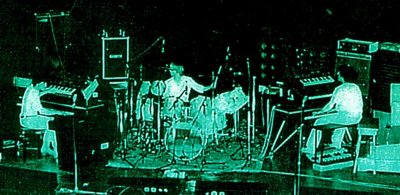
Ocean with black 'Tron (to left), from rear sleeve of Melody

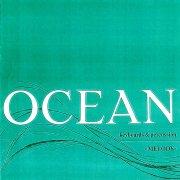
Ocean were a deeply obscure outfit, nothing to do with the French metal crew (whose eponymous '81 debut looks like it was made by a bunch of 19 year-olds). The German version produced a mini-masterpiece in Melody; entirely instrumental, it's (funnily enough) intensely melodic, with slight ELP and Focus influences, with much piano, although they suddenly lurch into a jazz feel on Melody Bass, sounding slightly out of place. Their, er, 'theme song', Ocean, is an absolutely fabulous classically-inspired piece that'll have all you '70s prog fiends salivating like rabid dogs, and the rest of the album's almost as good. Why is this so bloody obscure?

Their Mellotron use (from Mike Hoffman) is slightly odd, as they seem to use synth strings, except for a high string melody line on Wild Pig. Otherwise, it's choirs (Katrin, Wild Pig and Slow & Chromatic) and flutes (7 To 8 Melody), with especially good use on Slow & Chromatic. Although the 'Tron use isn't its best feature (while not being at all bad), if you see a copy of this, BUY. Incidentally, mucho thanks to my long-time info-finder Joe Ellis for providing the pics.
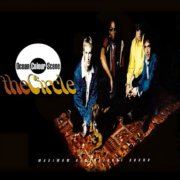
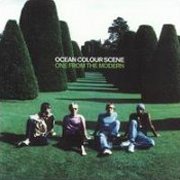
Ocean Colour Scene  (UK)

Ocean Colour Scene, 'One From the Modern'

One From the Modern  (1999,  43.28)  **½/T

Profit in Peace
So Low
I am the News
No One at All
Families
Step By Step
July
Jane She Got Excavated
Emily Chambers
Soul Driver
The Waves
I Won't Get Grazed

Current availability:

Mellotron used:

Ocean Colour Scene are, to my ears, one of the many wannabes Oasis have thrown up in their wake; I mean, they even (almost) file next to them on this page... The music is very much in the same area, which should tell you all you need to know about OCS; mostly mid-paced modern indie stuff with rather overwrought vocals and terrible lyrics. Sorry, not my bag at all.

One From the Modern is their fourth album, and in keeping with their mentors, they elected to use a Mellotron on a couple of tracks. Profit In Peace has a tiny burst of 'Tron flutes, played by producer Brendan Lynch, and Families has some more overt strings, uncredited, but probably played by Steve Cradock. That's it, really; if you like UK indie you'll probably like it, and if you don't, you won't. One plus point for the album is its length; rather than try to fill the CD up, OCS have recorded a 'regular' length record, maybe so that it could also be released on vinyl without the usual messing about. Anyhow, don't buy for its Mellotron content.

Official site

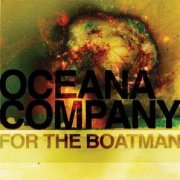
Oceana Company  (Netherlands)

Oceana Company, 'For the Boatman'

For the Boatman  (2008,  55.53)  ***½/TTT½

Landing
TrenchFever
Freedom of Mind
Imaginary Time
Silent

A Wayfarer's Travel
The Warning Light Stays on
Boatman

The Big Sky

Current availability:

Mellotron used:

Oceana Company seem to've got themselves labelled 'prog', but to my ears, they're more 'modern rock' than anything; you know, that hard rock/indie crossover that's so popular at the moment. Think Oceansize, but better. Their debut, 2008's For the Boatman, isn't a bad album by any means, better tracks including opener Landing and lengthy, trance-like closer The Big Sky. I'm not sure what's going on with the weird science fiction stuff on The Warning Light Stays On/Boatman, mind, but that's obviously how the band want it...

Vocalist/guitarist Matthijs Herder doubles on (genuine) Mellotron, to the point where it's pretty much his main instrument. The album opens with, essentially, the same Mellotron string chord that starts Crimson's Starless, carrying on throughout the track, with choirs and flutes on Freedom Of Mind, strings and flutes on Imaginary Time and Silent, a brief burst of choirs on The Warning Light Stays On and considerably more so on Boatman. Overall, then, not one for your symph enthusiast, but enough prog moments to just about make it worth hearing for the aficionado, with plenty of Mellotron.
Official site

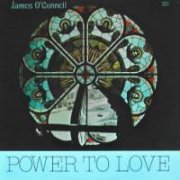
James O'Connell  (US)

James O'Connell, 'Power to Love'

Power to Love  (1975,  38.30)  */TT½

Spiritual Gold
When You Believe
Lift Up Your Voices
Supernaturally High
Psalm 34
Power to Love
Thank You Lord
Rainbow Hill
You Don't Really Have to Hide
Jesus Come Be My Lord

Current availability:

Mellotron used:

What can I tell you about James O'Connell? Effectively nothing; I don't even know whether or not he made more than the one album, 1975's Power to Love and to be perfectly honest, even if he did, I suspect most of us would be better off had we never heard it. This is an absolute stinker; think: slushy mid-'70s Christian country/folk/pop with extra added cheese. Oh, you'd rather not think about that? Me neither, but, unlike you, dear reader, I've just sat through this crud. It has no redeeming features (pun intended).

An unknown musician plays Mellotron, with a background string part on opener Spiritual Gold, more background strings and choirs on Lift Up Your Voices, flutes on Thank You Lord (distinct from the real one utilised elsewhere), cellos and really quite upfront strings on Rainbow Hill and choirs on You Don't Really Have To Hide (who's hiding, botherer?). Does it improve matters? Nope. This is properly, good old-fashionedly horrible. Let us thank the Lord that it's out of print. Er...
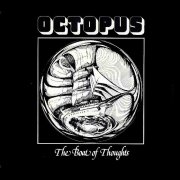
Octopus  (Germany)

Octopus, 'The Boat of Thoughts'

The Boat of Thoughts  (1977,  35.29)  **½/T

The First Flight of the Owl
Kill Your Murderer
If You Ask Me
The Delayable Rise of Glib
We're Losing Touch
The Boat of Thoughts

Current availability:

Mellotron used:

I should've known, as soon as I saw the Sky label. Sky appear to be the haven for second-division German prog outfits (so how come Eloy got a major deal?), i.e. the ones Brain didn't want. I've listened to The Boat of Thoughts several times, and it resolutely fails to impinge itself onto my consciousness in any way whatsoever; the compositions are poor, the playing merely competent, and the sound is pretty low-budget, too. Jennifer Hensel's vocals are too high in the mix and, frankly, pretty awful, while Pit Hensel's guitar work is utterly generic and average. It picks up slightly on the title track, which at least has a bit of energy to it, but it's hardly inspired.

Werner Littau uses a (presumably borrowed/hired) Mellotron on a couple of tracks, to no particular effect; Kill Your Murderer has a few ungainly slabs of strings, although The Boat Of Thoughts itself is slightly better, with some decent enough string block chords, but this is a very long way from 'classic' status. You know, I really hate having to be so harsh to a well-meaning progressive outfit, but Octopus are just so mediocre that I don't feel I can recommend this at all. Saying that, the following year's An Ocean of Rocks (**½) is even worse. However, if you're big on the 'German prog sound', you may get something from these albums; just because I've failed to doesn't mean that you will. Just don't go spending loads of money on them.

Erin O'Donnell  (US)

Erin O'Donnell, 'No Place So Far'

No Place So Far  (2001,  43.11)  *½/T

Janie's Garden
Only You
No Place So Far

Your Love Will Get Me There
Hold on the Jesus
There You Are
Bigger
Some Things Never Change
Damaged Goods
For Me
There is No Fear in Love

Current availability:

Mellotron/Chamberlin used:

I'd already listened to the first two or three tracks of Erin O'Donnell's fourth album, No Place So Far before I clocked that she's a CCM artist and I already hated what I heard. I'm saying this to deflect imaginary-but-potential criticism of the anti-Christian bias on this site; yes, this is god-bothering crud, but I hated it before I realised. Why is it that this stuff is mostly utterly, utterly awful? I know the message comes before the medium, but couldn't they make just a little effort on the medium side? Hang on, you're not allowed to say 'medium' to a Christian, are you? They might think you're talking about spiritualism and get all upset. Out of interest, did you know that references to reincarnation were allegedly removed from the Bible early on, along with a load of other inconvenient stuff? Anyway...

This really is a very nasty album indeed. Slushy, schlocky, insipid, not to mention wholly unoriginal; Some Things Never Change nicks Boston's More Than A Feeling riff, in a really lightweight kind of way (don't start - the original rules). Blair Masters plays Mellotron, with Glenn Rosenstein on Mellotron and Chamberlin (are Jewish people allowed to play on Christian albums? Just wondering), with what sounds like Chamby strings on Only You, recognisable Mellotron flutes on the title track and fainter ones on For Me, although the source of the strings on closer There Is No Fear In Love is difficult to determine for certain. It's more than possible there's more tape-replay hidden away in the mix, particularly the Chamby, but as so often, it's impossible to tell.

The chances of my usual readers buying this shite are about as close to zero as it gets; not only is it resolutely horrible, but the tape-replay input is pretty minimal. If there was a god, I'd pray to Him to stop people making awful records in His Holy name (or is that Name?).

Official site

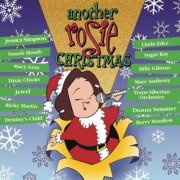
Rosie O'Donnell  (US)

Rosie O'Donnell, 'Another Rosie Christmas'

Another Rosie Christmas  (2000,  50.00)  **/T

Rockin' Around the Christmas Tree
Nuttin' for Christmas
Winter Wonderland
Merry Christmas From the Family
Face of Love
Ay Ay Ay it's Christmas
Spread a Little Love on Christmas Day
The Bells of St. Paul
Silver Bells
I'm Gonna E-Mail Santa
Christmas Auld Lang Syne
The Prince of Peace
Rosie Christmas
Because it's Christmas (for All the Children)

Current availability:

Chamberlin used:

Rosie O'Donnell is one of those US comedians (or comediennes, if you insist) who mean diddly-squat on the other side of the Atlantic, but are household names in their own country. She's actually a bit of a liberal star, being outspoken on the kinds of issues that make American conservatives see red, if you'll pardon the pun, which doesn't excuse Another Rosie Christmas. I'm glad to say I don't need to listen to its predecessor, as one was bad enough, thank you very much. OK, it has its amusing moments, not least the Dixie Chicks and O'Donnell collaborating on a trailer-trash piss-take, but generally speaking, it's awful. You want details? It's a Christmas album. I rest my case.

Patrick Warren does his usual Chamberlin thing; I'm not under the slightest illusion that the estimable Mr. Warren actually enjoys most of his sessions. Or maybe he does? It's easy to focus on your part of the jigsaw without feeling the need to pass judgement on the whole picture. Anyway, he adds strings and flutes to Winter Wonderland and strings to the bizarre Christmas Auld Lang Syne (can you hear The Bard spinning in his grave?), but that appears to be it. No, you don't want or need to hear this album. End of story.
Official site

Odyssice  (Netherlands)  see: Samples

of Montreal  (US)

of Montreal, 'False Priest'

False Priest  (2010,  53.41)  **½/TT½

I Feel Ya' Strutter
Our Riotous Defects

Coquet Coquette
Godly Intersex
Enemy Gene
Hydra Fancies
Like a Tourist
Sex Karma
Girl Named Hello
Famine Affair
Casualty of You
Around the Way
You Do Mutilate?

Current availability:

Chamberlin used:

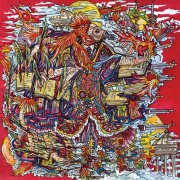
Athens, GA, Elephant Six psychsters of Montreal (note lower case 'of') turned towards '70s soul on 2008's Skeletal Lamping, for reasons best known to themselves, 2010's False Priest mostly carrying on in a similar vein. Better tracks include Coquet Coquette, with its deranged sitar (guitar) intro, the skronky Around The Way and nuts closer You Do Mutilate?, but I'm afraid the bulk of the album left this listener rather nonplussed. The band are, of course, making music to please themselves (and rightly so), but I'm not quite sure if this is going to please anyone else.

If the band's two previous releases are in samples, why is this here? Because, dear reader, this time round, the band have utilised the justly famed Jon Brion in a joint production/session capacity, openly stating that he persuaded them to replace their already-recorded Mellotron samples with his real Chamberlin. As so often with the Chamby, it's not always easy to tell where it might've been used, but we get definite flutes and cellos and possible brass on I Feel Ya' Strutter, more flutes on Our Riotous Defects and Enemy Gene (particularly upfront on the latter) and strings, what sounds like Chamby rhythm tapes on Sex Karma and strings on You Do Mutilate? Is that it? Who knows? I can't hear it anywhere else, but it could be on several other tracks, too.

Official site

See: Samples | Jon Brion

Ogre  (US)

Ogre, 'Seven Hells'

Seven Hells  (2006,  56.24)  ***/½

Dogmen (of Planet Earth)
Soldier of Misfortune
The Gas
Woman on Fire
Review Your Choices
Sperm Whale
Flesh Feast

Current availability:

Mellotron used:

I don't think it would be unfair to say that Ogre's music is, er, 'informed' by that of Black Sabbath, to the point where, vocals aside, it's a virtual copy. Their second album, 2006's Seven Hells, is decent enough, as long as you don't find its overbearing Sabbath-ness a problem. Can you plagiarise a sound? Its best track is probably thirteen-minute closer Flesh Feast, if only because it does what every other track on the album does, but for twice as long.

Ross Markonish plays Mellotron, although I'm having trouble working out whether or not it's real, to be honest. Anyway, all we get is occasional distant choirs on Flesh Feast, so we're hardly talking 'Mellotron classic' here. So; doomier than thou, very little Mellotron.

MySpace

Ohio Players  (US)

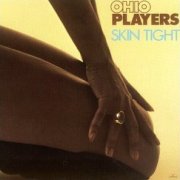
Ohio Players, 'Skin Tight'

Skin Tight  (1974,  41.03)  ***/T½

Skin Tight
Streakin' Cheek to Cheek
It's Your Night/Words of Love
Jive Turkey
Heaven Must Be Like This
Is Anybody Gonna Be Saved?

Current availability:

Mellotron used:

Skin Tight was the Ohio Players' seventh album, and their breakthrough into the mainstream. Their fat funk sound had been making waves for years, but it took a label change to Mercury to give them that all-important hit album. As with many funk outfits in the pre-disco mid-'70s, the Players allowed themselves to stretch out a bit on vinyl, with all six tracks on the album jammed out to one extent or another. I really don't feel qualified to comment on the music, as it seriously isn't my bag, but it seems to be good at what it does, particularly on the funkier, more uptempo tracks.

Although he isn't credited with it, vocalist/keyboardist Billy Beck plays Mellotron on a couple of tracks, with a pseudo-string section-style part on It's Your Night/Words Of Love, leaving the album's Major Mellotronic Moment for Heaven Must Be Like This, with string, flute and cello parts, all heavily reverbed and doing their best not to sound like a Mellotron. So; another unexpected 'Tron album from the funkier end of the spectrum, if not the heaviest use of the machine you'll ever hear.
Official site

Ohm  (US)

Ohm, 'O2'

O2  (1997,  43.32)  ***/TTT

Untitled No.1
Untitled No.2
Untitled No.3
Untitled No.4
Untitled No.5

Current availability:

Mellotron used:

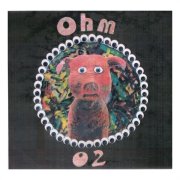
Ohm were a space-rock/psych outfit, featuring analogue keys enthusiast Doug Ferguson (also of Yeti). The first of their three albums, 1997's O2, is a fairly startling piece of work, full of the kind of sonic exploration that so many late '60s bands promised, but were ultimately unable to deliver (did I hear anyone say Jefferson Airplane?). Its two chief instrumental components seem to be synths and woodwind; not the commonest combination, but not the commonest band, either. None of the tracks are actually titled, which, while slightly irritating, at least dispenses with the 'what do we call instrumentals?' problem. This is far from easy listening, but isn't that a good thing?

Ferguson's first Mellotronic outing on the album comes several minutes into the first track, with a relatively lush string part underpinning the real violin, with massively pitchbent strings on track two. The choirs make their entry well into track three, reiterating on five, while four features some serious flute, string and choir action, although it's the most major use on the album. I'd vaguely expected more Mellotron than we actually get, but this is still pretty good on the 'Tron front, although more for track four than anything else.

There are another two Ohm albums, both almost certainly containing Mellotron, '99's Voices and 2001's Raw Ohm, although I've no idea how I'm going to get to hear copies. Tragically, Ferguson died in early 2002, signalling the end of the project, although Yeti have carried on. O2 is a fairly out-there album, but aren't you lot fairly out-there yourselves? Worth hearing, then, although most of its Mellotron work is fairly subdued.

See: Yeti

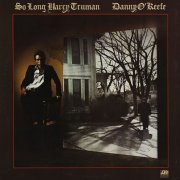
Danny O'Keefe  (US)

Danny O'Keefe, 'So Long Harry Truman'

So Long Harry Truman  (1975,  34.40)  **½/T½

So Long, Harry Truman
Quits
Rainbow Girl
The Delta Queen
The Kid/The Last Days
Covered Wagon
It's Been a Good Day
Fiddler's Jamboree
Steel Guitar
Hard Times

Current availability:

Mellotron used:

Danny O'Keefe seems to be known more for his songwriting than as an artist in his own right, having had his songs recorded by a pantheon of major names, not least Judy Collins, Willie Nelson and Elvis. His fourth solo album, 1975's So Long Harry Truman, features most of the then-lineup of The Eagles on a few tracks, just prior to their massive breakthrough with Hotel California, along with Linda Ronstadt, which probably gives you some idea of what it sounds like. Yup, country-lite, although Covered Wagon and Steel Guitar are more rock'n'roll and The Delta Queen is a sort-of Sinatra-era ballad, leaving closer Hard Times (ironically Eagle-free) as the kind of country-rock epic that band had already made their own (think: The Last Resort).

John Boylan plays most full-on Mellotron strings on Rainbow Girl, plus an uncredited part on The Kid/The Last Days to actually pretty good effect. You're unlikely to want to hear this too badly unless you're already a fan of O'Keefe and/or his songwriting, although it has its moments, principally Hard Times and the Mellotron work.


Official site

Okkervil River  (US)

Okkervil River, 'Don't Fall in Love with Everyone You See'

Don't Fall in Love with Everyone You See  (2002,  46.09)  ***½/T

Red
Kansas City
Lady Liberty
My Bad Days
Westfall
Happy Hearts
Dead Dog Song
Listening to Otis Redding at Home During Christmas
Okkervil River Song
Okkervil River, 'Down the River of Golden Dreams'

Down the River of Golden Dreams  (2003,  45.57)  ***½/T½

Down the River of Golden Dreams
It Ends With a Fall
For the Enemy
Blanket and Crib
The War Criminal Rises and Speaks
The Velocity of Saul at the Time of
  His Conversion

Dead Faces
Maine Island Lovers
Song About a Star
Yellow
Seas Too Far to Reach
Okkervil River, 'Black Sheep Boy Appendix'

Black Sheep Boy Appendix  (2005,  24.41)  ***½/TT

Missing Children
No Key, No Plan
A Garden
Black Sheep Boy #4
Another Radio Song
A Forest
Last Love Song for Now
Okkervil River, 'The Stage Names'

The Stage Names  (2007,  41.46/46.40)  ***/½

Our Life is Not a Movie or Maybe
Unless it's Kicks
A Hand to Take Hold of the Scene
Savannah Smiles
Plus Ones
A Girl in Port
You Can't Hold the Hand of a
  Rock and Roll Man
Title Track
John Allyn Smith Sails
[bonus track:
Love to a Monster]
Okkervil River, 'The Stand ins'

The Stand ins  (2008,  40.12)  ***/T

Stand ins, One
Lost Coastlines
Singer Songwriter
Starry Stairs
Blue Tulip

Stand ins, Two
Pop Lie
On Tour With Zykos
Calling and Not Calling My Ex
Stand ins, Three
Bruce Wayne Campbell Interviewed on the Roof of the Chelsea Hotel, 1979

Current availability:

Mellotrons used:

Okkervil River are a newish Americana band, originating in New England but based in Austin, Texas. They seem to have had multiple lineup changes in the decade they've been together, leaving just one original member, chief songwriter etc. Will Sheff. Where they win out over the likes of Ryan Adams is in their authenticity and their wind-blasted sound, all picked banjos and ghostly keyboards and strings. Something that might put some listeners off is Sheff's voice, which bears an uncanny resemblance to a slightly less hysterical Waterboys mainman Mike Scott at times, although he knows how to tone it down when he has to.

Don't Fall in Love with Everyone You See is their first full album, defining their sound nicely, with Kansas City's pedal steel contrasting nicely with the wonky brass of Lady Liberty and Westfall's mandolin. The material covers a wide variety of country-related styles sympathetically and without dipping into the Nashville schmaltz barrel at any point. Just one Mellotron track (from Sheff), with some wonderfully out-of-tune flutes on opener Red that almost sound like recorders.

Down the River of Golden Dreams is, somehow, slightly less appealing than its predecessor, though not enough to dock it any stars. One instrumental feature of note is Sheff's increasing use of the Wurlitzer, with several tracks featuring its percussive tones. New keyboard player Jonathan Meiburg adds Mellotron flutes to It Ends With A Fall and the wonderfully-titled The Velocity Of Saul At The Time Of His Conversion, although with credited cello and viola, I suspect all string parts are real.

Black Sheep Boy Appendix is a follow-up EP to the Mellotron-free Black Sheep Boy, showcasing a broadening of the band's sound, with the almost-ambient Missing Children and the rocky No Key, No Plan standing out. Mellotron from Alice Spencer this time round, with flutes on No Key, No Plan and, for the first definite time, strings on Black Sheep Boy #4, although other string parts sound real.

2007's The Stage Names is a typically 'themed' Okkervil release, possibly musically less exciting but better lyrically than its predecessors. Opener Our Life Is Not A Movie Or Maybe is good, but sounds like a Waterboys outtake, while Unless It Kicks has an almost Stones vibe about it, an influence that seems to be cropping up with greater frequency in Okkervil's work. Incidentally, John Allyn Smith Sails is probably better known to you as Sloop John B; an American folk song, the Beach Boys appropriated it back in '66. Mellotron from Meiburg and Scott Brackett, although I've no idea why it took two of them to play the almost-inaudible strings on Unless It's Kicks, only becoming apparent right at the end of the song, unless there are more parts hidden away. With several strings players credited, it seems the rest of the album's strings are real, and they sound like it, too.

The following year's The Stand ins is the second part of The Stage Names, originally conceived as a double; note how the two covers, here handily juxtaposed correctly, form a larger picture when placed one above the other. Sadly, the same problem applies to this album as to its 'first part', in that it's, well, less interesting than their earlier work. Some individuality seems to have been lost and the songs are less quirky, but maybe that's just my personal prejudices coming into play. Saying that, Bruce Wayne Campbell Interviewed On The Roof Of The Chelsea Hotel, 1979, is inspired by failed US glamster Jobriath (BWC being his real name), who died in 1983, decades before any possibility of musical rehabilitation. Three 'Tron players this time, Brackett, Justin Sherburn and Brian Beattie, with strings that don't sound particularly genuine on Starry Stairs, Blue Tulip and Calling And Not Calling My Ex, which probably means they are. It's possible that any of these three are, in fact, something else, and that other parts are, in fact, Mellotron, but by this point in the band's career it seems rather hard to tell.

To sum up, Okkervil River seem to have become more mainstream as time's gone along, with not only less interesting material, but also less obvious Mellotron use than on their earlier albums. Recommended? Don't Fall in Love with Everyone You See and Down the River of Golden Dreams, and maybe Black Sheep Boy Appendix (probably Black Sheep Boy, too, although I haven't heard it), all three for their songs and the latter two for the Mellotron, too.

Official site

See: Roky Erickson

Ryo Okumoto  (Japan)  see: Samples

Old Hickory  (US)

Old Hickory, 'Other Eras...Such as Witchcraft'

Other Eras...Such as Witchcraft  (1997,  46.25)  ***/T

Drain the Lake
Three Rings
T.I.O.N.
Cross the State
Selopan
Flames Grow Tall

Poblecito
Spur Eye
Pontiac
Settle Down
Diamonds or Coffeecake
Broken
Science Fair

Current availability:

Chamberlin used:

Old Hickory are a classic Mellotronic case of 'if I'm not told, I'll never know'; no tape-replay credit in the CD booklet, no (previous) online references... Actually, I was not only told by one of the band, but sent a copy for review, despite their non-existence for over a decade, which is above and beyond the call of duty. In the words of contemporaneous reviewers, every song on 1997's Other Eras...Such as Witchcraft sounds different to every other, or in the band's words, 'Flaming Lips meets Pavement with a bit of Nirvana', if that helps at all. Going by their name, they sound like they should've played prime Americana, but Pontiac's probably the only track that even partially fits that description. Common threads running through the album include songs with melodic intros that switch into a kind of post-grunge after about thirty seconds (Three Rings, Cross The State, Flames Grow Tall), occasional Neil Young-influenced guitar parts (notably on Broken) and (presumably) Jason Coile's overly 'rock'n'roll' vocals, which probably don't help to describe the music either.

Michael Marqueson played producer Sylvia Massy's Chamberlin (M1?), with flutes and cellos on Selopan, cellos on Flames Grow Tall and strings on Pontiac, although I wouldn't call it a defining feature of the album's sound. As you can see, I've found it rather difficult to convey the band's sound in cold print, but if the influences to which they admit appeal, you stand a good chance of liking this, too. Not much Chamby, but nice to hear it used on a non-mainstream pop album, for once. Incidentally, thanks to Scott Matz for going to so much trouble to get me a copy of the album.

Old 97's  (US)

Old 97's, 'Too Far to Care'

Too Far to Care  (1997,  46.24)  ***/T

Timebomb
Barrier Reef
Broadway
Salome
W. TX Teardops
Melt Show
Streets of Where I'm From
Big Brown Eyes
Just Like California
Curtain Calls
Niteclub
House That Used to Be
Four Leaf Clover

Current availability:

Mellotron used:

The grammatically-challenged Old 97's formed in 1993, releasing something like seven studio records to date. Fronted by the charismatic Rhett Miller, they're one of the better alt.country bands around, although without the psychedelic edge of, say, The Jayhawks, they're unlikely ever to appeal to a wider audience. 1997's Too Far to Care is their third effort, and while a respectable enough album, it fails to ignite in the way you hope it might, possibly being just a touch too trad for its own good.

Wally Gagel plays Mellotron, although the background strings on Salome seem to be the only place it crops up. Overall, then, a perfectly good alt.country album, but not the most exciting thing you'll hear in the genre, with very little Mellotron to boot.

Official site

See: Samples | Rhett Miller

Chris Olley  (UK)  see: Samples

Mark Olson  (US)

Mark Olson, 'Salvation Blues'

Salvation Blues  (2007,  36.55)  ***/T

My Carol
Clifton Bridge
Poor Michael's Boat
National Express
Salvation Blues
Keith
Winter Song
Sandy Denny
Tears From Above
Look Into the Night
My One Book Philosophy

Current availability:

Mellotron/Chamberlin used:

Mark Olson was a founding member of The Jayhawks, leaving in 1995 to become full-time carer for his wife, Victoria Williams, an MS sufferer. He made several albums her as The Original Harmony Ridge Creekdippers, in a much more traditional country vein, an approach he's carried over to his first proper solo album, 2007, Salvation Blues. There's no point trying to call this 'alt.country' or similar; the only thing that stops it being mainstream country is a traditional, non-schmaltzy Nashville approach, which is what makes it listenable, rather than dreck. I'm not saying "I love this album"; I don't, but it does what it does well, making me unwilling to give it a hard time for doing something I don't particularly like.

Zac Rae plays Mellotron and Chamberlin, with what sounds like Chamby strings on National Express, Keith and Sandy Denny, plus what I take to be Mellotron cellos and possibly flutes on the latter. Overall, then, a new country album from pre-schmaltz days, which probably means that most 'country' fans won't buy it and with very little tape-replay work, I doubt if you will, either.

MySpace

See: The Jayhawks

Ome  (US)  see: Samples

Omega  (Hungary)

Omega, 'Omega'

Omega  (1973,  34.24)  ***½/T½

Everytime She Steps in
After a Hard Year
Delicate Sweep
Parting Song
The Bird
The Lying Girl
White Magic Stone
Omega, '200 Years After the Last War'

200 Years After the Last War  (1974,  35.57)  ***½/TT

Suite
Help to Find Me
200 Years After the Last War
You Don't Know
Omega, 'Omega III'

Omega III  (1974,  32.36)  ***/T½

Stormy Fire
Spanish Guitar
Go on the Spree
Remembering
Everytime She Steps in
Live as Long as
Just a Bloom
I Go Away
Fancy Jeep
Omega, 'Csillagok Útján'

Omega 8: Csillagok Útján  (1978,  36.12)  ***/T

Nyitány
Égí Vándor
Léna
Légy Erős!
Metamorfózis I
Bíbor Hölgy
Csillagok Útján
Metamorfózis II
Finálé
Omega, 'Gammapolis (English)' Omega, 'Gammapolis (Hungarian)'

Gammapolis/Omega 9  (1979,  41.32)  ***½/T

Dawn in the City (Hajnal a Város Felett)
Lady of the Summer Night (Nyári Éjek Asszonya)
Rush Hour (Őrültek Órája)
Return of the Outcast (A Száműzőtt)
Start
Gammapolis (Gammapolis 1)
The Man Without a Face (Arcnélküli Ember)
Silver Rain (Ezüst Eső)
Gammapolis 2

Current availability:

Mellotrons used:

Omega's origins, like so many of their Western contemporaries, go back to their days as a beat group in the early/mid-'60s, eventually catching up with their British and American mentors in the early '70s, becoming a bit of a catch-all heavy/progressive outfit. It must have been incredibly difficult to operate behind the Iron Curtain at that time; I would guess that they were at least partially state-sanctioned - allowed to exist as 'proof' that the Hungarian regime was hip and 'with it, man', and didn't really torture dissidents to death in underground cells. This is no slur on the band; in fact, all respect to them for having the courage to follow their muse under such harsh conditions. They certainly managed several things denied to most other East European outfits, not least owning decent equipment, the chance to sing in English and record and release albums in the West.

There was immense confusion (at least in this household) over their catalogue; their domestic and foreign releases frequently bore little relation to each other, with tracks from several different Hungarian LPs being grouped together randomly on each Western album, until the two halves of their career reunited (musically, at least) with 1976's Time Robber/Omega 7: Időrabló. However, the excellent discography to be found at Gammapolis.de, a fan site better than many official ones, has helped set things straight. Just to add to the confusion, the musician credits on Omega reverse all the names, though I think I've sorted this one out. Also (groan), a 1975 album also called Omega, also released on their German label, Bacillus (along with Nektar) is actually a compilation of tracks from the previous three English-language releases. I think. Aaargh!

Anyway, Omega was their first Western album, based around their fourth and fifth Hungarian releases (as was the following year's Omega III). It's actually a damn' good album, if a little derivative, with more than a hint of Uriah Heep to their sound, especially in the Hammond department; in fact, Parting Song finishes with a circular riff that has more than a touch of Heep's July Morning about it. Maybe they thought no-one would notice. The album opens with a solid rocker, Everytime She Steps In, but swiftly moves into proggish territory, with some nice Mellotron strings from keyboard man László Benkő enhancing After A Hard Year. After some more undistinguished hard rock on side two, the album ends with minor epic White Magic Stone, with some slightly shrieky 'Tron strings (quick! Down an octave!) and another circular riff. Without meaning to sound patronising (although I expect I do), Omega's a good album given the various restrictions that must've been placed on the band.

They followed up with 200 Years After the Last War, a mixture of re-recorded English-language versions of tracks from Omega 5 (a.k.a. Szvit) and Omega 6: Nem Tudom a Neved. It's one of the proggiest efforts in their canon, although the blues section in the otherwise excellent side-long Suite is possibly slightly unnecessary, while the three shorter tracks on side two are all good, but fall short of 'excellent'. Bassist Tamás Mihály plays 'Tron this time round, with strings on Suite (there's a particularly nice solo part about twelve minutes in, after the aforementioned blues section) with more of the same on the title track, making this the band's best 'Tron album, although that isn't really saying that much.

Omega III is, unsurprisingly, the band's third English-language album, sadly rather more straightforward than its immediate predecessors. Spanish Guitar and Remembering are the two relevant 'Tron tracks, both more reflective pieces with extra added Mellotron strings, from Mihály again, but there's nothing here in the epic vein of Suite or White Magic Stone; in fact, only one track tops the four-minute mark and, for reasons best known to themselves, they reprise the rather average Everytime She Steps In from Omega. The only other particularly worthwhile track is the short proggy effort, I Go Away; as you might expect, Fancy Jeep is somewhat less progressive...

'75's The Hall Of Floaters In The Sky (stop laughing) and the following year's Time Robber/Omega 7: Idõrabló (***) are bereft of anything at all 'Tronlike. '78's Skyrover/Omega 8: Csillagok Útján has one credited, but it's pretty well back in the mix. Not that it's exactly the first thing you notice about the album; I mean, have had a proper look at that sleeve? Have you?? Oh. My. God. It's... I don't know what to say, actually; it's been known to reduce grown men to tears of laughter (not least myself). I know Communist Eastern Europe was behind the times, but had they no idea of the concept of camp? This sleeve is camper than Freddie Mercury and Boy George having a bitch-slapping contest. Camper than the Village People's dance routines. Camper than... oh, you get the picture. Musically, it's averagely proggy, without being outstanding in any way, with the odd track thrown in from a different genre (the hard rock of Metamorfózis I being an example), but it isn't really their finest hour. None of the Mellotron use is particularly obvious, although it presumably provides the high strings on Légy Erős! and Bíbor Hölgy.

Now, due to the Hungarian/rest of world situation I mentioned earlier, I managed to purchase both versions of their 1979 opus, Gammapolis/Omega 9 on the same European record-buying trip, which was a little excessive, if unintentional (see sleeves above to understand confusion). Interestingly, the tracklisting in the Hungarian version (in a different order, fact fans) translates the titles into both English and Russian, so I presume their sales in the then USSR were quite reasonable. The Hungarian track order seems to make far more sense, beginning the album with the Start/Gammapolis 1 pairing, and ending with Gammapolis 2, nicely bookending the record, so I've no idea why they had to mess with it for Western consumption by swapping each side's opening numbers. Anyway, in the intervening years, it seems Omega had learnt to vary their material a little more, though not necessarily for the better, with much of side 1 being too mainstream for its own good, with an unfortunate sub-disco beat on Return Of The Outcast. Saying that, Dawn In The City is a decent enough longer, proggy opener, with more of their ubiquitous 'Tron strings (did they use any other Mellotron sounds?) and both parts of the title track and Silver Rain are quite excellent. Gammapolis 2 still reminds me of Uriah Heep, and I think we should draw a discreet veil over The Man Without A Face... Incidentally, I think the paintings of the band in their full stage splendour should have been quietly dropped, as they make them look like rejects from a gay night at New York's Studio 54 (assuming there was any other sort). I'm all for a bit of a stage show, but please, chaps... [You might've guessed that I got these before Omega 8, or I may not've been quite as shocked...]

Omega are still in existence today, though they must be getting on a bit; the picture in Omega shows what looks like a bunch of guys in their thirties, though I suspect trends in early-'70s facial hair didn't help. I remember reading a live review from the mid-'80s, by an amazed British journalist who couldn't believe how much of a phenomenon Omega were in their own country. He remarked that they seemed to cover all bases, playing hard rock, progressive, pop, disco, you name it, with the audience going wild whatever they played, but I saw a similar response in Belgium watching the reformed Machiavel a few years ago; maybe European audiences have more 'loyalty' to their favourite bands, whatever you take that to mean. Who knows. Anyway, while Omega and Gammapolis are actually pretty good, if a tad patchy, 200 Years... is the nearest any of these comes to being a Mellotron album. Borrow them from a mate (assuming you have a mate who owns several Omega albums) and make a compilation.

Top fan site

Fan site

Omega Syndicate  (UK)  see: Samples

Ominous Seapods  (US)

Ominous Seapods, 'Super Man Curse'

The Super Man Curse  (2000,  49.12/66.46)  ***/T

Too Much Fire on the Brain
For Now
Good to Be Alive (for a Change)
Imaginary Money
Tornado Rain
Money to Burn
What I Saw
Bong Hits & Porn
In Good Time
Thought About it
The Super Man Curse
[Limited ed. 2-disc set adds:
Hey Donny Osmond (live)
Come Back Again (live)
Ziggy Stardust (live)]

Current availability:

Mellotron used:

Have you heard of The Ominous Seapods? Nor me. Turns out they're a second-division jamband who apparently concentrate more on the 'guitar dance' end of things, as against the 'sub-Dead' end, I suppose. I think 2000's The Super Man Curse is their fourth studio release, sounding like a cross between the Allman Brothers and the already-established Phish to my ears, better tracks including Money To Burn and the closing title track, which both jam out nicely, fittingly. The overall impression is of a relatively 'retro' band doing their best to straddle the great divide between 'traditional' and 'modern' and partially succeeding.

Glenn Rosenstein plays Mellotron, with distant strings and flutes on Bong Hits & Porn and strings on Thought About It, although it could be buried in the mix on another track or two. Generally speaking, not a bad effort, its best moments tending to be the ones where the band stretch out, as you'd expect from the curious cross-genre, er, genre. If you run into the two-disc edition, their version of Bowie's Ziggy Stardust is fairly useless, but Come Back Again is another good jam.

MySpace

Josh One  (US)  see: Samples

One Starving Day  (US)  see: Samples

One Ton  (Canada)  see: Samples

The Onion Band  (UK)

Onion Band, 'Funny Old Business'

Funny Old Business  (1997,  55.58)  ***½/T½

High Germany
Dirty Old Town
The Green Fields of France
Dennis Murphy's/John Ryan's
The Curragh of Kildare
The Oak and the Ash
Mist Covered Mountain/Out on the Ocean
Change at Thorpe-le-Soken
The Ballad of Cursed Anna
The Old Armchair
The Rights of Man
The Warlike Lads of Russia
King of the Swingers
Down Where the Drunkards Roll
The Blackbird and the Thrush

Current availability:

Mellotron used:

The (Celebrated) Onion Band have been around since the mid-'80s, playing folk gigs in Essex and Suffolk pubs, and seem perfectly happy with staying at that level, as far as I can work out. Funny Old Business is their fifth, and to date, latest release, though without writing credits, I'm not sure how many (if any) of the songs are band originals. Dirty Old Town is Euan McColl, Down Where The Drunkards Roll is Richard Thompson, King Of The Swingers is from 'The Jungle Book', while several of the others are by that most prolific of songsmiths, 'Trad. Arr.', but I really wouldn't like to say for many of them. Will you like this album? Do you like English folk? Then you'll like it. Apart from the occasional keyboard interjection, it's endearingly authentic, right down to Pug Rayner's 'oo-arrr' vocals.

Speaking of keyboards, bizarrely, the band own an M400, with eight tape frames, and have used it on two previous albums, 1988's Now There's a Thing...! and '90's Entirely Made of Wood. I'm told that Funny Old Business's producer, John Robert Peel, was rather unkeen on the Mellotron, for his own, twisted reasons, and as a result it's not only used sparingly, but buried so far down in the mix that the first point at which I realised there was some on High Germany was on the final chord, with some faint strings. Change At Thorpe-le-Soken (which sounds like their own composition) opens with some 'Tron sound FX, which leaves the quite audible strings and flutes of The Ballad Of Cursed Anna and some more faint strings on the jig, The Rights Of Man.

I hear dark rumours that the band have a stash of tapes made over the years, many featuring their 'Tron rather prominently. So, where are they, chaps? For that matter, it's now six years since you've released anything, according to your own site. Activity, please! Anyway, as I said above, if you like English folk of the more raucous variety, you'll probably like this lot, although it's pretty low on Mellotronic input.

Official site

Only Children  (US)

Only Children, 'Change of Living'

Change of Living  (2004,  37.54)  ***½/½

Sky Begins to Storm
Change of Living
Jesus Came Too Late
St. Graves
West Virginia
Lonesome Road
Before it Fades
Through the Night
Girl With the Golden Hair
The Circle Will Not Be Broken

Current availability:

Mellotron used:

Only Children comprise several ex-members of Kansas local heroes The Anniversary, who clearly felt the need to (re) connect with their roots. Their debut, 2007's Change of Living, is an excellent Americana effort, highlights including the title track, featuring some excellent Skynyrd-esque guitar work, Girl With The Golden Hair and 'epic country' closer The Circle Will Not Be Broken, but genre fans will find little to disappoint them here.

Producer Marc Benning adds a minor Mellotron flute part to Through The Night, although (as so often) it's difficult to tell whether or not it's real. It's hardly the album's defining feature, anyway; Americana fans apply here.

MySpace

Yoko Ono/Plastic Ono Band  (Japan)

Yoko Ono, 'Feeling the Space'

Feeling the Space  (1973,  45.28/55.58)  ***/T½

Growing Pain
Yellow Girl (Stand By for Life)
Coffin Car
Woman of Salem
Run, Run, Run
If Only
A Thousand Times Yes
Straight Talk
Angry Young Woman
She Hits Back
Women Power
Men, Men, Men
[CD adds:
I Learned to Stutter/Coffin Car (live)
Mildred, Mildred]

Current availability:

Mellotron used:

Yoko Ono needs no introduction, I hope; Feeling the Space was her fourth solo album proper (i.e. without John) and is a smack in the face for those who claim that she can neither write nor sing, as she tackles both disciplines with aplomb. It's an album of radical feminism, in an age when lower wages for women, constant sexist remarks and rape within marriage were actually considered acceptable, as against now, when they still happen, but are slightly more frowned-upon. Angry Young Woman and Women Power are the album's apotheoses, referencing abortion and other fundamental feminist issues in a way few (any?) other artists did at the time. Musically, it's all pretty much as you'd expect; middling early '70s rock with few outstanding features, although closer Men, Men, Men is an amusing jazz pastiche, featuring John's ironic two-word cameo as the album's last moment.

John's keyboard player, Ken(ny) Ascher, plays Mellotron, with strings and cellos on opener Growing Pain (although the flute's real) and Coffin Car, although that would seem to be your lot. Incidentally, I believe it was during the recording of this album that the (hired-in?) M400 was unofficially borrowed by Martin Mull's keyboard player, Keith Spring, who used it to surprising effect on one track on Mull's otherwise below-par Normal. So; an album that's probably more 'interesting' than 'a must-have', although it's a very long way from Yoko's primal scream stuff of a few years earlier. Perfectly listenable, two decent 'Tron tracks.

Official site

See: John Lennon

Opeth  (Sweden)  see:

Opeth

Opium Cartel  (Norway)

Opium Cartel, 'Night Blooms'

Night Blooms  (2009,  47.43)  ***½/TT

Heavenman
Better Days Ahead
Skinnydip
By This River
Three Sleepers
Honeybee
Beach House
Flicker Girl
The Last Rose of Summer

Current availability:

Mellotrons used:

The Opium Cartel are a White Willow mainman Jacob Holm-Lupo side-project, more in the indie/weird folk crossover field than his main band's progressive area. Their 2009 debut, Night Blooms, is a fascinating, if slightly inconsistent album, with male and female vocals on various tracks, the latter probably working better overall. While most of the material sits most comfortably within the above description, the eight-minute Beach House is a jammed-out psych/prog classic that could have lasted much longer without outstaying its welcome, while opener Heavenman and closer The Last Rose Of Summer are probably the most successful takes on the band's main style.

The album is practically a Scandinavian Mellotron Gods sampler (excuse the phrase), with not only Holm-Lupo, but current White Willow, Wobbler and others keys man Lars Fredrik Frøislie and celebrated Änglagård/AK-Momo/Pineforest Crunch etc. etc. dude Mattias Olsson all on various 'Trons in various studios across the region. While it's impossible to say who actually plays what, opener Heavenman is thick with tape-replay, with a rather stark cello line morphing into flute chords and back again, while Three Sleepers sounds like 'Tron cellos, despite the presence of a real one on the album, with possible faint strings in there somewhere, although they're more likely to be Mattias' Optigan or Orchestron. More of those unidentified strings on Beach House, along with some background choir (Orchestron again, or maybe Roland Vocoder?) Definite 'Tron flutes and strings on Flicker Girl, although it's more than possible that various odd sounds have been inserted here and there, flying under by 'Tron radar. I'm sure the participants will gleefully correct me once this review's on the site...

Despite a lower 'Tron content than expected, Night Blooms is a good album within its genre, although many fans of the various contributors may be slightly disappointed at its lack of progness, which is really rather missing the point, to be honest. Worth hearing, especially Beach House.

See: White Willow | Änglagård | Wobbler

Orange Humble Band  (Australia/US)

Orange Humble Band, 'Humblin' Across America'

Humblin' Across America  (2001,  52.40)  ***½/TT

Vineyard Blues
What's Your Crime?
On Our Way Back Home
Any Way You Want it
One Hour's Lonely Play
Better Just Fake it
Listen Up!
Annie Run Run Run
The Ballad of Gospel Sam
Can You Imagine
Freewheelin'
Skyway Believin'
Crescent City Ball Park Theme
The Way She Moves
Come Try This

Current availability:

Chamberlin used:

The Orange Humble Band seem to be some vague kind of 'powerpop supergroup', if you can imagine such a thing, at least on their second (and last to date) album, 2001's Humblin' Across America. Aussie band leader Darryl Mather played with the Lime Spiders, Ken Stringfellow is chiefly known as top Posie, while guitar/keys man Mitch Easter, despite having played with many bands, is best known for his production work with R.E.M. Not to be outdone, Big Star drummer Jody Stephens was a band member, while their sometime producer (and Mellotron player), Jim Dickinson, plays piano on one track.

So; does it sound like an amalgam of The Posies, Big Star and Jellyfish? Of course it does; do you have a problem with that? The album is split into three 'mini-suites', with tracks 1-5 subtitled Humblin' (Across America), 6-9, A Southern American Small Music Revue, and the remainder End Revue. The three parts all have different musical emphases; music biz legend Spooner Oldham plays various keyboards on most of the album, so it's hardly surprising that the second 'suite' takes a more countryish turn than the other two, although I'm still not sure what it's all about. As far as the album's tape-replay goes, Easter plays Chamberlin on several tracks, with a beautifully arranged string part on opener Vineyard Blues and a much shorter one on One Hour's Lonely Play. Almost inaudible strings on Can You Imagine, a sustained string note (studio trickery, I suspect) on the short instrumental Crescent City Ball Park Theme, and a 'proper' string part in closer Come Try This to finish things off nicely.

So; an intriguing record, in some respects. I'm sure there's a lot more going on here than would appear on the surface; the dreaded 'concept' album? My personal preference would've been for less of the country-influenced stuff, but they didn't ask me, funnily enough, so there it is. Passable Chamby work, though little that really stands out, to be honest. If you're into the powerpop/alt.country crossover area, though, you could do an awful lot worse than pick this up.

See: Posies | Big Star

Orange Peels  (US)

Orange Peels, 'Circling the Sun'

Circling the Sun  (2005,  34.07)  ***½/TTT

Something in You
California Blue

Circling the Sun
So Right
I Don't Wanna Shine
Long Cold Summer
What's it Like Mary Jo?
Tonight Changes Everything
Boy in Space
How Green the Grass

Current availability:

Mellotron used:

California's The Orange Peels seamlessly cross the (admittedly rather narrow) divide between pseudo-late '60s psych and 'sunshine pop', coming across as the bastard offspring of Jellyfish, if I may use such a coarse adjective to describe a band with such a sunny musical disposition. Their third album, Circling the Sun, wins on several fronts, being short enough not to outstay its welcome (hurrah! At last!), with no compositional fluff and excellent performances from all concerned. Best track(s)? Hard to say on a first listen, but opener Something In You is one of the strongest on the album, setting the listener up nicely for the rest of the record.

Mellotron on most tracks from Allen Clapp and Bryan Hanna, opening the album with strings and flutes on Something In You, with faint flutes on California Blue and (semi-)orchestral strings on the rest of the highlighted tracks, making this a surprise Mellotronic treat, assuming it's real, of course... So; a cheerful, summery modern psych album that's well worth hearing, with plenty of 'Tron work to boot. Recommended.

Orange Wedge  [a.k.a. Wedge]  (US)

Orange Wedge, 'No One Left But Me' Orange Wedge, 'No One Left But Me'

No One Left But Me  (1974,  34.21)  ***½/TT

S.P.
Hungary Man
No One Left But Me
Dream
Whisky and Gin
People
The Gate

Current availability:

Mellotron used:

Orange Wedge, 'No One Left But Me'

There seems to be a little confusion over Orange Wedge (who were, confusingly, also known as Wedge)'s catalogue; one source quotes an eponymous album in 1972, followed by '74's No One Left But Me, and there's a Japanese vinyl-only 2-LP set that covers what appears to be all the tracks from both albums. Orange Wedge, 'No One Left But Me'Much of No One Left But Me is rather average hard rock, although it definitely has its moments, not least opener S.P., Dream and The Gate.

Three Mellotron tracks, from OHO's Mark O'Connor, with brief string parts on S.P. and Dream (although the male voices here sound real), leaving the nearest the album gets to major 'Tron use being the strings on lengthy closer The Gate, well in the background, although the initial rather minor part is expanded into quite major orchestration later in the song. This seems to be more one for the collector than the dedicated obscure hard rock fan, although maybe subsequent listens will reveal the album's charms to me. Not bad, not great, some passable 'Tron.

See: OHO


previous pagenext page