




|
|
|
|
||
|
||
|
|

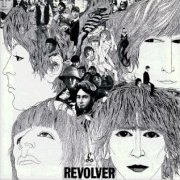 |
Revolver (1966, 35.01) ****/½ |
||
| Taxman Eleanor Rigby I'm Only Sleeping Love You to Here, There and Everywhere Yellow Submarine She Said She Said Good Day Sunshine |
And Your Bird Can Sing For No One Doctor Robert I Want to Tell You Got to Get You Into My Life Tomorrow Never Knows |
||
 |
7" (1967) *****/TTTT Penny Lane Strawberry Fields Forever |
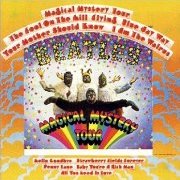 |
Magical Mystery Tour |
||
EP (1967, 19.10) ****/T½Magical Mystery TourYour Mother Should Know I am the Walrus The Fool on the Hill Flying Blue Jay Way |
LP (1968, 36.45) ****/TT½Magical Mystery TourThe Fool on the Hill Flying Blue Jay Way Your Mother Should Know I am the Walrus |
Hello Goodbye Strawberry Fields Forever Penny Lane Baby You're a Rich Man All You Need is Love |
|
 |
The Beatles [a.k.a. The White Album] (1968, 93.38) ***/T |
|||
| Back in the USSR Dear Prudence Glass Onion Wild Honey Pie The Continuing Story of Bungalow Bill While My Guitar Gently Weeps Happiness is a Warm Gun |
Martha My Dear I'm So Tired Blackbird Piggies Rocky Raccoon Don't Pass Me By Why Don't We Do it in the Road? I Will |
Julia Birthday Yer Blues Mother Nature's Son Everybody's Got Something to Hide Except for Me and My Monkey Sexy Sadie Helter Skelter |
Long Long Long Revolution 1 Honey Pie Savoy Truffle Cry Baby Cry Revolution 9 Good Night |
|
 |
7" (1969) ***/½ The Beatles' Seventh Christmas Record |
 |
Anthology 2 [Disc 2] (1996, recorded 1965-68, 64.21) ****/T½ |
||
| Strawberry Fields Forever (demo sequence) Strawberry Fields Forever (take 1) Strawberry Fields Forever (take 7 and edit piece) Penny Lane (remix) A Day in the Life (takes 1, 2, 6 & orchestra) Good Morning Good Morning (take 8) Only a Northern Song (takes 3 & 12) Being for the Benefit of Mr. Kite! (takes 1 & 2) |
Being for the Benefit of Mr. Kite! (take 7) Lucy in the Sky With Diamonds (takes 6, 7 & 8) Within You Without You (instrumental) Sgt. Pepper's Lonely Hearts Club Band (Reprise) (take 5; mono) You Know My Name (Look Up the Number) I am the Walrus (take 16) The Fool on the Hill (demo) |
Your Mother Should Know (take 27) The Fool on the Hill (take 4) Hello, Goodbye (take 16) Lady Madonna (takes 3 & 4) Across the Universe (take 2) |
|
 |
Anthology 3 [Disc 1] (1996, recorded 1967-70, 73.34) ***/½ |
||
| A Beginning (instrumental) Happiness is a Warm Gun (home demo; mono) Helter Skelter (take 2 edited; mono) Mean Mr. Mustard (home demo) Polythene Pam (home demo) Glass Onion (home demo) Junk (home demo) Piggies (home demo; mono) Honey Pie (home demo) |
Don't Pass Me By (takes 3 & 5) Ob-La-Di, Ob-La-Da (take 5) Good Night (rehearsal & take 34) Cry Baby Cry (take 1) Blackbird (take 4) Sexy Sadie (take 6) While My Guitar Gently Weeps (demo) Hey Jude (take 2) Not Guilty (take 102) |
Mother Nature's Son (take 2) Glass Onion (original mono mix) Rocky Raccoon (take 8) What's the New Mary Jane (take 4) Step Inside Love/Los Paranoias (jam) I'm So Tired (takes 3, 6 & 9) I Will (take 1) Why Don't We Do it in the Road? (take 4; mono) Julia (take 2) |
|
 |
The Beatles [50th Anniversary Super Deluxe Edition] (2018, recorded 1968) ***/TRevolution 1 (take 18) [disc 4, track 1]Lady Madonna (backing vocals from take 3) [disc 6, track 21] |
Current availability:
Mellotrons used:
The trouble with The Beatles is that they're generally regarded as above criticism, the most immense importance assigned to their most insignificant acts. Yes, they were pioneers in many ways; they were one of the first bands to have no obvious 'leader', they broke the songwriting stranglehold of Tin Pan Alley, they popularised long hair for men, they (semi-) legitimised soft drug use, blah blah blah. However, for someone not brought up on their music, while much of it is great pop, there seems to be an awful lot of filler in their canon, particularly on their early albums; hardly surprising given the amount of material they were forced to churn out. I don't personally really connect with the band until their 'psychedelic' period, starting with their second album of '66, Revolver. It sounds to me like an uneasy compromise between their pop past (Taxman, Here, There And Everywhere, Got To Get You Into My Life) and their semi-experimental future (Eleanor Rigby, Tomorrow Never Knows). The only confirmed (if inaudible) Mellotron on the album (from Paul) is during the mini-collage section of Tomorrow, in amongst the sonic maelstrom, so I wouldn't rush out and buy it on that account.
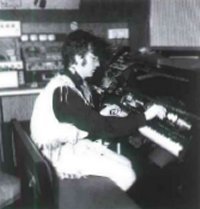
When 'classic' Mellotron tracks are mentioned, an ever-present example is one side of their early-'67 double-A single, Strawberry Fields Forever. A classic piece of psychedelia, it was recorded in November 1966 over several sessions, where the band and producer George Martin tried recording it with several different treatments. The final, released version, as you probably know, is an edit composed of two takes played in keys a semitone apart, the first by the band and the second by a brass band brought in for the occasion (which may account for the key-change). The first take is sped up slightly and the second is slowed down, which matched up both their keys and tempos. Serendipity, eh? It has to be said that this is not only The Beatles' Mellotron classic, but one of the all-time greats, while the Mellotron flutes (McCartney again) on the intro have defined a style. How often have you heard that sound played that way?
 |
However, the Beatles' reputation as Mellotron users relies almost solely on Strawberry Fields; they only (obviously) used one a handful of other tracks in their oeuvre and those are usually only referred to by aficionados. Later that year, the band released a six-track EP (actually a double 45) to accompany their ill-fated celluloid venture, Magical Mystery Tour. It was shown on TV at Christmas '67, but its wild, psychedelic look was hideously muted by the black-and-white sets still resident in 98+% of British households. A cursory listen makes it sound as if there's Mellotron all over the six track EP, but most of the 'sightings' are actually acoustic instruments, often played in a Mellotron-like manner (see: Blue Jay Way). The only actual use (probably) is on the instrumental Flying, which most definitely has Mellotron flutes right at the front of the mix, along with background strings and trombones, this time from John.
Like so many other bands, The Beatles turned away from '67's psychedelia the following year, the results being, well, rather prosaic in comparison, sad to say. Their sprawling double album, The Beatles, forever to be known as The White Album, featured Mellotron on at least two tracks; many fans regard it as their most enduring work, but I'm afraid I just can't see it myself. That isn't to say there's no good material on the album, but there's far too much messing about and half-formed sketches that have ended up being treated as if they were the Holy Grail. Anyway, The Continuing Story Of Bungalow Bill has the Spanish guitar run from the left-hand manual, with some woodwinds later in the song (and, according to Zohar, trombone and mandolin), I believe from engineer Chris Thomas. This has brought up an interesting point: although the guitar part is a prerecorded tape, once the Beatles recorded it, do they then hold copyright on the sound? Someone (brave) needs to put this to the test... I wouldn't fancy trying to explain to their top lawyers why this wasn't a sample from Bungalow Bill... John also plays Mellotron on the highly experimental (read: near unlistenable) Revolution 9; nine minutes of impenetrable sound collage put together by John and an engineer, including some backwards Mellotron strings amongst all the other sonic debris of the piece. I've heard rumours that some of the Mellotron sound effects are also used on the album, not least the plane landing at the beginning of Back in the USSR, but without hearing the original FX, it's hard to say.
The Beatles' Seventh Christmas Record is a band curio that's found its way here (thanks, Mark); you probably know this anyway, but the band released seven flexidisc Christmas messages to their fan club, collected on From Them to You (a.k.a. The Beatles' Christmas Album in the States), the last of which, The Beatles' Seventh Christmas Record, contains a few seconds of John messing about on his MkII, using vibes and accordion, which, due to an anomaly in the machine's tape-sequencing, could be played together (believe me, no overdubs here), plus what sounds like a slowed-down rhythm tape and left-hand manual moving strings. It's hardly worth rushing out and spending serious moolah to hear, but if you get the chance, it's at least vaguely worth hearing.
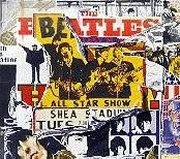
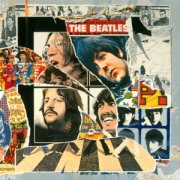
In the mid-'90s, fifteen years after Lennon's death, the vast Anthology series appeared; ten hours of video, three double CDs. A huge Beatles propaganda exercise, no less. Among the 'work in progress' scattered among the (roughly) chronologically-sequenced discs are three of the many takes of Strawberry Fields, found on disc two of Anthology 2, although one of these is a new edit of two other takes. Two of these (Take 1 and Take 7 And Edit Piece) contain Mellotron, the former having prominent flute and brass parts, the latter being more of an extended version of the first half of the familiar version, chock full of flutes. Both versions give a new perspective on the song, but whether that makes the whole set worth buying has to be up to you. Anthology 3 was, effectively, recorded over 1968 and '69, with just one track from '67 and one from January 3rd, 1970. The only one that has any interest for us, however (depending, of course, on how you feel about a double disc of Beatles outtakes), is the original mono mix of Glass Onion, on disc one, someone playing occasional Mellotron flutes, including a pitchbent part.
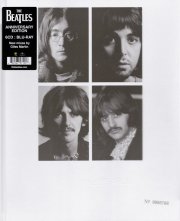
2018 brought the 50th Anniversary Super Deluxe Edition of The White Album, adding no fewer than four extra CDs and a Blu-ray containing several different mixes; effectively a vastly expanded version of disc one of Anthology 3. Believe me, this is one for fanatics ONLY; however, I'm pushed to think of another artist whose fans are quite as, well, fanatical as those of The Beatles, so I'd imagine this has sold very well indeed. Disc three contains the 'Esher Demos', basically acoustic demos of most of the album, plus a handful of tracks released either later (on Abbey Road or Anthology 3) or not at all, at least officially. Discs 4-6 are subtitled 'sessions', opening an exhaustive/exhausting window into the Fabs' recording methods; I mean, does anyone really need thirteen minutes of a grindingly slow Helter Skelter blues? In fairness, we also get early versions of later tracks (notably Let It Be) and several studio jams, for those who are into such things. I point blank refuse to list the full contents of the relevant discs, thus the odd compromise I've employed above, merely listing the two relevant tracks from discs 4 and 6 for the sake of brevity and ease of use. John plays flutes, for two or three minutes, with a couple of radical pitchbends thrown in, on disc 4's ten-minute Revolution 1 (Take 18), while Paul messes about in the background on strings and flutes on Lady Madonna (Backing Vocals From Take 3), neither track entirely essential, frankly.
There are several other possible Mellotronic sightings in the band's oeuvre, although none are confirmed. The 'songtrack' of 1969's Yellow Submarine, remixed and released in 1999, supposedly exposes some previously unheard Mellotron on Hey Bulldog (sounds like a Hammond to me) and there are supposed to be several other examples, although nothing that's audible to my ears. Although the band were reputedly so impressed with the Mellotron that all four members allegedly bought one (note: apparently a fallacy; John and George Martin were the only two Beatles/associates to actually do so), George and John were the only ones to use one on their solo work while the band were still extant; George on his soundtrack for Wonderwall, Wonderwall Music (he never apparently recorded with it again) and John on the frankly bizarre Unfinished Music No. 1: Two Virgins, in a somewhat lesser musical context, to be brutally honest. Paul used a MkII on his first solo LP, before using an M400 and MkV sporadically ever since, while Ringo never apparently used one, only finally using a little (seemingly sampled) M400 in recent years.
There are artists who have used the Mellotron on multiple releases, often to little real effect (see: any number of second-rate central European electronic musicians), while the Beatles only ever (obviously) used it on a handful of tracks. Who are better known? For that matter, who are better? The Beatles probably prove the old adage that it's not how much that counts, but what you do with it. So; for the Mellotron work, get the Magical Mystery Tour CD, but the rest of their stuff doesn't really make the outlay worthwhile.

It's a long-running moot point as to whether or not there's any Mellotron on the band's psychedelic milestone, Sgt. Pepper's Lonely Hearts Club Band, many, many people writing to tell me that there's a few seconds of reverb-heavy Mellotron strings on Lovely Rita (around the 1:11 mark, if you really care). However, Patrick's written to tell me that, according to engineer Geoff Emerick's Here, There & Everywhere, it's an effect he created by placing some sticky editing tape on the guide rollers of a tape machine that was sending a signal to the echo chamber, causing the tape to wow and flutter (p.171), which presumably settles that one for once and for all.
...Pepper... must be the most written-about album in the history of written-about albums, but, for what it's worth, my two penn'orth is that it's a flawed masterpiece, thus my under-five star rating. Lucy In The Sky With Diamonds, Being For The Benefit Of Mr. Kite! and A Day In The Life are impossible to criticise, unless you're even more churlish than my good self, while most of the remainder have their good points, although George's Within You Without You should've been a lot shorter, while Macca's music-hall influence could've been sat on in places. All complaints to the usual address.

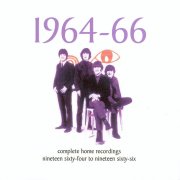 |
Complete Home Recordings, 1964-66 (55.07) ***/TT |
||
| The Public Ear Bit (1) The Public Ear Bit (2) One and One is Two If I Fell (1) If I Fell (2) If I Fell (3) If I Fell (4) If I Fell (5) Talking Guitar Blues (1) Talking Guitar Blues (2) Bouree Top Gear Promo (1) Top Gear Promo (2) Am Sonntag Will Mein Suesser Mit Mir Segein Gehn We Can Work it Out Michelle He Said He Said (1) He Said He Said (2) |
He Said He Said (3) He Said He Said (4) He Said He Said (5) She Said She Said (1) She Said She Said (2) She Said She Said (3) Mellotron Improvisation (1) Mellotron Improvisation (2) Mellotron Improvisation (3) Mellotron Improvisation (4) Mellotron Improvisation (5) Strawberry Fields Forever (1) Strawberry Fields Forever (2) Strawberry Fields Forever (3) Strawberry Fields Forever (4) Strawberry Fields Forever (5) Strawberry Fields Forever (6) Strawberry Fields Forever (7) Strawberry Fields Forever (8) |
Strawberry Fields Forever (9) Strawberry Fields Forever (10) Strawberry Fields Forever (11) Strawberry Fields Forever (12) Strawberry Fields Forever (13) Strawberry Fields Forever (14) Strawberry Fields Forever (15) Strawberry Fields Forever (16) Strawberry Fields Forever (17) Strawberry Fields Forever (18) Strawberry Fields Forever (19) Strawberry Fields Forever (20) Strawberry Fields Forever (21) Strawberry Fields Forever (22) Strawberry Fields Forever (23) Strawberry Fields Forever (24) Tape Loop and Backward Speech |
|
Mellotrons used:
Is Complete Home Recordings, 1964-66 actually complete? Or even actually all recorded at someone's home? Doubtful on both fronts, but that's Bootlegland for you (like Pepperland, only rather more prosaic). Far more than with most boots, you've got to be a serious fan to really want to trawl through nearly an hour of warbly-vocal-and-acoustic versions of songs both known and unknown, not to mention several examples of the band's famed collective sense of humour. However, multiple takes of Strawberry Fields Forever, from John with a reel-to-reel at home through to studio run-throughs, give a real sense of the song's development.
Mellotron? The giveaway's in the track titles: Mellotron Improvisations 1-5. No. 1 features a squawking string line and vibes over (real) piano, No. 2 sounds like rather distorted acoustic guitar tapes, No. 3 is someone messing about with the pitch control for a few seconds, No. 4 is the left-hand manual's 'moving strings' and flute trills (whole phrases triggered from single keys) and, finally, No. 5 is little bursts of strings and flutes over something, possibly not even Mellotronic. Unsurprisingly, it crops up again on those Strawberry Fields run-throughs, with obvious Mellotron vibes on version 22, more of the same plus probable fast-Leslie organ on versions 23 and 24 and more of those flute phrases on the final track, Tape Loop And Backward Speech.
Do you need to hear any of this? That entirely (and I mean ENTIRELY) depends on how much of a Beatles fan you are, frankly. Worth it for the Mellotron? I suppose if the thought of someone dicking around on a MkII sounds like your idea of fun (bear in mind that we've already heard this and to a greater extent, on Lennon's Two Virgins), then go right ahead. To be fair, the vibes on those early versions of SFF are vaguely intriguing, but that's about as far as this goes. Is there any more Beatles bootleg Mellotronia out there? I suppose there might be some more unreleased takes of SFF, but this release seems to mop up all the 'Mellotron Music' snippets that have been doing the rounds for years.

See: John Lennon | Paul McCartney/Wings | George Harrison | Ringo Starr