




|
|
|
|
||
|
 |
LP3 (2008, 42.24) ***½/TTT |
|
| Shiller Falcon Jab Mi Viejo Mirando Flynn Bird-Priest Shempi Imperials |
Dura Bruleé Mumtaz Khan Gipsy Threat Black Heroes |
|
Current availability:
Mellotron used:
Ratatat are the duo of Mike Stroud and Evan Mast, who mix electronica with '60s- and '70s-inspired pop, if you can imagine that combination played instrumentally. Sometimes, musical categorisation isn't so easy... Their imaginatively-titled third album, LP3, throws all kinds of stuff into the mix, no one track sounding anything much like any other, which is quite a feat. 10cc guitar lines duke it out with Spectoresque pianos, harpsichords and laptop electronica declare an honourable draw and then there's the Mellotron...
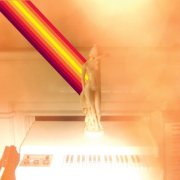
The album was record at Old Soul Studio, up in the Catskills in New York State, which I presume to be the same place that Grizzly Bear used on 2009's Veckatimest. I expect to be hearing more about this place in the future... It apparently hosts a goldmine of old gear, including an Optigan and a Mellotron, pictured on the sleeve, in case there were any doubt. It's used all over the place here, with flutes, strings and cellos on opener Shiller, strings on Falcon Jab, flutes and cellos on Mirando, flutes on Bird-Priest, strings and cellos on Imperials and finally, all three sounds again on closer Black Heroes. There's Optigan on a few tracks for optical disc fans, too, notably Gipsy Threat and Mi Viejo (used backwards).
If there's one criticism I could level at this album, it's the duo's habit of finding a musical idea, then beating it to death over the course of a 'song'. In fairness, though, none of them are that long and isn't that really, at heart, how most bands work? It's only the variety here that makes it more apparent, I suspect. Anyway, an intriguing, original album, with loads of Mellotron. Well worth hearing.
See: Samples etc.
 |
Tonight Starring Edna (1972, 37.25) **½/T½Devil's SonYou've Got to Get Another Girl Will You Pay When I Cry Alabama Make it Visions of Tarzan & Jane Be My Man What Do I Care Blue Berry Music |
Current availability:
Mellotron used:
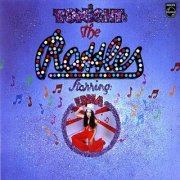
The Rattles (originally with Achim Reichel) have the distinction of being the first German band to crack the US charts, with their 1970 re-recording of their '68 hit, The Witch. After the following year's imaginatively-titled album of the same name (their first in four years, amazingly for the era), they followed up quickly with '72's Tonight Starring Edna, or, I suppose, Tonight the Rattles Starring Edna. It's a pretty mainstream German rock album of the period, not heavy or progressive or weird enough to fall into any readily-definable category; bizarrely, this is the kind of stuff that's lazily labelled 'krautrock' by people who don't know any better. Anyway, better tracks include opener Devil's Son and Visions Of Tarzan & Jane, although it's all rather unexciting, frankly and closer Blue Berry Music is interminable, repeating the chorus until you want to throw up.
On the Mellotron front, Lude Lafayette sticks string stabs and queasy, rolling chords all over Devil's Son and cellos and strings on What Do I Care; only two tracks, but both good ones. Having also heard The Witch, I think it's safe to say that The Rattles were never the most dynamic of outfits, so with only two Mellotron tracks, you're probably better off passing this one up.
 |
Raw Material (1970, 31.50) ***/TTime and IllusionI'd Be Delighted Fighting Cocks Pear on an Apple Tree Future Recollections Traveller Man Destruction of America |
Current availability:
Mellotron used:
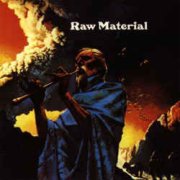
Raw Material were a typical UK proto-prog outfit, with that '1970 sound' beloved of bands like Cressida, Indian Summer and Spring, playing lengthy, organ-driven workouts in a post-psychedelic kind of way. This isn't to criticise; the material (ho ho) on Raw Material's pretty good, although they were never going to be front-runners, to be honest. Colin Catt plays lush Mellotron strings and flutes on album closer Destruction Of America, a short piece with either Catt or Mike Fletcher intoning a poem which is, sadly, as relevant now as then.
Their second and last release, Time is (***½), is supposed to have Mellotron all over it, but upon actually hearing the album (which, incidentally, is an improvement on their debut), all I can hear is an early string synth (an Eminent?), disqualifying it from this site. Sorry. So; Raw Material: not bad, not brilliant, might be worth it if you like the style anyway. One beautiful Mellotron piece, but a minute of Mellotron isn't that big a deal. Up to you.
 |
Restless Night (2001, 48.43) ***/T½ |
|
| The Man That Time Forgot New Moon Indigo River Lost Little Orbits Dark Night of the Soul One Hour Baby Blue Dark Sky Traveler |
More Wine Heaven (is in Your Eyes) |
|
Current availability:
Chamberlin used:
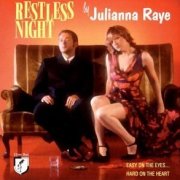
Being the cousin of the late Michael Kamen hasn't hurt Julianna Raye's career, but in fairness, her voice and songwriting may well have brought her plaudits on her own terms. She's worked with (deep breath) Rufus Wainwright, Don Henley, Ryan Adams, Jeff Lynne and countless others, so her professional future's hopefully assured, although she must have suffered periods of self-doubt during the nine-year gap between her 1992 debut and 2001's Restless Night. Best described as 'jazzy singer-songwriter', Restless Night is the kind of album that transcends its genre (such as it is), highlights including the sparse New Moon, the slightly more mainstream Lost Little Orbits and One Hour.
Patrick Warren and Richard Causon both play Chamberlin (presumably Warren's), with background strings on opener The Man That Time Forgot, more upfront ones on Dark Night Of The Soul and a huge, lush string part on closer Heaven (Is In Your Eyes). If I have one criticism of this album, it's that pretty much every track is slightly too long, at least for my taste; it might have been better at around forty minutes. Picky picky picky... A good record, some decent Chamby work.
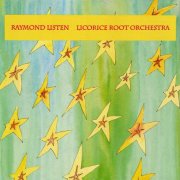 |
Licorice Root Orchestra (1993, 38.48) **½/TTT |
|
| September in the Night Cloud Symphonies Saturn Rise Lemon Peel Medallion Tangled Weeks Ocean's Long Floor/Spell on This Room Sunday Theme of Petals Coronation Day |
Let Darkness Fall Everyday Supernatural Garden of Chalcedony Black-Eyed Susans Firmament |
|
Current availability:
Mellotron used:
Raymond Listen made one album under that name, 1993's Licorice Root Orchestra, before becoming Licorice Roots, eventually re-releasing their debut under their new moniker. And they sound like...? Hazy, early '90s US indie/psych (lo-fi division), I suppose, so it comes as no surprise to discover that this was produced by the legendary Kramer, sounding a lot like his other productions from the era. Highlights? Given that Edward Moyse's voice is, er, an acquired taste, it's difficult to say, although closer Firmament possibly encapsulates their best features.
Given Kramer's involvement (this was also recorded at his studio), it's almost certain that it's his M400 splattered all over the record, although no-one's actually credited with playing it. Multi-instrumentalist David Silverman? An uncredited Kramer himself? Anyway, we get flutes and strings on opener September In The Night (spot the patch-change 'on the fly') and Let Darkness Fall, flutes on Cloud Symphonies, Tangled Weeks and Sunday Theme Of Petals, choirs and flutes on Lemon Peel Medallion and Firmament and strings on Coronation Day. An unexpected early '90s Mellotronic highlight, then, at least for tape-replay fans.
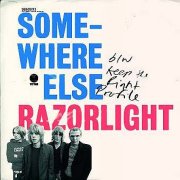 |
CDS (2005) **/½ Somewhere Else Keep the Right Profile |
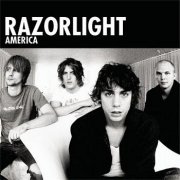 |
CDS (2006, 11.56) *½/½ America Teenage Logic Fine |
Current availability:
Mellotrons used:
Razorlight seem to be the Great White Hope for UK indie in 2005, which can only mean that we really have disappeared up our own fundament without even noticing. They're truly dreadful, from their pseudo-New Wave posturing, bad Tom Verlaine vocals and 'we're as gritty as Squeeze' namechecking of London districts (notably the inexplicably fashionable Dalston). Somewhere Else is included as a bonus track on later versions of their debut album, Up All Night (**), but the album's so awful I just can't be arsed to review the whole thing, especially as there's no Mellotron on the regular version.
Anyway, to no surprise at all, it's a tedious little pop song, typical indie-schmindie, quite clearly wanting to be the Libertines, for God alone knows what reason. Mellotron cellos and strings in the background make it sound like a poor man's Wonderwall, which is no recommendation at all. About the only thing for which this is genuinely notable is the band's appearance at Live8, for which they wheeled out an M400, played by bassist Carl Dalemo. I believe they're touring with it as well, which is pretty cool; shame they're so crap, really.
I thought the following year's America was even worse, until I heard its second b-side track, Fine. No. No it isn't. It isn't fine at all. It's complete shite. As far as America's Mellotron use (from Björn Ågren) goes, as far as I can work out, we get literally a few seconds of barely audible background strings at the end of the track. Big fucking deal.
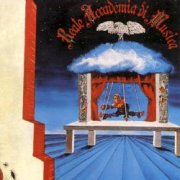 |
Reale Accademia di Musica (1972, 40.17) ***½/TFavolaIl Mattino Ognuno Sa Padre Lavoro in Città Vertigine |
Current availability:
Mellotron used:
The slightly ponderously-named Reale Accademia di Musica specialised in that strain of gentle, pastoral prog that the Italians were so good at in the '70s, with the beautiful Favola getting things off to a good start. They did pick up the pace here and there and allowed the occasional lapse of taste (the honky-tonk piano in Ognuno Sa, for example), but overall, their self-titled sole album is well worth the effort.
I've been reading for some time now that there's Mellotron all over closing track Vertigine. Well, there isn't; not that I can hear anyway. There are, however, Mellotron string parts on Favola and Lavoro in Città from Federico Troiani, but that's as far as Reale Accademia di Musica goes on that front. A good album, if not a great one. Worth hearing (it's on CD), but don't pay a fortune.
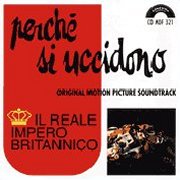 |
Perché si Uccidono (1976, 31.55) ***/TT½ |
|
| Epopea Ammoniaca Kalu' Edda Epopea (reprise) My Damned Shit Dodici e un Quarto Block |
R.I.B. Apotheke Distrazione |
|
Current availability:
Mellotron used:
Il Reale Impero Britannico were basically Goblin by any other name; the nom de plume may have been used because some of the tracks were written with Fabio Frizzi and therefore stand slightly outside the rest of the band's catalogue. A film soundtrack again, most of the music on Perché si Uccidono is instrumental, few tracks longer than four minutes. Unsurprisingly, it sounds quite like Goblin, although it has a slightly more mainstream side that the parent band lacked. Actually, to be brutally honest, some of the material slips into Pat Metheny fuzak territory, while the three actual songs are all a bit grim, including the ludicrously-titled My Damned Shit, while Epopea cuts George Martin/Van der Graaf's Theme One very close indeed.
Anyway, Claudio Simonetti probably plays more Mellotron here than on anything else in the Goblin/related catalogue, with quite overt string and flute parts on Edda, plus flutes on Epopea, with strings on the other highlighted tracks. I have to be honest and say this isn't the greatest album Goblin etc. ever made, but it does have some reasonable Mellotron work here and there.
See: Goblin
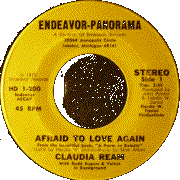 |
7" (1972) *½/TTT Afraid to Love Again You're the One |
Current availability:
Chamberlin used:
Don't be fooled into thinking Claudia Ream's Afraid To Love Again c/w You're The One has anything much to do with the (pseudonymous?) lady in question; this is prime song-poem territory, the 'A' crediting Rod(d) Rogers (a.k.a. Rodd Keith) with backing vocals. Unusually, we get both a copyright date (1972, although it sounds like something from the mid-'60s) and a lyrical dedication, 'from the beautiful book, "A Poem in Beauty"', which probably gives you some idea of what you're in for. Is this bad? Yes. Very, very bad.
Keith plays Chamberlin on both sides, with strings and plinky electric guitar throughout, the only other instrumentation being gently tapped hi-hat and the aforementioned backing vocals. Of course, this is obscure as they come (as ever, 'thanks' to Mark Medley for this flea-market purchase) and probably extremely rare, for which we should probably be very grateful.
See: Rodd Keith | Rod Rogers
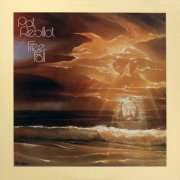 |
Free Fall (1974, 40.26) ***/T |
|
| The Naked Truth Song for the New Man Let Me Know In a Melancholy Funk Free Fall Monday's Something/Love-Happy (Medley) Pastorale The Beautiful Bend Ahead |
Violet Don't Be Blue Rumanian Folk Dance |
|
Current availability:
Mellotron used:
Session keyboard player Pat Rebillot has worked with many top names, not least Hall & Oates and Steely Dan, although he's probably best known for his long-term collaboration with Herbie Mann. 1974's Free Fall seems to be his only solo album, produced by Mann and featuring ninja drummer Steve Gadd and the not-yet-famous Tony Levin on bass, amongst other luminaries. It's largely a jazz record, unsurprisingly, although it shifts between the funk of opener The Naked Truth and the title track and gentle solo piano pieces like In A Melancholy Funk (ironically) and Monday's Something/Love-Happy.
Rebillot plays Mellotron himself, with a harmonising flute part on Let Me Know, although it's difficult to know whether or not the background cello on Violet Don't Be Blue is Mellotron or not. It's a shame this appears never to've appeared on CD, as it's a far better and more accomplished record than many easily-available fusion efforts of the period. Very little Mellotron, though, which is pretty consistent with Rebillot's other relevant work with Mann and Roy Ayers.
See: Herbie Mann | Roy Ayers | Aretha Franklin
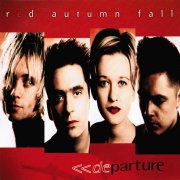 |
Departure (1998, 46.07) ***/½ |
|
| Josephite Silent Station Satellite Heaven2 King Shaker Release '66 The Revenge of the Blazer Boys Mercury Men |
She's Always Angry I Need You Hurricane |
|
Current availability:
Chamberlin used:
Calgary natives Red Autumn Fall formed in 1992, releasing a handful of cassettes and one or two actual albums (I believe), chiefly '98's Departure. It would be easy to slot this into the 'powerpop' bracket, going by excellent opener Josephite, although several other tracks display indie traits of the era, albeit generally in a good way. Other highlights include Silent Station, The Revenge Of The Blazer Boys and She's Always Angry, but omitting dreary seven-minute closer Hurricane would have improved the album.
The CD booklet says 'Chamberlain [sic] on Heaven2 recorded at Orchard Studio', so I presume it's genuine, the uncredited player adding background flutes to the track, shifting between chords and the occasional melody.
 |
Red Dirt... Plus (1970, 41.37/60.49) **½/T |
|
| Memories Death Letter Problems Song for Pauline Ten Seconds to Go In the Morning Maybe I'm Right Summer Madness Laced With Newbald Gold |
Death of a Dream Gimme a Shot Brain Worker I've Been Down So Long |
|
Current availability:
Mellotron used:
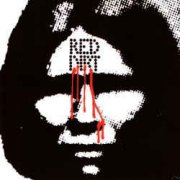
Red Dirt were a British heavy blues-rock band, whose sole eponymous album appeared and disappeared again in 1970, leaving little impression on the record-buying public. The reason for this, unlike some other unfairly obscure efforts, is that it's dull and generic and completely unable to provide anything not already catered for by many far better bands. Surprisingly, there's Mellotron (player unknown) on opener Memories (also the album's least generic track), with fairly heavy MkII strings, although that appears to be it.
Oddly, the bonus tracks on Audio Archives' CD issue, Red Dirt... Plus, are more interesting then the contents of the album itself. The first two, Mixed Blessing and Wilting Tree, are long, slow, dark pieces, a long way from the blues, while Three Fair Maidens and Back Alley Sally are fiddle-driven country hoedowns. So; you're only really going to like Red Dirt if you're into early, grungy blues-rock, but the opening track and at least the first two bonus ones are worth hearing, though not necessarily buying.
 |
Red Favorite (2006, recorded 1996-2003, 47.23) ****/TT½ |
|
| Starry Sky First The Storm Witch Routine Green Hill Beach Flight Agrippina Taken in |
Cistern Wingshot Pallid Untitled |
|
Current availability:
Mellotron used:
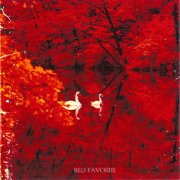
Red Favorite are basically Jeremy Pisani's solo weird-folk project, existing as no more than a basement band for years. His/their eponymous 2006 debut was actually recorded between 1996 to 2003 and sounds about as low-fi as you can go and still get a professional release, albeit one originally only on CD-R. It's actually quite wonderful; its understated acoustic work and mumbled vocals are worth a million big-name no-talents, which almost certainly means Mr Pisani will never become a household name (excepting my own). Think: Bert Jansch and Nick Drake filtered through an old four-track and you might be getting close, although ultimately, Pisani sounds like no-one but himself.
I presume the Mellotron on several tracks is real, although whether Pisani owns/owned one or borrowed it is unknown; I'd like to think it isn't samples, anyway. He plays flutes on First and Taken In, flutes and strings on Routine, flutes, possible cellos and definite choirs on Flight and something that may be a flute/strings mix on Cistern. Overall, then, a beautiful album, filled with ghostly melodies and light, not to mention Mellotron. I'm not sure if this is even currently available, but if it is, please make the effort to support this music.
 |
Mother's Milk (1989, 44.55) ***/TT | |
| Good Time Boys Higher Ground Subway to Venus Magic Johnson Nobody Weird Like Me Knock Me Down Taste the Pain Stone Cold Bush |
Fire Pretty Little Ditty Punk Rock Classic Sexy Mexican Maid Johnny, Kick a Hole in the Sky |
|
 |
Blood Sugar Sex Magik (1991, 73.58) ***/T½ | |
| The Power of Equality If You Have to Ask Breaking the Girl Funky Monks Suck My Kiss I Could Have Lied Mellowship Slinky in B Major The Righteous and the Wicked Give it Away |
Blood Sugar Sex Magik Under the Bridge Naked in the Rain Apache Rose Peacock The Greeting Song My Lovely Man Sir Psycho Sexy They're Red Hot |
|
 |
One Hot Minute (1995, 61.06) ***/T | |
| Warped Aeroplane Deep Kick My Friends Coffee Shop Pea One Big Mob Walkabout |
Tearjerker One Hot Minute Falling Into Grace Shallow Be Thy Game Transcending |
|
 |
Californication (1999, 56.26) ***/T | |
| Around the World Parallel Universe Scar Tissue Otherside Get on Top Californication Easily Porcelain |
Emit Remmus I Like Dirt This Velvet Glove Savior Purple Stain Right on Time Road Trippin' |
|
 |
By the Way (2002, 69.13) ***½/½ |
|
| By the Way Universally Speaking This is the Place Dosed Don't Forget Me The Zephyr Song Can't Stop I Could Die for You |
Midnight Throw Away Your Television Cabron Tear On Mercury Minor Thing Warm Tape Venice Queen |
|
Current availability:
Mellotrons/Chamberlin used:
Since their mid-'80s inception, the Red Hot Chili Peppers have become fantastically popular, chiefly, it seems, with the musclebound 'jock' type of American concert-goer/record-buyer who likes nothing better than some good ol' macho funk metal and no gurlz. Homoeroticism aside, the Chilis have done little to quench the flames of rampant misogyny that have surrounded them for many years, although Californication, despite its title, may have finally broken the back of their all-too warranted reputation. I can't say I'm wildly enamoured with their music, to be honest, but I'll try to review these albums as fairly as possible.
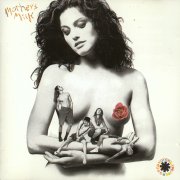
Well, you certainly can't fault 'em on energy grounds; Mother's Milk kicks, er, 'ass' (so what's that poor donkey done to anybody?) in a funk/rap/metal hybrid driven along by Flea's pyrotechnic funk bass licks and John Frusciante's ripping guitar, replacing the recently deceased Hillel Slovak (heroin, death fans). Despite fairly detailed instrumental credits, there's no mention of keyboards anywhere, including the organ on the fairly reprehensible Sexy Mexican Maid, but given that it's produced by noted Mellotron fan Michael Beinhorn, it's probably safe to assume it's his playing that can be heard on three tracks. Nobody Weird Like Me is layered with strings, although it's one of the heavier tracks on offer here, ditto Knock Me Down. Taste The Pain, however, is slower, with some reggaeish guitar and Mellotron choir and string parts that, strangely, don't really seem to add anything much to the song. In fact, none of the Mellotron parts are that relevant to the music, leaving one to wonder why Beinhorn actually bothered at all, though it's difficult to knock anyone who puts the Sacred Keyboard onto anything. Track nine is the Hendrix song, incidentally, which I remember seeing them play on TV with Flea playing the entire song hanging upside down from the lighting rig.
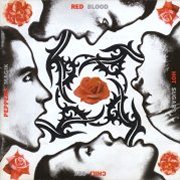
I've seen Blood Sugar Sex Magik written as the rather indigestible Bloodsugarsexmagik, but I think I'll stick with the readable version. For some reason, the Chilis opted to put out over 70 minutes' worth of music, which to be quite honest, is absolutely interminable. This is the sort of music that should rush in, mug you when you're not looking and be out again before you've noticed; 50 minutes would be overlong. Anyway, the album follows its predecessor's template fairly closely, although the band veer away from their chosen path in a few places, particularly on the acoustic Breaking The Girl and I Could Have Lied. This time round there's Mellotron credited on a couple of tracks, played by engineer Brendan O'Brien; Breaking The Girl has Mellotron flutes a-plenty, plus a little burst of strings somewhere along the line, while the utterly reprehensible Sir Psycho Sexy has cello and string parts towards the end. Shame about the lyrics, 'cos it's not a bad song.
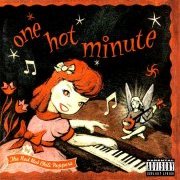
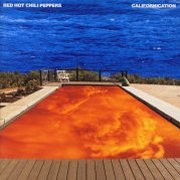
One Hot Minute, 1995's belated follow-up, shows a few signs of maturity, with a couple of decent songs in Tearjerker and the title track. I believe it's regarded as a bit of a stopgap album, but it doesn't sound that dissimilar to the rest of their catalogue to my ears. I've no idea who plays the Mellotron on this one, but there's quite a bit to be heard on Tearjerker, with a few choir and flute chords before a full-on strings part at the end. After another several-year gap, the Chilis released Californication and their emotional and musical maturity seems to have come on apace, although lead-off track Around The World gives the temporary impression that it's No Change on the Chilis front. The rest of the album is (relatively) more laid-back, in fact, almost mellow in places. Parallel Universe and Road Trippin' are genuinely good songs, although most of the rest have trouble rising above average. Patrick Warren was brought in to play Chamberlin (bizarrely credited as 'Chamberlin organ' - at least they spelt 'Chamberlin' correctly...) on Road Trippin' and succeeds in lifting what was already a good song with some well-placed cellos, strings and flutes.
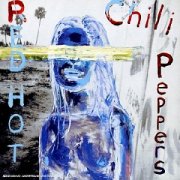
With 2002's By the Way, the Chilis have continued their unstoppable march towards the mainstream while, to be fair, keeping something of themselves about it. Best song is probably the opening title track, with the proverbial chorus to die for, but overall, the quality of the material is pretty high, although it does sound like a watered-down version of their previous funk/metal crossover. I'm sure they've made many more fans than they've lost, though. Just a couple. There are strings on a few tracks and uncredited keyboards, although it's apparently Frusciante playing the Mellotron strings on This Is The Place, consisting of some block chords over the drumless mid-section of the song. There are several other moments on the album that could be Mellotron, but somehow, none of them ring true, so I'm leaving it at this, at least without any more information.
Two later Mellotron credits turn out to be chimeras: producer Brian "Danger Mouse" Burton's supposed use on We Turn Red (2016's The Getaway) is inaudible and quite certainly nothing to do with a real machine, while Frusciante's credit on Poster Child (2022's Unlimited Love) seems to be for the wispy, generic voice sample running through the track. God, this band are shit.
See: Samples etc. | John Frusciante
 |
7" (2022) ***½/T Silver Ship Somewhere at the Edge of Time |
Current availability:
Mellotron used:
Red River Dream are the brainchild of Constantine Hastalis, a seemingly one-off project involving various Chicago psych scene luminaries, including members of Lucille Furs. 2022's Silver Ships b/w Somewhere At The Edge Of Time are a pair of decent-yet-not-outstanding songs, an accurate recreation of That West Coast Sound, the 'A' being a combo organ-driven, minor-key number, complete with organ solo and mucho wah guitar, while the equally minor-keyed flip features an electric 12-string solo and a Love-esque trumpet part.
Hastalis and Alex Rowney play one of his Mellotrons on the flip, with a background strings part that, while nice, is hardly the most upfront or innovative use you'll hear all year. Still, it beats the shit out of the mountains of landfill indie still being produced on a daily basis...
See: Constantine
 |
Cycles (1977, 41.44) **½/TCyclesOpen (Give it Back to Me) Gamble (Take a Chance on Me) Ooh Give Our Love Another Try Dancing Bones Checkin' it Out Funky Silk Don't Say No |
Current availability:
Chamberlin used:
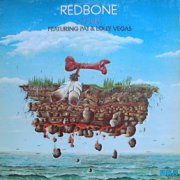
Redbone were formed in the late '60s by Native American brothers Pat and Lolly "Vegas" Vasquez, hitting gold with two major hits in the early '70s, Maggie and The Witch Queen Of New Orleans. However, by 1977, it seems their star was firmly on the wane, especially after (temporarily) losing long-term guitarist Tony Bellamy, Cycles being their last album for many years. By this point, the band had slipped sharply from their original Native American take on Santana to a rather gloopy soul/funk direction, although I've heard far worse in this field. The first two tracks are fairly affable soul/funk things, but by track three, Gamble (Take A Chance On Me), the band delve into the murky waters of... well, what was the biggest-selling genre in the States in the late '70s? You got it... Four to the floor, Saturday Night Fever, Yowzah! Yowzah! Yowzah! Yup, it's essentially disco, although the rest of the album manages to skirt the issue without doing the full Rose Royce.
The only band member not called 'Vegas' by this point was keyboard player Aloisio Aguiar, who, along with the ever-present Rhodes and string synth, is credited with Chamberlin; great Chamby strings intro on the title track, with a flute part on Open (Give It Back To Me) and more strings on Funky Silk, although all other string parts appear to be string synth. Anyway, despite its first 20 seconds or so, you really don't need a copy of this album, although I suspect their earlier work may be worth hearing.