





|
|
|
|
||
|
|
Mandalaband Eleni Mandell Mandrake |
Mandrake Paddle Steamer Mangala Vallis Manhattan Transfer |
Jim Manley Herbie Mann Manna |
Roger Joseph Manning Jr. Marilyn Manson Mansun |
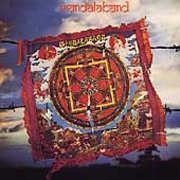 |
Mandalaband (1975, 41.18) ***½/½Om Mani Padme HumDetermination Song for a King Roof of the World Looking in |
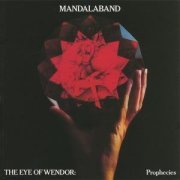 |
The Eye of Wendor: Prophecies (1978, 40.13) ***/½ |
|
| The Eye of Wendor Florian's Song/Ride to the City Almar's Tower Like the Wind The Tempest/Dawn of a New Day Departure From Carthilias Elsethea Witch of Waldow Wood |
Silesandre Ænord's Lament/Funeral of the King Coronation of Damien |
|
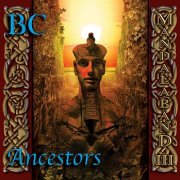 |
BC - Ancestors (2009, 68.20) **½/0 |
|
| Ancestors (Overture) Eden Nimrod (Journey’s End) Shemsu-Har Karum Kanesh Beautiful Babylon The Sons of Anak Aten |
Ozymandias Solomon the Wise Akhiyawa The Wine Dark Sea Elissa Roots |
|
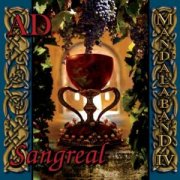 |
AD - Sangreal (2011, 76.11) **/½ |
|
| A Bloodline Born Magdalena Palatium Britannicum England's Heart and Soul Sancto Laurent Flight to Osca Visigoths Saracens |
Al-Andalus Unholy Orders The Kingdom of Aragon Holy Orders Le Perche Val Anfortas Rex Galadriel |
|
Current availability:
Mellotrons used:
Mandalaband were primarily a studio outfit (although I'm told they toured, at least early on), much of their material being written by 'controversial Egyptologist' (thanks, Discogs) David Rohl, who didn't actually play in the band, at least initially and whose sole non-writing credit on Mandalaband is as remix engineer. Rohl's songs sit quite firmly in that 'musical theatre' style of prog writing, where you get the feeling that he'd have been happier writing stage shows in a Lloyd-Webber vein than that bloody prog stuff, although bassist John Stimpson's are less so. It's not a bad album, actually, if somewhat overblown, highlights being parts of side one's epic, Om Mani Padme Hum, Roof Of The World and Stimpson's Determination. Now, despite keyboard man Vic Emerson having full instrumental credits, including 'string and choir arrangements' and the notable omission of a Mellotron from his rig, those are quite clearly Mellotron strings on Roof Of The World, unless the string arrangement somehow made a real string section sound like a Mellotron. The string synth has been left off his credits, too, making me seriously doubt their veracity.
Even more so than its predecessor, the preposterous The Eye of Wendor: Prophecies has all the hallmarks of a vanity project, oddly akin to The Intergalactic Touring Band's sole LP, released the previous year. Dozens of musicians, many of them famous, no crossover with the first album, two years' recording time, a ludicrous concept... Yup, it's a vanity project. The album contains a beautifully illustrated fold-out insert, detailing the concept, a Tolkienesque effort concerning Florian, Ænord etc. etc., which was, of course, completely in keeping with the times. NOT! It seems unbelievable now that anyone might think that an album like this would be a success in the late '70s, but hindsight's a wonderful thing, while the upheavals of the day were probably regarded at the time as a temporary aberration, not a seemingly permanent situation. At the end of the story are the fateful words, "To be continued". I've only once seen this particular prophecy fulfilled and that's on Rush's A Farewell to Kings.
Anyway, notable amongst the lengthy musicians list are all four of 10cc and Barclay James Harvest, Woolly Wolstenholme playing synths and Mellotron, while 'Davy' Rohl plays various keys and sings this time round. I stumbled across a Japanese website detailing what was played by whom and on which track, but I've no idea where the information came from. According to it, Woolly plays Mellotron on over half the tracks, but I can only hear it on a handful, so I'm afraid I'm going to stick to that, so it's M400 choirs at the end of The Eye Of Wendor itself, Dawn Of A New Day and Witch Of Waldow Wood, although any or all of them could be the real choir that crops up here and there. For what it's worth, the tracks where I can't hear the Mellotron are: Ride To The City, Like The Wind, Elsethea, Silesandre and Funeral Of The King; I rather suspect that the real choir and string section have confused someone, but it's hard to say. So, we'll never know exactly how Florian regained the Eye of Wendor, but you can be sure that he did, as a failed quest isn't much use to anyone, is it?
Just when you thought it was safe to go back in the water... A composite version of Mandalaband reconvened in 2007, led by Rohl, of course, also involving Woolly. BC - Ancestors appeared in late 2009 and is... a real disappointment. I'm not sure why I thought it would be better than The Eye of Wendor, but it isn't. It has a (relatively) modern sound, full of programmed orchestrations, but its vaguely Celtic, rather insipid 'symphonic' prog sounds more like the tedious Alan Parsons Project than, say, Yes. Maybe that's the idea. Anyway, it tackles its lyrical subject matter (the ancient world, unsurprisingly) with determination, but the music really is a bit bland, not to mention that there's too much of it, as with so many releases from the last twenty years or so. Woolly's credited with Mellotron on three tracks, Ancestors (Overture), Shemsu-Har and Roots, but I'll be buggered if I can hear it over the digital strings.
What was I saying about the water? Obviously on a roll (see what I did there?), Rohl swiftly followed BC up with (you guessed it) AD - Sangreal, in a near-identical vein. Lyrically, Rohl tackles the legend of the holy grail this time round, although his version of the story takes a rather unusual slant, claiming that said grail (you can stop the Python jokes RIGHT NOW. Yes, you!) resides in Valencia to this day and is known to the Catholic hierarchy. All sounds a bit Da Vinci Code to me, but there you go. Musically, this is, if anything, even more off-Broadway than its predecessor, to the point where I feel unable to give it more than two miserable Ts, not helped any by what I take to be dreaded autotune use on Sancto Laurent. Credited Mellotron on two tracks from Woolly again, on what turned out to be his final recording before his tragic death a few months before its release, with definite flutes on Visigoths, though nothing obvious (again) on The Kingdom Of Aragon. There's some slight confusion surrounding the musicians' credits on the album, at least as far as I'm concerned. Some years ago, my friend Robert Webb (of England fame, of course) recorded a Mellotron part on my own machine for 'the next Mandalaband album'. Given that it's nowhere to be seen, was it simply not used, or was it for Rohl's next project? Only time will tell, I suppose.
See: Woolly Wolstenholme | 10cc
 |
Wishbone (1998, 41.16) ***/TT |
|
| I'm Your Girl Wishbone Sylvia Tristeza Meant to Be in Love Normandie Snake Song To Dream of Sarah |
Careless Driver Hack Jimmy Nickel Plated Man |
|
 |
Miracle of Five (2007, 39.04) **½/T |
|
| Moonglow, Lamp Low Girls My Twin Salt Truck Wings in His Eyes Make-Out King Miracle of Five |
Perfect Stranger Dear Friend Somebody Else Beautiful Miss Me Invisble Moon Felt Like Love |
|
Current availability:
Mellotrons/Chamberlin/Birotron used:
Eleni Mandell is an L.A.-based singer-songwriter who managed to get her self-released debut album, 1998's Wishbone, produced by Brian Kehew (Moog Cookbook), getting tape-replay star Jon Brion to contribute. It's a decent enough effort, influences coming from the folk, jazz and showtune worlds, amongst others, with the occasional more rocking effort (notably Careless Driver). Although blessed with a great voice, her material, at least on this record, is inconsistent, although when it's good, it's very good. Brion plays a shedload of instruments, including Mellotron and Chamberlin. Opener I'm Your Girl has what sounds like Chamby rhythm tapes and guitar, with Mellotron strings on Snake Song, but to finish off the album's tape-replay work, Kehew dug up one of the tiny handful of surviving Birotrons, the doomed late-'70s attempt to replace the Mellotron with a machine running 8-track cartridges (!), financed by Rick Wakeman. Nickel Plated Man features its ghostly flutes, both similar yet different to the Mellotron and Chamby varieties, making their use here very much worthwhile.
2007's Miracle of Five is something of a retrograde step for Mandell, at least to my ears, filled with pseudo-late nite jazz, all swooning clarinets and her breathy tones. I wouldn't mind, but too many of its tracks sound near-identical to too many of its other tracks, making for a rather monotonous listening experience, however well-played and sung it might be. For what it's worth, Andy Kaulkin adds a melodic Mellotron flute part to Wings In His Eyes.
See: Samples etc.
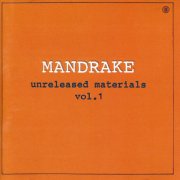 |
Unreleased Materials Vol. 1 (1997, recorded 1972-78, 56.09) ****/TTT½Kazari Mado No DekigotoSyumatsu No Kajitsu Okasareta Kyuden Sukuran No Tobira |
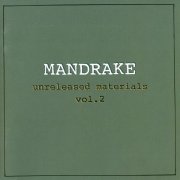 |
Unreleased Materials Vol. 2 (1997, recorded 1972-78, 40.48) ****/TMandragoraTales From Pornographic Ocean Nagare No Hate Ni Iriyoubachi No Yuuwaku |
Current availability:
Mellotrons used:
As with so many Japanese outfits, finding any hard and fast info on Mandrake is a bit of a chore; what's certain is that they were one of the earliest prog outfits from that country, led by Susumu Hirasawa, who went on to be highly successful with other acts and on his own. Mandrake's recordings have been collected together as Unreleased Materials Vols 1 & 2, both released in 1997; not before time, I have to say. While unsurprisingly derivative, they both contain plenty of good material, probably better than the bulk of that released by the leading lights of the '80s Japanese scene. It's impossible to know what was recorded when, but both discs appear to hail from between 1972 and '78.
Vol. 1 contains four lengthy tracks with a distinct Crimson influence, if less than, say, Bi Kyo Ran, a fair helping of their own sound thrown in, the material veering between semi-symphonic (Syumatsu No Kajitsu) to Crimsoid-heavy (Sukuran No Tobira). Yasumi Tanaka plays Mellotron throughout, with strings on the first three tracks, strident in places, melodic in others, replaced by Fumiyasu Abe's violin work on Sukuran No Tobira. Vol. 2 contains their remaining recordings and is a rather shorter release, although three of its four tracks are still fairly lengthy. The material's as good, though, although relatively brief closer Iriyoubachi No Yuuwaku is probably less than essential. Tanaka's Mellotron work is limited this time round to short parts on the first two tracks, Mandragora and the wonderfully punning Tales From Pornographic Ocean (I wonder if one of the band came up with that, or a native English speaker?), making the disc the less important of the two, Mellotronically speaking.
See: P-Model
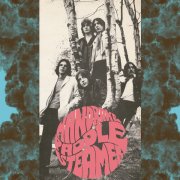 |
Pandemonium Shadow Show (2018, recorded 1968-70, 43.50) ***½/TPandemonium Shadow ShowSolitair Husk Stella Mermaid The World Whistles By Upminster Windows Doris the Piper The Doorway to January Simple Song The October Country |
Current availability:
Mellotron used:
Mandrake Paddle Steamer are one of the great lost Brit-psych bands, only actually releasing a lone single, the superb Strange Walking Man, during their brief lifetime. Several archival releases have appeared over the years, showcasing a bewildering variety of the same material under different titles, material recorded in 1970 as Mandrake and other 'is this actually the same band?' stuff. A useful blog indicates that the contents of 2019's Pandemonium Shadow Show (title clearly nicked from Nilsson) are now available in their best quality yet, with corrected titles. Its contents are as much proto-prog as psych, two tracks topping the seven-minute mark, at its best on Solitair Husk, The World Whistles By, Upminster Windows and the ripping Simple Song.
Just one Mellotron track, with heavy strings over the last minute of closer The October Country, the band's first recording, according to their website, clearly sourced from an acetate. I don't know whether the perfect MPS compilation exists, but, with the obvious exception of that single, this will do until then.
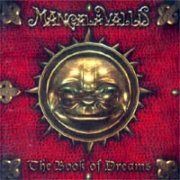 |
The Book of Dreams (2002, 62.05) **½/TTTTOuvertureIs the End the Beginning? The Book of Dreams The Journey Days of Light Under the Sea Asha (Coming Back Home) A New Century |
Current availability:
Mellotron used:
Mangala Vallis formed in the late '90s as a guitar/keys/drums trio, guitarist Mirco Consolini doubling on bass; they used several guest vocalists on their debut album, The Book of Dreams, including ex-PFM man Bernardo Lanzetti, which is a problem they're going to have to overcome in time. To be quite honest, the album lacks something on the originality front, although those of you more into the neo- side of the prog world will find much here to commend. As for the rest of us... This basically sounds like a cross between Grey Lady Down (who themselves sound an awful lot like the dreaded Marillion) crossed with Spock's Beard trying to play Genesis (just listen to the Supper's Ready cop on A New Century), so we're looking at a pretty well-trodden path here and not an especially interesting one, at least to those already steeped in the genre. Actually, by about halfway through, I found myself beginning to lose the will to live, only the occasional decent key modulation holding my attention - oh, and the Mellotron work, of course. I believe the album has a concept, too; it's apparently based on the work of Jules Verne, though I could only hear the odd reference to his writings.
Enzo Cattini is actually credited with Mellotron (yes, it's real), used loads, with shedloads of strings and choir on most tracks. He also plays it with a modicum of taste (another Banks comparison, then), although his efforts are somewhat wasted when they're plastered over a generic neo-prog chord sequence, with a bass part that Mike Rutherford would've hammered to death with his polo mallet, or at least his Rickenbacker. I'm afraid I really can't recommend something as leadenly uninspired, plagiaristic and wildly overlong as The Book of Dreams to anyone, really, although there is a fair bit of the ol' Mellotron to be heard, which is about this album's only real saving grace. Lots of far better Mellotron-heavy albums about - buy one of those instead. Incidentally, the 'very old' machine (er, aren't they all?) they used here didn't want to work when recording follow-up Lycanthrope, so they faked it.
See: Samples etc.
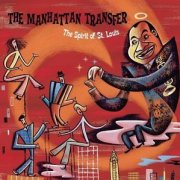 |
The Spirit of St. Louis (2000, 46.18) ***½/½ |
|
| Stompin' at Mahogany Hall The Blues Are Brewin' Sugar A Kiss to Build a Dream on Old Man Mose Do You Know What it Means to Miss New Orleans Gone Fishin' Nothing Could Be Hotter Than That |
Blue Again When You Wish Upon a Star |
|
Current availability:
Chamberlin used:
Ignoring an early version of the band, Manhattan Transfer (named for the 1925 novel) as we know and, er, love them have been around since 1972, releasing the better part of twenty studio albums in that time. They're best known in the UK for their 1977 No. 1, the smoochy Chanson D'Amour, although it didn't hit in the States at all. For those of you who've managed to avoid them, they're essentially a four-piece vocal group (two female, two male) who sing material mainly from (or in the style of) the swing/big band era. Unsurprisingly, they sometimes come across as pastiche, but their dedication to their art is difficult to fault, whatever you might think of the actual music.
The Spirit of St. Louis puns nicely, referencing both Charles Lindbergh's minuscule plane in which he made the first non-stop Transatlantic flight and the album's content, which is pure Louis Armstrong, end to end. There's quite a range of material here, from the energetic Nothing Could Be Hotter Than That to the laid-back Gone Fishin', probably the best-known song here, all treated with just enough, but not too much reverence, Gone Fishin' in particular raising a smile. They also tackle the cheese-fest that is When You Wish Upon A Star without making me want to gag; quite a feat in itself. The ridiculously ubiquitous Patrick Warren is credited with Chamberlin, but as so often with the blasted instrument, it's enormously difficult to work out exactly where it appears. About the only even vaguely obvious place is the strings on A Kiss To Build A Dream On, although they could easily be real, unless some of those distant male voices are Chamby, which seems extremely unlikely, all things considered. Anyway, do you like swing? Big band? Jump jive? Listen to the Manhattan Transfer. Don't? Then don't. Easy.
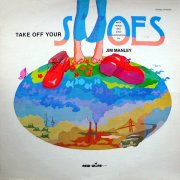 |
Take Off Your Shoes (1975, 34.38) ***/½ |
|
| Take Off Your Shoes Ferris Wheel The Gifts That You Gave Me Pennies on the Track Sunday Dinner Hymn of the Earth Manoa Rain Magician |
Orion Over 395 Lord of All Hopefulness Linda McMinn Has it Dawned on You |
|
Current availability:
Mellotron used:
Jim Manley was (and is) a Christian singer-songwriter, whose talent, at least going by the material on 1975's Take Off Your Shoes (possibly only released on cassette), clearly exceeds his chosen backwater by some way. He actually avoids Christian subject matter on a handful of tracks (almost unknown in this genre), songs like Pennies On The Track and Magician (OK, that one could have a Christian subtext) standing up well against many better-known artists of the era.
Jim Strathdee plays Mellotron, with choirs on Hymn Of The Earth, although all string parts appear to be string synth. Given how appalling most CCM tends to be, artists like Jim Manley should be lauded for not only having talent, but also refusing to sink to the lowest Christian denominator. This is easy to find on download sites, although I wouldn't bother for its minimal Mellotron.
Aimee Mann (US) see: |
 |
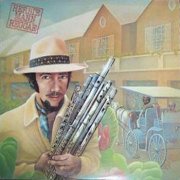 |
Reggae (1974, 38.52) ***/0Ob-La-Di, Ob-La-DaRivers of Babylon Swingin' Shepherd Blues My Girl |
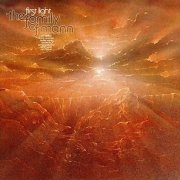 |
First Light [as Family of Mann] (1974, 39.18) **½/T |
|
| Toot Stick Davey Blue Daffodil The Turtle and the Frog Muh Hoss Knows the Way Music is a Game We Play Sunrise Highs Thank You Mr. Rushing |
Mexicali Lullaby for Mary Elizabeth |
|
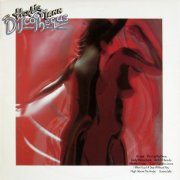 |
Discothèque (1975, 41.23) ***/½Hi-JackPick Up the Pieces Lady Marmalade Mediterranean I Can't Turn You Loose I Won't Last a Day Without You High Above the Andes Bird of Beauty Guava Jelly |
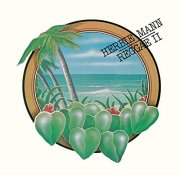 |
Reggae II (1976, 36.45) **½/TDown on the CornerBend Down Low So Get it While You Can Cecilia I Know (You Don't Love Me No More) Stoned By You |
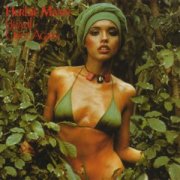 |
Brazil - Once Again (1978, 32.53) ***/TPeleOh How I Want to Love You Dingue li Bangue Lugar Comum (Common Place) O Meu Amor Chorou (Cry of Love) |
Current availability:
Mellotrons used:
Herbie Mann (1930-2003, born Herbert Jay Solomon) was one of the world's chief exponents of jazz flute and an early pioneer in what came to be known as World Music. Making his first recordings in 1954, he was already a studio veteran when he made his first foray into the murky world of reggae, er, Reggae, in 1974. Unsurprisingly, his flute-led, slightly jazzy takes on familiar material echo the style's usual inherent sweetness; this is dance music, at the end of the day. Backed by several big names, not least recent ex-Stone Mick Taylor (who gets a lovely solo in on Swingin' Shepherd Blues), side one's three tracks work well enough, although side two's super-extended My Girl does go on a bit, if truth be told. Pat Rebillot plays keys, allegedly including Mellotron, but it's hidden away so well that I can't hear the bugger; no obvious strings and he wouldn't have used flutes, would he? [n.b. See below.]
First Light, released so soon after Reggae that it's difficult to say which was recorded first, was credited to The Family of Mann (ho ho), although how it differs from other Mann albums is hard to say. And it sounds like...? Flute-led jazz, as against fusion, at its best on the lengthy, acoustic guitar-led Sunrise Highs and gentle closer Lullaby For Mary Elizabeth. Rebillot's Mellotron is audible this time round (if barely), with faint strings on Davey Blue and cellos on Lullaby For Mary Elizabeth. Mann followed up immediately with Discothèque the following year; I love his über-literal album titles - at least you know what you're getting. Actually, it starts off in a disco-ish vein, shifting into the kind of jazz/soul territory with which Mann's usually associated after a few tracks, dished up with a soupçon of funk. Rebillot on keys again, with Mellotron strings on I Won't Last A Day Without You, in an orchestral-replacement kind of way.
1976's Reggae II is a feather-light reading of the genre, frankly, with no obvious best tracks. Rebillot plays, of all things, Mellotron flutes (under Mann's real one, natch) on closer Stoned By You. After three years and several releases (Mann put out two or three albums a year at the time), he released Brazil - Once Again, unsurprisingly containing a somewhat Latin vibe. Five mostly longer tracks this time, if not quite as extended as on Reggae. Rebillot gets the Mellotron in from the off this time, with strings on opener Pele, though once again, one track's your lot.
See: Pat Rebillot
Manfred Mann (UK) see: |
 |
Manfred Mann Chapter Three (UK) see: |
 |
Manfred Mann's Earth Band (UK) see: |
 |
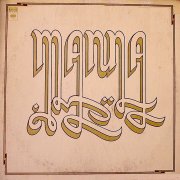 |
Manna (1972, 39.19) ***/TT½ |
|
| Good Old Rock and Roll Tell Me Why Save the Country What Ya Gonna Do We Can Make it Red Man Southern Bound Clap Your Hands |
Hold on New Day's Coming Children of the Mountain |
|
Current availability:
Chamberlin used:
When Blues Image split at the beginning of the '70s, unable to repeat the success of major hit Ride Captain Ride, keys man Frank "Skip" Konte joined Three Dog Night and some of the others formed Manna, releasing their sole, eponymous album in 1972. It's a pretty typical mainstream American rock album of the era, with a heavy country influence on many tracks, better efforts including funky opener Good Old Rock And Roll, the rocky(ish) We Can Make It and Red Man and the Allmans-esque Southern Bound.
Someone (Konte guesting?) plays Chamberlin, with strings all over We Can Make It, a flute/string mix (?) on Southern Bound, vibes and female voices on Hold On and strings on New Day's Coming, making Manna semi- worth hearing on the tape-replay front. After the band split, members (notably guitarist Mike Pinera) went on to various projects, including Iron Butterfly and Ramatam, although it doesn't seem as if any broke through in any major kind of way.
 |
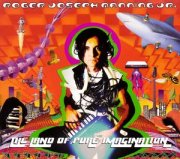 |
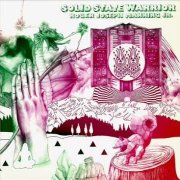
Solid State Warrior [a.k.a. The Land of Pure Imagination] |
|
| The Land of Pure Imagination Too Late for Us Now Wish it Would Rain The Loser Sandman What You Don't Know About the Girl Dragonfly Creeple People |
Sleep Children You Were Right 'Til We Meet Again [Reissue removes tracks 6, 9 & 11 and adds: Pray for the Many In the Name of Romance Appleby] |
||
Current availability:
Mellotron/Chamberlin used:
Roger Joseph Manning Jr. has had a stellar career, in a low-key kind of way, not least as a key member of Jellyfish, also playing with Imperial Drag, The Moog Cookbook, Beck and countless others. His first solo album, 2006's future powerpop classic Solid State Warrior, was only released in Japan, being reissued in the States, with a revised tracklisting, as The Land of Pure Imagination. Highlights? Too many to mention, although opener The Land Of Pure Imagination, The Loser, What You Don't Know About The Girl and the stomping Creeple People are especially worthy. Criticisms? A couple of the more lightweight tracks could've been quietly lost in the editing suite, but that's a minor quibble.
Manning plays Mellotron and Chamberlin (are these his own machines?), with chordal Mellotron flutes on Too Late For Us Now, Chamby strings on The Loser and Sandman and Mellotron strings on Creeple People, while the reissue adds more Mellotron strings on Pray For The Many, other string parts sounding like string synth. This is really rather splendid, frankly; make the effort.
See: Beck | Blink-182 | Mishelle Bradford-Jones | Tim Burgess | Burning Brides | Glen Campbell | Johnny Cash | JC Chasez | Coward | Charlie Faye & the Fayettes | Go-Go's | Emile Haynie | Jellyfish | Ladytron | The Moog Cookbook | Noémi | Emitt Rhodes | Spellbound | Umajets | Wilson Phillips
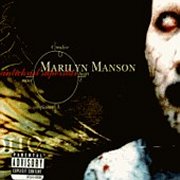 |
Antichrist Superstar (1996, 69.53) ***/T |
|
| Irresponsible Hate Anthem The Beautiful People Dried Up, Tied and Dead to the World Tourniquet Little Horn Cryptorchid Deformography Wormboy |
Mister Superstar Angel With the Scabbed Wings Kinderfeld Antichrist Superstar 1996 Minute of Decay The Reflecting God Man That You Fear |
|
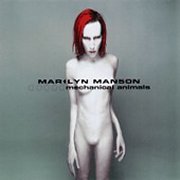 |
Mechanical Animals (1998, 62.38) ***/½ |
|
| Great Big White World The Dope Show Mechanical Animals Rock is Dead Disassociative The Speed of Pain Posthuman I Want to Disappear |
I Don't Like the Drugs (But the Drugs Like Me) New Model No. 15 User Friendly Fundamentally Loathsome The Last Day on Earth Coma White |
|
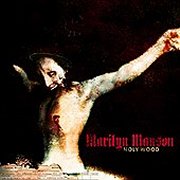 |
Holy Wood (in the Shadow of the Valley of Death) (2000, 68.11) ***/T |
||
| Godeatgod The Love Song The Fight Song Disposable Teens Target Audience (Narcissus Narcosis) "President Dead" In the Shadow of the Valley of Death Cruci-Fiction in Space |
A Place in the Dirt The Nobodies The Death Song Lamb of God Born Again Burning Flag Coma Black Eden Eye The Apple of Discord |
Valentine's Day The Fall of Adam King Kill 33 Degrees Count to Six and Die (the Vacuum of Infinite Space Encompassing) |
|
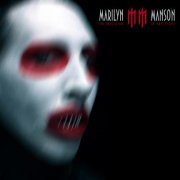 |
The Golden Age of Grotesque (2003, 57.46) ***/½ |
|
| Thaeter This is the New Shit mOBSCENE Doll-Dagga Buzz-Buzz Ziggety-Zag Use Your Fist and Not Your Mouth The Golden Age of Grotesque (s)AINT Ka-Boom Ka-Boom |
Slutgarden ♠ Para-noir The Bright Young Things Better of Two Evils Vodevil Obsequy (the Death of Art) |
|
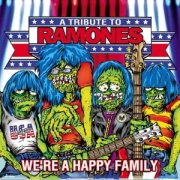 |
We're a Happy Family: A Tribute to the Ramones (2003) **/T[Marilyn Manson contributes]The KKK Took My Baby Away |
Current availability:
Mellotrons used:
It seems to be a matter of conjecture as to whether Brian "Marilyn Manson" Warner (originally Marilyn Manson and the Spooky Kids) should be classed as a band or an individual, a conundrum that also, ironically, applied to the early Alice Cooper, who has commented re. Manson: "He has a woman's name and wears makeup. How original". Go Alice! The original concept seemed to encompass each member taking a female icon (usually film star)'s first name and a surname from a serial killer (Twiggy Ramirez, M.W. (Madonna Wayne) Gacy etc.), although this seems to've become diluted over the years. Their remit has always been to shock and to expose society's (and specifically America's) hypocrisy, although the end result is nearer to a cross between Cooper, David Bowie and Nine Inch Nails, with whom the band have worked.
1996's Antichrist Superstar was Manson's second album proper, after 1994's Portrait of an American Family and the following year's hour-long 'EP' of remixes and covers, Smells Like Children. It's surprisingly varied, although much of the material is the full-on industrial/goth/metal crossover you'd expect. Manson writes frequently witty and pointed lyrics, often utilising wordplay to get his point across, although, given that his voice is often heavily effected (hiding a multitude of sins?), it's not always so easy to make out what he's on about. An awful lot of you are simply not going to like this music - I'm not at all sure I like it myself - but it's been assembled with some care and skill and shouldn't be dismissed lightly. Anyway, NiN's Trent Reznor plays Mellotron on Cryptorchid, with a distant, high string line and an upfront, almost solo flute part. Two years on, Mechanical Animals is slightly more Bowie-esque, although the bulk of its material is business as usual, at least to ears unattuned to Manson's abrasive style. Lyrically, he's as astute as ever, but the music will (and has) put many people off who may otherwise have been intrigued by the band's imagery. This time round, M.W. Gacy plays Mellotron on two tracks, The Speed Of Pain and Coma White, but to little effect, with possible faint flutes on the former and nothing recognisable on the latter whatsoever.
Holy Wood is quite clearly a concept piece, its plotline alluding heavily to society's cult of personality (which, ironically, Manson uses towards his own ends), taking a major pop at Hollywood in particular and celebrity in general. Manson had curtailed his 1998 tour after the Columbine shootings, so it's no surprise that this album refers to the incident more than once, specifically on The Nobodies; frequently underestimated, Manson made possibly the most intelligent recorded comment on the shootings in Bowling for Columbine when he stated that he wouldn't have said anything to the boys, just listened. Back in Mellotronland, Manson himself plays choirs on "President Dead", while Gacy puts more of them onto Valentine's Day, neither to any great effect, to be honest.
The Golden Age of Grotesque apparently has a Weimar Germany thing going on, though I can't say it's that obvious from the music, which sounds like... more of the usual. Distorted vocals, 'industrial' synths, buzz-saw guitars; yup, it's a Marilyn Manson album, although, in fairness, it's more electronic than his previous work, probably due to Tim Skold's presence in his band and at the desk. Manson's usual wordplay extends to several track titles this time round and yes, the album's opening track is spelt correctly. He adds a little Mellotron to the album himself, with choirs and strings on the title track, although I didn't spot anything else; without its predecessors' track-by-track credits, there's always going to be some guesswork involved.
See: We're a Happy Family
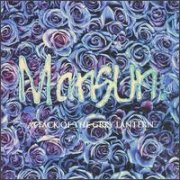 |
Attack of the Grey Lantern (1997, 60.17) **½/½ |
||
| The Chad Who Loved Me Mansun's Only Love Song Taxloss You, Who Do You Hate? Wide Open Space Stripper Vicar Disgusting She Makes My Nose Bleed |
Naked Twister Egg Shaped Fred Dark Mavis An Open Letter to the Lyrical Trainspotter |
||
Current availability:
Mellotron used:
Mansun came riding in on the coattails of Britpop, although, in several respects, they had little in common with that 'movement', such as it was. On Attack of the Grey Lantern, rather than write a bunch of tedious, '60s-'inspired' songs, they chose to write loads of little bits, then stick them together almost at random, rather spurious track divisions inserted to try to deflect press accusations of 'prog rockdom'. Sadly, the end result is still fairly dull, 'featuring' those awful whiny vocals so popular at the time (why?!). There are a few memorable moments, the amusing Stripper Vicar standing out, but most of the album is simply dreary, making it hard to find anything very positive to say about it.
A teeny-style book written on the band during their brief stab at success quotes a band member as saying that they owned a broken-down Mellotron which they kept in their kitchen, so I don't think there's any doubt that it's real. However... where is it? It seems likely that they (probably played by Paul Draper) used it chiefly for its sound effects, familiar-sounding church bells and air-raid sirens popping up here and there, particularly between tracks. As a result, much of my highlighting is guesswork; is that a Mellotron harp glissando on Taxloss? If you like that Britpop thing, you might like this album, but on no account buy it for the Mellotron. Oh, and guess what? A hidden track (yawn), An Open Letter To The Lyrical Trainspotter. I've knocked the requisite two minute gap off the album's length; at least it wasn't a ten-minute wait...