




|
|
|
|
||
|
|
SBB SRC S.S. Fools Raphael Saadiq |
Harry Sabar Friends Jim Saco Sadistic Mika Band |
Mike Safron/St. Louis Strangers Saga (Netherlands) Saga de Ragnar Lodbrock |
Sage Sagittarius Sahara |
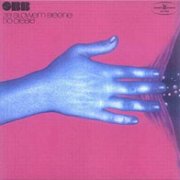 |
Ze Słowem Biegnę do Ciebie (1977, 38.49) ***½/0Ze Słowem Biegnę do CiebiePrzed Premierą |
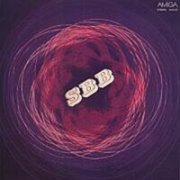 |
SBB [a.k.a. The Amiga Album] (1977, 78.28) ***/0 |
|
| Tanzbar Magische Blaue Stunde Hektik 2:10 Ouzo Unterbrochene Erotik Kala Tumba |
Mutraczka Nr. 7 I Wonder Why |
|
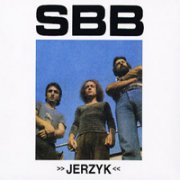 |
Jerzyk (1978, 39.49) ***/0JerzykKijek Oddech Taniec Bulibara Garbusek Palamakla Wołanie o Podkład Janek Władkowa Kołysanka |
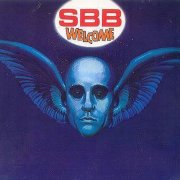 |
Welcome (1979, 41.50) **½/0Walkin' Around the Stormy BayLoneliness Why No Peace Welcome Warm Nights and Days Rainbow Man How Can I Begin Last Man at the Station |
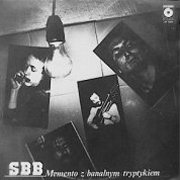 |
Memento z Banalnym Tryptykiem (1980, 39.54) ***½/0Moja Ziemio WyśnionaTrójkąt Radości Strategia Pulsu Memento z Banalnym Tryptykiem |
Current availability:
Mellotrons used:
SBB were a Polish fusion outfit, led by über-keyboard man Józef Skrzek, who produced several inventive albums during their career, especially their second and third, both from '75, Nowy Horyzont and Pamięć. Like many Eastern European bands (Omega spring immediately to mind), SBB's discography is a confused thing, with albums appearing in different territories under different titles, although their website seems to put matters straight by listing their releases not only in order, but with the month as well as the year of original release.
As a result, it seems Ze Słowem Biegnę do Ciebie is definitely their fourth album and like its two predecessors, is a ripping slice of prog/jazz rock, consisting of two side-long pieces, one with vocals, although not a jot of the credited Mellotron, unless the extremely faint sustained sound on side one (which pretty much rules it out anyway) is what we're looking for. Neither the first nor the last time we'll hear from 'the inaudible Mellotron'. Or not. Fine album, anyway. Now, their second album of '77 really starts the ball rolling properly; SBB (Wołanie o Brzęk Szkła) (****) is a storming record, with some of the most incendiary MiniMoog playing (from Józef Skrzek) you may possibly ever hear scorched into its grooves/binary pits. This is a fucking great album, make no mistake, even for someone who generally avoids fusion, although, despite rumours, it appears to not only be entirely Mellotron-free, but hasn't actually got the thing credited. Follow My Dream (***½), from later the same year, hasn't got it credited either, but the year's second eponymous SBB album apparently has. Confused? Good.
SBB's eponymous 1977 album is more often known as The Amiga Album, due to its release on the East German label of the same name. It's probably what you'd call a transitional record, with echoes of both the band's more interesting fusion past and its less interesting blandola future, with drivel like Tumba or I Wonder Why (a particularly poor English-language vocal track) sitting cheek-by-jowl with dynamic, inventive material such as Mutraczka or the aptly-titled Hektik. The double album's oddest moment is probably the straight blues instrumental that closes the record, Trema; er, why? Anyway, a rather average LP with, again, absolutely no audible Mellotron whatsoever and sparse enough arrangements that if one were in attendance, I'm quite certain you'd be able to hear it somewhere. Surely?
The following year's Jerzyk was, strangely, only released on cassette at the time (although it's now available on CD), so don't bother trying to find it on vinyl, just in case you were thinking about it. It's best described as a better version of The Amiga Album minus the disposable vocal tracks, although the expanded CD version does go on a bit, to be honest. Yet again, absolutely no Mellotron whatsoever; maybe they were using it as a generic term for their sparsely-used string synth? Anyway, worth hearing for SBB fans who haven't run into it before, though fairly indistinguishable from their other albums of the period for the rest of us. Incidentally, the release dates of both Jerzyk and The Amiga Album are a little vague and could easily be reversed.
Sadly, the band had 'normalised' considerably by Welcome, but it still has its moments, although, to be honest, they're few and far between. Opener Walkin' Around The Stormy Bay is a high-energy slice of prog-fusion and How Can I Begin has some nice organ work, but most of the rest of the material's pretty dispensable. There's Mellotron credited on three tracks, but I can't hear the thing myself, so that's a fat 'zero' on the 'T' rating, then.
Memento z Banalnym Tryptykiem is a better affair, surprisingly, without all the cheesy vocal material of its predecessor (I believe this was due to leaving their previous label). There's some quite ripping fusion guitar work to be heard here, which, while creating its own problems, is vastly superior to awful attempts at songwriting. The side-long title track is especially good, building to a superb guitar-driven crescendo before a sudden tape cut. Mellotron's credited on two tracks but is, once again, completely inaudible.
Skrzek's '79 solo release, Pamiętnik Karoliny (****), has rumoured Mellotron, although it's neither credited nor audible, leading me to think that, er, it isn't there. Going by the above, I can't imagine what use Skrzek actually made of his Mellotron; the only other band I can think of who used it so little are Novalis and even they managed more than this. So, the only genuinely poor album I've heard by the band (apart from its opening track) is Welcome, but everything else is pretty much worth hearing, assuming you're into fusion.
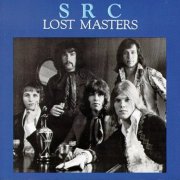 |
Lost Masters (1993, recorded 1970-72, 70.03) ***½/TT |
||
| After Your Heart Gypsy Eyes Valerie Love is Here Now (Love is Like a) Heat Wave Out in the Night Badaz Shuffle Eliza Green the Shimmie Queen |
My Sunday's Gone Never Let Your Daystar Fade Away Born to Love No Rules in Love The Deeper the Longer Lovelight Cry of the Lonely |
Get the Picture Evil I'm Cryin' Ride the Wind Richard's Song |
|
Current availability:
Chamberlin used:
Well, have you heard of SRC before? Nor me, although it seems they're rated among the cognoscenti as one of Detroit's best barely-known bands. They apparently worked their way through several different styles during their career, all of which can be heard on 1993's odds'n'sods collection Lost Masters, which mops up various non-album single tracks and their unreleased fourth album. Their shift from '60s garage rock to '70s soul/funk is well documented, with highlights including the one/two opening pairing of After Your Heart and Gypsy Eyes (not the Hendrix tune) and the near-psych of Badaz Shuffle. The later, soul/R&B-inflected material is mostly good, but doesn't give the same visceral kick as the album's first few tracks, at least for those attuned to the '60s/'70s rock aesthetic. For a proto-punk/R&B monster, incidentally, you need go no further than I'm Cryin', which is about as far from the tune its title suggests as you can get.
The marvellously-named Glenn Quackenbush (brother of guitarist Gary) plays Chamberlin on Love Is Here Now (a cool strings part), Badaz Shuffle (a distant flute line and upfront strings), closer Richard's Song (pseudo-orchestral strings) and less obviously, a high string line on No Rules In Love. Overall, then, although apparently not a good starter for those unfamiliar to the band (thought it was pretty good myself), Lost Masters is a must-have for aficionados, with a few Chamby tracks for those who care. Mark tells me there's no more tape-replay to be heard in the rest of their catalogue, which is a shame, but saves me from trying to find them for that reason alone.
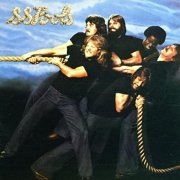 |
S.S. Fools (1976, 37.52) **/TTFirst Things FirstDesert Dancin' Tearbanks Baby's Calling Me Back Home Fool Hard-E I Just Love the Feelin' Sunnyridge Whatever Happened to America Why Can't You Be Mine |
Current availability:
Mellotron used:
Half of S.S. Fools previously played in Three Dog Night, naming themselves for that outfit's sixth album, Seven Separate Fools, so it comes as little surprise to find that their sole, eponymous 1976 album has a similar mainstream pop/rock vibe about it as their alma mater. To be honest, it's pretty rank, in the way that only mid-'70s American 'good time' music can be. Less tedious tracks include Baby's Calling Me Back Home and funky instrumental Fool Hard-E (ho ho), but it's pretty slim pickings.
Either future Toto alumnus Bobby Kimball or Wayne DeVillier play Mellotron, with orchestralish strings on the drippily balladic Tearbanks, probable high strings on Baby's Calling Me Back Home (it's amazing how close high notes on a fast-Leslied Hammond sound to Mellotron strings) and more of those orchestralish strings on I Just Love The Feelin', including solo spots for strings and flute. I don't believe this has ever been reissued (can't imagine why not), but it's available on YouTube under Kimball's name, should you feel the need.
See: Three Dog Night
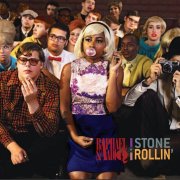 |
Stone Rollin' (2011, 43.11) ***/TTT½ |
|
| Heart Attack Go to Hell Radio Over You Stone Rollin' Day Dreams Movin' Down the Line Just Don't |
Good Man The Answer |
|
Current availability:
Mellotron used:
Charles Ray "Raphael Saadiq" Wiggins was vocalist/bassist with Tony! Toni! Toné! in the '80s and '90s, who were apparently massive, although they mean little to moi. 2011's Stone Rollin' is his fourth solo album, an incredible evocation of the days when albums were recorded onto tape, with real musicians, everything played pretty much as you heard it. Unsurprisingly, the compositions veer heavily towards '60s r'n'b, a proposition so superior to the modern variety that words, frankly, fail me. The album isn't actually to my personal taste, which isn't to decry it, merely to state that it isn't my bag.
Saadiq (also crediting himself as 'Amp Fiddler') plays Mellotron throughout, with a brief, high-in-the-mix flute part on opener Heart Attack, string parts running through Go To Hell and Over You, a string line on the title track, repeating flute parts on Movin' Down The Line and Just Don't and less overt flutes on Good Man and closer The Answer, making for an unexpectedly Mellotron-heavy release. Thank you, Mr. Saadiq.
 |
Lentera (1979, 52.25) ***/TTT |
|
| Lentera Kala Daun Berguguran Kitaran Warsa Lazuardy Kemarin Dan Hari Ini Terbenci Tapi... Khalwat Jiwa Sekiranya'... |
Disejuk Malam Resah |
|
Current availability:
Mellotron used:
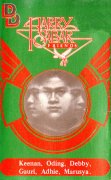
Harry Sabar? Who? An Indonesian singer who apparently released three cassette-only albums (the preferred format for the country/era) around the turn of the '80s, the first being 1979's Lentera. I've seen this rather hopefully described as 'prog', but 'Big South-East Asian Balladry' might be more accurate; perfectly good at what it does (he says, through gritted teeth), but sounding more like a pastiche of Western MOR than anything even remotely culturally relevant. Do I actually know what I'm talking about? Not usually, no, but I'm reliably informed that Barry Manilow is 'revered as a god' in the Philippines, assuming that has any bearing on the matter. So, does this effort have any highlights? The prog-lite Kemarin Dan Hari Ini opens with a lovely classical guitar part, its piano chording could be seen as a distant relative of a lightweight version of Yes, while its organ/synth middle section is straight off Genesis' A Trick of the Tail. The following Terbenci Tapi... isn't too bad, either, or am I simply acclimatising to the style? More Genesisisms on a few other tracks, but nothing as overt again.
So where the hell did Sabar access a Mellotron in late '70s Indonesia? I have no idea, but here it is... No fewer than four musicians play the thing, Marusya Nainggolan, Debby and Keenan Nasution and Adhie (surname unknown), doing a pretty good job, if truth be told, the opening title track being fairly typical, with choirs doubling real voices, a cello line underpinning the piano, strings, flutes... You get the idea. The ensemble carry on in similar style, with strings all over Kala Daun Berguguran, the cheesily upbeat Kitaran Warsa is blessed with great slabs of brass, strings and flutes on Lazuardy and strings and choirs all over Kemarin Dan Hari Ini like a rash, although the credited Mellotron on Khalwat Jiwa appears to be string synth, as are the strings on closer Resah. So where on earth are you going to find this utter obscurity? Blogs, of course; where do you think I found it? (To be honest, I didn't 'find' it, but was pointed towards it by Antal - thank you, sir). I'm not sure I can wholeheartedly recommend this to you, but it has its moments amongst the cheese, with plenty of genuine Mellotron work from a most unusual source.
 |
No. 9 (2007, 34.37) ***/T |
|
| Ambulance Driver Coal Drinkin', Drinkin', Drivin' Whispering Pines Steppin' Under Ladders Hear Me Now They'll Make You Cry Patriotic Christian Song |
Jersey Thursday Mickey's Blue Room I Don't Like You Farewell |
|
Current availability:
Mellotron used:
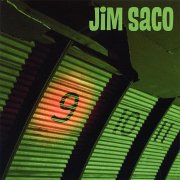
I can't tell you a lot about Jim Saco, other than that he only seems to have made two albums, the second being 2007's No. 9. It's a kind of psychedelic country/powerpop/singer-songwriter hybrid, probably at its best on opener Ambulance Driver, Drinkin', Drinkin', Drivin', Hear Me Now and his version of Donovan's Jersey Thursday, although you'd be hard-pushed to find any genuinely disposable material here.
Matt Henry Cunitz plays his M400 on one track, with wobbly flutes and strings all over closer Farewell, making you wonder why Saco didn't get him to use it elsewhere, too. One for alt.country fans looking to broaden their tastes.
 |
Sadistic Mika Band (1973, 42.10) **½/T |
|
| Dance is Over Silver Child Cosmic Watch Citron Girl Shadow Show I'm Sittin' on the Edge of Skies Galaxy Way Arienu Republic |
Milky Way Picnic Boogie |
|
 |
Black Ship (1974, 42.40) ****/TT |
|
| Sumie no Kunie (i) (ii) Time Machine Black Ship 2nd June 3rd June 4th June |
Yoroshiku Dozo Dontaku Four Seasons Suki, Suki, Suki Typhoon Sayonara |
|
Current availability:
Mellotrons used:
The Sadistic Mika Band were pretty odd, if truth be told. The recipe goes something like this:
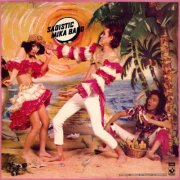
Sadistic Mika Band adheres to this 'formula' in particular, with every song sounding as if it's been influenced by another strand of US pop/rock'n'roll. Dance Is Over is frantic rock'n'roll, Citron Girl is '50s-style balladry, I'm Sittin' On The Edge Of Skies is pseudo-country, etc. The album sleeve spoofs early-'60s 'beach party' movie posters, while the back cover illustration is closer to Gone With the Wind; all very odd. To my ears, there's only one Mellotron track; Chris tells me that Masanori Takanaka did the deed, with a few string chords here and there on Silver Child's relatively contemporary rock. I'm not quite sure what the band were trying to achieve with their debut, but although they do it perfectly well, I don't really feel I can recommend this.
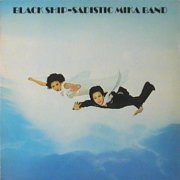
Black Ship is a better proposition all round; Sumie No Kunie is a lengthy, Rhodes-driven jazz/prog workout, with duelling guitars from Kazuhiko Katoh and Masayoshi Takanaka; the title track is distinctly prog, too. The rest of the album's more straightforward, but still a major improvement over its predecessor. Hroshi Imai's Mellotron turns up on a couple of tracks: Black Ship has some string chords fading in, then 'stabbed' in the 2nd June section, while Four Seasons has a beautiful flute part, with two lines weaving in and out of each other.
Their third effort, Hot! Menu (***½) is also worth hearing, but Black Ship was most definitely their highpoint. Get this and don't bother looking too hard for the others.
See: Kazuhiko Katoh
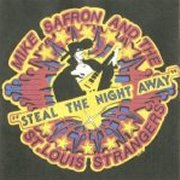 |
Steal the Night Away (1982, 36.34) **½/TTTT |
|
| She's Just Another Loser Fool for Your Love Songs That Made the Hit Parade Shot on a Subway Hello it's Me Too Hard Steal the Night Away Bitter Night |
Gone, Gone, Gone Hold on to You |
|
Current availability:
Mellotron used:
Ex-Pavlov's Dog drummer Mike Safron formed the St. Louis Strangers after the original band's ignominious implosion in the late '70s. As far as I can ascertain, 1982's Steal the Night Away was their sole album, although one track, Fool For Your Love, escaped on a compilation two years earlier, K-SHE Seeds Homegrown Rock'n'Roll. Their album really isn't the most exciting release ever, consisting mainly of typical commercial hard rock of the era, reflected in its current unavailability, its chief interest being its unexpectedly heavy-duty Mellotron use.
Safron plays the Mellotron himself; in fact, it's almost the only keyboard used on the album, oddly. We get strings on most of the highlighted tracks above (with a distinctly choppy part on closer Hold On To You), plus choir on Fool For Your Love and no strings, but flutes on Songs That Made The Hit Parade and Bitter Night, although the strings on the title track seem to be something else: real ones? A pre-digital polysynth that does a passable 'bowed strings' impersonation? Hard to say.
So; not a great album, but a damn' good Mellotron one. I've no idea where you might find a copy of this (I suspect it was a local St. Louis area release and not available widely elsewhere), but if you like the idea of Mellotron-heavy commercial hard rock, try to track a copy down to assuage your curiosity, at least.
See: Pavlov's Dog
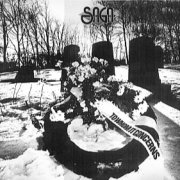 |
To Whom it Concerns (1977, 38.20) ***½/TTT½RagnarokTime Only Rumours To Whom it Concerns True or False Memoires |
Current availability:
Mellotron used:
There appears to be some confusion over names here; Canada's own Saga put their first album out in 1978, a year after their Dutch namesake's (presumably) one and only. The bands couldn't sound more different, though; the Canadians (still, I believe, known as Pockets at this stage) were extremely forward-looking, with no organ or Mellotron to be heard. In fact, their only concession to 'tradition' was their acoustic and electric piano use; otherwise, they were strictly synths only. In fact, if you haven't heard them, think of a slightly transatlantic sounding UK (the Wetton/Jobson/Holdsworth/Bruford outfit from around the same time).
On first hearing To Whom it Concerns I decided that it was just another average Euro-rock album from the mid-'70s; nothing special, just with a bit of Mellotron. Wrong. Now don't get me wrong, this is no classic, but it's actually a really nice European prog album, loaded with Mellotron. Keyboard player Guido Goebertus makes excellent use of Mellotron brass, with the usual strings making their presence felt, plus a little choir. The Mellotron-free track, Time Only Rumours is a pleasant little acoustic strumalong thing, very Genesis to be honest. In fact, Genesis are probably Saga's main influence overall, although they definitely have more of that 'late '70s' sound about them.
The album's a bit of a rarity and I wouldn't recommend paying a fortune for it, but if you see it cheap...
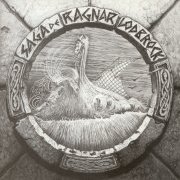 |
Saga de Ragnar Lodbrock (1979, 38.23) ****/TTTLes North MendiantsLe Temps de Géants La Chasse Hellequin Le Loup Fendri Chant de la Lance Chants Funèbres de Ragnar Lodbrock Du Fond de l'Empire des Morts La Route Longue des Combats Alors qu'Approche la Mort Chant Final |
Current availability:
Mellotron used:
Saga de Ragnar Lodbrock wasn't so much a band as a project, whose chief aim was to set the 12th-century poem of the title to music. The Saga describes the lesser-known Viking invasion of France in the Dark Ages and while sung and narrated entirely in French, the music's medieval tonalities create enough atmosphere to override any language barriers. The original eighteen-minute Chants Funèbres De Ragnar Lodbrock was recorded first, in April '78, but ended up on side two, with several companion pieces written in a similar style to flesh out the album. Listening to it, I'm reminded of French medieval folk outfit Malicorne (slightly like a Gallic Gryphon), but the project's main members had enough of their own style for comparisons to be fairly redundant.
Studio owner Armand Frydman joined the project after they chose his studio to work in and ended up playing all the keyboards, including a Mellotron. He makes good use of it throughout, mainly flutes and choirs and although the CD doesn't give separate timings for each part of Chants Funèbres De Ragnar Lodbrock, I think it's fair to assume that it's on every part, considerably enhancing its funereal aspect. I don't believe the Mellotron was used on the side one material, although there may possibly be some flutes on Le Loup Fendri (The Wolf Fendri), although they're more likely to be an overdubbed real one. The bonus tracks are solo pieces by vocalist François Proust, written for the theatre, but fitting the overall concept of the original album.
So; if you like medieval music with a progressive bent (or vice versa), you can't go too far wrong with Saga de Ragnar Lodbrock, assuming you don't have a problem with French vocals (don't laugh; I've run into several people who love prog, but won't buy 'foreign language' releases). Once more (and more and more), top marks to Musea for rescuing this rather wonderful obscurity and doing such a good job on the reissue. And no, they're not paying me. Highly recommended.
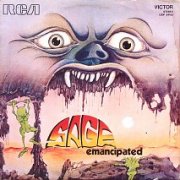 |
Emancipated (1972, 31.38) ***/½(It) Still Goes onWinds of Change Slow Down Music is Did You Ever Wonder People Running Garden of Boom |
Current availability:
Mellotron used:
US/Italian? It seems Sage were a '60s vocal group, The Four Kents, formed in Italy by NATO soldiers, backed by Italian outfit Stump. Their sole release under their new moniker, 1972's Emancipated, displays their schizoid approach to the full, veering between gospel/soul and bluesy progressive rock, sometimes simultaneously. Best track? The complex, jazzy Slow Down. Worst? Nothing here offends, although much of the vocal work is unlikely to appeal to progressive fans.
Alberto Barisano plays Mellotron, if only just, with a brief string part on closer Garden Of Boom, doubled with Hammond, by the sound of it. An interesting curio, then, but definitely not an album for the discerning Mellotroniac.
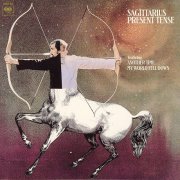 |
Present Tense (1968, 28.01) ***/T½ |
|
| Another Time Song to the Magic Frog (Will You Ever Know) You Know I've Found a Way The Keeper of the Games Glass Would You like to Go My World Fell Down Hotel Indiscreet |
I'm Not Living Here Musty Dusty The Truth is Not Real |
|
Current availability:
Chamberlin used:
Basically a studio outfit, Sagittarius were another Gary Usher/Curt Boettcher (The Millennium) project, partially anthologised on 2001's Magic Time: The Millennium/Ballroom Recordings, with a several-track crossover between it and the first Sagittarius album (of two), 1968's Present Tense. The latter is a decent enough production, albeit one harking back in many ways to a few years earlier, virtually ignoring the current psych scene via tracks like opener Another Time, Would You Like To Go and the sentimental Musty Dusty, although Glass features a vogueish sitar line.
Chamberlin on a few tracks (from Boettcher?), with strings on Song To The Magic Frog (Will You Ever Know), a variety of woodwind on Would You Like To Go, which also ends on a very obviously Chamberlinic string chord, plus a major string part on Musty Dusty. Overall, Usher/Boettcher fans who haven't already got this will be mad for it; the rest of us may well sit there wondering what all the fuss is about. Impeccable production, but you've really got to be into their twee approach to gain anything much from this.
See: The Millennium
 |
Sunrise (1973, 48.05) ***½/T½ |
|
| Marie Celeste Circles Rainbow Rider Sunrise (Part I) Sunrise The Divinity of Being Perception including "Devil's Tune" Paramount Confluence |
Sunrise (Part II) Aspiration Creativity Realisation |
|
 |
For All the Clowns (1975, 42.28) ***/T½ |
|
| Flying Dancer The Source Part 1 Part 2 For All the Clowns Prélude |
The Mountain King Part 1 Part 2 Dream Queen Fool the Fortune |
|
Current availability:
Mellotrons used:
Some sources quote Sunrise as Sahara's third album, although the sleevenotes claim it's their debut; I now suspect the confusion has arisen over the band's previous identity, Subject Esq. who recorded two albums before changing their name. Not as confusing, however, as the music, which is highly indicative of a band who didn't really know what they wanted to do. They flit from hard rock to almost-country to full-on symphonic prog, to... I think you get the picture. The album's side-long title track is definitely the best thing on it, with several Crimsonesque sections, then in Part C) of Part II (!), a gorgeous unaccompanied Mellotron strings part from Michael Hofmann, with a bit more Mellotron later in the piece. Probably not worth buying on those grounds, to be honest, but the album does have its moments among the musical confusion.
For All the Clowns seems to be a little more cohesive, although I'm not sure it matches its predecessor's highs. Slightly more Mellotron this time round, too, with background choirs on the title track and both parts of The Mountain King, but I wouldn't say it was exactly the most exciting use ever, to be honest. In fact, I'm starting to wonder whether there's any more Mellotron this time round than on Sunrise; it's certainly less interesting, although the album's possibly better. So; neither album's a must on any front, but both are probably worth picking up if you find 'em cheap.