




|
|
|
|
||
|
 |
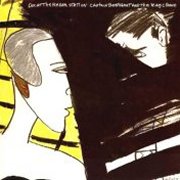
Bluejeans & Moonbeams (1974, 36.59) ***/TTParty of Special Things to DoSame Old Blues Observatory Crest Pompadour Swamp Captain's Holiday Rock'n Roll's Evil Doll Further Than We've Gone Twist ah Luck Bluejeans & Moonbeams |
 |
Doc at the Radar Station (1980, 38.48) ****/TTT |
|
| Hot Head Ashtray Heart A Carrot is as Close as a Rabbit Gets to a Diamond Run Paint Run Run Sue Egypt Brickbats Dirty Blue Gene |
Best Batch Yet Telephone Flavor Bud Living Sheriff of Hong Kong Making Love to a Vampire With a Monkey on My Knee |
|
 |
Grow Fins (Rarities 1965-82) [disc 5] (1999, disc recorded 1969-81, 69.54) ***½/T½ |
||
| My Human Gets Me Blues (live) When Big Joan Sets Up (live) Woe is Uh Me Bop (live) Bellerin Plain (live) Black Snake Moan I Grow Fins (live) Black Snake Moan II Spitball Scalped Uh Baby |
Harp Boogie I One Red Rose That I Mean Harp Boogie II Natchez Burning Harp Boogie III Click Clack Orange Claw Hammer Odd Jobs (demo) |
Odd Jobs (demo) Vampire Suite (live) Mellotron Improv (live) Evening Bell (demo) Evening Bell Mellotron Improv (live) Flavor Bud Living (live) |
|
 |
Amsterdam '80 (2006, 77.07) ***½/T |
|
| Abba Zaba Hot Head Ashtray Heart Dirty Blue Gene Best Batch Yet Safe as Milk Her Eyes Are a Blue Million Miles One Red Rose That I Mean Doctor Dark |
Bat Chain Puller My Human Gets Me Blues Sugar'n'Spikes Veteran's Day Poppy Dropout Boogie Sheriff of Hong Kong Kandy Korn Suction Prints Big Eyed Beans From Venus |
|
Current availability:
Mellotrons used:
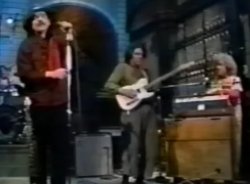
Zappa protégé Captain Beefheart (a.k.a. Don van Vliet, or Don Glen Vliet to his mother) was one of the few true originals; eccentric to a ridiculous degree, awkward, crazed, a genius and many other things according to both his supporters and detractors. He peaked early with his deeply weird third release, 1969's double album Trout Mask Replica, held by many to be one of the greatest albums ever, assuming you can penetrate its almost unfathomable depths.
 |
The Captain released several albums of varying quality with ever-sillier titles through the seventies, including 1974's Bluejeans & Moonbeams, made with a completely different set of backing musicians to its predecessor, generally regarded as the nadir of Beefheart's career. With the benefit of several decades' hindsight, it's hard to say why; I suppose his fans see its mainstream blues/pop/rock approach as a betrayal of his avant-garde reputation, but, taken on its own, rather than as part of his oeuvre, it sounds like something J.J. Cale might have produced around the same time. It might be at its best on opener Party Of Special Things To Do (the most Beefheart thing here) and the uncharacteristically gentle Further Than We've Gone, although the blandola likes of Captain's Holiday (recorded with a different set of musicians) give hints of how disappointed his fanbase must've been with this at the time. Michael Smotherman is the album's main keyboard player, although Jimmy Caravan and Mark Gibbons both contribute, so there's no way of saying who played the Mellotron, with major strings parts on Same Old Blues, Further Than We've Gone and the closing title track. A below-par Beefheart album, then, but a merely average record of its era.
Beefheart hooked up with his last band around 1978, John "Drumbo" French rejoining after a long absence, although the rest of the band, including bassist/keys/Mellotron man Eric Drew Feldman, were only on their second album by 1980's Doc at the Radar Station. Feldman only used it on a few tracks, but he made sure you knew it was there... There's some standout flutes on Sue Egypt and a particularly good strings part on Making Love To A Vampire.... This is by no means an easy listen, but there's nothing wrong with being challenging and this album never disappoints on that score... The Captain only made one more LP, 1982's Ice Cream for Crow, before retiring into the desert to paint.
1999 brought the five-disc Grow Fins (Rarities 1965-82), doing precisely what it says on the tin. Beefheart obsessives almost certainly need this in exactly the same way as the rest of us don't; that's no reflection on the quality of the contents, merely their style. Disc 5 is the only one of relevance to us, so I've spared yourselves (not to mention myself) the rest of it. Discs 1-3 cover 1965-69, most of 4 contains video footage, leaving one disc to cover 1969-81 (I'm not sure what's supposed to be from 1982), most of which will probably leave you nonplussed, as it did me. Mellotronically speaking, there's strings from Feldman on a live 1980 Vampire Suite (a.k.a. Making Love To A Vampire With A Monkey On My Knee), plus atonal strings, apparently from Beefheart himself, on the two Mellotron Improvs from '78 and '80.
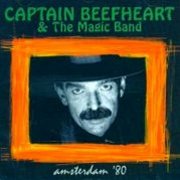
2006's Amsterdam '80 is a slightly edited, semi-official release of a high-quality bootleg from the Paradiso Club on November 1st of that year. I'll come clean here and say that I'm reviewing this from the twenty-one-track bootleg version, which puts me at an immediate disadvantage, viz, what, apart from the obvious three tracks, has been cut in order to get this onto a single disc? Those lovely Discogs.com people inform me (not personally, you understand) that some between-song clutter has been excised, meaning that the brief Mellotron tuning-up session before Hot Head has been cut; seems to me that fans of the good Cap'n would probably shell out for a two-disc set in order to get the full concert, but there you go. This disc gives us a fascinating insight into the World Of Beefheart, showing us how gigs were broken up with solo guitar pieces (Flavor Bud Living (missing here) and One Red Rose That I Mean) and spoken-word pieces (One Man Sentence, also missing), not to mention Beefheart having to deal with repeat-offender hecklers. Who are these tiresome people? Incidentally, it's also blindingly obvious from this how massive an influence he's been on pretty much any skronky, angular band since. Feldman uses his Mellotron, but only just, with naught but a handful of screechy string notes on Hot Head and more upfront strings on Ashtray Heart, barely scraping the single 'T' above. Don Vliet died on 17th December 2010, without having recorded a note of music for nearly thirty years, which was clearly exactly how he wanted it.
See: Mama Kangaroos: Philly Women Sing Captain Beefheart
 |
Money Feeds My Music Machine (1998, 40.02) ***/T |
|
| Always Something There to Remind Me I Just Don't Wanna Try Old Man Man Bites Dog If You Love Me, Kill Your Dog I Just Wanna Get Laid I Long for Kyoto Don't Fuck With the Phoenix |
Shut Up Radio's Broke Barry's Lament |
|
Current availability:
Mellotron used:
(The) Captain Howdy was a collaboration between Kramer and Penn Jillette, the big one who does all the talking for Penn & Teller. Their second and last album, 1998's Money Feeds My Music Machine, is a fairly typical Kramer record, in its low-fi indieness, easily at its best on their ripping version of Neil Young's Old Man, which, sadly, highlights their own songs' compositional deficiencies. Saying that, some of the lyrics are worth the price of entry, not least If You Love Me, Kill Your Dog and I Long For Kyoto.
I suspect this was one of the last recordings made at Kramer's Noise New Jersey studio, before his move to Florida and, I believe, the sale of his Mellotron. He only obviously plays it on one track, with chordal strings and a flute part on Man Bites Dog, although it could be buried in the mix elsewhere.
 |
Frango Kentucky (2021, 20.38) ***½/TTFrustratedRollin' VX Captain Rapture Neu |
 |
Current availability:
Mellotron used:
Captain Mubber's Brigand Musicians released a limited-edition album in the mid-'80s, deciding to have another crack at the fame game over thirty years later. 2021's Frango Kentucky EP channels various strands of US and UK '80s indie pretty effectively, which, in turn, channelled '60s garage-rock-into-psych, the comparison accentuated by Jason Court's half-spoken vocals, highlights including the woozy, psychotropic VX, complete with squalling guitar solo and closer Neu, presumably a tribute to the obvious.
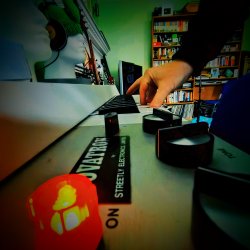
The band own OMD's old Novatron M400, using it on three tracks, with choirs kicking proceedings off on opener Frustrated's intro, cellos and strings towards the end of Captain Rapture and strings throughout closer Neu, all reverbed to within an inch of their lives. Looking for modern garage rock/psych with a dash of Mellotron? Look no further.
 |
A Fondness for Hometown Scars (2008, 49.45) **½/T |
|
| Crawling (a Fondness for Hometown Scars) In December (Beyond Our Grasp) Troubles Down (Attic Crawlspace) In This Life (Wake Up and Smell the Bodies) Nothing to Lose (X-Ray Illusion) Sad Eyed Lady (the Pressure and Need for Release) Silver Candy (Shivering Leafless & Hollowed-Out) Got Monsters (I No Longer Exist) |
Son of a Gun (Jail Face) Devils Pride (Forever in Transition) Bleed for Something Beautiful (Turquoise Bloodline) Society's Deep Sleep (Meat Stink) |
|
Current availability:
Mellotron used:
Keith Caputo is apparently best-known as vocalist for US metal troupe Life of Agony, plus various other projects, although I have to admit his previous career has passed me by. 2008's A Fondness for Hometown Scars is his fourth full solo album, consisting largely of downbeat, rather depressive material, sadly displaying little of the transcendentality of better purveyors of the style, with a couple of metal numbers thrown in for good measure, none of which adds up to anything I'm going to want to hear again any time soon, I'm afraid.
Zac Rae plays (credited) effective Mellotron flute and string parts on opener Crawling (A Fondness For Hometown Scars), which might've worked nicely on a few other tracks, too. Why so stingy on the tape-replay front? Anyway, LoA fans will lap this up, the rest of us will probably shrug indifferently and get on with our lives. One decent Mellotron track.
 |
In the Land of Grey and Pink (1971, 43.24) ***½/T½Golf GirlWinter Wine Love to Love You (and Tonight Pigs Will Fly) In the Land of Grey and Pink Nine Feet Underground Nigel Blows a Tune Love's a Friend Make it 76 Dance of the Seven Paper Hankies Hold Grandad By the Nose Honest I Did! Disassociation 100% Proof |
Current availability:
Mellotron used:
Caravan were (and still are) probably the 'purest' form of the 'Canterbury sound', characterised by a light, jazzy feel and dollops of English whimsy. It's an acquired taste and I'll be perfectly honest in saying that I've never personally acquired it, but I'm not going to slag them on those grounds. I can see perfectly well where they were coming from, even if I'm not. In the Land of Grey and Pink is the album where all their disparate influences finally came together into a cohesive whole, side two's epic, Nine Feet Underground and the rather more lightweight Golf Girl still being live favourites. While the album's never going to be a particular favourite of mine, Winter Wine is very good, as are parts of Nine Feet Underground, but I think it's safe to say, Caravan don't 'do' dark.
Dave Sinclair isn't known for his Mellotron use, but for some reason he dug one out for this album, with an upfront strings part (sounds like a Mark II) on Golf Girl, actually taking a rare solo on the instrument. The strings on Nine Feet Underground don't come in until halfway through the epic (I'm afraid I've no idea which part), then disappear just as quickly. So, not really a Mellotron album, to be honest, but if you like the Canterbury sound, go for it.
See: Dave Sinclair
 |
A Little Man and a House and the Whole World Window (1988, 43.41) *****/TTT½ |
|
| A Little Man and a House In a City Lining Is This the Life Interlude Dive The Icing on the World The Breakfast Line Victory |
R.E.S. The Whole World Window |
|
Current availability:
Mellotron used:
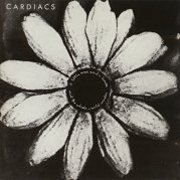
Cardiacs (no 'The', thank you) are one of those bands who seem to be impossible to describe accurately, although it never seems to stop people trying, so here's my two penn'orth: 'the weirder end of prog filtered through punk, with various other influences including ska. Think Gentle Giant and Frank Zappa getting a good kicking from the Pistols and Madness in a dark alley'. That doesn't even really begin to describe them; Cardiacs are absolutely unique and the tragedy is that they're still practically unknown, even in their own country.
A Little Man and a House and the Whole World Window was their first full-length vinyl LP containing songs they'd been performing, in some cases, for several years. As mainman Tim Smith tells it, "We really wanted a Mellotron on the album and the only band we could think of with one were IQ, so we got hold of them and asked if we could borrow it". IQ let them have it for just one day, so they wasted little time in recording as much of it as possible; Tim found time to sample it as well and the samples have cropped up on subsequent albums. Almost every track on A Little Man has some somewhere, even if only almost subliminally; opener A Little Man And A House has a few small bursts of strings, but track two, In A City Lining goes all the way with huge bursts of choir on its massive opening riff. Last-minute addition Is This The Life was actually on their first cassette release from seven or eight years earlier, as well as a later, more widely-available cassette, The Seaside (*****); because they were persuaded to give it a third go at the last minute, a separate recording session became necessary, which explains the slightly different sound on the track. No Mellotron, of course, but it's one of their enduring classics and doesn't sound out of place on the album.
Apart from the almost medieval tonalities of Interlude, there's very little let up from there on. Album closer, the emotional The Whole World Window seems to consist of nothing else in the keyboard department; keyboard whizz Bill ("William D.") Drake uses choir, flutes and strings to great effect, seeming to accentuate the almost pre-war feel of the song. Tim has told me that he played some too, but Bill has argued the toss. Whatever. Sadly, Cardiacs have never played the track since saxophonist (and Tim's ex-wife) Sarah Smith left the band at the end of the '80s. (STOP PRESS: they encored with it at their November 2001 gig in London, absolutely bringing the house down). Because of the limits of vinyl, something had to be left off to make way for Is This The Life, so I'm Eating In Bed was demoted to its b-side. Strangely, although it was supposedly recorded during the album sessions, there's no apparent hint of Mellotron on it, although it would have fitted perfectly. Eating was reinstated to its correct position in the running order when A Little Man... made it to CD. For some reason, there's a German issue of the CD, released some time before the UK one; it not only includes Eating, but all three tracks from the There's Too Many Irons in the Fire EP and another b-side, Goosegash that isn't available anywhere else on CD in this form.
In 1998, Tim borrowed my own M400 to (so I thought) record it for the new Cardiacs album. In fact, the malfunctioning machine ended up inspiring a whole new side project, Spratley's Japs, where it can be heard on several tracks wheezing away, mere seconds from breakdown. I prefer my Mellotron working properly; Tim preferred it breaking down. I won.
See: Samples etc. | Spratley's Japs | William D. Drake
 |
Long Gone Before Daylight (2003, 49.16) ***/T |
|
| Communication You're the Storm A Good Horse And Then You Kissed Me Couldn't Care Less Please Sister For What it's Worth Lead Me Into The Night |
Live and Learn Feathers and Down 03.45: No Sleep |
|
Current availability:
Mellotron used:
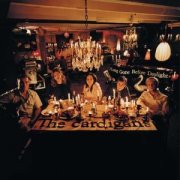
The Cardigans' fifth album, Long Gone Before Daylight, is slightly less overtly poppy than its predecessors, which isn't to say they've taken a sudden sharp left into the avant-garde; I mean, there's not even a Black Sabbath cover this time round (no, really). I can't really pick out 'highlights' as such, as none of the album appealed to me in the slightest, although, unlike many such efforts I've grimly ploughed through in the last few years, it doesn't actually offend me and is clearly well written and played. However, it's an awful lot less interesting than vocalist Nina Persson's A Camp project, which isn't that interesting itself.
I'm told the band own not just one, but two of the new MkVI Mellotrons (should be an M600, going by previous models), one for each of their Swedish studios, which are some distance apart. I believe Lars Olof Johansson plays the flutes (and later in the track, strings) on Feathers And Down; a perfectly pleasant part, without being particularly outstanding. Rather like the rest of the album, in fact. So, I can't really recommend this, unless you're already a devotee of the Cardigans' work; it isn't worth it for the Mellotron use, anyway.
See: A Camp | Nina Persson
 |
Cargoe (1972, 43.11) **½/T½ |
|
| Come Down Feel Alright Horses and Silver Things Scenes Things We Dream Today Time Feelin' Mighty Poorly Thousand Peoples Song |
Heal Me I Love You Anyway Leave Today |
|
Current availability:
Mellotron used:
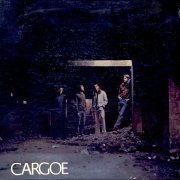
Cargoe (not to be confused with the Dutch Cargo) were a pretty mainstream US rock band, going by the audio evidence on their sole, eponymous 1972 release. OK, it rocks it up a bit every now and again (Time, Leave Today), but the bulk of the record's pretty bland fare. Ever feel you've completely run out things to say about something?
Bill Phillips plays Mellotron, but not a lot, with naught but a faux-orchestral strings part on I Love You Anyway and flutes and strings on closer Leave Today; perfectly nice, but inessential. Actually, you could say the same about Cargoe as a whole, although 'perfectly nice' is probably overstating the case a little; 'rather dull' might be closer.
 |
Give Up the Ghost (2009, 39.23) **½/½ |
|
| Looking Out Dying Day Pride and Joy Dreams That Year Caroline Before it Breaks |
I Will If There Was No You Touching the Ground Oh Dear |
|
Current availability:
Mellotron used:
Brandi Carlile treads lightly through the common ground between pop, folk and country, at least on her third album, 2009's Give Up the Ghost. Irritatingly, it veers between the kind of alt.country you might wish to hear again (opener Looking Out, Dying Day) and the kind of pop/rock/AOR you probably won't (Dreams, Before It Breaks), other better tracks including the jaunty Caroline (a lesbian love song) and gentle closer Oh Dear, despite the ukelele.
Jesse Carmichael plays Mellotron (Jupiter Studios' M400?), although he makes us wait for it, with a pleasant flute part on Oh Dear.
 |
Sailors on the Roiling Sea (2024, 39.44) ****½/TTEarly FormationsThe Shout From Beyond Too Much Stuff As it Was Spiralling AI Trash Future Winters Falling Ice in New York City Nothing is Ever Over |
 |
The Mad Decades (2026, 34.42) ****/TTThree Studies of a Half HumanJester Quantised Fire Without Heat Let the Moon Cry With You Retreat to Barbarism People Are Plastic Hilversum The Mad Decades |
Current availability:
Mellotrons used:
Originally hailing from Northern Ireland, singer-songwriter Nick Carlisle now lives on the British mainland, releasing a clutch of albums (many in collaboration) since 2011. 2024's Sailors on the Roiling Sea is his third fully solo record, a (for want of a better word) powerpop album of unusual power and subtlety, taking its inspiration from the likes of Love, The Beach Boys, Jellyfish and (of course) The Beatles, amongst others. Highlights? All of it, really, but opener Early Formations, with its unexpected brass interjections, is simply wonderful, while The Shout From Beyond (Tears for Fears without the angst), the darkly balladic Spiralling and Falling Ice In New York City stand out. Watch for closer Nothing Is Ever Over's prog moves, too.
Nick came down to my studio (now known as The Somerset Synth Sanctuary, potential clients!) to record my Mellotron. Although it isn't always obvious, he assures me that we're hearing MkII brass (alongside Marcus Hamblett's cornet) and string section on Early Formations, cellos and inaudible flutes on Spiralling, brass on AI Trash, cellos, violas and inaudible vibes on Future Winters and cellos at the end of Falling Ice In New York City. Is this a Mellotron classic? Probably not, but it's a record you need to hear anyway. Preview it on Bandcamp (if you must), then buy.
Nick's follow-up, 2026's The Mad Decades, continues his good work, a semi-concept work inspired by Isaac Asimov's 1939 story Trends (found in The Early Asimov, fact fans), based on the idea that scientific progress will leave people behind, letting them sink back into superstition and religious fundamentalism. Sounds familiar? The songs are, of course, excellent, probably at their best on the stately, magnificent Jester Quantised, the dark, piano-led Fire Without Heat and People Are Plastic, while opener Three Studies Of A Half Human sports a distinct XTC feel. Less of my Mellotron this time round, with stabby MkII brass on Jester Quantised, solo cello/double bass on Fire Without Heat, cello (and distant choir?) on People Are Plastic and a string line on the closing title track. Incidentally, for those who find the album overly brief, the Bandcamp version includes three single edits at the end, which I haven't bothered to include.
See: Samples etc.
 |
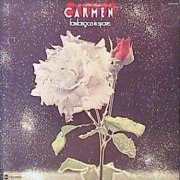 |
Fandangos in Space (1974, 46.27) ****/TTT½ |
|
| Bulerias Cante (Song) Baile (Dance) Reprise Bullfight Stepping Stone Sailor Song Lonely House Por Tarantos |
Looking Outside (My Window) Theme Zorongo Finale Tales of Spain Retirando Fandangos in Space Reprise - Finale |
||
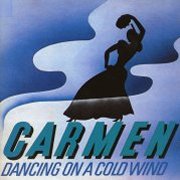 |
Dancing on a Cold Wind (1975, 49.39) ***½/TTT |
|
| Viva Mi Sevilla I've Been Crying Drifting Along She Flew Across the Room Purple Flowers Remembrances (Recuerdos de España) Table Two for One She's Changed Gypsy Girl |
The City Time People Dressed in Black Dancing on a Cold Wind Instrumental Vocal The Horseman Conclusion (She Changed) |
|
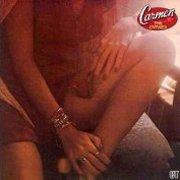 |
The Gypsies (1975, 37.15) ***½/TTDaybreakShady Lady High Time Dedicated to Lydia Joy The Gypsies Siren of the Sea Come Back Margarita |
Current availability:
Mellotrons used:
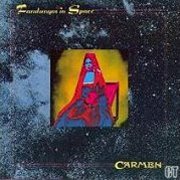
Carmen were a fantastic concept; flamenco/prog, but from a US perspective, sung (mostly) in English. At their best, they were absolutely magnificent, Roberto Amaral and Angela Allen both being credited with 'footwork', Amaral also playing castanets. They apparently had a mic'd-up metal-covered low platform for use at gigs, so said footwork could be channelled through the PA. Angela Allen (sister of guitarist/main man David Allen) also doubled on synth and Mellotron, both of which played an important part in their sound.
Fandangos in Space set their stall out admirably, opening with one of their best pieces, Bulerias, with much reference to 'gypsy lovers' et al.; the main theme from the song is reused at least twice later in the album and why not? Angela's Mellotron strings are right up in the mix on the first part of Bulerias, then dip in and out over the course of the album, with particularly good use on Retirando and Reprise, plus the odd bit of flutes here and there. Highly recommended.
Dancing on a Cold Wind looks like it should be a concept album, but only actually has one side as a concept piece, Rememberances, dealing with all the usual gypsy lovers etc. stuff they were so keen on; Viva Mi Sevilla actually repeats a line from the previous album almost verbatim. Interestingly, Rememberances is where the album's recording budget obviously went, as there's not a trace of Mellotron on the whole track, a real string section being used throughout. Reasonable amounts of Mellotron on side one, though, although no totally outstanding tracks, which is a fair summing-up of the album overall.
Carmen's third and last album, The Gypsies, carries on in a similar vein, though you wonder how much longer they could've kept the concept going. The album's actually slightly more cohesive than its predecessor, although without any of the concept stuff (other than the band's overall concept, of course). One really good track in The Gypsies itself and two reasonable Mellotron tracks; Shady Lady is as flute-heavy as anything they did, with the usual strings on Joy.
So; a pretty good band, actually, unless you have a particular aversion to flamenco, in which case you're not going to like any of the genuine Spanish bands in that area either. If you don't like Fandangos in Space, you won't like the others, so start there and see how you get on. It's definitely the strongest Mellotron album of theirs, too, but all three are recommended. Incidentally, British bassist John Glascock eventually went off with Angela Allen and joined Jethro Tull after Carmen supported them on tour. Extremely sadly, after a handful of albums with the band (he was nicknamed 'Brittledick' by Ian Anderson), Glascock died on the operating table while undergoing open-heart surgery.
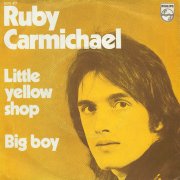 |
7" (1974) **/½ Little Yellow Shop Big Boy |
Current availability:
Mellotron used:
Henricus Vrienten released records under the names Ruby Carmichael and (more sensibly) Paul Santos, his first under the Carmichael moniker being 1974's twee Little Yellow Shop b/w Big Boy, a limp, mainstream '70s pop effort if ever I heard one. Someone plays Mellotron on the flip, with background strings that are neither here nor there. Miss.
 |
Portuguesa (2023, 43.58) ***/½ |
|
| O Quarto (Fado Pagem) As Flores (Fado Flores) As Fontes (Fado Sophia) Praias Desertas Marcha de Alcântara de 1969 Fado é Amor Palma Simplesmente Ser |
É Preciso Saber Porque se é Triste (Fado Soneto) Sentas-te a Meu Lado Ficar Pedra Solta Levo o Meu Barco no Mar Meu Amor Marinheiro |
|
Current availability:
Mellotron used:
Maria "Carminho" de Andrade is a Portuguese fado singer, solidly in her country's folk tradition. 2023's Portuguesa is her sixth album, its original material firmly in the fado mould, albeit with extra instrumentation in places, possibly at its best on opener O Quarto (Fado Pagem), Fado É Am and the dramatic Levo O Meu Barco No Mar, but nothing here lets the side down.
Mellotron meister Martin Smith tells me that Carminho's husband, João Pimenta Gomes, owns a new M400, on which he plays recordings of her voice. However, if you didn't know you were hearing it on Praias Desertas, you wouldn't have the faintest idea it was a Mellotron, frankly. Anyway, a fine album, if a little on the niche side.
See: Samples etc.
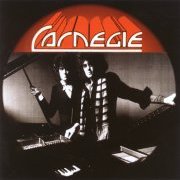 |
Rock and Roll Symphony (2001, recorded 1977, 47.06) ***½/TTA Drinking Man's ConcertoVariations Never Give Up Storybook Girl Worn Down Piano Rock and Roll Symphony [hidden track] |
Current availability:
Mellotron used:
Carnegie started life as The Mark & Clark Band, identical twins with a unique two-piano double-act, apparently having considerable success in Europe in the late '70s. After the name-change, the Seymour twins' record company (CBS, I believe) pushed them in a commercial direction for the sadly Mellotron-free Double Take (**½). They apparently resisted strongly, being more into the pomp side of things, Queen being a constant comparison, but to no avail. Rock and Roll Symphony, doubling two tracks with Double Take, has apparently been salvaged from unreleased tapes, the odd tape glitch here and there proving the point. Musically, this is ridiculously wonderful; pompous beyond well, anything, really, this makes Queen look like a garage band, or at least it would with as extravagant a production. The two grand pianos make for a monster sound, the twins' brother Scot on other keys, plus the regular guitar/bass/drums completing the lineup. Two female backing vocalists (almost all the band sang) tip the sound over into complete insanity; this is not for the fainthearted.
Scot Seymour's Mellotron seems to have been used exclusively as an orchestral strings substitute, cropping up all over the first four tracks, if not to the greatest effect, to be honest. The last two tracks are live (Worn Down Piano was their hit) and the Mellotron doesn't appear to have been dragged out for live dates; indeed, it isn't visible in the live pic on the back of the CD. So... difficult to recommend this wholeheartedly; it's a completely bonkers album and the Mellotron work is rather unexciting. However, it's insanely unique and I suspect its, er, 'individuality' may grow on me with time. Come back in a year and see if I've rewritten this review. Oh and don't get too excited about the 'hidden track'; it's a live mess-around by the twins, with no musical involvement.
 |
Black Power (1994, 38.00) ***/T |
|
| Tears Come Down Speed Shooting Speaker of the House Sweetheart Wish Infrared Asylum Green The Ballad of Soap These Foolish Things |
The Ballad of Jim Jones Thanks for the Tinklers The Ballad of Florida Dangerous Cult Following |
|
Current availability:
Mellotron used:
The trio of long-time Tom Waits associate Ralph Carney, Daved Hild and Mark Kramer recorded two albums together, 1987's Happiness Finally Came to Them and '94's Black Power, the latter seemingly only available with a chunk of the former added to it, although the tracklisting above removes the extraneous material. Anyone even slightly au fait with Kramer's oeuvre will be unsurprised to hear that it's an experimental low-fi US indie effort of its era, probably at its best on the unearthly Speaker Of The House and its weirdest on its seriously odd version of These Foolish Things.
Kramer plays his own M400 on a couple of tracks, with background strings on opener Tears Come Down and upfront flutes towards the end of Speaker Of The House, although the jury's out on the near-subliminal chordal wash on The Ballad Of Florida. Worth hearing? Really only for those with a shelf reserved for Shimmy Disc releases.
See: Kramer
 |
4-Kyoku-iri (1975, 10.32) ***/½Ruijian'naNamida no Tedī Bōi Fankī Monkī Beibī Ban-kaku Rokku no Tēma |
Current availability:
Mellotron used:
Carol were a Japanese rock'n'roll revival outfit, who released half a dozen albums in the mid-'70s before splitting. 4-Kyoku-iri is a four-track EP of (presumably) original material that sounds a lot like a far-east reformation of The Beatles, particularly on opener Ruijian'na (Louisiana), which bears more than a passing resemblance to Last Train To Clarksville.
Renowned session player Katsuo Ohno plays harpsichord and Mellotron strings on Namida No Tedī Bōi (Tearful Teddy Boy), albeit neither for that long, nor to any great effect, quite obviously in 'string section replacement' mode. It's hard to tell for certain, but it looks like all four tracks are available on 2003's The Best, should you be bothered. Incidentally, there's a spirited rock'n'roll revival scene in Japan to this day; the Tokyo Rockabilly Club still meet every Sunday in the city's Yoyogi Park.
 |
From the Top [Disc 1] (1991, recorded 1965-71, 54.58) **/½ |
|
| Caravan The Parting of Our Ways Looking for Love I'll Be Yours Iced Tea You'll Love Me All I Can Do Don't Be Afraid (demo) Invocation (demo) Your Wonderful Parade (demo) Good Night |
All of My Life Eve Ticket to Ride Get Together Interview Maybe it's You (They Long to Be) Close to You Mr. Guder We've Only Just Begun Merry Christmas Darling For All We Know |
|
Current availability:
Chamberlin used:
As I'm sure I've ranted elsewhere on this site, there's an opinion that does the rounds every now and again that says The Carpenters were actually the epitome of cool (well, sort of) and Richard's arrangement skills were absolutely top-notch. The latter is undeniable, but cool??; The Carpenters were and remain, the cheesiest, most MOR, mainstream horror ever to descend upon the Great Listening Public, despite Richard's dislike of their 'Pepsodent image' (your fault, Rich, your fault). And no, covering Klaatu's Calling Occupants Of Interplanetary Craft doesn't let 'em off the hook. Nor am I the first person to think there was something exceedingly creepy about the brother/sister duo, although Karen's anorexia-related death in 1983 was a classic 'everyone turned a blind eye' tragedy, not to mention Richard's quaalude addiction in the '70s. Did I hear someone say 'dysfunctional family'?
1991's From the Top is a four-disc box, mainly interesting to Carpenters fans for the first half of its first disc, containing a selection of pre-Carpenters work, some of which (gasp!) isn't actually that cheesy at all. It seems Richard was a decent jazz pianist in his day, while Karen's voice (the audio equivalent of honey, for better or worse) didn't always offend ears attuned to a rock aesthetic quite so much, which isn't to say this, er, rocks; it doesn't. Some of it is, however, less offensive than you might expect and I'm amazed to hear something here I actually like: Invocation, the lead-off track on their first album, is a beautiful Baroque vocal harmony piece, comparable to The Beach Boys' contemporaneous Our Prayer. So there.
So, er, why is this here? I don't know the story behind it, but Richard plays Chamberlin flutes on a 1966 track, The Parting Of Our Ways (also available on a similar box set, 2002's The Essential Collection: 1965-1997), to passable effect. Which brings me to a really odd Mellotron-related story I heard somewhere: apparently, The Carpenters owned what has to be the world's only split Mellotron. Yup, a touring M400 was split, à la a Hammond, under the keyboard. Er, why? It's not as if they're that heavy... It allegedly now resides in a museum somewhere in the Midwest, although this remains unconfirmed.