




|
|
|
|
||
|
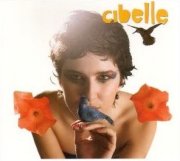 |
Cibelle (2003, 57.27) **½/T½ |
|
| Deixa Só Sei Viver No Samba Hate Luisas Waiting No Prego I'll Be |
Train Inútil Paisagem Um Só Segundo Pequeno Olhos |
|
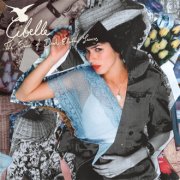 |
The Shine of Dried Electric Leaves (2006, 70.14) **½/T |
|
| Green Grass Instante de Dois Phoenix London, London City People Minha Neguinha Mad Man Song Por Toda a Minha Vida |
Flying High Arrete la, Menina Esplendor Train Station Lembra Cajuina |
|
Current availability:
Mellotrons used:
Cibelle (Cavalli) is a modern Brazilian electronica artist who takes her inspiration from many genres, including traditional Brazilian music, Tropicalia, various dance sub-genres, even metal. Whether the end result is to your personal liking is another matter, of course... She'd settled in London by the time she finished recording her eponymous debut, making me wonder how much of it might've been recorded over here; it sounds nothing like the city, but then, she's Brazilian - why should it? I'm afraid I can't personally connect with this music at all, though and the album gets a relatively low rating for its boredom factor; why produce an hour of music when you don't have to? Enthusiasm, I suppose. Anyway, Brazilian electronica dude A9 (a.k.a. Apollo 9, a.k.a. Apollo Nove) adds all manner of synths and keys, newer and older, including real, poorly-maintained Mellotron, with a really cranky-sounding string part on Waiting, plus flutes, with more strings on Inútil Paisagem.
Cibelle followed up with 2006's oddly-titled The Shine of Dried Electric Leaves, a far more acoustic album than its predecessor, although, sadly, no more interesting to those not into her Brazilian thing, which isn't to denigrate it musically, only to say it isn't my bag. At seventy minutes, though, it's far too long for its relatively repetitive content and is marked down accordingly. Nove on Mellotron again, with string chords on City People and flutes and strings on Minha Neguinha, although it's impossible to tell if various other stringlike noises on the album are Mellotronically-produced or not.
See: Apollo Nove | Freezone
José Cid (Portugal) see: |
 |
 |
Early Days 1970-1985 (2018, 87.00) ***/T |
||
| Feel Nice Soul for Sale Let's Unite Kiss and Tell You Turn Me Down Starlight What the World Needs Feel No Pain |
Lonely Boy West Eleven Skinheads a Mash Up London Town Feel Nice Version Ethiopian Romance Tell Her Love Has Felt the Need Blood Money Cool it |
Harder Than a Rock JL JR Just Like to Say So Real Robot Style Soul and Inspiration |
|
Current availability:
Mellotron used:
Formed in 1967, The Cimarons' chief claim to fame is being Britain's first indigenous reggae outfit, pretty much the house band at Trojan Records, backing multiple artists throughout the '70s. I can't actually find any trace of a physical issue for 2018's Early Days 1970-1985, although an abbreviated, twelve-track version was released on vinyl the following year as Skinheads a Mash Up London Town 1970-1971. It's described as, "A superb collection of rare and unreleased gems", although the odd track has leaked out on recent singles. This is a classic case of 'if you're not into it, you won't get much from it', although a handful of tracks stand out, notably instrumentals Kiss And Tell and Starlight, and the near-nine-minute Cool It, clearly a rather later recording.
An unknown musician (possibly Carl Levy) plays Mellotron on two tracks, very possibly London's Chalk Farm Studios' MkII, apparently (previously?) belonging to Manfred Mann. Anyway, we get plucked mandolin and clicky flute on Kiss And Tell (possibly from 1970) and strings on What The World Needs, both to good effect. Were these recorded at the same session? Impossible to say, without further information. Anyway, one for Brit-reggae fans, while the rest of us can probably pass.
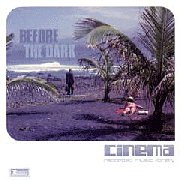 |
Before the Dark (2002, 49.30) ***½/TT½ |
|
| Before the Dark Pendulum Reflections Almost There After Dark Lost Coming Up for Air Undercurrent |
Head Spin Crash and Burn The Dawn |
|
Current availability:
Mellotron used:
Cinema Recorded Music Library's schtick is to recreate that '70s library music vibe, which they do with aplomb on 2002's Before the Dark. Every track has a different feel to it, as you'd expect from the real thing; this actually reminds me of Sundae Club, or (more 'authentically'), Harmonic 33, in its dedication to recreation of a lost art. Best tracks? More like best moments, actually: Pendulum nicks the descending Rhodes line from The Doors' Riders On The Storm, while the 'police car siren' synth on Head Spin almost convinces. The band (actually a duo) actually rock out a little on the latter half of Crash And Burn ('Burn', I suppose), although they splatter what sounds like a Solina all over the track, along with half of the rest of the album.
Mellotron flutes are proudly displayed on the opening title track, Pendulum, Lost, Coming Up For Air and closer The Dawn, although the one on After Dark sounds real. No idea who plays it (presumably either Crawford Tait or Gregor Reid), or whether it's real, although it sounds a lot more authentic than many other similar examples I can think of. Overall, this does exactly what it says on the tin and does it well. If you're after that vaguely 'Gallic film music' thing, this will almost certainly hit the spot. Recommended.
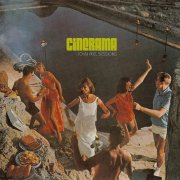 |
John Peel Sessions (2001, recorded 1998-99, 40.41) **½/T |
|
| Comedienne Maniac You Turn Me on Honey Rider Pacific (acoustic) Dance, Girl, Dance (acoustic) 146 Degrees Reel 2, Dialogue 2 |
Film Elenore Kerry Kerry (live) Hard, Fast and Beautiful (live) |
|
Current availability:
Mellotron used:
The Wedding Present's David Gedge and his then-partner, Sally Murrell, formed Cinerama in 1998, quickly becoming a firm favourite of 'Saint' John Peel (RIP), recording no fewer than eleven sessions for his radio programme. John Peel Sessions collects the first two, along with other relevant recordings, although be warned: you need a fairly high tolerance for faux-early '60s pop to survive even forty minutes of this. Suffice to say, the lyrics are mostly more interesting than the music.
Although I've thrown Season 2 straight into samples, one track here's made me sit up and cock a quizzical eyebrow at my speakers. Reel 2, Dialogue 2 features what sounds like separate male and female Mellotron voices, presumably played by either Gedge or Murrell; I'm really not sure there were good enough samples of these sounds at the time to pass muster, so this stays here unless I get more (negative) information.
Official Cinerama/Wedding Present site
See: Samples etc. | The Wedding Present
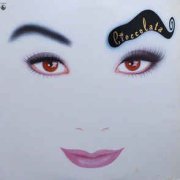 |
Cioccolata (1985, 38.19) ***/½ |
|
| Pa•Chi•La Il Cielo Lontano Sandwichman Danza Birthday Nina From the Dark Moon La Mia Mano The Dancing Cat |
Tiss Tiss Addio |
|
Current availability:
Mellotron used:
I can't tell you an awful lot about Cioccolata, due to not only the usual language-related issues, but the three decades-plus that have elapsed since the release of their eponymous, second album from 1985. Fronted by Cano Caoli (a.k.a. Kano Kaoli), the only band member with any obvious history (admittedly, according to Discogs) is guitarist Toru Terashi. Cioccolata is a strange, offbeat pop album, choppy rhythms interacting with new wave-derived melodies and more obviously Japanese influences, possibly at its best on crazed massed-vocal opener Pa•Chi•La, the funky Sandwichman, the sax-driven Tiss Tiss and closer Addio.
Amongst the ubiquitous synths, Fuquiko "Yuko" Watanabe plays background Mellotron flutes and strings on Danza, although that would appear to be our lot. Bored with production-line Japanese pop? Try Cioccolata. Intriguingly different.
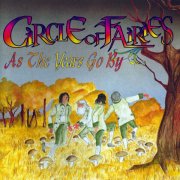 |
As the Years Go By (1995, 53.33) **/TTRequiemCrawling on the Floor My Camouflage On the Run Autumn Colours The Troubled Wake As the Years Go By |
Current availability:
Mellotron used:
Circle of Fairies were yet another one-off Beppe Crovella production project from the Vinyl Magic label, 1995's overlong As the Years Go By being their sole legacy. It starts well enough, with the instrumental Requiem, but swiftly descends into neo-prog tedium, characterised by all the usual tropes: simplistic composition, unimaginative arrangements, a propensity for Marillion-esque vocal melodies and delivery... This may have been considered good enough in the Italian scene of the '90s, but its shortcomings are all too apparent some twenty-five years on. Lowest point? The excruciating, eleven-minute title track that closes this sorry effort, where the band's already tenuous grip on musical theory entirely deserts them.
Gianfranco Milone is credited with a raft of keyboards, including a MiniMoog, Hammond, Rhodes and 'Mellotron M400 and Mark II'. Really? A MkII? There's an eMu Vintage Keys module in there, too, which sounds more like it provides the Mellotron sounds, but, without definite info, I feel (at least for now) I have to respect those credits. Anyway, we get 'stabbed' choir chords on Requiem, murky choirs on My Camouflage, phased strings on On The Run, choirs and chordal flutes on The Troubled Wake and chordal strings and melodic flutes on the title track. Is any of it actually real, or are those credits essentially bullshit? Hard to say, but I don't feel able to recommend this on any front, anyway. Reprehensible.
See: Beppe Crovella
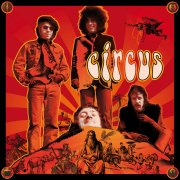 |
Circus (2011, recorded 1968, 27.51) ***½/TFairy Tales of TruthMother Sundance Change of Scene Voluntary Peacemaker Medusa |
Current availability:
Mellotron used:
Circus (not to be confused with any other band of the same name, including alternate spellings) were formed by vocalist/guitarist Frank Nuyens and drummer/lyricist Jay Baar after noted Dutch psychsters Q65 split in 1968; although Herman Brood (ex-Cuby & the Blizzards, later of solo fame) and Henk Smitskamp (ex-Motions) were approached, the duo ended up recruiting Frank Verhoef on bass/vocals and keyboard player Mark Klein. Using a different singer on each of the few tracks the nascent band recorded, finally released in 2011 as the barely-over-EP-length Circus, their emphasis was more on instrumental work, in true freakout fashion, highlights including trippy opener Fairy Tales Of Truth, rhythmic psychfest Mother Sundance (originally Mother Motha's Sundance, I believe) and the more traditionally songlike Change Of Scene. Sadly, the comedown came all too soon: unable to secure a deal, the quartet splintered, most of their demos being reused/re-recorded for Q65's 'comeback' contractural-obligation effort, 1969's Revival, Fairy Tales Of Truth and Voluntary Peacemaker surviving intact, while Mother Sundance was truncated to Sundance and Change Of Scene became Ridin' On A Slow Train.
Paul Natte plays Mellotron on the original recordings, with strings on Fairy Tales Of Truth, possibly from Phonogram Studios' M300, although the vibes part on Q65's Voluntary Peacemaker is inaudible/missing. Possibly the most amazing thing about these recordings is that they were ever considered even remotely 'commercial', particularly the two lengthy(ish) tracks that make up side one of the currently vinyl-only issue, which says more about the era than I ever could. Worth hearing for side one, then, not to mention one good Mellotron track.
See: Q65
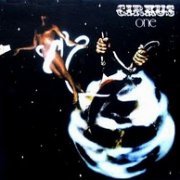 |
One (1971, 41.41/60.31) ***/T½ (TT) |
||
| You Are Seasons April '73 Song for Tavish A Prayer Brotherly Love Those Were the Days Jenny |
Title Track Breach Ad Infinitum [CD adds: Castles The Heaviest Stone Amsterdam Mellissa Pickupaphone] |
||
 |
7" (1976, 10.53) ***/TT Mellissa Pickupaphone Amsterdam |
Current availability:
Mellotron used:
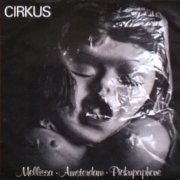
Not to be confused with any other Cirkus/Circus, One was Cirkus' only album under that name, although an obscurity crept out later in the decade as Future Shock. Despite usually being labelled a progressive rarity, this more a (very) late-period psych album, featuring ten average-length tracks of relatively simple construction. It's not a bad album, by any means, but there's something of a shortage of great material, although Brotherly Love stands out. With a string section on most tracks, it's frequently difficult to work out where Derek G. Miller's Mellotron is actually being used, although the aforementioned Brotherly Love has some quite obvious strings and flutes, while Song For Tavish has an unaccompanied Mellotron strings coda.
Speaking of later recordings, Audio Archives' expanded CD issue adds two tracks from '71 and a three-track EP from '76, Mellissa, apparently a paean to a blow-up doll. Nice. Anyway, despite being of dubious quality (Amsterdam's the best thing here), two of the three tracks feature the Mellotron, with background strings on Pickupaphone and pretty full-on ones on Amsterdam, although Mellissa's strings are string synth-generated. Psych fans may well lap the album up, but I reckon it falls rather short of greatness, while the Mellotron use is at best average. Buy at your discretion.
See: Future Shock
 |
"El Tor" (1975, 44.14) ****/T½Alba di Una CittàSolo Uniti... El Tor Duro Lavoro Mutazione La Casa del Mercante "Sun" Milioni di Persone Equilibrio Divino? |
Current availability:
Mellotron used:
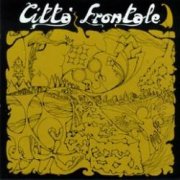
There seems to have been quite a bit of movement between bands in the Italian '70s progressive scene; two of Città Frontale had, only a year earlier, been members of Osanna, including vocalist and sometime Mellotron player Lino Vairetti. "El Tor" definitely has echoes of the Osanna sound on it, but the band pretty much had their own voice, partially characterised by Enzo Avitabile's sax playing, giving the music a fusiony edge in places, particularly on Solo Uniti... and the excellent Mutazione.
The Mellotron parts, also played by regular keyboard man Paolo Raffone, are extremely tasteful and restrained, often only a few chords or a short orchestrated flute part (aside from Avitabile's real flutes) before disappearing again. A classic example of their restraint is in the album's longest track, Duro Lavoro, where they refrain from using the oh-so obvious strings during the first time through a grandiose chord sequence, only bringing them in second time round. 'Tension and release', as I believe it's known. Strangely enough, they only use it on three tracks, so there's probably less than a minute of Mellotron on the whole album; it's a very tasteful minute, though.
See: Osanna
 |
The Perimeter Motor Show (2005, 60.30) ***/TT |
|
| Poor Joy Skim East Brunswick Run Down Good Thanks Lonely Brooklyn Mme. The Perimeter Motor Show Everybody's Flag |
Fail Better Fallujah The 4am Cavalry pt 1 The 4am Cavalry pt 2 Train |
|
Current availability:
Mellotron used:
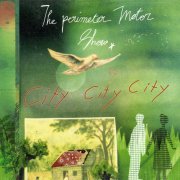
Going by the brief bio on their Bandcamp page, Melbourne sextet City City City existed between 2000 and 2006, releasing two albums, of which 2005's The Perimeter Motor Show is, unsurprisingly, the second. It would be easy to call this 'indie' and have done with it, but the band's influences clearly went way beyond the usual suspects, not least into Krautrock territory, while US alt.rock and electronica turn up as unlikely bedmates on some tracks, too. Highlights? East Brunswick Run Down, the title track and closer Train, perhaps, while fans of atonal weirdness may go for Fallujah and parts of The 4am Cavalry Pts 1 and 2. Downsides? The length of both the album and many of its tracks; Good Thanks would be good at four minutes, but becomes tiresome at double that.
Two members of their 2005 lineup are credited with keyboards, but it seems more likely that Ned Collette plays the (obviously real) Mellotron, with upfront flutes on opener Poor Joy and Good Thanks, radically pitchbent flutes and cellos on Fallujah and background flutes on Train. Given that you can hear this on their Bandcamp page, what's not to like?
See: Ned Collette & Wirewalker
 |
Sling (2021, 44.33) ***/0 |
|
| Bambi Amoeba Partridge Zinnias Blouse Wade Harbor Just for Today |
Joanie Reaper Little Changes Management |
|
 |
Charm (2024, 38.07) **½/T½ |
|
| Nomad Sexy to Someone Second Nature Slow Dance Thank You Terrapin Juna Add Up My Love |
Echo Glory of the Snow Pier 4 |
|
Current availability:
Mellotrons used:
Claire "Clairo" Cottrill is young enough to have initially putting her music out online, and to have an on/off parallel career as a DJ/producer, although her default position is singer-songwriter pop. The dance influence creeps in here and there on her second album, 2021's Sling (notably on Amoeba), although its overriding influence is Carole King and her ilk, albeit updated for this century. Grammy-winning producer (it says here) Jack Antonoff brings in a raft of vintage gear, helping to shift the album's sonic palette towards the '70s, as against your typical, sample-and-beats-heavy contemporary production. Hooray! Highlights? I wouldn't go that far, but the ambitious Joanie stands out, while a pervasive Beach Boys influence can be detected in the vocal arrangements. Mellotron. Hmmm. The album was partially recorded at Allaire Studios, so it's not unreasonable to assume that their M400 was used. Antonoff's credited with most of the album's parts, while Clairo plays on Harbor, but... Where is it? The string line on closer Management? Nope, probably the track's real violin. Subliminal strings elsewhere? Who knows? Much as I hate to do so, I feel I have no choice but to give this a big, fat zero on the tape-replay front. Perhaps someone in the know could point me in the right direction?
2024's Charm bears comparison with its predecessor, possibly at its best on opener Nomad and Thank You, but if you'll excuse the pun, the album's charm wears off very quickly. Mellotron? Uncredited cellos and flutes on opener Nomad, something unknown from Leon Michels on Sexy To Someone: flutes? A typo? Strings on Second Nature from Clairo and 'stabbed' flutes on Thank You from Michels again. Well, at least you can hear it this time round...
 |
Your New Boundaries (2001, 44.09) **½/T |
|
| To Reassure Camera on a Truck After the Accident For Granted You Will Miss the Autumn Interlude How is Your Memory? |
Yes, I Waited a Year... New Name The Hungry Ghosts Song Against Suicide Surface of the Water To Harm Your New Boundaries |
|
Current availability:
Chamberlin used:
Brian Dunn's Clairvoyants picked up some less-than-ecstatic reviews upon the release of 2001's Your New Boundaries, the kindest of which called them 'slowcore'. Yes, their distinctly downbeat music is that, although I'd argue that there's a place for this kind of music, although it probably isn't 'at the front of my collection'.
Colin Rhinesmith is credited with Chamberlin and, for once, we may well be listening to a genuine machine, tapes'n'all, presumably Q Division's MusicMaster 600, the album being partially recorded there. Not much of it, mind; all I can hear is strings (and one of the woodwind family?) all over the brief Interlude, but it's better than nothing. To quote one of those reviews, "Is your record collection lacking 'decent background music?' Is this a gap you need to fill?" Harsh - probably too harsh, but at least slightly accurate.
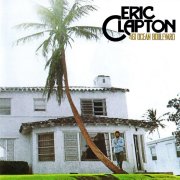 |
461 Ocean Boulevard [Deluxe ed.] (1974/2004, 39.38/142.20) **½/0 (½) |
||
| Motherless Children Give Me Strength Willie and the Hand Jive Get Ready I Shot the Sheriff I Can't Hold Out Please Be With Me Let it Grow Steady Rollin' Man Mainline Florida |
[Disc 1 extras: Walkin' Down the Road Ain't That Loving You Meet Me (Down at the Bottom) Eric After Hours Blues B Minor Jam [Disc 2: live] Smile Let it Grow Can't Find My Way Home |
I Shot the Sheriff Tell the Truth The Sky is Crying/Have You Ever Loved a Woman/Ramblin' on My Mind Little Wing Singin' the Blues Badge Layla Let it Rain] |
|
Current availability:
Mellotron used:
I'm not sure how I've got to the age I have without hearing 461 Ocean Boulevard - I suppose I've been careful - but I must've seen that iconic sleeve a million times over the decades. OK, slight exaggeration. And... Three-and-a-half decent tracks, viz. upbeat opener Motherless Children, the authentically heartfelt Please Be With Me, the infuriatingly half good/half crap Let It Grow and closer Mainline Florida. The rest? The kind of overly laid-back blues/funk/soul you'd expect, not least his anodyne (but successful) cover of Bob Marley's I Shot The Sheriff. No wonder it sold so well. Anyway, it's Mellotron-free, so it doesn't matter what I think about it (he said, having told you anyway).
However, I've been alerted to 2004's deluxe edition, which adds an entire disc of live material from December '74. More dynamic than the album (how could it be less?), it features sterling versions of I Shot The Sheriff, Hendrix's Little Wing and, of course, Layla, although it's still a pretty bland affair (see: Badge), compared to, say, Cream's best work. Keys man Dick Sims plays Mellotron, with orchestral-replacement strings on Let It Grow, although I don't hear it anywhere else. They hauled an M400 about for one song? Not the only band to do so (see: Grand Funk Railroad), but it does seem a little extravagant. Their business, I suppose.
See: Samples etc. | Cream
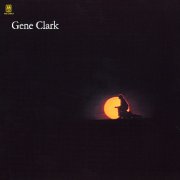 |
White Light (1971, 34.55) ***½/½The VirginWith Tomorrow White Light Because of You One in a Hundred For a Spanish Guitar Where My Love Lies Asleep Tears of Rage 1975 |
Current availability:
Mellotron (Chamberlin?) used:
Gene Clark really shouldn't need any introduction: a founding member of The Byrds, he was actually their main songwriter during their first two years, later supplanted by Jim/Roger McGuinn and David Crosby. He left the band in early '66 (rejoining briefly in '67 and '73), working his way through Phoenix and Dillard & Clark, before releasing the acclaimed, yet poorly-selling White Light in 1971. Essentially a country album, several of its tracks (Because Of You, For A Spanish Guitar, 1975) might've worked well in a pre-country Byrds setting, but are perfectly acceptable here, as long as you don't object too strongly to the style.
An uncredited musician (organist Mike Utley?) plays background Mellotron, or, more likely, Chamberlin strings on Where My Love Lies Asleep (well spotted, Reid), although you'd be forgiven for missing it entirely. Anyone hoping for a lost slice of Turn! Turn! Turn!-era Byrds should probably look elsewhere, but if you've ever found yourself captivated by Clark's writing, you could do worse than to hear a copy. Sadly, Clark was the first Byrd to die, still in his forties, after years of sustained alcohol abuse, living just long enough to participate in his old band's induction into the Rock & Roll Hall of Fame in 1991.
 |
Sheer Golden Hooks (1996, 55.29) **½/T |
|
| Sheer Golden Hooks Exploded View Storyville Marianne Faithfull Cakewalk Los Angeles Times Poor King Crow A Taste of Scorpion |
Joyce's House of Glamour No Stone Unturned The Hanged Man The Map |
|
Current availability:
Chamberlin used:
Shiva Burlesque's Jeffrey Clark's solo debut fails to live up to the powerpop promise of its title, the end result being a kind of uncommercial pop, which strikes me as a contradiction in terms. It's easily at its best on eight-minute closer The Map, Clark narrating over sparse, bluesy acoustic guitar, a world away from the rest of the album.
Patrick Warren's Chamberlin gets a decent outing on The Hanged Man, with distant, reverbed-to-hell flutes, Warren playing about with the flywheel, creating hiccoughing pitchbend effects. I want to like this more than I actually do, although, at least, the tape-replay work's worth hearing.
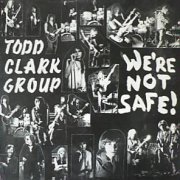 |
We're Not Safe! [as Todd Clark Group] (1979, 32.55) ***½/TWe're Not Safe!Hungry Rumor Has it Mathematics Don't Mean a Thing X-ray X-tasy I Had Too Much to Dream Last Night The Grim Rider |
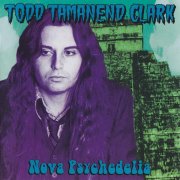 |
Nova Psychedelia [Disc 2] (2005, recorded 1975-85, 76.41) ***/½ |
|
| Rumor Has it Mathematics Don't Mean a Thing X-ray X-tasy I Had Too Much to Dream Last Night The Grim Rider Secret Sinema Nightlife of the New Gods National Anthem/Nova Theme Another Climate |
Stars in Heat Unknown Syndromes Death Hovers X-rated X-tasy Brain and Spinal Column (#2) Into the Vision Flame Over Philadelphia Oceans of She |
|
Current availability:
Mellotron used:
Todd Tamanend Clark (his middle name has been added fairly recently to acknowledge his Native American heritage) released several albums and singles in the 1975-85 period, pressed in small runs, near-impossible to find in their original incarnations these days. As a result, those wonderful Anopheles people have reissued his entire oeuvre from the period on a two-CD set, Nova Psychedelia, showcasing Clark's mad, psychedelic electronic vision in its entirety, originally released under several different names, some only on 8-track (!). It takes us on a journey through his psyche (be warned: this is not for the faint-hearted), from 1975's seriously out-there March Of The Legion (written for a costume competition at a comics convention, would'ja believe), through to the abrasive new wave of 1985's Flame Over Philadelphia, taking in three full albums en route.
The second of these is 1979's 300 copies-only We're Not Safe!, a punk/psych monster to rival The Damned's Machine Gun Etiquette (well, nearly), featuring Todd's takes on Paul Revere & the Raiders' Hungry and The Electric Prunes' seminal I Had Too Much to Dream Last Night, not to mention the brilliant, fourteen-minute prog epic The Grim Rider. Even if this had been pressed in sensible quantities, somehow I can't imagine it would've done particularly well in 1979, or any other year, due to its deeply eccentric approach. Charlie Godart plays Mellotron strings and choir on I Had Too Much to Dream Last Night, not only the only Mellotron on We're Not Safe!, but on the whole of Nova Psychedelia.
Unless you're a fanatical collector, there's little point in trying to source an original We're Not Safe!, so I'm sure you'll be content with Nova Psychedelia, four times the length and a fraction of the price. Todd's almost non-voice takes a little getting used to, but he utilises it carefully (having an American accent always helps when intoning, I find) and for every nutsoid, nigh-on unlistenable experimental track, there are several worth-hearing selections from a man almost lost to obscurity. Clark's still releasing albums to this day, in a rather more available manner than previously. God bless the Internet.
 |
Allan Clarke (1974, 34.13) ***/TTDon't Let Me Down AgainCan't Get on I'll Be Home I Wanna Sail Into Your Life Side Show If I Were the Priest New Americans Love, Love, Love Send Me Some Lovin' |
Current availability:
Mellotron used:
By 1974, Allan Clarke had left and rejoined the band with whom his name is synonymous, The Hollies, and was in the process of recording their last huge hit, the irritatingly memorable The Air That I Breathe. Allan Clarke was his third solo album and, in all honesty, there's little about it to distinguish it from a thousand other mainstream pop/rock albums of the era; its recent reissue can only be due to his Hollies connection. It's perfectly competently written and played, but it totally fails to excite, not even containing anything of the quality of The Air That I Breathe. Mind you, if it had, I'm sure it would've been siphoned off for the band's use... Interestingly, Clarke covers an early Springsteen song (this was still a year before Born to Run, note), If I Were The Priest, going on to encourage The Hollies to do the same.
The credits contain several familiar names, including Herbie Flowers and Johnny Gustafson on bass, Mike Moran on keys and the ubiquitous B.J. Cole on steel guitar, with Tony Hymas (here spelt Hymass) on Mellotron. Surprisingly, maybe, it's on several tracks, with varying levels of strings, presumably standing in for an overly-expensive string section, but let's not look the proverbial gift horse, eh? Clarke finally retired from the Hollies in 2000, only to have his successor, Carl Wayne (once of The Move), die of cancer in 2004. Clarke hasn't gone back on his pledge; in fairness, he's in his seventies and the touring lifestyle has finished off many a younger man. While Allan Clarke is a perfectly good album of its type, it's desperately unexciting and, despite several Mellotron tracks, it's all pretty much background use, to be honest. File under 'that was then'.
See: The Hollies
 |
Yellow Sun of Ecuador & Other Topsongs (1974, 36.58) *½/TT |
|
| Yellow Sun of Ecuador Bury My Heart If You Come to San Francisco I'm Gonna Loose You Take This Hammer I Like to Be Free My Lady of Spain In Yucatan |
Gimme That Horse Together The One-Armed Bandit Dance in the Sunlight |
|
Current availability:
Mellotron used:
Classics were a scarily mainstream Dutch pop group whose career stretched over fifteen years, from the late '60s to the early '80s. Despite having released a slew of singles by that point, 1974's Yellow Sun of Ecuador & Other Topsongs appears to be their first album, most of its contents being the blandest kind of Euro-country-pop, that, for some reason, the Dutch seemed to do so 'well', about the only deviations from the formula being the amusingly glam-rock guitar riff on Bury My Heart and the rock'n'roll-lite of I Like To Be Free.
I presume it's vocalist/keys man Jan Dirkx on Mellotron, with pseudo-orchestral strings on all highlighted tracks above, plus flutes on I'm Gonna Loose You [sic.] and cellos on Together, although the strings on My Lady of Spain and The One-Armed Bandit are real. Frankly, this is terrible. I mean, properly painful. Sorry, but you can't even pass it off as 'kitsch'. It may contain several Mellotron tracks, but none of them are worth hearing.