




|
|
|
|
||
|
 |
3000 Miles Away (1975, 30.53) ***½/03000 Miles AwayNaïvetés Réflexions à Propos d'un Miroir Flip-Flop Birds, Birds |
Current availability:
Mellotron used:
The still-teenaged Philippe Grancher (also of Aphélandra) released 3000 Miles Away in 1975, an instrumental, keyboard-heavy release, loosely categorisable as progressive, although his piano work (notably on Réflexions À Propos D'Un Miroir) is closer to modern classical. All three of the album's longer tracks (the title track/Flip-Flop/Birds, Birds) are episodic, featuring several quite disparate parts played consecutively, possibly displaying Grancher's relative musical immaturity, although many of their individual sections are highly listenable. Highlight? Probably closer Birds, Birds, although nothing here lets the side down too badly.
Grancher is credited with Mellotron, most likely Philippe Besombes' M400, as this was recorded at his Studio Du Chesnay, but I'll be buggered if I can hear where. The timpani on Flip-Flop? Probably the track's credited drummer. Under the ubiquitous string synth? Who knows? I'll leave this here, as it seems likely Grancher had access to one during the sessions, but I'd love to know what he did with it. It seems Grancher is more of a blues/rock guitarist these days, so don't go expecting a revival of this era of his career any time soon.
See: Aphélandra
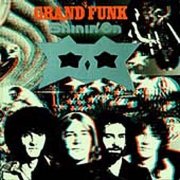 |
Shinin' on (1974, 36.20) **½/TShinin' onTo Get Back in The Loco-Motion Carry Me Through Please Me Mr. Pretty Boy Gettin' Over You Little Johnny Hooker |
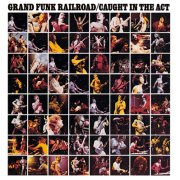 |
Caught in the Act (1975, 74.29) ***/T |
|
| Footstompin' Music Rock and Roll Soul I'm Your Captain/Closer to Home Heartbreaker Some Kind of Wonderful Shinin' on Loco-Motion Black Licorice |
Railroad We're an American Band T.N.U.C. Inside Looking Out Gimme Shelter |
|
Current availability:
Mellotrons used:
 |
The only thing that stops Grand Funk (the 'Railroad' seemed to come and go, possibly dependent on legal action) being the least talented hard rock band ever is the continuing existence of Kiss. I once owned a copy, on some idiot's recommendation, of their first live album, er, Live; it's crap, particularly the side-long instrumental jam T.N.U.C. (go on, reverse it). Risibly sexist and stupid (so what's wrong with being sexy, anyway?), Grand Funk define American party metal, years before its supposed genesis with the emergence of the aforementioned cartoon characters in the mid-'70s. This is music to drop quaaludes to, throw frisbees and/or firecrackers to, paaarty to. How this lot were ever mentioned in the same breath as Sabbath or (God help us) Zeppelin is utterly beyond me. OK, they sold a lot of records to disaffected Midwestern teenagers, but they're musical lightweights compared to any of their equally successful contemporaries you might care to name.
Shinin' on was Grand Funk's eighth studio album (count 'em) in five years and it's immediately evident that they'd mellowed a little since their early bludgeon-athons. Chiefly notable for the inclusion of their hamfisted cover of Little Eva's The Loco-Motion, a US No. 1 hit (!), the rest of the album is a mixture of hard rock-lite stuff like the title track and slower material along the lines of Carry Me Through and Mr. Pretty Boy. The latter is the album's sole Mellotron track, a fairly ordinary string part running through most of it; hardly world-beating, but nice to hear.
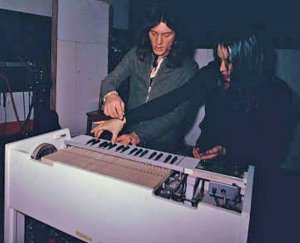
Caught in the Act came out the following year and, in fairness, they'd learnt a little subtlety since that early live tragedy, doubtless partly due to the addition of Craig Frost on keyboards. Frost was a perfectly good player, concentrating largely on organ and Clavinet, although he used his onstage Mellotron on one track, with nice upfront strings and flutes on the Closer To Home part of side one's medley, although, rather irritatingly, it fades out. Actually, for all my ranting above, this isn't that bad an album, (good singing) good playing throughout and a few memorable tracks, not least their major US hit, We're An American Band.
If you're American and of a certain age, these will almost certainly bring back memories, good or otherwise. For the rest of us, if you were contemplating dipping a toe into the murky waters of The Funk, there are worse places to start than Caught in the Act. Like Live. One decent(-ish) track on each album doesn't make them worth buying, but hear them if you get the chance, particularly Caught in the Act.
See: Flint
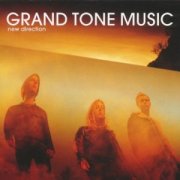 |
New Direction (2000, 49.23) **½/T |
|
| Stop Keep Telling Me Goodbye Save Time I Give it All Height Alright Depending on New Direction Sound in Me |
Where Did My Day Go Go Become My Friend |
|
Current availability:
Mellotron used:
Grand Tone Music are a rather dour Swedish outfit, whose second album, 2000's New Direction (a Spinal Tap quote?), is fine for two or three tracks, but nearly fifty minutes of their rather characterless, downbeat, female-fronted material is at least ten minutes too much. The largely acoustic Where Did My Day Go is probably the best thing here, although closer Become My Friend might just bring all their influences together with the most success.
I thought this was recorded at Mattias Olsson (Änglagård, a million others)'s Roth-Händle studio, although it appears not, so I've no idea whose Mellotron we're hearing here. Dan Lepp plays it, with strings on Stop Keep Telling Me Goodbye, Height and Sound In Me and a spartan cello part on Become My Friend, although it's all well in the background. Assuming this is a Mattias-related release, I'm afraid to say it's the least appealing I've yet heard, but then, it was a while back. OK in places, but rather dull and little Mellotron work. Incidentally, despite rumours, the band's eponymous 1998 debut is Mellotron-free.
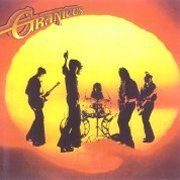 |
Granicus (1973, 43.38) ***½/TYou're in AmericaBad Talk Twilight Prayer Cleveland, Ohio Nightmare When You're Movin' Paradise |
Current availability:
Mellotron used:
Can't say I know an awful lot about Granicus, to be honest. They were from Cleveland, Ohio, they named themselves after Alexander the Great's first major battle, they featured a silver-lunged screamer called Woody Leffel and they played pure, undiluted hard rock in an early-'70s stylee. Pretty good at it they were, too, although you sometimes find yourself wishing they'd up the energy quotient a little, or at least I do. Since I suspect Granicus will be something of a grower, it's difficult to pick out highlights on a single listen, but the eleven-minute plus Prayer builds like a building thing to a ridiculous crescendo. Quite magnificent.
I don't actually know who plays the Mellotron on the instrumental Twilight, but since it was arranged by producer Martin Last, I expect he played it, too. It's an orchestrally-arranged strings part over a gentle (electric) guitar backing; it's only a shame they didn't put any more of it on the album.
 |
Duets for Mellotron (2017, 35.51) ***½/TTT½The Green SwordJoan Folds Towels Moving Strings Enemies Til Death Naked as a Jaybird Tangled Worms Take the Old Bridge |
Current availability:
Mellotrons used:
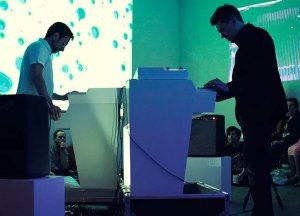 |
Robby Grant and Jonathan Kirkscey seem to be well-known on the Memphis scene, although I don't know the full story behind their Mellotron Duet project. Suffice to say that the duo wrote seven compositions 'arranged and written for shows at Crosstown Arts - April 16th and 17th, 2016', performed on two of Winston Eggleston's M400s (one of which he may've built himself) and two digital M4000Ds. I can't work out how serious they're being when they call this 'the first Mellotron duet concert'; do they mean 'the first duet for Mellotrons played by us', or 'the first ever concert for two Mellotrons'? If the latter, it's quite sweetly naïve, but may I refer you to Tangerine Dream? Four (or five, depending on how you're counting) Mellotrons on stage at once, late '70s, sometimes played simultaneously, never mind loads of other multiple-Mellotron performances, not least two of my own.
The actual material owes little to the worlds of classical music or progressive rock, coming more from the minimalist and post-rock areas, an obvious reference point being Philip Glass, his 'compositions based around shifting arpeggios' technique being used more than once here. Incidentally, although the compositions were written for performance, we seem to be hearing studio versions on the record. These guys clearly know what they're doing, overcoming the potential tedium (for an audience unacquainted with the oddness of entirely Mellotron-generated music) by keeping it varied. Sound FX-crazy opener The Green Sword reminds me of an album of which I'm quite sure these two are entirely unacquainted: Chuck Minuto, a.k.a. Celluloid's completely mad Neptune, from 1983, while Joan Folds Towels takes that Glass influence and runs with it over its eight-minute length. Moving Strings uses the MkII patch of the same name (via a digital machine, of course), giving it a strange, wartime feel, Naked As A Jaybird touches on Disney territory and Take The Old Bridge is based around the MkII flamenco guitar phrases, albeit not the 'Bungalow Bill' one.
So what's played on what? Film of the live event gives us some idea. I suspect that most of the strings and cellos are real, while the flutes vary from track to track, depending on how they're being used; for example, the arpeggiated, distorted flutes on Joan Folds Towels are real (backed up by video evidence, here), but I'd imagine the fast, clean flute arpeggios on Enemies Til Death are samples. Sound FX, percussion and almost anything rhythmic (or played particularly rhythmically) are samples, as are the vibes and MkII rhythms and musical phrases. So why only TTT½? While every sound used is Mellotron-generated, an awful lot of them are from the digital machines; as regular readers will know, you can slather as much sampled Mellotron onto your records as you like, but it don't count fer shit roun' these parts. In fairness, they were never going to be able to play these pieces as they were written on any number of genuine Mellotrons; Grant and Kirkscey should be (and, as far as I'm concerned, are) applauded for this project; here's hoping they repeat the endeavour and soon.
Official Jonathan Kirkscey site
See: Mellotron Variations
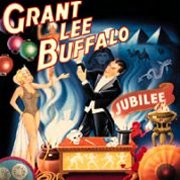 |
Jubilee (1998, 59.10) ***/T½ |
|
| APB Seconds Change Your Tune Testimony Truly, Truly SuperSloMotion Fine How'd Ya Do Come to Mama |
She Say 8 Mile Road Everybody Needs a Little Sanctuary My My My Crooked Dice Jubilee The Shallow End |
|
Current availability:
Mellotron/Chamberlin used:
Grant-Lee Phillips' Grant Lee Buffalo's fourth and last album, '98's Jubilee, is apparently the point at which their disparate influences come together, producing an all-American blend of rock, folk, country, vaudeville etc. etc. It's not my fave kind of stuff, if truth be told, so I'll just concentrate on its tape replay aspects.
Phillips plays Mellotron, while the ubiquitous Jon Brion adds Chamberlin in places, although you feel that a few more tracks may have benefitted from their inclusion. Testimony has some background flutes, while all I can hear in Fine How'd Ya Do are some strings in the middle 'phased' section and cellos, inaudible until the end. The title track has Chamby brass (very subtle and unlike anything a Mellotron would do), while The Shallow End sounds like cellos again, though it's pretty hard to tell, to be honest. So; I can't wildly recommend this on either musical or Mellotronic grounds, but there are plenty who would, so maybe you should take their advice instead.
See: Samples etc. | Grant-Lee Phillips
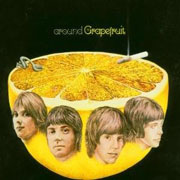 |
Around Grapefruit (1968, 34.23) ***½/T |
|
| Another Game Yesterday's Sunshine Elevator Yes C'mon Marianne Lullaby Round Going Round Dear Delilah |
This Little Man Ain't it Good Theme for Twiggy Someday Soon |
|
Current availability:
Mellotron used:
Grapefruit are another UK psych obscurity, although, unlike many of their compatriots, they managed to release not one, but two albums, 1968's Around Grapefruit and the following year's listless Deep Water. Their debut is a good slice (sorry) of contemporaneous pop/psych, almost all of which could've passed muster as singles and indeed, two tracks were hits, Dear Delilah actually reaching no. 21.
I've no idea who plays the Mellotron on the instrumental Theme For Twiggy, but it's an excellent track, possibly the album's highlight, with a great Mellotron strings part. Very much of its time, but that's no bad thing, unless, of course, your time happens to be any time from the early '80s on... Also mandolins on Elevator (thanks, Chris), though nowt essential. Overall, good album, but don't chuck out your copy of Pet Sounds just yet. Rock trivia note: bassist Alex Young (1938-1997) was brother to AC/DC's Malcolm and Angus, and The Easybeats's George.
 |
7" (1983) ***½/TT Sleepdancer Our Planet Ocean |
Current availability:
Mellotron used:
British Columbia's Graphics, featuring three Gogo brothers, John, Paul and Tom, are described in their Discogs entry as 'progressive rock', which, of course, isn't a genre best-suited to the single. Sadly, their lone platter, the self-released Sleepdancer b/w Our Planet Ocean, was exactly that, although it's a brave attempt to squeeze complex music into a shorter format. Sleepdancer, presumably in an attempt to be commercial, early '80s style, features a couple of synthpop tropes (notably, duh, synths), while Our Planet Ocean's more of a reflective number, most likely a more compact version of their preferred style.
Paul Gogo (later of Canuck legends Trooper) plays his own M400 on the single, with background choirs and more upfront strings on the 'A' and more choirs on the flip. Gogo has also released a slew of Mellotron-featuring albums under various monickers, including Groovy Man, Super Groovy Band/Super Groovy Gogo and his actual name. I've also just discovered that he formed Jesus Music, a 'contemporary faith music group', but perhaps we can overlook that one, eh?
See: Super Groovy Band
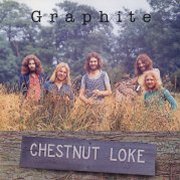 |
Chestnut Loke (1996, recorded 1970-74, 74.29) ***/T |
|
| Starflight Over the Skies Chestnut Loke Tide Freedom A Dragon's Tale Dawn (Morning Has Come) Set it Free Out in the Rain |
Don't You Think it's Kinda Strange In Our Country Home Evil Arms Spring Autumn She's Gone Away I'm Feeling Low Freedom (Reprise) |
|
Current availability:
Mellotron used:
Graphite are another of those 'almost lost forever' bands whose works have been resurrected, this time by the estimable Audio Archives label. Sadly, unlike their long-overdue issue of the second Fantasy album, Chestnut Loke is all a bit ordinary, really. It's difficult to categorise the music, though not in a particularly good way; laid-back rock, but with an English rather than an American approach is the nearest I can get. In other words, this isn't terribly exciting, but doesn't have either the complexity or the melodic strength to really appeal to the prog crowd. It's perfectly pleasant, but that's rather damning it with faint praise, isn't it? The lyrics are of the 'a little too cosmic' variety, too (see: Starflight Over The Skies and A Dragon's Tale, in particular), dating the music almost to the year.
I can't tell for certain, but it looks like this is material that has never been previously released, so it's not an album with bonus tracks, more a new album of various studio recordings. Most of the tracks just drift along pleasantly, with considerable Fender Rhodes input, but both the title track and Freedom feature a bit of the old Mellotron strings, to passable effect, played by Chris Gore. I'm sorry I can't be more positive about this, as I applaud the efforts of labels Like Audio Archives, but it's really not the sort of album that's likely to grab anyone much, I'm afraid. Of its time, really. File under 'play once, then shelve'.
 |
Gratitude (2005, 43.15) **½/T½ |
|
| Drive Away Last All in a Row The Greatest Wonder This is the Part Feel Alright Sadie Someone to Love |
Another Division Street If Ever Dream, Again Begin Again |
|
Current availability:
Chamberlin used:
Gratitude were a one-off indie outfit with powerpop tendencies, formed by members of Crumb, Far and The Get Up Kids. Their eponymous 2005 release treads an uneasy line between the two styles, spoiling things with 'big indie' nonsense like The Greatest Wonder and Sadie, ending up sounding exactly like a million other bands. On the positive side, most of the album's upbeat enough to make for an inoffensive, if undemanding listen, which is so very much better than so much of the dross clogging up landfills worldwide that I can barely begin to describe it. Still only gets **½, though.
Yup, it's Patrick Warren on Chamberlin again, with strings on The Greatest Wonder, Feel Alright, Another Division Street, If Ever, Dream, Again and Begin Again, the most obvious use being on If Ever, the rest of it sounding like it could come from pretty much any keyboard equipped with a string sound, to be honest. Powerpop fans may go for Gratitude, although it's really only tangentially within the genre's remit, while Mellotron nuts will find it frustratingly light on the tape-replay front, despite a clear half of its tracks containing Chamberlin. B-, could do better. Oh, you can't; you've split.
See: Crumb | Far | The Get Up Kids
 |
Lights Out (2012, 35.33) ***/½An Industry of MurderSlow Motion Countdown Seven Seven The Suits, the Law & the Uniforms Endless Night Hard Times Lovin' Goliath Fool in the End 20/20 (Tunnel Vision) |
Current availability:
Mellotron used:
The casual observer might label Sweden's Graveyard 'heavy metal'. Wrong. If ever a band deserved the appellation 'hard rock', it's Graveyard; the bluesy, lightly distorted sound they utilise on their third release, 2012's Lights Out, harks right back to 1972. Counter-intuitively, the fact that the band all look like Dave Brock actually helps matters, which isn't something you can say very often. OK, ever. Their material channels Humble Pie, The Groundhogs and lesser lights such as Leafhound (spot the occasional Budgie-isms on Endless Night); solid, riff-heavy-yet-melodic rock, without a hint of any hideous '80s AORisms. Is it actually any good, though? Not bad, not brilliant, almost certainly better live; rather like most of their influences, in other words. Best tracks? Probably opener An Industry Of Murder and the bluesy Hard Times Lovin', but I'll probably say something different tomorrow.
Nils Dahl helps out on keys, including Mellotron on Slow Motion Countdown, with a string part buried in the mix. So; worth the effort? Do you like your rock relentlessly retro? If so, then a full-on 'yes', but don't even think about it if you're partial to even the tiniest hint of 'glam', 'cos you won't find it here.
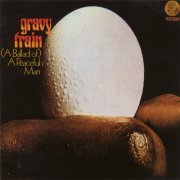 |
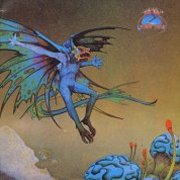
(A Ballad of) a Peaceful Man (1971, 39.08) ***½/TAlone in Georgia(A Ballad of) a Peaceful Man Jule's Delight Messenger Can Anybody Hear Me Old Tin Box Won't Talk About it Home Again |
 |
Staircase to the Day (1974, 43.59) ***/TStarbright StarlightBring My Life on Back to Me Never Wanted You Staircase to the Day Going for a Quick One The Last Day Evening of My Life Busted in Schenectady |
Current availability:
Mellotrons used:
Gravy Train were a Manchester-based band whose debut, Gravy Train (****), is an enjoyable blend of early Jethro Tull and, er, slightly later Jethro Tull. Its flute-heavy blues-based style is a little dated now, but it's got loads of energy, while the writing's excellent, although they never really equalled it. By 1971's (A Ballad of) a Peaceful Man they were almost unrecognisable as the same outfit; a more mellow sound, replete with (real) string parts on many of the songs. The only Mellotron track here is Messenger, with strings, possibly fed through a Leslie, along with the guitar part. The album's no less dated than its predecessor, but hasn't aged as well, I'm afraid, although Messenger is actually a decent enough song.
I don't know why, but after spitting out two albums in such quick succession, there was a three-year gap before Second Birth (***½) (label hassles?), not dissimilar to their second effort, with noticeably more keyboards. Gravy Train's last album was Staircase to the Day, business as usual, the band basically rehashing their previous two albums, although the formula was beginning to wear a little thin by this time. There's a minute or so of Mellotron strings on the title track, but once again, one track and that's yer lot.
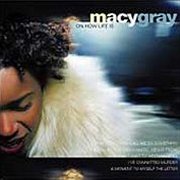 |
On How Life is (1999, 44.55) **½/TT |
|
| Why Didn't You Call Me Do Something Caligula I Try Sex-O-Matic Venus Freak I Can't Wait to Meetchu Still I've Committed Murder |
A Moment to Myself The Letter |
|
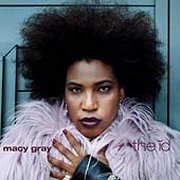 |
The Id (2001, 58.25) **½/TTT |
|
| Relating to a Psychopath Boo Sexual Revolution Hey Young World Part 2 Sweet Baby Harry Gimme All Your Lovin' or I Will Kill You Don't Come Around |
My Nutmeg Phantasy Freak Like Me Oblivion Forgiveness Blowin' Up Your Speakers Shed |
|
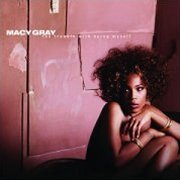 |
The Trouble With Being Myself (2003, 49.50) ***/T½ |
|
| When I See You It Ain't the Money She Ain't Right for You Things That Made Me Change Come Together She Don't Write Songs About You Jesus for a Day My Fondest Childhood Memories |
Happiness Speechless Screamin' Every Now and Then |
|
 |
Epic Records: A Season of Soul & Sounds (2001) ***/TT[Macy Gray contribute]Winter Wonderland |
Current availability:
Chamberlins used:
Macy Gray broke through well on the wrong side of thirty; it's a shame that her chosen oeuvre is so desperately dull, although there do actually seem to be some tunes on her albums, which is more than I can say for many of her contemporaries. For whatever reason, she's soaked all her early albums in Chamberlin. 1999's On How Life is has Jon Brion, Patrick Warren and Jeremy Ruzumna on the ol' tape replay, two of whom you'll recognise from numerous other projects; although there are fairly obvious strings on Do Something and I Try, I'm at a bit of a loss as to where it might be on, say, Caligula. It's that 'Chamberlin Effect' again, isn't it? Stick it on tape and watch it disappear in the mix! All in all, despite having six tracks'-worth of Chamby, I really wouldn't go too far out of your way for this one. Next album up, the following year's The Id, sounds more upbeat than its predecessor, but, other than that, it's business as usual. Chamberlin by Zac Rae this time round, with strings, flutes and brass all over the place, far better produced this time round, clearly audible on almost every relevant track, with some interesting parts to boot.
Third time round, The Trouble With Being Myself, opens with a full-on Jackson 5-style '70s funk groove on When I See You, although, by second track in, It Ain't The Money, it seems nothing's changed, with tedious hip-hop style rapping over a rather tuneless effort. Or hasn't it? It turns out that most of the album is fairly palatable, given its overall style, to the point where it didn't really offend me at all, certainly compared to some 'melodic rock' rubbish I've just subjected myself to... Chamby (from Rae and Ruzumna) on several tracks. A string part opens She Ain't Right For You, carrying on throughout the song, sounding an awful lot like real strings, which may be part of the instrument's appeal and its problem, unless, that is, it's actually real strings... More strings in Things That Made Me Change and strings and cellos in the lyrically amusing My Fondest Childhood Memories and the other highlighted tracks, although in a rather less interesting manner than on her previous effort.
See: Samples etc.
 |
Ro Sham Bo (1994, 59.06) ****/TTT |
|
| Very Best Years Everybody's World Same Thing Friend of Mine Is it Now Yet Oh Well Maybe Nothing Between Us Both Belong |
Nothing Not Long for This World Spooky All You Wanted No One Can Hurt Me |
|
Current availability:
Chamberlin used:
The short-lived Grays consisted of four multi-instrumentalists, some of whose names will be familiar to you; Jon Brion, Jason Falkner (of the mighty Jellyfish), Buddy Judge and Dan McCarroll. It seems that all concerned were sick of the bands they were in and formed The Grays as an experiment in leaderless democracy, although, sadly, it only lasted for one album. As you'd expect, Ro Sham Bo is stuffed with intelligent pop tunes, Very Best Years being a 'radio hit', which presumably means it didn't translate into sales. In fact, there isn't a bad track on the album, which is an achievement in itself.
Brion and Falkner both play Chamberlin, with more flutes than anything, with very obvious use on Is It Now Yet, amongst others. Oh Well Maybe has some pretty upfront strings, but given that we've entered the Wacky World of Chamberlins, there could be all sorts of stuff going on here that I haven't spotted (again). I'm assuming the cellos on a couple of tracks are Chamby; actually, on All You Wanted, there seems to be a polyphonic part that gives the game away. Anyway, much Chamby all round, though subtly.
See: Jon Brion | Jellyfish | Buddy Judge
 |
Carnival of Rust (2012, 29.29) ***½/TT½ |
|
| This Old Ferris Wheel Show Yourself 1958 Dead Man's Car Fold Me Up Carnival of Rust Mr. Liar Nobody Knows |
Sophie's Gone Dark Horizon |
|
 |
Christopher Green (2013, 13.32) ***½/TT½Losing GameStill Running Imposter Last Train to Nowhere Untitled |
 |
Closer (2020, 11.53) ***½/TTMarieCloser Powder Blue Eyes People on TV |
Current availability:
Mellotrons used:
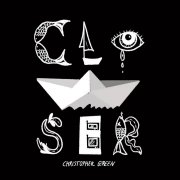
So, is Christopher Green Chris Verheijen's international nom de plume or is it the name of his band, in which case, this should file under C? I'll leave this here until I find out for certain. 2012's self-released Carnival of Rust is an Americana-infused singer-songwriter album, highlights including jaunty opener This Old Ferris Wheel, the haunting 1958 and Dead Man's Car, but little, if anything here will disappoint fans of the style. Ruud Peeters plays his M400, with upfront flutes and brass on Show Yourself, strings and cellos on Dead Man's Car, tentative at first, before a 'solo spot', two minutes in, strings on Nobody Knows (under real violin) and background choirs on Sophie's Gone.
The following year's Christopher Green EP moves away from Americana and closer to the indie mainstream, albeit in a good way, at its best on Imposter and Untitled, possibly. Peeters on his M400 again, with flutes and strings on Still Running, strings on Imposter, which opens with another strings 'solo spot', while brief, instrumental closer Untitled (an expansion of Imposter's intro) is, effectively, a Mellotron solo, strings, cellos and choirs duking it out for sonic supremacy. After a lengthy wait, 2020's brief Closer EP carries on in a similar vein, at its best on opener Marie and closer People on TV. Peeters' Mellotron on two tracks, with building flutes leading into the title track, more of the same further in and 'arranged' strings on Powder Blue Eyes.