





|
|
|
|
||
|
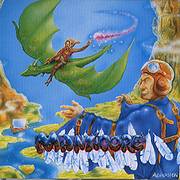 |
Time to Fly (1993, 62.58) ***/TTTT |
||
| New Foundation Running With the Stars Is it All Too Late? Future is the Time (Hymn) The Manticore Theme Private Show The Maiden The Way of the Seasons |
Sin of Origin Time to Fly |
||
 |
This is an Orange: A Compilation of Scandinavian Progressive Rock (1995, 11.05) ***/T½[Manticore contribute]The Maiden |
Current availability:
Mellotrons used:
Manticore appeared in 1993 with their lone album (until 2018's comeback, Next Step: Flight 19), Time to Fly, which, unsurprisingly, has a heavy ELP bent to it and late-period ELP at that, although Yes turn up as well (spot the shameless Yours Is No Disgrace rip on Running With The Stars). Unlike their Swedish contemporaries Änglagård, Anekdoten and Landberk, Manticore had no problem with using digital equipment alongside the analogue, so some rather nasty pseudo-brass sounds (very Emerson) are to be heard alongside the Hammond and Mellotron. While passable enough, the material's quite simplistic, more than a hint of '80s neo- rearing its ugly head (The Manticore Theme has more than a little IQ about it), although they had quite a pleasing lushness in places.
Erik Olsson and Ulf Holmberg play Mellotron, not only on most tracks, but on most of most tracks; mostly strings, although the flutes creep through here and there, while the choirs turn up more towards the end of the album. Not many specific highlights, although Future Is The Time (Hymn) is stuffed with choir chords and does actually has a slightly hymnal quality to it. This is actually more a Mellotron fan's album than one for the heavy-duty progheads amongst you, musically somewhat predictable, its digital synth use serving only to diminish the overall sound. If you can track down the considerable rarity This is an Orange: A Compilation of Scandinavian Progressive Rock, there's a different version of The Maiden on it, with Mellotron this time.
See: Samples etc. | This is an Orange
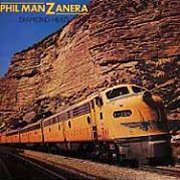 |
Diamond Head (1975, 42.26) ***½/½FonteraDiamond Head Big Day The Flex Same Time Next Week Miss Shapiro East of Echo Lagrima Alma |
Current availability:
Mellotron used:
Manzanera, is, of course, guitarist with art-rock gods Roxy Music, which shouldn't automatically qualify him to make solo albums. Diamond Head isn't a bad record, but its greatest achievement is as naming inspiration for the superb British band of the same name. It's a bit of a mish-mash, musically, to be honest, veering between Spanish-vocal Latin rock (Fontera), funkyish stuff (The Flex) and more progressive material (Big Day, Miss Shapiro). Having hundreds of his mates play on it doesn't really help, giving the whole affair a lack of much-needed cohesion, although Roxy's Paul Thompson and (then-current) bassist John Wetton guest on most tracks.
Wetton's responsible for the album's only Mellotron interjection, a couple of string chords on Same Time Next Week, which really doesn't qualify it for Mellotron classic status... Not rubbish, but a long way from 'special', too.
See: Roxy Music | John Wetton
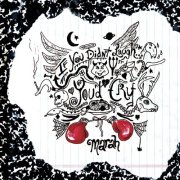 |
If You Didn't Laugh, You'd Cry (2005, 41.28) ***/T |
|
| The Closer The Hustle City of Dreams Fat Boy Sooner or Later Out of Tune Demon of White Sadness The Dishwasher's Dreams |
Poor People Walt Whitman Bridge The Apartment The Sooner or Later Interlude |
|
Current availability:
Mellotron used:
Garage-band Marah formed in the early '90s and spent several years 'paying their dues', releasing six albums in seven years before 2005's If You Didn't Laugh, You'd Cry. It sits somewhere in between Americana and rockabilly (not as different as they may seem), typified by The Hustle and The Dishwasher's Dreams.
Kirk Henderson plays real-sounding Mellotron, with a flute line on City Of Dreams (it actually starts at the end of The Hustle, but is clearly meant to be part of the following track) and very background flutes on Demon of White Sadness.
See: Samples etc.
 |
Savage Sleep (1991, 29.46) ***½/T |
|
| Intro Please Come Down Love's Just Begun How Much You Cry Sickness Can't Be Myself Girl With No Name You're Never Gonna Hold Me |
Never Existed You Don't Have to Cry Lucifer Sam/Interstellar Overdrive |
|
 |
Agent Invisible (1992, 41.11) ***/TT |
|
| The Rise It's My Time Writing on My Wall Hit on the Head Shadows Morning Rain Too Many Times Castles |
Word to the Wise A Clue Go Back Home Trip to Nowhere Angel of the Night |
|
 |
Adventures in Mutation (1995, 50.05) ***½/T½ |
|
| Tear it Down No One Understands You A Little Piece of Heaven Paradise Aging Years I Wonder Why Bad Girl Out the Door |
Green Back Dollar I Know Nothing Instrumetal Already Gone Library of Alexandria World on Fire River in Your Mind Goin' Somewhere |
|
Current availability:
Mellotrons used:
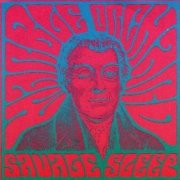
Named for a slang term for a cemetery, Marble Orchard were a Portland, Oregon-based psychedelic trio (sometimes quartet), releasing their first single in 1990, followed by several more singles, three albums and a handful of compilation appearances. Since their demise, drummer Steve "Froth" Frothingham has gone on to greater acclaim with the mighty Bigelf, keeping one facet of his old band's oeuvre alive. Their debut longish-player, 1991's Savage Sleep, is actually shorter than current releases I've seen described as 'EPs', but eleven tracks looks like an album to me... It displays the band's superb pick'n'mix approach to the psych canon, opening with the backwards Intro before lurching into the chugging Please Come Down, while Love's Just Begun is '60s Byrdsiana, Sickness is more Stooges, Can't Be Myself is surf-metal ... You probably get the picture. Best track? Whew... Storming early Floyd one/two Lucifer Sam/Interstellar Overdrive segue, perhaps? Froth doubles on his own Mellotron, although sadly only on one track, with strings on Please Come Down.
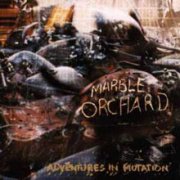
The following year's Agent Invisible ups the ante somewhat by going full-on garage rock, at its best on the propulsive It's My Time, the organ-driven Morning Rain and the slowburn Go Back Home, although I've knocked half a star for lack of variety. Froth on Mellotron again, with a heavily-reverbed string line running through Shadows, doomy chordal strings on Word To The Wise and an odd choir part on closer Angel Of The Night. 1995's Adventures in Mutation is a heavier effort than their debut, the Byrdsian element relegated to a supporting role. Highlights include punkoid opener Tear It Down (could almost be The Damned) and Paradise's unusual twee-melody-over-garage-backing crossover, while Already Gone rocks like a bastard and the slow, trippy Library Of Alexandria is a serious contender for 'best track'. Froth's Mellotron is slightly more evident this time round, with flutes all over I Wonder Why, complete with a lovely solo part at the end and suitably Arabic strings on Library Of Alexandria.
Are Marble Orchard worth tracking down? I suspect they're one of those bands who need a really good compilation, although, given that said albums never fully satisfy anyone, maybe they just need a full reissue programme, although (writing in 2020), the CD reissue boom is long over. Vinyl reissues? Suffice to say, both of these records are worth the effort for garage/psych fans looking for something new, all assuming you can track them down. I've no idea when I might be able to get hold of a copy of Agent Invisible; it was only ever released on vinyl, making it that much harder to copy, probably (and unintentionally) to the band's advantage. I suppose it may turn up on a blog or YouTube sometime, but '90s albums are often hard to find; too 'new' to be considered 'classic', yet simultaneously far too old to be in any way current. Oh well, odder things have surfaced. Incidentally, many thanks to Ian for providing my review copies.
See: Bigelf
 |
Rock Reflections (1977, 30.10) **½/T½ |
|
| Who's Rocking the Boat Out of Love A Race at the Opera Mersey Light Essoldo Rock Southern Comfort Cry Mama Cry Digger Jig |
Nashville Nursery Shortcut to Heaven Ghostwriters in the Sky Dee Blues Shadow Boxing |
|
Current availability:
Mellotron used:
Well, here's a first for this site: library music. I'm sure you all know what it is, but just in case, library music, a.k.a. production music, is music recorded specifically for broadcast use, performers and frequently composers waiving all rights to royalties. Most performers are anonymous sessioneers, although I believe some higher-profile names have dabbled over the years, not least über-guitarist Gordon Giltrap. While some of this stuff has a cult following, not least 'crate diggers' looking for a previously-unheard breakbeat, it has to be said that the bulk of it falls into the 'half-arsed background music' category, of little use to man or beast.
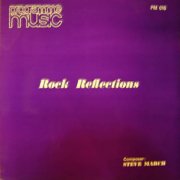
I can't say I know an awful lot about Steve March. One report has it that he's the son of legendary US jazz singer Mel Tormé; Tormé had a guitarist son called Steve, whose website refers to him as 'Steve March Tormé', although it seems more likely he's a British session player. Whoever he is, he recorded a library album in 1977 called Rock Reflections; while less bland than some, the bulk of it's a fairly pointless listen, consisting largely of pastiches of well-known songs backed by the dullest drummer in the world. March's own contributions are reasonably feisty, but the material's tedious enough to overwhelm any positive feelings you may develop for his style. Who's Rocking The Boat (ho ho) is a Pinball Wizard rewrite, Ghostwriters In The Sky (ho ho again) is The Shadows and Nashville Nursery is country-by-numbers, leaving A Race At The Opera (ho ho once more) as the album's most ambitious piece, March taking on Queen's Brian May in the multiple-guitar harmony department, although his approach is, er, rather lacking in the finesse department.
The unknown keyboard player (March?) adds Mellotron to a handful of tracks, with phased strings on Out Of Love and more normal ones on Shadow Boxing, his most upfront use being on Ghostwriters In The Sky, with some high-in-the-mix flutes that leave you in no doubt as to what you're hearing. Well, I may never review another library record, or I may suddenly tap into a seam of Mellotron Madness in the library; who knows? You're unlikely to find this album very easily and I have to say that you really shouldn't be that bothered; more of a curio than a genuine musical experience, with only a little Mellotronic input.
 |
Disposable Friend (2003, 39.10) ***/½ |
|
| Make You Happy Kickback, Turn Around $5 Poor Little Girl Give Up Better Off Heard Enough Iron |
Your Way Dull One of Them Don't Think Disposable Friend |
|
Current availability:
Mellotron used:
Try as I might, I haven't been able to locate more than one full-lengther by Eric Marcos & Normal Noises, 2003's Disposable Friend. To be brutally honest, it's a thoroughly ordinary alt.rock effort, already rather dated by the early 2000s, at its possible best on upbeat opener Make You Happy, Give Up and Better Off.
Mike Gent plays what may well be Fort Apache studio's Mellotron, if only just, a choir chord kicking off Dull and another brief part around thirty seconds in, making this barely worth even a half 'T'. Disposable Friend may've done better in the mid-'90s, but its vaguely pop/punk moves were quickly shifting out of fashion by the time it appeared. File under 'average'.
 |
Marcus (1976, 43.23) ****/TTBlack MagicSalmon Ball Kelly Gypsy Fever Pillow Stars Highschool Ladies Streetcorner Babies Dream Wheel Rise Unto Falcon |
Current availability:
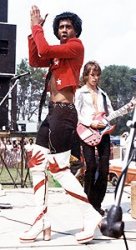 |
Mellotron used:
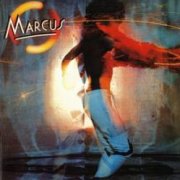
Marcus were one of those 'one-off' American bands from the mid-'70s, signed by a major (UA in this case), then not selling enough albums to be retained. Unlike most of the rest, though, Marcus had a secret weapon that you would've thought would ensure a little more longevity: Marcus Malone, a black guy with a great voice (rare live shot right), who was perfectly happy singing rock. Marcus is a damn' good album, although it is a little 'of its time' (particularly with regard to the frequently sexist lyrics), I suppose; largely mid-paced hard rock, with much duel-lead work from the three guitarists and the sort of song structures that were (sadly) just about to go out of fashion.
The album's credits are odd, to be honest; only the vocalist, guitarists and drummer are mentioned, Cactus' Tim Bogert guesting on bass on a couple of tracks, with no mention of who played the rest of the bass or any of the keyboards. There's a nice synth solo on opener Black Magic, then, of course, some Mellotron on a couple of tracks. Kelly is the album's ballad, with good flute and strings work, while there may be a tiny burst of choir at the end of Gypsy Fever, but the album's piéce de resistance is its final track, the superbly-titled Rise Unto Falcon. This is a real epic hard rock classic; great arrangement, excellent guitar work, Mellotron flutes and strings to die for. Brilliant.
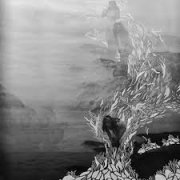 |
All Around Us (2015, 42.35) ***/½Follow itTake Care of Me Friend Tonight Dani Surrender I Don't Belong to You Everything is New All Around Us Further |
Current availability:
Mellotron used:
My first thought, on hearing Briana Marela's third album, 2015's All Around Us, was 'Sigur Rós'. It turns out it was recorded in Iceland and produced by their regular guy, Alex Somers, so no surprise there. It's a gentler record than your average Sigur album, although we get a couple of bursts of their crescendo rock, notably on opener Follow It and Friend Tonight.
Marela and Somers play what I presume to be Sigur Rós' M4000, with flutes on Surrender, although, I have to say, I can't spot it anywhere else, all other keyboard work being of the 'distant and organlike' variety. I'm afraid I found this rather dull, but I can imagine those into the more experimental end of the indie spectrum may get something from it.
See: Sigur Rós
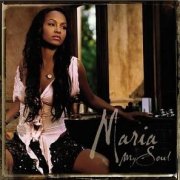 |
My Soul (2003, 52.52) *½/T |
|
| Lonely I Give, You Take My Soul Nowadays Coffee in Bed You, Me and She Interlude (Dreams From the Hills) Intoxicated |
Weakness Always Simplified Hate to Love You Miss You |
|
Current availability:
Chamberlin used:
Maria (Jensen) is a Danish-born R&B singer, although she apparently 'grew up in different parts of Europe', so I presume she isn't based in her country of birth. Anyway, her sole album to date, 2003's My Soul, is as tepid a slice of entirely unoriginal R&B as you can imagine (least crummy track: Simplified) with only one even slightly redeeming feature. You've guessed it...
Patrick Warren plays Chamberlin on two definite tracks: the brief Interlude (Dreams From The Hills) is essentially a Chamby strings solo spot and there's a flute part on Simplified. Possibly more, but you know, it's a Chamberlin... Awful album, but one good instrumental Chamby highlight.
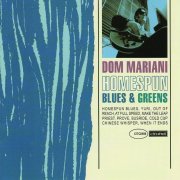 |
Homespun Blues & Greens (2004, 42.50) ***½/T |
|
| Homespun Blues Yuri Out of Reach At Full Speed Make the Leap Priest Prove Bus Ride |
Cold Cup Chinese Whispers When it Ends |
|
Current availability:
Chamberlin used:
Dom Mariani has worked his way through several Western Australian outfits, notably late '80s powerpop heroes The Stems, 2004's Homespun Blues & Greens being his first solo release. The opening title track reminds me of a smoother version of The Saints' later work, from the '80s, other highlights including Prove and Bus Ride.
Powerpop legend (and Fidelitorium Studios engineer) Mitch Easter plays the studio (his?) Chamberlin M1 on At Full Speed (Flamin' Groovies quote?), with a string section-esque part that could almost be, er a string section. While not 'pure' powerpop, this is a fine album, if a little thin on the tape-replay front.
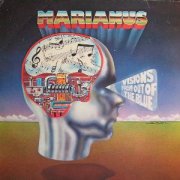 |
Visions From Out of the Blue (1981, 37.32) ***½/TTTTTOut of the BlueThe Change is Gonna Come Human Race, Human Race The Man From Another Planet Prelude Magical Man Ace Deuce Someone Told You a Story |
Current availability:
Mellotron used:
Boston area-based Marianus was a solo artist, as against a band, obscure enough that I can't tell you an awful lot about him, other than that 1981's oddly-titled Visions From Out of the Blue was probably his sole release. Musically, it's a real stylistic hodge-podge, the uncohesive whole being held together chiefly by Marianus' extremely mannered vocal style; think: Pavlov's Dog's David Surkamp detuned and fed through a tremolo effect, if that gives you some idea. The nearest it gets to an overall style is Pavlov's/Styx-esque pomp, epitomised by the Prelude/Magical Man one/two and superb six-minute closer Someone Told You A Story, although opener Out Of The Blue is vaguely glammy, Human Race, Human Race is sequencer/synth-driven, with 'playground chorus' backing vocals, while Ace Deuce is a quirky pop/rock effort. Confused? So, by the sound of it, was Marianus.
Having heard a snippet of this album (probably Prelude) on a mixtape-style CD-R years ago, I've been looking forward to tracking a copy down, while hoping it wouldn't be a disappointment. Oh no... Marianus plays the Mellotron himself, with 'lead strings' parts on most tracks, notably The Change Is Gonna Come, Human Race, Human Race, The Man From Another Planet and Magical Man, choirs added to the mix on Prelude, Magical Man and Someone Told You A Story for good measure. You know when you hear about semi-legendary, ridiculously Mellotron-heavy albums that no-one's ever heard? Well, I've just heard one. Now this has FINALLY turned up on download blogs, let's hope it stays there for long enough for you lot to grab it, or even (wait for it) gets an official CD issue. Does anyone put anything out on CD any more? Can anyone afford to? What about a WAV-quality download? Anything? Please? The music's good, but the Mellotron's magnificent. Not a disappointment.
Marillion (UK) see: |
 |
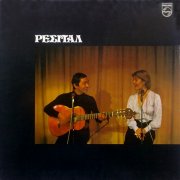 |
Resital [Disc 2] (1976, 60.40) ***/T½ |
||
| O Gelastos Mou Adelfos An Ise Antras Me Kardia Poso Pikrameni Ine i Matia Sou Leventonios Ke Mi Rotisis Pia I Teleftea Selida Kapia Mera Skeftomouna Monologoume |
Agapo Agapo Oli i Zoi Ine Ipothesi Hamogelo I Palia Edem Deka Entoles I Sinidisi Kalovoli Etouti i Vradia Zitite Pos Na Figis |
Dakri to Dakri to Pikro Ine Karavia ta Kormia Mas Me les Tragoudisti Xehasa Na Po Fovame Trelos i Palikari |
|
Current availability:
Mellotron used:
Kiriaki "Marinella" Papadopoulou and Costas Hadjis had both been stars in Greece since the '60s, so I presume pairing them up on stage was considered a win-win situation. The recording of their concert in front of a smallish audience at Skorpios on 28th March 1976 was released later that year as a three-LP set, transliterating as Resital, although how much, if any, of the material was 'traditional' is impossible to say for someone with zero knowledge of the Greek songbook. Side one is a seventeen song-segue of solo Hadjis, accompanying himself on guitar, probably the album's highpoint, its folky material well-suited to his dulcet tones and more than competent playing. Marinella appears on some of side two, still only accompanied by Hadjis, singing what sound like traditional songs, but it all goes downhill from side three on, as the band enter and the material becomes more 'Greek wedding'. The remaining four sides shift from more introspective songs to big, brassy ballads and a handful of jazz numbers, not least Deka Entoles, I Sinidisi and Xehasa Na Po, most unlikely to appeal to an international audience, but then, this was aimed at the domestic market and should probably be viewed as such.
One R. Favilli is credited with Mellotron and synth (the latter cropping up on a couple of tracks), the Mellotron used chiefly as pseudo-orchestral strings backup to a handful of acoustic instruments, principally cello, clarinet and a pair of flutes. As a result, it rarely stands out in the mix (let's face it, it was never meant to), only really sounding like a Mellotron at all in a couple of places, so despite being present on (I think) fourteen tracks, a mere T½ rating seems fair. I can't really imagine anyone other than middle-aged Greek people will gain much from this, but it features plenty of live Mellotron, albeit rather subdued, should that be your chief purchasing criterion.
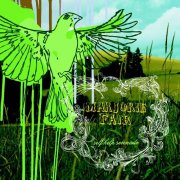 |
Self Help Serenade (2004, 54.26) */T |
|
| Don't Believe Halfway House Empty Room Stare How Can You Laugh Waves Please Don't Cracks in the Wall |
Stand in the World Hold on to You Silver Gun My Sun is Setting Over Her Magic |
|
Current availability:
Chamberlins used:
Marjorie Fair are... well, what are they, exactly? Utterly insipid, that's what. Their first album, 2004's Self Help Serenade, given that they've been compared to The Beach Boys (HOW!?), is about as wet as it's possible to get without falling off your surfboard. On the rare occasions when the music picks up slightly (notably on Waves), it's ruined by bossman Evan Slamka's horrible, soggy voice and painful lyrics. I mean, how can ANYONE write a song called My Sun Is Setting Over Her Magic and expect to be taken seriously? Maybe he doesn't. Maybe that's the whole point. Maybe the joke's on me. Doubt it, though.
Well, somebody believed this lot were worth spending money on (hey, never underestimate the general public's stupidity), bringing in both Jon Brion on Mellotron and Patrick Warren on Chamberlin, amongst many other major sessioneers. The drippy production (do you notice a preponderance of aquatic analogies here, dear reader?) hides both under waves (there I go again) of mush, although a strings swell (stop it!) in Empty Room and slightly more obvious parts in Please Don't (well, if you insist) and Stand In The World (whatever the hell that's supposed to mean) are likely to be one or the other. God, this is crud. There, I've said it. What a dreary, flaccid piece of shite. Despite the vaguely audible tape-replay here and there, please don't even think about picking this up. In fact, please don't even think about taking it if someone gives it to you, or even pays you to take it away (perfectly possible). Horrid.
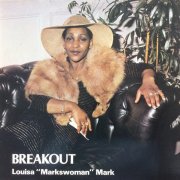 |
Breakout (1981, 39.19/47.51) **½/½ |
|
| People in Love Moving Target 6, Six Street Baby Simone Even Though You're Gone Funny Guys Keep it Like it is Dance and Feel Free |
Reunited Used to Be My Man [CD adds: Natty Go Dey Voluntarily Step it Brother Clem Gone Out] |
|
Current availability:
Mellotron used:
1981's Breakout appears to be Louisa "Markswoman" Mark's (1960-2009) lone album, a typical lovers rock reggae effort of the time, with no obvious highlights for the non-genre fan, although CD bonus instrumental Gone Out is marginally less sweet than everything else here.
With no specific credit, the Mellotron could've been played by any of Dennis Bovell, Des Charles, or Owen Gray; all we get is a handful of string chords on Keep It Like It Is, with even less of the same on CD bonus Step It Brother Clem, all flute parts (even the polyphonic ones) sounding real.
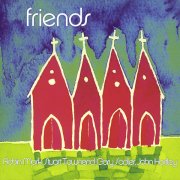 |
Friends (2001, 44.55) *½/TT |
|
| Lord of Every Heart Take Us to the River Where Truth and Mercy Meet The Way it is When Love Came Down This is the Day (6:30am) How Matchless is Your Love Every Day |
The Presence of God How Long |
|
Current availability:
Mellotron used:
2001's Friends was recorded by an international ensemble consisting of Ireland's Robin Mark, Britain's Stuart Townend and ex-pat John Hartley (of Phil & John) and American Gary Sadler. It starts off reasonably well, with the passable Lord Of Every Heart, but quickly (very quickly) descends into CCM hell, possibly at its worst on When Love Came Down and closer How Long, not that there's much in it. The trouble with this stuff is that faith is an imponderable (although I'm sure they ponder it a great deal), making their heartfelt beliefs entirely bemusing to anyone who actually gives their assertions more than a moment's thought. 'Worship' music would be less appalling were the lyrical content less gloopy, but then, it wouldn't be 'worship' music, would it?
Phil Madeira (of course) plays Mellotron, with flutes all over opener Lord Of Every Heart, cellos and flutes on Where Truth And Mercy Meet, little string swells on This Is The Day (6:30am) and cellos on The Presence Of God. There may be more near-subliminal parts scattered about, but, frankly, I don't care. Avoid, with prejudice.
 |
Absolutely Positively (1993, 59.21) *½/T |
|
| Absolutely, Positively The Party's Over Next Time You See Johnny Make it Right Soul Reviver Single-Minded Love Friends Turn My World Around |
White Dress Right Where You Are Running on Love Like a Father Should Be I'll Be a Friend to You I Give it All to You |
|
Current availability:
Mellotron used:
Kenny Marks (1950-2018) was a Christian artist, which may well bring out a Pavlovian reaction in yourself; I know it did in me... I can't work out what's going on with his 1993 release, Absolutely Positively; ostensibly a compilation, including material from a decade's-worth of albums and a couple of newies, I suspect it's all new recordings, although I'm not sure I can be bothered to do the necessary research. It doesn't start too badly, like a clean-cut John Mellencamp, maybe, with the opening title track's rootsy, Hammond-driven approach, but it all goes down the shitter soon enough, drivelly God-bothering ballad after drivelly God-bothering ballad making me lose the will to live. Worst offender? Possibly White Dress, for its particularly puke-inducing, sentimental lyric. The nearest it gets to 'good'? The title track (one of the newies) and the punchy AOR of Running On Love, but it's pretty slim pickings...
John Mark Painter does his usual Christian Mellotron thing, with flutes on closer I Give it All To You, although it's nowhere near enough to redeem the song, which is another bucket of slop. You weren't even thinking about buying this, were you? Good.
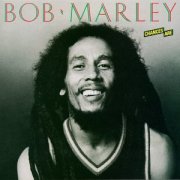 |
Chances Are (1981, recorded 1968-72, 32.23) **½/TReggae on BroadwayGonna Get You Chances Are Soul Rebel Dance Do the Reggae Mellow Mood Stay With Me I'm Hurting Inside |
Current availability:
Mellotron used:
As Bob Marley: The Complete Guide to his Music puts it, "Following Bob's death in 1981, there was an unseemly scramble among labels totally unassociated with him in his lifetime to put out something with his name on it". It seems that Chances Are was the most successful of these grubby cash-ins, a barely-over-half-hour collection of tracks recorded in the years immediately preceding his breakthrough with '73's Catch a Fire. To absolutely no-one's surprise, many of them bear little comparison with his best work, even though at least one of them was produced by reggae's top international success of the era, Johnny Nash, presumably utilising his studio band. It's not that these recordings are terrible, just generally rather uninspired, commercial pop-reggae (honourable exception: opener Reggae On Broadway), with little of Bob's later roots feel.
Nash's keys man and all-round early '70s session guy John "'Rabbit" Bundrick plays Mellotron on Dance Do The Reggae, apparently recorded in '72, string notes fading in and out of the mix in an 'orchestral substitute' kind of way, only occasionally at all obviously Mellotronic. Although Chances Are apparently leaked out on CD in the early '90s, many of its tracks are more easily available on (at best) semi-official releases such as 1999's Satisfy My Soul Jah Jah: The Complete Bob Marley & The Wailers 1967 to 1972 Part III, or the official Black Progress.
See: Johnny Nash | John "'Rabbit" Bundrick
 |
Sugarbursts & Thunderbolts (2002, 38.13) ***½/½ |
|
| Because of a Girl If You Wouldn't Mind In Spite of Everything The Last Great Face on Earth Brighton Rock Candy Summer Death of the Party The Week That Never Was Clown College Reunion |
Camera Ready (Photo Shy) Month of Promises 100 Percent Zero Interest A New Kind of Weather |
|
Current availability:
Mellotron used:
Growing out of late '80s outfit The Convertibles, Providence, RI's The Marlowes operated for around fifteen years, releasing their last album in 2005. Its predecessor, 2002's Sugarbursts & Thunderbolts, is a rather splendid powerpop album, shining out like a beacon in the dark amongst the steaming heaps of insipid singer-songwriter dreck with which I'm usually faced. Highlights? All of it, really, although opener Because Of A Girl, Clown College Reunion and vocal/piano closer A New Kind Of Weather possibly have the edge.
Peter Linnane plays Zippah Studio's Mellotron, if only just, with faint strings on Because Of A Girl. This is why this used to live in the 'Samples' section.
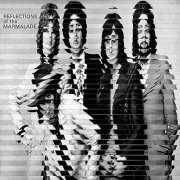 |
Reflections of the Marmalade (1970, 34.02) **½/T½ |
|
| Super Clean Jean Carolina in My Mind I'll Be Home in a Day or So And Yours is a Piece of Mine Some Other Guy Kaleidoscope Dear John Fight Say the Mighty |
Reflections of My Life Life is |
|
Current availability:
Mellotron used:
(The) Marmalade were Scotland's most successful pop group prior to The Bay City Rollers' massive (and rather inexplicable) success in the mid-'70s. Their biggest hit was with a Beatles song, Ob-La-Di, Ob-La-Da; they were principally known for their singles rather than their albums, as was and is the way with mainstream pop groups. Go on, name a Spice Girls album. I dare you. OK, Spiceworld. Now name another. Er...
[Moving swiftly on...] As a result, 1970's Reflections of the Marmalade was only their second long-player and the semi-title track was the only single, or at least hit. To be honest, it's a rather ordinary pop album of its time, with country influences on a few tracks, presumably as the band attempted to become more 'serious'. They finally do something different on Kaleidoscope, a psych-lite number featuring a brief Moog break (like a tea break, but with Moog), with more of the same on Fight Say The Mighty, complete with experimental cymbal work. No, really. Reflections Of My Life has a nice backwards guitar solo from William "Junior" Campbell; a huge hit, it's definitely one of the best tracks here, although that's no great recommendation, frankly.
Mellotron from some anonymous session muso, presumably, with pseudo-orchestral strings on the country-flavoured Carolina In My Mind, although the ones on I'll Be Home In A Day Or So are real. The only other Mellotron track is And Yours Is A Piece Of Mine, with strings and something woodwindish. My theory, given when this was recorded, is that an M300 was used, explaining the unusual string sound and the woodwind, presumably the M300's clarinet. Anyway, a far from jaw-dropping record, although assuming my theory's correct, a rare non-BJH UK example of the M300 in action.
 |
It Won't Be Soon Before Long (2007, 40.33) *½/½ |
|
| If I Never See Your Face Again Makes Me Wonder Little of Your Time Wake Up Call Won't Go Home Without You Nothing Lasts Forever Can't Stop Goodnight Goodnight |
Not Falling Apart Kiwi Better That We Break Back at Your Door |
|
 |
Hands All Over (2010, 40.26) */½ (T½) |
|
| Misery Give a Little More Stutter Don't Know Nothing Never Gonna Leave This Bed I Can't Lie Hands All Over How |
Get Back in My Life Just a Feeling Runaway Out of Goodbyes [various versions' bonus tracks include: Last Chance Never Gonna Leave This Bed (acoustic) Misery (acoustic)] |
|
Current availability:
Mellotrons used:
[Coughs, metaphorically sharpens metaphorical Pencil Of Bile] Maroon 5, eh? Ever hear 2002's Songs About Jane? No? How d'ya miss the bastard? One of the most truly horrible mainstream pop/rock bands coughed up in the 2000s, along with bloody Coldplay, their sound triggers all those murderous impulses you thought you'd left behind you. Anyway, their belated follow-up, 2007's It Won't Be Soon Before Long (?), is utterly vile; an appalling mish-mash of mainstream pop, indie and funk-lite that leaves a very nasty taste in the mouth. The only time it livens up at all is on the Latin punk (!) of Can't Stop, although Mr. Lydon's uber-sarcastic "We mean it, maaan..." could've been written for Maroon 5. Keyboard player Jesse Carmichael appears on Mellodrama: The Mellotron Movie, sadly, making a complete tit of himself as he strokes his MkVI and talks about how he 'wants to paint farm animals on it, or maybe a space scene'. Twat. Try leaving it alone, so that when you get bored with it and sell it on, its new owner won't have to undo your stupid work. Anyway, it crops up here and there on the album, with background strings on Won't Go Home Without You, flutes on Goodnight Goodnight (the strings appear to be real) and strings on Not Falling Apart, although it sounds like more real ones on closer Back At Your Door.
If you think that's bad, you clearly haven't heard the utter horror that is 2010's Hands All Over; by their own admission, it's (allegedly) "...a killer hybrid of rock, pop, funk and R&B", which is every last little bit as gruesome as that sounds. Veteran producer Robert "Mutt" Lange (remember, this man has produced AC/DC) whacks Autotune all over (Autotune All Over?) several tracks, with the band's last pathetic vestiges of rock ruthlessly expunged from the album's ultra-ultra-slick sound. No, I didn't like it. Carmichael's MkVI turns up on a handful of tracks on the 'standard' version, with strings on Stutter (one standalone note near the end), How and Get Back In My Life, more strings on Last Chance, cellos and flutes on the acoustic version of Never Gonna Leave This Bed and flutes on the acoustic Misery, all from the deluxe/iTunes version (I believe this is standard practice these days).
See: Mellodrama