




|
|
|
|
||
|
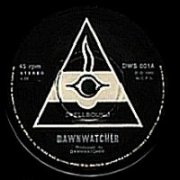 |
7" (1980) ***½/TT½ Spellbound Hall of Mirrors |
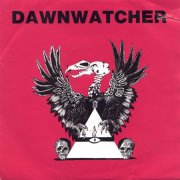 |
7" (1982) ***½/TT Backlash Salvador's Dream |
Current availability:
Mellotrons used:
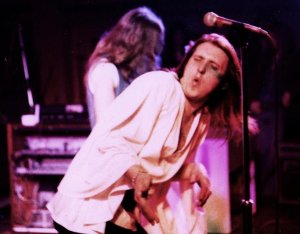 |
While trading NWoBHM (New Wave of British Heavy Metal, for what it's worth) rarities recently, I was pleased to discover Dawnwatcher, from Keighley, Yorkshire. I'd been aware of the band since '81 or so, but had never heard them, so it came as a pleasant surprise to discover that they were an epic, keyboard-heavy outfit, (very) vaguely in the same area as early Magnum. It came as an even more pleasant surprise to hear a Mellotron on some 1979 demos, although I don't feel I can review this material here, as it's never been commercially available (SEE: bootlegs). There are seven proper studio tracks on my disc, five of whose provenance I can trace, although it would be nice if this stuff were to be officially released at some point.
 |
Their first single (the preferred format for NWOBHM outfits, over the demo tape) was Spellbound, which appears to be a heavily-rewritten version of an older song. If you're familiar with the era, it sounds more like Hartlepool heroes White Spirit than anyone, with a similar organ-driven sound, although it's actually its b-side, Hall Of Mirrors, we're interested in here. A seven-minute plus song, it fits all the criteria for epic hard rock of the time, with extra added Mellotron choir in the chorus, played by Peter Darley, who frequently plays to, or sometimes beyond his capabilities, particularly on the monosynth lines. Anyway, Mellotron strings later in the song, helping to make it a minor classic of its era.
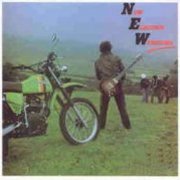
Single no. 2 and final, Backlash, came out in '82, the band no doubt struggling through financial vicissitude and general public apathy, as they didn't sound like a carbon copy of Iron bloody Maiden. If anything, Backlash is even less commercial than Spellbound, which, while laudable, wasn't guaranteed to sell copies or make megastars of the band. Again, no Mellotron on the a-side, but the flip, Salvador's Dream, opens with some gothic Hammond before (again) Mellotron choirs in the chorus and strings towards the end. Their only other officially available track of which I'm aware is Firing On All Eight from the mostly appalling New Electric Warriors compilation featuring one of the most stupid sleeves of all time, admittedly against stiff competition. Well, a guy with a (cheap) guitar slung round behind him with his back to the camera, standing next to a trials bike in a field, in the rain, watching three other blokes off in the distance, all wearing bike helmets and playing air guitar? I don't think that description does it justice, although I doubt if you can see that much detail on the image to the left. Anyway, don't blame Dawnwatcher.
See: Bootlegs
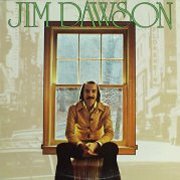 |
Jim Dawson (1974, 36.23) **/0 |
|
| The Singer Four Strong Winds Oh No, Mercy Me Montego Bay (Love and Other Things) I First Came From the Mountains The Light of Day Whatever Happened (to You and Me)..? Until I Find Someone |
Somewhere Down the Road The Woman With the Beautiful Eyes Close Your Eyes |
|
Current availability:
Mellotron used:
Jim Dawson was a New York-based folkie, although there isn't an awful lot of 'folk' in evidence on his third album, Jim Dawson. Sadly, there is an awful lot of weak-as-water singer-songwriter stuff, with over-fussy arrangements and the sort of lyrics that you could only get away with for a few years (see: The Woman With The Beautiful Eyes), 1974 being at the epicentre.
Tommy West is credited with Mellotron, but I'll be buggered if I can hear the thing anywhere. Two tracks (I First Came From The Mountains/Until I Find Someone) have real strings, leaving The Woman With The Beautiful Eyes as the only track with any uncredited string parts. Really doesn't sound like a Mellotron, though, so this one may have to remain a mystery. Anyway, a tedious, if heartfelt album, with no obvious Mellotron. Just don't.
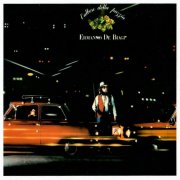 |
L'Albero della Pazzia (1979, 36.34) ***/T½ |
|
| L'Albero della Pazzia Safari Al Sole e Alla Luna Falsa Eternità Che Senso Ha Preludio Finale Canzone di Tutto e di Niente Il Tuo Silenzio |
Ciao Pagliaccio Ninna Nanna |
|
Current availability:
Mellotron used:
According to Discogs, Ermanno de Biagi released just the one album, 1979's L'Albero della Pazzia, an above-average pop/rock effort with progressive touches, many of its tracks resembling the quieter, more straightforward material you'd find on actual prog albums from earlier that decade. Highlights? The gentle opening title track, the lush Preludio Finale and Canzone Di Tutto E Di Niente's pseudo-Baroque middle eight, although little here offends.
Paolo Casa and Alberto Visentin play Mellotron, with distant, occasional choirs on the title track, chordal flutes on Al Sole E Alla Luna, heavily-reverbed choir chords on Che Senso Ha and a flute line on Canzone Di Tutto E Di Niente, although the uncredited cello on Preludio Finale sounds real, while all string parts seem to be string synth.
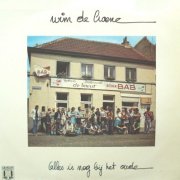 |
Alles is Nog Bij het Oude (1975, 38.14) **½/T |
|
| Tim 5 Uur Alles is Nog Bij Het Oude De Schoolstraat Onze Jeugd 't Leven is Schoon Rozerood - Oranje Rozie |
De Gokkers Drie Heren Portret Van Gisteren Piepoe (Morgten Wordt Beter) |
|
Current availability:
Mellotron used:
Wim de Craene was a Belgian singer-songwriter, who released eight albums before his tragic suicide in 1990. 1975's Alles is Nog Bij het Oude is the third, a respectable enough set, although its typical early '70s lightweight style dates it terribly. While nothing here actively offends, without understanding the lyrics, the music has little appeal on its own, making it a poor bet unless you're an obsessive era/country collector.
Jean Blaute plays Mellotron, with flutes and strings on opener Tim, flutes on the title track and very background flutes on Onze Jeugd, to passable if not exactly startling effect. Given that this is only properly available on an expensive, 7-disc set, unless you fancy searching out a download, I wouldn't bother, if I were you.
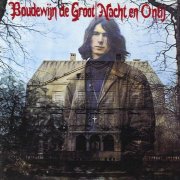 |
Nacht en Ontij (1969, 29.16) ****/½BabylonHeksen-Sabbath (Deel 1) Heksen-Sabbath (Deel 2) |
Current availability:
Mellotron used:
Nacht en Ontij was Boudewijn de Groot's fourth album, finding him in experimental mood, making the kind of record that would probably have fallen foul of British or American record company conservatism. A two-track album was entirely unheard of in 1969, one so long it was split over both sides of the vinyl. Heksen-Sabbath (Witches' Sabbath) is essentially a suite of pieces of greater or lesser orthodoxy, featuring a great many spoken-word parts, sadly indecipherable if you don't speak Dutch, although their ominous tone translates perfectly. The album's other track, the relatively brief Babylon, opens with Mellotron cellos, available on the M300 'A' set; given that said machine appeared in 1968 and only stayed in production for maybe two years, Phonogram Studios would definitely have owned theirs by '69. Most of the track features real strings, but another short Mellotron part at the end (all played by de Groot himself) completes the album's Mellotron work, all confirmed by Boudewijn himself, incidentally.
The mid-'90s CD issue of Nacht en Ontij not only rejoins the two parts of Heksen-Sabbath (they were originally split at a convenient moment of silence, anyway), but adds two (Mellotron-free) single tracks in Wie Kan Me Nog Vertellen and Aeneas Nu, oddly putting them at the beginning of the disc. A contemporaneous single, Waterdrager, is also rumoured to contain Mellotron parts, although all I can hear is a rather piping organ and a real string section. This is actually a really good album; practically unknown outside the Dutch-speaking world (er, the Netherlands?), it's inventive, original and more proto-progressive than psych. Seriously, if you love the era and your palette is jaded, you could do a great deal worse than to track a copy of this down. Recommended, though not for the Mellotron.
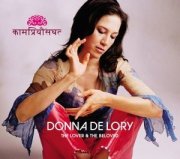 |
The Lover & the Beloved (2004, 48.52) **½/½Ganapati OmOm Nama Shivaya He Ma Durga Hare Krishna Govinda Jaya Jaya Samba Sadashiva |
Current availability:
Chamberlin used:
Donna De Lory's day job is as a singer/dancer with various mainstream acts, principally Madonna, for whom she worked for twenty years. I can't comment on her earlier solo work (she released her first album in 1993), but 2004's The Lover & the Beloved isn't the drippy singer-songwriter stuff I'd expected, being an album of Indian spiritual chants, set to a semi-Western backing. All rather unexpected, that. While harmless, it's also somewhat unengaging, drifting past the listener like the musical equivalent of clouds, which hopefully gives you some idea of the album's sound.
Zac Rae plays Chamberlin, with a recurring string part on Ganapati Om, although I can't say I spotted anything else obvious. Overall, perfectly pleasant, but not an album to really get your teeth into, being far too light and fluffy for anyone looking for anything but a temporary distraction.
 |
De Rossi e Bordini (2022, 55.43) ****/TT½Il Pozzo dei GigantiLa Porta Nel Buio Natività Cammellandia |
Current availability:
Mellotron used:
 |
|
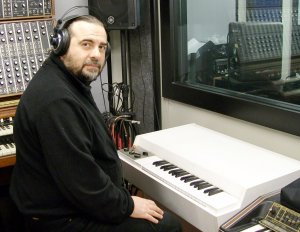
| Gianluca De Rossi at the Studiosette M400 | |
Even by the standards of the convoluted Italian scene, unravelling De Rossi e Bordini's history is a gnarly business. The duo first worked together on 2008's Dante's Inferno: the Divine Comedy, Part I, contributing Canto XXXI, Il Pozzo Dei Giganti; Gianluca De Rossi was a member of Taproban, while Carlo Bordini was the drumming half of Rustichelli & Bordini, of 1973 classic Opera Prima. They later both played in Cherry Five (Bordini had played with them, briefly, in the '70s), until that outfit split after the death of bassist Pino Sallusti. With me so far? 2022's De Rossi e Bordini is, effectively, a two-track, 'one piece per side' effort; both CD and download versions include two 'bonus' tracks, although the album proper should probably be considered to be vinyl length. None of the material was written for the project: 'side one' is a new recording of that Divine Comedy piece, while La Porta Nel Buio is from the fourth Taproban album, Strigma, and the bonus tracks are recent live versions of Opera Prima material.
Il Pozzo Dei Giganti might be the more cohesive piece of the two, making all the right '70s prog moves, enhanced by De Rossi's welcome insistence on using vintage kit, while La Porta Nel Buio is more piano-driven, reminding me strongly of an instrumental early Banco del Mutuo Soccorso. The album only features occasional vocals from De Rossi, most of Il Pozzo Dei Giganti's lyrics having been quietly dropped along the way, although Bordini contributes a spoken-word intro that, sadly, only succeeds in detracting from the overall effect, at least for non-Italian speakers. The album's most startling quality is how De Rossi carries the entire melodic component of the music on his own, especially on the live tracks, presumably un-overdubbed. How well this stands up to the better albums from the '70s scene (not least Rustichelli & Bordini's) is hard to say, but, unlike some other newer Italian progressive artists I could name, you'll hear nary a hint of nasty '80s neo-ness here.
De Rossi plays Studiosette Studio's Mellotron, with brass, what sounds like multi-overdubbed instruments at one point, thick string chords and 'stabbed' choirs on Il Pozzo Dei Giganti, and sludgy church organ on La Porta Nel Buio, with more of those choirs. It looks like they use samples live (no surprise there), so I'd imagine that's what we're hearing on closer Cammellandia. De Rossi e Bordini is a splendid effort, easily eclipsing many of their contemporaries, although writing new material for their second album will tell us how much longevity they may have.
See: Cherry Five | Taproban
 |
Cago (2002, 51.32) **½/TT |
|
| Landslide Centrifugitives Crossfades A Single Thing Short Term Investments Authentic Blue Volkswagen 10:10 am |
Things That Will Happen Again Need Losing the Lost |
|
Current availability:
Mellotron used:
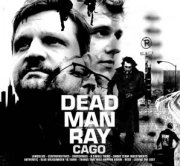
Going by their third album, 2002's Steve Albini-produced Cago, Belgians Dead Man Ray (including an ex-member of dEUS) are a run-of-the-mill indie outfit, although I can already hear their fans' faint outrage at that description wafting across the Channel. Does it have any highpoints? Not really, although Blue Volkswagen 10:10 AM, with its spoken lyrics and psychedelic feel and mildly angular closer Losing The Lost are possibly the least irritating things here.
I'm told (thanks, Peter) that Albini borrowed/hired an M400 for the recording, Wouter van Belle using it extensively, if rarely that overtly. Anyway, we get background cellos and flutes on opener Landslide, cellos on Centrifugitives, flutes and strings on Crossfades, flutes on Short Term Investments, flutes and strings on Things That Will Happen Again and, finally, cellos on Losing The Lost, although nothing stands out as much as I'd like. The band's website describes them as 'giv[ing] itself an introspective break for 2004-2005, probably restarting creativity through 2006', which seems to be an optimistic way of saying, 'we've split up'. Oh well.
 |
Speak the Language (2010, 41.25) **½/T |
|
| The Language Strike Up the Band Sever City Sparks As Above, So Below These Dirty Streets Blood Thrive (in a Vague Moment) |
A Voice to Speak The Age of Fear An Unending |
|
Current availability:
Chamberlin used:
Dead Snares seems to be Jeffrey Cain's nom de plume, his debut, Speak the Language, being a kind of indie/post-rock/singer-songwriter mash-up. Better tracks include Sever and These Dirty Streets, but it's pretty slim pickings for those unattuned to Cain's style. Worst track? Dreary, five-minute instrumental closer An Unending. No contest.
Jebin Bruni (Fiona Apple, Aimee Mann, a million others) plays Chamberlin, with a sweeping string part on Strike Up The Band, although all other possibles will have to remain just that. Sorry, can't recommend this, but at least the Chamby sounds real.
 |
Porcella (2005, 39.10) ***/T½ |
|
| Debt Collection 200 Nautical Miles Sissy Blues High Prices Going Down Gore Veil So Young & So Cruel Let it All Go Work |
Oh Lord, My Heart! I Heard Your Voice By Morning, it's Gone The Banquet A Bird in the Hand is Worthless |
|
Current availability:
Mellotron used:
The Deadly Snakes are a Canadian garage rock band with a difference, that difference being that they're influenced as much by Nick Cave and Tom Waits as the usual suspects. As a result, their final album (they split the following year), 2005's Porcella (also released as a longer double LP version entitled Porcella - A Bird in the Hand is Worthless), features strange waltzes, pizzicato strings and soulful Hammond, with no two tracks sounding alike. I'm not sure if it entirely works, but it's certainly a brave attempt.
Someone calling himself Age Of Danger (a.k.a. Max McCabe-Lokos, apparently) plays Mellotron, with some very real-sounding strings on High Prices Going Down and flutes on Gore Veil (ho ho), with a repeating part that carries on after everything else stops, although all other string parts seem to be real. Overall, then, good at what it does, but I'm not convinced that the world actually needs that thing. Good try, though and a couple of decent Mellotron tracks.
 |
Deadstring Brothers (2003, 45.06) ***/T |
|
| I'm Not a Stealer 27 Hours Unbroken Entitled It Takes Love Lay Me Down Jones Street For a Time |
Such a Crime I Know You Dear The Long Black Veil |
|
Current availability:
Chamberlin used:
The Detroit-based Deadstring Brothers' eponymous debut is an album to raise the spirits of the jaded Americana fan, highlights including the ripping pedal steel work and overall vibe of opener I'm Not A Stealer, Lay Me Down and their take on grim old murder ballad The Long Black Veil, although a couple of 'trad.country' efforts (Jones Street, Such A Crime) could've been sidelined without hurting the record.
Ross Westerbur plays Chamberlin string lines on Unbroken and It Takes Love, enhancing the tracks without being in any danger of becoming the album's defining feature. While no classic, Deadstring Brothers is a very acceptable Americana effort, worth exploring for fans of the genre.
 |
Deadwood Forest (1998, 68.45) ****/TTTT |
|
| Music From God Theme for the Forest Peace Garden Living the Life in Between Remote She Was a Pretty Girl New Braunfels Pebble Stream |
Basically Nothing Better Go Back Home Heartspill Blow Away Days of Wonder Vital Commentary |
|
 |
Mellodramatic (2000, 47.51) ****½/TTTTT |
|
| The Pioneer — O L D King of the Skies The City in the Sea Dry Stolen Smile — |
The Ultraviolence Departure |
|
Current availability:
Mellotrons used:
Deadwood Forest were a Texas-based outfit with a heavy psychedelic bent to their sound; it seems the various members can't decide whether the band is in 'indefinite hiatus' or has simply split, so let's hope for the former, as at least it provides some hope. Their self-titled debut is good without being outstanding, although I suspect many of its songs will grow on me with repeated plays. There's very little 'prog' to what they were doing at the time at all, bar near-fifteen minute closer, Vital Commentary, but if you're into a sort of psychedelic singer-songwriter thing, Deadwood Forest is definitely worth a listen. Mitch Mignano plays 'organ and Mellotron' throughout and, despite a slow start on the Mellotron front, he ends up sticking it on over the half the tracks, including the aforementioned Vital Commentary, with dirty great slabs of (mainly) strings and choir and the odd burst of flute. Very nice.
Their second album, from two years later, the wittily titled Mellodramatic, is one of those records where the more you play it, the more you hear. An intriguing pot pourri of styles, it's probably best described as psychedelia-influenced progressive rock, with the occasional contemporary touch to throw you off the scent. At least two songs use percussion loops on their intros, but that late-'60s sound is rarely far away, making it an Album For All Eras, maybe. Another specific influence that crops up here and there is that of early-'90s Swedish wunderkind Änglagård; hardly surprising, given that the album is produced by their drummer Mattias Olsson, although in a 'chicken or egg' situation, it's difficult to tell whether or not the influence was there first.
It's also difficult to tell just how much Olsson influenced Mitch Mignano's Mellotron use. The band already owned their machine, but it's to be found on every single track here, with some noticeably Änglagård-like chord sequences in places. Strings, flutes, cellos, choirs all over the shop; this really is a Mellotron fan's wet dream, not to mention an excellent album. Individual highlights are hard to pick out, but opener The Pioneer is especially good and seems to best capture their eclectic mix of styles. Oh and the two '—' tracks are basically untitled instrumentals, the second of which sounds for a moment like it's going to quote 'All Things Bright and Beautiful', but thankfully doesn't.
See: Scattered Pages
 |
Country Hits of Today (1969, 28.21) **½/TT½ |
|
| Another Time, Another Place Little Arrows What Made Milwaukee Famous Your Gentle Way of Lovin' Me Two People Sounds of Goodbye Hey Jude Harper Valley P.T.A. |
Workin' on a Tug Boat Miles and Cities |
|
 |
Country Gospel (1969, 26.29) **/T |
|
| Saturday Satan, Sunday Saint Happy Tracks Higher Power The Gospel Key I Saw the Light Mama Dragged Me Off to Church Sinner Beware Precious Light |
I Wanna Live Good News |
|
Current availability:
Chamberlins used:
Legendary eccentric Gary S. Paxton (1939-2016, born Larry Wayne Stevens), a.k.a. Rusty Dean and several other noms de plume, was predominantly a country artist, also known as producer of Bobby "Boris" Pickett's Monster Mash, amongst others. He made a handful of albums as Dean in the late '60s, including 1969's Country Hits of Today, an odd combination of mainstream country and reworkings of pop hits such as Leapy Lee's Little Arrows, Jeannie C. Riley's Harper Valley P.T.A. and an obscure number called Hey Jude. Not only is the album exceedingly short, but several tracks fade well before their natural ends, trimming even more off the running time. Perhaps we should be grateful. About the best thing I can say about this is that it could be worse, but that really isn't a recommendation. Someone (most likely Paxton/Dean himself) played Chamberlin, with background strings, approximating an actual string section rather well, on opener Another Time, Another Place and Sounds Of Goodbye, properly upfront strings on Hey Jude, vibes on Two People and something unidentified on What Made Milwaukee Famous, possibly Chamby pedal steel, alongside a real one.
The same year's mercifully brief Country Gospel (Paxton was soon to find God) is at its worst on The Gospel Key, with its side-splitting spoken intro and the truly awful Mama Dragged Me Off To Church, although it's a pretty cruddy collection all round. Fairly minimal Chamby this time round, just upfront strings on opener Saturday Satan, Sunday Saint and subtler ones on closer Good News. While not quite as schlocky as some of the no-budget Christian albums on this site, this is pretty dreadful, almost (but only almost) making Country Hits of Today sound acceptable.
See: Gary S. Paxton
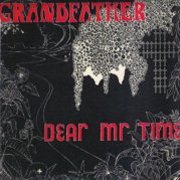 |
Grandfather (1970, 44.40) ****/T½ |
|
| Birth - the Beginning Out of Time Make Your Peace Your's Claudia Prelude (to Your Country Needs You?) Your Country Needs You? A Dawning Moonshine Years & Fortunes |
A Prayer for Her Light Up a Light On a Lonely Night Grandfather |
|
Current availability:
Mellotron used:
Dear Mr Time were an obscure British outfit who straddled the late-period psych/early prog divide with their sole album, a concept piece entitled Grandfather. It (loosely, of course, in true concept album style) tells the story of one man's life from his birth around the turn of the century to his own death, as recounted by his grandson. Birth - The Beginning makes for a pastoral enough start, but the pace picks up quickly enough as the story races towards the protagonist's experiences as a soldier in the trenches. The rest of the album veers between acoustic and electric, but quality's maintained throughout, avoiding the 'only two or three decent tracks' syndrome. On reflection, the concept actually owes a little to the Pretty Things' seminal SF Sorrow, but it's a very different album and, let's face it, a fairly universal subject.
No-one's credited with Mellotron, so I'll assume keyboard player Barry Everitt was responsible for the excellent MkII strings on Prelude (To Your Country Needs You?) and the rather shorter part in closer Grandfather. Pity they didn't use it more, but there you go. Incidentally, the cellos in Prelude are real. All in all, this is really rather good and undeservedly obscure, especially when you consider some of the third-rate stuff that's been available for years. My CD appears to've been pressed from a vinyl copy, but the surface noise isn't too bad; let's hope that more recent reissues are taken from the masters.
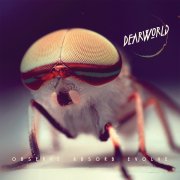 |
Observe, Absorb, Evolve (2014, 42.54) ***½/T½ |
|
| Observe Isolationation Paradox Superstar Everything You Are Absorb Symmetry Ashes Mirage |
Evolve Waster Ran Outta Love Spark Remain |
|
Current availability:
Mellotron used:
Dearworld are a four-piece Dutch 'electro rock' outfit, who successfully combine elements of electronica, synthpop, techno and even metal on 2014's Observe, Absorb, Evolve. Probably unsurprisingly, given those influences, they come across as a Lowlands Ultravox on material such as Isolationation and Everything You Are; no bad thing, as it happens, other highlights including the riffy Symmetry, the dark Ashes and the electro of Waster.
Ruud Peeters guests on his own M400, with icy, high strings, followed by cellos and lower-register strings on Mirage, more strings and flutes on Spark and distant choirs on closer Remain. All in all, a rather good little album, then, particularly if you have a yen for creative synthesis. And what's more, they're giving it away on Bandcamp. What's not to like?
 |
Forbidden Love EP (2000, 19.37) ***½/T½PhotoboothTechnicolor Girls Song for Kelly Huckaby 405 (acoustic) Company Calls Epilogue (alternate) |
Current availability:
Mellotron used:
The main thing I know about the curiously-named Death Cab for Cutie is that they pinched their name from a Bonzos track. It seems they're an 'alternative' (to what?) US outfit and the Forbidden Love EP is their third release, coming after two albums, Something About Airplanes and We Have the Facts and We're Voting Yes. Going by the EP tracks, they play a perfectly pleasant kind of semi-intelligent pop, while not really being a patch on, say, The Posies, although they're perfectly listenable, just a little unexciting. Maybe I'm missing the point.
Anyway, despite some faux-tape replay strings on Photobooth, Song For Kelly Huckaby is the only Mellotron track on offer here, with a melodic string part added to the disc's most rocking track, oddly. I'd swear blind it's real, too; the way the pitch wobbles at the song's conclusion is completely typical and almost impossible to replicate using samples. Hooray! So; one for US college kids everywhere, I think. It actually isn't at all bad, though I'm never going to be the style's biggest fan, I suspect. Putting the word 'cigarettes' in two out of five tracks isn't ever going to endear them to me, either. Anyway, not bad, one nice Mellotron track.
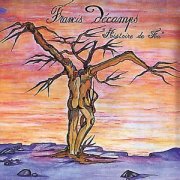 |
Histoire de Fou (1979, 38.27) ****/TTDroit Vers le SoleilMalédiction Canicule Amédée le Mal Maudit Apocalypse |
Current availability:
Mellotron used:
Francis Décamps is, of course, keyboard player with Ange, by a long chalk France's most successful progressive band, although he seems to've languished in his elder brother Christian's shadow for most of their career. After a decade in the band, Histoire de Fou was his first solo album and can, in many ways, be regarded as the 'lost' Ange album between their last classic (Guet-Apens) and the beginning of their terrible 'commercial' period. Ah, the '80s; don'cha just love 'em? It's difficult to describe this album without repeatedly mentioning Ange, to be honest, although Canicule's orchestral arrangement is interesting, as I don't believe Ange ever went down that particular path. The rest of the material sounds like, er, Ange, so the most useful thing I can think of to say is; if you like them, you should like this.
I believe this was Décamps' last Mellotron album, as well as his last progressive one (at least for a while). He doesn't overuse it, as usual and (again as usual), it's not always easy to tell the Mellotron strings apart from his heavily modified Viscount organ, but it sounds like background strings on Droit Vers Le Soleil and Malédiction, with a far more upfront string part, plus choirs, on Amédée Le Mal Maudit and a final choir part on Apocalypse. Quick note: the queasy-sounding barrel-organ at the end of Amédée Le Mal Maudit is almost worth the price of admission on its own...
See: Ange
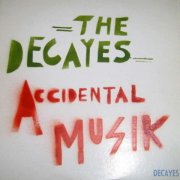 |
Accidental Musik (1979, 50.55) ***/T½Rich People's MailboxesThe Prisoner Melange Malade Red Silent K-7 Niteclub Close Enough for Jazz |
Current availability:
Mellotron used:
The Decayes were a late '70s avant-garde combo from southern California, whose best-known (I use the term loosely) work is 1979's Accidental Musik, more because it's been written about on several blogs than because it's actually, y'know, well known... Taking cues from the wave of German experimentalists from earlier in the decade, principally Can, the album veers between near-misses at actually producing regular tunes, woozy jamming and tape cut-ups, sometimes all at once, possibly at its best on the seventeen-minute Niteclub.
Ron Kane, John Payne and Craig Smith (not Craig P. Smith) all play Mellotron, which was '...recorded at Luxury Living Studios in Lakewood, California'. Can we assume it's Craig's machine we're hearing? Anyway, it's only on two tracks, with two bursts of strings on Niteclub, one scratchy and near-atonal, one more 'traditional', with more of the same on closer Close Enough For Jazz, mixing the two approaches. One for lovers of the further reaches of 'out there', rather than Mellotron fans, I think.
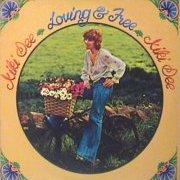 |
Loving & Free (1973, 39.16) ***/TT |
|
| Loving and Free If it Rains Lonnie and Josie Travellin' in Style You Put Something Better Inside Me Supercool Rest My Head Amoureuse |
Song for Adam Sugar on the Floor |
|
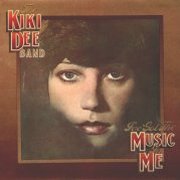 |
I've Got the Music in Me [Kiki Dee Band] (1974, 42.51) **½/½I've Got the Music in MeSomeone to Me Step By Step Water Out of My Head Do it Right Little Frozen One Heart and Soul You Need Help |
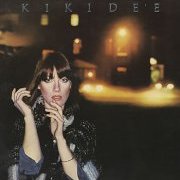 |
Kiki Dee (1977, 42.51) **/0 |
|
| How Much Fun Sweet Creation Into Eternity Standing Room Only Bad Day child Chicago Night Hours Keep Right on |
In Return Walking First Thing in the Morning |
|
Current availability:
Mellotrons used:
After her early career on Motown, Pauline "Kiki Dee" Matthews moved into the soft-rock arena with 1973's Loving and Free, including her mate Elton John on keyboards, not least Mellotron (two of the songs are also John/Taupin compositions). In all honesty, I can't get too excited about any of the material here; it's perfectly good at what it does, but it all sounds a bit dull with a few decades' hindsight. Anyway, Elt's Mellotron can be heard on three tracks: strings on Lonnie And Josie and Kiki's cover of Stealer's Wheel's You Put Something Better Inside Me, while, although the credits say it's on Sugar On The Floor, I not only can't hear it there, but I can hear Mellotron flutes on just about the best song here, Jackson Browne's Song For Adam.
Her follow-up, I've Got the Music in Me, contains her career highlight in the title track, a sassy, funky piece of mid-'70s pop, displaying her soul roots for all to see. The rest of the album, sadly, is rather average fare, being very ordinary mainstream pop, with a largish dose of balladry which may have sounded OK at the time, but is terribly dated now. One Mellotron track this time, with keys man Bias Boshell (that's 'Tobias', ex-fabulous British folk rockers Trees, last seen playing with The Moody Blues on a recent tour) playing flutes on Do It Right, along with real strings, to rather underwhelming effect. Don't go out of your way, to be honest. Don't go even less out of your way for her biggest (as against best) hit, '76's Don't Go Breaking My Heart, a duet with Elton and possibly one of the most irritating hits of the decade, against stiff competition.
Her last album of any relevance to this site was '77's Kiki Dee and, I'm afraid to say, it's a bit sorry. Most of Elt's band were on it, but all they succeed in doing is producing another bloody mid-'70s pop/rock album, irritating blues piano licks thrown in at every available opportunity (How Much Fun is a notable offender), not to mention the appalling cod-Philly soul of Chicago. Or is it Chicago soul? Dreadful, wherever it's supposed to be from. About the best track is the only one with any credited Mellotron (funny, that), Into Eternity, a reasonable ballad with an unusual enough sound to catch the ear, although James Newton Howard's Mellotron is entirely inaudible under the real cellos and string section.
See: Elton John