




|
|
|
|
||
|
 |
 |
Carmin (2007, 44.30) ***/TT½ |
|
| Musicamor Big Daddy Boy Abracadabra Déclaration à Celui Mourir d'un Oeil Les Phénix L'Homme Piano Le Petit Navire |
Penny Peggy Les Yeux Comanches Par la Fenêtre Le Songe de Neptune |
||
Current availability:
Chamberlin used:
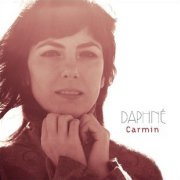
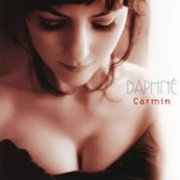
Daphné (Vialletet) is a French jazz/pop/chanson singer, of the kind only France can produce. Her second album, 2007's Carmin, is perfectly acceptable, if a trifle dull in places, especially for non-French speakers, although I doubt whether she could care less. Best tracks? The mournful Big Daddy Boy, the superbly-arranged male vocal harmonies of Les Yeux Comanches and closer Le Songe De Neptune, perhaps, although no individual track really lets the side down.
Fred Pallem (Kent) plays Chamberlin on several tracks, with strings on opener Musicamor, flutes on Big Daddy Boy, Déclaration À Celui and L'Homme Piano and both sounds on Le Petit Navire. It's possible the vibes on a couple of tracks are Chamberlinic, too, but I wouldn't actually put money on it. A pretty decent modern French singer-songwriter effort, then, although a working knowledge of the language would help in its appreciation.
 |
Dark Ocean Colors (2011, 35.38) ***½/TTT |
|
| My Barbara Closed the Doors Crashing the Sky The Other Line Love You Much Better Own the Day Lazy Lighthouse Jupiter Band Alone With Candy Same Old Mistake |
She's a Cornucopia Dream Away |
|
 |
Patches & Patterns (2012, 17.12) ***½/TTTPatches and PatternsKeep Me Running Million Mile Mind Song 24 Temporary Man |
 |
Close Enough to See (2013, 39.30) ***½/TT½ |
|
| Everything Again When Both Our Worlds Collide Up to Speed Gone Somewhere Player in Your Game 95 Cloudbursts Trouble Lost, Sorrow Gone |
Granny Smith Fade to Nothing 1X1 |
|
Current availability:
Mellotrons used:
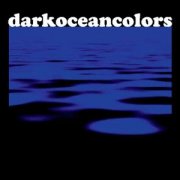
Dark Ocean Colors are the duo of Scott Hunt and Mark Mikel, whose rather gorgeous eponymous 2011 debut's overriding influence is quite clearly The Beach Boys generally and Pet Sounds in particular, although plenty of other era references creep in. The lush vocal harmonies, the unusual juxtapositioning of instruments, the unashamedly romantic melodies... Brian & Co. spot-on, chaps. Is this a bad thing? When the approach produces an album of this quality, unequivocally 'no'. Highlights include Crashing The Sky, Same Old Mistake and She's A Cornucopia, complete with squelchy Moog, the album only occasionally crossing the schmaltz line, albeit so cheerfully that it seems rude to point it out. Mikel plays their own MkVI Mellotron, My Barbara Closed the Doors' string chords opening the album, with choppy cellos later on in the track, the same two sounds also apparent on Own The Day, strings on Lazy Lighthouse Jupiter Band, Alone With Candy and Same Old Mistake and strings and skronky flutes on She's A Cornucopia. Bravo, gentlemen; not everyone's going to like Dark Ocean Colors, but I'd like to think it could raise a smile in anyone with even a hint of romance in their soul.
The following year's download-only Patches & Patterns EP, while still very much '60s influenced, loses the overt Beach Boys-isms. Well, at least until you get to Song 24, that is, a largely a capella piece, complete with Carl Wilson-style falsetto, other highlights including the opening title track and the très psychedelic Million Mile Mind. Mucho Mellotron, with strings all over the title track, Keep Me Running and Million Mile Mind, with cellos, choirs and a flute solo on closer Temporary Man. The duo's last outing, 2013's Close Enough to See, remains a closely-guarded secret, only available on various streaming platforms, lacking even a Discogs entry. It's as good as ever, making it all the more infuriating that it's so obscure, at its best on six-minute-plus opener Everything Again, Gone Somewhere, Player In Your Game and the gorgeous Granny Smith, although nothing here lets the side down. The album opens with solo Mellotron strings on Everything Again, with orchestrally-arranged flutes later in the track, distant choirs on Up To Speed, strings (including a cool pitchbend) on Player In Your Game, orchestrally-arranged strings and flutes on 95 and an odd little flute part and screechy strings on Trouble Lost, Sorrow Gone, the issue often confused by the inclusion of real strings on several tracks. Since it sounds like they threw everything at this record, it's all the odder that it has so little Web presence. Make the effort to track it down.
 |
Rumours in Our Own Time, Legends in Our Own Room (1980, 35.30) ***/½ |
|
| #1 Man Lamented Love Good Boy Scared Straight Bondage Nobody's Girl Can't Get Used to it Fun in Nicaragua |
Back on the Streets Blow it Up! You Should Envy Me Rendezvous Down the Tubes |
|
 |
Odd Fellows on an Even Day: Anthology 1977-1995 (2005, 73.22) ***/½ |
||
| Good Boy Lamented Love #1 Man Scared Straight Bondage Nobody's Girl Can't Get Used to it Fun in Nicaragua Back on the Streets |
Blow it Up! You Should Envy Me Rendezvous Down the Tubes How I Cried You & I Are Through Bluestown Out on a Limb Sweet Promises |
Kiss & Tell Dogs on Drugs In the Dark Another Crack in the Jaw Back Off! In the Dark ('95) You Should Envy Me ('95) Back Up Man |
|
Current availability:
Mellotron used:
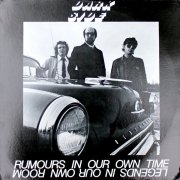
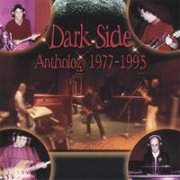
Dark Side were, essentially, a continuation of Baltimore's avant-gods OHO, although the musical path they chose was utterly different. Imagine a 1980-style 'noo wave' band, with pointed, ironic lyrics, a scratchy, punkish approach to their playing and dollops of Farfisa all over everything and you won't be too far out. They released one album, the now-so-rare-I-struggled-to-find-a-cover-scan-on-the-'Net Rumours in Our Own Time, Legends in Our Own Room, which should probably have done an awful lot better than it did. Just think; what if The Cars had possessed brains? (Just What I Needed excepted, of course). Decent enough material, although Back On The Streets clearly deliberately rips off (Sittin' On The) Dock Of The Bay, for some unknown reason. Mellotron on one track, Down The Tubes, with some background strings that don't really make that much difference.
As part of a general OHO reissue programme, the whole album was released on CD in 2005 as Odd Fellows on an Even Day: Anthology 1977-1995, expanded to double its original length. Y'know, you've got to really like this stuff to want to listen to an entire album of it... That's not to dismiss it in any way, however; it's good at what it does, just doesn't really hold the attention of one not into the style for over an hour.
See: OHO | Food for Worms
 |
Travelogue II (2000, 72.29) ***/T |
|
| Eject! Opal Frantic Upstream The Slice Of Life Don't Look 'Til It's Gone Go Beyond, But... Come To Masterplace |
Solaris I Belvedere Solaris II |
|
Current availability:
Mellotron used:
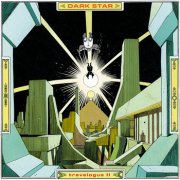
What, ANOTHER Dark Star? On top of the excellent NWoBHM band and the Levitation spinoff? And, doubtless, many others? This lot seem to be, essentially, Wolfgang Reffert's solo electronica project, utilising many collaborators, not least members of Anglo-Dutch experimentalists Legendary Pink Dots. Travelogue II is actually a semi-reissue of 1994's Travelogue, losing its last two tracks and adding another four, apparently from an unfinished follow-up. Much fucked-up electronic blipping and growling ensue, like an attempt to soundtrack Lynch's Eraserhead working only from a description of the film, if that makes any sense at all. Highlights? I quite honestly have no way of telling.
Volkmar Miedtke (Dunaj, Klar) plays what sounds pretty much like real Mellotron on near-quarter-hour closer Solaris II, with some nicely borderline-discordant string swells, not dissimilar to how King Crimson used the sound in an earlier epoch. Given the abuses heaped on electronics in music over recent decades, it's refreshing to hear someone use them in a genuinely experimental manner, whether or not the end result is especially 'musical' (whatever that means) or not. I wouldn't bother for the Mellotron, though.
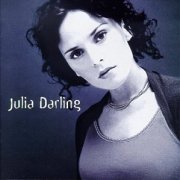 |
Figure 8 (1999, 43.53) **½/TTT |
|
| Overloading God My Inanimate Friend My Face Bulletproof Belief Grace Bury You 26/23 Crinolines and Waltzing |
Soak Me You Closer Look Lady Blue |
|
Current availability:
Chamberlins used:
Yup, you're seeing that correctly - I haven't forgotten to put the 'end bold text' HTML tag. Kiwi Julia Darling's debut album, Figure 8, is stuffed to the gills with Chamberlin, although, sadly, her music is of the 'bland, overproduced girly singer-songwriter' type, sounding like a watered-down (!) version of Sarah McLachlan or someone. It all pretty much stays at one level throughout, so unless you're particularly captivated by her confessional lyric style, you're likely to become as bored by its lack of variety as me.
Anyway, Chamberlin from Patrick Warren, Benmont Tench and producer Tony Berg, largely strings, but with a notable flute part on My Face. There may be other sounds thrown in, but with odd stuff like a marxophone and a bandura on various tracks, it's rather hard to tell. So; not a very exciting album, although Ms. Darling has a perfectly nice voice and there's plenty of Chamby work for the aficionado. Pick it up very cheap.
 |
The Greatest Show on Earth (1998, 68.49) **½/½ |
|
| Greatest Show ("From the Beach" excerpt including Cacophony) Modern Man Ceremony Greatest Show ("Rest of Our Lives" excerpt including Cacophony) I Must Go ("Mother Nature" excerpt, "Rest of Our Lives" excerpt) I Will Love You Forever I Must Go (Reprise including The Greatest Show", "Mother Nature" excerpt) Don't Touch the Marble Greatest Show ("Paradise is Waiting" excerpt) Sodium City Circus in the Sky |
I am the Future Greatest Show ("Rest Your Weary Mind" excerpt) The Only Way to Fly In Search of the Holy Grail (including Cacophony) The Greatest Show on Earth Part 1: The Dawning of the Ages Part 2: From the Beach Part 3: The Rest of Our Lives (I) Part 4: The Day of the Rock Part 5: The Rest of Our Lives (II) Part 6: The Greatest Show, Finale (Mother Nature) |
|
Current availability:
Mellotron used:
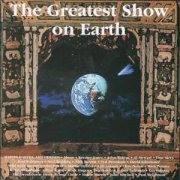
The Greatest Show on Earth is a rather odd album; going by the extensive sleevenotes, Martin Darvill was a cohort (read: drinking buddy) of members of the fledgling '80s UK neo-prog scene in late-'70s Aylesbury (the town where Marillion first came to prominence, for its sins), but opted to become a successful accountant rather than chance his luck with some dodgy band and very sensible, too. Twenty years later, the fire having never been wholly extinguished, he finally decided to record a batch of material he'd written over the years, getting all his neo-prog mates in to help.
The end result is a rather overblown and overlong neo-prog concept effort about the history of the world or something, which ultimately, I'm afraid, fails to excite, being nearly seventy minutes of averageness, with about as much musical invention as you'd expect. The eighteen-minute title track is ambitious - I like the way its themes are spread out across the album, tying it all together - but the nearest the whole thing gets to 'key changes' are the soundtracky chord shifts that crop up in places, the whole affair reeking of 'vanity project'. The huge number of musicians involved doesn't help with the project's coherence (and listing them on the front of the booklet is just plain naff), the likes of John Wetton (Darvill's then-neighbour, apparently), most of the then-current Arena lineup, Martin Orford and John Jowitt from IQ, Don Airey, Noel Redding and Nick Barrett from the awful Pendragon contributing to the proceedings.
Despite several Mellotronish bits, the only mention I can find in the booklet is a 'thanks to Karl [Groom, Shadowlands]'s bass pedals and Mellotron', which rear their ugly heads at the end of The Only Way To Fly, with some fairly obvious, if subdued choirs (what else?), although the credit doesn't tell us who played them. Darvill's regular keys man Paul Ward? Groom? Darvill himself? Doubt if it was Martin Orford... Pretty inessential, anyway. The Greatest Show on Earth wasn't a huge seller for Music of Life, but given that Darvill can't be short of a bob or two (I mean, mastering at Abbey Road?), I doubt if it hurt him too badly, at least in the wallet department. It's notable that he hasn't repeated the experiment, though - probably run out of material. Never mind, eh?
See: John Wetton | Arena | IQ
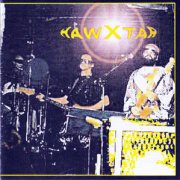 |
Hawxtar (1997, 53.48) ***/TSonic AttackBrainstorm Kadu Flyer The Great Sun Jester Children of the Sun 7½ Obstakel Breath Messages |
Current availability:
Mellotron used:
Darxtar formed in 1989 and are still operating, in one form or another, thirty years later. 1997's limited edition CD-R (one hundred copies, fact fans) Hawxtar is an edited version of a live performance from '95, the band backing Nik Turner; some sources actually quote Hawxtar as the artist. Now, I'll be bluntly honest here; I'm reviewing this rarity from YouTube videos of the 'Hawkwind' part of the gig and I haven't actually heard the band running through some of their own material (tracks 6-8). However, The Moor's Kenneth Magnusson only plays on the Hawks stuff, so, at least as far as this site's concerned, the rest of the set is irrelevant. While Sonic Attack and Brainstorm are pretty much as expected, Kadu Flyer (from Astounding Sounds) is an unusual choice, while The Great Sun Jester is a recitation of Michael Moorcock's poem, as set to music by the Blue Öyster Cult, of course, the band finishing that part of their set with a trippy (trippier?) version of In Search of Space's Children Of The Sun.
Since none of the Hawks material covered here is from their brief Mellotron period, Magnusson could've done what he liked with his machine, although all we get is a handful of volume-pedalled strings notes and choir chords on opener Sonic Attack and no, they don't work especially well on the track. Wonder if he used it on any of the material that didn't make the album? Like myself, you're not going to find this easily, so if you really feel the need, do what I did and listen to it on YouTube.
See: Hawkwind | Nik Turner | The Moor
 |
Das Pop (2009, 44.50) **½/½ |
|
| Underground You Don't Wanna Know Wings Saturday Night - part 1 Never Get Enough The Last Thing Fool for Love Try Again |
Let Me in Saturday Night - part 2 Girl Be a Man September |
|
Current availability:
Mellotron used:
Das Pop (previously Things to Come) are a Belgian indiepop outfit, with the emphasis on the 'pop'. They've only released three albums in over a decade together, partially due to concentrating on EPs at one stage in their career, the latest being 2009's Das Pop, recorded at The Kinks' Konk Studio in North London (thanks, Dieter) and at Liam Watson's Toe Rag facility. It's a reasonable effort, as far as it goes, better tracks including the jangly You Don't Wanna Know, the rocky Saturday Night - Part 2 and slightly jammed-out bonus track Feelgood Factors.
A unnamed member of the band played Konk's house EMI M400 (or was it my machine at Toe Rag?), with a high, shrieky string part on Never Get Enough, complete with authentic 'slur' at the end, although all other string parts are real. Overall, probably not something most of you will want to hear, but, after its cheeso opening track, far better than expected.
 |
I Split on Your Grave (1990, 49.10) ***/0 |
|
| I'm Outta Here Evolution Revolution Poker Chips Didn't Know I Love You... Bog Baby Skull Diggery Crawdaddy Simone Strange Movies |
Master Race Rock I Got a Right Graveyard Stomp College Kids Snakeskin Summer Master Race Rock Do Anything You Wanna Do The Pagoda Mystery |
|
Current availability:
Mellotron used:
Well, you could never accuse me of not going to inordinate lengths to track down obscure Mellotron music for you, even when I fail. Date Bait were an '80s US outfit; trash aesthetic turned up to eleven, 'production' somewhere around the zero mark. I Split on Your Grave (riffing on the horror flick, of course) is both brilliant and crap, usually at the same time, band-written numbers like Graveyard Stomp, Bog Baby and the great The Pagoda Mystery rubbing over-reverbed shoulders with the likes of the Stooges' I Got A Right, the Dictators' Master Race Rock, Eddie and the Hot Rods' (!) Do Anything You Wanna Do and a hilarious effort at the now (rightly) disgraced Gary Glitter's Didn't Know I Love You... [sic], a.k.a. Didn't Know I Loved You Till I Saw You Rock'n'Roll. Plenty of snatches of horror film dialogue inserted between tracks, too; play 'spot your favourite film' here.
The differing 'productions' on tracks just adds to the album's appeal, at least in my book; who needs two years in Montserrat and a recording budget of $2m? Insert your choice here. It actually sounds like their entire recorded output stuck onto one LP (including both sides of a 7" from the previous year), reinforced by being rather overlong for this type of music, although there was a late '90s CD-R release, too. Half an hour's plenty when ripping it out like this; ask The Ramones. Anyway, the beauty of this album lies in its idiotic persistence in the face of overwhelming odds, i.e. they were complete rubbish and knew it, nay, revelled in it. Jeff Zang plays keyboards here and there, mostly Farfisa, by the sound of it. He's also credited with Mellotron (unsurprisingly, given that I'm reviewing the bloody thing), but unless my ears are totally deceiving me, I can't hear a note (unless those are the faintest of faint choirs under the organ on The Pagoda Mystery); maybe there never was any and it's all a big joke that I haven't got. Who knows? Anyway, a good laugh, but don't come here for even the tiniest hint of anything Mellotronic...
 |
Mr. Untel (1982, 47.34) ***½/T |
|
| La Ballade de Mr. Untel La Cour des Miracles Un Air de Fête Sang, Foutre, Haine L'Attaque Zhork (partie 1) (partie 2) |
La Tour d'Ivoire Retour (partie 1) (partie 2) Un Age d'Or |
|
Current availability:
Mellotron used:
French proggers Datura released just the one album, 1982's Mr. Untel, an amateurish, yet intriguing effort, frequently compared to the likes of Mona Lisa in its relatively straightforward compositional style. Like many other early '80s progressive albums, it points towards neo-prog, while taking the kind of risks of which Marillion and Pendragon could only dream. It lacks originality in places; Sang, Foutre, Haine cops a riff from Yes' Starship Trooper, while hints of late '70s Genesis crop up here and there, although, compared to the open plagiarism that was to emanate from the genre over the following years, it's pretty small fry. Highlights? Maybe the upbeat L'Attaque, the two-part Retour and closer Un Age D'Or.
Patrick Loisel plays keys, principally the ubiquitous (and overused) string synth, with Mellotron choirs on Un Air De Fête, L'Attaque and Un Age D'Or, only at all upfront on the last-named. Not exactly a Mellotron classic, then, but a decent listen from the lesser-known end of the French scene (see: Grime).
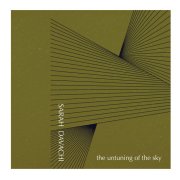 |
The Untuning of the Sky (2013, 41.47) ***/TAlms VertSpanish Banks Rainbands Brumeux Aurum |
 |
Qualities of Bodies Permanent (2015, 48.17) ***/TMare ImbriumPraha Olsun Geneva Flowers and Other Voiceless Things Codex |
Current availability:
Mellotrons used:
Going by 2013's cassette-only (and Bandcamp, thankfully) The Untuning of the Sky, Sarah Davachi is an analogue synthesist, working at the 'drone' end of the electronic genre. I won't say the album's an easy listen - her intervals are far too disharmonic for the new age crowd - but she understands dissonance and the merits of allowing a piece to slowly unfold over the course of ten minutes or more. Sarah plays the credited M400 on Brumeux (and a single note on closer Aurum), with a haunting flute part, pretty clearly from a real machine. I reiterate: not an easy listen - in fact, a challenging one - but for those who like to hear synth rarities such as the Buchla 100, the Serge modular and the Korg PS-3300, this is your album.
Two year on, Qualities of Bodies Permanent is a similar proposition, five of its six tracks being synth drone pieces, oddly major-key across much of the album's length. Closer Codex is no more or less than a solo piece for Mellotron flutes (again, a credited M400), making up for its lack elsewhere on the album. Davachi also credits 'Mellotron' (no M400) on 2018's Let Night Come on Bells End the Day, but it appears to be a false alarm, as are several later releases.
See: Samples etc.
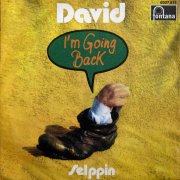 |
7" (1970) **½/T½ I'm Going Back Selppin |
Current availability:
Mellotron used:
The elusive David is rather better known as ex-copper Dave "Dee" Harman of the enormously unwieldily-named Dave Dee, Dozy, Beaky, Mick & Tich, of The Legend Of Xanadu fame. Dee left the outfit in 1969 for a short-lived solo career, before moving into the lucrative management and production area, though not before releasing '69's cheery I'm Going Back 7". Its flip, Selppin (yeah, yeah, reverse it...), is a far better affair, to be honest, being a Hammond-driven instrumental ripe for rediscovery by the hip moddish crowd that infests certain London clubs, even today. Are these people immortal?
Someone (usual studio sessioneer?) plays Mellotron strings on the a-side, though not to any great effect, to be perfectly honest, although it's always nice to hear. Both sides of this have been added to DDBM&T's 1969 album Together, in case you feel the urge to hear them. Unusually, the non-Mellotron track here is better than the one with it, but neither's that outstanding, to be honest.
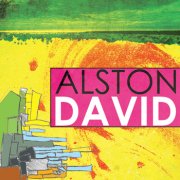 |
Alston David (2011, 49.26) ***½/TT |
|
| Spottedcrow Flies When California Falls Right Into the Ocean Are We Like Family? What is Love Midtown Clouds Photograph (Angels/Devils) The Sky is Purple Over 10th Street Tornado |
On the Verge of Paranoia If it's All in My Head Across the Indian Meridian Present Situation Abstract Photograph Suite |
|
Current availability:
Mellotron used:
Alston David (a.k.a. David Alston) is an Oklahoma-based singer-songwriter, whose music combines historical and contemporary influences on his eponymous debut (download only?) album, giving us a kind of indie/psych/powerpop hybrid that manages to sound like no-one else in particular. Top tracks? Brief Moody Blues-esque opener Spottedcrow Flies, the powerpoppy When California Falls Right Into The Ocean, the stately Midtown Clouds and lengthy closer Photograph Suite, amongst others, the album's only real downside being a certain sameyness to some of the tracks.
Alston tells me that he'd only recorded four songs when the studio shut down and sold their Mellotron, so although the sounds can be heard on literally every track, we're only hearing the real thing on four, with upfront strings on opener Spottedcrow Flies, flutes and strings on What Is Love, strings and cellos on Photograph (Angels/Devils) and strings and choir on The Sky Is Purple Over 10th Street. You can get this at Bandcamp, Amazon et al., but I'm not at all sure a physical version's available. This might've been improved by trimming a couple of tracks, but overall, a worthy effort with a few tracks of real Mellotron.
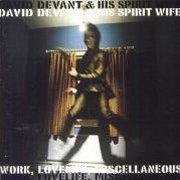 |
Work, Lovelife, Miscellaneous (1997, 51.17) ****½/T |
|
| Ginger Miscellaneous Lie Detector The Last Ever Love Song I Think About You Parallel Universe Re-invent the Wheel Ballroom |
This is for Real I'm Not Even Going to Try Light on the Surface Goodnight |
|
Current availability:
Mellotron used:
Although I've been aware of the fictitious Mr. Devant and his unfeasibly discorporeal spouse for a while (although a very real Victorian magician, apparently - thanks, Mark), it was only when I ended up driving them to a gig that I found out just how good they are. A mix of classic British '60s pop and quirky late-'70s 'noo wave', with more than a dash of surreal humour, 'The Vessel' (a.k.a. Mikey Georgeson) and his unlikely crew have the songs to match the image, particularly in the lyrical department. Well, how many bands do you know who can get away with writing songs about their girlfriend being a human lie detector? Or, for that matter, about a game of Cluedo? Ballroom is possibly the best of an extremely good bunch of songs on Work, Lovelife, Miscellaneous, but there's not one duffer to be heard here; I suspect the more I play this album, the better it'll sound and it's not too often you can say that.
After mentioning Mellotrons as we drove along (as you do), the band informed me that they'd used one on this album, although after that incendiary gig, I'd have bought it anyway. In fact, I can only hear it (played by 'The Vessel') on a couple of tracks and then only barely: a string line doubling the ubiquitous Vox organ on The Last Ever Love Song and what has to be a few Mellotron choir chords on Goodnight, although they seem to be combined with real voices. So; while it's no great shakes on the Mellotron front, it's a brilliant album and I look forward to hearing their subsequent efforts.
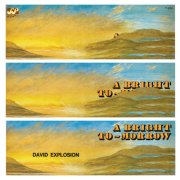 |
A Bright To-Morrow [a.k.a. Cockpit by Cockpit] (1971, 34.24) ***½/TT½ |
|
| Eight Days and Wake Up Fifi A Taste of Love Mister Hardy Father Machine Lena A Bright To-Morrow May, You're a Woman |
A Long Way to Go Mother Jacobs Hide and Seek |
|
Current availability:
Mellotron used:
Cockpit were a one-shot French late-period psych outfit, known in Belgium, for reasons lost in the mists of time, as David Explosion. They were led by Robert Fitoussi, a.k.a. F.R. David, under which name he had considerable success in the '80s, notably with huge international hit Words. 1971's A Bright To-Morrow is, unsurprisingly, a different proposition altogether, flitting between the Rhodes/Hammond groove and fuzz guitar of opener Eight Days And Wake Up, the jaunty, Zombies-like A Taste Of Love, the acoustic Lena and brass band-driven (!) closer Hide And Seek, to name but four variations on a very broad theme. In fact, not one track here really sounds like any other, which can now be seen as the album's strength, but was almost certainly its weakness at the time.
Someone plays (probably MkII) Mellotron on several tracks, with chordal strings and rather wobbly baritone sax on A Taste Of Love, strings on Father Machine, complete with some serious pitchbending, lush strings on the title track and strings and flutes on May, You're A Woman. Given how little-known this is, fans of obscure psych should make every effort to track a copy down (CD release, please?), its Mellotron use merely the icing on the cake. Incidentally, the original Cockpit release (er, Cockpit) features variations on several track titles, not to mention a completely different running order.
Dave Davies (UK) see: |
 |
 |
7" (197?) **/T½ Farewell for Now Put Your Love Back in Your Locket |
Current availability:
Chamberlin used:
Debbie Davies (assuming that's the lady's real name) seems to've been another member of the Rodd Keith song-poem factory, so it should come as little surprise to hear that Farewell For Now and Put Your Love Back In Your Locket are the usual anodyne-dross-with-appalling-lyrics that the 'genre' threw up as standard. This is difficult to date, but the weedy synth on the flip makes it more likely to be early '70s than the previous decade.
Of course, it's impossible to know who played the Chamberlin on the 'A', although the legendary Rodd Keith seems like a good bet. However, background strings and woodwinds arranged in a pre-psych '60s style are only going to excite the most perverse fans of the instrument and/or genre, I suspect.
See: Rodd Keith
Ray Davies (UK) see: |
 |
 |
Let the Woman (2007, 36.30) **/½ |
|
| Earth and Venus Believable Doubt Let the Woman Our Love is Not Their Business Brown Eyes Spade a Spade Good Life Beautiful Day for Bad News |
Black Keys Union & 3rd |
|
Current availability:
Chamberlin used:
Louisianan Andy Davis' 2007 debut, Let the Woman, is your typical wet singer-songwriter effort, although he manages to restrain himself enough to avoid using that awful 'overwrought' thing that was so popular at the time. It's at its least irritating on opener Earth And Venus and Beautiful Day For Bad News. I did say least...
Mitchell Froom does his increasingly rarely-heard Chamberlin thing, with background strings on Earth And Venus, other possible sightings being the organ/strings thing on Black Keys and, just possibly, the vibraphone rolls on Our Love Is Not Their Business. Is this a Chamberlin sound? You don't want to hear this either way.
 |
7" (1975) ***½/TT Down Home Funk Part 1 Down Home Funk Part 2 |
Current availability:
Mellotron used:
Although it's undated, I believe Larry Davis' two-part Down Home Funk is from 1975, an irresistible dancefloor filler in a sane world. Unfortunately, being on Arkansas' True Soul label (as was Thomas East), it remains an obscurity, although inclusion on Now-Again's True Soul: Deep Sounds From the Left of Stax (as the original, five-minute, unsplit recording) has given it a higher profile.
It's apparently Tony Stephens who plays the Mellotron strings in true 'orchestral simulation' style, complete with a cheeky pitchbend, probably around the point where Part 1 becomes Part 2. This may not especially be my personal cup of gruel, but its quality is undeniable; kudos to Now-Again for opening up True Soul's catalogue.
 |
Forever Lovers (1976, 33.31) **/T½ |
|
| The Good Times We Had I'm Just in Love Forever Lovers Tears in Baby's Eyes I'm a Survivor Baby, I Just Ain't the Man for You Please Tell Her That I Said Hello I Won't Want to Own You |
The Love Lamp Every Now and Then |
|
Current availability:
Mellotron used:
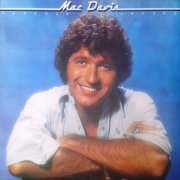
They don't come a lot more mainstream than Mac Davis (1942-2020); not that fake Christian 'mainstream' that's actually so extreme it's bizarre, but the genuine, light entertainment kind of mainstream that means someone known as a country singer can put a dance-pop track such as I'm Just In Love onto an otherwise fairly ordinary country record. 1976's Forever Lovers is typified by its mawkish, tearjerking title track, other horrors including opener The Good Times We Had and Tears In Baby's Eyes. Ugh.
Randy McCormick plays Mellotron, with a fragile, clicky flute line and high strings on Baby, I Just Ain't The Man For You and upfront strings and flutes on closer Every Now And Then, although all other string parts sound real. Do you need to hear this? You do not.
 |
Back on My Feet Again (1975, 39.53) **½/TTBack on My Feet AgainBaby I Do Wild Woman Who Knows Step in the Right Direction Sweet Little Rock'n'Roller Only Love Can Last Forever You and I He's Just a Heartbreaker |
Current availability:
Mellotron used:
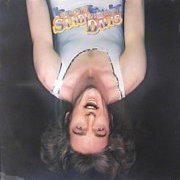
I initially wrote, "I know nothing at all about Sandy Davis' career, although EMI obviously thought highly enough of him to release two albums in the mid-'70s", but Sven informs me (thanks, Sven!) that he was none other than Paul Davis of Mellotron megastars Gracious! fame, although there's little way of telling unless you're familiar with his appearance. Anyway, going by the second of his albums, Back on My Feet Again, Davis played bland, slightly funky pop with hardly any distinguishing features, about as collectible nowadays as pointy collars and tank tops (as in the sleeveless jumper, as against whatever it means these days). Probably less. What a come-down.
I've no idea whether or not there's any Mellotron on '74's Inside Every Fat Man, but Davis gets it onto a few tracks on Back on My Feet Again. Strings on the title track, slowly becoming more prominent towards the end of the song, Only Love Can Last Forever and probably Who Knows (who indeed?) although the flute on that track is real. He's Just A Heartbreaker is the nearest this album gets to a Mellotron track, with a decent enough flute part and upfront strings coming in later on to quite reasonable effect. So; don't bother, even for the Mellotron. That was easy, wasn't it?
See: Gracious!
 |
Brighter Days (1977, 43.03) ***/TThings Cannot Stop Forever (Poon Tang Tally-Wacky)Space-a-Nova I Play Sleep Brighter Days/Brighter Daze Funky Fried Tofu Nida Space-a-Nova II High Jazz High Jazz Reprise |
Current availability:
Mellotron used:
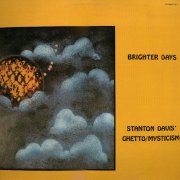
I know very little about Stanton Davis, never mind his Ghetto/Mysticism, although going by the evidence of the released-in-'77-though-recorded-earlier privately-pressed Brighter Days, he/they specialised in a kind of Afro/funk/jazz/soul fusion, probably not a million miles away from some of Funkadelic's more out-there stuff. In all honesty, this is a long way from my area(s) of expertise, but it seems to do what it does pretty damn' well, with much funky jamming and spaced-out vocals, should you be into such things.
One Mellotron track, with Davis himself doubling Mellotron strings and string synth (sounds like a Solina) on Nida, although not to any great effect, to be honest. Solina on several other tracks, sounding quite Mellotron-like on Funky Fried Tofu, but only the one credited track. Decidedly not worth it for the Mellotron, then, but space-funk fans should track a copy down immediately.
 |
The Evolution of... (2000, 53.24) ***/TT |
|
| Senorita My Dear Kate Transit Bastard Fall Like I Fall Another Lonesome Highway Salvation Number 10 Better Days |
Think Twice Can't Have You Murder in the Brickyard Seven Years Mosquito Cut to Pieces |
|
Current availability:
Chamberlin used:
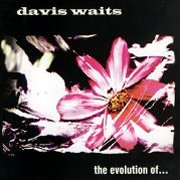
Davis Waits were, at heart, a roots-rock outfit, although 2000's The Evolution of... sees them tackle several other genres, not least alt.rock (opener Senorita, Think Twice), acoustic balladry (My Dear Kate, Better Days) and even hard rock (Bastard, Seven Years). Highlights? Probably Senorita and Bastard, but, despite being over fifty minutes, there's barely a bad track here.
John Philip Shenale plays Chamberlin, with a cello line and chordal strings on My Dear Kate, a handful of string chords on Another Lonesome Highway and more chordal strings on Better Days; not the most upfront use ever, but nice to hear.
 |
Svaka Je Ljubav Ista (Osim One Prave) (1976, 33.50) ***/TTU Tebi Se Žena RadjaNe Mogu Da te Uhvatim Noćni Susret Tvoje Opasne Igre Mala Je Stvarno Luda Danas Plače Prvi Put I Pad Je Let Bila Si Ti, Bila Je Ljubav... Mala Pjesma |
Current availability:
Mellotron used:
Davorin "Davor" Popović's (1946-2001) career is inextricably entwined with that of Yugoslav/Bosnian heroes Indexi, with whom he sang between 1964 and his death. Although they'd been releasing singles since 1966, the band only released their first non-compilation album in '72, then the decision was taken to release its 1976 follow-up under their singer's name. Except... The cassette version came out as Indexi, while Discogs lists it under the band. Work that one out. The end result is a thoroughly mixed bag, veering between the upbeat pop/rock/prog of opener U Tebi Se Žena Radja and Mala Je Stvarno Luda, the folk-inflected balladry of Ne Mogu Da Te Uhvatim, Danas Plače Prvi Put and Bila Si Ti, Bila Je Ljubav..., the kind-of hard rock of Noćni Susret and Tvoje Opasne Igre and jaunty closer Mala Pjesma. I said it was a mixed bag... As with other Eastern Bloc artists (OK, pedants, I know Yugoslavia wasn't aligned with Soviet Russia), a 'something for everything' approach was used, possibly imposed from on high. Does it work? Maybe then and there, not so much here and now.
Enco Lesić plays Mellotron, probably a studio machine, coming straight in with upfront strings on U Tebi Se Žena Radja, flutes and strings on Ne Mogu Da Te Uhvatim and strings and 'Strawberry Fields' flutes on Bila Si Ti, Bila Je Ljubav... Given that this hasn't even been reissued as part of a compilation, it's all a bit academic, anyway, although this turns up on download blogs.
See: Indexi
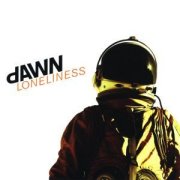 |
Loneliness (2007, 50.38) ***½/TTTDawnRain on the Moon The Brook Loneliness The Story of Nobody Dusk |
Current availability:
Mellotron used:
Switzerland's Dawn (this lot have clearly never heard of Tony Orlando, to their great good fortune) released their debut, Loneliness, in 2007, a welcome addition to the progressive canon (thanks for this one, Mike). Stylistically, it sits solidly in the 'retro' category, featuring bursts of late '70s-esque Genesis here and there, although René Degoumois' slightly neo- vocal style becomes a little wearing after a while. I'm not sure what's going on with that sleeve design, either; I'm not asking for a return to the clichéd sub-Deanisms of yesteryear, but this looks like a kind of space-age indie effort, were you to go by its cover. Best track? Possibly the album's longest, the seventeen-minute The Story Of Nobody, although the lyrics leave a bit to be desired, to say the least.
Nicolas Gerber plays seemingly real Mellotron, with strings all over the opening title track and towards the end of Rain On The Moon, a choppy part in The Brook that switches between strings, flute and choir in a most authentic manner, strings on the title track, strings (including an improbably high-speed part) and flutes on The Story Of Nobody and Dusk.
See: Samples etc.
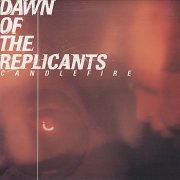 |
10" (1998) ***/TTT½ Candlefire Skullcrusher (David Holmes & Tim Goldsworthy Remix) |
Current availability:
Mellotron used:
Dawn of the Replicants are one of those outfits who passed me by, largely due to their dance-orientated stance, although it seems they were pretty hot on the synth front, in a '90s kind of way. The David Holmes & Tim Goldsworthy remix of Skullcrusher, a track originally available on their first release, the previous year's All That Cheyenne Caboodle EP, was released as the flip to the 10" of Candlefire, the second track of three on the CD EP and as a 10" promo in its own right. It's pretty acceptable to the non-fan, as these things go, being a lot less 'dancey' than I'd expected, helped along no end by Darrin Morris' credit for Mellotron.
Mellotron? They ain't kiddin'... Morris splatters what is quite clearly a real M400 all over the place, with string chords throughout, skronky cellos and a mad, lengthy flute part, full of key-clicks and pops, giving this a startlingly high rating for a single track. I've no idea what the rest of their stuff sounds like (they seemed to be keener on EPs than albums), or whether they used a Mellotron on anything else, but this one track is genuinely worth hearing for some of the most full-on Mellotron work you'll have heard in a long time.