




|
|
|
|
||
|
|
Deep Purple Deerhunter Sam Dees |
Gavin DeGraw Déjà-Vu Lana Del Rey |
Delirium Fabienne Delsol Deluge Grander |
Demon Thor Denim |
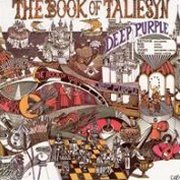 |
The Book of Taliesyn (1968, 43.58) ***½/TListen, Learn, Read onWring That Neck Kentucky Woman Exposition/We Can Work it Out Shield Anthem River Deep, Mountain High |
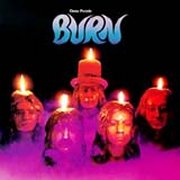 |
Burn (1974, 42.25) ****/TBurnMight Just Take Your Life Lay Down, Stay Down Sail Away You Fool No One What's Goin' on Here Mistreated "A" 200 |
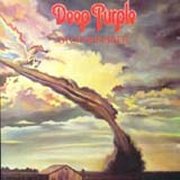 |
Stormbringer (1974, 36.59) **½/TStormbringerLove Don't Mean a Thing Holy Man Hold on Lady Double Dealer You Can't Do it Right (With the One You Love) High Ball Shooter The Gypsy Soldier of Fortune |
Current availability:
Mellotrons used:
Deep Purple's second album, The Book of Taliesyn (named for a collection of Welsh legends), was a major leap from their debut, Shades of Deep Purple (***), containing material as adventurous as Wring That Neck and Shield that they would never have tackled (or probably been allowed to tackle) earlier. Admittedly, it also 'features' some dodgy covers, not least Neil Diamond's Kentucky Woman and The Beatles' We Can Work It Out, although Ike & Tina Turner's River Deep, Mountain High has a fantastic, several minute proto-prog intro, making the actual song, bombastic though it is, sound rather prosaic in comparison. Rod Evans' cabaret-singer vocals were clearly already hanging around the band's collective necks like a bouffanted albatross, although he lasted one more album, the following year's Deep Purple (***½). Jon Lord used a Mellotron for the first time on Anthem, with a strings part before the real strings later in the song, although that was it for the next five years, despite Lord's symphonic ambitions, realised (poorly) on '69's Concerto for Group and Orchestra (**½).
1973 brought Purple's second major lineup shake-up, oddly enough, both changes being in the vocalist and bassist department; so, Gillan and Glover out, Coverdale and Hughes in. The story goes, Glenn Hughes left Trapeze for Purple on the understanding that he'd reprise his bassist/lead vocalist role and was more than a little miffed to find that they'd also recruited the previously unknown David Coverdale, leading to the uncomfortable compromise of both men singing lead at different points, with much harmony vocal. Anyway, Burn was the first result of the new lineup and, like '72's Machine Head (****½), was recorded with the Rolling Stones' mobile in Montreux, albeit under less trying circumstances. Unfortunately, it also suffers from that album's poor sound and lack of dynamics, as do most of their studio albums, with the honourable exception of 1970's stupendous In Rock (*****), live versions invariably crapping on their studio counterparts. Burn contains two cast-iron classics in its title track and the slow-burn blues of Mistreated, but there aren't any actual dogs on the album, even including lesser-known efforts such as Sail Away or What's Goin' On Here. Lord's keyboards expanded from his faithful Hammond to include occasional ARP synths and, on closing instrumental "A" 200, to my surprise, a few Mellotron string pitchbend swells, although hardly enough to qualify the record for Mellotron Album status.
Stormbringer turned out to be Ritchie Blackmore's swansong for Purple (at least in that decade), before he sloped off to form Rainbow; listening to it in the cold light of day, you can hear why. The band was essentially hijacked by new boys Coverdale and Hughes, the latter's soul and funk influences making themselves apparent on tracks like Hold On and You Can't Do It Right. Saying that, it's not all bad, the title track and Lady Double Dealer proving to be live faves, although the album's pretty ropey overall. Now, I'd never even considered that Lord may have used a Mellotron here, although I've been alerted to the fact that he layers flutes all over one of its few worthwhile tracks, closer Soldier Of Fortune, later to be Coverdale's vocal tour de force with Whitesnake, before they, in turn (but for different reasons), went down the shitter. Actually, that may be Mellotron strings, too, but the flutes are a definite.
So what happened to poor old Rod Evans, I probably don't hear you ask? Well, he went on to sing with the (briefly) excellent Captain Beyond, going on to become embroiled in the 'cheap Purple' fiasco of 1980 (see his Wikipedia page), since when he's retired from music. He was inducted into the farcical Rock & Roll Hall of Fame in 2016, but didn't attend, clearly wanting nothing more to do with his ex-colleagues.
See: Samples etc. | Rainbow
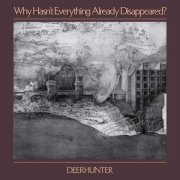 |
Why Hasn't Everything Already Disappeared? (2019, 36.14) *½/½ |
|
| Death in Midsummer No One's Sleeping Greenpoint Gothic Element What Happens to People? Détournement Futurism Tarnung |
Plains Nocturne |
|
Current availability:
Chamberlin used:
Deerhunter play exactly the kind of insipid, dreary indie nonsense that 4AD seem to sign up these days, their eighth album, 2019's Why Hasn't Everything Already Disappeared?, typifying the current indie malaise. Détournement is a particular low, with its faux-lysergic narration, but it's merely the worst of a very, very bad bunch.
Bradford Cox is credited with Chamberlin on three tracks, with nothing obvious on Détournement or Tarnung and what might be occasional pitchbent strings on closer Nocturne, while Javier Morales adds chordal strings to Element, particularly upfront (not to mention real-sounding) at the end of the track. This is really hateful music. Consider yourself warned.
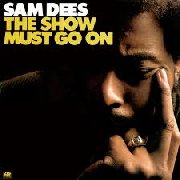 |
The Show Must Go on (1975, 37.53) ***/T½ |
|
| Child of the Streets The Show Must Go on Come Back Strong Just Out of My Reach Claim Jumpin' Troubled Child What's it Gonna Be Worn Out Broken Heart |
Good Guys So Tied Up |
|
Current availability:
Mellotron used:
Despite beginning his singing career in childhood, Alabama native Sam Dees was nearly thirty when Atlantic released his debut long-player, The Show Must Go on, in 1975. The bulk of the album consists of the expected soft soul (though nowhere near as anodyne as the squeaky-clean Philly soul of the era), although two tracks, six-minute opener Child Of The Streets and What's It Gonna Be, show a harder, funkier side to Dees' sound.
Coincidentally (?), the album's two highlights are also its two Mellotron tracks (player unknown - Dees himself?), the former opening the album with a murky flute melody, before sliding into a 'string section substitute' string part, while the latter features unison strings and cellos, a flute melody riding over both. While not worth a purchase for the Mellotron alone, both tracks are worth hearing for the aficionado, while the album itself seems to be an above-average example of its style.
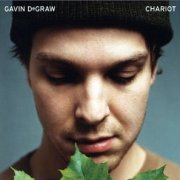 |
Chariot (2003, 37.54) **/T |
|
| Follow Through Chariot Just Friends (Nice to Meet You) Anyway Chemical Party Belief Crush I Don't Want to Be |
Meaning More Than Anyone Over-Rated Get Lost |
|
Current availability:
Chamberlin used:
Gavin DeGraw is a mainstream US singer-songwriter, albeit one considerably less offensive than the likes of, say, the horrible Daniel Powter and his ilk. Saying that, his first studio album, 2003's Chariot, isn't something I'll be listening to again in a hurry, although at least it didn't actually (particularly) offend me.
Patrick Warren does his usual Chamberlin thing, with strings on Just Friends and Over-Rated, although, as ever, low enough in the mix that it's difficult to work out if that's actually what you're hearing. Anyway, passable modern singer-songwriter stuff, as far as that goes, with a rocky edge in places, but no classic, either for its songwriting or its tape-replay use.
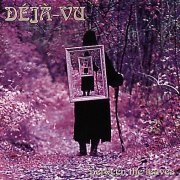 |
Between the Leaves (1976, 55.23) ****/TBurning BridgesBetween the Leaves Free Man Flying Somebody Cares Time Visions of Nirvana |
Current availability:
Mellotron used:
Déjà-Vu, including ex-members of Høst, released just the one album, 1976's Between the Leaves, although it was apparently completely unknown to collectors before its 1995 CD issue, having only ever appeared as a sleeveless test-pressing at the time. Given how many mediocre to downright appalling records are given a commercial release, the fact that this came close to disappearing for good is close to criminal. I'm not saying it's a lost classic, but it's a good heavy prog album in a mid-'70s style, several stretched-out compositions featuring decent keyboard and guitar work. One major anomaly, though, is its length; was the original vinyl really fifty-five minutes long? Going by its Discogs entry, it would seem so.
Harald Otterstad is credited with Mellotron, but, until the dying seconds of the album, it seems to be a misnomer, as he sticks chiefly to string synth, monosynth and Clavinet, with a little Rhodes thrown in. Then suddenly, just as all hope is gone, a triumphal choir part enters within the last ninety seconds of final track Visions Of Nirvana, in the manner of the cavalry riding over the hill. Anyway, definitely worth a purchase for fans of the genre/era, but don't go expecting much Mellotron.
 |
 |
Born to Die: The Paradise Edition (2011/2012, 49.28/84.19) **/T |
||
| Born to Die Off to the Races Blue Jeans Video Games Diet Mountain Dew National Anthem Dark Paradise Radio |
Carmen Million Dollar Man Summertime Sadness This is What Makes Us Girls [Paradise adds: Ride American Cola |
Body Electric Blue Velvet Gods and Monsters Yayo Bel Air] |
||
Current availability:
Chamberlin used:
Lizzy "Lana Del Rey" Grant is a lightweight American singer-songwriter of the 'relies on her looks' variety. Harsh? But fair. 2011's Born to Die was reissued the following year as Born to Die: The Paradise Edition, adding a second disc containing another eight tracks, as if the original twelve weren't enough. The harp-driven Video Games is about the least bad thing here, while particular horrors include the 'go on, beat me up' lyrics to Off To The Races (sample lyric: "He loves me with every beat of his cocaine heart") and (to pick one almost at random) Million Dollar Man. The second disc tries its damndest to be all dark and European on Body Electric and Gods And Monsters, but spoils it with string-laden slush like Blue Velvet and Bel Air.
Patrick Warren plays orchestral-ish Chamberlin strings on Dark Paradise to passable effect (with something tape-replay-like on Radio, presumably sampled), although I can't imagine that anyone wouldn't have noticed had they been real, while Warren and Rick Nowels are both credited with Mellotron on Body Electric on disc two, which makes it all the stranger that it's completely inaudible on the track. I strongly suspect that Nowels' credit is bogus.Still, you really don't want or need to hear this, anyway, so it's hardly an issue, is it?
See: Samples etc.
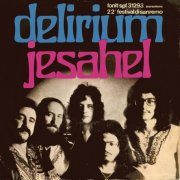 |
7" (1972) ***/TT½ Jesahel King's Road |
 |
7" (1972) **½/TT½ Treno E l'Ora |
 |
Lo Scemo e il Villaggio (1972, 37.27) ****/TTTT½VillaggioTremori Antichi Gioia, Disordine, Risentimento La Mia Pazzia Sogno Dimensione Uomo Culto Disarmonico Pensiero per un Abbandono |
 |
Delirium III: Viaggio Negli Arcipelaghi del Tempo (1974, 34.51) ***½/0Il DonoViaggio Negli Arcipelaghi del Tempo Fuga N.1 Dio Del Silenzio La Battaglia Degli Eterni Piani Un Uomo Viaggio N.2 Ancora Un'Alba |
Current availability:
Mellotrons used:
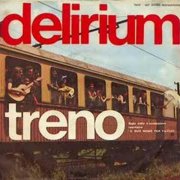
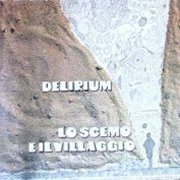
Delirium (not to be confused with any other band of the same name)'s first album, Dolce Acqua, was pleasant enough folk rock, if a little uninspired, but they were moving towards getting the mixture right by '72's Jesahel single and its jazzy flip, King's Road (had this lot been to London?). Mellotron on both tracks from Ettore Vigo, with repeating strings chords on the 'A' and brass and major string parts on the other side. The same year's Treno b/w E L'Ora (or possibly the other way round; it's rather unclear) is a somewhat lesser effort, Treno being a jaunty folk/pop tune, while the flip's an undistinguished ballad. On the Mellotron front, the 'A' features a fat brass part, with upfront chordal strings towards the end and background strings on the flip. All four tracks are available on 2005's '71-'75, which appears to fit the band's complete works onto a two-CD set.
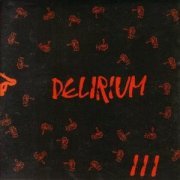
The same year's Lo Scemo e il Villaggio has a far more Jethro Tull-influenced sound, with distinctly Anderson-like flute leads. The band led a dual existence, juggling non-album commercial hits with their more serious LP material; the occasional leak from one style to the other is in evidence here, notably on La Mia Pazzia. Much of the album is laid-back folk/prog, but when the band let rip, as on the sax-driven Culto Disarmonico, they display interesting jazz sensibilities that are quite out of kilter with the rest of their material. As for Vigo's Mellotron, Villaggio has brass and strings, also possibly flutes alongside the real one, while all other highlighted tracks feature excellent, full-on string parts. Hard to pick out individual Mellotron highlights; suffice to say it almost gets full marks.
It took the band two years to produce Delirium III: Viaggio Negli Arcipelaghi del Tempo and, while reasonably good, it suffers from the same musical schizophrenia as its predecessor, mixing, folk, pop, funk and various other styles, not always in an especially pleasing manner. The album's swamped in orchestral strings, so although Vigo's credited with Mellotron, all I can hear is the actual string section, with some rather cheesy arrangements too, I'm afraid. If you're going to buy one Delirium album, there's really no contest: Lo Scemo e il Villaggio it is. Incidentally, the band have reformed, releasing the rather good Il Nome del Vento in 2009, with credited Mellotron, although it turns out to be samples. Boo, hiss.
See: Samples etc.
 |
On My Mind (2010, 32.31) ***/TT½ |
|
| To You Your Queen Ragunboneman On My Mind Pas Adieu I Feel So Blue And I Have Learnt to Dream Take Your Seat |
Faraway Spaceman Blues Count Me Out Ce Jour la Strange Shadows |
|
 |
Four (2019, 31.24) ***½/TTT |
|
| See How They Run Ladder Door Knob So Many Could Not When I Awake The Face No Love to Give J'ai Fais de Lui un Rêve |
Follow Me I'll Never Be Lonely Again Hurtin' Kind |
|
Current availability:
Mellotrons used:
Although Fabienne Delsol is, unsurprisingly, French, her career is exclusively British, based around famed all-analogue London studio Toerag and owner Liam Watson (hi, Liam). After two albums with garage revivalists The Bristols, she went solo, 2010's On My Mind being her third release, containing an appealing mixture of mid-'60s beat and balladry, top tracks including the Farfisa (?)-driven Ragunboneman, the sparse title track and heartfelt ballads And I Have Learnt To Dream and closer Strange Shadows. The studio hired my M400 early in 2010 and, although I had no idea what session it would be used on, I can only presume it was this one. Ed Turner plays it, with a lovely flute part opening the title track, running throughout, more muted flutes on Pas Adieu, what sounds like violas (I know, I know, they're my tapes) on And I Have Learnt To Dream and, finally, flutes and wobbly strings on Strange Shadows. Oh dear, is that my Mellotron?
Fabienne took a nine-year break between albums, Four finally escaping in 2019. It's business as usual on the stylistic front, her pre-psych '60s sound at its best on the beautiful When I Awake, J'ai Fais De Lui Un Rêve and closer Hurtin' Kind. Fabienne hired my Mellotron, misbehaving badly, for the sessions, although the terrible screech it produced on the day has magically disappeared in the mix. Played by über-session chap (and all-round nice guy) Carwyn Ellis, we get choirs and flutes on So Many Could Not, strings on When I Awake, chordal choirs and strings on J'ai Fais De Lui Un Rêve and upfront strings and chordal flutes on top Mellotron track I'll Never Be Lonely Again. Two albums locked, then, as is the studio, in 1965, which is by no means necessarily a bad thing, with decent helpings of Mellotron. Which is no bad thing either.
 |
Heliotians (2014, 40.45) ***½/TT½UlteriorSaruned Reverse Solarity |
Current availability:
Mellotron used:
Deluge Grander (presumably a pun on 'delusions of grandeur') rose from the ashes of the Maryland-based Cerebus Effect in the mid-2000s, presumably with the intention of moving away from the fusion area. Their third album, the download-only 2014's Heliotians, actually flirts with fusion in places, notably on the twenty-minute Reverse Solarity, the other two tracks being closer to what passes for the progressive mainstream, US-style.
The band's Bandcamp page credits Dan Britton with Mellotron, thanking known M400 owner Ilúvatar's Jim Rezek; after all, who, in 2014, would thank someone for a sample set? It's used on all three tracks, unsurprisingly, with lovely upfront strings about six minutes into opener Ulterior, followed by a flute line and chordal choirs, a strings wash and another flute line on Saruned and more chordal strings on Reverse Solarity. Due to the band's usual sample use, I've had this in Samples etc. for a while. Am I deaf? Anyway, while maybe not quite as good as its predecessor, The Form of the Good, this is definitely worth a punt.
See: Samples etc. | All Over Everywhere | Birds & Buildings
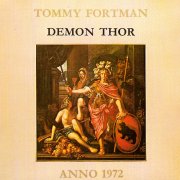 |
Anno 1972 [as Tommy Fortman/Demon Thor] (1972, 36.51) **½/TTStory Demon ThorEast and West Israel Ant Hill Good Old Oak Simple Song Groovy The Army |
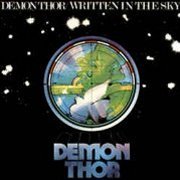 |
Written in the Sky (1973, 37.23) ***/TTTWritten in the SkyPink Mary For One Little Moment Good Morning Sweet Caroline |
Current availability:
Mellotrons used:
Demon Thor are often listed as being German (Munich, specifically), though I believe I'm correct in saying the band were actually an Anglo-Swiss effort, with two British members in Tommy Fortman and Geoff Harrison. They debuted with 1972's Anno 1972 (credited to Tommy Fortman/Demon Thor), a middling rock/pop album of considerable averageness with few outstanding features, certainly not deserving of the 'progressive' status it seems to've gained retrospectively. Stephen Nuesch plays Mellotron flutes and strings on Good Old Oak, strings on Groovy and brass and choir on closer The Army, although that shouldn't be taken as any sort of recommendation.
The following year's Written in the Sky is one of the most weirdly schizophrenic records I've heard in a while, viz side one's side-long title track, which is a full-on heavy prog effort, smothered in Mellotron, while most of side two is workaday boogie, aside from one vaguely folky track in Good Morning. Nuesch plays most of the keys again, with the exception of piano, handled by Fortman. You'll be unsurprised to hear that the only Mellotron to be heard is on Written In The Sky itself, but it's a bit of a monster, loaded with strings, brass, cellos and choir - oh, and flutes later on. This is serious stuff, making it all the worse that it's let down so badly by the rest of the album. I'm sure it all made perfect sense at the time.
 |
Denim on Ice (1996, 56.53) ***½/½ |
|
| The Great Pub Rock Revival It Fell Off the Back of a Lorry Romeo Jones is in Love Again Brumburger The Supermodels Shut Up Sidney Mrs Mills Best Song in the World Synthesizers in the Rain |
Job Centre Council Houses Glue & Smack Jane Suck Died in 77 Grandad's False Teeth Silly Rabbit Don't Bite Too Much Out of the Apple Myriad of Hoops Denim on Ice |
|
Current availability:
Mellotron used:
What on earth can I say about Denim on Ice? Denim were Lawrence (Hayward)'s second project, after the much-vaunted Felt and, at least on their second album, are best described as, er... '70s-obsessed electro-glam? After Felt's ethereal Cocteaus-esque soundscapes, Denim come as something of a shock, with Lawrence's upfront vocals and bizarre, Brit-centric lyrics; hands up who doesn't know what a lorry is? Loads of references to very peculiarly British things: council houses, the job centre, Mrs. Mills, beermats, the NME... Synthesizers In The Rain's spot-on Visage piss-take, Ducks Deluxe and Wreckless Eric namechecks, the Glitter Band's Pete Phipps and Gerry Shephard guest... Wot - no Alvin Stardust? Shame on you, Lawrence.
The story I was told is that r.m.i.'s Duncan Goddard was asked to bring his Mellotron along to a session, which he duly did, as well as playing Moog on the album. Plenty of string synth, but I'm only certain I can hear the Mellotron (played by a certain Pete Z) on two tracks, with a few choir chords on Mrs Mills and Don't Bite Too Much Out Of The Apple, but nothing you can't actually live without. Anyway, a surprisingly good, witty album, but not one for the Mellotron fan in your life (what, you have a life? I don't. Oh, you noticed). Worth picking up. Oh and Lawrence's latest project is called Go Kart Mozart; anyone not spotting the reference has to stay behind after school and write a hundred lines.
n.b. Duncan has expanded considerably on his studio experience, much of it probably libellous. It sounds like a bit of a nightmare all round, Lawrence obsessing over particular sounds, then recording the first thing that was played over a track and insisting on keeping it. Glad I wasn't there.