




|
|
|
|
||
|
Cathedral (UK) see: |
 |
 |
7" (1971) **½/T Don't Waste Your Time It's Over Now |
Current availability:
Mellotron used:
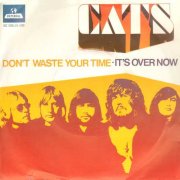
The Cats were a pretty typical 'first wave' Dutch pop group, changing with the tide of musical progress, albeit always a step or two behind. 1971's non-album Don't Waste Your Time (as against a track on the previous year's Take Me With You, Don't Waste My Time), despite some fairly contemporary guitar work, sounds more like 1967, while its flip, the superior It's Over Now, while still dated, at least gives us some nice acoustic playing.
Someone plays Mellotron strings on the A-side, to no great effect, to be honest. Do you need to hear this? Not really, no.
 |
Ars Moriendi (1996, 49.16) **½/TT½ |
|
| Age of Quicksand Just Like Anyone Quicksand Revisited Gulag a) Astray b) Audience Green Room Walk on Waves Underwater Web |
Counting Out the Time Suntanned in the Shadows Lizards' Journey Heathersong |
|
Current availability:
Mellotron used:
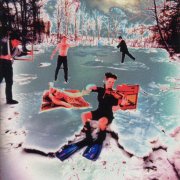
Catweazle (apparently the early '70s UK kids' show starring Geoffrey Bayldon in the title role was popular in Scandinavia) were a one-off Swedish neo-prog outfit from the mid-'90s, displaying most of that sub-genre's tropes on '96's Ars Moriendi. An over-reliance on vocals at the expense of the music, cheesy lyrical themes, lots of modern keyboards, too much Steve Rothery guitar... I think you get the picture. Chaps, you've been listening to a little too much '80s and '90s prog and not enough '70s, I suspect, not least with regard to subject matter, which appears to be a concept about someone's life or something. So what happened to albums about snow geese, passion plays and walls, eh? I blame Fish. The album has its good points; Peter Rendius' acoustic guitar work is lovely, Michael Thörne plays some ripping Hammond and the band are solid enough when they decide to rock out, but there are too many minuses to raise its rating, I'm afraid, not least low-level plagiarism; er, Counting Out The Time? Pur-lease...
Mellotron from Thörne, with (predictably) IQ choirs on Gulag, choirs and strings on Astray, strings on Green Room, choirs on Walk On Waves... None of it's at all innovative, but then who am I to say it should be? Standard block chords, inserted at appropriate points, are a great deal better than a lack of the same. Flutes on Counting Out The Time, although I think the cellos are real, background choirs on Suntanned In The Shadows and that's your lot. Quite a bit in the end, although the machine they used sounds a bit tired.
 |
Snake River Canyon (2010, 35.47) ***/T |
|
| So Gone Heat Lightnin' Heat Moonlight Mile As You Please Honest-Eyed Woman Weightless DLMG Skeleton Tree |
Throw Me to the Wolves Corners |
|
Current availability:
Mellotron used:
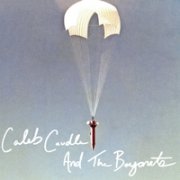
To my knowledge, Snake River Canyon is Caleb Caudle's third album, mostly consisting of rather lightweight Americana, of the 'attempting to cross over into the mainstream' variety, although better tracks include the stomping Honest-Eyed Woman, the fragile Skeleton Tree and slow-burn closer Corners.
Jon Ashley's credited with 'MiniMoog voyager' and Mellotron, with an upfront flute part on Skeleton Tree. I've played this three times now, trying to work out whether or not it's genuine and have come to the conclusion that, if it isn't, it's close enough to stay here until/unless I should find out otherwise. Ashley even re-triggers notes before their eight-second limit's up, the ignorance of which is often a sample giveaway.
 |
Cavalli-Cocchi, Lanzetti, Roversi (2011, 45.41) ***/TTTTNew Life on MarsJpg Card Morning Comes Words Got the Power Why Should I? By This River Great Love Does Burn Fast The Late Hour Blue Boy Under an Ethnic Sky |
Current availability:
Mellotron used:
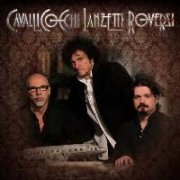
I'm sure at least one of the above names is familiar to you, dear reader: Bernardo Lanzetti, ex-Acqua Fragile, Mangala Vallis and, of course, the late '70s incarnation of PFM, although if you know anything about the current Italian scene, Cristiano Roversi (Mangala Vallis, Moongarden, Submarine Silence) should ring a bell, too. The pair have teamed up with drummer Gigi Cavalli-Cocchi, releasing their eponymous debut in 2011. Is it any good? Matter of opinion, I suppose; if you took its progressive tropes away, it would sound like an overblown Italian singer-songwriter effort, Lanzetti's operatic voice (let's be honest: it never really worked in PFM) and the lush arrangements giving the whole thing a rather mainstream edge. Best track? Possibly Great Love Does Burn Fast, featuring none other than Steve Hackett on distorted acoustic guitar (apparently), giving the impression of an electric. So why, er, not use an electric?
Although Roversi's known for using Mellotron samples (the one time I met him, he confirmed this), Lanzetti's website says he plays, "A restored vintage piece from the 70s" and, I have to say, it sounds pretty authentic. He adds strings to every track, including an upfront melody on By This River, sounding as real as you like, choir on Morning Comes, Why Should I?, choir and a brief flute melody on Great Love Does Burn Fast and choir and something not entirely identifiable - oboe? - on The Late Hour, making for an unusually Mellotron-heavy release. I'm not entirely sure I can really recommend this, as too much of it sounds like a progressive version of the kind of thing listened to by middle-aged Italians, but it has its moments, not least the heavy Mellotron use. Worth hearing, at least.
See: Lanzetti Roversi | PFM | Acqua Fragile | Mangala Vallis | Cristiano Roversi
 |
Soul Martini (1992, 47.10) ***½/T½ |
|
| Love Grenade Here Comes Rosie Sonny Day As You Were Boy in a Plastic Bubble You're Put Away (Folderol) Sorrow (Boots of Pain) III |
Murder On for the Ride Tarzan and His Arrowheads Circus Song |
|
Current availability:
Chamberlin used:
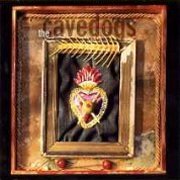
Soul Martini was the Cavedogs' second and last album; a shame, as their rocky take on the whole powerpop thing is a joy to hear, like a less full-on Superdrag, maybe. Best tracks? Hard to say, but You're Put Away (Folderol) and Murder particularly caught my ear. Interestingly, after their dissolution, bassist Brian Stevens worked with the wondrous Aimee Mann, playing on '93's excellent Whatever and in her live band, also releasing a solo album in '96, Prettier Than You.
There's no mention of Mellotrons or anything other than 'keyboards' in the CD booklet, which are credited to two of the band (Stevens and drummer Mark Rivers), along with producer Michael Beinhorn. Beinhorn? Yup, the late-'80s/early-'90s champion of the Chamberlin, although his last known tape-replay work was back in '94 and he seems to have been supplanted by the likes of Jon Brion and Patrick Warren. Anyway, it's quite clearly Chamby on a few tracks: As You Were has a harmonium part morphing into Chamby flutes, while On For The Ride opens with what amounts to a Chamberlin demonstration tape, with squeaky brass and sound FX, not to mention a rhythm track that could well be from the left-hand manual of an older model. More brass later in the song, with more of the same on Tarzan And His Arrowheads; two or three other songs have things going on in the background that could be tape-replay, but, as so often with the Chamberlin, it's almost impossible to tell.
See: Brian Stevens
 |
I Mali del Secolo (1972, 38.40) **½/TT½Ready TeddyUn Albero di Trenta Piani Forse Eri Meglio di Lei La Ballata di Pinocchio Disse La Siringhetta L'Ultimo degli Uccelli Quel Signore del Piano di Sopra |
 |
7" (1974) **½/TT Bellissima Stringimi a Te |
Current availability:
Mellotrons used:
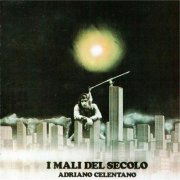
For the most part, Adriano Celentano's I Mali del Secolo is a Italian pop/rock album of its era, typified by material such as awful rock'n'roll opener Ready Teddy, the oompah folk of Un Albero Di Trenta Piani and closing campfire singalong Quel Signore Del Piano Di Sopra. Any saving graces? The brooding, almost progressive Disse and La Siringhetta are a cut above, in the manner of many early '70s mainstream Italian singer-songwriter releases, where a touch of prog often didn't go amiss.
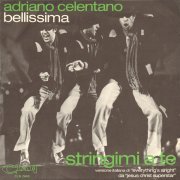
Il Balletto di Bronzo's Gianni Leone plays his band's M400, with orchestral strings, flutes and brass on Forse Eri Meglio Di Lei and L'Ultimo Degli Uccelli and volume-pedalled strings on Disse. Should you ever see this labelled as 'Italian prog', don't be fooled; three Mellotron tracks doth not a prog album make. The same goes for his 1974 single, Bellissima, backed with Stringimi A Te, a version of Everything's Alright from Jesus Christ Superstar. The 'A' is a mid-paced, vaguely rock effort, featuring loads of Mellotron strings and brass, the latter sound making it likely that it's Leone again.
 |
Celeste [a.k.a. Principe di un Giorno] (1976, recorded 1974, 37.08/72.31) *****/TTTT½ |
|
| Principe di un Giorno Favole Antiche Eftus Giochi Nella Notte La Grande Isola La Danza del Fato L'Imbroglio [Definitive ed. adds: Prince of One Day |
Ancient Fables Eftus Far White Halo The Merchant Fireflies in the Grass Boswellia Sacra Nora Favole Antiche (instrumental)] |
|
 |
 |
Celeste II [a.k.a. Second Plus] (1991, recorded 1977, 46.15/71.43) **½/0 (T) |
|
| Il Giardino Armonico Bassa Marea Un Mazzo di Ortiche Settottavi All'Ombra di un Fungo La Danza del Mare - parte I/II Slancio dell'Immaginazione Un'Anima nell'Universo |
Nodissea Ala del Pensiero Lontano Profondo Il Giardino Armonico - Ripresa |
||
 |
Il Risveglio del Principe (2019, 50.37) ****/TTTTQual Fior di LotoBianca Vestale Statue di Sale Principessa Oscura Fonte Perenne Giardini di Pietra Falsi Piani Lontani Porpora e Giacinto |
 |
Flashes From Archives of Oblivion (Just a Collection of Antiques and Curios) (2020, 77.01) ***/T |
||
| Prince of One Day Ancient Fables Far White Halo Eftus The Merchant Fireflies in the Grass Ellisse Autostrada |
Odissea Sequestro Una Notte a San Martino Sinai Guardare in Fondo a Noi Nora Supocto TEB |
Settottavi All'Ombra di un Fungo Un Mazzo di Ortiche Mare di Giada |
|
 |
Il Principe del Regno Perduto (2020, 62.48) ****/TTTBaie DistantiL'Ultimo Viaggio del Principe (Il) Ceruleo Sogno Viola, Arancio e Topazio Il Passaggio di un Gigante Gentile Tornerai Tramonto Nora |
Current availability:
Mellotrons used:
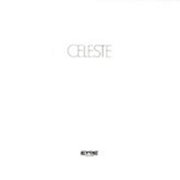
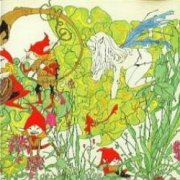
Celeste's first album, '76's Celeste (a.k.a. Principe di un Giorno), although recorded in 1974, appeared quite late in the day for Italian prog, but succeeds in being an absolute masterpiece of gentle, pastoral progressive rock, with both classical and folk influences, to the point where the word 'rock' seems slightly redundant. With practically no drums to be heard and almost every instrument acoustic (with one obvious exception), this is superbly laid-back without being anywhere near laid-out. The very first sound to be heard on the album is a mournful Mellotron strings melody slowly fading in before the title track kicks off properly (as much as anything here could be described as kicking off...). Acoustic guitars, flute, piano, sax, percussion... Mellotron, the odd ARP synth line and the occasional note from an electric bass seem to be just about the only electric instruments here, making a change from the busy style of so many Italian bands.
The material's excellent, too, although surely they realised that the Mellotron string line on Favole Antiche was ripped straight off The Court Of The Crimson King? It's difficult to pinpoint areas of Mellotronic excellence (played, incidentally, by Leonardo Lagorio and Ciro Perrino); basically, any of the first five tracks feature rather gorgeous use of strings. It's really quite difficult to go wrong with this album; it shouldn't even offend your prog-hating spouse, being entirely devoid of the 'fiddly bits' so many non-prog fans hate. So; a classic. Buy now. Many other bands (PFM spring to mind) do that 'pastoral' thing extremely well, but few of them made it their entire raison d'être. Truly marvellous. Incidentally, Mellow's definitive edition (2020) adds an English-language version of the album, with female vocals but no Mellotron, plus a handful of other tracks, including the beautiful Boswellia Sacra, complete with more of those strings.
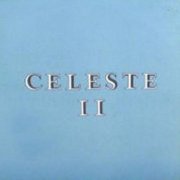
In 1991, over a decade after the band's demise, an LP appeared called Celeste II, made up of unreleased tracks recorded after Principe di un Giorno; the unitalicised tracks above are the original LP tracklisting. I'll admit I don't know very much about the provenance of the material, only that it's a decidedly mixed bunch, most of which bear little relation to their illustrious predecessors. Three of them (Un Mazzo Di Ortiche, Settottavi and La Danza Del Mare) are over ten minutes long, all uninspired sax-led jams, to be honest, as are several of the other tracks, rather uninteresting string synth providing the keyboard backing.
In all honesty, this is a pretty poor release, few tracks actually worth listening to more than once. Just for the record, Il Giardino Armonico (and its reprise), Bassa Marea and the lovely Lontano Profondo are the only tracks the average progressive fan is likely to actually enjoy. As for Perrino's Mellotron use, although both parts of Il Giardino Armonico are soaked in strings, I heavily suspect that they date from '91 rather than '77, sounding more like time-stretched string samples than Mellotron, especially on the deeper notes. This technique has been used on at least one other reissue to my knowledge, Easter Island's excellent NowAndThen, which, like this album, is bookended by two contemporary tracks recorded on modern equipment. This leaves the one genuine Mellotron track here as Bassa Marea, with a heavy strings and choir presence over a doomy, medieval-sounding instrumental backing. Excellent, but hardly worth buying the album for and, even here, the long sustained chord at the end sounds slightly bogus; maybe they used an overdubbing trick (been there...).
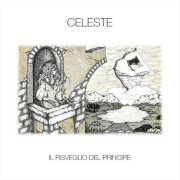
So many classic Italian '70s prog outfits have made terrible, ill-conceived reformation albums over the years (alongside some genuinely worthy efforts, in fairness), that it's a joy to report that Celeste's long-awaited rebirth sees them capturing lightning in a bottle for the second time. Il Risveglio del Principe is a gorgeous, largely acoustic record, although only time will tell whether its compositions will have the staying power of those from their debut. Highlights? Perhaps Bianca Vestale, Statue Di Sale and Giardini Di Pietra, but nothing here disappoints. Ciro Perrino plays real Mellotron across the board, with strings on every track, to varying degrees. A triumph!
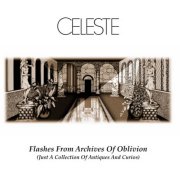
As I'm sure you've spotted, Flashes From Archives of Oblivion (Just a Collection of Antiques and Curios) references albums by two other artists, Roy Harper and The Strawbs, presumably for humorous effect. To be brutally honest, this comes across as a bit of a barrel-scraping exercise, most of its contents being somewhat second-rate, early versions of first album tracks, or later material in a jazzy, Celeste II vein, while the polysynth-led Sequestro is terrible, sounding like a lira-shop Goblin. Don't get me wrong; it has its moments, not least the ten-minute Settottavi, but they're few and far between. After waiting for over seventy minutes, we finally get some Perrino Mellotron on closer Mare Di Giada, with beautiful string and flute parts on one of the album's rare highlights. A carefully curated, forty-minute version of this album would be a worthy addition to Celeste's small catalogue, but, I'm afraid to say, this is a bit of a mess.
2020's largely instrumental (and largely better for it) Il Principe del Regno Perduto keeps up the quality from Il Risveglio del Principe, the near-twenty-five-minute L'Ultimo Viaggio Del Principe, complete with choral section halfway through, marking a compositional departure for Perrino. The nearest this gets to 'rock' is the relatively brief Il Passaggio Di Un Gigante Gentile (The Passage of Gentle Giant?), the bulk of the album's hour-plus length containing the kind of laid-back, melodic progressive we've come to expect from Celeste. Most of Perrino's Mellotron work sticks to the strings, although a flute part in opener Baie Distanti clearly emanates from the Mellotron, as against Marco Moro's real one heard elsewhere. Mellotronic highlights include the repeating strings arrangements in Baie Distanti and L'Ultimo Viaggio Del Principe and a haunting solo part at the close of the latter, but this is, once again, a musical and Mellotronic delight.
It's highly unusual to give two albums by the same band such wildly contrasting ratings, but their first posthumous release really is pretty uninteresting. There's another album released long after the event, '92's I Suoni in Una Sfera (****), also dating from '74; I believe it's some sort of soundtrack, but I really know very little about it and it turns out to be Mellotron-free anyway. In the meantime, their debut is an absolute classic and its follow-up... isn't. If you don't already own a copy, buy Principe di un Giorno immediately, while their 21st Century comeback is well worth hearing.
See: Ciro Perrino
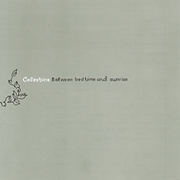 |
Between Bedtime and Sunrise (2005, 51.37) ****/TTTT |
|
| Someone Between Bedtime and Sunrise City of Lights Sunflower A Part of a Change The Lost Sun Different Types of Liquid Nothing |
Premonition of Death Masterpiece Peaceful Playstation Boy Under Our Blanket |
|
Current availability:
Mellotron used:
Celestine are a Mattias Olsson (Änglagård, AK-Momo etc. etc.) production, although he isn't a band member this time round. As usual with anything in which Mattias is involved (with the honourable exception of Pineforest Crunch), they're a pretty melancholy sounding bunch, although they heavy it up occasionally, presumably for the sake of contrast. Comparisons? Other Mattias involvements such as Reminder or Nanook of the North, with fine material that is sure to worm its way into my brain after not so many listens. A find, Mattias...
Mattias' Mellotron work covers the usual ground, strings, cellos and flutes abounding, although some unusually restrained church organ can be heard on The Lost Sun, a particularly powerful string part on the excellent Nothing and very upfront 8-choir on Peaceful. Mattias also informs me that I'd missed the viola and cellos (and, apparently, regular though inaudible strings) on opener Someone, the vibes on A Part Of A Change and the oboe and clarinets on Masterpiece. Oops. Anyway, this is one of those albums where it could've been used on every track (damn' near was, to be fair), but their restraint is admirable; yes, it is possible to overuse a Mellotron... All in all, excellent album, plenty of Mellotron. Recommended.
 |
Wish Vehicles (2015, 33.50) ***/TT½ |
|
| Wake Up Tonight Red Queen Hypothesis I am the Boundary Stone Ice Prism Bos Taurus Aquamarine Carnivore Ravaging Amulet |
Hall of Gems Pulled By the Rope of External Extending |
|
Current availability:
Mellotron/Chamberlin used:
It's difficult to know how to describe Amanda Lindsey's Celestogramme's Wish Vehicles: dream pop? Psychedelic indie? Post-punk folk? All of the above? Probably at its best on '60s-esque opener Wake Up Tonight, the splendid I Am The Boundary Stone and Aquamarine, this listener feels that its punkier aspects weaken the album's impact.
The album opens with Lindsey's echoed flute note from either the Mellotron or (Fidelitorium Studios') Chamberlin, strings later on, distant flutes on I Am The Boundary Stone, flute and string parts on Carnivore Ravaging, cellos and flutes on Hall Of Gems and Chamby solo male voices on closer Pulled By The Rope Of External Extending. While flawed, the album features several lovely performances, not least its tape-replay ones.
 |
This Isn't Here (2007, 37.29) ***/T |
|
| Evidently True Best Thing Ever Infinity Cactus This Isn't Here Speak to Me I Found You She's a Waterfall |
NYC Plain to See Tear Duct Brothers |
|
Current availability:
Mellotron used:
David Celia is a Canadian singer-songwriter with an Americana bent (why isn't there such a thing as Canadiana?), although several tracks on what I believe to be his second album, This Isn't Here, bypass the genre altogether, not least closer Brothers. Best tracks? Possibly the title track and definitely instrumental acoustic guitar solo I Found You, although nothing here actively offended this listener, who has become quite used to music that sounds like country but has nothing to do with Nashville, entirely as a result of running this site. Strange.
Michael Holt plays Mellotron on one track, with a wobbly-enough-to-be-real polyphonic flute part dipping in and out of Plain To See. As so often; if you've got a Mellotron in the studio, why not use it a little more? The strings on several tracks are real, incidentally. Overall, then, a decent enough album both inside and outside its genre, one good Mellotron track. Your choice.
See: Samples etc.
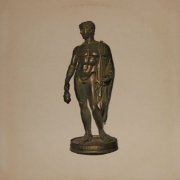 |
Mercury (1982, 34.39) ***½/TTTPart IFormation of Space, Land and Sea The Melting of Stars The Arrival of Man Part II The Civilization of Planets |
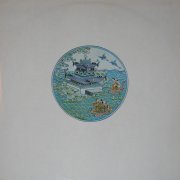 |
Neptune (1983, 30.33) ***½/TTTTT |
|
| Part I Central Courtyard Throne Room Pavilions of Forestlife A Crown in a Glass Case Cascade Through a Room Tarot Cards Zodiac Wheel Palace Cirkus Maximus Monsters From the Depths of the Sea |
Part II Attack and Fall of the Titans The Marshes of Primitive Realm The Ascent of Poseidon Earthquake |
|
Current availability:
Mellotrons used:
Difficult to know how to describe Celluloid, really; sort of progressive electronic (electronic progressive?). Whatever. I originally wrote:
| "No-one knows who the brains behind the project actually was, but it was definitely a one-man-band, armed only with a 'computer' (make, type, processing power etc. unknown) and a Mellotron. I can't imagine what sort of computer in 1982 could produce the variety, not to mention quality, of sounds on Mercury, although I suspect a mainframe was involved; if I didn't know better, I'd have assumed he was using a bank of polysynths and some tape effects". |
Well, thanks to US reader Tom O'Neill, I can give you considerably more information. It seems that 'Celluloid' was the nom-de-plume of one Charles (Chuck) Minuto, still in his teens when he recorded these strange albums. Chuck recorded an electronic piece called Murmadon's Log at Tom's place, prior to the albums, which is easier on the ear than his later projects. The 'computer' he lists on the Mercury sleeve was, in fact, a rented Synclavier, which must've eaten up a fair chunk of his limited budget, but explains why the non-Mellotron sounds are so good for the time. He had a more limited budget for Neptune, which presumably explains a) the lack of any Synclavier and b) the poor pressing quality. It's unknown whether Minuto still holds the mastertapes of these albums.
 |
Anyway, the composition on Mercury is of the dark'n'doomy variety, befitting its rather grand subject matter and has a really quite relentless air about it; despite being effectively rhythmless, this isn't 'lie back and enjoy it' music by any stretch of the imagination. The three pieces on side one are instrumental, but side two's Part II: The Civilization Of Planets surprises by Mr. Celluloid's rather portentous singing, though I'm not sure it adds much to the proceedings. There's a good bit of Mellotron use, although he only had one tape frame at this stage, with strings, brass and male choir. The Melting Of Stars features a fanfareish brass part, but the other two sounds (unsurprisingly) comprise most of the Mellotron work on the album. The music certainly isn't 'standard' electronic stuff, but for those who prefer the darker end of the spectrum, laced with a fair amount of Mellotron, this is probably worth a listen.
Neptune went the whole hog and was recorded entirely on the Mellotron. It's a good deal odder than his debut, much use made of Mellotron FX tapes; laughter, applause, church bells, smashing glass - you name it, it's here. Much of it sounds as if it was recorded 'live' in the studio, possibly on two (very) defective M400s, with considerable tape-wobble and switching between sounds on the fly. The overall effect is less 'musical' than 'ambient', though that gives the wrong impression; suffice to say, it's very different to Mercury, with much repetition of the FX and no real 'structure' to the pieces at all. Apart from the sounds used on Mercury, I think I can hear church organ, timps, flutes, some unidentified woodwind (?) and maybe cellos, so I suspect he used a couple of machines and overdubbed some of the parts later. Anyway, you're unlikely to find this on vinyl, so if you buy the CD, you've got it anyway.
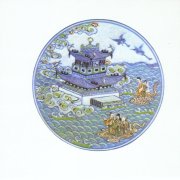
These albums are rare as rocking-horse shit and were mostly circulating on tape copies until 2002, when an 'official' 2-on-1 release was announced. Beware; it's an overpriced CD-R with minimal packaging, looking like something someone could've knocked up on their home PC (see sleeve, right). It's also been mastered from vinyl; the sound quality's reasonable, but I can hear crackles here and there (particularly on Neptune), with no obvious attempt made to de-click it, while it sounds like the original tapes were fucked anyway. I've just paid new shop price for this and feel somewhat ripped-off, although the music is worth it. A third title, Jupiter is rumoured, though no-one I've spoken to has ever seen or heard a copy, so I rather doubt that it exists. [Note: Minuto mentioned it to O'Neill, but probably never found the money to record it].
Thanks are due, by the way, to Daniel Miso for the sleeve images above. He owns both of these... [n.b.] Johnny tells me that Minuto is alive and (relatively) well, but is in no condition to make any music again. Since the mastertapes are almost certainly long gone, I think that 2-on-1 CD-R is the nearest we're going to get to an 'official' re-release.
 |
Breakfast in the Ruins (1989, 60.21) ***/½ |
|
| Zone Red Zone Green Zone Blue La Mola Past Tense Art Deco The Kirlian Witness Teutonasia |
CEP Agent M. Without Water K L Fellini Conga Domenis Breakfast Arrival of the Rainman Talkover Endless Talk |
|
Current availability:
Mellotron used:
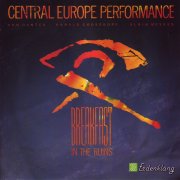
Central Europe Performance were the natural follow-on from German electronic duo You, Udo Hanten and Albin Meskes bringing in the semi-legendary Harald Grosskopf (Ash Ra Tempel, Ashra, Cosmic Jokers, many others), who co-produced their own first album, 1980's Electric Day. The CEP's sole release, 1989's Breakfast in the Ruins, might be described as 'digital ethnic', with a preponderance of digital and sampled sounds in a vaguely Eastern setting; not much like You at all, really. Is it any good? It's OK, if rather of its time, which might be why its sole CD issue was, at the time of writing, over thirty years ago.
Mellotron on just the one track, M. Without Water, from Hanten, with some suitably watery strings drifting in and out of the piece. Overall, then, probably not that easy to find and not that great anyway, if truth be told. Next to no Mellotron and rather too much digital synth. Stick with You, I'd say.
See: You
 |
Hang Out Your Poetry (1993, 53.58) **/T½ |
|
| Goodbye Sunshine Steal Your Heart Day By Day Ready for Love Ready for Love (Refrain) Hang Out Your Poetry Could've Been Love Turn it Over |
Trust 2 of 1 First Day of My Life Breathless Living in a Paradise Livin' it Up |
|
Current availability:
Mellotron used:
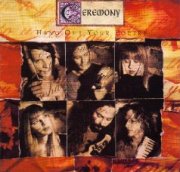
Ceremony were essentially a vehicle for Chastity "Chaz" Bono, daughter of (no you fool, not him) Sonny Bono, the only pop star (to my knowledge) to accidentally kill himself skiing into a tree and, of course, Cher (who didn't). Their (and her) sole album, 1993's Hang Out Your Poetry, is a lacklustre effort, doing its level best to sound like a string-drenched '60s pop record while actually sounding like a pale, early '90s imitation of that style, with few memorable songs. Strangely, it takes a detour around halfway through to a rootsy, almost Americana sound for a few tracks, before slipping back into its well-worn groove. All in all, this is a ridiculously overproduced record; the bagpipes that close the album are fairly indicative...
Mark Hudson and Mark Hart both play Mellotron, with faint flutes on Could've Been Love, 2 Of 1 and closer Livin' It Up, with a mad, high-speed part on Trust, although none of it adds up to very much. If this was the level of her talent, we should probably be thankful that Bono hasn't followed in her parents' footsteps, although I'm possibly being a little unfair to the record, which might've sounded better with a sparser production. So; overblown nonsense with a smattering of Mellotron flutes. Maybe not. Incidentally, Bono came out in the late '90s and, at the time of writing, is undergoing gender reassignment surgery, with which Planet Mellotron (genuinely) wishes them the best of luck.
 |
Tanyet (1967, 21.10/42.19) ***½/TTT |
|
| Leyshem Zendan Ceyladd Beyta Becal Ddom Todda BB Dyl Ralin |
Tygstl Pendyl Jacayl Manyatt Dyl Com |
|
Current availability:
Chamberlin used:
Probably the only reason anyone remembers The Ceyleib People these days is the participation of Ry Cooder, credited as 'Cooter', although other band members, not least Larry Knechtel, went on to make names for themselves in the '70s. Tanyet is their one, ridiculously short album, best described as a reasonable example of then-fashionable raga rock, to the extent that one of their guitarists, Lybuk Hyd, doubled on sitar to the point where he could be said to be a sitarist doubling on guitar. Despite Knechtel's presence (he's known as a singer), the album is almost entirely instrumental, although it seems he may have contributed in other areas.
Either Knechtel or Mike Melvoin (or both?) play Chamberlin on the album, with a clunky flute part on Leyshem and some full-on strings on Ceyladd Beyta. A quick word at this point on the album's tracklisting: although each side lists half a dozen separate tracks, they all essentially run into each other, so whether I've actually highlighted the correct tracks can only really be a matter for conjecture. More strings on Becal and Todda BB, played fast enough to almost fool the ear into thinking they're real (can't do that on a Mellotron), making side one pretty Chamby-heavy. More on side two, with what sounds like muted brass on Ralin and maybe trumpets (more high-speed playing) on closer Manyatt Dyl Com, making (presumably) Ceyladd Beyta the album's top Chamby track.
Well, making an album a mere twenty-one minutes long lessens the chance of boring your potential audience, I suppose; there's something to be said for not outstaying your welcome... I've no idea why they recorded so little material; maybe it was all they'd written, if you can call this 'written' at all? It's actually pretty good at what it does, in an acid-fried kind of way and, if it kick-started Cooder's career, it was certainly worth doing. Definitely worth hearing if you're into the era; decent Chamberlin use, too, which is rare enough to be worth commenting on in itself. Incidentally, the '91 CD issue doubles the album's length by including mono and stereo versions, which aren't wildly different, but you're going to get them anyway, as I'm sure the original vinyl's as rare as rocking-horse shit.
 |
Nadie en Especial (1980, 43.35) ***/TUn Mundo FelizEn Visitante Aymara Nadie en Especial Salamandra El Dia en que Murio el Rey Camaleon Bienvenidos al Fin del Mundo |
Current availability:
Mellotron used:
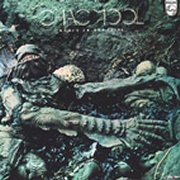
Chac Mool are one of the few Mexican artists on this site; to be honest, I was quite certain that their debut, 1980's Nadie en Especial, would be entirely Mellotron-free, which just goes to show how much I know. Musically, it's not great, just scraping that third full star; think: third-rate wannabes, pre-'80s neo-prog, but with the same overall vibe. Simplistic and unoriginal, this isn't an album to which I can see myself returning on anything like a regular basis, or probably at all, to be brutally honest. It has its moments, not least the flute-playing throughout and the riff in the title track, but what on earth made them spoil it by ripping off Floyd's Welcome To The Machine? Mystifying.
Carlos Alvarado (and possibly guitarist Jorge Reyes) played the 'Strawberry Fields'-style Mellotron flutes on El Dia En Que Murio El Rey Camaleon, to no particular effect. I didn't know there were any Mellotrons in Mexico, thus my previously-mentioned disbelief, so given that they had one, or at least access to one, one might wonder why they didn't use it a little more, as against the ubiquitous string synth? As usual, we'll never know, but their minimal use doesn't help to lift this album above the average.
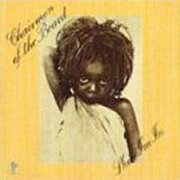 |
Skin I'm in (1974, 37.15) ***½/TTEverybody Party All NightSkin I'm in Morning Glory/Life and Death, Part 1/White Rose (Freedom Flower)/Life And Death, Part 2 Let's Have Some Fun Love at First Sight Only Love Can Break a Heart Live With Me, Love With Me Finder's Keepers |
Current availability:
Mellotron used:
I believe the Chairmen of the Board's earlier albums (this was their fourth and last) are more straightforward early-'70s soul/funk, but Skin I'm in took a serious left-turn into P-Funk territory, with Funkadelic's Eddie Hazel guesting, among others. Is this the ultimate progressive funk album? This is better even than Edwin Birdsong's startling Dance of Survival from a couple of years later. The Chairmen's mainman, Norman "General" Johnson apparently dismissed Skin I'm in as "Just some old tapes that the company had stored away", but I suspect the world of '70s black music would be poorer without it. This album had even a dyed-in-the-wool whiter-than-white proghead like myself tapping my foot. Impressive, despite some slightly lesser material on side two.
Also impressive is the fact that an unknown keyboard player sticks some Mellotron on side one's Morning Glory/Life And Death medley, with a Mellotron flute opening, before some extremely full-on strings scattered across the first half of the lengthy segue. More slightly wobbly strings on Love At First Sight, although the strings on the schmaltzy Only Love Can Break A Heart and the rather better Live With Me, Love With Me are real. So; probably not for proggers, but a (generally) fine album, with some great playing and arrangements, not to mention a nice bit of Mellotron.
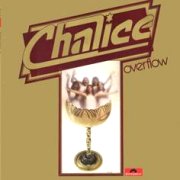 |
Overflow (1975) **½/T½ |
|
| Writings on the Wall In My World Mums and Dads Beginning to Feel the Pain Sail on Sailor Got to Be Serious (About it) Lightning We Can Make Love |
Living's Easy Standing on a Mountain Top On the Road You Turn Me Around |
|
Current availability:
Mellotron used:
From its cover, you'd think that Chalice's sole album, Overflow, was a prime slice of Aussie glam-rock, but it's actually middling pop-rock with the occasional country influence, notably the banjo and pedal steel-driven Mums And Dads. Apparently, the band were British ex-pats, so Christ knows what persuaded them that moving to Australia was a good idea; maybe the overcrowded scene back home? Competent but unexciting, the album consists of a mix of homegrown efforts and covers, including the Beach Boys' sublime Sail On Sailor from the previous year.
Although guitarist/keyboard player George Bunea is credited with Mellotron, the track-by-track credits only mention Sebastian Hardie's Toiv(o) Pilt; Sebastian Hardie were on the same label (Polydor Australia) and released their own debut album the same year. He only plays it on three tracks, with strings on In My World and Beginning To Feel The Pain and strings and cello on the closing ballad You Turn Me Around. All in all, this is pretty average fare with fairly weak songwriting; I'm not especially surprised Polydor didn't release a follow-up, assuming that was the course of events. OK Mellotron parts, but nothing you haven't heard before and better. Incidentally, not sure what's with the deliberately badly-played 'A Bicycle Made For Two' on the organ at the end of the album... In-jokes should, by and large, be kept out of the public gaze.
See: Sebastian Hardie