




|
|
|
|
||
|
E (US) see: |
 |
 |
Fate is the Hunter (2005, 43.11) ***/TT |
|
| Someone to Love When You're Older Officer Silence Cry Sometimes Anything Free Come This Far |
Sweet Sixteen Hero Untitled |
|
Current availability:
Chamberlin used:
Kate Earl is an Alaskan of Filipino/European descent, thankfully better than the other Alaskan female singer-songwriter who springs to mind. Saying that, her debut, 2005's Fate is the Hunter, is a somewhat unexciting effort, although I've heard a lot worse; elements of blues (Someone To Love), folk (Come This Far) and even jazz (Sweet Sixteen) creep in, making for a wider stylistic palette than that used by many of her contemporaries.
Patrick Warren does his usual Chamberlin thing here, with flutes (alongside real strings) on When You're Older and Silence, plus strings and flutes on Anything and remarkably real-sounding strings on Hero. Overall, then, not that dynamic, but could've been so much worse; reasonable Chamby use, too, for a change.
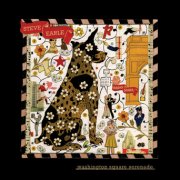 |
Washington Square Serenade (2007, 42.08) ***½/T |
|
| Tennessee Blues Down Here Below Satellite Radio City of Immigrants Sparkle and Shine Come Home to Me Jericho Road Oxycontin Blues |
Red is the Color Steve's Hammer (for Pete) Day's Aren't Long Enough Way Down in the Hole |
|
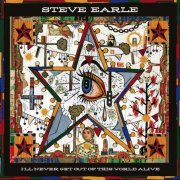 |
I'll Never Get Out of This World Alive (2011, 37.42) ***½/T |
|
| Waitin' on the Sky Little Emperor The Gulf of Mexico Molly-O God is God Meet Me in the Alleyway Every Part of Me Lonely Are the Free |
Heaven or Hell I am a Wanderer This City |
|
Current availability:
Mellotron used:
Steve Earle can reasonably be said to've been to hell and back, the important bit being the 'back' part, unlike, say, Townes Van Zandt, with whom he's often compared. 2007's Washington Square Serenade is something like his twelfth album, produced by one half of The Dust Brothers to, as Earle put it, "Make a folk record arrived at by hip-hop rules". You wouldn't actually know it, listening to the album, with the possible exception of closer Way Down In The Hole; it's a very respectable alt.country record, although Earle's youthful lyrical fire has dimmed slightly. His wife, trad country singer Allison Moorer guests, as does NYC avant-garde doyen John Medeski, but the credit for such a powerful album has to go to Earle and Earle alone.
Medeski does his usual Mellotron thing, with a swooping pitchbent choir part on Satellite Radio, although I just can't decide whether or not the background voices on Oxycontin Blues are Mellotron or not; surely Medeski wouldn't play such a 'normal' part? I suspect it's far more likely to be the 'Downtown Proletariat Choir', a.k.a. a bunch of Earle's New York buddies. I'd imagine the background flutes on Way Down In The Hole are Mellotron as well, but more because no-one's credited with flute than for any other reason.
Four years on and 2011's I'll Never Get Out of This World Alive is, if anything, better than its predecessor, top tracks including opener Waitin' On The Sky, the superb The Gulf Of Mexico, the Irish folk of Molly-O and the gentle Every Part Of Me, amongst other highlights. Keefus Ciancia plays Mellotron cellos and very obvious flutes on Waitin' On The Sky, although that would appear to be our lot.
See: Allison Moorer | Medeski Martin & Wood
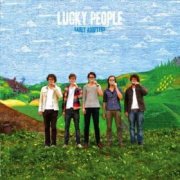 |
Lucky People (2011, 38.52) ***/TT½ |
|
| Talking Backwards Floating House Metropollution Average Boy Hoax Lucky People We Are Harmonise |
Blank Page Love Like Liars |
|
Current availability:
Mellotron used:
Early Adopters exist at the better end of indie, which is to say, their songs on Lucky People are fairly bland, but more adventurous than the average, which makes a welcome change. Highlights include the driving Average Boy, We Are and Harmonise, although too many songs waft along in tried'n'tested indie fashion.
Ruud Peeters plays his M400, with strings all over opener Talking Backwards, the title track and We Are, plus choirs on Harmonise, occasionally upfront, more often not, Lucky People itself being a particularly good example. So-so indie with a handful of better tracks, then, with some nice (confirmed) Mellotron.
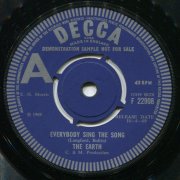 |
7" (1969) ***/T½ Everybody Sing the Song Stranger of Fortune |
Current availability:
Mellotron used:
The Earth, from Plymouth, Devon, released just the two singles, the first of which, Everybody Sing The Song b/w Stranger Of Fortune, is a late-period semi-psych effort, albeit less so on its flip. I'm sure collectors pay stupid money for mint originals, but this jaunty effort really isn't worth it on musical grounds (which, I realise, are irrelevant in such circles).
Someone, possibly band pianist Dave Bolitho, plays a cranky Mellotron flute line on the 'A', although nothing on the flip. This is on YouTube; I'd hear it there, if I were you.
Earth & Fire (Netherlands) see: |
 |
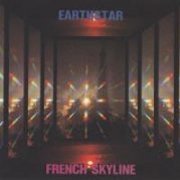 |
French Skyline (1979, 43.35) ***/TT½Latin Sirens Face the WallSirens The Amazon The Flourishing Illusion Splendored Skies and Angels French Sky Lines Suite Movement I: Morning Song (for Iris and Richard) Movement II: Sources Change, Including 'The Movement' Movement III: Demensional Music Movement IV: Wind and Sky Symphony/Reprise: Morning Song |
 |
Atomkraft? Nein, Danke! (1981, 46.59) ***/TT |
|
| Golden Rendevous Sonntagsspaziergang Garden's End Wind Mills Cafe Sequence Cafe Exit (incl. March of the Flanged Angles) White Cloud Solar Mirrors |
Jet Sets Forest Floor Part I: Atomkraft? Nein, Danke! Part II: Aras |
|
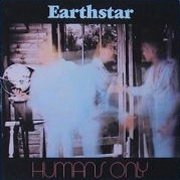 |
Humans Only (1982, 44.51) **½/T½Rainbow DomeDon't You Ever Wonder? Indian Dances One Flew Over the Ridge TV Funk Tip Toe Funk Umbrey Flowing Lights 25 Arrival Pieces |
Current availability:
Mellotrons/Birotrons used:
Earthstar (or Earth Star) were the brainchild of American Craig Wuest, who relocated to Germany in the late '70s. There was an early, limited edition tape replay-free album in 1979, Salterbarty Tales (***), but their first release to gain any major exposure was French Skyline from later that year, on the Sky label. On the German '70s progressive scene, the best bands usually ended up on the superb Brain imprint, leaving Sky with the also-rans; Earthstar are actually one of their better bands, but, while working in the same general area as Tangerine Dream/Klaus Schulze, they're unable to hit the same heights. This album is actually quite highly rated on the electronic scene, partly because of Schulze's co-production credit, but I'm not sure that's enough to label the album a 'classic'.
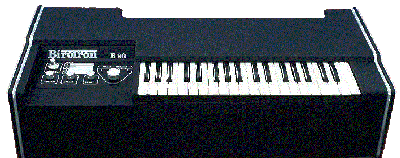 |
French Skyline relies heavily on drones, featuring the rare Birotron all over side one's three-part Latin Sirens Face The Wall. Wuest is credited with both Birotron and Mellotron and it's difficult to tell which is which, although I suspect the choirs are Birotron (notes sustained far past the eight-second limit) and the strings later in the piece are Mellotron, though this is sheer guesswork, to be honest. I can't hear any tape replay stuff on side two, but that doesn't mean it isn't there. Saying that, Wuest is listed as playing nineteen different keyboard instruments, plus sundry others, so it's quite amazing that the tape-replay stuff gets as much of a look in as it does.
Atomkraft? Nein, Danke! (that's 'Nuclear Power, No Thanks!', though I'm told the translation's a bit iffy), is slightly more laid back than its predecessor, though still firmly in EM territory. There's no Mellotron this time round, just the Birotron, so although it's only on a couple of tracks, it's an ideal opportunity to hear the rarest tape-replay instrument.
By Humans Only, Earthstar had developed a more guitar-orientated sound and appeared to be carving their own little niche in the EM field. It wasn't the most enthralling listen, to be honest, but I'm not sure I'm really qualified to judge this stuff properly. The two 'funk' tracks on side two, er, aren't really and Tip Toe Funk feels like it's going to go on forever, though not in a good way. The Mellotron makes a reappearance on this album, along with the ever-present Birotron, but the use is still fairly minimal and it's still difficult to tell which is which.
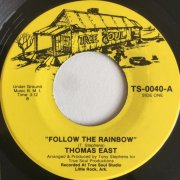 |
7" (1975) ***/TT Follow the Rainbow Follow the Rainbow (instrumental) |
Current availability:
Mellotron used:
As with labelmate Larry Davis, soul maven Thomas East has languished in obscurity for some decades longer than is strictly fair. Discogs lists a mere six singles to his name, including the undated-but-most-likely-1975 Follow The Rainbow, a smooth soul/funk groover of the kind that swept the States in the mid-'70s.
Tony Stephens apparently plays Mellotron, with 'orchestral replacement' strings right through, presumably also on the instrumental flip. No, nothing you haven't heard before, but nice to hear it at all on a soul 7".
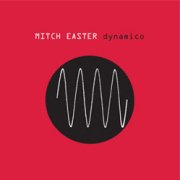 |
Dynamico (2007, 51.18) ****/T½ |
|
| 1½ Way Street Break Through Time Warping You/Me Sudden Crown Drop Ton of Bricks Sights Set on Heaven Dusky Lair |
To Be, Cool Thing Why is it So Hard? Phantoms of Ephemera Glazed I Want a New Scene Love Slaves to Paradise Lost |
|
Current availability:
Chamberlin used:
Although best known as a producer (notably for early R.E.M.), powerpop legend Mitch Easter (b. 1954) has been a working musician since his teens, initially with schoolfriends who became The DB's, his most notable later work being with The Orange Humble Band. It comes as no surprise, then, that his lone solo album to date, 2007's Dynamico, falls fairly and squarely into the powerpop field, at its best on opener 1½ Way Street, You/Me, To Be, Cool Thing and Why Is It So Hard?, although attempting to isolate highlights is a futile gesture when faced with songwriting this good.
Easter plays what I take to be his own Chamberlin, with string and flute parts on Break Through and flutes on Time Warping and closer Love Slaves To Paradise Lost. I presume Easter's simply too busy producing other artists (see below) to record a follow-up, but anything else he chooses to release will be get a heroes' welcome at Planet Mellotron, tape-replay or no.
See: Coronet Blue | Mark Crozer & the Rels | The DB's | The Drag | D. Henry Fenton | Jeffrey Dean Foster | Health & Happiness Show | Hungry Mind Review | Insanity Wave | Dom Mariani | Mercury Dime | Motocaster | Orange Humble Band | Mary Prankster | R.E.M. | Shalini | Slingbacks | Sneakers | Someloves | Velvet Crush | Lynne Me Your Ears: a Tribute to the Music of Jeff Lynne | Surprise Your Pig: A Tribute to R.E.M.
 |
 |
Easter Island [a.k.a. NowAndThen] (1980/1990, 45.08/50.13) ****/TTTT |
||
| Wanderer's Lament Face to Face Genius of the Dance Solar Sailor Winds of Time |
The Alchemist's Suite Prelude Life Celebration Telesterion Resurrection Summerland Nowandthen |
[Bonus tracks on 2016 CD: Face to Face Solar Sailor] |
||
Current availability:
Mellotron used:
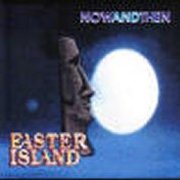
Easter Island were yet another of those US prog outfits who struggled for years, eventually throwing in the towel in the early '80s (see: Cathedral, Netherworld et al.), while managing to put one album out, usually self-financed. Originally released in early 1980 as Easter Island, the album apparently comprises various demos made over the preceding few years, but sounds reasonably cohesive, all things considered. It's also pretty good, faring well against the likes of Yezda Urfa or Mirthrandir, sounding in places like a heavier version of King Crimson, maybe, or a less experimental Gentle Giant. Albums of this kind are usually let down by the vocals, although not in this case, while the rest of the musicianship's excellent, especially when you consider these began life as demos.
Ray Vogel played keys for the band at the time and his Mellotron work is exemplary, shedloads of strings and polyphonic flute parts all over the place, not to mention his organ, piano and synth work. It's difficult to pick individual highlights - it's the kind of album you need to have played several times to let it all really sink in; suffice to say, not only is the music excellent, but the Mellotron work alone makes the album more than worthy of purchase.
The album was originally only pressed in a ridiculously small quantity (figures of three hundred are mentioned), so, ten years later, ZNR Records reissued it as NowAndThen, albeit not without a bit of mucking about. Guitarist Mark Miceli wrote and recorded a title track for the new release, which obviously features modern synths and added more of the same to the beginning of the album, on Wanderer's Lament, which I suppose justifies its new title (the two new tracks are italicised). In all honesty, I'd much rather he hadn't, as the different sound jars badly against the original tracks, making for a slightly disjointed feel. Oddly, given when it was recorded, the Mellotron on Wanderer's Lament sounds authentic. A 2016 Japanese reissue adds two 1978 live tracks, Face To Face and Solar Sailor, Mellotron present and correct on both, while 2025's vinyl reissue on PQR-Disques Plusqueréel adds a CD of live material, adding another three 1978 recordings, also apparently available on LP as Live 1978-2003. More news when etc. etc.
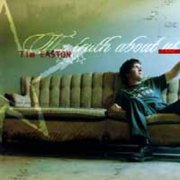 |
The Truth About Us (2001, 47.55) ***/½ |
|
| Half a Day Carry Me Downtown Lights Get Some Lonesome Happy Now Bad Florida Soup Can Telephone Game Conversation Out of Your Life |
I Would Have Married You When the Lights Went Out Don't Walk Alone |
|
Current availability:
Mellotron used:
Given that Ohio-born Tim Easton is based in Nashville and that members of Wilco are involved, it comes as no great surprise to learn that his second album, 2001's The Truth About Us, is a folk/country hybrid. Better tracks include the harmonica-fuelled Downtown Lights, the moody Bad Florida and When The Lights Went Out, but nothing here should offend the typical Americana fan.
Although I've found online references to 'Mellotron samples', Wilco's Jay Bennett is credited with the machine, adding background flutes to Carry Me, so I'm inclined to treat it as genuine, at least for the moment. Neither a bad nor a great album, then and I'm not fully convinced by that Mellotron (or by any of Bennett's other use?), to be honest. Worth it for lovers of Americana.
See: Wilco
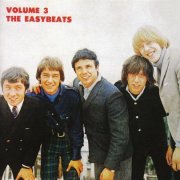 |
Volume 3 (1966, 31.22/58.39) ***/0 (½) |
||
| Sorry Funny Feelin' Say You Want Me You Said That Goin' Out of My Mind Not in Love with You Promised Things The Last Day of May Today |
My My My Dance of the Lovers What Do You Want Babe Can't You Leave Her [CD adds: Hound Dog Do You Have a Soul Saturday Night |
My Old Man's a Groovy Old Man The Easybeats-Medley Mean Old Lovin' I'm Happy Hey Babe I Don't Agree Keep Your Hands off My Babe I'm Just Trying] |
|
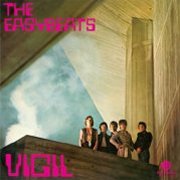 |
Vigil (1968, 43.46) ***/T½ |
|
| Good Times What in the World Falling Off the Edge of the World The Music Goes Round My Head Can't Take My Eyes Off You Sha La La Come in You'll Get Pneumonia See Saw |
Land of Make Believe Fancy Seeing You Here Hello How Are You Hit the Road Jack We All Live Happily Together I Can't Stand it |
|
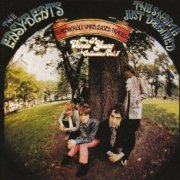 |
The Shame Just Drained (1977, recorded 1964-68, 40.27/64.44) ***½/T |
||
| Little Queenie Baby I'm a Comin' Lisa I'm on Fire Wait a Minute We'll Make it Together Peter Me and My Machine The Shame Just Drained |
Mr. Riley of Higginbottom & Clive Kelly Where Old Men Go Johnny No-One Amanda Storey Station on Third Avenue [CD adds: Do You Have a Soul (3rd version) Check the Bassline |
Watch Me Burn Where Did You Go Last Night Heaven and Hell Happy is the Man Land of Make Believe Coke Jingle, No. 1 Coke Ads #2 & 3] |
|
Current availability:
Mellotron used:
The Easybeats were Australia's primo '60s group, living in Britain for a while and having one huge international hit in Friday On My Mind. What is less well known is that two of their members were Harry Vanda and George Young, the latter being the much older brother of Malcolm and Angus, later of the phenomenally successful AC/DC, whose first several (and best) albums were recorded at Vanda and Young's studio, produced by them and (as rumour has it) partially anonymously written by them, too. Allegedly. Finding a decent discography for the Easybeats isn't the easiest job, as (along with so many other bands of the era) their albums were released in different versions in different territories, while they weren't really much of an albums band anyway, singles being seen as the prime method of expression (OK, way of making money) by their record company.
Volume 3 was released in 1966 and, while it's a perfectly competent album of its type, mostly Beatles-esque pop, with a smattering of Stonesy graunch, there's nothing on it that leaps out at the listener like their biggest hit. The original album's unsurprisingly Mellotron-free, as hardly anyone was using them at that point, but the last track on Repertoire's expanded edition, I'm Just Trying (recorded in 1968) has a rather hesitant string part that doesn't really do that much to enhance the song.
What a difference two years can make... Their next album 'proper', 1968's Vigil, carries all the hallmarks of a band who realise they have to keep up with the crowd or get swept away. Its psych-pop sounds not unlike a beefier version of, say, The Hollies, better tracks including Falling Off The Edge Of The World, Come In You'll Get Pneumonia and Land Of Make Believe, although I'm not quite sure what to make of the rather surreal We All Live Happily Together. I blame the drugs. Anyway, someone (Young?) plays Mellotron, with a huge blast of strings opens Come In You'll Get Pneumonia, swelling up later in the song, saxes on See Saw and more strings on Land Of Make Believe, although the strings and brass on Hello How Are You are real.
In 1977, many years after their demise, über-fan and well-respected Sydney scenester Glenn A. Baker compiled an LP's-worth of unreleased or super-rare material, The Shame Just Drained, years before this became the norm. Many of the tracks are clearly demos, with even the odd dropout in places, although for 'Beats fans this is invaluable, showing another side to the band, not least their penchant for 'mini-operas', like Mr. Riley Of Higginbottom & Clive or the title track. As Glenn mentions in his exhaustive sleevenotes, several of the album's tracks are from a scrapped LP from 1967, I believe, featuring Freddie Smith on (presumably) a studio MkII, with string parts on We'll Make It Together and Where Old Men Go (although the orchestral stuff on Amanda Storey is, er, an orchestra), although nothing you'd actually describe as essential listening, to be honest.
To quote Glenn, "The Easybeats were beset by every conceivable handicap: management problems, record company disputes, legal wrangles, drug dilemmas, lack of direction, poor financial management, constant change of producers and plain bad luck", without all of which they may have been a lot more successful than they were. At least Vanda and Young eventually basked in some reflected glory and hopefully made some decent dosh out of AC/DC, a band who couldn't be described as 'hard up' these days. As far as these albums go, Volume 3's probably only for fans of the era, although Vigil and The Shame Just Drained might be worth the effort if you're into the period where mid-'60s beat turns into psych-pop, there are a few essential tracks scattered across both albums and a bit of decent Mellotron work.
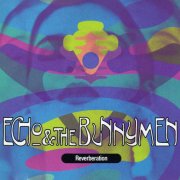 |
Reverberation (1990, 46.35) ***/T |
|
| Gone, Gone, Gone Enlighten Me Cut & Dried King of Your Castle Devilment Thick Skinned World Freaks Dwell Senseless |
Flaming Red False Goodbyes |
|
Current availability:
Mellotron used:
Reverberation was the Bunnymen's sixth album, the last before their split and the only one made without their charismatic leader, Ian McCulloch and, as such, is often overlooked by the band's fans. It would be fair to say that it's 'informed' by late-'60s psych (spot the 'phase the whole mix' bit in Devilment), although its influences are as much their own catalogue and that peculiar strand of pseudo-psych that reared its head in the '80s, the decade with which the Bunnymen will always be associated. Best track? Possibly sitar-strewn apocalyptic closer False Goodbyes, although there are several good bits, just not many entire songs.
Regular keys man by this point, Jake Brockman is credited with Mellotron, although it's fairly well buried in the mix, as you'd expect from an album from 1990. Anyway, all I can hear are background strings on Freaks Dwell, a vague strings solo on Senseless and about one string chord on Flaming Red, so we're not exactly talking 'Top Mellotron' here. Bunnymen fans who have previously avoided this record should probably give it a go and psych fans desperate for anything even remotely in that league could, too, but the rest of us can probably get our psych fixes better elsewhere.
 |
Rachel Eckroth (2021, 15.34) ***/TThe RootReady Go You're the Only Thing Cooped Up and Bored Blues |
Current availability:
Mellotron used:
Arizonan Rachel Eckroth is a multi-faceted artist, specialising in jazz, although 2021's self-titled download-only EP leans heavily on her singer-songwriter side. It's at its best on You're The Only Thing (also released as a standalone download single), while opener The Root and Rady Go are piano ballads and closer Cooped Up And Bored Blues is a straight country number.
Rachel plays The Wavelab M400 on You're The Only Thing, with flute and cello parts running through the song. The same year's The Garden is so different it could be by another artist entirely, more gnarly instrumental jazz than anything. Although Rachel's credited with Mellotron on it, the flutes on the title track (alongside real ones) are almost certainly sampled.
 |
Eclection (1968, 43.36) ***½/½ |
|
| In Her Mind Nevertheless Violet Dew Will Tomorrow Be the Same Still I Can See In the Early Days Another Time, Another Place Morning of Yesterday |
Betty Brown St. George & the Dragon Confusion |
|
Current availability:
Mellotron used:
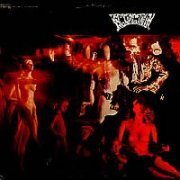
Eclection were one of the earliest examples of British folk rock (as against the US version), so it's no surprise at all that two members (drummer Gerry Conway and guitarist Trevor Lucas) went on to join Fairport Convention in the '70s. Eclection is an appealing collection of folk and folk-influenced material, with joint male/female vocals (sound familiar?), albeit with late-'60s mainstream production values, meaning most tracks have string section/orchestral parts, without which folk rock may have happened a little sooner. It's difficult to pinpoint the best tracks, although In Her Mind, Violet Dew and St. George & The Dragon are all excellent examples of their style.
While most of the orchestral instruments are exactly that, there's a polyphonic flute part in Betty Brown ("Betty Brown was small and round/red hair had she too") that has to be a MkII Mellotron, presumably played by some anonymous session type, although that would seem to be your lot on the Mellotron front. Anyway, if you want to hear the roots of the '70s folk rock scene, look no further; although dated, this is decidedly worth hearing. Incidentally, speaking of ex-members, Georg Hultgren (renamed Kajanus) went on to become a minor-league pop star in the '70s with Roxy copyists Sailor.
 |
Life on the Line (1977, 34.53) ***/½Do Anything You Wanna DoQuit This Town Telephone Girl What's Really Going on Ignore Them (Still Life) Life on the Line (And) Don't Believe Your Eyes We Sing...the Cross Beginning of the End |
Current availability:
Mellotron used:
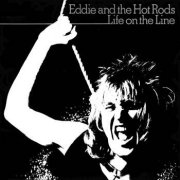
By 1977, Canvey Island's Eddie & the Hot Rods found themselves in the invidious position of being allied to the punk movement by the general public, although not by their peers, generally to their detriment. Life on the Line was their second album, tastefully 'featuring' sleeve art depicting someone in the act of committing suicide, as did the previous year's Teenage Depression. These shock tactics (very 1977) belie the album's high-energy r'n'b, notably their biggest hit, powerpop classic Do Anything You Wanna Do, although the rest of the album lacks that track's joie de vivre, sounding strangely neutered in comparison with some of their punk peers.
Strangely, guitarist Dave Higgs (there's a British name for you) plays Mellotron on closer Beginning Of The End, with a distant string part that doesn't, to be brutally honest, add much to the song. If you're thinking of buying a copy of this, the Captain Oi! release features a very generous selection of bonuses, essentially all the b-side/EP tracks from the period, the best example being the set's final track, Distortion May Be Expected, which I vaguely remember from the time, a sort-of dub instrumental. Best title? Has to be the amusing Bowie Low-referencing Ignore Them (Always Crashing In The Same Bar). As an aside, the band's mascot, a dummy named 'Eddie', was retired before the band broke through. Given that they almost certainly played the East End in their early days, might a certain Steve Harris, in the process of forming a certain Iron Maiden have been influenced in his choice of ridiculous 'hook' on which to hang his new band's image? Just wondering...
 |
The Eddie Boy Band (1975, 41.36) **½/0 |
|
| Oh, So Hard The Maze Say Goodbye Babe Come on Virginia (I Wanna Win Ya) Losin' Again Good to Have You Back Again The Gambler Sixteen Ladies |
Makin' Love to You, Babe Mother Music |
|
Current availability:
Mellotron used:
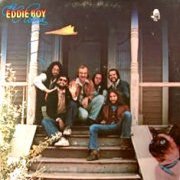
The Eddie Boy Band were one of those mid-'70s US outfits that sounded a bit like The Doobie Brothers; you know, bland, mainstream stuff, with 'soulful' vocals, funk-lite rhythm guitar and just enough 'rock' not to be considered full-on pop. All pretty unexciting stuff, if truth be told, although MCA obviously thought enough of them to release their album abroad, or at least in the UK. A couple of tracks have some balls, notably Losin' Again, with its duel-lead work, but it's largely very anodyne stuff.
Keys man John Paruolo sticks to Hammond and piano most of the time, while subsidiary session man David Wolinski (Chicago, a million others) adds 'ARP string ensemble' on one track, but despite Paruolo's 'Mellotron' credit, I can't hear a note of the thing. What's the point, eh? It's obviously either so far down in the mix (maybe doubling those synth strings?) that it's inaudible, or there's a bit of cello somewhere that's completely hidden by everything else. Anyway, dull album, no Mellotron. Avoid.
 |
7" (1969) ***/TT Cousin Pretty Sad Old Song |
Current availability:
Mellotron used:
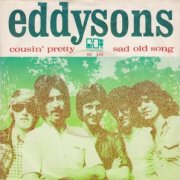
(The) Eddysons (a.k.a. Eddy & the Eddysons) were a short-lived late '60s Dutch pop outfit, based around the talents of Eddy Ouwens, also featuring our old friend Martin Agterberg (Shoes, many sessions). One of their last singles, '69's Cousin Pretty, is by far the best thing I've heard by them, a fuzz guitar-heavy psych number, anthologised on Otherside's Fantasio Daze compilation, although flip Sad Old Song (a Mike d'Abo composition) is a brassy effort, much like the band's other work and very much of its time.
Someone (most likely Agterberg) plays Mellotron on the 'A', with a fat string chord kicking things off, complete with nifty pitchbend and background strings throughout. Unlike so many other Dutch Mellotron recordings, I'd say we're not hearing Phonogram Studios' much-recorded M300, as a) I don't believe the standard M300 was capable of pitchbending and b) er, it sounds like a MkII. After Ouwens' departure, the band morphed through several other incarnations, not least Jumbo, although their late '70s stint as Circus has nothing to do with the identically-named Dutch outfit from a decade earlier.
See: Jumbo
 |
Alon Eder (2011, 51.36) ***/TTT |
|
| The Bell The Last Day of Autumn And There is a Bird in the Sky The Beautiful Life of Clara Shito Until a Song is Unfolded My Desire to Give The One With the Black Dog 88 |
Hard at Night Without a Person CT Swing My Body Was Smarter Than I Was Just Do Not Cry You'll Be With Me Boredom |
|
Current availability:
Mellotron used:
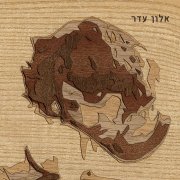
Alon Eder's eponymous 2011 debut is a gentle, vaguely jazzy, Hebrew-language singer-songwriter album, with a Gallic feel in places, although it's actually less eclectic than that sounds. Unlike Japanese and some other non-Arabic script languages, Google Translate won't transliterate Hebrew, so the rather unwieldy track titles above are direct translations, which probably loses a lot of their original flavour. Highlights include The Beautiful Life Of Clara Shito (one of the more Gallic tracks), Until A Song Is Unfolded and CT, not to mention the brief, instrumental 88.
Google Translate also tells me that what I took to be a real Mellotron, possibly a MkII, is in fact Zohar Cohen's probable MkII (I can't remember whether he also owns any other models), played by Eder, with strings on all highlighted tracks. Any other sounds used? All the brass sounds real (the MkII brass is very distinctive), ditto the flutes, so I doubt it. Decent album, decent Mellotron work. Nice to know that my Mellotron Radar's working better these days.
 |
Carolyn Edwards (2006, 37.22) **½/T |
|
| Lunacy Monica Solace Lazy Factory Moon Wrestling Match Shrink Secret Monster |
The Argument Leave Beauty Wasted |
|
Current availability:
Mellotron used:
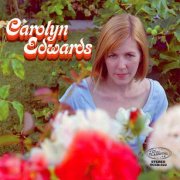
Carolyn Edwards has played post-punk, 'alt.pop' (?) and, presumably, generic indie in various bands, although 2006's Carolyn Edwards is piano-based singer-songwriter pop. Any good? Dark opener Lunacy is worth the price of entry, as are Wrestling Match and the low-register brass-led Secret Monster, but much of the remainder is too lightweight for its own good.
The sleeve credits state 'Mellotron on 'Lunacy' recorded at Carousel 44' and, indeed, Edwards' Mellotron flutes sound pretty damn' real, with overlapping parts all over the song. Not the most exciting of albums, then, but it could be so much worse.