




|
|
|
|
||
|
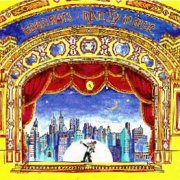 |
Ratcity in Blue (1976, 39.11) ***½/T |
|
| Does it Make You Feel Good Boardwalk Slasher Ratcity in Blue Almost Anything Goes The Room Writing the Pages Reason to Kill Advertisement in the Voice |
Yellow Flower Tough Guys Hour Glass |
|
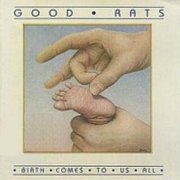 |
Birth Comes to Us All (1978, 30.41) ***/½ |
|
| School Days City Liners Cherry River Gino Ordinary Man Man on a Fish You're Still Doing it Juvenile Song |
Bed and a Bottle Birth Comes to Us All |
|
Current availability:
Mellotrons used:
Long Island's Good Rats formed in the mid-'60s, releasing their first, eponymous album in 1969, carrying on a sporadic series of releases until the early '80s; the epitome of the phrase 'local heroes', they supported just about everyone and got their name about without ever actually breaking through nationwide in any meaningful way.
Their third album, 1976's Ratcity in Blue (ouch), is an excellent collection of vaguely Blue Öyster Cult/Dictators-style hard rock, tinged with an early '60s Spector-esque feel in places, highlights including the ripping title track, stuffed with harmony guitar work, The Room and Advertisement In The Voice (pronounced in the American fashion, of course, with the accent on the third syllable). I believe John Gatto plays the Mellotron on a handful of tracks, with choir (mixed with real vocals) on the quiet bits in Writing The Pages, cellos and strings on Advertisement In The Voice and a brief string part on Tough Guys, although not enough to make it worth hearing for that alone.
1978's Birth Comes to Us All contains a combination of hard rock, ballads and their own brand of slightly off-kilter rock, typified by the brassy Ordinary Man and the vaguely Queen-like Juvenile Song. It occasionally strays into rather ordinary, mainstream pop/rock territory, but contains enough of their own identity to make it stand out from the crowd. Recorded at The Who's Ramport Studios in London, although I'm unaware that the facility had any connection with Mellotrons, Stephan Galfas plays one for a few seconds on Bed And A Bottle, with a string part clearly distinguishable from the real strings on a couple of tracks.
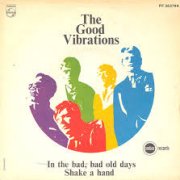 |
7" (1969) ***/TTTT In the Bad, Bad Old Days (Before You Loved Me) Shake a Hand |
Current availability:
Mellotron used:
These days, it's rare to come across a band with releases on a major label about whom so little is known, but the unwisely-named The Good Vibrations are one such. It seems they were British, but thoroughly obscure, despite releasing several singles. Their version of The Foundations' In The Bad, Bad Old Days (Before You Loved Me), a UK hit the previous year, is a vibrant, brassy (without actually containing any brass) take on the song that should appeal to lovers of little-known gems from the era. The flip, Shake A Hand, is not only less interesting, but also Mellotron-free.
You want Mellotron? You goddit. The 'A' is smothered in MkII strings, both a lead line and a background chordal part, making it effectively the lead instrument on the track, although it's the only one of their twelve extant tracks to feature the instrument. 2008's under-half-hour compilation of the band's singles, I'm Thinking 'Bout, already seems hard to find, but it's probably the easiest way to track down a physical copy of their meagre output.
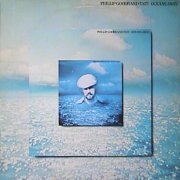 |
Oceans Away (1976, 35.13) **½/T |
|
| Oceans Away On the Waterfront Old Fashioned Love Jewel Love's Like a Song I Will Glide You've Got the Gun Laundry |
Gabrielle Can You Demonstrate |
|
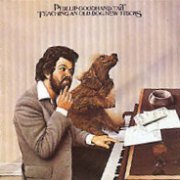 |
Teaching an Old Dog New Tricks (1977, 33.31) **½/T½ |
|
| Airborne The Lady Lives in England Are You Alone? Private Lives Just a Dream Parade Angeltown Don't Treat Your Lover Like a Thief |
I Want to Winter With You If We Ever Meet Again |
|
Current availability:
Mellotrons used:
Phillip Goodhand-Tait had been around since the beginning of the '70s; I get the impression that he was something of a songwriting 'gun for hire', rather in the way that Harry Nilsson started his career. Now, I don't know about his earlier albums, but Oceans Away (ho ho) is appallingly bland, real MOR stuff for most of its length. I'm not sure what I was expecting, but this brings to mind the slushiest orchestral end of '70s pop; very 'songwriterly' songs, but no excitement whatsoever. Like Gilbert O'Sullivan, or Elton John on Mogadons. More Mogadons. There's only one track with credited Mellotron (from Goodhand-Tait), Gabrielle, with a reasonable flute part, but orchestral arranger Robert Kirby (of concurrent Strawbs fame) is credited with 'choir' on You've Got The Gun and it is, indeed, Mellotron, with some fairly ordinary block chords.
'77's Teaching an Old Dog New Tricks is a more upbeat effort, no doubt not in keeping with the times, having more of a Philly soul vibe about it in places than anything remotely connected to that nasty punk rock stuff, although I found it just as hard to trawl through as its predecessor. Kirby plays Mellotron again, flutes this time, on Just A Dream and Angeltown, but nothing particularly outstanding, unsurprisingly.
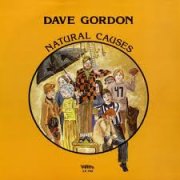 |
Natural Causes (1978, 35.43) ***/T½ |
|
| The Mad Consumer Dust-Eatin' Cowboys In the New York Central Yard Your Gettin' Bothered Doesn't Marry Me Slip of the Hand My Ohio Home Grease on the Seat of My Jeans I Only Keep Up Appearances Now |
The Way it Sounds Ballad of Natural Causes Surely I'll Be Coming Home |
|
Current availability:
Mellotron used:
I can tell you next to nothing about Dave Gordon; a current jazz artist of the same name confuses the issue, although I've seen a reference to at least one other album that's probably by this chap. 1978's Natural Causes is a decent enough record, fusing bluegrass, folk and country into a pleasing mélange of American styles, better tracks (possibly more for their lyrics than music) including opener The Mad Consumer, In The New York Central Yard and the humorous Your Gettin' Bothered Doesn't Marry Me, while I Only Keep Up Appearances Now's '40s feel allows it to stand out from the pack.
Gordon (credited as 'Bill Gordon's youngest son') plays Mellotron himself, with a melodic flute part on Slip Of The Hand and pseudo-orchestral strings on My Ohio Home and The Way It Sounds, although the strings on a couple of other tracks are real. Even if you want to hear this, you're probably not going to find it that easily; suffice to say, while a little of its time, it's a good album of its type with some guaranteed Mellotron usage.
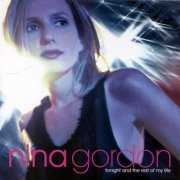 |
Tonight and the Rest of My Life (2000, 50.39) **½/TT½ |
|
| Now I Can Die 2003 Tonight and the Rest of My Life Badway Horses in the City Hold on to Me New Year's Eve Fade to Black |
Number One Camera Got Me Down Too Slow to Ride Hate Your Way The End of the World |
|
Current availability:
Mellotron/Chamberlin used:
Nina Gordon left Veruca Salt in 1998 (the story behind her dispute with co-founder Louise Post remains 'undisclosed', apparently), kicking off her solo career with 2000's Tonight and the Rest of My Life. Was it worth it? Depends how much you like very slightly 'alternative' pop/rock, I suppose. The only 'alternative' thing about this is that it isn't quite as mawkishly mainstream as the stuff that regularly soils the charts and its (very) occasional propensity for cranking the guitars up a little.
Going by the credits, there should be shitloads of tape-replay here, with Mellotron and Chamberlin from both John Webster and Patrick Warren, more Chamby from Jon Brion and more Mellotron from Gordon's brother, Jim Shapiro, although I really don't know what's where. Anyway, we get strings on Now I Can Die and the title track, strings and cellos on Hold On To Me, a string melody and chords on Fade To Black and cellos on Too Slow To Ride, all rather underwhelming, leaving the album's chief tape-replay use being the (Chamberlin?) strings and cellos on regular issue closer The End Of The World.
See: Veruca Salt
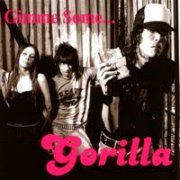 |
Gimme Some... Gorilla (2004, 51.47) ***/TJust Wanna RockTrampus Rok Orl Night Vesuvius Double Neat Gimme Some Gorilla Negative Space Oaken Mind I'm Dirty |
Current availability:
Mellotron used:
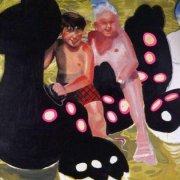
Gorilla are that rarest of things, a current British band (actually a trio with a female bassist), not only heavily influenced by Blue Cheer and their ilk, but also reasonably good. My chief criticism of their second album, 2004's Gimme Some... Gorilla, is its length; this kind of material works best in an under-forty-minute format, in my opinion, its fifty minute-plus length being rather too much of a good thing. Stylistically, it could be described as being at the most raucous end of the psych spectrum, roaring garage rock suddenly shifting into spacey psych interludes, a musical device that actually works rather better than you'd expect. Best tracks? Probably opener Just Wanna Rock and Vesuvius, though within their parameters, it's all good.
The uncredited keyboardist plays Mellotron strings and flute, sounding surprisingly real, on Vesuvius, although that's a real (and not very well played) flute on Oaken Mind. So if you like your guitars filthy and your vocals filthier, you really can't go wrong with Gorilla, one decent Mellotron track merely adding to their appeal. On the downside, Gimme Some... Gorilla is pretty samey, but whad'ya expect from a garage band?
 |
Eindelijk Vakantie! (2000, 43.01) **/T |
|
| Ode an die Freude We Zijn Zo Jong XTC Bij Nacht en Ontij Red Mijn Ziel Vooral In Mijn Betere Wereld Later Zeker Misschien Geld en Olie |
Mijn Bed is Zwaar en Groot Duitsland Wint Altijd Destroy! |
|
 |
Research & Development (2011, 46.18) **½/T |
|
| Kamikaze Ik Reis Door de Nacht Jonge Ondernemers Ik Ben Erbij Sirenen Iedereen Plukt de Dag Grote Stoute Orka Eddie Gelukzak |
Concorde Satan Ze Moesten Eens Weten 88 Procent |
|
Current availability:
Mellotrons/Chamberlin used:
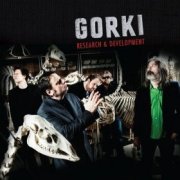
Gorki (originally Gorky) are a successful Belgian indie outfit, active for over twenty years. 2000's Eindelijk Vakantie! was their sixth release, a thoroughly average Flemish-language indie album, least dull tracks including brief opener Ode An Die Freude (Beethoven's Ninth on clean electric guitar with lyrics) and even briefer instrumental closer Destroy!, but this isn't going to win any awards in the 'internationally interesting' stakes. Keys man Luc Heyvaerts adds Mellotron to two tracks, with real-sounding flute on Red Mijn Ziel Vooral and reedy strings on Duitsland Wint Altijd, but you're really not going to buy this for that reason.
2011's Research & Development shifts the goalposts slightly by being a thoroughly average Flemish-language pop/rock effort instead. Better tracks include Ik Reis Door De Nacht and the punchy Ze Moesten Eens Weten, but we're really not talking 'Planet Mellotron fodder' here, frankly. Heyvaerts apparently plays Mellotron and (real?) Chamberlin, but, with a small string section on most tracks, the only definite parts are the flutes on Grote Stoute Orka and Concorde, assuming it's actually real. Are those tape-generated strings (backing real ones?) on Sirenen? Who knows?
See: Samples etc.
 |
Gospel (1974, 38.12) **/T½ |
|
| Icing on the Cake Bullfrog Jim Natural Love One Day Love Chapter Write a Little Letter Traveling I'm Looking for Seagulls |
Let This Cup To Him |
|
Current availability:
Mellotron used:
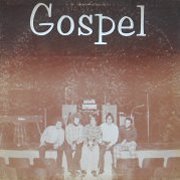
Kentucky vocal quartet Gospel released their eponymous album in 1974; while a handful of tracks almost pass muster, given that we're talking Jesus rock here, far too many push the needle most of the way over on the cringeometer. Sample lyric (from opener Icing On The Cake): "Oh, he's the icing on the cake/He's better than Shake'n'Bake". Ouch. The better efforts (Traveling, Let This Cup) could pass for America on a bad, Christian day, but even that isn't an especially good recommendation.
Jay Petach plays 'mellatron'; One Day opens with an unaccompanied flute part, with strings throughout the rest of the track, plus flutes on Love Chapter, although all other flute parts are real. Let's face it: Gospel isn't kind of album you really need to hear, unless you're a) a '70s Jesus rock nut, or b) as much of a Mellotron obsessive as, er, me.
 |
Another Summer of Love (2017, 37.58) ***½/T½ |
|
| In the Desert Hangin' on California Fantasy You're Already Home (I Wanna See U) All the Time Strange Days Sad Country Boy Kathleen |
The City Limits I Don't Wanna Lose You |
|
Current availability:
Mellotron used:
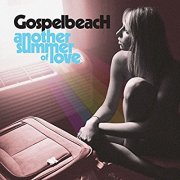
Gospelbeach (or, as they have it, GospelbeacH) are led by Brent Rademaker of Beachwood Sparks and The Tyde, so it shouldn't come as any surprise to hear that their second album, 2017's Another Summer of Love, is really rather good. The band operate on the cusp of Americana and West Coast soft-rock, which could be disastrous, but isn't. Highlights include opener In The Desert, which amusingly references The Jam's In The City, Hangin' On (which kicks off as if it's about to reference Thin Lizzy's That Woman's Gonna Break Your Heart), the glorious 12-string powerpop of (I Wanna See U) All The Time and the desert rock of Strange Days (presumably a Doors reference). Lots of referencing going on here, chaps...
Jonny Niemann plays what the band are keen to advertise as 'America's old Mellotron' on a handful of tracks, although it's unknown whether they've bought it, hired it in or simply borrowed it, with a clicky, jaunty flute solo and lush strings on You're Already Home and chordal flutes on (I Wanna See U) All The Time. All in all, a decidedly decent effort, even if a couple of tracks stray a little too close to, well, America, I suppose. Nice to hear some real Mellotron use, too.
See: Samples etc. | Beachwood Sparks | The Tyde
 |
Tid är Ljud (2006, 55.39) ****/T½HelgamarktzSyrenernas Sång Aniarasviten Goldondern Aniara Lämnar Doris Dalar Tyngdlösheten Miman Söker, Och Finner... Ljud Från Stan Tog du Med Dig Naturen? Knölsvanen Svarta Hål Och Elljusspår |
 |
Detta Har Hänt (2009, 53.10) ****/T½KontrastSorterargatan 3 Svenska Hjärtan Fem Trappor Nattkift Berslagen Innilegur? Västarbron 05:30 |
 |
Glue Works (2011, 46.05) ****½/TT½354Icosahedron Island Gliese 581g Waves Geosignal Soterargartan 1 |
 |
Sersophane (2016, 39.04) ****/½KonstruktionSersophane Fort Europa Dekonstruktion Channeling the Sixth Extinction Naturum |
Current availability:
Mellotron used:
Gösta Berlings Saga are named after the famous late-19th century Swedish novel, or possibly its 1920s film adaptation, featuring a very young Greta Garbo (thank you, Wikipedia...). Although they describe themselves as 'prog', their debut release, Tid är Ljud, is, in many ways, more of a psych album. Opener Helgamarktz is a fantastic slice of instrumental prog with a 'hook' (so to speak) to die for, but tracks such as Ljud Från Stan and Knölsvanen shift into 'jam' territory, albeit in a proggy kind of way, the overall feel being as much psych as prog, at least to my ears. Most of the album's keyboard work consists of David Lundberg's obviously genuine Rhodes work (listen to it distort at the beginning of Knölsvanen for proof), with the odd bit of Moog (?) and Solina thrown in for good measure. On the Mellotron front, both Lundberg and drummer Alexander Skepp play Mellotron flutes and cellos on the gentle three-part Aniarasviten, with more cellos and strings on Svarta Hål Och Elljusspår, all recorded using Anekdoten's machine at their rehearsal space, fact fans.
It's taken the band three years to follow up, but 2009's Detta Har Hänt has been worth the wait, being every bit as exploratory as their debut, full of dark, psych-infested instrumental prog. It's difficult to pick out 'best tracks', but opener Kontrast sounds slightly like a vocal-free Dungen, while lengthy, jammed-out closer Västarbron 05:30 pushes all the right buttons. Lundberg uses Mattias 'Änglagård' Olsson's Mellotron on just three tracks, with strings on Sorterargatan 3, Berslagen and mad pitchbent ones on Västarbron 05:30, once again refusing to overdo it. Two years on and they're at it again, with Glue Works, on Cuneiform this time. You know the setup by now, I'd imagine: excellent instrumental psych/prog crossover, beautifully composed, arranged and played. Top tracks? Probably the wonderfully dynamic thirteen-minute Island, complete with well-played (i.e. tuneful) Theremin and almost-as-long closer Soterargartan 1, although there's not a minute of dead wood here. Lundberg (and possibly Olsson) play Mellotron, with choirs on Icosahedron, strings on Island, Waves (a particularly upfront part) and strings and (briefly) choir on Soterargartan 1, making this not only their most satisfying Mellotron album to date, but their most satisfying all round.
After a several-year break, 2016's Sersophane is worth the wait, a blistering example of 'how to play progressive rock in the new millennium without re-treading old ground', highlights including the highly effective Fort Europa, throwing Moog Taurus and slide guitar into the mix and the crazed, ultra-intense, fifteen-minute Channeling The Sixth Extinction. Lundberg's Mellotron? You may well ask, despite a credit and being recorded at Mattias' studio. Is that a strange, non-standard brass part on Fort Europa? It'll have to do for the moment.
See: Samples etc.
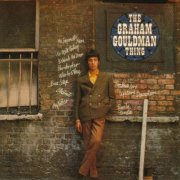 |
The Graham Gouldman Thing (1968, 29.07) ****/T |
|
| The Impossible Years Bus Stop Behind the Door Pawnbroker Who Are They My Father No Milk Today Upstairs, Downstairs |
For Your Love Pamela, Pamela Chestnut |
|
Current availability:
Mellotron used:
Mancunian Graham Gouldman is probably best known for his membership of 10cc (he's the only original member of the current touring outfit), but those in the know are aware of his writing career, stretching back to 1965, when he was all of nineteen. I hope he's proud of the fact that his fabulous For Your Love drove that purist twat Clapton out of the Yardbirds; he should be. It apparently forced Claptout's (slow) hand, as he left for John Mayall's Bluesbreakers, replaced by first Jeff Beck, then Jimmy Page. Gouldman carried on his run of hits with Bus Stop for The Hollies and No Milk Today for Herman's Hermits, amongst many others, before joining the rest of studio project Hotlegs to go on to fame and fortune under their new, allegedly Jonathan King-inspired name.
Anyway, The Graham Gouldman Thing is a solo album recorded by Graham in the late '60s, partially consisting of his own versions of his multiple hits, probably at the suggestion of label execs, doubtless unaware that Gouldman's neat little vignettes of suburban life might not be best suited to 1968's zeitgeist. In fairness, the arrangements are more '68 than '65 and great songs are great songs, irrespective of time. Amongst the excellent arrangement ideas on the album are Behind The Door's tape-trickery, the cod-medieval woodwind (in a good way) on Upstairs, Downstairs and the organ part on For Your Love, although the latter works less well than The Yardbirds' original.
Mellotron on just one track, possibly played by multi-instrumentalist Gouldman himself ('60s albums rarely give individual credits), or maybe then-sessioneer John Paul Jones, with a hesitant and slightly murky MkII flute part on Chestnut (also b-side to Upstairs, Downstairs), some nicely distorted Hammond chops and slightly campy narration thrown in. So; not a knock-you-dead album, but a very pleasant collection of beautifully-crafted '60s pop with one decent Mellotron track, now available on CD.
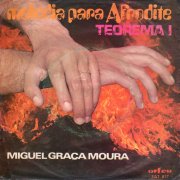 |
7" (1972) ***/TTT½ Melodia para Afrodite Teorema 1 |
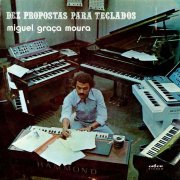 |
Dez Propostas para Teclados (1974, 37.51) ***/TTTT½ |
|
| Melodia para Afrodite Vado Via Petit Matin Killing Me Softly With His Song Ne Me Quitte Pas Adagio do Concerto de Aranjuez I Don't Know How to Love Him Valsinha |
Forever and Ever Poema Salgado |
|
Current availability:
Mellotrons used:
 |
Miguel Graça Moura? No, I hadn't heard of him, either, until my friend Arnaldo put me onto him. A Portuguese songwriter and keyboard whizz, his earliest work that's of any interest to us is a 1972 single, Melodia Para Afrodite, an instrumental ballad overlaid with a wordless female vocal (well, if there were words, it wouldn't be instrumental, would it?), backed with the rather more gutsy Teorema 1. Both sides of the disc feature Graça Moura's Mellotron heavily, with solo flute and chordal strings on the 'A' and strings all over the flip.
His 1974 album, Dez Propostas para Teclados (Ten Experiences for Keyboards) opens with a reprise of Melodia Para Afrodite, going on to give us another nine instrumental piano ballads (can you see a pattern forming here?), underpinned by loungetastic muted bass and tippy-tappy drums, not to mention more of that wordless female vocal. While a couple of titles are his own compositions, most appear to be covers, some (Killing Me Softly With His Song, Ne Me Quitte Pas, Demis Roussos' Forever And Ever) more familiar than others.
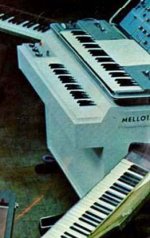
The rear sleeve credits tell us that Graça Moura used no fewer than seven Mellotron sounds on the album; the close-up from the sleeve (right) shows off a very fetching 'Mellotron' label on the side of the machine, in case you weren't sure. His favourite was clearly the strings, utilised on every track here, plus the flutes on Melodia..., a handful of very real-sounding trumpet notes at the end of Petit Matin, an oboe solo on Adagio Do Concerto De Aranjuez and what I take to be cor anglais on I Don't Know How To Love Him. Closer Poema Salgado features more cor anglais and a major trumpet part, although the flute on the track, plus Killing Me Softly... and Forever And Ever is real, while the trumpet solo on Valsinha sounds more like one of his two Moogs.
Both these titles are available as downloads if you know where to look (ahem). Can I recommend them? Well, sort of, although they're pretty bland, if truth be told. Loads of Mellotron, though, so if that's what you're after and context be damned... Did Graça Moura ever use his M400 again? Unknown, although I know he released three albums in a series entitled Pianorama in the mid-'70s, which, frankly, don't sound very promising, either musically or Mellotronically. These days, he works as an orchestral conductor, probably writing film scores on the side, so whether or not his M400 was chucked or salvaged may never be known. Perhaps he sold it on to José Cid?
Gracious! (UK) see: |
 |
 |
How to Play the Sound of Time (2017, 34.55) ***/TTT |
|
| Take Me to the Tower Boneclocks La Gomera (Outer Space) Pieces Out of Time Paper Moon Solid Ground Child of Porcelain |
Tower of Glass Nothing's Really Real |
|
Current availability:
 |
Mellotron used:
GRAEF are an indie/electronica outfit based at Roermond's Moon Music studio in the Netherlands, in the far south, near the German border. Their debut, 2017's How to Play the Sound of Time, veers between the abrasive electronica of opener Take Me To The Tower and La Gomera (Outer Space), through the indie/electronica hybrids of Out Of Time and Paper Moon to closer Nothing's Really Real's electro balladry.
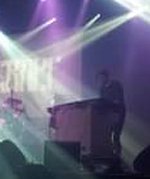
Noted Dutch Mellotronist Ruud Peeters plays his M400 (also the studio machine), with cellos and volume-pedalled strings on Pieces, strings on Out Of Time, choirs and cellos on Paper Moon, flutes and strings on Solid Ground and skronky strings on Child Of Porcelain, although the bass clarinet on Paper Moon is real. I can't imagine fans of 'regular' indie going for this, but I could be underestimating their adventurousness. Probably best experienced live, not least as (see pic, right) the M400 gets to come out and play.
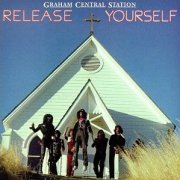 |
Release Yourself (1974, 37.30) ***½/TTG.C.S.Release Yourself Got to Go Through it to Get to it I Believe in You Tis Your Kind of Music Hey Mr. Writer Feel the Need Today |
Current availability:
Mellotron used:
Larry Graham's Graham Central Station (from NYC's Grand Central Station, of course) played funk, sounding more like his old band, Sly Stone's Sly & the Family Stone than the Ohio Players, say, adding a fat chunk of psychedelia to the mix, even as late as their second record, 1974's Release Yourself. Its best tracks are probably the ones where the funk heats up to melting point, not least self-referential opener G.C.S. and Hey Mr. Writer, not to mention the almost-Motown arrangement on Feel The Need, but the writing and playing are strong throughout, making this the kind of funk album a rock fan may, just may be able to appreciate. Well, I did...
Graham plays Mellotron on the album, amongst other keys, with slightly oblique string and flute parts on Tis Your Kind Of Music and far more straightforward strings on lengthy closer Today, the final chord stretched out way beyond the machine's limitations via studio trickery. The album's oddest bit of Mellotron work, however, is the few seconds of pitchbent strings on Feel The Need, in true 'blink and you'll miss it' style, although it doesn't add to the overall rating.
 |
Flying (1997, 46.14) ***/T |
|
| Jonah Less of Me Flying Rocketship Peace Pain Sell Your Soul Fuse |
Spiderweb Found in You For Me |
|
Current availability:
Mellotron used:
Grammatrain are another CCM act who transcend the 'genre' by playing 'alternative rock', or whatever you may choose to call it, rather than the insipid, near-MOR dross that passes for 'Christian music' most of the time (well, we wouldn't want to offend anyone, would we?). Flying was their second and last studio album proper before their 2009 reformation and, to prove my point, Rocket Ship is actually, er, heavy, so Christians can rock, too. Kind of.
Mellotron on two tracks from vocalist/guitarist Pete Stewart, presumably the Ardent Studios machine, with a brief cello part on opener Jonah and upfront flutes and strings on closer For Me. Not much of a listen, no, but immeasurably better than most CCM drivel.
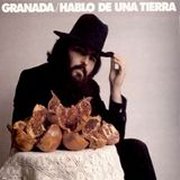 |
Hablo de Una Tierra (1975, 36.30) ***½/TTTGranada esRompiendo la Oscuridad Hablo de Una Tierra Nada es Real Es el Momento de Oir un Buen Rock Algo Bueno |
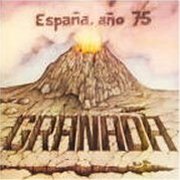 |
España, Año 75 (1976, 40.12) ***½/½El Calor Que Pasamos Este VeranoPor Donde Andamos Todo Hubiera Sido Tan Bonito La Auténtica Canción No Me Digas Bueno, Vale Septiembre Noviembre Florido Hora Vamos a Ver Que Pasa (Vamonos Para el Mediterráneo) |
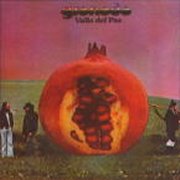 |
Valle del Pas (1978, 39.01) ****/TNo Se Si DeboBrave Silueta de Color Carmin Noches Oscuras, Ocas Contentas Himno del Sapo Valle del Pas Calle Betis (Altardeciendo) Ya Llueve |
Current availability:
Mellotrons used:
Granada were a relatively early entry in Spain's late-flowering progressive scene (due to the restrictive atmosphere of Franco's regime), which was just taking off as it was dying away across the rest of Europe. They're not the best of the bunch by some way, being seriously outclassed by, say, the excellent Canarios, although their debut, Hablo de Una Tierra, is by no means a bad record. There is something of a Spanish influence on the band's sound, although nowhere near as much as with some of their contemporaries. The instrumental tracks/sections work better than the vocal ones, with a slight jamming feel in places and some nice guitar work from Michael Vortreflich, although I'm not at all sure how it might stand up to repeated plays. Carlos Cárcamo plays Mellotron, along with flute, violin, several other keyboards and just about everything else, by the look of it. Reasonable string use on Granada Es and Rompiendo La Oscuridad, neither of which prepare the listener for the exceedingly full-on string chords that open the title track and carry on in similar vein throughout the song. More of the same on Nada Es Real and Es El Momento De Oir Un Buen Rock, leaving only the upbeat Algo Bueno Mellotron-free, making this one of the better Spanish Mellotron albums.
Their follow-up, España, Año 75, isn't a bad album, just a little generic. Despite crediting Mellotron again, I can't help being reminded of Iman, Califato Independiente's first album, that credits it on three out of four tracks, then buries it under washes of string synth (a.k.a. 'The Spanish Disease'). All I can hear here is a few seconds of Cárcamo's (possible) strings during Noviembre Florido, although that could be merely wishful thinking; a particular disappointment after such heavy Mellotron use on its predecessor. Yet again, I'm at a loss to understand why you'd make the effort to use a Mellotron, then... not use it. Is it buried beneath the cheap string synth? Was it loaded with the hitherto-unknown 'Spanish Tape Set', consisting of three varieties of string synth, all recorded at ¼ volume? If anyone knows anything about the strange approach the Spanish took to the Mellotron, PLEASE tell me!
Well, who'd have thought it? Granada's last album, 1978's Valle del Pas, is far better than you might expect of a late-'70s prog album. Then again, this is Spain... Carlos Cárcamo replaced the entire lineup, adding Joaquín Blanco on 'Northern Spanish woodwinds', including the Celtic bagpipes indigenous to the region, the end result being an album of fairly typical instrumental Spanish progressive with added Celtic influences. Standout tracks are difficult to pinpoint, although opener No Se Si Debo recovers after a ropey start and Himno Del Sapo is notable, the most Celtic piece here being closer Ya Llueve, bagpipes and all. Despite the real strings on a few tracks, Cárcamo gets a bit of Mellotron in, too, with a handful of string chords on Brave Silueta De Color Carmin, Noches Oscuras, Ocas Contentas and Calle Betis (Altardeciendo), but not enough to bother with on those grounds.