





|
|
|
|
||
|
 |
JRK & Jessica Cooke (2008, 41.24) ***/T½ |
|
| R. O. C. K. Lucid In Other Words Mother Vicious Hips Illuminating Pass the Elmers No More Excuses |
Dusty Grimes Alarmed Filed Fragments The Wheel Confliction |
|
Current availability:
Mellotron used:
I can't honestly tell you anything much about either JRK or Jessica Cooke, other than that on 2008's JRK & Jessica Cooke (or whatever it's actually called), she sings (occasionally), he provides 'beats' etc. and a handful of other musicians play other stuff. The end result is a kind of live-action hip-hop, possibly at its best on the violin-driven Illuminating and closer Confliction, although little here made me reach for the 'skip' button, which is a minor triumph in itself.
Matt Henry Cunitz plays his own 'Meletron', with flutes, strings and pitchbent choirs on Pass The Elmers, flutes and vibes on No More Excuses and chordal strings on Filed Fragments, although the strings on No More Excuses sound like the credited Orchestron.
 |
Everything in Transit (2005, 45.22) **½/T½ |
|
| Holiday From Real The Mixed Tape Bruised I'm Ready La La Lie Dark Blue Miss Delaney Kill the Messenger |
Rescued MFEO Part 1 - Made for Each Other Part 2 - You Can Breathe Into the Airwaves |
|
 |
The Glass Passenger (2008, 52.08) **/T½ |
|
| Crashin' Spinning Swim American Love What Gets You Off Suicide Blonde Annie Use Your Telescope Bloodshot |
Drop Out - The So Unknown Hammers and Strings (a Lullaby) The Resolution Orphans Caves |
|
Current availability:
Chamberlins used:
Jack's Mannequin are ex-Something Corporate mainman Andrew McMahon's subsequent outfit, although they seem to be more of a solo project than an actual band. He/they debuted in 2005 with Everything in Transit, apparently a kind-of concept album about McMahon's move to California, featuring the odd nice touch, notably the Carl Wilson-style falsetto "Oo-wee-oo" after a line about The Beach Boys in Miss Delaney, but they're few and far between, I'm afraid. Good ol' Patrick Warren on Chamberlin (as ever), with what sounds like strings on The Mixed Tape, Bruised and closer Into The Airwaves and strings and flutes on the surprisingly lengthy MFEO Part 2, You Can Breathe, although, as so often, little of it's essential. Nice sleeve, though.
McMahon took three years to follow his debut, chiefly due to being busy surviving a form of leukaemia, which, understandably, heavily informs 2008's The Glass Passenger. It's not dissimilar to its predecessor, although it lacks even that album's occasional charms, frankly, despite Suicide Blonde's pseudo-powerpop stance. Warren on Chamby again, with strings on What Gets You Off, Annie Use Your Telescope (most effectively), Bloodshot, Hammers And Strings (A Lullaby), The Resolution and Caves, although it's far enough in the background that its total rating remains low.
See: Something Corporate
 |
Bringing on the Weather (1994, 45.08) ***/½ |
|
| Late Shift Forces Weather Along for the Ride Iron John Jacob Anderson's Luck Free |
Capable Girl Witch in the Old Man Be Your Man Get to Know Me Better |
|
Current availability:
Chamberlin used:
Jackopierce are essentially the duo of vocalist/guitarists Jack O'Neill and Cary Pierce, plus whoever else is needed to flesh out their sound. 1994's Bringing on the Weather was their third studio album, an appealing set of good, if fairly generic Americana, highlights including opener Late Shift, Iron John and Free, which reminds me of Richard Thompson's iconic Shoot Out The Lights. One of the album's plus points is the band's inspired choice of collaborators, including Benmont Tench (Tom Petty, a million others), whose Hammond playing informs the entire record and T Bone Burnett.
Burnett plays Chamberlin, although the only obvious use is the cellos on Jacob, which seems like a slightly missed opportunity. So; probably not a classic, but something for Americana fans to get their teeth into, if not for its Chamby use.
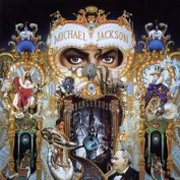 |
Dangerous (1991, 77.08) **½/½ |
|
| Jam Why You Wanna Trip on Me In the Closet She Drives Me Wild Remember the Time Can't Let Her Get Away Heal the World Black or White |
Who is it Give in to Me Will You Be There Keep the Faith Gone Too Soon Dangerous |
|
Current availability:
Mellotron used:
In the late '80s, there was a great little independent record shop near where I lived in north London called English Weather, run by an eccentric bloke called Steve, sadly no longer with us. He had a large poster at one end of the shop for Michael Jackson's Bad, upon which he had scrawled in black marker, "Bad, I'll say it's bad, Mr Jackson!", or words to that effect. Childish? Maybe, but it completely summed up Steve's disgust with the bland mainstream, where everyone listens to the same faceless, pointless music, rarely interacting with it on anything more than the most basic level. OK, there's no rule saying anyone should have to, but isn't it nice when you run into people who do? And they don't listen to Michael Jackson?
I'm surprised to learn that Dangerous has sold nearly thirty million copies to date, as its general perception is that of a failure, although its sales have now equalled those of Bad. However, unlike its predecessors, it's exceedingly thin on decent tunes, despite its double-album length, which merely gave Wacko Jacko the freedom to, er, 'stretch out' on most of the tracks, i.e. refuse to edit, in a similar manner to many artists when first given CD's extra half-hour over LP length, without any extra pressing cost (see: Oasis' dreadful Be Here Now). I can see that much of the material would appeal to his core fanbase, but it was the casual buyers who backed away here; I mean, anyone who wasn't utterly repelled by the stomach-turning Heal The World has to have a screw loose, although for sheer revulsion, it can't touch 1995's Earth Song and as for the full chorale at the beginning of Will You Be There... Most of the material is his patented mixture of, er, 'pop, rock and soul', but it's all starting to sound a bit tired by this point, although it seems nearly thirty million people would disagree.
Unusually for 1991, there's what sounds like a genuine (credited) Mellotron on one track, Give In To Me, played by Bill Bottrell. The song starts with a cranky-sounding strings pitchbend and, while the major verse/chorus string part sounds like regular string samples, the Mellotron weaves in and out of the song fairly pleasingly, if rather ineffectually. So; all in all, this is one to avoid, in case you hadn't guessed. It gets the star rating it does for not being too overly offensive, but there is absolutely nothing here for the discerning music fan. Music for lifts. Not much Mellotron, either.
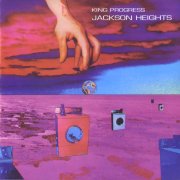 |
King Progress (1970, 36.00) ***/TMr ScrewSince I Last Saw You Sunshine Freak King Progress Doubting Thomas Insomnia Cry of Eugene |
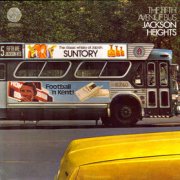 |
The Fifth Avenue Bus (1972, 41.26) ***/T½ |
|
| Tramp Dog Got Bitten Autumn Brigade Long Time Dying Sweet Hill Tunnel Laughing Gear House in the Country Rent a Friend |
Luxford Pastor Roger |
|
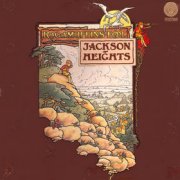 |
Ragamuffins Fool (1972, 38.17) **½/TT |
|
| Maureen Oh You Beauty As She Starts BeBop Catch a Thief Ragamuffins Fool Chorale (Five Bridges Suite) Chips and Chicken |
Poor Peter Bellyfull of Water |
|
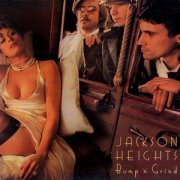 |
Bump'n'Grind (1973, 32.20) **½/TI Could Be Your OrchestraSpaghetti Sunshine Long Necked Lady Public Romance Bump and Grind Cumberland County It's a Shame Ladies in the Chorus Whatever Happened to the Conversation |
Current availability:
Mellotrons used:
Jackson Heights (named in honour of the New York suburb) were formed by bassist Lee Jackson after the demise of The Nice, their remit being to make music as unlike The Nice as possible. As a result, King Progress is largely acoustic, although the occasional burst of electricity seeps through. From a few decades' distance, I'm afraid it all sounds a bit insipid, although I'm sure it made more sense in those post-hippy days. Best tracks? Probably the title track and opener Mr Screw, although none of it exactly leaps out and grabs you by the throat, to be honest. Guitarist Charlie Harcourt is credited with 'Melatron' (I know, I know), but, given that the strings on the title track are real, you'll only hear it on Insomnia, with a rather weak MkII string line that adds little to the song. So; neither a very interesting album nor one that contains any sensible Mellotron work, so don't go too far out of your way.
Two years on, more N.Y.C. references in The Fifth Avenue Bus, possibly a marginally better album than its predecessor, though nothing exactly startling. Opener Tramp is quite nice, ditto House In The Country, but it's all a bit thin on the ground.. Mellotron from Brian Chatton this time, with gentle strings and flutes on House In The Country and strings on Rent A Friend, leaving the album's most unusual Mellotron work to the heavily pitchbent (MkII?) brass on Pastor Roger. Jackson Heights' chief problem was their frequent and irritating lapses into piano-driven pub singalong stuff, spoiling what might otherwise have been at least passable albums. Chips And Chicken (should've known with that title) and Bellyfull Of Water are the culprits on their second album of '72, the grammatically-challenged Ragamuffins Fool, a pretty dull record all round, to be honest. Chatton and John McBurnie add Mellotron to a handful of tracks, with pitchbent strings on opener Maureen, more 'regulation' ones on Oh You Beauty and BeBop, reserving easily the nicest work on the album for the volume-pedalled strings on Chorale (Five Bridges Suite), presumably something to do with the Nice piece.
The sexistly-sleeved (so what's wrong with being sexy, anyway?) Bump'n'Grind is no better than its predecessor, with no standout tracks at all. Instrumentally-speaking, about the only addition to their (very) slightly proggy mainstream rock is the synth on a couple of tracks, which isn't exactly enough to liven things up any. Despite being credited on several tracks, it's quite difficult to hear where Chatton and McBurnie used the Mellotron this time round. Spaghetti Sunshine has some vocals that sound more real than Mellotron, ditto It's A Shame, ditto, well, every other credited track, actually. Maybe they got Mellotronics to record their own voices onto Mellotron tapes? They wouldn't be the last... The end results aren't that great, to be honest, so you aren't going to go after this for its Mellotron use, or probably anything else, really. Good musicians disappearing up their own fundaments, then, while their ex-colleague goes on to fame and fortune by being as crass as possible. There's a lesson to be learnt there somewhere, I fear.
See: The Nice
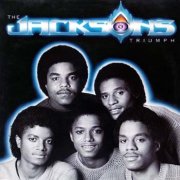 |
Triumph (1980, 44.45) ***/TCan You Feel itLovely One Your Ways Everybody This Place Hotel Time Waits for No One Walk Right Now Give it Up Wondering Who |
Current availability:
Chamberlin used:
1980's Triumph was the Jackson tribe's fourth album since dropping the '5' and moving to Epic from Motown in the mid-'70s. It's precisely what you'd expect of the group: slick, commercial, danceable pop/soul, although, to their credit, they largely avoid the era's throwaway disco clichés, material like opener Can You Feel It and Everybody presaging the style that would make Michael (chief vocalist here, unsurprisingly) a global megastar a couple of years on.
Someone (most likely Ronnie Foster) plays, of all things, Chamberlin on Your Ways, with a female voice part that might have remained undiscovered, were it not for this page, which appears to be r'n'b producer etc. Questlove's Instagram whatever-you-call-it. It isolates the Chamby (and the finger-snaps) well enough to identify it, although, in fairness, even buried in the mix, it sounds too stilted to be real b/vs. Given the era, a Fairlight seems the obvious choice for a deliberately artificial part, but perhaps the Chamby was lying around in the studio. Who knows? Anyway, you're really not going to buy this for a background Chamberlin part that really could be almost anything, are you? Thought not. (p.s. Thanks for this one, Matthias).
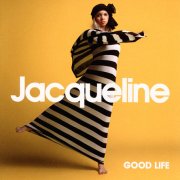 |
Good Life (2010, 35.55) ***/T½ |
|
| Overrated Dare to Lose Hard to Disagree Hold Your Fire Forgive Me All I Want is You Break of Day Finally in Love |
No Never Good Life Big World Honey B |
|
Current availability:
Mellotron used:
Jacqueline Govaert fronted Krezip before their split, releasing her solo debut, Good Life, in 2010. It's a surprisingly 'retro' (sorry) sounding effort, full of '60s-esque combo organs and 12-strings, probably at its best on pub piano-driven opener Overrated, Forgive Me and the faux-1964 go-go of Finally In Love, although you'd be pushed to find any real clunkers here. Who'd have thought it? A decent modern pop album?
Alex Callier and Remko Kühne play what sounds like real Mellotron, with strings on Dare To Lose and No Never and strings and flutes on the title track, all other string parts sounding real. Don't get me wrong, this isn't some hidden classic, but it could've been so, so much worse. Incidentally, top marks for that fab sleeve.
 |
Here Comes the Night (2011, 38.56) ***/T |
|
| Here Comes the Night Listen to Your Baby Traveller Natural Way Break the Law Keep Me Warm Rusty Faster |
Covered Don't Erase Me Back Home |
|
Current availability:
Mellotron used:
Marike Jager is a young Dutch singer-songwriter, whose third album, 2011's Here Comes the Night, is apparently a break from the style of her first two releases. This time round, she favours a kind of '40s jazz aesthetic, alongside a (slightly) more contemporary folky influence, top tracks including the opening title track, Natural Way and the gentle Keep Me Warm, although nothing here made me reach for the 'next' button.
Henk Jan Heuvelink plays Mellotron on Natural Way, with nicely upfront flute and string parts, sounding pretty authentic at the end of the track. It's possible it's hidden away elsewhere, but I suspect that's real strings we're hearing on a couple of tracks. So; Nothing groundbreaking, but a well-crafted album that deserves to do well.
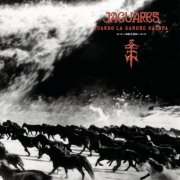 |
Cuando la Sangre Galopa (2001, 65.56) **½/T½ |
|
| Cuando la Sangre Galopa El Secreto Como Tu Estoy Cansado En la Tierra La Vida No es Igual Por un Beso Contigo |
El Aislamiento Viaje Astrol El Momento El Ultimo Planeta ¿Viejo el Mundo? Dime de un Amor Que No Ha Sufrido |
|
Current availability:
Chamberlin used:
Jaguares come across as a generic indie outfit crossed with a Latin version of U2, maybe, if you can imagine that band periodically breaking out into something samba-influenced. Go on, try. Their third album, 2001's Cuando la Sangre Galopa, is a passable enough effort, though most unexciting to ears used to music more dynamic than 'alt.rock', final, bluesy 'hidden' track Dime De Un Amor Que No Ha Sufrido managing to be about the best thing here.
Patrick Warren plays Chamberlin once more, with a nicely upfront part on Contigo and flutes and strings on El Momento, without causing too much excitement overall. So; a typical 'local market' band, I suspect: play a generally popular style in the local language, making yourselves accessible to fans of that style in your own country. An old ploy and a successful one and who am I to argue?
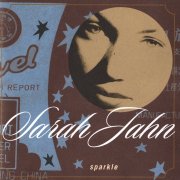 |
Sparkle (1997, 37.56) **½/TT |
|
| Brand New Name Drinking Water Crucible Face Love Learn Happy Paradox Chronic Lullaby |
I Found the Time Home |
|
Current availability:
Mellotron/Chamberlin used:
Sarah Jahn was pushed as a Christian artist, but her sole release, 1997's Sparkle, is more like a typical Lilith Fair female singer-songwriter than some awful, preachy CCM artist, which has to be a bonus. The album's instrumentation is atypical in places, with unexpected accordion on a few tracks, reminding me slightly of Jewel Kircher's earlier work.
Jeremy Bose and producer Glenn Rosenstein both play Mellotron, Bose also chipping in on Chamberlin, with what I take to be background Chamby strings on Face, a (Mellotron?) flute solo on Love Learn Happy, Chamby strings on Chronic and (probably) Mellotron ones on Lullaby. Overall, though, this is a pretty unexciting work, although a few tape-replay tracks make it marginally more appealing. But only marginally.
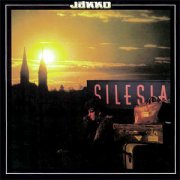 |
Silesia [as Jakko] (1982, 43.04) **½/½ |
|
| I'll Stand on My Own Grab What You Can (Biez Co Mozesz) Something in the Mirror If it Should Be Today Straining Our Eyes One More Time This is Me Mills & Boon |
Tell Me Where to Run Silesia Ingmar Bergman on the Windowsill |
|
Current availability:
Mellotron used:
I first encountered Jakko Jakszyk (born Michael Lee Curran, adopted by the Jakszyks at eighteen months) during his stint with the now sadly defunct 21st Century Schizoid Band, various ex-early Crimso members playing their early repertoire, Jakko handling the two missing parts, vocals and guitar, with aplomb. It seems he's been around since the late '70s, although his career path has steered carefully around my taste, consisting of various fusion outfits and a spell with Level 42 (heinous haircut obligatory).
He recorded an album around 1980 with various friends, not least David Jackson/Jaxon (Van der Graaf) and Dave Stewart (Egg, Hatfield & the North, National Health, a million others), lined up for release on the fiercely independent Chiswick Records (first Motörhead album, The Damned, many more), although they went bust before it came out. To be honest, I find them a strange home for an album of this kind; it's a Japan-in-their-funkier-moments-esque effort, very proto-'80s, although Jakko's voice and excellent guitar work save it from sounding like Japan's biggest creditors, Duran Duran, its better moments including opener I'll Stand On My Own and the brief, ambient title track. Jakko's claimed he played Mellotron on the album and I suppose the choirs on If It Should Be Today and Tell Me Where To Run could well be tape-driven, but it's all a bit tenuous, really.
Jakko's actually credited with The Beast on his 2006 solo effort The Bruised Romantic Glee Club, but given that it's almost certainly sampled, that's where I've stuck it. As far as Silesia goes, now that it's properly available, you might wish to dip a fetid toe if you like the sound of it, but don't bother for its exceedingly minimalistic Mellotron.
See: Samples etc. | 21st Century Schizoid Band
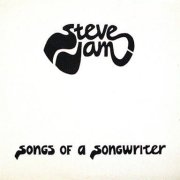 |
Songs of a Songwriter (1975, 46.25) **½/TT |
|
| Walk a Little Bit Longer Love Like a River Ain't No Trains (No More) Over You A Song of Loving You Promised Land When Things Go Wrong Keep the Memory |
Down in Old Mexico Journey's End |
|
Current availability:
Mellotron used:
The West Coast soft rock boom threw up a vast number of singer-songwriters hoping to tap into the huge profits to be made from a successful album. Unfortunately for California's Steve Jam, amongst many others, he lacked two essential ingredients: 1) a major-label contract and 2) any especial talent. It's not that 1975's Songs of a Songwriter is a bad album, but its borderline-MOR songwriting is rarely better than indifferent, at its least dull on A Song Of Loving You, vaguely reminiscent of Zeppelin's That's The Way and closer Journey's End, which isn't, frankly, much of a recommendation.
Dave Smid on Mellotron, with chordal strings on Ain't No Trains (No More) and Promised Land and strings and cellos on Keep The Memory and Journey's End that, in their own bland, uninspired way, sum up this album's issues. After all, with a little effort on the arrangement front, the instrument could really lift the tracks on which it's used, rather than merely following the guitar chords, although whether the blame lies with Smid or Jam is unknown. Kudos to whoever decided to do something interesting with the cellos on Journey's End, though, although it's a case of 'too little, too late', sadly. Anyway, this is now on YouTube if you feel the need.
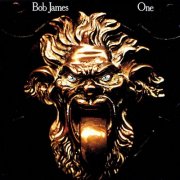 |
One (1974, 34.07) ***½/TValley of the ShadowsIn the Garden Soulero Night on Bald Mountain Feel Like Making Love Nautilus |
Current availability:
Mellotron used:
Born in the dying days of the '30s, American jazz keyboardist Bob James recorded several trio albums in the early '60s before immersing himself in session work for a decade. The bulk of 1974's One, his first album as band leader (a peculiarly jazz concept, with seemingly little meaning outside the genre), has little in common with the slickness of smooth jazz, the genre he later helped to establish. Perhaps surprisingly, the album features a heavy classical influence: In The Garden is an instantly-recognisable Pachelbel piece, Mussorgsky's Night On Bald Mountain (also tackled by Fireballet, amongst others) gets the James funk/jazz treatment, while Soulero, despite being uncredited, is clearly based on Ravel's subsequently famous piece. Of the rest, dynamic, Rhodes-led opener Valley Of The Shadows is a highlight, while closer Nautilus is decent enough, leaving the slushy Feel Like Making Love as the album's one real letdown; OK, maybe I take it back about the smooth jazz...
James adds uncredited Mellotron to a couple of tracks (thanks, William), with distant choir parts on Valley Of The Shadows and Night On Bald Mountain, neither of which exactly stands out, although they enhance the pieces well enough. Fans of James' later work are likely to hate this, which probably makes it worth checking out for the rest of us. Not a classic, but anyone wishing to hear a rare jazz/classical/prog crossover could do a lot worse, although it's not worth it for the Mellotron.
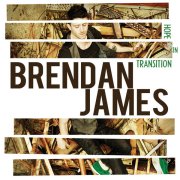 |
Hope in Transition (2012, 33.35) **/TNone of Them Are YouYounger Days Carriers of the Light Nightlife Heavy Lifting Here for You Nothin' But Love Charleston World on the Streets |
Current availability:
Mellotron/Chamberlin used:
New Englander Brendan James' Hope in Transition is your classic 'singer-songwriter writes songs that they want to be used on popular TV shows' record, all cheesy falsetto and swooping strings. Pretty unpleasant, frankly. Less offensive material includes Heavy Lifting, with its 'I sing for you' refrain and, er, that's it.
Patrick Warren plays Chamberlin, with what, were this an album from the '60s or '70s, I would term 'orchestral replacement' strings; odd, since we have any number of sample-based orchestral-replacements these days. Anyway, my guess is that the strings on None Of Them Are You, Younger Days and Charleston are Warren, although the upfront strings on Nightlife sound more like generic samples to my ears.
See: Samples etc.
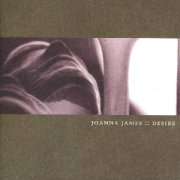 |
Desire (2005, 49.24) **½/T |
|
| Wake Waiting So Long Desire Rest Tell Me Don't Try Lucky Strike Molasses |
Save Yourself Stripes Trouble of the World |
|
Current availability:
Chamberlin used:
JoAnna James? It seems she made two albums in the mid-2000s, the second of which, 2005's Desire, is a rather drippy singer-songwriter effort, veering into soul/blues/jazz territory on its less introspective tracks. I can't criticise James' superb voice, but I'd have stripped out the more upbeat material, had I been producing.
Chris Koza is credited with Chamberlin on two tracks, with nothing obvious on opener Wake and an upfront string part on Don't Try, sounding passably genuine, although almost everything else I've heard recorded in the same studio (Minneapolis' Third Ear) has been suspect.
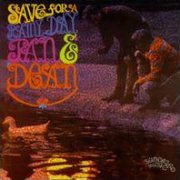 |
Save for a Rainy Day (1966/96, 26.59/65.41) ***½/T½ (TTT) |
||
| Yellow Balloon Here Comes the Rain Lullaby in the Rain Taste of Rain Yellow Balloon Here Comes the Rain Pocket Full of Rainbows When Sunny Gets Blue |
Like a Summer Rain Rain Drops Rain on the Roof Cryin' in the Rain Taste of Rain Save for a Rainy Day Theme Yellow Balloon Taste of Rain |
Rain Clouds Long Gone When Sunny Gets Blue Pocket Full of Rainbows Rain on the Roof Yellow Balloon Taste of Rain Save for a Rainy Day Theme |
|
Current availability:
Chamberlin used:
Strictly speaking, Save for a Rainy Day isn't a Jan & Dean album at all; it's a Dean Torrance album, recorded after Jan Berry's catastrophic car crash, legendarily near Dead Man's Curve in L.A. Unfortunately, between Berry (the brains behind the duo)'s disapproval and legal problems, Columbia refused to release the album, which eventually appeared on Torrance's own J&D imprint. Those excellent people at Sundazed have finally given it a proper release almost thirty years later, much expanded (the extra tracks are italicised above), although the running order they've given it rather wrecks the feel of the original. The album's concept is, fairly self-evidently, songs about rain, tied together with rain sound effects, although most of the album was apparently largely recorded in their friend Joe Osborne's garage, making it a wonder it sounds as good as it does.
As with most of Jan & Dean's output, The Beach Boys are a major reference point, Brian Wilson having co-written much of their best work, although Save for a Rainy Day is more lightweight than anything Brian would produce, particularly by the mid-'60s. The concept is actually pretty good, giving the songs a common mood, but it's a bit middle-of-the-road in places, notably When Sunny Gets Blue, certainly compared to Brian's jaw-dropping work of the same era. Best songs? Probably Yellow Balloon and maybe Taste Of Rain, although nothing here actively offends. Anyway, if you want to hear the original album, uninterrupted, programme your CD player to tracks 5-14, sit back and enjoy.
Larry Knechtel played Chamberlin on the album, presumably in the garage, although a real string section shows up in places (notably on Taste Of Rain), presumably in a studio. On the original album, we get nice, upfront flutes on Pocket Full Of Rainbows, strings and flutes on When Sunny Gets Blue and strings on instrumental closer Save For A Rainy Day Theme. Sundazed's bonus tracks add a murky orchestral string part on the demo version of Taste Of Rain, slightly blocky flutes and strings on the When Sunny Gets Blue demo and flutes and something else (female vocal?) on Pocket Full Of Rainbows. It sounds like something in the tape-replay vein on the final version of Yellow Balloon, too; a variety of woodwind? The final Taste Of Rain sounds a lot like the first version on the disc, with the same murky strings, the closing Save For A Rainy Day Theme having what sounds like the same strings as the original album take.
See: The Beach Boys
 |
Where is Home (2012, 46.32) ***/T |
|
| Big Sur The Clearing Leaving the Woods Symphony Hills Lily in the Garden Auburn Road Mustang Song Stay With Me |
A Viennesian Life Broome's Orchard 'Cross the Williamsburg Bridge Where Will We Go Finale |
|
Current availability:
Mellotron used:
Cellist Janel Leppin and guitarist Anthony Pirog are, according to Cuneiform's hyperbolic description, 'two of the fastest-rising stars in DC's burgeoning experimental music scene'. Where is Home (presumably a statement, not a question)'s sleeve pic makes the listener think they're going to get a trad-Americana album, complete with autoharp, but the actuality is a (mostly) quietly beautiful avant-/ambient crossover. Highlights? Maybe The Clearing, Lily In The Garden and Broome's Orchard, although the more abrasive material (notably Where Will We Go) appealed less to this listener.
Leppin and Mike Reina are both credited with Mellotron, although all we get is a suitably wobbly flute part on A Viennesian Life, the slurring of slipping tapes (hopefully) proving its authenticity. Hard work in places, but an adventurous release.