




|
|
|
|
||
|
Gerard (Japan) see: |
 |
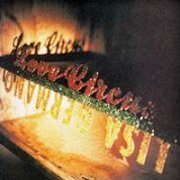 |
Excerpts From a Love Circus (1996, 51.55) ****/TT |
|
| Baby on the Plane A Beautiful Schizophrenic Bruises I Love a Snot Forget it's a Mystery Victorias Secret Small Heads We Suck |
Lovesick Singing to the Birds Messages From Sophia Big Big World |
|
Current availability:
Mellotron used:
Apparently, Excerpts From a Love Circus is Lisa Germano's most upbeat album, which makes me worry about the state of her mental health, though in the nicest possible way. Chiefly a singer and violinist, Germano's actually a talented multi-instrumentalist, who knows how to put together an album or two of bittersweet, dark-but-somehow-uplifting songs such as Bruises. Often compared to the likes of P.J. Harvey or, oddly, Tori Amos, I'd actually say that Germano is the greater talent, with considerably more presence on record and possibly better songs.
The CD digipack doesn't say who plays what, only who appears, so I've no idea who plays the haunting Mellotron flutes on Baby On The Plane (just about the first sound you hear on the album) and, particularly, A Beautiful Schizophrenic, but they sound highly authentic and are right up at the front of the mix. There's a possibility there's some more Mellotron on the album, but what with the real violin and possibly real flute, it's rather hard to tell. So; good album, great Mellotron, just not quite enough of it. Incidentally, this was recorded at Bloomington, IN's Echo Park, who own an M400, so that may well be what we're hearing.
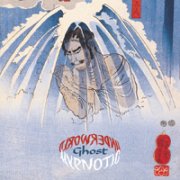 |
Hypnotic Underworld (2004, 70.42) ****/TT |
|
| Hypnotic Underworld God Took a Picture of His Illness on This Ground Escaped and Lost Down in Medina Aramaic Barbarous Dawn Leave the World! Hazy Paradise Kiseichukan Nite Piper Ganagmanag |
Feed Holy High Dominoes - Celebration for the Gray Days |
|
Current availability:
Mellotron used:
Ghost are an institution in the lysergically-inclined world of current Japanese psych, having released a sizeable number of albums of stoned-out, semi-improv'd weirdness. Hypnotic Underworld is merely the latest of the band's psychedelic creations, moving between various styles in the manner of a silverfish flitting around your house, almost undetectable, but... OK, enough. Ghost are extremely talented, though, shifting from the freeform drones of the first part of the album's title track, God Took A Picture Of His Illness On This Ground, through more high-energy stuff like Holy High to the early-'70s style folk/psych of Kiseichukan Nite. Some listeners may be in favour of opening the album with a thirteen-minute stoned jam, but I'd have rather they'd kicked off proceedings with something more cohesive; just my prog roots showing, I think.
Kazuo Ogino's Mellotron crops up on their cover of an obscure Earth & Fire b-side, Hazy Paradise, with a full-on string part, then short bursts of strings on the other tracks highlighted above, though no extended use anywhere. I'm all for subtlety, but a little more Mellotron wouldn't have hurt... They even get a few chords onto their epic version of Syd Barrett's Dominoes, which they've subtitled Celebration For The Gray Days, for reasons best known to themselves.
See: Samples etc.
 |
Meliora (2015, 41.23/47.29) ****/TT |
|
| Spirit From the Pinnacle to the Pit Cirice Spöksonat (Ghost Sonata) He is Mummy Dust Majesty Devil Church |
Absolution Deus in Absentia [Bonus track: Zenith] |
|
Current availability:
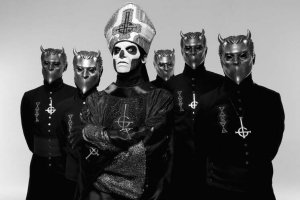 |
If you've managed to avoid Sweden's Ghost up until now, you must be even more disconnected from the media than your humble writer. Their ridiculous image, cunningly crossed (see what I did there?) with a superb ear for a melody, has seen them rise through the metal firmament like a mitre-shaped rocket. Y'know, ludicrous though their image undoubtedly is, I can't fault their dedication to the cause; not only is it both faultless and consistent, but they've succeeded in keeping all their identities secret across a several-album career. Then-'current' vocalist Papa Emeritus III (they're all the same guy, Tobias Forge) shares the stage with five totally anonymous musicians merely known as 'Nameless Ghouls', some of whom are reputed to have changed over the years, while their image subtly shifts from tour to tour. Impressive, in its own way. Beat that, Kiss.
2015's Meliora is their third album, its contents possibly best described as a mock-satanic, melodic-yet-heavy take on Metallica schmoozing with Queensrÿche, while fellow Swedes Europe and the Blue Öyster Cult look on from the sidelines, although I'm sure their influences range far further afield. Highlights include opener Spirit, complete with mock-gothic intro, the super-catchy Cirice and Majesty, but there really isn't anything on this LP-length release that could easily be discarded. Any wrong moves? Near-fatally, closer Deus In Absentia sounds like a death metal-lite take on Madness' House Of Fun, ever-so-slightly reducing its devilish impact, but it's a minor quibble. 'Ang on, I've suddenly realised who Ghost remind me of more than anyone: NWoBHM act Demon, who quickly outgrew the genre's limitations to become unsung heroes of interesting-yet-tuneful hard rock in the musical wasteland of the '80s. There you go, an updated Demon, possibly appropriately.
I consigned this to the sample dungeon years ago, but I've become aware that it was partially recorded at Mellotron-owing RMV, in Stockholm, so a reassessment was due. Real? I'm still not fully convinced, but we get male choirs on Spirit (notably on the intro), choirs on From The Pinnacle To The Pit, Mummy Dust, Devil Church and box set bonus Zenith and strings on He Is, although I'm not convinced by the strings on Cirice. Four stars? I wasn't going to, but another listen affirmed the obvious: Ghost might be rather silly, but when you've listened to as much awful music as I have, something this well-constructed is a blessed relief. Did I just use a religious term there? Sorry, guys.
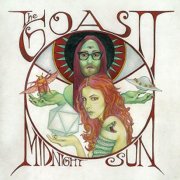 |
Midnight Sun (2014, 49.43) ***/TT½ |
|
| Too Deep Xanadu Animals Johannesburg Midnight Sun Last Call The Devil You Know Golden Earrings |
Great Expectations Poor Paul Getty Don't Look Back Orpheus Moth to a Flame |
|
Current availability:
Chamberlin used:
The Ghost of a Saber Tooth Tiger (a.k.a. GOASTT) are Sean Lennon's latest project, a full-blown psychedelic exploration, whose second release, 2014's Midnight Sun, sits somewhere on the boundary between '60s-influenced psych and modern indie. Better material includes Beatlesque opener Too Deep, the rocking Animals, the wispy Johannesburg and the lysergic Last Call, while Golden Earrings (as covered in wildly camp style by The Enid some decades earlier) provides some light relief.
Jared Samuel plays Chamberlin on several tracks, with contributions from a couple of others, with full-on flutes and strings on Xanadu, pitchbent Chamby guitar (and strings?) on the title track, upfront strings (from Pete Drungle) on Last Call, orchestralish strings and bells on Golden Earrings and Lennon on not-immediately-obvious oboes on Great Expectations. Is it real? Far harder to tell with a Chamberlin than a Mellotron, so I think we'll have to assume so without receiving information to the contrary. Is this actually any good? Like the curate's egg, in places, but trimming a couple of its less interesting tracks might possibly have made for a stronger album.
See: Sean Lennon
 |
Quixoticism (2007, 38.59) ***/½ |
|
| Catacombs The Upper Ten/The Lower Five You Wear it Like a Stained Glass Window The Motions Secret Life of the Union Part II The Black Hand The Nettles in Your Mouth Isn't it Appropriate That Way |
Secret Life of the Union Part I The Pink Princess Eskimonia Even a Vampire Wouldn't Drink My Blood |
|
Current availability:
Mellotron used:
Ghost Stories is/was Ron Lewis' solo project, his lone full-lengther, Quixoticism, appearing in 2007. It's a decent enough powerpop/indie release, full of unexpected key changes and quirky touches, although the overall effect tends to be mildly dispiriting. Better tracks? Probably Secret Life Of The Union Part II and the choppy Isn't It Appropriate That Way.
Jonathan Rothman is the only other credited musician, adding distant Mellotron strings to opener Catacombs, other possible flute parts being more likely to be a muted organ sound.
 |
36 Seasons (2014, 40.21) ***/TTT |
|
| The Battlefield Love Don't Live Here No More Here I Go Again Loyalty It's a Thin Line Between Love and Hate The Dogs of War Emergency Procedure Double Cross |
Bamboo's Lament Pieces to the Puzzle Homicide Blood in the Streets Call My Name I Love You for All Seasons |
|
Current availability:
Mellotron used:
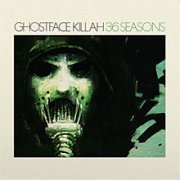
Dennis "Ghostface Killah" Coles is a member of the currently nine-strong Wu-Tang Clan; if the other members keep up his workrate, fandom must be a full-time operation, as 2014's 36 Seasons is his eleventh solo album over a two-decade period. It is, of course, hip-hop, but a refreshing lack of macho bullshit makes it far more listenable than anything you'd care to name by the likes of 50 Cent et al. Actually, I'd say that there's a heavy soul influence here, doubtless aided by producers The Revelations; closer I Love You For All Seasons appears to be entirely their work. The album should apparently be approached as an 'audio comic', alongside the actual one in the CD booklet, telling the story of a Staten Island resident, home after nine years' incarceration (thus the title), which accounts for the vastly-more-thoughtful-than-expected lyrics.
There are no fewer than five credited Mellotron players: Gintas Janusonis, Adam Klipple, Wes Mingus, Daniel Schlett and Josh Werner and, I have to say, what we're hearing has a pleasing ring of authenticity about it, although I'm not sure how much that means these days. Anyway, we get strings on It's A Thin Line Between Love And Hate, choirs and volume-pedalled strings on The Dogs Of War, choirs on Double Cross, a flute line on Pieces To The Puzzle and strings on Homicide, Call My Name and I Love You For All Seasons, assuming I haven't missed anything. Not one for your prog fan, then, but, assuming I'm correct, it's nice to hear a well-used Mellotron in an unusual genre.
 |
Two Years to Never (2000, 52.13) **½/½ |
|
| One Step Away Two Years to Never Lullaby All That I am Chevy Nova Mach 3 Vs. Expect |
Next to Me Campbelltown It's Alright Means to an End [Hidden track] |
|
Current availability:
Mellotron used:
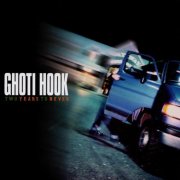
Ghoti Hook were a Christian ska/punk band (!), whose name apparently derives from George Bernard Shaw's amusing illustration of the irregularities of the English language, 'ghoti' being pronounced 'fish'. Work it out for yourself. Their last full studio album, 2000's Two Years to Never, is far more punk than ska, better tracks including the punky title track, All That I Am and the jammed-out instrumental stuck at the end of the disc, after a lengthy gap, removed from the timing above.
John Davis plays pretty real-sounding Mellotron strings (complete with pitchbend) on opener One Step Away, although I can't hear it anywhere else. While competent enough, I can't find it in myself to recommend this on any level, as everything it does has been done better by someone else, not least its Mellotron use.
 |
Bimba (1977, 37.09) **/0 |
|
| Preludio Il Vecchio Antonio Chissà, Però Amici Se Vuoi Nasconderti Bimba Il Tempo dell'Amore Quel Gioco Stupido |
Che Cosa Rimane Ieri E Silvia |
|
Current availability:
Mellotron used:
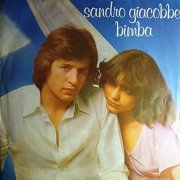
Sandro Giacobbe (1949-2025) was a mainstream Italian singer, active from the beginning of the '70s to the present day. His fifth album, 1977's Bimba (more easily found in its Spanish release, Niña), is a collection of decidedly ordinary late '70s pop/rock, whose music is more than likely little more than a vehicle for the lyrics, not only meaningless to a non-Italian speaker, but most likely pretty anodyne anyway.
Danilo Vaona plays Mellotron (it's actually credited on the inner sleeve), although, assuming it hasn't been used as a catch-all phrase meaning 'something that sounds like strings', it's presumably hidden in the mix, possibly under the real strings evident on several tracks. So; mainstream foreign-language pop with no Mellotron. No, no, no.
 |
A Giant Crab Comes Forth (1968, 44.49) **½/T½ |
|
| A Giant Crab Comes Forth It Started With a Little Kiss Directions Watch Your Step Intensify Your Soul Enjoy it Hot Line Conversation I Enjoy Being the Boy Lydia Purple |
Groovy Towne Thru the Fields The Chance You Take Believe it or Not The Answer is No Hi Ho Silver Lining Why am I So Proud? |
|
Current availability:
Chamberlin used:
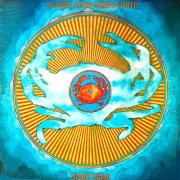
Metamorphosing out of the beat-era Ernie & the Emperors, Santa Barbara's superbly-named Giant Crab consisted of two sets of brothers, the Oroscos and the Fricias, who released their debut, A Giant Crab Comes Forth, in 1968. Now, if ever there were a band who weren't sure what they wanted to be, it's Giant Crab. The bulk of the album harks back to the sound of a couple of years earlier, soul-inflected, brass-driven pop, probably not unlike the band's earlier incarnation, a few psych numbers (already a year late) thrown in for good measure. Unsurprisingly, it's the latter we're interested in here, highlights including Hot Line Conversation's proto-hard rock moves and Lydia Purple and Groovy Towne's slightly stiff psych feel, presumably from a band who hadn't quite got to grips with the new regime. Lowpoint? Definitely the awful Hi Ho Silver Lining, a waste of space if ever I heard one.
Although it's uncredited, it seems likely that keyboard player Kenny Fricia plays Original Sound's Chamberlin MusicMaster 600, with string parts on I Enjoy Being The Boy and Lydia Purple and strings and flutes on Why Am I So Proud? Is this worth the effort? 'Possibly' for psych obsessives, 'possibly not' for tape-replay enthusiasts, although Why Am I So Proud?'s a minor classic in its own right.
 |
Chore of Enchantment (2000, 59.53) ***½/T |
|
| Overture (Well) Dusted (for the Millennium) Punishing Sun X-tra Wide 1972 Temptation of Egg Raw Wolfy |
Shiver Dirty From the Rain Astonished (in Memphis) No Reply Satellite Bottom Line Man Way to End the Day Shrine |
|
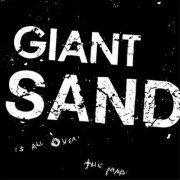 |
...Is All Over the Map (2004, 47.57) ****/T |
|
| Classico NYC of Time Remote Flying Around the Sun at Remarkable Speed Cracklin Water Rag Muss Drab |
Fool Les Forbats Innocents Napoli Hood (View From a Heidelberg Hotel) A Classico Reprise Anarchistic Bolshevistic Cowboy Bundle Ploy |
|
Current availability:
Mellotrons used:
Howe Gelb's brainchild, Giant Sand's thirteenth album, Chore of Enchantment, is typical of their skewed take on Americana, sounding like it was recorded in a desert full of cranky old keyboards. Highlights include the creepy Dusted (For The Millennium), the abrasive 1972 and the acoustic Dirty From The Rain, but there's nothing here that will offend those used to a bit of pre-country. Mellotron from three different players, Big Star producer Jim Dickinson, Rob Arthur and Kevin Salem. Dusted (For The Millennium) has flutes and heavily pitchbent strings (assuming it isn't the credited Fairlight) from Dickinson, nothing obvious from Arthur on X-tra Wide, double-tracked, high, panned strings on Shiver and, again, nothing obvious from Howe on No Reply, despite a distinct 'Mellotron strings' credit. A bizarre little coincidence that happened while I was listening to this album: Satellite features the line, "You could get Leonard Nimoy to play the part of Leonard Cohen". What am I reading at the time? Nimoy's second autobiography, 1995's I Am Spock. Much too weird and probably very Giant Sand.
2004's ...Is All Over the Map carries on in similar style, sandblasted Americana with squalling punk rock guitars, not least on the bizarre Anarchistic Bolshevistic Cowboy Bundle, a segue of Anarchy In The UK and a maudlin country toon; no, I don't know why, either. Other top tracks include Cracklin Water and the Italianate Napoli, which highlights the nearest this album has to a problem: maybe it's just a little too diverse? Anyway, Mellotron from John Parrish on Flying Around The Sun At Remarkable Speed, with a high string threnody and more of the same on Muss, while Fool remains resolutely Mellotron-free until its dying seconds, when a creakily real-sounding Mellotron choir appears to pipe the song out.
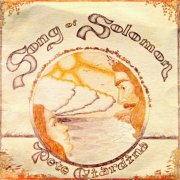 |
Song of Solomon (1975, 33.58) **½/TTTSong of SolomonDarkness Before the Dawn Never Alone Dance Song Christ of Galilee Billows and Waves One More Mile to Go |
Current availability:
Mellotron used:
I can't tell you much about Pete Giardina, other than he was a Christian singer-songwriter from Indiana who released Song of Solomon in 1975. It's a sort of soft rock/prog-lite effort, notably on its twelve-minute opening title track, intercut with spoken-word passages from Giardina relating to the book of the same name from the Hebrew Bible (good old Wikipedia, eh?). Unfortunately (if predictably), the rest of the album consists of decidedly ordinary generic soft rock with exceedingly overtly Christian lyrics, although compared to most modern CCM, it's really pretty inoffensive.
An unknown musician (Giardina himself?) plays Mellotron strings on the title track, Christ Of Galilee, Billows And Waves and One More Mile To Go to decent effect, although the last three named are all pretty ordinary musically. This goes for silly prices second-hand, but downloads are out there (ahem), so if you feel a yen to hear some Mellotron-heavy early CCM, feel free.
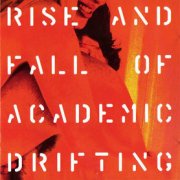 |
Rise & Fall of Academic Drifting (2001, 53.20) **½/TA New Start (For Swinging Shoes)Pet Life Saver The Beauty Tape Rider Trompsø is OK Pearl Harbor Little Victories Penguin Serenade Rise and Fall of Academic Drifting |
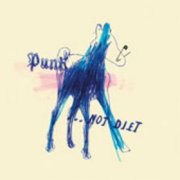 |
Punk... Not Diet (2003, 44.53) **½/½Too Much Static for a BeguineThe Swimming Season Given Ground (Oops... Revolution on Your Pins) Connect the Machine to the Lips Tower (Be Proud of Your Cake) Once Again a Fond Farewell The Comforting of a Transparent Life When You Were a Postcard Last Act in Baires Dolphins Are Here to Watch Your Blue Blood Flow |
Current availability:
Mellotrons used:
Ah, post-rock. Italy's Giardini di Mirò's debut offering, Rise & Fall of Academic Drifting, initially struck me as sounding not dissimilar to, say, Pineapple Thief, maybe, although as it progressed it became apparent that Mogwai were probably a safer comparison. Something mostly instrumental, rather drifting and not particularly interesting, anyway. Sorry, does that come across as a bit narrow-minded? I've listened to quite a bit of this stuff in the course of my unpaid 'duties' and little of it holds my attention for very long. Am I missing the point somewhere along the line? Anyway, the enigmatically-named Giacomo F. guests on Mellotron, with a string line under real violin on Pet Life Saver and another background string part on Penguin Serenade, neither anything to write home about.
By the even more oddly-named Punk... Not Diet, from two years later, the band had incorporated vocals as a regular feature, using them on around half the album's tracks. The material is, sadly, no more exciting than before, the album's chief plus point being that it's 'vinyl length' and doesn't outstay its welcome. Mellotron from Luca di Mira this time round, with just flutes on (inhale) Connect The Machine To The Lips Tower (Be Proud Of Your Cake) (exhale), although I can't say they add to it particularly.
 |
Twenty Nine Over Me (1999, 55.07) ***/T |
|
| Cut My Spirit Dry Drag the Ashes Animals Criminals House in a Bottle Lay on the Fire Ellen Terry 29 Over Me Sincerity's Ground |
Down on Rivington Milk Slowly Creeping Smile Bruises to Claim Cash Photograph |
|
Current availability:
Mellotron used:
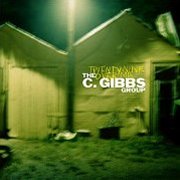
San Diego's Christian Gibbs has worked with British post-punk crew Modern English and NYC's Morning Glories, amongst others, 1999's Twenty Nine Over Me (usually referred to as 29 Over Me, despite the sleeve art) being his second solo effort. It sits somewhere between Americana and a kind of Nick Cave-esque goth, at its best on opener Cut My Spirit Dry, Drag The Ashes and the title track, barely scraping three stars, not least for being a good ten minutes too long.
Rami Jaffee plays upfront Mellotron flutes and less upfront strings on Drag The Ashes, with some radical pitchbending at the end of the track. As with so many other albums, why not use it more? Budgetary restrictions?
 |
Blue Apple (1974, 40.46) ***½/TTBlue AppleRock Scene Don't Waste Your Time Psalm Everything's Alright Go to Find a Way Reflections Part I & II Left the Past Behind |
Current availability:
Mellotron used:
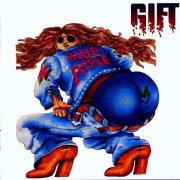
Blue Apple was German hard rock outfit Gift's second and last album and the only one to utilise keyboards, from Dieter Frei. The music is that typically mid-'70s mix of lighter and heavier rock, with a noticeable blues base, but way better than that produced by many of their countrymen, including Jane and Epitaph. There isn't actually a bad song on the album, top marks going to the high speed Purple/Heep-ish Everything's Alright, complete with Speed King-style classical organ intro.
Frei's Mellotron is apparent from the off, with a Mellotron flute melody running through the title track and strings on the other credited tracks. It's a shame more bands from the heavier end of the spectrum didn't use Mellotron, as it can work well in that area; kudos to current outfits such as Sweden's Spiritual Beggars for doing exactly that (albeit sampled). Against all expectations, Blue Apple is actually very good and will definitely be played again. Buy? If '70s hard rock's your thing, yes. Pity about the rather crass sleeve, but it was 1974...
 |
 |
Gift Horse [a.k.a. Excess, Lies & Heather's Arrest, by GiftHorse] (1997, 38.55) ***/T½ |
|
| Excess Heather's Arrest Drive Gravity Little White Lie Shoot Shoot Dear No One Butterfly |
Coffee Queen Small |
||
Current availability:
Mellotron used:
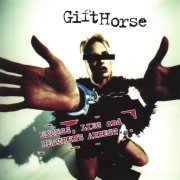
To my knowledge, Gift Horse only made the one album, originally released eponymously in 1997, reissued three years later as Excess, Lies & Heather's Arrest, the band having changed their name to GiftHorse in the meantime. It sounds something like an alt. version of Tom Petty, perhaps, at its best on Heather's Arrest, Butterfly and Coffee Queen, but too much lightweight material drags the overall vibe down, sadly.
Phil Parlapiano plays Mellotron, with matched string and cello parts on Drive and flutes and strings on Shoot Shoot, both obviously real and both to good effect, making them the best thing about this rather ordinary record.
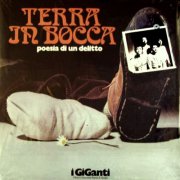 |
Terra in Bocca (1971, 46.40) ****½/TTTTT |
|
| Terra in Bocca parte I Largo Iniziale Molto Largo Avanti Avanti Tutto - Brutto Momento - Plim Plim Plim Plim al Parossismo - Delicato Andante Rumori - Fine Incombente |
Terra in Bocca parte II Fine Lontana - Allegro per Niente Tanto va la Gatta al Lardo - Su e Giù Larghissimo - Dentro Tutto Alba di Note - Rimbalzello Triste Rimbalzello Compiacento - Ossessivo Ma Non... |
|
Current availability:
Mellotron used:
Ex-beat group I GiGanti's last and sole progressive release, before a 200s reformation, Terra in Bocca, is apparently a concept album based around the Mafia - a brave subject to tackle at any time, but especially in early '70s Italy. It's characterised by many multi-part vocal sections, though not in the harmonic sense; this is an album that will make very little sense to the non-Italian speaker, to be honest. For all that, it's a wonderful piece (the album really has to be taken as a whole), being an excellent early example of typical Italian symphonic prog; bear in mind that this is pre- the first PFM album. Multiple tempo/mood changes abound; this is a band who had obviously listened to King Crimson, then applied the lessons learned to their own cultural influences, resulting in something quite unique.
Much Mellotron throughout, from Francesco "Checco" Marsella, with flute, brass and (especially) string parts throughout; given the year it came out, I rather suspect that what you're hearing is one of the few MkIIs to make their way to Italy, rather than those three sounds on an M400 tape frame. The Mellotron certainly has that particularly rich, reverbed sound that only really comes from the earlier instrument, although this is a good year before the first known appearance of the M400 choirs, so their lack proves nothing. Actually, this really is something of a Mellotron monster; it's still sometimes surprising to come across use as powerful as this. Marsella obviously had excellent technique, as it never sounds 'clunky', as it can with rather lesser practitioners.
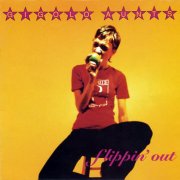 |
Flippin' Out (1993, 50.17) ***½/T |
|
| Cope Lemon Peeler Ride on Baby Ride on Bloom Figurine Where I Find My Heaven Lullaby Mrs. Washington |
Gun Pin Cushion Flippin' Out |
|
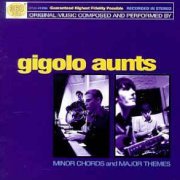 |
Minor Chords & Major Themes (1998, 48.14) ***½/½ |
|
| C'mon, C'mon Everyone Can Fly Half a Chance Super Ultra Wicked Mega Love You'd Better Get Yourself Together, Baby Everything is Wrong The Big Lie Simple Thing |
Rest Assured For a Moment Fade Away Residue Untitled |
|
Current availability:
Chamberlins used:
The Gigolo Aunts (formed as far back as 1981) are, of course, named for one of Syd Barrett's finest solo moments. 1993's Flippin' Out is only their third full-length album, full of the kind of powerpop that's now become rather clichéd, but was still relatively fresh back then, given that it was already a second-hand style. Irritatingly, there seem to be two different versions of the album, the original release on Fire, then a resequenced one with a couple of different tracks on RCA, the one I'm reviewing here. It's a good album, very good in places, but without that certain je ne sais quoi that can make an album great, despite tracks of the quality of opener Cope, Lullaby and Gun. Mike Denneen plays Chamberlin, with distant strings on Figurine, Where I Find My Heaven and Pin Cushion, none of which particularly enhances the tracks, unfortunately, which isn't to dismiss its use.
1998's Minor Chords & Major Themes (a quote from For A Moment) is a bit of a mixed bag, veering between the excellence of opener C'mon, C'mon, Everything Is Wrong, Rest Assured and Fade Away and the more prosaic likes of the rather limp Everyone Can Fly or Simple Thing. That's probably a little harsh; nothing here appals, but trimming the album down to forty minutes by the exclusion of a couple of lesser tracks would've improved the whole. Denneen on that studio Chamby again, with 'Strawberry Fields' flutes on Super Ultra Wicked Mega Love.
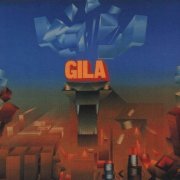 |
Gila [a.k.a. Free Electric Sound] (1971, 37.57) ***½/TAggressionKommunikation Kollaps Kontakt Kollektivität Individualität |
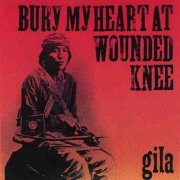 |
Bury My Heart at Wounded Knee (1973, 35.00) ***½/TThis MorningIn a Sacred Manner Sundance Chant Young Coyote Black Kettle's Ballad Little Smoke The Buffalo Are Coming |
Current availability:
Mellotrons used:
Gila are the sort of German band who fall into the 'are they or aren't they?' debate re. 'Krautrock'. By no means as experimental as early Tangerine Dream or as trippy as, say, Amon Düül II, they were certainly more 'out there' than Eloy, Jane, or many of the other relatively mainstream acts of the time. Their style was based firmly on jamming around a basic song structure, or at least it was on Gila (a.k.a. Free Electric Sound, for some reason). The material's actually very good, although both 'Kommunikation' and 'Kontakt' do go on a bit, to be honest; it's all very druggy, with echoes of early Floyd (pun intended), but there's a solid core of good songwriting, putting them several notches above many of their contemporaries. As well as the ubiquitous organ, there's a little of Fritz Scheyhing's Mellotron work to be heard on the album, with the unusual combination of brass and flutes on 'Kommunikation', topping and tailing the lengthy piece (and isn't that a riff later purloined by Porcupine Tree?).
Anyway, two years later, Bury My Heart at Wounded Knee, with its Native American theme, is a very different album to its predecessor, less trippy and more folky, with much 12-string acoustic from Conny Veit. Decidedly more song-orientated than Gila, Bury My Heart is generally regarded as a Krautrock classic, though with three decades' hindsight, it probably fits the so-called 'acid folk' genre better. Highlights? A matter of opinion, of course, but I'd go for In A Sacred Manner and Black Kettle's Ballad. Mellotron (and piano) are played by the now sadly late Florian Fricke, soon to be the one-man musical whirlwind otherwise known as Popol Vuh (German version), with vibes on opener This Morning and cellos on In A Sacred Manner.
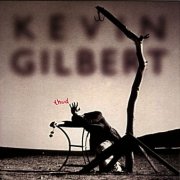 |
Thud (1995, 49.50) *****/TT |
|
| When You Give Your Love to Me Goodness Gracious Joytown Waiting Tea for One Shadow Self The Tears of Audrey Shrug (Because of Me and You) |
All Fall Down Song for a Dead Friend |
|
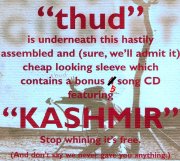 |
Thud EP (1995, 24.35) ***½/TTTKashmirGoodness Gracious Waiting (the other version) Joytown (live acoustic) Shadow Self (edit) |
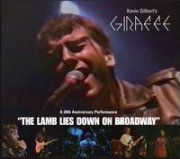 |
A 20th Anniversary Performance of The Lamb Lies Down on Broadway |
|
| The Lamb Lies Down on Broadway Fly on a Windshield Broadway Melody of 1994 In the Cage The Grand Parade of Lifeless Packaging Back in N.Y.C. The Carpet Crawlers |
Lilywhite Lilith The Lamia The Colony of Slippermen Raven In the Rapids IT/Watcher of the Skies The Musical Box |
|
Current availability:
Mellotrons used:
Jim Rigberg again, folks.
The music business, like life, is brutally unfair. 'Stars' are manufactured, their crappy music - and, more importantly for sales, their attractive images - are pumped into the ears and eyes of our impressionable youngsters and genuine talent is ignored, routinely. Kevin Gilbert got the royal shaft from the music business. By all accounts, a musical prodigy - capable of playing any song he heard on any instrument handed to him - Gilbert possessed an impeccable sense of melody and a biting, cynical wit. He found some measure of success, to be sure - he was in big demand as an engineer and worked (undoubtedly, much to his personal distaste) with Michael Jackson, Madonna and other '80s luminaries. However, he had little luck getting much attention for his own work which, in addition to his two releases, included the excellent Toy Matinee (*****), released in 1990. Gilbert dated Sheryl Crow; he and his buddies were responsible for writing much of the music on her multi-platinum debut. However, once that album took off, Crow dumped him and never looked back. Of course, to add insult to injury, Gilbert then had to go and accidentally kill himself. Life really sucks sometimes.
Anyway, Thud is a somewhat 'lost' masterpiece (like many others before him, Gilbert, ironically, developed a following after he died that he couldn't swing while alive). Each song is expertly written, arranged, played and produced. The stand-out, both from an overall and a Mellotron point of view (for me, anyway) is Shadow Self, a mini-prog epic about the devil inside us all. The chorus of this song includes the most sinister sounding Mellotron choirs under equally sinister chanting. Sublime. The Mellotron on both Goodness Gracious and Shrug is almost as good; both tracks have perfectly thought-out flute melodies that are repeated throughout. The former track also ends in some great polyphonic Mellotron flute-meandering, much like the reprise of Strawberry Fields Forever. Shrug scatters some interesting spooky block string chords here and there, as well.
Though I can't positively identify it as Mellotron, the 'organ' in Waiting sounds suspiciously like it's being generated via tape; it is the most unstable sounding organ I've ever heard. However, given the presence of strings, flute and choir on the remainder of the album, I admit it seems unlikely that Gilbert had another frame with organ on it. On the other hand, he was a vintage keys freak, so I guess it's not out the question. There may also be Mellotron brass mixed with real brass in All Fall Down.
Overall, this is prog-pop heaven and should be purchased immediately. It also happens to include three amazing Mellotron tracks. If you like this, you must also get Gilbert's posthumously-released The Shaming of the True (*****), his ode to the fucked-up music business.
| Jim Rigberg |
n.b. Having finally heard this myself, several years later, I can confirm that it's a Mellotron on Waiting, possibly a church organ/something else (real Hammond?) mix, although there's nothing to be heard on All Fall Down. I'd probably give this ****/TT, but since Jim reviewed it originally, his rating stands.
The Thud EP (for want of a better title) was given away with initial copies of the album, led by a drastic(-ish) reworking of Kashmir, starting off acoustic before letting rip, albeit in 4/4, which sort of works. Sort of... Two album tracks (one edited) are bolstered by a different (and superior?) take on Waiting and an acoustic version of Joytown, recorded for Westwood One Radio, apparently, not that you'd know it. Although the only credited Mellotron is Dave Kerzner's work on 'The Other Version' of Waiting (brass, by the sound of it), it's also present on Kashmir (strings, much as on the original) and the album versions of Goodness Gracious and Shadow Self.
2014 finally brought an official release for Gilbert's performance at Progfest 1994; after the success of 1993's inaugural event, Gilbert partially reformed his old band, Giraffe, electing to cover a large chunk of Genesis' iconic The Lamb Lies Down on Broadway, in the festival's first (only?) foray into the tribute arena, his band including future Spock's Beard (and, briefly, Genesis) drummer Nick D'Virgilio and all-round vintage keys fiend Dave Kerzner.
Their set opened with a taped Casey Casem in DJ mode, amusingly introducing Invisible Touch as a 'golden oldie', only to be cruelly curtailed (to a chorus of audience boos) in favour of the piano intro to The Lamb itself. At first glance, it looks like they played most of the double album, but closer scrutiny reveals that we only get about half, due to time constraints; in my humble opinion, there are some slightly eccentric track choices, but then, given the plot's general incoherence, it's almost irrelevant, lyrically speaking, what is and isn't included. They play the material almost perfectly, to the point where I only spotted one minor notational mistake (and one brief synth setting error), while Gilbert possibly tackles Peter Gabriel's parts better than the great man himself; there's almost an argument to be made that it's more fitting for the piece to be sung by an American, anyway. Heresy! We lose some classics in the editing, although what we get is superb, highlights including the title track, The Lamia and a rip-roaring The Grand Parade Of Lifeless Packaging.
Kerzner's page on Gilbert's site tells us that he played a super-rare T550 Novatron (a more portable machine, stripped down to essentials and housed in a built-in road case), using it on around half the set, with choirs at the beginning of Fly On A Windshield and the expected strings in the instrumental section of Broadway Melody Of 1974 (possibly wittily-renamed Broadway Melody Of 1994 on the night). The choirs at the end of The Grand Parade Of Lifeless Packaging are absolutely monstrous, although the deep 'choir' note near the beginning of In The Cage (actually an F#, a semitone below the Mellotron's bottom key) appears to be Gilbert himself. After a couple of Mellotron-free numbers, the string parts on Lilywhite Lilith are present and correct, as are the strings and choirs on The Lamia, while Kerzner adds a handful of volume-pedalled string chords to Raven. To finish things off, we get what sounds like the 'proper' strings/brass mix on the Three Sides Live-esque IT/Watcher Of The Skies medley.
The entire gig was filmed; to my knowledge, it's not officially available, but it all seems to be on YouTube, giving us occasional flashes of that T550. Three tracks from their set leaked out the year after the concert, on the first compilation from the festival, Progfest '94, with Fly On A Windshield/Broadway Melody, Slippermen and The Musical Box, but I can recommend the complete recording to anyone who's interested in hearing a very familiar album tackled by a different, yet highly talented group of musicians. Incidentally, Gilbert managed one more stab at Genesis before his untimely death, with an unusual, if excellent take on Back In N.Y.C. on the Magna Carta label's Supper's Ready Genesis tribute album the following year.
See: Toy Matinee
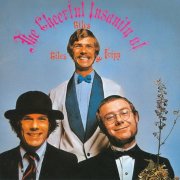 |
The Cheerful Insanity of Giles, Giles & Fripp (1968, 40.52/59.33) ***½/TT |
||
| Northmeadow Newly-Weds One in a Million Call Tomorrow Digging My Lawn Little Children The Crukster Thursday Morning |
How Do They Know Elephant Song The Sun is Shining Suite No. 1 Erudite Eyes [CD adds: She is Loaded Under the Sky |
One in a Million (mono single version) Newly-Weds (mono single version) Thursday Morning (mono single version) Thursday Morning (stereo single version)] |
|
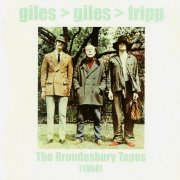 |
The Brondesbury Tapes (1968) (2001, 72.30) ***½/½ |
||
| Hypocrite Digging My Lawn Tremelo Study in A Major (Spanish Suite) Newly Weds Suite No. 1 Scrivens Make it Today Digging My Lawn |
Why Don't You Just Drop in I Talk to the Wind Under the Sky Plastic Pennies Passages of Time Under the Sky Murder I Talk to the Wind |
Erudite Eyes Make it Today Wonderland Why Don't You Just Drop in She is Loaded |
|
Current availability:
Mellotrons used:
I expect these names are familiar to most of you; two-thirds of the initial King Crimson lineup, while the other Giles played on their second album. Cheerful Insanity... is a very odd record; very much of its time, it works its way through all the usual Brit-psych clichés without ever really transcending the genre. Saying that, Suite No. 1 is an interesting little piece, with some excellent guitar work by the young Mr. Fripp (one of his surprisingly rare writing contributions here). Unfortunately, most of the songs tend towards the overly-whimsical, the end result being a less than totally essential addition to the psych (or Crimson) fan's collection. One of the album's better features is/are the little spoken-work vignettes between some of the songs, collectively entitled The Saga Of Rodney Toady, although the humour hasn't really dated that well. There's a little Mellotron on the album, uncredited, but apparently played by Fripp, particularly on the slightly cheesy One In A Million, but, like many of its contemporaries, Cheerful Insanity... isn't exactly awash with the thing. Incidentally, thanks to Jochen for extra information.
2001's clumsily-titled The Brondesbury Tapes (1968) is pretty much what it says on the tin: demos, mostly from the band's tenure at 93a Brondesbury Road, Queens Park, in west London, some featuring Ian McDonald, who turned up with a post-Fairport Judy Dyble. He stuck it out, she didn't. Some of the set has been released on vinyl as Metamorphosis, while Dyble's version of I Talk To The Wind originally appeared on 1975's post-Crimso compilation The Young Person's Guide to King Crimson. The optimistic sleevenotes claim that the band's home demos (an unusual approach at the time) are comparable with professional studio recordings; they're good, given that they were done by bouncing-down on a two-track Revox, but not that good. Highlights include Suite No. 1, the Dyble I Talk To The Wind and the six-minute Wonderland, but the set's completist approach (which, perversely, I applaud) works against it, landing the listener with over an hour of relatively low-fi music, including no fewer than five doubles. Then again, this is an album for completists; I suppose that's what Spotify playlists/programmable CD/iPods etc. are for. Despite detailed track-by-track credits, there's no mention of the Mellotron flutes on Newly Weds, but, given that it's one of the McDonald-free tracks, it seems likely that Fripp was responsible.
See: King Crimson | 21st Century Schizoid Band
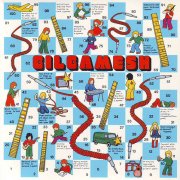 |
Gilgamesh (1975, 37.02) ***½/½One End More/Phil's Little Dance (for Phil Miller's Trousers)/Worlds of ZinLady and Friend Notwithstanding Arriving Twice Island of Rhodes/Paper Boat (for Doris)/As if Your Eyes Were Open For Absent Friends We Are All/Someone Else's Food/Jamo and Other Boating Disasters (From the Holiday of the Same Name) Just C |
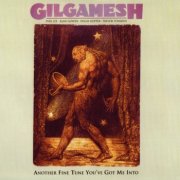 |
Another Fine Tune You've Got Me Into (1978, 37.48) ***½/TDarker BrighterBobberty - Theme From Something Else Waiting Play Time Underwater Song Foel'd Again T.N.T.F.X. |
Current availability:
Mellotrons used:
Gilgamesh are a classic 'Canterbury Scene' band; led by ninja keyboard god Alan Gowen, they coalesced in 1973, split in '75, then re-coalesced in '77 before splitting again, this time for good. Musically, they had an awful lot in common with Hatfield & the North, so it comes as no surprise that Dave Stewart was briefly involved with the band; think: prime Brit-fusion, somehow managing to make that so American of musics, jazz, sound relatively un-American. An un-American activity? Let's hope so.
The first lineup's only release, 1975's Gilgamesh, is exactly what you'd expect of it; mad, instrumental jazz-rock, with surprisingly little showing-off, all musicians concerned playing their hearts out in a tightly arranged formation. Individual plaudits are irrelevant; all players and tracks display the levels of virtuosity you'd expect, although the concept of 'tunefulness', outside the hermetically-sealed world of jazz is another matter. Gowen played the tiniest amounts of Mellotron possible, seemingly emulating the Hatfields, with a smidgeon of strings on One End More and only slightly more on Notwithstanding.
After the aforementioned split and reformation, the band's second lineup released Another Fine Tune You've Got Me Into in '78, following the path laid down by their debut with little deviation, despite the vast changes wrought on the industry in the intervening three years. The album's one Mellotron track is Underwater Song, with a quiet flute part running most of the way through the piece, though not exactly something any self-respecting Mellotron nut couldn't live without. Tragically, Gowen died of leukaemia in 1981, denying the world his very considerable talents; for more of his work, listen to National Health, essentially a Gilgamesh offshoot.