




|
|
|
|
||
|
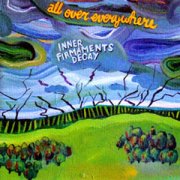 |
Inner Firmaments Decay (2010, 42.23) ***½/TTTTArt of the EarthEndless Night The Shroud Honesty After All the Years On a Dark Street Until the Sun Begins to Fall Gratitude |
Current availability:
Mellotron used:
All Over Everywhere are another Dan Britton (Deluge Grander, Birds & Buildings) project; while still loosely 'progressive', 2010's Inner Firmaments Decay is as much post-rock as prog, containing some acreage of drifting, occasionally dissonant warblings, with female vocals for good measure. Saying that, Endless Night has a folky feel to it, while On A Dark Street is almost pop/prog/post-rock, if you can imagine that particular genre-clash, although the highpoint is probably beautifully grandiose ten-minute closer Gratitude, the nearest the album gets to full-on prog.
M400 owner Frank Stickle lent his M400 for the project, assuring me that, amongst the sounds used, were church organ, the weird 'two violins' of the M300-A strings, 8-choir, MkII brass, tenor sax and bass clarinet. Britton adds strings to just about every track, other obvious use being the choirs on opener Art Of The Earth, brass on Endless Night, an unidentified choir sound on The Shroud, saxes (?) on After All The Years, church organ on Until The Sun Begins To Fall and, possibly, those M300-A strings on closer Gratitude. Whither the bass clarinet, though? Overall, a decent album of its type, assuming you can actually identify its 'type'; prog fans will go for some of it, though probably not all.
See: Deluge Grander | Birds & Buildings
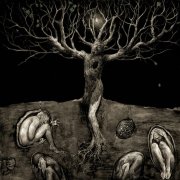 |
A Drop of Light (2018, 63.31) ****½/TTT½All Traps on EarthMagmatic Warning Omen First Step Bortglömda Gårdar |
Current availability:
Mellotron used:
All Traps on Earth (presumably named for Clifford D. Simak's short story All the Traps on Earth) are a new project from Änglagård's founder and bassist, Johan Brand, also featuring their original keyboard player, Thomas Johnson, current drummer Erik Hammarström and Johan's daughter Miranda. Unsurprisingly, Änglagård are a musical touchstone, although elements of jazz make themselves felt in places, not least due to the album's trumpet and saxophone work. Of the album's five tracks, all but one (First Step) are twelve minutes-plus and all but one (closer Bortglömda Gårdar) are effectively instrumental, assuming Miranda's wordless vocals don't count. Brand is the chief composer, although I suspect Johnson's contributions add that indefinable 'Änglagård X factor', as they did on the album he wrote with Thieves' Kitchen, whose guitarist, Phil Mercy, appears here. Even after several listens, there's an awful lot to take in here, to the point where even attempting to pick out highlights is an exercise in futility. Suffice to say, Änglagård fans are unlikely to be disappointed, although this is far from a clone.
Johan tells me that he borrowed (and played) Lennart Fröderberg's M400 for the recording (to quote, "most choir and string, some flute"), while he and Thomas also used an M4000D for brass, vibes and cello, amongst other things, all used with taste and restraint. While the sounds are an essential component of the album's sonic palette, it's the composition (as you'd hope) that makes this the kind of record I hope I'll still be listening to in twenty, thirty years' time. After all, at the time of writing, Änglagård's two original albums are around twenty-five years old and still get regular spins at Planet Mellotron Towers... If you buy just one progressive album this year, make it A Drop of Light. Dark, Nordic, beautiful.
See: Änglagård | Thieves' Kitchen
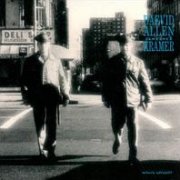 |
Who's Afraid? (1993, 42.53) ***½/T |
|
| Thinking Thoughts Love Who's Afraid? Shadow Bopera III Pretty Teacher Call it Accident Song For Robert |
C'est la Maison More & More Quit Yr Bullshit |
|
Current availability:
Mellotron used:
I don't know who came up with the idea of pairing on/off Gongster Daevid Allen and noted US eclectic producer/muso (Mark) Kramer, but the combination seems to work, going by their one collaboration, 1993's Who's Afraid? More Allen than Kramer, at least to my ears, it's a quirky collection of late '60s-esque psych, with plenty of acoustic guitar, almost-chanted vocals and the relentless electric repetition of Bopera III and More & More.
Kramer's responsible for the album's occasional keyboard work, including some wavery, high-end Mellotron strings on the title track which, while unusual, are nothing you desperately have to have, although Quit Yr Bullshit's strings sound more like an old string synth than anything; definitely not a Mellotron, anyway. Daevid fans will love this, Kramer ones probably less so, while the rest of us will probably sit on the sidelines wondering what all the fuss is about. Good, but niche.
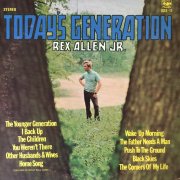 |
Today's Generation (1971, 26.57) **½/TTT |
|
| The Younger Generation I Back Up The Children You Weren't There Other Husbands and Wives Home Song (Dreams of What May Come) Wake Up Morning The Father Needs a Man |
Push to the Ground Black Skies The Corners of My Life |
|
Current availability:
Chamberlin used:
Now in his seventies, Rex Allen, Jr. is son of 'singing cowboy' Rex Allen (duh), his debut, 1971's Today's Generation, apparently promoted at the time as 'underground country'. What a difference a few decades make, eh? With the benefit of hindsight, this has all the trappings of a rather mainstream country record, albeit one adorned with occasional touches of then-contemporary instrumentation, while its lyrical concerns sound far more 'trad' than I imagine they did at the time. Any better tracks? The (very slightly) rockier Black Skies, perhaps, but this gets the rating it does for merely not being too awful.
Producer Steve Singleton plays what sounds like Chamberlin (was there one at his Nashville-based studio?) with 'orchestral replacement' strings on The Younger Generation, I Back Up, Home Song (Dreams Of What May Come), Push To The Ground, Black Skies and closer The Corners Of My Life. Interesting to hear a Chamby sound so raw, but it's difficult to really recommend this rather faceless record.
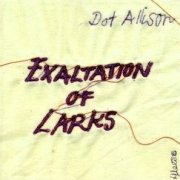 |
Exaltation of Larks (2007, 49.23) ***½/T½ |
|
| Allelujah Thief of Me Sunset In Deep Water You Dropped Your Soul M'Aidez Call Tall Flowers Quicksand |
Shivering The Latitude and Longitude of Mystery |
|
 |
I Killed the Monster: 21 Artists Performing the Songs of Daniel Johnston (2006)[Dot contributes]Don't Let the Sun Go Down on Your Grievances |
Current availability:
Mellotrons used:
Dot Allison is a Scottish singer who rose to fame via her involvement with the electronica of One Dove in the early '90s. Given that she's known for working in that style, it's all the more surprising that her third solo album proper, 2007's Exaltation of Larks, should consist of hushed, dreamy folky material, full of banjos, solo violins and Allison's breathy voice. The latter actually becomes a distraction after a while, as she doesn't seem to be able to sing this material any other way, but that could be construed as unfair criticism of a quietly beautiful album.
The legendary Kramer produces and plays various keyboards, including Mellotron, even though this well post-dates his apparent ownership of a machine. Anyway, we get uncredited strings on opener Allelujah and credited ones on Sunset (plus flutes) and M'Aidez Call, all used to reasonable effect while never being in any danger of being lauded as 'outstanding'. Overall, a lovely album, worth pursuing by those of a folky persuasion, being far more 'authentic' than some of the bigger new names on the current British folk scene. Naming no names.
See: I Killed the Monster
 |
For Loved Ones & Lost Ones (2002, 36.57) **½/T½ |
|
| It's Alright Everyone Was Right Ann-Christine Blue T-Shirt Boy In Bad Dreams What I've Been Maybe Next Year |
Closer Than You Think Flowers |
|
Current availability:
Mellotron used:
I'm having trouble finding out very much about Alma; it seems they were a Swedish quartet, two blokes, two girls, specialising in a type of country/folk/pop. To my sketchy knowledge, they only released the one album, 2002's For Loved Ones & Lost Ones, a pleasant enough set, if a little samey, which manages to slightly outstay its welcome, despite its relative brevity. There's nothing specifically wrong with any individual track, but ten of them on the trot made me fidgety.
Tom Hakava (Ben's Diapers) plays Mellotron, with major flute and string parts on Everyone Was Right and strings towards the end of closer Flowers, to good effect. Just for once, I'm going to say that I feel it was used about the right amount here; it's easy to overdo, especially on an album as quiet as this. I've heard far worse albums than For Loved Ones & Lost Ones, but then, I've heard far more interesting ones, too.
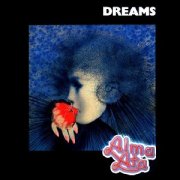 |
Dreams (1979, 34.40) **½/TDreamKeep on Come to Stay By Me New Born Baby Metall Angel Welcome to Night Top of the Hill |
Current availability:
Mellotron used:
I can't tell you a great deal about Alma Ata; both Discogs and Krautrock-musikzirkus.de only list one album, so I suspect that's the extent of their career, such as it was. To be blunt, I don't think we're missing out to any great extent; 1979's Dreams is a bland, disco-inflected soft-rock effort, less obnoxious tracks including the Fleetwood Mac-esque boogie-lite of Come To Stay By Me and Metall Angel's mild twin guitar histrionics, although six-minute closer Top Of The Hill succeeds in being far less epic than we might hope.
Although he's only credited with writing lyrics, our old friend Klaus Hoffmann(-Hoock) tells me he played his Mellotron on New Born Baby, with a sympathetically-arranged high string part running through the bulk of the track, with a choir segment in the fade. Not only is this not available on CD, but I can't imagine why it might ever be, its style being about as unfashionable as it comes. Do you bother for its Mellotron use? No, you do not.
See: Klaus Hoffmann-Hoock
 |
Human, All Too Human (1998, 43.47) ****/½ |
|
| It Didn't Work Out I Want to Live Winter Feeling Curse It's All in a Day... That Can't Stop Me From Loving You It's Different Now When I Do it... it's O.K. |
John Thursday Poison in the Glass Reno Twice Two |
|
Current availability:
Chamberlin used:
New Yorker (originally from Minneapolis) Steve Almaas has played in bands since the late '70s, working solo since 1992. 1998's Human, All Too Human was (I believe) his third album, a fine set of powerpop-infused Americana, at its possible best on I Want To Live's jangle, the sparse Curse and It's Different Now. This is one of those "Listen to the bloody words!" records, notable examples including Curse's, "The kiss becomes a curse" and, from It's Different Now, "Can you love the sinner, and hate the sin?". Just superb.
Chamberlin from the legendary Mitch Easter, if only just, with low strings (cellos?) on Curse, although it would've worked nicely elsewhere, too. Listening to album after album of complete dreck can turn a man into (more of?) a cynic, but artists such as Steve Almaas can cut through the crap and enthuse the jaded palette. Listen to this record.
 |
Patent Pending (1969, 37.01) ***/½EnsingleBefore Dawn Voodoo Forest Solar Level To R.K. Reversed for Two Horns Pequeno Nova Tales of Junior |
Current availability:
Mellotron used:
Johnny Almond (1946-2009) was a noted saxophonist and wind player, probably best-known for his work with The Alan Price Set in the '60s, then as half of second-hand shop staples Mark-Almond (with Jon Mark) the following decade. 1969's Patent Pending was the first of two albums he made with The Johnny Almond Music Machine, an instrumental set of jazzy, groove-filled jams, bordering library music in places. Despite its year of release, I'm surprised this isn't labelled a 'mod classic' more often. It's a decent enough set, if less progressive than you might expect, possibly at its best on the odd Voodoo Forest, the organ-driven Solar Level, inventive sax duet Reversed For Two Horns and groovy closer Tales Of Junior.
After years, nay, decades of knowing about this, yet not being able to hear a scrap of the credited Mellotron, my old friend (and yours) Martin Smith of the mighty Streetly Electronics has finally pointed me in the right direction. There are a handful of pitchbent sound FX on Voodoo Forest that could be absolutely bloody anything, frankly. No wonder I never spotted it before.
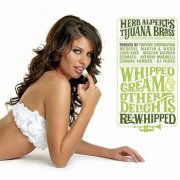 |
Whipped Cream & Other Delights: Re-whipped (2006, originally 1965, 46.58) **/T |
|
| Whipped Cream (Anthony Marinelli) A Taste of Honey (John King) Green Peppers (Anthony Marinelli) Ladyfingers (Camara Kambon) Love Potion #9 (Anthony Marinelli) Peanuts (Anthony Marinelli) Tangerine (DJ Foosh) El Garbanzo (Medeski Martin & Wood) |
Lemon Tree (Thievery Corporation) Lollipops and Roses (Anthony Marinelli) Bittersweet Samba (Mocean Worker) Butterball (Anthony Marinelli) |
|
Current availability:
Mellotron used:
Herb Alpert (the 'A' in 'A&M') and his Tijuana Brass are one of the scourges of the '60s; the kind of stuff that your parents would put on, thinking they were hip, now cluttering up a charity shop/garage sale near you. Yes, some people claim that this kind of easy listening has a certain caché these days: they're wrong. Not cool then, not cool now; don't give me that hipster crap. 1965's Whipped Cream & Other Delights was one of Alpert's most successful releases, familiar to anyone brought up on this kind of stuff (not me, then), presumably making it ideal for an ironic remix project, Whipped Cream & Other Delights: Re-whipped (remixers credited in brackets). You can see this in three ways: a) as a welcome updating of a vilely dated sound, b) vandalism of the highest order, or c) doing something nasty to something that's already nasty. I favour c).
John Medeski plays Mellotron on his trio's reworking of the Latin El Garbanzo, with some typically skronky, pitchbent strings warbling away in the background, barely scraping a single T. If your ironic bone is twitching, you stand a good chance of loving these contemporary reworkings. If it isn't, I can only suggest that you move quickly in the direction of 'away', as this may irritate you as badly as it irritated me.
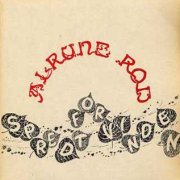 |
Spredt for Vinden (1973, 41.34) ***½/½Kom NuHer i Solen En Snehvid Fugl Sammensang XN Flyv Fugl Fisk Spredt for Vinden Gåseøje Gåseøje Fortsat |
Current availability:
Mellotron used:
Alrune Rod were one of Denmark's first psychedelic bands, operating between the late '60s and mid-'70s, producing six albums in the process, although the only one that interests us here is 1973's Spredt for Vinden, a raw, psych/proto-prog crossover effort with a broad blues streak running through it. This really is rather good, actually, standout tracks including opener Kom Nu, the incendiary Flyv Fugl Fisk and closer Gåseøje Fortsat, while the brass-driven Sammensang, while not amongst the album's best tracks, is unusual enough to be worth commenting on.
This album's up for the coveted 'least actually audible Mellotron on a record ever' award, with naught but a few seconds of background choppy strings on opener Kom Nu from Leif Roden, while someone called Ivan plays something entirely inaudible on Sammensang. Is there more elsewhere? Possibly, but as with so many albums on this site, if it's there, it's buried pretty deeply in the mix. Anyway, a good album of its type, worth hearing for psych and early prog fans who think they've heard it all.
 |
[Various tracks on Bandcamp] (2022-24, 41.08) ****/TTTT |
|
| Eclipse Endured On Undiscovered Waters in Undreamed Ships On the Sleeping Stream When the Veil is Thin Taking the Ghost's Word Dagger of the Mind Tomorrow and Tomorrow Reaching for the Ebony Desert |
Against a Sea of Troubles A Dream to Poison Sleep |
|
Current availability:
Mellotron used:
I've reviewed disparate collections of tracks downloaded from short-lived websites in the past, but I think this might be the first time I've collected together a set of pieces, all uploaded to Bandcamp with their own separate page. Altamira Lux is the nom-de-plume of Canadian James Blair, although I suspect he is not the Jim Blair who played on Art Bergmann's Sexual Roulette and released a thoroughly obscure album in 1986 called Turn the Tide. Anyway, these ten, fairly short pieces conveniently make a vinyl-length album, although I've ignored several more recordings only containing Blair's digital machine. His basic remit is instrumental progressive rock, touchstones clearly including The Enid and Genesis/Tony Banks, not to mention Steve Hackett in the guitar department. Top tracks? Eclipse Endured, On The Sleeping Stream and Reaching For The Ebony Desert, but the quality rarely dips below 'excellent'.
Blair explains the Mellotron use on Eclipse Endured thus (slightly edited):
| "M400 #1444 was built on June 11, 1974. Its early history has been lost, but the trail of provenance is solid, post-1980. In 1980, #1444 was purchased by a Canadian progressive rock band called Graphics, and as with many prog rock bands it was a vital part of their sound. They were an excellent and popular band, performing often on the West Coast, releasing two songs on a 45. In 1982, they purchased a new set of tapes from Sound Sales, the US Mellotron representatives, containing 3 violins/flute/8-voice choir, used for a few years before they disbanded. #1444 then changed hands a number of times, before reaching myself. By this time, the tapes were in very bad condition; constantly losing oxide and containing many dropouts, they were obviously on borrowed time. After purchasing #1444, I embarked on a full restoration. In May of 2022 (40 years after the previous tapes were installed), I bought new tapes from Streetly Electronics (3 violins/mixed brass B/Moraz Moog brass) and set about replacing the old sounds. In this track, all of the Mellotron in the first half is my M4000D digital machine, and at 2:00 the fully restored M400 makes its debut. All of the strings and flute from that point on are the restored instrument - but with the original Graphics tapes - until the last violin phrase before the ending. Near the end of tracking, I replaced the Graphics tapes with a new set from Streetly. This set of mixed brass B and Moraz Moog were then combined with the 40-year old Graphics 3-violins through the aggressive section at 2:46. The last phrase in the song is the tired old tapes and the new Streetly violin tapes played together. The final violin swell at 3:50, just before the quiet piano outro is the last time the Graphics tapes will ever be heard. A passing of the torch in a sense, and the closing of a chapter in Mellotron #1444's history". |
Listening to Eclipse Endured, the difference between the digital machine and the real thing is startlingly obvious, which is one in the eye for the naysayers who insist samples are just as good. The two brass sounds leap out at you, too, making a change from the usual tapeframe suspects. As for the other nine tracks, it's strings across the board, the brass sounds rearing their heads in the noisier parts, with particularly good use on On Undiscovered Waters In Undreamed Ships, When The Veil Is Thin, Dagger Of The Mind and Against A Sea Of Troubles. I feel as if I've cheated slightly by constructing an album made solely of Blair's Mellotron pieces, but, y'know, my site, my rules. You can, of course, listen to all of these for free, but I urge you to buy the tracks and recompense Mr. Blair, if only slightly, for the untold hours of work he's put in.
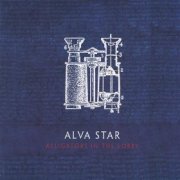 |
Alligators in the Lobby (2001, 36.11) ***½/T |
|
| Adore Falling Unhappily Yours Thing for Me Beautiful 74 Victorian Revelation |
Alva Star Girlfriend |
|
Current availability:
Mellotron used:
John Hermanson's Alva Star are a Minneapolis-based powerpop outfit, whose 2001 debut, Alligators in the Lobby (is that a Fear & Loathing in Las Vegas reference?) is an excellent addition to the canon, top tracks including opener Adore, with a repeating guitar hook to die for, Unhappily Yours, the laid-back 74 and solo-electric-guitar-and-vocal closer Girlfriend. Truth be told, there isn't a bad track here, although Hermanson's falsetto on Beautiful reminds me a little too much of the horrible James Blunt, even though that artist's similarly-titled hatefest was several years in the future at this point.
Hermanson plays Mellotron on their 'theme tune', Alva Star, with a beautifully upfront and very real-sounding flute line and string and choir chords, making it a pity it wasn't used a little more often. All in all, yet another great powerpop album, the only caveat being that, like so many similar, it has trouble standing out from the pack, despite featuring several memorable tracks.
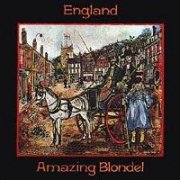 |
England (1972, 34.57) ***/½The PaintingsSeascape Landscape Afterglow A Spring Air Cantus Firmus to Counterpoint Sinfonia for Guitar and Strings Dolor Dulcis Lament to the Earl of Bottesford Beck |
Current availability:
Mellotron used:
Amazing Blondel (named in honour of Henry VIII's favourite minstrel) started life as an Elizabethan music ensemble, operating in the same vague sphere as Gryphon and Magna Carta, although they did it first, with albums such as their self-titled debut and '71's Fantasia Lindum. England was their fourth release, with the band down to a duo and the first to noticeably incorporate contemporary instrumentation, although much of the album still has that 16th century vibe about it. To be honest, much of the material is a bit lightweight and forgettable, with the honourable exception of Cantus Firmus To Counterpoint, which conjures up the spirit of times past with aplomb. To be fair, this may just be a reflection of the era they were trying to recapture, but I find that side one, in particular, doesn't bear repeated listening.
Most of the tracks are backed by the strings of the Hopkins/Blondel Ensemble, but Terence Alan Wincott, as the band's resident multi-instrumentalist, plays Mellotron (credited as 'Mellotron?!') on closing instrumental, Lament To The Earl Of Bottesford Beck, although all that's audible is a few strings pitchbends behind the harmonium and pipe organ. So, not a classic, but some of side two is quite listenable.
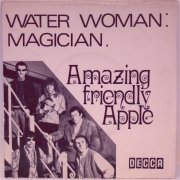 |
7" (1969) ***½/TT½ Water Woman Magician |
Current availability:
 |
Mellotron used:
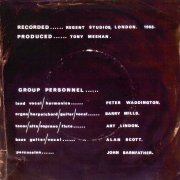
Amazing Friendly Apple were a Leeds-based five piece, who only managed to release one single; there doesn't even appear to be any other material in the vaults. The A-side is a very British take on Spirit's Water Woman (not to be confused with Mancunians Pacific Drift's fiddle-led version from a year later), while the flip, Magician, is an excellent late-period psych piece. Organ, harpsichord and Mellotron strings, presumably from organist Barry Mills, vie with each other for precedence over Peter Waddington's strangely nasal vocal, as the song moves through several different parts in quick succession, reminding me slightly in places of Traffic's Hole In My Shoe. In fact, this could be said to be bordering early progressive; it's certainly more inventive than many of its better-known cousins.
You're unlikely to find an original copy of Magician, but it's apparently available on The British Psychedelic Trip 1966-1969 LP or The Great British Psychedelic Trip, Vol. 1 CD, according to the excellent and now sadly disappeared Tapestry of Delights site. I wouldn't say it was a Mellotron classic, but it's worth hearing on both musical and Mellotronic grounds. A quick word here to say a public thank you to the band's manager, Peter Brent, for providing scans and information. Interesting to note that the single even had a picture sleeve, as they were still a rarity in the UK at that time.
 |
Shade Themes From Kairos (2014, 67.44) ***/TThat Space BetweenTemporal, Eponymous Circumstances of Faith Sometimes Ebony Pagoda |
Current availability:
 |
Mellotron used:
The (one-off?) Ambarchi/O'Malley/Dunn combo can almost be considered a Sunn O))) side-project, Stephen O'Malley being one half of the duo, while Australian Oren Ambarchi frequently guests and Randall Dunn also acts as an unofficial member and live engineer. The trio's album, 2014's Shade Themes From Kairos, is yet another of those 'difficult to describe' efforts: ambient metal? I know that such a thing exists; perhaps this is it. Drifting, formless, experimental music, like psychedelia taken to an extreme, maybe, or a black metal band tripping on the baddest brown acid ever. 'Stoner' doesn't even begin to describe it. Given that this is well beyond my conceptual level, which is essentially a fancy way of saying that I don't 'get it', I think three stars is reasonable enough; they seem to know what they're doing, even if I don't.
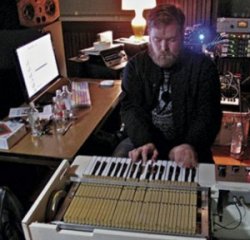
As you can see, a gen-u-wine M400 was hired for the Belgian sessions, Dunn bringing it in from the off, with quick, volume-pedalled, pitchbent choir chords in the opening minute of That Space Between, strings and flutes drifting in towards the end of Temporal, Eponymous and drifting strings and flutes on lengthy closer Ebony Pagoda, although if overall use tops a total of two minutes, I'd be amazed. One for the experimentalists amongst you, then and, of course, Sunn O))) completists. Really not worth it for that Mellotron use, though.
See: Samples | Earth | Master Musicians of Bukkake
 |
Amberjacks (2014, 40.37) **½/T |
|
| Proloque The Manic Sweet Summer Rain Black Water Catch 'em Alive The River's Own Return of the Obeah Man |
Castle in the Sky Nation on Fire High Speed Love |
|
Current availability:
Mellotron used:
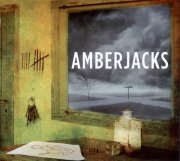
Amberjacks seem to be aiming for Holland's psychedelic hard rock crown (such as it is) on their eponymous debut, scuppered by their inability to shake off their heavy indie influence, typified by The Manic and Return Of The Obeah Man. Any better tracks? Possibly Nation On Fire, but nothing here's going to set the world alight, if you take my point.
Ruud Peeters plays his M400 on two tracks, with a muted strings part on Sweet Summer Rain and upfront strings, a repeating flute line and cellos on closer High Speed Love. I couldn't honestly recommend this, but at least we get one decent Mellotron track.
 |
Es Lebe der Zentralfriedhof (1975, 38.36) **½/0 |
|
| Es Lebe der Zentralfriedhof Wem Heut Net Schlecht is Espresso G'Söchta Heit Drah i Mi Ham Zwickt's Mi Familie Pingitzer De Kinettn Wo i Schlof |
A Gulasch und a Seitl Bier I Glaub i Geh Jetzt |
|
Current availability:
Mellotron used:
Wolfgang Ambros is an Austrian singer-songwriter, whose 1975 album, Es Lebe der Zentralfriedhof, is a fairly typical mainstream pop/singer-songwriter record of the era, albeit one sung in German, which won't add to its non-German-speaking appeal. Is it any good? Not especially, no, although I've no doubt that the lyrics are meaningful and erudite; shame they're set to such dull music, really.
Christian Kolonovits allegedly plays Mellotron, though I'll be stuffed if I can tell where, as all of the album's strings are real and there are no obvious flute or choir parts. Maybe he didn't actually play one at all? Anyway, although this is actually available on CD, I can't really recommend it on either of the usual grounds.
 |
Gypsy Moth (1972, 37.38) **½/T½ |
|
| Friend Somebody Walks Beside Me Mary Gypsy Moth Answer in the Rain Tumbleweed Caroline Mornin' Sun |
Safely Home Like a River Sweet Turnstyle Blues |
|
Current availability:
Mellotron used:
Stephen Ambrose is a figure of some obscurity, although his lone solo release, 1972's Gypsy Moth, features a stellar cast of musicians, not least Dean Torrence and a pre-fame Andrew Gold. This was never going to set the world alight, to be honest, being a set of rather drab West Coast-style singer-songwriter material, at its least dull towards the end of the record on the countryish Mornin' Sun, Safely Home Like A River and more upbeat closer Sweet Turnstyle Blues.
With three keyboard players credited, it's impossible to know who played the album's Mellotron work, but my bet would go to producer Don Gallucci, if only because he also played one with late-period Touch, as heard on a 1973 bonus track on the CD of their 1969 album. Anyway, we get orchestral-esque strings on Somebody Walks Beside Me and strings and cello on the title track, quite distinct from the real strings used elsewhere. Disturbingly, one of two other Ambrose credits on Discogs is as a member of the Church of Scientology Choir, on an album recorded in the mid-'90s. OK... Anyway, many thanks to Michael for discovering this one.
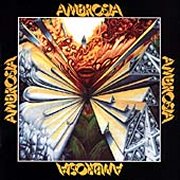 |
Ambrosia (1975, 38.36) ***½/TTNice, Nice, Very NiceTime Waits for No One Holdin' on to Yesterday World Leave Me Alone Make Us All Aware Lover Arrive Mama Frog Drink of Water |
 |
Somewhere I've Never Travelled (1976, 45.48) ****/½ |
|
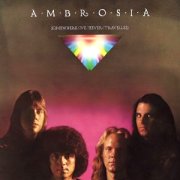
| And... Somewhere I've Never Travelled Cowboy Star Runnin' Away Harvey I Wanna Know The Brunt Danse With Me George (Chopin's Plea) |
Can't Let a Woman We Need You Too |
|
 |
Life Beyond L.A. (1978, 41.18/98.15) ***/0 (T) |
||
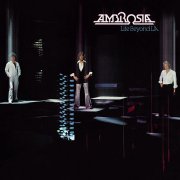
| Life Beyond L.A. Art Beware Apothecary If Heaven Could Find Me How Much I Feel Dancin' By Myself Angola Heart to Heart |
Not as You Were Ready for Camarillo [Live disc adds: Life Beyond L.A. If Heaven Could Find Me Not as You Were How Much I Feel And... Somewhere I've Never Travelled |
Nice, Nice, Very Nice The Brunt Holdin' on to Yesterday Can't Let a Woman I Wanna Know] |
|
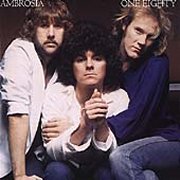 |
One Eighty (1980, 39.38) **½/½ReadyShape I'm in Kamikaze You're the Only Woman Rock n' a Hard Place Livin' on My Own Cryin' in the Rain No Big Deal Biggest Part of Me |
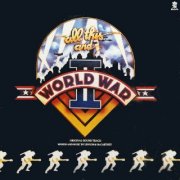 |
All This & World War II (1976, 3.52) ***/½[Ambrosia contribute]Magical Mystery Tour |
Current availability:
Chamberlin used:
Ambrosia operated towards the rock end of the 'progressive pop' field, rather in the way that Canada's Saga did a few years later, without really sounding anything much like them. Regular song format, good hooks, clever arrangements, interesting instrumentation... I think you get the general idea. Influences include Yes, Styx (who were still on their way up when Ambrosia appeared) and maybe Kansas (ditto); a very American sound, which keeps reminding me of Spock's Beard two decades hence.
Ambrosia itself is a good album, if falling short of 'excellent', standouts including Time Waits For No One, Make Us All Aware and Mama Frog, complete with Lewis Carroll quotes. Christopher North plays Chamberlin on several tracks, with flutes on Nice, Nice, Very Nice and what I presume are Chamby cellos on Make Us All Aware, but it isn't until Lover Arrive that it kicks in properly, with a beautifully arranged polyphonic flute part. Apart from a brief burst of flutes again on epic closer Drink Of Water, that would appear to be it, but as usual with the Chamberlin, I could just be missing parts due to a lack of detailed knowledge of its sounds. Either way, a fine album. The following year's Somewhere I've Never Travelled (note English spelling!) sees Ambrosia at the peak of their pomp powers; an excellent album with endlessly inventive arrangements, often coming more from a soundtrack/stage show area than 'rock'n'roll'. Highlights are probably Cowboy Star and Danse With Me George, but there isn't a bad track on the album. Mucho real strings/woodwind, although it's been pointed out to me that there's a brief burst of Chamberlin flutes (and possibly strings?) towards the end of Cowboy Star, though the casual listener simply isn't going to notice.
Upon reappraisal, '78's Chamby-free Life Beyond L.A. is better than I remember, although North had been relegated from full-member status, only playing on a handful of tracks. Better material includes its killer opening title track, If Heaven Could Find Me, Not As You Were and closer Ready For Camarillo, although several tracks are probably best described as soul-influenced schlock. In 2013, America's Relayer Records released a two-disc edition of the album, disc two containing a barely-better-than-bootleg recording of The Warner Bros. Music Show, from Cincinnatti, November 15th, 1978. Despite the sound quality, or lack of same, it's good to hear what the band sounded like live, their set kicking off with four new numbers (three of the four I quoted above), four from Somewhere... and two from their debut, highlights including the And... Somewhere I've Never Travelled twofer and closer I Wanna Know. Video (and audio) evidence tells us that the band had two full-time keyboard players in this particular incarnation, including North on Hammond and Chamberlin M1, amongst other 'boards. He uses the Chamby here and there, with 'string section replacement' strings on How Much I Feel and orchestral-style flute parts on And... Somewhere I've Never Travelled and Nice, Nice, Very Nice.
One Eighty's the only other Ambrosia album to have credited Chamberlin, but in all honesty, if it's actually on Biggest Part Of Me I'd be surprised; it's the nearest any of the keyboard sounds gets to tape replay. The album's a slight improvement over its predecessor, although two or three soul-influenced tracks are rather hard to bear. The band are, surprisingly up to a six-piece, with North reinstated, but it hasn't improved their sound overmuch. I'm actually surprised they didn't manage to break through into the AOR big league; right time, wrong place? Maybe a lack of truly memorable material sunk them, although they managed one more album, '82's Road Island (***). One various artists project appearance, with a so-so version of Magical Mystery Tour on 1976's dodgy All This & World War II, but with merely a few seconds of Chamby strings (admittedly underneath some great Taurus pedal notes), we're talking less than fully essential, I think.