




|
|
|
|
||
|
 |
Go! (1997, 35.11) ***/T |
|
| I Got Time Because of You Anchor Find You Dead Veda Very Shining Co-Pilot Go! Sparklegirl |
Alouette & Me I'm a Fool Disappear |
|
Current availability:
Mellotron used:
Letters to Cleo are another in a seemingly endless list of American female/female-fronted pop/punk bands, this time from Boston. Going by their third album, 1997's Go!, they don't do anything especially original, although the bitter Alouette & Me impresses both musically and lyrically in comparison to the rest of the album. Anchor is probably the best of their punkier material, but little of it's anything to really write home about.
Guitarist Michael Eisenstein doubles on keys, with Farfisa on a few tracks and upfront Mellotron strings in a couple of places on Sparklegirl. So; perfectly ordinary pop/punk with only one track that stands out in any way. Maybe not.
 |
Black Sun (1978, 38.24) ***½/T |
|
| Nuit Lunaire Requiem pour un Astronaute Soleil Noir Adagio pour un Poète Les Plaines de Feu Fleur de Lit Le "Blue Bar..." La Chasse |
Romance de Garnison Dernier Bal Les Géographes Un Homme dans la Nuit |
|
Current availability:
Mellotron used:
Claude Léveillée (1932-2011) is one of the odder artists featured on this site. Generally referred to as an 'author, composer, performer, pianist and actor' (thank you, Discogs), it seems his chosen milieu was somewhere between jazz and French chanson, making it all the stranger that he should release a one-off all-instrumental progressive album, Black Sun, in 1978. Possibly best-described as 'keyboard-led symphonic', Léveillée was quite happy to throw other instruments into the mix, both violin and sitar appearing on Soleil Noir and a decidedly funky guitar part on Le "Blue Bar..." Overall, the composition is good, if not outstanding, its strong melodies holding the interest over repeated playings, especially in the 'awkward' instrumental field.
Léveillée employed Michel le François as his musical director and chief keyboard player for the project, so, despite a lack of any 'Mellotron' credit, it seems likely it's le François' strings (from his own machine?) on Le "Blue Bar..." and closer Un Homme Dans La Nuit. Those nice ProgQuébec people haven't reissued this at the time of writing, but copies shouldn't be beyond the reach of the average collector. Definitely worth hearing for the prog fan who thinks he has it all, though not for the Mellotron.
See: Michel le François
 |
If You Know What I Mean (1997, 54.26) ***½/T½ |
|
| The River For Love and New Orleans Georgia Springs If You Know What I Mean Preacher Man Louisiana Little Wonders Waiting |
It's Your Family Little White Lies Revolution Magnolia Days Thief of These Fields |
|
Current availability:
Mellotron used:
Mo Leverett is a Christian Americana artist who, at least on 1997's If You Know What I Mean, keeps most of his religiosity to himself. As a result, his impeccable country/blues credentials shine through on gems such as the instrumental Georgia Springs, the slowburn Little White Lies and the beautiful Magnolia Days, although I'm less convinced by the R&B influences on It's Your Family. Lyrical theme: it doesn't matter what they do or how they behave, they're family. Right...
Producer Phil Madeira plays keys, including Mellotron on a couple of tracks, with a cello line under the real violin on Louisiana, and cellos and polyphonic flutes on Revolution. According to the ever-reliable (?!) Discogs, Leverett hasn't released anything in fifteen years at the time of writing, but, given the overly-goddy titles on his last release, perhaps we shouldn't worry too much. I can wholeheartedly recommend If You Know What I Mean to Americana fans, though, its occasional faith-based lyrics unobtrusive enough to not be a problem for heathens.
 |
Oshik Levi (1974, 35.16) **/T½ |
|
| Haiti Gever Ze Mikvar Shir Eres Ganuv Agadat Deshe Yesh Li Shir Raglaim Yonatan Sa HaBaita Ishmael |
Lo Hikarti Otha Nigun Atik |
|
Current availability:
Mellotron used:
Other than that he's a mainstream Israeli pop singer, I can't really tell you much about Oshik Levi/Levy, other than that his eponymous 1974 album contains Israeli folk-influenced pop. While not completely horrible, it's so tied into its time and place of conception that it's difficult to reassess it many years later; it sounds like exactly what it is, for better or (probably) worse.
Matti Caspi plays Mellotron, with orchestralish strings on Ze Mikvar, Agadat Deshe and Lo Hikarti Otha and flutes on closer Nigun Atik. I can't really that imagine you'll want to hear this, unless you're an obsessive collector of Israeli pop. A little Mellotron improves things slightly, but nowhere near enough to make it worth tracking down.
 |
7" ( 1974) ***½/T½ Why Must I Be Like You I'll Get Lost Out There |
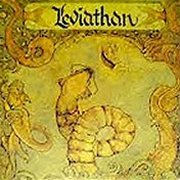 |
Leviathan (1974, 42.53/49.34) ***½/TTTT½ |
|
| Arabesque Angela Endless Dream Seagull Angel of Death Always Need You Quicksilver Clay |
[CD adds: Why Must I Be Like You I'll Get Lost Out There] |
|
Current availability:
Mellotrons used:
Despite usually being retrospectively labelled 'prog', Tennessee's Leviathan were less a full-on prog outfit than a progressive hard rock act, although their unusual (unique?) lineup included no fewer than three keyboard players, one each on organ, piano and Mellotron, although I find it hard to believe that there couldn't have been some kind of doubling-up. As far as I can ascertain, their initial release on the tiny Mach label was a non-LP single, 1974's Why Must I Be Like You c/w I'll Get Lost Out There, both available on the album's Flawed Gems CD issue. The A-side's an average hard rocker, but the flip is more of a slow-burner, with plenty of Mellotron strings, including an outrageous pitchbending section towards the end.
To be honest, none of the material on Leviathan particularly stands out, but it's a good album of its type. Like so many US prog(-ish) outfits, they had a hard time getting signed by anyone, never mind a major, so it's fortunate for us that this album's actually available at all. Leviathan opens with some heavy-duty Mellotron strings, getting the album off to a good start, then, well, doesn't let up for the next forty minutes. This is a serious Mellotron Album, John Sadler's machine all over everything; mostly strings, but a couple of affecting flute melodies, too. It's difficult to pinpoint highlights, but the flutes on Always Need You are especially good; in fact, the only thing that stops it getting the full five Ts is a lack of 'Mellotron Moments' comparable to, well, all the classics.
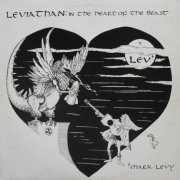 |
Leviathan: In the Heart of the Beast (1980, 44.24) ***½/TT |
|
| Sunpower San Andreas Rag Room at the Top Blues for Us Leakin' Like a Sieve Mourning Dove Pre-War Blues Shenachie Hill |
Ma Tovu Log Rhythms on Isaiah's Grave |
|
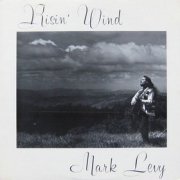 |
Risin' Wind (1981, 36.37) ***½/TTEternal ReturnRe-Run Ron I Can't Think Pre-War Blues Phase II Blind Leading Blind Risin' Wind Celtic Phantasy Save the Black Hills |
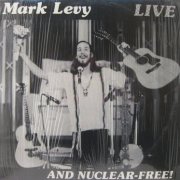 |
Live & Nuclear-Free! (1984, 45.37) ***/½ |
|
| Talkin' Raw Deal The Fema Side-Step Livermore or Less Who Builds the H-Bomb? Arms Race or Human Race Blond Sleil Fast for Life The Ghost of Arthur McDuffie |
Casitas Only Remembered |
|
Current availability:
Chamberlins used:
Mark Levy is a folk musician and political satirist, active since the late '70s, his first album (to my knowledge) being 1980's Leviathan: In the Heart of the Beast, an excellent folk/singer-songwriter effort, covering several bases musically, while lyrically tackling various liberal causes of the day (mostly still relevant now). Highlights include solar energy plea Sunpower, witty earthquake warning San Andreas Rag, Shenachie Hill and Log Rhythms On Isaiah's Grave, with no clunkers amongst the rest of the material. Two musicians on Chamberlin: Paul Smith adds background strings to opener Sunpower, while Harriet Jacoff adds 'chorus' (sounds like mixed Chamby male and female vocals) to Shenachie Hill and strings, 'chorus' and church organ to Log Rhythms On Isaiah's Grave. Now, I didn't know there was a church organ sound in the Chamby library, so if nothing else, consider this an excellent demo, as it comes through the mix loud'n'clear.
He followed up in '81 with Risin' Wind, a good, if slightly lesser album than Leviathan. Its highpoint has to be its twelve-minute title track, rising (sorry) like a leviathan (even more sorry) over the rest of the record, a folk/rock epic, no less, other top tracks including opener Eternal Return, acoustic instrumental Celtic Phantasy and closer Save The Black Hills. Although there's only one credited Chamby track, it's all over opener Eternal Return, too, with strings and church organ, presumably from Levy, as are the credited strings, choirs and church organ on the title track. 1984's Live & Nuclear-Free! features one side of solo acoustic live satire and one of largely-unadorned studio material; the live side is good for what it is, although Levy's concentration on the nuclear issue is a little outdated these days, while the nine-minute Fast For Life is the studio highlight. Chamberlin (on the studio side, of course) from Justin Mayer, later to receive (admittedly rather minor) acclaim as inventor and builder of the J-Tron, his own, one-off Mellotron/Chamberlin hybrid and a thing of beauty. He adds a brief string part towards the end of Fast For Life, but that's your lot.
Levy is still recording and performing today, he concentrates on his faith these days, his more recent albums reflecting aspects of Jewish history and, as such, probably (doubtless unintentionally) rather excluding fans of his early work. Sadly, none of his early titles are on CD, although Levy's website mentions that he still has a few LPs for sale, although he doesn't say which. Drop him a line and see if he can sell you any of these. Incidentally, major thanks to regular contributor Mark Medley for supplying these hard-to-find titles.
 |
Joy'All (2023, 32.01) **½/T |
|
| Psychos Joy'All Puppy and a Truck Apples and Oranges Essence of Life Giddy Up Cherry Baby Love Feel |
Balcony Chain of Tears |
|
Current availability:
Mellotrons/Chamberlin used:
Jenny Lewis was vocalist and all-round musician with Rilo Kiley until their 2013 split (not to mention her extensive Hollywood career), by which time she'd already released two solo albums. 2023's Joy'All is her fifth such, a West Coast/singer-songwriter effort, much like its predecessor, the sampletastic On the Line, possibly at its best on the countryish Puppy And A Truck and the laid-back Essence Of Life, but this isn't really the kind of album about which your typical Planet Mellotron reader will rave.
Lewis is credited with Mellotron, but I'm rather doubtful we're hearing a real machine, although the album also features an increasingly rare Jon Brion Chamberlin credit, with background strings on opener Psychos and very obvious Chamby strings on Balcony. Or is the Psychos part a real Mellotron? Or a sampled one? One definite tape-replay track, anyway, for what it's worth.
See: Samples etc.
 |
Echo [U.S. Version] (2009, 58.31) **/T |
|
| Happy I Got You Love Letter Can't Breathe You Don't Care Outta My Head Brave My Hands |
Alive Don't Let Me Down Fly Here Now Broken Lost Then Found Stone Hearts & Hand Grenades |
|
Current availability:
Mellotron used:
For those of you who've been hiding in a cave in Tora Bora for the last few years, Leona Lewis won the 2006 British X Factor, by dint of being a fairly decent singer; given that most of the voters are teenage girls, she did doubly well to win against the hordes of useless-but-pretty boys that seem to clog up the show. Like I give a shit. The whole media circus is a horrible feeding frenzy of fake dramatics (though very real emotion, at least on the part of the contestants) and pure, capitalist-to-the-core money-making from that vampire of the music biz... OK, I'll shut up now.
Lewis has actually lasted to a second album, 2009's Echo, making it look like a distinct possibility her career may have some longevity and good luck to her. She hasn't got the greatest soul voice in the world, but I've heard a damn' sight worse, although the album's pretty anodyne, possibly excepting the electro of Can't Breathe, not that we're talking Front 242, you understand. For some strange, no doubt income-generation-related reason, the album's been heavily re-jigged for the American market, including two songs not on the UK version. One of these is You Don't Care, with apparently real Mellotron flutes all over the thing (played by track producer Ryan Tedder and recorded at Abbey Road, fact fans), to passable effect, but hardly something for the Mellotron fetishist, to be honest.
 |
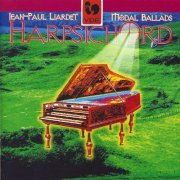 |
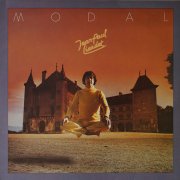
Modal [a.k.a. Harpsichord Vol. 1: Modal Ballads] (1979, 33.52) ***½/½ |
|
| Picky Pickings Sad Girl on a Swing Ballad for Clear Rondo Alla Russe Sylvia's Tune Lazy Lady Land Blueberry Modal |
Jasmina To Fabrice Castle in the Night Pavana for Clouds |
||
Current availability:
Mellotron used:
Despite his mainstream classical training, Swiss pianist Jean-Paul Liardet also played beat, jazz, electronic music and other disparate genres through the '60s and '70s. He turned forty in 1979, the year he released Modal, a collection of self-composed harpsichord pieces, although many of them are generically 'baroque' enough to be standards, possibly at their best on opener Picky Pickings, Sad Girl On A Swing, Rondo Alla Russe and Castle In The Night. As if to prove that he wasn't interested in going the usual route, the album features several unusual - possibly unique - instrumental and compositional combinations, not least the 'lonesome cowboy' harmonica and pedal steel on Blueberry and Modal's bizarre harpsichord boogie-woogie.
Liardet's credited with Mellotron, but all we get is distant choirs on Sylvia's Tune, probably intended to fool the listener into thinking they were the real thing. Good, sometimes excellent music, but a Mellotron dud, I'm afraid. The album was reissued in 1997, with a truly appalling sleeve and a different running order, as Harpsichord Vol. 1: Modal Ballads.
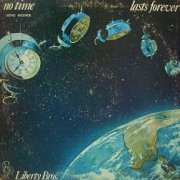 |
No Time Lasts Forever (1977, 37.20) **½/TTT½Do You Have to Remind MeAnywhere Anytime Nesadel Song (War Machine) Our Love Was Made With Time Two A.M. The Reds You Do it to Yourself I Believe (That You Belong to Me) No Time Lasts Forever |
Current availability:
Mellotron used:
To my knowledge, 1977's No Time Lasts Forever was Texans Liberty Bros' sole album, an odd, kind-of progressive pop release, probably at its best on the acoustic Anywhere Anytime and the heavier Nesadel Song (War Machine), its worst on the awful The Reds, a crummy by-numbers blues effort and cheesy rock'n'roller You Do It To Yourself. This gives the impression of wanting to be everything to everyone, so, of course, ends up being very little to anyone.
Shannon Taylor plays keys; well, piano and Mellotron, to be precise, so we get some lovely Mellotron overkill, with background flutes and upfront (almost solo) strings on opener Do You Have To Remind Me, strings on Anywhere Anytime, a Heart Of The Sunrise-style brief string part at the end of Nesadel Song, pseudo-orchestral strings and upfront flutes on Our Love Was Made With Time and distant strings on I Believe (That You Belong To Me) and the closing title track. You know, I really wanted to like this, but it's defeated me. Decades later, Taylor would put out a couple of excellent solo albums before his untimely death in 2012; I believe drummer Tommy Campbell has also gone the way of all things, sadly.
See: Shannon Taylor
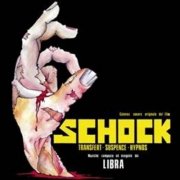 |
Schock (Transfert-Suspence-Hypnos) (1976, 30.42) ***½/TT½ |
|
| The Shock L'Altalena Rossa Transfert/Hypnos/Transfert La Baia La Cantina/The Shock Tema di Marco/Tema di Marco 2 L'Incubo Transfert 3 |
Il Fantasma Suona il Piano Transfert 4/Tema Di Marco 2 |
|
Current availability:
Mellotron used:
Given that the misspelled Schock (Transfert-Suspence-Hypnos) (it should be Shock) is a mid-'70s Italian horror film soundtrack, it should come as absolutely no surprise to anyone to hear that Libra had a Goblin connection, although they were a long way from being the same band. You'd be forgiven for thinking they were, mind you, as their dark, frequently near-atonal music parallels Goblin's quite eerily, involving inventive synth patches and dissonant Mellotron choirs, amongst other musical pointers. Allesandro "Sandro" Centofanti's innovative keyboard work is probably the album's most outstanding quality, although the musicianship is excellent throughout; opener The Shock is a killer bass/drums/Hammond/synth workout, while guitarist Carlo Pennisi contributes some excellent acoustic playing on L'Altalena Rossa.
Centofanti's Mellotron strings open the album, with some of the loudest choirs I've ever heard within the first minute, clearly mixed way up from the part that precedes them. Transfert/Hypnos/Transfert features church organ tapes, although it's hard to tell whether the strings on the track are Mellotron or, er, something else. More choirs on Tema Di Marco, with choirs and cellos on L'Incubo, along with more of those 'are they or aren't they?' strings, although that seems to be it, sadly. Another excellent Cinevox release, then, unleashing more Italian horror onto the outside world. Libra were a good little unit, going by the evidence here, although their first two albums, recorded for Motown, of all labels, are apparently best avoided if you don't like The Funk.
See: Goblin
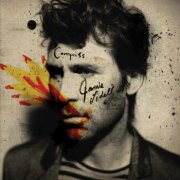 |
Compass (2010, 50.23) **/½ |
|
| Completely Exposed Your Sweet Boom She Needs Me I Wanna Be Your Telephone Enough's Enough The Ring You Are Waking I Can Love Again |
It's a Kiss Compass Gypsy Blood Coma Chameleon Big Drift You See My Light |
|
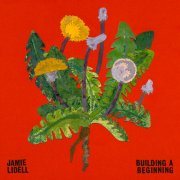 |
Building a Beginning (2016, 49.53) **½/T |
|
| Building a Beginning Julian I Live to Make You Smile Find it Hard to Say Me and You How Did I Live Before Your Love Walk Right Back Nothing's Gonna Change |
In Love and Alone Motionless Believe in Me I Stay Inside Precious Years Don't Let Me Let You Go |
|
Current availability:
Mellotron/Chamberlin used:
Jamie Lidell is a British ex-pat New Yorker, specialising in layering his own beatboxing to his vocals, a trick he apparently performs onstage; proficient technically, if not necessarily musically. 2010's Compass (produced by Beck) is his fifth long-player, less 'soul vocal over beatboxing' than I'd expected; the clue's probably in his label: Warp. That isn't to say that I consider the album a milepost in the evolution of music, but parts of it are far less terrible than I'd (teeth-grittingly) expected. Pat Sansone plays Mellotron (presumably not Wilco's, as this wasn't recorded at their studio), with real-sounding flutes on Big Drift, although I could well be mistaken.
Two albums on, 2016' Building a Beginning is more straightforward soul than before, proving that white Brits can actually do this stuff with some level of authenticity, at least to my ears. But is it any good? Hard to tell, when I dislike what it does to the extent that I do; it seems harmless enough, but had me gritting my teeth and skipping bits by a few tracks in. Any better tracks? Yes! The sparse Believe In Me reduces the cod-soul vocals, while I like the Coral Sitar use on How Did I Live Before Your Love. Frequent Lidell collaborator Dominic "Mocky" Salole plays real-sounding Chamberlin (an LA hire machine?), with a woodwind and strings on the opening title track.
 |
Suburban Hymns (2005, 41.39) **/T |
|
| My Last Hostage Coat of Arms Charlotte St. Muscle Cars Skateland Thrill Ride Running Redlights Shift Your Gaze |
Mea Culpa A Chorus of Crickets |
|
Current availability:
Mellotron used:
The Life & Times play a particularly empty, vacant variety of indie; as they describe themselves on their site: "...moody, spacey, sonically overwhelming, symphonic and always grandiose". What's not to hate? Like U2 but worse, they are the living embodiment of the old saw about empty vessels making the most noise; they make a lot of noise, it seems and are certainly completely empty.
Although J. Robbins is credited with Mellotron on Thrill Ride, he actually adds strings to the lengthyish Mea Culpa, helping to make it possibly the least bad track on the album. I wouldn't take that as any kind of recommendation, though; this is unworthy of your time.
 |
No Name Face (2001, 55.23) **/½ |
|
| Hanging By a Moment Sick Cycle Carousel Unknown Somebody Else's Song Trying Only One Simon Cling and Clatter |
Breathing Quasimodo Somewhere in Between Everything |
|
 |
CDS (2001) **/½ Hanging By a Moment Fairy Tales What's Wrong With That Fool |
 |
Lifehouse (2005, 47.50) */½ |
|
| Come Back Down You and Me Blind All in All Better Luck Next Time Days Go By Into the Sun Undone |
We'll Never Know Walking Away Chapter One The End Has Only Begun |
|
Current availability:
Chamberlins used:
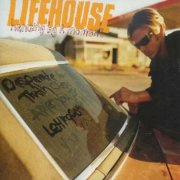
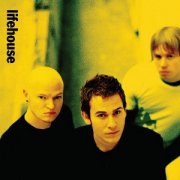
I've seen Lifehouse compared to Crowded House and even, God help us, Nirvana. Er, huh? The former write transcendent pop, the latter transcendent rock. Lifehouse write third-rate indie drivel, held together by Jason Wade's annoying voice and clichéd vocal melodies. Transcendent nothing. Their debut, 2001's No Name Face, starts (almost) promisingly with their first hit, Hanging By A Moment, although the song becomes an irritant after a couple of plays. The album takes a serious dip after this, rapidly becoming bogged down in mid-paced pop/rock pointlessness, guaranteed to appeal to a certain type of teenager and equally guaranteed to piss off anyone who's heard any music made before 1998. Session bloke Marcus Barone plays Chamberlin on Trying, with some strings alongside real ones and maybe some flutes hidden in the mix, but, as usual with this type of album, it's not exactly major use. One of Hanging By A Moment's b-sides, Fairy Tales, features a short Chamby flute part from Aaron Embry, but you're not going to track it down for that, I can assure you.
2005's Lifehouse is actually considerably worse, full of the kind of empty, pompous rubbish listened to (or more likely, merely heard) by dullards without the imagination to think for themselves. Absolutely terrible. There are no best tracks. Producer John Alagia plays Chamberlin, with a distant flute part on Chapter One (and The End Has Only Begun?), although all of the album's (credited) strings seem to be real.
![Lift [US], 'Caverns of Your Brain'](images/lift-caverns.jpg) |
![Lift [US], 'The Moment of Hearing'](images/lift-moment.jpg) |
Caverns of Your Brain [a.k.a. The Moment of Hearing] (1990/2001, recorded 1974 (-2001), 36.26/73.30) ****½/TTTT (TTTT½) |
|
| Simplicity/Caverns Buttercup Boogie Trippin' Over the Rainbow [The Moment of Hearing adds: Perspectives The Toast The Waiting Room |
The Masque Wind Psalm] |
||
Current availability:
Mellotron/Chamberlin used:
The Louisiana-based Lift (not to be confused with the East German crew, below) recorded their sole LP in 1974; it was bootlegged soon after as Caverns of Your Brain, although the band had planned to title it Simplicity. It finally received a proper release on Greg Walker's Syn-Phonic label in 1990, side one divided into two tracks, although it was originally conceived as one. Although the original title would've been better, the album was already known by its bootleg title, so that's how it remains. Keyboard player Chip Gremillion (thanks for all the info, Chip) played an M400 on the album sessions (over three days!), with 'mixed strings', choir and brass; a similar setup to Tony Banks, fact fans.
The music is firmly in the Yes/Genesis mould, with much upfront Ricky bass and Chip's organ and Mellotron combo. All four tracks are excellent, Caverns possibly beating the rest by a whisker, featuring some seriously epic Mellotron work towards the end. Buttercup Boogie is, essentially, high-energy prog boogie (!), with a smattering of Mellotron brass, while Trippin' Over The Rainbow cuts Genesis' Apocalypse In 9/8 outrageously close, albeit a) in 6/4 and b) done well, invalidating Marillion comparisons. Think of it more as a cheeky homage than a rip-off. Chip's Mellotron work is superb throughout, so top marks on all fronts.
Lift recorded more material over the '75/'76 period, this time using Chip's Chamberlin and Orchestron. One track, Perspectives, appeared on Syn-Phonic's 1990 sampler Past, Present and Future, but all four recordings are now available, along with the original album material, as The Moment of Hearing. They're presented out of chronological order, The Toast (their sole '75 recording) sequenced after the first '76 'Atlanta session' piece, the aforementioned Perspectives, although the latter's previous compilation release may be the reason for the discrepancy. It's difficult to pinpoint highlights from the later material, although Perspectives and The Masque may just tip the balance. Chip's Chamberlin turns up on all four mid-'70s tracks, with a brief string part on Perspectives, an equally brief solo male voice section on The Toast and reverbed, pseudo-Mellotronic choirs on The Waiting Room and The Masque. The one contemporaneous recording, 2001's Wind Psalm is, unsurprisingly, tape-replay free.
Chip sold his M400 in 1979, but has recently reclaimed his Chamberlin and Mellotron M300 for future use. Hooray! So; buy Moments of Hearing immediately. Excellent stuff.![Lift [DDR], 'Lift'](images/lift-lift.jpg) |
Lift (1977, 40.47) ***½/TTTTWasser und Wein...Fällt der Erste Reif Und es Schuf der Mensch die Erde Jeden Abend Früh am Morgen Ballade vom Stein Du Falsche Schöne Komm Her Abendstunde, Stille Stunde |
 |
Meeresfahrt (1978, 38.24) ***/½Wir Fahrn Übers MeerNach Süden Scherbenglas Tagesreise Meeresfahrt Sommernacht |
Current availability:
Mellotrons used:
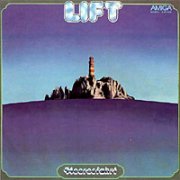
Lift were one of the few East German progressive bands to emerge during the Communist era; unlike some of their contemporaries, they don't appear to have been straightjacketed into applying their country's politics to their music, so to speak. Lift isn't a 'bit of everything so nobody's left out' album like Karat's Albatross, say; I'm not saying it's a symphonic prog classic and it certainly has its more commercial moments, but there's no reggae or mainstream pop. Which is nice.
After a slow start, there's quite a bit of Mellotron to be heard, particularly on Und Es Schuf Der Mensch Die Erde, with some great string textures from Wolfgang Scheffler, one of the band's two keyboard players. Lift's overall sound is keyboard-heavy, with, despite the six-piece lineup, one member covering both guitar and bass. As a result, there's very little guitar to be heard, although the album's far less of a 'keyboard classic' than other similar outfits like Epidaurus. There's actually one bona fide prog epic on Lift, Ballade Vom Stein, taking up half of side two, plenty of Mellotron scattered throughout. Actually, apart from the album's opener, it's present on every track; almost exclusively strings, though I think I heard some flutes warbling away under the real thing at one point. I relistened to this expecting a bit of a clunker, but I was pleasantly surprised. Not a classic, but a pretty good album, with some great Mellotron work.
Lift's second album, Meeresfahrt, shoots my argument in the foot slightly by starting off as a 'something for everyone' record. The bluesy chug of Clavinet-driven opener Wir Fahrn Übers Meer is pretty awful, Nach Süden merely average and, while a lot more listenable, the string quartet on Scherbenglas sounds oddly out of place. Tagesreise is a decent enough, Hammond-heavy ballad, Sommernacht rather less so, which leaves the title track. To my astonishment, Meeresfahrt is a truly wonderful piece, uplifting in the same way as, say, Gryphon's coincidentally German-titled (Ein Klein) Heldenleben, with a repeating melody to die for, in a vaguely medieval style, before lurching into a fusionesque middle section. Oddly, it's also the only Mellotron track, opening with phased strings and finishing, some fourteen minutes later, with some muted choir, although the flute on the track is presumably real.
 |
The Story of Moses (1972, 39.54) ***/T½The WaterThe Blackberry Bushes White Turns Into Black The Nuisances The Desert The Red Sea |
Current availability:
Mellotron used:
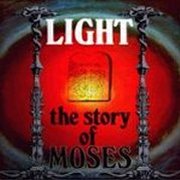
Light (originally Light Formation) were a one-off Dutch progressive band, unsurprisingly influenced by Ekseption, only without the cheese (well, they were from Gouda - geddit? Oh, never mind) and, of course, Focus. The album is exactly what it says on the tin, being a rather dodgy Biblical concept effort, although thankfully, there isn't too much singing and very little narration (chiefly on The Desert). It's not bad, musically, although the jazzy Hammond workout complete with walking bass on White Turns Into Black is rather unnecessary. The rest of the album is essentially sub-Focus; heard worse, heard better.
It's difficult to tell what's producing the string sound on The Water, though considering the album was recorded at Phonogram's studios in Hilversum, chances are it was the strangely-popular-in-the-Netherlands M300 Mellotron the studio obviously owned, used by several other bands at the time including Ekseption. Anyway, flutes on the track, too, from Adrie Vergeer and more strings on The Nuisances, though that appears to be it. So; as I said, heard worse, heard better, not that much Mellotron. Passable.
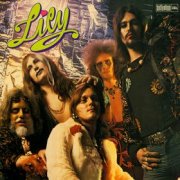 |
VCU (We See You) (1973, 40.23) ***½/½In Those TimesWhich is This Pinky Pigs Doctor Martin I'm Lying on My Belly (including Tango Atonale) Eyes Look From the Mount of Flash |
Current availability:
Mellotron used:
Lily formed in the late '60s as Monsun, being persuaded to change their name (and image) by their record company boss, who seemed to have some sort of hang-up about the emergent early '70s glam scene. The music on their sole release, VCU (We See You) is actually blues-influenced prog, with that instantly recognisable 'German' sound (NOT Krautrock) and may very well not appeal to all progressive fans, despite their extended compositional techniques.
Dieter Dierks (again!) guests on Mellotron, but, unless my ears deceive me, his entire input is limited to a few chords at the beginning of I'm Lying On My Belly, hardly making this a Mellotron Classic. Incidentally, Garden of Delights' four bonus tracks almost double the album's length; there's nothing in the sleevenotes to denote when they date from, but they seem to be a reasonable addition to the album. So; not a bad album of its type, but don't bother for the Mellotron.
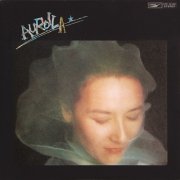 |
Auroila (1976, 39.30) **½/½ |
|
| Okite Yo Ken no Honō Kawahara no Hikōjō Tenki ni Na Are Mizu no Nagare ni Ie e Oideyo 'Cause We've Been Together Michishirube |
Anata wa Mahō - Mōsukoshi Watashi de Ite Ōroira (So Long) |
|
Current availability:
Mellotron used:
Saeko "Lily" Kamata (1952-2016) was a mainstream Japanese singer, 1976's Auroila being something like her sixth album. What can you say about this stuff? Vaguely fusionesque pop with some gloopy ballads thrown in. You know, mainstream Japanese music of its time. Any better tracks? Maybe Mizu No Nagare Ni and semi-epic closer Ōroira (So Long), but that's somewhat stretching a point.
No lesser a personage than Ryuichi Sakamoto plays Mellotron, with distant choirs on Ōroira (So Long); suffice to say, this isn't the heaviest Mellotron use you'll ever hear, nor the most interesting album.