


|
|
|
|
||
|
||
|
|

 |
Frozen North (1995, 133.43) ****/TTTTWrecksWhat's the Point of Going to Crete Small Frozen North Rosemary's Baby Drown Frozen North I Frozen North IV |
 |
Republic (1996, 74.04) ***½/TTSend OffRaw Cane Approach Republic |
 |
Burned & Frozen (1997, 72.19) ****/TT½ArmisticeBurned & Frozen (Frozen North III) |
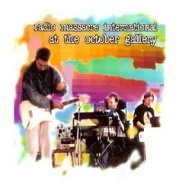 |
At the October Gallery (1997, 72.31) ***½/TTT½Organ HarvestImprovisation I (Come to) Sunny Teeside (Mrs Emerson) Improvisation II Geiger Improvisation III |
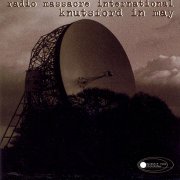 |
Knutsford in May (1997, 61.59) ***½/TTUnder the DishFrozen North Part 2 Ha'penny Bridge Skeletope Action Painting |
 |
Diabolica (1997, recorded 1994, 72.46) ***½/T½DiabolicaBlaze Dispersion Upstairs Downstairs |
 |
Organ Harvest (1997, 62.13) ****/TTTTOrgan Harvest Part OneGeiger Edison Rainy Day Song Organ Harvest Part Two A Minute of Silence |
 |
Gulf (1998, 68.50) ***½/T½ScudGulf Desert Storm |
 |
 |
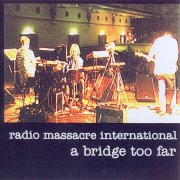
A Bridge Too Far [a.k.a. A Bridge Further] (1998/2017, 67.46) ***/T½Organ HarvestImprovisation 1 Come to Sunny Teesside, Mrs. Merson Improvisation 2 Plastered in Paris |
 |
Borrowed Atoms (1998, 135.17) ***½/TT½Plastered in ParisRite of Spring Borrowed Atoms Horizon Build Blakey Ridge 30 Years |
 |
Bothered Atmos (1999, 73.51) ***½/TTT½WeightlessSnap All the Water in the Universe is Melted Comets Cathedral Floor |
 |
Upstairs Downstairs (2000, recorded 1997-98, 71.34) ****/TTT½Part OnePart Two Part Three |
 |
Been There, Done That (2000, 68.18) ***½/TTPart OnePart Two |
 |
Zabriskie Point (2000, recorded 1980-1996, 70.56) ***½/TTHa'Penny BridgeDante's View Zabriskie Point |
 |
The God of Electricity (2000, recorded 1994, 59.36) ***½/TTTTPart 1Part 2 Part 3 Part 4 Part 5 Part 6 Part 7 |
 |
Planets in the Wires (2001, 74.05) ***½/TPlanets in the WiresEchoes |
 |
Startide (2001, recorded 1993, 68.59) ***½/TTTMonstrous TidesStartide |
 |
Maelstrom (2002, recorded 1999, 56.00) ***½/TT½Part OnePart Two |
 |
Solid States (2003, 155.43) ***½/TTWrecksAnts in Me Room Black Cloud Over Claremont The Loneliness of the Long Distance Drummer 'Ave it!/Erm I Knew We Were in Trouble When They Taught the Machines to Talk Delaware Horseshoe Crab International Mass (Nov)embers |
 |
Emissaries (2005, 136.32) ***½/TT |
|
| Seeds Crossing the Interstellar Void A Priest Crossing Frozen Water Mad Bob's Self-Inflicted Torment The Emissaries Reveal Themselves The Ice Garden A Promise of Salvation An Interstellar Vacuum is Far From Empty Mobile Star Systems |
A Piano Wanders the Incandescent Vapours Sympathy for the Bedeviled The Arrival of the Seeds Deliverance From Nuclear Winter |
|
 |
Septentrional (2006, 56.13) ***½/TT½The First Cry...Seven Sceptres for Sephulcrave Trident Searching Septrentional Skies ...The Last Laugh |
 |
Lost in Space (2006, recorded 1987-2003, 456.08) ****/TTTTT |
|||
| Roxette Turkey Hunt Wading Through Shit Zabs is Ten Uno What Time it is 80-Bobness Been There Fever #23 200 Mushrooms |
Float Wherever You Go There's Always Food Greekscene Atlantis Fini ...& Hout Anemone Frozen North II |
Retina Flood Meta Never Quarry Abbey Lifecycle of a Frog Radio Music Intermission Dragged Down By the Stone Titanic |
Tarn Measure Acre Jordan Wintergreen Reactor at the Edge of the World Electronic Wasteland Tattoo Interlude Damo |
|
 |
Rain Falls in Grey (2007, 60.00) ***½/TTRain Falls in Grey...Bettr'r Day-s Shut Up Syd Emissary Legacy ...Far Away |
 |
Rain Falls in a Different Way (2008, 77.31) ***½/T½Rain Falls in a Different WayPluto Silicon Psychosis The Emissary M.F. in the Sky Chainless & Beauty Black Yeager Everywhere's Somewhere |
 |
March 2000 (2009 download, 71.22) ****/TTTFresh BananasRainy Day Snog What's the Point of Going to Crete/Crisps Water Batteries Geiger Upstairs Downstairs |
 |
Concerts at Jodrell Bank 2000 [Disc 1] (2000) ****/TTT½[r.m.i. contribute]Fresh Bananas Rainy Day Song What's the Point of Going to Crete? Geiger Upstairs Downstairs |
 |
Hampshire Jam Preserved (2002) ***½/TT½[r.m.i. contribute]Pipe Let Me Hear You Say Yeah Roxette Lost in Liphook |
Current availability:
Mellotrons used:
Radio Massacre International, usually known (to their irritation) as r.m.i., play 'EM' (electronic music), apparently of the 'Berlin School', which is amusing, seeing as how they originally hail from Sunderland. I've seen good and bad reviews of their work, with the bad concentrating on their alleged lack of originality, but working on the theory that there's nothing new under the sun (Socrates?), I have no more problem with someone sounding 'quite like' Tangerine Dream, any more than I have with someone sounding 'quite like' Genesis, with the single proviso that it's done well and without any direct rip-offs. OK, that's two provisos. The trio's central raison d'être is improvisation, as it was for the Tangs, although they will sometimes rework older pieces on the rare occasions they play live. As with the Tangs, they feature two full-time keyboard players in Duncan Goddard and Steve Dinsdale, with Gary Houghton on guitar and synth, although the three could quite easily form a regular power trio if they so wished, with Steve on drums and Duncan on bass (note: they have pretty much done exactly that in recent years).
Frozen North is their first album, a two hour-plus double CD that sets out their stall in no uncertain terms and while to my ears there's a strong Tangs influence, it's in no way a copy, any more than any two bands in the same genre can have that accusation levelled at them. Of course there are similarities, but to the untrained ear I expect Motörhead and AC/DC sound the same, or even Genesis and Yes. The album splits down the middle, with the five tracks on disc one being more rhythmic and the two very lengthy pieces on disc two being more 'ambient', although disc one also has its quieter moments. There's plenty of Mellotron work to be heard, with the minor problem that since the band record live direct to two-track and they 'only' own one Mellotron, some of the Mellotron parts are samples, but since they're sampled well and directly from their own machine, they're pretty hard to spot. Duncan owns at least seven different tape frames, including a couple of old Tangs ones, but most of the Mellotron work is those good old standbys, 8-choir and strings (actually 3 violins), although there's a murky 'orchestra' sound that comes in nearly 40 minutes into Frozen North IV. Ex-Tangs?
'96's Republic expands on the feel of disc two of Frozen North for most of its length, with a sombre aura to the first two tracks that has an almost soundtracky feel to it. The title track is a little more upbeat, with analogue sequencer parts holding it together, but this is very much a late-night sort of album, however clichéd that may sound. There aren't huge amounts of Mellotron on it, either, at least in comparison to its predecessor, although it's featured on all three tracks. Republic itself has the most, with flutes, strings and choir being used quite effectively. In 1997, the band instigated a still-running series of privately-issued (but NOT limited) 'companion albums' on CD-R, the first of which is Frozen North's companion, Burned & Frozen, consisting of just two tracks. Of the two, Armistice is the more rhythmic, with something of an early '70s Floyd feel to the guitar work, while Burned & Frozen (Frozen North III) manages the tricky feat of being both relaxing and ominous simultaneously. On the Mellotron front, Armistice has flutes, choirs and brass and is that the string section I hear at one point? The title track's more strings and choir, with a burst of church organ around the half-hour mark, reiterated later on.
The same year's At the October Gallery was released in a highly limited edition of thirty, given away to those who attended the titular performance; strangely, although it contains four tracks (of six) that feature prominent sequencer work, the album still comes across as more laid-back than many r.m.i. releases. Mellotron across the board on this one, with choir swells on Organ Harvest, a string line on Improvisation I, (Come To) Sunny Teeside (Mrs Emerson), echoed brass and flutes all over Improvisation II, faint flutes on Geiger and upfront strings (real) and flutes (probably sampled) on closer Improvisation III. Knutsford in May (referencing Mike Leigh's iconic TV play of the same name) soundtracks the ensemble's first appearance at famed radio telescope array Jodrell Bank, highlights including the excellent guitar work on Frozen North Part 2, the ominous, doomy Ha'penny Bridge and the distorted voices on Skeletope, only intermittently decipherable: "This is Jodrell Bank calling..." Mellotron all round, with choirs and a flute line on opener Under The Dish, chordal strings (and a few seconds of choir) and a flute line on Frozen North Part 2, a more complex choir part on Ha'penny Bridge, alternating string and flute parts on Skeletope and a choir wash and flutes on closer Action Painting. Diabolica, recorded over two sessions three years earlier, is the first of r.m.i.'s 'private pressings' to be reviewed here, consisting of the forty-minute title track, during which guitarist Gary Houghton spends a fair chunk of the piece channelling Jimmy Page, the more percussive Blaze Dispersion and the energetic (and relatively brief) Upstairs Downstairs, later revisited on the album of the same name. On the Mellotron front, the choirs at the beginning of the album don't sound especially Mellotronic, although the strings at around the quarter-hour mark do, with strings, choirs and a flute melody towards the end of Blaze Dispersion.
'97's second 'official' release, Organ Harvest (presumably named for the practice of 'harvesting' bodily organs from accident victims) was one of no less than five releases that year. Six tracks in an hour brings the average length down to a sprightly ten minutes, with a couple coming in well under that, while Organ Harvest Part One also features (wait for it) a recognisable tune, or at least a memorable bass line, reprised a few octaves up on Part Two. Much Mellotron flute and choir this time round, although the old strings get a look in on a couple of tracks. Particularly heavy choir on Organ Harvest Part Two, but all tracks feature The Beast somewhere along the way. The following year's Gulf (another private pressing) is an interesting one; despite being released some years after the (first) Gulf War, much of the dark and foreboding music reflects the apocalyptic feel of the bloodthirsty news broadcasts from the senseless conflict that brought the phrase 'friendly fire' into being. Mellotron on all three tracks (no surprise there), with dissonant male voice choirs on Scud and string (section?) and flute parts on Gulf and Desert Storm, but overall, a rather low score, although what's here is worth hearing.
A Bridge Too Far was reissued in 2017 as A Bridge Further, with the caveat that it isn't exactly the same recording of their set at Nijmegen; the original release was taken from an ambient recording, the reissue from the desk, while the tracklisting's changed slightly, although all we lose are Announcement and A Minute Of Silence (actually six minutes), so no great loss, by the sound of it. A decent set, though the trio have probably been on better form. But is this real Mellotron? Nothing visible on the original release's sleeve pic, but it might simply not be in shot. Anyway, choir, string and flute parts on Organ Harvest, distant strings and a flute line on Improvisation 1, muted strings on Come To Sunny Teesside, Mrs. Merson, vague, background choirs on Improvisation 2 and more obvious ones, alongside flutes, on closer Plastered In Paris. 1998's sprawling double-disc Borrowed Atoms shifts between feels over its seven lengthy tracks; discordant on opener Plastered In Paris, rhythmic on Rite Of Spring (with no obvious connection to Stravinsky's iconic symphony), dark and drifting on Blakey Ridge. Plenty of Mellotron, with flutes and string section on Plastered In Paris, flutes, strings on Rite Of Spring, although I suspect the latter are samples, as they drop below the Mellotron's keyboard range, oboe (with key-click) on the title track plus strings and choir with naught but flutes on the near-Mellotronless Horizon. Disc two opens with phased strings then flutes on the half-hour Build, while Blakey Ridge features a mere few seconds of phased choir in its twenty minutes, leaving closer 30 Years to finish things off with flutes, oboes, strings and choirs, all within its first few minutes. The following year's Bothered Atmos is, unsurprisingly, Borrowed Atoms' companion release, occasionally rhythmic, though more often dark, drifting and smothered in Mellotron, with large helpings of choirs, strings and flutes in various quantities, not to mention tubular bells on All The Water In The Universe Is Melted Comets that I strongly suspect are Mellotron-generated. If you think you'll find Borrowed Atoms, this is an easier entrée into the band's sound for the uninitiated, with the bonus of mucho Mellotron.
Upstairs Downstairs is the only live recording of this bunch and, although more 'ambient' than Frozen North or Organ Harvest, is nowhere near as stark as Republic. 'Drifting' might be a good word to describe much of its length, with a fair bit of Mellotron on both Part Three and 40 minute-plus Part One, although Part Two is rather lesser in the Mellotron department. The album's overall ambience is noticeably different from the studio (well, rehearsal studio) albums, although the band indulge in digital editing of their live tapes as well as studio ones. Been There, Done That isn't dissimilar, the bulk of its length characterised by drifting ambience. Mellotron on both tracks, a little burst of (sampled?) flutes near the beginning of the hour-long Part One, followed by a cranky string line and choir chords, with less of the same on Part Two.
Zabriskie Point, from later the same year, isn't intended as an alternate soundtrack to the film, although it probably does a better job of it than the official one. It seems the concept grew out of a UK MTV commission for their 'Party Zone' show, back in '96. The mind boggles... The first two tracks, Ha'Penny Bridge and Dante's View, came out of the band's rehearsals for the programme, while Zabriskie Point itself is actually the very first recording of the trio from 1980, back when they were sixth-formers discovering the delights of making music with a borrowed Roland SH1000 (they were made to return it eventually). Ha'Penny Bridge is a shortish ambient piece, Mellotron choirs appearing briefly towards the end, Dante's View opens with ten minutes of guitar drone (are you getting an insight into their working methodology yet?), before subtle Mellotron strings enter the picture, choirs and flutes entering later before some last-second strings and choirs right at the end of the fifty-minute piece. Given that Duncan obtained his M400 in the early '90s, there is, of course, nothing on the title track, a highly competent piece from relative beginners.
The last album in another busy year, The God of Electricity (actually recorded as far back as 1994) eschews track titles for a simple 'parts 1-7' approach, although as all the track flow into one another, I suppose that's fair enough. While the sequencers rear their heads occasionally, this is more a synth-and-Mellotron-overkill record, with huge crescendos like the one in Part 5 being nearer drum-free prog than EM. Part 6 also features a first for the band (to my knowledge), a clean, picked (and sometimes Leslied) guitar part, making another departure from the band's norm. Mellotron on all but Part 1, with male voices and strings on Part 2, what sounds like string section on Part 3, along with more choir, church organ on Part 6, under the previously-mentioned guitar, followed by a clicky flute part and flutes all over Part 7, making this one of their better Mellotronic efforts.
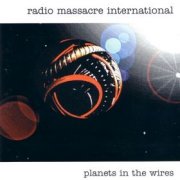
2001's Planets in the Wires consists of two lengthy tracks, both of which move through darkly ambient and vibrantly rhythmic sections, while simultaneously managing to be quite different to each other. A first (I think) for the band is Gary's guitar harmony part on Echoes (not that one), although there are few surprises to be heard elsewhere. Not a lot of Mellotron, either, with a small burst of heavily-reverbed choirs and a near-solo strings (string section?) part later on in the title track and drifting choirs a few minutes into Echoes, with more overt strings at around sixteen minutes and occasionally later on. The same year's Startide was apparently recorded in 1993 by the duo of Goddard and Dinsdale, making it technically the first r.m.i. album 'proper' and conforms to that space-rock cliché, 'dreamlike', particularly on its hugely long title track. While it wouldn't be accurate to call the album 'rhythmless', there's no obvious sequencer work, what little rhythm there is coming from pulsing synths or heavily echoed synth and guitar. Mellotron on both tracks, with choirs on the relatively short Monstrous Tides and choirs, church organ, flutes and strings on the title track, meaning that (unless Duncan did some overdubs), at least one of the sounds is sampled, assuming the album is actually a live improvisation.
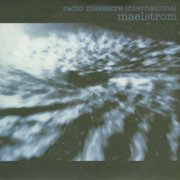
2002's Maelstrom (recorded 1999) consists of two 28-minute tracks, imaginatively titled Parts 1 and 2. Aside from an insistent hi-hat, Part 1 remains rhythmless until about halfway through, when the sequencers slowly kick in, building in intensity in true Tangs style (sorry), while Gary lets rip on guitar, wah pedal and all. Part 2, while a very different piece, performs a similar trick on the rhythm front, only without the hi-hat. A medium Mellotronic presence throughout; string and flute parts appear about halfway through Part 1, while Part 2 opens with reverbed-half-to-death choirs, with strings later on, although the organ sounds more like a Hammond than anything Mellotronic.
2003's Solid States is a record (literally) of the band's first US tour, disc one being subtitled 'West' and two, 'East'. The 'West' half includes a piece with drums, a precursor to their later direction and a long, dark night of the space-rock in 'Ave It!/Erm, which opens with several minutes of guitar madness before shifting into one of their darker episodes. The 'East' disc is more electronic and less Mellotronic than 'West', the occasional 'Mellotron' flutes probably being samples throughout. Disc one features a borrowed machine (machines?), with cellos, strings choir and church organ on opener Wrecks (a version of the piece that opens '95's Frozen North), with choir and string parts elsewhere, though never that overtly.
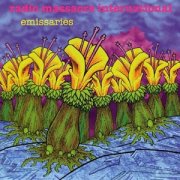
2005's Emissaries is another lengthy double, highlights including the intense A Priest Crossing Frozen Water, the unique-for-r.m.i. strummed acoustic on A Promise Of Salvation and Deliverance From Nuclear Winter. Despite the number of highlighted tracks, there's less Mellotron than you might expect, with a strings wash and choirs on opener Seeds Crossing The Interstellar Void, with an upfront flute part towards the end, not to mention what I presume are sampled woodwinds, flutes, (sampled?) cellos and chordal choirs and strings on A Priest Crossing Frozen Water, flutes, strings and cellos on Mad Bob's Self-Inflicted Torment, the cellos under what I take to be the 'torment' section, cellos and choirs on The Emissaries Reveal Themselves, near-atonal choirs on The Ice Garden, occasional flutes and strings on An Interstellar Vacuum Is Far From Empty, strings on A Piano Wanders The Incandescent Vapours and occasional flutes on the guitar-effect-led The Arrival Of The Seeds. The following year's Septentrional has a lot in common with its predecessors, although Trident introduces programmed techno-ish beats, a first for the band (to my knowledge), though not to the point of irritation. And whom, exactly, said that r.m.i. couldn't do what the hell they liked, anyway? Five tracks in under an hour makes this one of their easier listens, possibly even a good place for the novice to begin, although it's not exactly rammed with Mellotron. Opener The First Cry... features strings, church organ and brass, with clustered string chords and a solo part complete with brief, high-speed arpeggios on Seven Sceptres For Sephulcrave, with phased strings on Trident, a handful of echoed choir notes on Searching Septrentional Skies and more asymmetical string chords on closer ...The Last Laugh, quite possibly at half-speed, which is actually rather less than it sounds.
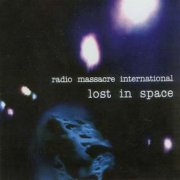
2006's massive, six-disc Lost in Space doubles as a career retrospective and a repository for previously unreleased material. The earliest recordings date from 1987, when the band were still known as DAS, so despite being very much in the electronic vein, they're not immediately recognisable as r.m.i. pieces. Opener Roxette is apparently 'loosely' based on the old r'n'b number, presumably as performed by Dr. Feelgood. 'Loosely'? They ain't kiddin'... By track five, Uno What Time It Is, we must be into the early '90s, as Duncan adds Mellotron strings, with strings and choir on 80-Bobness and flutes on Been There, while Fever #23 is a departure, a guitar-heavy piece with pounding drums, more '68 Floyd than the Tangs. Disc 2 dates from '93 and is immediately obviously r.m.i., with Mellotron string, choir and church organ interjections over complex sequencer patterns, with strings on the brief Wherever You Go There's Always Food, with choirs, flutes, church organ and strings on Greekscene. The lengthy Atlantis has a 'rhythm' track straight from Eraserhead, with flutes and discordant choirs clustered around the beginning, with strings, flutes and choir on the even longer, mid-paced Fini, with solo flutes closing the piece.
Disc 3 ('94) opens with the incredibly brief ...& Hout, before settling into the band's usual groove. The ten-minute Anemone is largely Mellotron-free, before string and choir parts appear in its final two minutes, the considerably longer Frozen North II and Retina Flood featuring strings, choirs and flutes. Disc 4 (1994-95)'s half-hour Meta takes over ten minutes to do anything more than that Eraserhead backing again, with warbly guitar duelling (quietly) with Mellotron choirs and flutes, until it builds up to a Mellotron strings/Gary-as-Brian-May battle (dunno if he grew his hair for the track). More of the same (Mellotronwise, anyway) on Quarry and Abbey and is that half-speed strings on the latter? Disc 5 (1995-99) opens with a surprisingly 'regular' piece, the fittingly short Lifecycle Of A Frog, Gary's overdubbed Hendrixesque guitars leading, Mellotron flutes bringing up the rear. No Mellotron on the even briefer Radio Music Intermission and naught but short string and choir parts towards the end of the ambient-yet-disturbing Dragged Down By The Stone (spot the title reference, pt. 94), while unless the orchestral chimes on Titanic are Mellotron-produced, I believe the track's completely free of it. Another short track, Tarn, features the disc's first sequencer use, plus Mellotron strings and choir, with strings and choirs on the disc's closing track, Jordan. Disc 6 (2002-3) opens with Wintergreen, with sparse strings and distant choirs, with strings (mixed?) and flutes on Electronic Wasteland, along with beautifully clear choirs, while Tattoo is all guitar and squawking sequencers and percussive closer Damo (as in Suzuki, presumably) utilises what has to be Mellotron orchestra, probably one of their old Tangs tape sets.
2007's Rain Falls in Grey is a very different album to everything else reviewed here; a direct tribute to Syd Barrett, who'd died the previous year, it presents an early Floyd-influenced r.m.i., far more space-rock than EM, the band by and large playing as a guitar/bass/drums trio. The opening title track probably works the format to its advantage the best, with Syd rather unsurprisingly being the most, er, Sydlike track here. It's the only one not to have any Mellotronic input, although Duncan rarely goes mad on the thing, with reverb-swamped choirs towards the end of the title track, strings and choirs on Bettr'r Day-s, church organ on Shut Up, strings on Emissary and Legacy and strings and flutes on ...Far Away, though none to any major effect.
2008's Rain Falls in a Different Way is, of course, the companion volume to b>Rain Falls in Grey, containing extra material recorded at the same sessions. Unsurprisingly, then, it's another space-rock as against EM concoction, with relatively little keyboard work (I don't think I spotted a sequencer line anywhere), replaced by bass and drums, with more guitar than usual. Fans of the band's earlier work may not go for this, but anyone who boasts more than a couple of genuine krautrock albums in their collection should probably give this a listen. Only three obvious Mellotron tracks, with strings and oboe (?) on Silicon Psychosis and just strings on Chainless & Beauty Black and Yeager, giving this one of the lowest T ratings of any r.m.i. album so far.
2009's download-only March 2000 has a rather odd genesis: that month, the band played two concerts in a fortnight, at Jodrell Bank Planetarium in Cheshire and at the Dutch Alfa Centauri festival. Yours truly was involved in both; I attended the former, my Mellotron in the back of my van, for long-forgotten reasons (had they asked to borrow it? I've no idea). Although r.m.i.'s M400 was fine, its tapes weren't, so I extracted my set from my machine (with some difficulty: don't do this when your Mellotron's lying on its back, kids), so we're hearing their machine, my tapes. They then asked me to drive them over to Huizen, near Amsterdam, two weeks later; I persuaded them to take my M400 as well (as you do), so we're hearing both on those recordings, played by Duncan and Steve on the day. Now it gets weird... As the band played pretty much the same set at both gigs, it was possible to layer the two sets, which is what they've done for large chunks of the album. Huh? So much for improvisation, says I... I don't know if it's a subliminal memory of the gigs (Gary's guitar freakout in Geiger brings back memories), or genuine musical quality, but this is one of the best recordings I've heard by the band. Mellotronically speaking, a flute improvisation kicks things off on opener Fresh Bananas, with strings towards the end, more random flutes, strings and choir on Rainy Day Snog (or should that be song?), strings and authentically clicky choirs on What's The Point Of Going To Crete/Crisps Water Batteries, with church organ (their tapes? Samples?) later on, flutes and watery strings on Geiger, volume-pedalled strings on Upstairs and a building choir part and chordal strings on closer Downstairs. Completists can hear the original Jodrell Bank recording on disc one of the presumably long-out-of-print (and only ever on CD-R) Concerts at Jodrell Bank 2000.
I've recently been told that r.m.i. have semi-retired their M400 from live use, due more to logistics than mechanics, so presumably most future live albums will feature samples only, unless they borrow a local machine for the gig. Given that they've also shifted rehearsal sessions to the Manchester area, while Duncan's M400 resides in London, it's hard to say just how many future albums will actually feature it. Assuming all the releases on their website have the Real Thing on them, though, that makes twenty Mellotron albums to date (mid-'03), beating everyone except King Crimson into the proverbial cocked hat, not to mention some various artists albums containing r.m.i. work.
Although these reviews are incomplete, hopefully they'll give you a reasonably clear idea from whence r.m.i. come. Given that they mostly sit firmly in the rather restrictive 'EM' category, there's a lot of variation between and within these releases, but I think it's safe to say that if you like the style, there's every possibility you'll like the band. I can recommend all these, although Republic is definitely harder going than the others. There are the better part of another dozen unreviewed albums; I hope to add more as time goes on.

Samples? Whadd'ya mean, samples?! Of course, r.m.i. have utilised sampled Mellotron alongside their real one for years, as mentioned above, but Duncan tells me that some post-2000 recordings were made without the real machine, not least those recorded in foreign climes, where borrowing one wasn't an option.
2003's CD-R Greenhousing (doubtless punning on 'hothousing'), one of the first of their 'Non-Mellotron' efforts, was recorded at two sessions at Greenhouse Rehearsal Studios, Stockport, over September and October '02. The album's notable for featuring the band as an (almost) power trio on some tracks, with Duncan on bass and Steve on drums, playing along to sequencers, particularly on twenty-five minute closer (deep breath) 3pm At The Edge Of The Village In Claremont Waiting For A Train That Never Came. Ho ho. Several of the shorter tracks have a more 'industrial' feel; genuinely industrial, as against your Trent Reznor-style 'rock with samples' nonsense. Not a lot of samplotron, with naught but a lone string note at the end of Shed Of Light 1, skronky string chords on Plasmolysis, a flute melody on God Of Electricity (Slight Return) and murky choirs on Not Too Long.
Next up is 2004's ludicrously-titled CD-R release, People Would Really Like Space Rock if They Would Only Give it a Try (think I've got that right). A record of the bulk of their National Space Centre set from April of the previous year, it's a guitar-heavy release, Gary even riffing at a few points. On the 'Mellotron' front, neither the brief flute part on In A Not Silent Way nor the flute solo on the faintly Hendrixy The God Of Electricity Oh No Not Again really have that ring of authenticity about them, ditto the string chords on the relatively brief 23 Craters Full Of Some Sort Of Moondust and closer Star's End. I think, in some ways, I prefer r.m.i. messing about with synths, sans samples, to many of their contemporaries' spaffing of sampled Mellotron all over their albums. In fact, I'm sure of it.
2008's Antisocial (a reference to concert volume levels, apparently) was recorded at the Brudenell Social Club in Leeds, June 2005 and features a good chunk of 'r.m.i. as space-rock power trio', with much fretless bass work from Duncan. I know these things can only ever be objective, but this didn't inspire me in the way of some of the trio's music, which isn't to say that you won't go for it. Not much samplotron, which makes sense, really, with drifting string chords on opener Percussive Maintenance. 2010's Time & Motion is possibly best described as 'meditative', the bulk of its considerable length steering clear of their usual sequencer moves, the trio aided and abetted by Martin Archer's wind instruments, chiefly various saxes. Do his contributions work? In places, but you probably have to be a fan of the soprano sax to appreciate some of them. Incidentally, both discs are precisely the same length, which, given the band's attention to detail, can not be an accident... The Mellotron sounds sampled, with strings on several tracks, plus the odd burst of choir or cello, although guitar and sax dominate.
2011's City 21 soundtracks Chris Zelov's documentary of the same name with twelve shorter-than-usual pieces, mostly in the ambient (sorry) zone, picked guitar backed by subtle synths, the superb End Titles being the most 'typically' r.m.i. piece here, Gary's guitar duelling with programmed percussion and massed synths. Samplotron use kept to a minimum, with background strings on Intro/Hawes, a distant string part on Damanhur, twin cello lines on Iceland and choirs on Findhorn, but Steve and Duncan sensibly concentrate on the synths rather than the samples.

 |
Electrical Tape (2013, 60.00) ****/TTTIs it Live or is it Memorex?Mellotrons in the 80s Ketchup Bogie Elcaset They're Not Loops Time-Lag Accumulator |
Current availability:
Mellotron used:
Duncan Goddard is, of course, one third of long-running UK EMers Radio Massacre International and a synth enthusiast in his own right. The band's slow geographic separation has possibly triggered Duncan's desire to write and record his own music, the end result being 2013's punning, download-only, Mellotron-heavy Electrical Tape. Does it sound like r.m.i.? To an extent, of course, but this is less Tangs, more Klaus, albeit less dark and discordant, highlights including tuneful (!) opener Is It Live Or Is It Memorex? (remember the rubbish '80s TV ad, Brit readers?), the choir-heavy Mellotrons In The 80s and They're Not Loops (old Mellotron joke, non-owners), while Elcaset and closer Time-Lag Accumulator are actually closer to the Klaus template, giving the album a more varied feel than your average r.m.i. release.
Duncan plays his own M400 (plus samples of it) on the album, of course, with watery strings on Is It Live Or Is It Memorex?, clicky flutes, choirs and strings all over Mellotrons In The 80s (although some of the choirs sound synthetic), occasional strings on Ketchup Bogie, string section on Elcaset, drifting, high-end strings and church organ on They're Not Loops and heavily phased strings on Time-Lag Accumulator. Although this isn't really a 'Mellotron showcase', not only is the music up to par, but you get at least some of that M400 on every track, making a download well worth your trouble. While you CAN pay nothing for it, try bunging Duncan a few quid while you're at it.