




|
|
|
|
||
|
 |
Satellite Soul (1997, 49.32) **/T |
|
| Either Way Wash Fool He Can Pieces Equal to the Fall Never Say I am |
Soul Maybe Interstate Travel [Hidden track] |
|
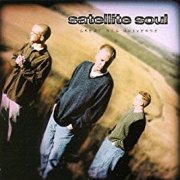 |
Great Big Universe (1999, 46.39) *½/½ |
|
| Great Big Universe Revive Me Always the Same I am Not Leaving Now Heaven Waits Single Moment Broken Again Poor Reflection |
These Fields Mercy Maker Love is All We Own |
|
Current availability:
Mellotrons used:
A casual listen to Satellite Soul's eponymous 1997 debut tells you that they're an entirely average '90s alt./roots outfit, but it's only on closer inspection that you realise they're Christians, too. In fairness, although they subsequently recorded a 'live worship album' (pass the sickbag), the lyrics aren't so overtly god-bothering that it's a real problem. Unfortunately, the music itself is bland and predictable, triggering boredom and frustration in approximately equal measures, frontman Tim Suttle's voice irritating in the way that only a whiny American Christian's can. I believe Suttle plays Mellotron, with background flutes and strings on Pieces, both sounds more upfront on Soul.
And I thought that was bad? '99's Great Big Universe is utter crap, only getting the rating it has through being (relatively) musically inoffensive. Relatively. Lyrically, it's forty-six minutes of god-bothering pain, its nadir being Heaven Waits. Probably Suttle on that M400 again, with a passable, if inessential flute part on Mercy Maker. I suppose Christian Wallflowers fans might go for this stuff, but I can't imagine who else might. Dull, dull, dull.
 |
Katadayori (1974, 42.41) **½/T |
|
| Nishikaigan e Tsudzuku Michi Michi Kusa Minikui Ahirunoko Shiroi Kānēshon 23-Banchi no Komori-Uta Odoriko Oka o Koeru to Inori |
Kono Heya Kara Ochiteiku-ji Sugita Toki mo Korekara Kuru Toki mo Furusato ni Furu Ame |
|
Current availability:
Mellotron used:
Kimihiko Satō (1952-2017) was a singer-songwriter whose career encompassed a mere five years in the mid-'70s. 1974's Katadayori was something like his sixth album in three years, a fairly typical Japanese release of its era in its mildly folky pop approach, easily at its best on opener Nishikaigan E Tsudzuku Michi. The rest? Borderline-MOR with few redeeming features.
Makoto Yano plays Mellotron, with upfront, orchestral-alike strings on Nishikaigan E Tsudzuku Michi, quite distinct from the real strings used elsewhere. Perhaps surprisingly, this received a CD release on Vap in 2006, although it's also available on YouTube, should you feel the need.
 |
download (2016) ***½/TT½ Saudade |
 |
Shadows & Light/Sanctuary Dub (2019, 15.18) ***½/T½Shadows & LightCrisis Sanctuary Dub MyGoalsBeyond |
Current availability:
Mellotrons used:
Saudade (named for a term meaning 'a deep emotional state of nostalgic or profound melancholic longing for something or someone that one cares for and/or loves' - thank you, Wikipedia) are Chuck Doom's 'genre bending music collective' (thanks, Discogs), the four-minute track of the same name being a kind of instrumental slightly avant-metal thing, kicking off properly after ninety seconds, after an ambient intro, relying more on atmosphere than melody to get its message across. John Medeski on Mellotron, with chordal strings throughout most of the piece, in a startlingly normal bit of playing for someone whose Mellotronic approach is often so extreme. It may say 'download' above, but I've no idea from where; I listened to this on YouTube, so I expect you can, too.
2019's Shadows & Light/Sanctuary Dub EP mops up a couple of download-only tracks from the same year, adding another two, all seething with dark heaviosity, possibly at its best on closer MyGoalsBeyond. Medeski on Mellotron again, with distant strings on opener Shadows & Light, very distant brass on Crisis, a background woodwind sound (unidentified) on Sanctuary Dub and strings again on MyGoalsBeyond, little of it upfront.
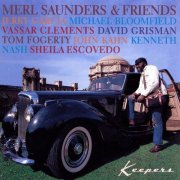 |
Keepers (1997, recorded 1971-75, 74.18) ***/T½ |
|
| Mystery Train That's All Right I Was Made to Love Her Gee Baby, Ain't I Good to You? Iron Horse Little Bit of Righteousness Wondering Why Keepers (Finders) |
She's Got Charisma La-La Georgia on My Mind M.S. Bolinas Brown |
|
Current availability:
Mellotron used:
Keys man Merl Saunders (1934-2008) was closely associated with Jerry Garcia and The Dead, without ever becoming a full member of the band; probably for the best, as they had the worst keyboard player attrition rate of any outfit I can think of. 1997's Keepers compiles tracks recorded between 1971-75, featured musicians including Garcia (of course), Mike Bloomfield, Tom Fogerty and Geoff Muldaur. The bulk of the album's contents are, essentially, psychedelic blues jams, at their best on the jammed-out likes of She's Got Charisma and propulsive closer Bolinas Brown.
Saunders plays Mellotron on two tracks, with a strings wash on Wondering Why and spitty strings dipping in and out of Bolinas Brown. To be honest, you've got to be a medium-to-high-level blues fan to get much from this album; excellent at what it does, assuming that's your bag.
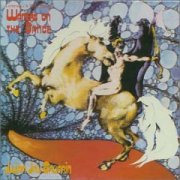 |
Waiters on the Dance (1973, 32.47) ***½/TT½Child of the Night 1 and 2Stranger The Death of Alda Dance of the Golden Flamingoes Cycle Soldiers of Time |
Current availability:
Mellotron used:
Julian Jay Savarin was/is a science fiction writer, still active today, but in the late '60s he formed a band to try to realise his ambitions in the musical field as well as the literary. Julian's Treatment recorded one album, the proto-prog A Time Before This in 1970, utilising themes from his Lemmus trilogy, although the band split up soon after. Undeterred, Savarin released its logical follow-up, Waiters on a Dance (sharing a title with the first Lemmus book), under his own name in '73, in a broadly similar musical vein, which unfortunately rather dates it these days. The material, sung by Jo Meek (the first album's vocalist, Cathy Pruden, had returned to Australia by this time), is good, though not outstanding, although the album succeeds in not really sounding much like anyone else, which has to be a bonus. Best track? Probably the longest, Dance Of The Golden Flamingoes.
A Time Before This is sometimes quoted as a Mellotron album, the confusion arising from the See For Miles CD, which adds all but one track from Waiters on a Dance (the exception being Dance Of The Golden Flamingoes, typically), although Bevis Frond (Nick Saloman)'s sleevenotes obfuscate the issue slightly. Anyway, Savarin certainly does play Mellotron on the latter release: Child Of The Night 1 And 2 has a Mellotron flute part that dips in and out of the track, before some mental, full-on strings come crashing in near the end, with strings and what I presume is Mellotron brass on The Death Of Alda and just about everything on the album's longest and best track, Dance Of The Golden Flamingoes. I suspect this will take a good few listens to assimilate properly and at least it's now available properly, albeit only on the Italian Akarma label (or is that 'Akarama', Shane and co?). Worth hearing.
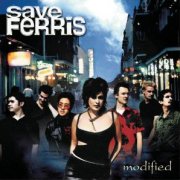 |
Modified (1999, 45.51) **½/½ |
|
| Turn it Up The Only Way to Be I'm Not Cryin' for You Your Friend No Love Angry Situation What You See is What You Get One More Try |
Mistaken Holding on Let Me in Modified |
|
Current availability:
Mellotron used:
Orange County, CA's Save Ferris were, going by their third and last studio album, 1999's Modified, a typical lower-rung, '90s female-fronted ska/punk outfit. Who said No Doubt? In fairness, this isn't terrible, better efforts including the ripping Angry Situation and Mistaken, but, by and large, this is pretty forgettable.
Against stiff competition, this album must contain the least Mellotron of any album on this site (excluding samples, obviously). Moog Cookbook's Brian Kehew and Roger Joseph Manning Jr both guest on keys, Kehew playing, literally, under a second of solo Mellotron strings/choir mix on opener Turn It Up. Why? Just to get it on there? Who knows?
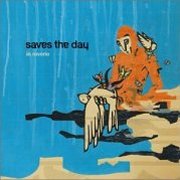 |
In Reverie (2003, 33.56) ***/T |
|
| Anywhere With You What Went Wrong Driving in the Dark Rise In Reverie Morning in the Moonlight Monkey In My Waking Life |
She Where Are You? Wednesday the Third Tomorrow Too Late |
|
Current availability:
Mellotron used:
In Reverie marked the point at which everything went tits-up for Saves the Day, as their new label, Dreamworks, stopped supporting the album days after its release (allegedly), dropping the band soon after, as many of their fans concurrently decided they didn't like the band's new 'mainstream' sound. To an outside pair of ears, it's a melodic, punkish pop record, complete with the sort of halfway decent songwriting that makes it stand out in a sea of similar-sounding dross. Not that it's a classic, you understand, but how many albums are? It seems to be good at what it does, which is often enough.
Reed Black guests on Mellotron on two credited tracks, although there's also a very obvious string part at the end of What Went Wrong, presumably also played by Black. Of the two credited tracks, Wednesday The Third is decidedly better on the Mellotron front, with a cool string part, sounding nice'n'cranky, with a rather lesser cello line on She. So; while most of you are unlikely to like this album, it manages to be reasonably good in a fairly poor genre, which has to be applauded, as does its brevity, in a world of overlong CDs, 'because we can'.
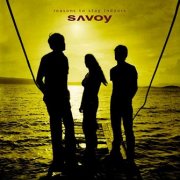 |
Reasons to Stay Indoors (2001, 54.03) **½/TT½ |
|
| Reasons to Stay Indoors If You Won't Come to the Party Face Half of the Time Once Upon a Year Fear List I Would Not Change a Thing Paramount |
The One That Got Away Against the Sun Five Million Years Overgrown |
|
Current availability:
Mellotron used:
Savoy is essentially the trio of A-Ha keys man Paul (originally Pål) Waaktaar-Savoy, his wife, Lauren and drummer Frode Unneland, whose fourth album, 2001's Reasons to Stay Indoors, veers between very listenable pop and the kind of overwrought nonsense that gives the mainstream a bad (OK, badder) name. Best tracks? Fear List brings A-Ha's original electro-pop stylings to mind, Paramount is about the rockiest thing here and Against The Sun's a passable ballad, but nothing really leaps out and grabs you by the throat, I'm afraid.
Waaktaar-Savoy uses his MkVI on several tracks, with strings on If You Won't Come To The Party, an electric harpsichord/celeste mix on the intro to Half Of The Time (no, I didn't know anyone had recorded those sounds, either), reiterated later in the song, with background strings on Fear List. I Would Not Change A Thing sounds like it features another rare-as-rocking-horse-shit sounds, the Mellotron guitar (very plinky, actually), plus cellos on The One That Got Away, although I believe the rest of the album's strings are real. Incidentally, thanks to MkVI developer Markus Resch for his unwitting Mellotron info here, rescued from an ancient saved e-mail.
So; a fairly mainstream 'adult pop' album with a decent chunk of Mellotron, including some unusual sounds. Enough to make it worth buying? Only if seen very cheap indeed, I'd have to say. Nice to hear something a bit different on the Mellotron front for once, though.
See: A-Ha
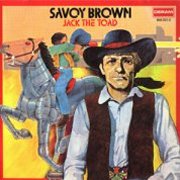 |
Jack the Toad (1973, 46.19) ***/½Coming Down Your WayRide on Babe Hold Your Fire If I Want to Endless Sleep Casting My Spell Just Cos' You Got the Blues Don't Mean You Gotta Sing Some People Jack the Toad |
Current availability:
Mellotron used:
Savoy Brown (previously the Savoy Brown Blues Band) formed during the mid-'60s UK blues boom and are still going today, led by the one remaining original member, guitarist Kim Simmonds. They survived most of their lineup jumping ship in 1969 to form the equally-successful-in-the-US Foghat, going on to lose members to fellow blues-boomers Fleetwood Mac, before Simmonds recruited the members who would play on what I believe was their tenth album in six years, Jack the Toad. The album is... blues. I'm not quite sure what I can say about this; it's a blues album and the band plays blues. They don't appear to play it with any great originality, although they by no means stick rigidly to the 12-bar blueprint, but ZZ Top they ain't. There are better tracks; Endless Sleep has a nice feel to it, but it's largely pretty much blues by numbers, to be honest.
One notable feature of the album for me personally is the inclusion of future UFO member Paul Raymond on keyboards, not to mention 'friend of the Quo' Jackie Lynton on vocals (I supported his band once in the late '80s - talk about a mismatch...). Admittedly, Raymond mostly plays piano, but he's also credited with Mellotron, with a slightly pointless cello part on the closing title track. Personally, I find the appeal of this kind of workaday blues-rock utterly mystifying, although I'm a big fan of those artists who took the blues somewhere (ZZ, the much-missed Rory Gallagher). Plenty of people, particularly in the States, seem to love this stuff though, so who am I to argue? Don't bother with Jack the Toad for its Mellotron use, though.
See: Foghat
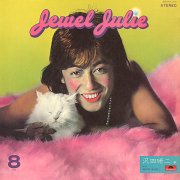 |
Jewel Julie (1974, 49.23) ***/TTT |
|
| Omae wa Mahōtsukai Kaki Kake no Merodī Oyaji no Yō ni Mama to Dokidoki Gatsu no Yuki Julian Ishō Hey Dave |
Kanashī Tatakai Bai Bai Bai Tsuioku |
|
Current availability:
Mellotron used:
After success in the '60s with The Tigers, Kenji "Julie" Sawada went solo, 1974's Jewel Julie being something like his eighth album, a surprisingly decent Japanese-take-on-glam effort, like an Asian Bowie, maybe. Best tracks? Possibly the semi-epic Julian, Hey Dave and the rocky Kanashī Tatakai, although cheesy, lengthy closer Tsuioku outstays its welcome by several minutes.
Katsuo Ono plays Mellotron on several tracks, with a couple of brief, pseudo-orchestral string parts on rock'n'roll opener Omae Wa Mahōtsukai, strings all over Kaki Kake No Merodī, occasional strings on Gatsu No Yuki, strings opening Julian (and reiterating halfway through) that sound so close to Crimson's Epitaph that the reference has to be deliberate and flutes and strings on Ishō, although the strings on Tsuioku are real. Not a classic, but worth hearing on both musical and Mellotronic grounds.
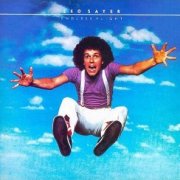 |
Endless Flight (1976, 37.02) */½ |
|
| Hold on to My Love You Make Me Feel Like Dancing Reflections When I Need You No Business Like Love Business I Hear the Laughter Magdalena How Much Love |
I Think We Fell in Love Too Fast Endless Flight |
|
Current availability:
Mellotron used:
The diminutive Gerard "Leo" Sayer's career began with him writing songs for other artists, notably Roger Daltrey, whose very un-Who like debut album, Daltrey, featured several of Sayer's compositions. His own singing career kicked off with 1973's The Show Must Go On, providing the template for his next few hits: very mainstream pop, nowadays bizarrely sometimes referred to as 'guilty pleasures'. Nothing pleasurable about this, mate... Spitting out an album a year, Endless Flight was Sayer's fourth, catching him at the point where he discovered the delights of disco (with the horrid falsetto-driven You Make Me Feel Like Dancing) and the extra moolah playing it would bring him. It also contains one of the cheesiest, sloppy love songs ever, in When I Need You; I'd actually forgotten that this existed, so no thanks whatsoever for reminding me. The rest of the album consists of what passed for singer-songwriter material in the pop world at the time, veering between nasty and nastier; well, just one look at that cover tells you everything you need to know about this, I think.
Mellotron flutes on Magdalena, one of the less offensive tracks, by Jimmy Phillips, presumably the same guy who slapped shitloads of Mellotron strings all over Small Wonder's debut album the same year (this was recorded in LA). Unsurprisingly, they're not exactly enough to drag the album up from the considerable depths it inhabits, so it rather goes without saying (although I'm going to say it anyway) that you really, REALLY don't need a copy of this dreck within spitting distance of your town, never mind your stereo. Avoid with prejudice. Oh and according to the pics on his website, although the little git is now almost unrecognisable from his '70s heyday, he's still got that bloody hair. And he's still a shortarse.
Official site (why, why?)
 |
All is Good Now (2005, 35.07) ***/TT½ |
|
| Sail on (part II) Lost Low-Life Sometimes Weary Eight and a Half The Sun Sunday Morning The Turtle and the Crab |
He Soiled Himself All is Good Now |
|
 |
The Sun (2007, 17.16) ***/TTThe SunRosebud Happiness Sail on (part I) Sunday Morning (Boys of Scandinavia remix) |
 |
Don't Follow the Weak (2007, 42.45) ***/T½ |
|
| Exit Earth Treehugger No One Cares Times Will Change Let's Talk About it Maybe Smiley Don't Follow the Weak |
Watch Out! Run, Run, Run Time to Clean Take Care Oh Well! |
|
Current availability:
Mellotrons used:
The Scaramangas (presumably named for the Bond villain from The Man With the Golden Gun, and nothing to do with UK outfit The Scaramanga Six) were (are?) a Finnish psychedelic indie act, formed in 2000. I haven't heard 2003's Le Monde Bizarre EP, but their debut long-player, 2005's All is Good Now, hits the Mellotron hard. It's at its best on opener Sail On (Part II), The Turtle And The Crab and the woozy closing title track, although its default setting is the upbeat, catchy likes of Lost, Sometimes Weary and Eight And A Half. Kim Liljeström plays producer Tom Hakava's M400, with heavily-reverbed flutes and strings on Sail On (Part II), strings and cellos on Lost, chordal flutes on Sunday Morning, cellos and strings on The Turtle And The Crab and strings and flutes on the title track. Oddly, The Sun, an EP from the same sessions (the title track's on the album), took another two years to appear. Musically, it's more of the same, probably at its best on Happiness, (presumably) Liljeström playing Mellotron strings and heavy flutes on the track, plus strings on Sail On (Part I).
Their second and last (to my knowledge; Discogs can be shaky on this stuff) album, 2008's Don't Follow the Weak, continues in a similar vein, at its best on atmospheric opener Exit Earth, the upbeat Let's Talk About It and the title track. No fewer than three credited Mellotron players this time round, Liljeström, Joonas (brother of Tom?) Hakava and Martin Panelius, with upfront flutes on the brief Maybe, similarly upfront strings on Run, Run, Run, albeit briefly and what sounds like female voices on closer Oh Well!, while what might be Mellotron strings on No One Cares are more likely to be the real ones on the track.
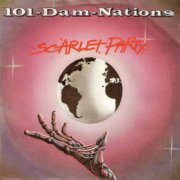 |
7" (1982) ***/½ 101 Dam-Nations What is This Thing |
 |
7" (1983) ***/T Eyes of Ice Another World |
Current availability:
 |
Mellotrons used:
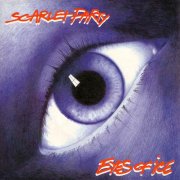
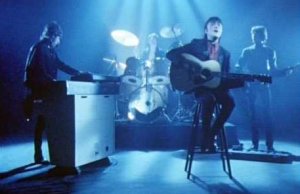
Scarlet Party? Who? I hear you cry. Well, I'd never heard of them until about half an hour before I wrote this, but it seems they were one of the legions of 'unlucky' bands who signed to a major, then found themselves sidelined before they could release an album. In Scarlet Party's case, the album was even recorded, but when Parlophone nixed it, that was, essentially, their lot. And all this despite featuring David Gilmour's brother Mark in their lineup...
Based around the Dye brothers, Graham and Steven, they sat firmly in the 'classy early '80s pop/rock' camp, not obviously any less potentially commercial than many others and a lot more than some. Nonetheless, two obscure singles are their sole legacy, until/if that lost album should ever surface. First release 101 Dam-Nations is my personal favourite of their four tracks, its breezy, upbeat feel reminiscent of an updated 10cc, say, while Eyes Of Ice is more 'McCartney plays Floyd', though decent enough for all that.
Mellotron? Surprisingly, yes, with distant strings (clearly audible at the end) on the heavily McCartneyesque b-side What Is This Thing, with polyphonic cellos on Eyes Of Ice, but nothing you can't live without, frankly. I'm not sure who would actually buy it thirty-five years on, but it would be nice if that album, Scarlet Skies (they'd even given it a title!), finally gained a release. Who knows, there might actually be a bit more Mellotron on it.
 |
Acquatica (1996, 70.38) ***/T½ |
|
| The Tones of Peloponnesus Ionia Parisia Acquatica All Fish Go to Heaven The Isle of Caldra Deserted Shores Improvia |
Angelica Dronia The Ionic Curve Aga Aludoma Sidereal Hands at the Temple of Omphalos Modula Raga Et Tu, Dronius? Untitled |
|
Current availability:
Chamberlins used:
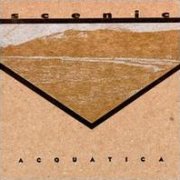
How to describe Scenic? Maybe their name gives the game away. 1996's Acquatica is a widescreen, cinematic travelogue through their influences, with the traditional Velvets-style guitar drone juxtaposed with ambient keys and vaguely prog leanings. An instrumental safari? "Look! There's Mt. Kilimanjaro!" Scenic are capable of rocking out, too (Angelica), but their default setting seems to be vaguely psychedelic drone rock, heavy on the atmosphere.
Patrick Warren turns up to do his usual Chamberlin thing and, also as usual, you can't always spot where it's used. Probable Chamby strings on Ionia, the lengthy Modula Raga and Et Tu, Dronius?, although what sound like slides between notes on the latter two tracks make you wonder. Incidentally, there are several minutes of silence after Et Tu, Dronius? before an untitled piece, so they've been removed from the timing above.
See: Samples etc.
 |
A Lot of People Would Like to See Armand Schaubroeck... DEAD (1970?, 127.43) ***/½ |
||
| Armand (17 Yrs. Old) Confesses His Crimes to a Priest "King of the Streets" Armand & Dan Go Down to "Rock a Bowl" to Steal Dimes From Bowling Ball Polishers (50's Live Band Plays in Middle) "I Don't Care" Out on Bail, Armand is Alone With Suzie (Night Before Sentencing) "Love for the Last Time" Elmira Bound Mr. Tomato, the State Public Relations Director Addresses New Inmates Dr. Leiderman, State Psychologist, Interviews New Jacks Privately to Determine When They Will See the Parole Board and to What Institution the Inmates Will Be Sent "Games" |
Why Do Children Steal? (Armand and Dan's Background) Christmas Eve in Elmira "Cut My Friend Down" Dr. Leiderman Interviews Howard Q. Sappy Who Was Sent Up for Attempt of Suicide "Streetwalker" A Inmate Reminds Armand of His Girl "The Young Boy" A Black and White Are Arguing Over a Comic Book Because Each Wants to Look at All the Colors "I Wish to See Color" Mental Breakdown in Solitary Confinement "Fading Out" "We, Like Lost Sheep Are Drifting" |
New Young Inmate Meets Lifer Stage Break (Taped Live) "God Damn You" Friday Night Radio Plays Old Tune Reminding the Population of the Streets "Sweet Sister Suzie" "Turn Off the Sound" Visiting Day Night Before Parole Board "One More Day; One More Night" Hack Talks to Arm on the Way Out "Ex-Con" Dan & Armand Meet on the Streets While Going to See Parole Officer "Warden's Circus" |
|
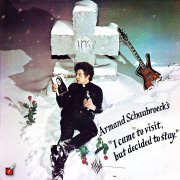 |
I Came to Visit; But Decided to Stay (1974, 27.38) **½/TFather Michael Loves Sister JenniferBaby, Can't Let You Burn Auld Lang Syne Cry Myself to Sleep Intro to Bells Bells Michael Veni Ad Me I Came to Visit; But Decided to Stay |
Current availability:
Mellotrons used:
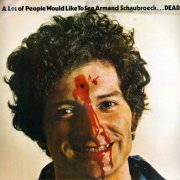
Armand Schaubroeck was a teenage tearaway in 1962, when he was sentenced to three years in a 'corrective institution' (don'cha just love that American terminology?) for safecracking. According to its sleevenotes, A Lot of People Would Like to See Armand Schaubroeck... DEAD's three LPs were recorded in 1969 and originally released a year later, although several different release dates are in circulation. This isn't what you'd call an easy listen; more a play than a conventional album, it consists of Schaubroeck processing his awful experiences, something like Lou Reed if he actually meant it (contentious? Moi?). It has been pointed out, fairly reasonably, that it's difficult to have much sympathy for a habitual thief, but then, what made him that way in the first place? No excuses for The System's barbarism, either way. That isn't to say there isn't any music to be heard - it's at its best on the acoustic "We, Like Lost Sheep Are Drifting" - but much of it sounds like a budget Velvets. An unknown musician adds Mellotron to a couple of tracks, with background strings and cellos on Dr. Leiderman Interviews Howard Q. Sappy Who Was Sent Up For Attempt Of Suicide "Streetwalker".
Assuming this was actually recorded in '69, where on earth did Schaubroeck source a Mellotron? It sounds like one, too, rather than a Chamberlin. His family own one of New York's most successful music shops, so, like future Cheap Trick mainman Rick Nielsen, was this a sale machine that ended up on his album? If so (and if it isn't actually a Chamby), the recording date can't be any earlier than 1972, the year Mellotronics made the M400 cello sound available. Geek moment over. In direct contrast, I Came to Visit; But Decided to Stay (1974? '77?) is under half an hour long and, while it still features Schaubroeck's narration, is definitely more 'music with speech' than vice versa. Unfortunately, this listener found the music boring, repetitive and self-indulgent, at its least dull on Baby, Can't Let You Burn. Chris Caswell plays keys, presumably including the album's Mellotron, with distant strings on opener Father Michael Loves Sister Jennifer and more upfront ones on Auld Lang Syne.
Schaubroeck went on to record another three albums, the interminable Live at the Holiday Inn (which isn't), Shakin' Shakin' and his obvious career highlight, the confrontational Ratfucker, still processing his prison experiences, since when he appears to've called the whole thing off as a bad job. It's difficult to actually recommend A Lot of People..., but it'll definitely be one of the odder albums you'll hear this year.
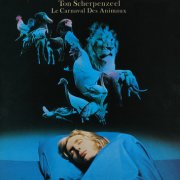 |
Le Carnaval des Animaux (1978, 34.53) ***½/½ |
|
| Introduction - Marche Royale du Lion Fossiles Aquarium L'Eléphant Le Cygne Hémiones Poules et Coq Volière |
Le Coucou au Fond du Bois Tortues Personnages à Longues Oreilles Le Carnaval des Animaux - Finale |
|
Current availability:
Mellotron used:
Ton Scherpenzeel was/is keyboard player and joint chief songwriter with one of the Netherlands' top progressive outfits, Kayak, but he chose a classical adaptation for his first solo album, some years into his band's career. Le Carnaval des Animaux (I really hope I don't need to translate that...) is Scherpenzeel's version of one of noted French composer Saint-Saëns' best-known pieces and is, for the most part, extremely well executed. The narrow gap between classical and progressive is rarely more clearly illustrated than on this album, as it's quite possible to listen to it believing you're hearing Scherpenzeel's own compositions. While not knowing the history behind the piece, it's obvious that the music is meant to represent a dream of, well, a carnival of animals, as the sleeve design makes quite clear.
The individual pieces, all named after animals, oddly enough, are all short; none more than four minutes long. The instrumentation is typically progressive; instrumental, with guitar/bass/drums and loads of keyboards, including a largely inaudible Mellotron. In fact, the only place I can even faintly hear it is at the end of side one, where some strings become apparent at the end of Hémiones. It's interesting to note that although the original 'song' titles are in French, they're also printed on the sleeve in Dutch and English, but not German, although my copy originates from that country.
Not being terrifically au fait with the original work (although I have heard it), I find it difficult to tell just how well Scherpenzeel has adapted it, particularly with regard to the drum parts; it's very noticeable how most drum parts added to classical adaptations sound very 'tacked on', as the pieces weren't written with strict rhythm in mind. As a result, some of the rhythm tracks here (by Kayak percussionist and sometime Mellotron player Max Werner) sound a little awkward, but others fit perfectly. The original composition, as you'd expect from any 'known' classical composer, is quite faultless, with a dollop of humour frequently missing from the classical oeuvre, notably the lengthy quote from The Can-Can, taken at an amusingly slothlike pace in the middle of Tortues; Tortoises - what else?
So, all in all, not a bad album at all, with a sound vaguely akin to Kayak's. The Mellotron use is almost nonexistent, but if you're into symphonic progressive or adaptations of classical works, you could do worse than pick this up.
See: Kayak
Schicke Führs Fröhling (SFF) (Germany) see: |
 |
Eberhard Schoener (Germany) see: |
 |
 |
 |
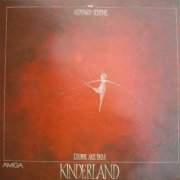
Lieder aus dem Kinderland (1982, 42.18) ***/½ |
|
| Kinderland Hampelmännerlied Der Riese Glombatsch Bude Baun Schmusen Muß Sein Lügenlied Der Traummann Fidibus Der F-Tsch-Chqu-&-%-Wumm-Apparat |
Der Meeresbezwinger Thomas Alle Deine Namen Jule Wäscht Sich Nie Kalle, Heiner, Peter Der Zauberer Von Zirkus Luft Augen, Ohren und Herz Raxli Faxli Der Märchenprinz |
||
Current availability:
Mellotron used:
Gerhard Schöne's second release, 1982's Lieder aus dem Kinderland, is a children's album, apparently telling a story in time-honoured tradition, although my lack of German leaves me unable to tell you anything about it, other than that the phrase 'mother and father' crops up at one point. It's far better than you might expect, although the children's chorus on a few tracks is slightly unnecessary. Or is it? This is an album for kids, not discerning adults and as such, is almost unjudgeable by adult standards.
Michael Schubert plays various instruments, including a few seconds of Mellotron strings on Raxli Faxli, although that appears to be it for the instrument, sadly. This is actually on CD, but unless your kids speak German, I really couldn't recommend it. Good at what it does.
 |
Closer to the Wind (1981, 45.28) ***/T |
|
| The Ballad of Mad Jack Sweet Thames Flow Softly Squid Jiggin' Ground Fawn Grove Don't Stop to Rest The Cobbler Fiddler's Green But Were I Born a Sailor |
John Cook My Lady in Waiting The Kingfisher We're Here to Drink the Whiskey |
|
Current availability:
Mellotron used:
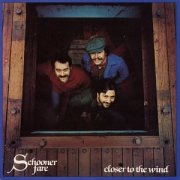
New England's Schooner Fare were formed by ex-members of Devonsquare in the mid-'70s, with the intention of not only performing nautically-themed folk, but writing their own songs in a similar vein. By accident or design, they tapped into the region's heavy Irish diaspora presence, which has done their career no harm at all. Their second album, 1981's Closer to the Wind, is a very acceptable collection of originals and 'trad' material, all assuming you can cope with the sound of three beardy men singing in a 'pub folk' style, at its best on opener The Ballad Of Mad Jack, British artist John Conolly's Fiddler's Green and the gentle My Lady In Waiting.
Bassist Tom Rowe's Mellotron finally puts in an appearance with a nice 'orchestral replacement' strings/cello part (arranged by him) on My Lady In Waiting, although the flute on a couple of tracks is real. Is this on CD/download/anything other than out-of-print vinyl? Surely it would make sense for the band (down to a duo since Rowe's death in 2004) to keep their back catalogue available? Strange, given that they're still a going concern.
 |
One Hundred Questions (2000, 38.13) ***/½ |
|
| 300 Answers Torn in Two Deny You I'll Believe Simple Arithmetic Mary Come Lately She Says 3 Trips to Heaven and Back |
Yesterday Falls Away I Know it's Mine Mailbox |
|
Current availability:
Mellotron used:
Discovering at the eleventh hour that he couldn't use the name The Walking Wounded, Ex-Yo La Tengo guitarist Dave Schramm quickly called his new band The Schramms, for better or worse. 2000's One Hundred Questions is their fifth and last album, akin to a PowerPoint presentation on 'US indie of the 1980s & '90s', clearly Velvets influenced, without being in thrall to their sound. Schramm's borderline-tuneless vocals are an acquired taste, while his songs are perfectly pleasant without standing out in any way, possibly at their best on Yesterday Falls Away and closer Mailbox.
Andy Burton plays obviously genuine Mellotron flutes on Deny You, if only just, with just a handful of notes inserted into the mix. I'm not sure why this has extracted three stars from the notoriously parsimonious Planet Mellotron ratings system; perhaps the mournful Americana influence on several tracks. Perhaps because it didn't piss me off.