




|
|
|
|
||
|
|
Eela Craig Egg Alf Emil Eik |
Mark Eitzel Ejwuusl Wessahqqan Rick Eldridge |
Electones Electric Flag |
Electric Sandwich Electric Wizard |
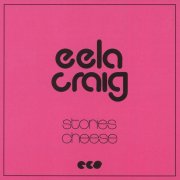 |
7" (1974) ***½/TTTT Stories Cheese |
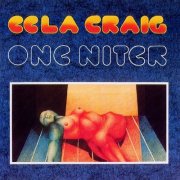 |
One Niter (1976, 45.41) ****/TTT |
|
| Circles The Mighty The Nude The Curse The Blessed Loner's Rhyme One Niter Medley Benedictus Fuge V.A.T. |
Morning One Niter Venezuela Way Down |
|
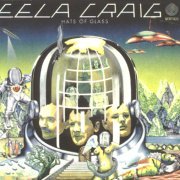 |
Hats of Glass (1978, 39.08) ***½/TTA Spaceman Came TravellingHats of Glass Chances Are Heaven Sales Holstenwall Fair Caught on the Air (Remove Another Hat of Glass and You Could Easily Find Assorted Kinds of) Cheese |
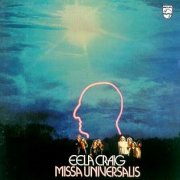 |
Missa Universalis (1978, 42.22) ***½/TKyrieGloria Credo Part I Credo Part II Sanctus Agnus Dei Amen |
Current availability:
Mellotrons used:
Austria's never been the biggest country for Mellotrons, but Eela Craig had a go, if only briefly. Their debut, 1971's Eela Craig (***½) is good, if slightly perfunctory space rock, but after various lineup changes, they released the Stories 7" in '74, backed with Cheese. Stories is slightly dated for the time, but Hubert Schnauer layers the Mellotron on good'n'thick, with strings, choir and some sort of solo brass all making an appearance, while although Cheese is a lesser song, it still manages a reasonable string part. Both tracks are available on the Eela Craig CD, along with two compilation tracks from '72.
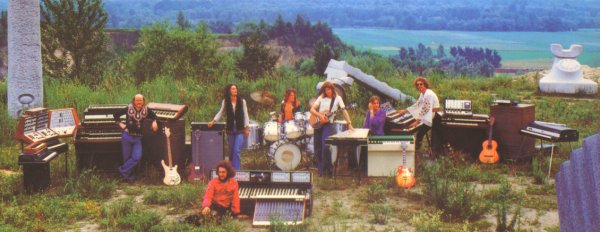
It took Eela Craig (a meaningless name, apparently) another two years before the release of their belated second album, One Niter. Given that it's a fairly late entrant into the world of '70s prog, it's superb; it's quite likely that this material had been sitting around for a while, anyway, given the gap between releases. By this time a six-piece with three part- or full-time keyboard players (!), it's hardly surprising that One Niter is keyboard-heavy, although they managed to rustle up two guitarists when needed. Multi-instrumentalists that they were, there were also two flautists in the band, so I suspect the flute harmonies are real, rather than Mellotron. Eela Craig were nothing if not gear freaks (see pic below) and must've owned one of almost everything by this point, including two different models of Hammond, so there was absolutely no shortage of keyboard sounds available, or players. Apparently, all members except the drummer played their Mellotron at one point or another at the time of the Stories single, but I believe Hubert Schnauer played it on these albums.
 |
The four-part Circles opens the album with a massive Mellotron brass flourish (trombones? Not mixed brass), reiterated throughout the piece, followed by some distant choirs over picked guitar, before a funky Clavinet-fuelled section on part two. After a more 'normal' section, with more of that brass filling out the sound, there's another funky part towards the end, overlaid with various synths, including what looks like two VCS3s. Loner's Rhyme has more of that slightly dodgy mid-70s funk feel and more Mellotron brass before the album's other epic, One Niter Medley. Choirs on the semi-ecclesiastical Benedictus before what sounds like real strings, although there's none mentioned on the credits. Actually, it's interesting to note that a band who used Mellotron strings so heavily at one point (Stories) should so totally abandon the sound for the joys of the generic string synth so quickly. Oh well, there you go... Anyway, more of that funky stuff on One Niter Medley, with a little (you guessed it...) brass, final section One Niter itself being the second-best bit of the album. A few more brass chords on Way Down, then that's it. Rarely has a prog album been loaded with more Mellotron brass than One Niter and, while it would've been nice to hear some strings here and there, the brass makes a refreshing change from the usual, to be honest.
Hats of Glass, released the following year, nearly blows it from the off by covering the godawful Chris de Burgh's A Spaceman Came Travelling, his drippy sugar-coated Christmas effort, but, in fairness, this was when de Burgh (born Christopher Davison, apparently) still (strangely) had a smattering of credibility, so we'll forgive them. Just. Anyway, things soon improve with the excellent title track, with some background Mellotron choirs, before (oh no, not again) more brass on Chances Are and Heaven Sales, not to mention the lengthy Holstenwall Fair, which at least evens things out slightly by chucking in a fair bit of choir, too. More Mellotron than I'd remembered and a decent enough album, although Holstenwall Fair and Hats Of Glass are definitely highlights. Oh, and the ridiculously lengthily-titled final track is a reworking of the Stories b-side from a few years earlier.
In 1978, Eela Craig seriously overreached themselves by releasing Missa Universalis; a rock mass, no less, sung (variously) in Latin, German, English and French and all in the year when disco and punk took over the entire world. Lunacy. Unfortunately, while it's not that bad, it's no classic, either, so you can't even say "Look what prog could still chuck up!" (unless, of course, you're referring to either The Enid or Steve Hackett). This makes One Niter's Benedictus look terribly secular, although I don't know just how Christian the band actually were; it's certainly a bit overbearing in the Latin department, but if you can handle that, it has its moments. Only one Mellotron track, Gloria with... brass.
Eels (US) see: |
 |
 |
Egg (1970, 43.45) ****/T |
|
| Bulb While Growing My Hair I Will Be Absorbed Fugue in D Minor They Laughed When I Sat Down at the Piano... The Song of McGillicudie the Pusillanimous (or Don't Worry James, Your Socks Are Hanging in the Coal Cellar With Thomas) Boilk |
Symphony No. 2 Movement 1 Movement 2 Blane Movement 4 |
|
 |
The Polite Force (1970, 42.59) ****/TA Visit to Newport HospitalContrasong Boilk Long Piece No. 3 Part One Part Two Part Three Part Four |
Current availability:
Mellotrons used:
Egg were a marvellously bonkers psych/prog/jazz-rock/whatever trio who coalesced from an earlier band, Uriel, including the legendary Steve Hillage (later of Gong, of course), whose only recordings were later released under the name Arzachel for contractural reasons. Egg took the guitarless route, keyboardist 'good' Dave Stewart (as against the 'evil' Eurythmics one) providing the bulk of the chordal and melodic work, mostly in unfathomable time signatures with strange lyrics, when anyone (essentially bassist 'Mont' Campbell) actually bothered to sing at all.
Egg is a good little album, quite unlike anything else you'll hear from the 'Canterbury' scene, such as it was. It's difficult to pick out highlights; suffice to say, there's no dead wood on the record and later versions with both sides of their sole 45 added (including the fantastic Seven Is A Jolly Good Time) are worth picking up. There are a couple of classical adaptations, with (credited) Bach on Fugue In D Minor and (uncredited) Grieg on Symphony No. 2 (Movement 1), although the band's sense of humour peers through the chinks in the arrangement, in case you were about to take them too seriously. Anyway, Stewart used the studio's MkII Mellotron on the brief Boilk, but all you get is a few seconds of a dissonant string part and some bonkers left-hand manual rhythms, so don't go buying this for its Mellotron use.
Later that same year, the mischievously-named The Polite Force (ho ho) appeared, featuring rather more heavily than on their debut that 'Canterbury organ sound', also heard on various Caravan albums. The material is the equal of that on their debut, although it's probably slightly less eccentric, with no obvious classical adaptations this time. Again, Mellotron on one track, which is... Boilk. For some reason, the band elected to use the same title for another improvised piece, this time nine minutes long as against the one or so of their first attempt, easily the most 'difficult' piece on the album, consisting largely of strange noises and studio experimentation, including some mangled Mellotron strings near the beginning.
After they split in '72, Stewart went off to form the 'Canterbury supergroup' Hatfield & the North, although Egg reformed for a one-off release in 74, the Mellotron-free The Civil Surface (ho ho again). You're better off sticking to their two 'proper' albums, both of which are more than worth a listen, if not especially for their Mellotron work.
See: Hatfield & the North
 |
Joy & Breath of Eternity (1979, 46.50/99.56) **½/TT½ (TTT½) |
|
| Morning Glory Joy Part I Part II To You Crying Care Man of the Present Age Part I Part II Part III Breath of Eternity March of Earth |
Heart After All After the End [2CD ed. adds: Crying (long version) Joy Part II (bogus bonus) Crying (interlude) To You (long version) March of the Earth (introlude) Joy (Prins Thomas diskomix) Joy Part I (rough multitrack edit) March of the Earth (long version)] |
|
Current availability:
Mellotron used:
Alf Emil Eik's 1979 opus, Joy & Breath of Eternity, is a Christian prog-lite concept album, although I haven't actually marked it down on those grounds. I have, however, marked it down for its dedication to applying extra layers of cheese to something already quite cheesy. Tragically, several tracks work really well in isolation, not least opener Morning Glory, a gentle, string synth-led piece, although the mood's immediately ruined by the awful Joy, all funky bass and fusionesque synth leads and piano. In fact, the bulk of the album appears to be rather more 'commercial' (I use the term loosely) than you might expect; certainly not particularly progressive, anyway.
Less Mellotron than expected, although Crying features strings and flutes all over the place, with what I take to be real male voice, a huge strings pitchbend on Care, standard 8-choir on Part II of Man Of The Present Age and volume-pedalled strings on Part III, finishing up with lush, symphonic strings on Heart. German imprint Strømland's 2010 two-CD reissue adds seriously full-on strings and flutes to the long version of Crying, also revealing that the wobbly tubular bells heard on the album version's fade are Mellotronic, too, with more strings on Crying (Interlude) and a previously-unheard part entering the fray around eight minutes into the long version of To You. Unfortunately, it also gives us twelve sodding minutes of the 'Prins Thomas diskomix' of Joy. Pain, distilled. There's a passable album to be compiled from the double CD; I'd do that, if I were you.
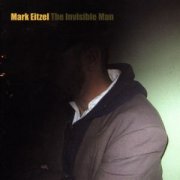 |
The Invisible Man (2001, 53.07) ***/½ |
|
| The Boy With the Hammer in the Paper Bag Can You See? Christian Science Reading Room Sleep To the Sea Shine Steve I Always Knew Bitterness |
Anything Without You The Global Sweep of Human History Seeing Eye to Eye Proclaim Your Joy |
|
Current availability:
Chamberlin used:
After American Music Club split in 1994, Mark Eitzel went solo, 2001's The Invisible Man being his fifth subsequent release. Here, as with anything touched by the hand of Eitzel, the lyrics and the overall mood are at least as important as the music, which is all well and good, unless you tend to rate musical content over lyrical, in which case, this may well disappoint. Most tracks follow a well-worn (not to mention world-weary) path, mid-paced and somewhat gloomy; perhaps surprisingly, an occasional electronica influence rears its head, notably on Steve I Always Knew and Bitterness, although it's a moot point whether or not it actually improves anything.
Eitzel plays Chamberlin, with strings on The Boy With The Hammer In The Paper Bag, although all other possible parts are probably something else. How's that for being vague? After this review, I may well be taken to task by Eitzel fans for misunderstanding his work, so I apologise in advance, but however meaningful the lyrics, the music left me cold. Sorry.
See: American Music Club
 |
Ejwuusl Wessahqqan (1975, 40.53/67.49) ***½/0 (T)Die Geborstenen Kuppeln Von YethlyreomDie Orangefarbene Wüste Südwestlich Von Ignarh Thuloneas Körper Hobbl-di-Wobbl [CD adds: Passaceety AFN The Crystal La Mer] |
Current availability:
Mellotron used:
The utterly unpronounceable Ejwuusl Wessahqqan were a one-shot German progressive/kraut crossover band, whose instrumental, organ-infested eponymous album stands up pretty well in comparison to some of their contemporaries. Admittedly, it's self-indulgent, but at least it isn't Mad Hippy Shit, while Michael 'Hieronymus' Winzker's Hammond work is reminiscent of Jon Lord's, largely because like Lordy on Deep Purple in Rock, he doesn't appear to be putting it through a Leslie. Anyway, the album consists of two ten-minute tracks on side one, with one short and one very long one on the flip, all but the short one (Thuloneas Körper) being keyboard/bass jams, Rene Filous' enthusiastic if clunky bass work standing out.
Those wonderful Garden of Delights people have reissued this rarity with four bonus tracks, the latter two of which are apparently actually by a later Winkzer project, Koala-Bär. There's no Mellotron at all on the original album or the first two bonuses, but the second of the later band's tracks, La Mer, is a gentle, drifting piece, featuring an unusual Mellotron strings/synth unison part, although it's not quite worth the price of admission on its own.
Ekseption (Netherlands) see: |
 |
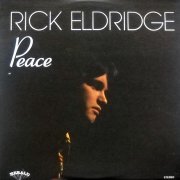 |
Peace (1975, 35.15) */TTT |
|
| Peace, Love and Hope Eternity to Live or Die Reach for the Light Peace Won't Come Brother, Watch the Light Testimony His Light Still Shines Thank You, Jesus, You're My Friend |
Six Sixty Six/I Wish We'd All Been Ready Nearer to Thee |
|
Current availability:
Mellotron used:
Rick Eldridge's debut album, 1975's Peace, would be a typical (albeit a particularly unpleasant) pop/rock effort of the era were it not for his religious inclinations, which turn a tedious effort into an offensive piece of propaganda. Musically, this is bad; think: the worst end of Eric Carmen, but Eldridge's patronising approach really turns the stomach. Does this have any, I mean any redeeming (pun intended) features? Possibly the groovy squelchy synth/guitar duel in the otherwise horrible Peace Won't Come, a sentence that almost defines the old saw 'clutching at straws'.
Joe Rotina (possibly Robins) plays Mellotron on several tracks, with cello and string lines on Eternity To Live Or Die, full-on strings on Reach For The Light, a high string part and flute solo on Brother, Watch The Light, strings on the Six Sixty Six/I Wish We'd All Been Ready medley and string and flute parts on closer Nearer To Thee, although the orchestral accompaniment on Thank You, Jesus, You're My Friend sounds more like the credited string section. In recent years, Eldridge appears to've moved into Christian film production/direction, which almost certainly fills us all with hope. Not. This is properly dreadful, the sort of album that, hopefully, turned far more people off the Christian 'message' than drew them in. Is this worth it for its Mellotron use? Don't be so fucking stupid.
 |
If You'll Be Null, I'll Be Void (2009, 52.58) ***/TT |
|
| Electricity Wants to Dance Right Foot From Left Death With Benefits Black Veil Down A Dreamless Sleep Will Do Just Fine A Box of Rain Nights When the Moon Comes Too Close The Book of Elsewhere |
A Song in the Snow The Huntress Jubilee Humming The Non Sequitur Influx of Quackery Summercloud |
|
Current availability:
Mellotron used:
The Electones are otherwise known as Xploding Plastix, presumably forming their sister outfit to make music in a poppier vein, although it's hardly what you'd call mainstream. On their sole album, 2009's If You'll be Null, I'll Be Void, the duo of Jens Petter Nilsen and Hallvard Hagen have made a sometimes-interesting blend of '60s pop, folk, indie and electronica that won't appeal to everyone, by any means, but is well-crafted and inventive, managing to sound a little like lots of other bands and a lot like themselves. Quite a trick, chaps.
Norwegian vintage keys king Lars Fredrik Frøislie plays Mellotron, with a few seconds of strings on Black Veil Down, loads of strings and cello on The Book Of Elsewhere, faint choirs on Jubilee Humming and what I take to be string chords on closer Summercloud, although I wouldn't swear to the latter. So; a slightly Sigur Rós-like release in places (notably Summercloud), if most unlike them in others, which probably doesn't help you very much. Not that much obvious Mellotron, given Lars' Mellotronic proclivities, but the one excellent Mellotron track's worth hearing if you get the chance.
See: Xploding Plastix
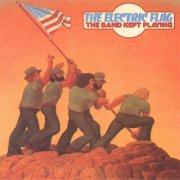 |
The Band Kept Playing (1974, 42.26) ***/T |
|
| Sweet Soul Music Every Now and Then Sudden Change Earthquake Country Doctor Oh Doctor (Massive Infusion) Lonely Song Make Your Move Inside Information |
Talkin' Won't Get it The Band Kept Playing |
|
Current availability:
Mellotron used:
The Electric Flag were Mike Bloomfield's late '60s outfit, whose original remit was to make 'American music', melding many American forms into a cohesive whole. The original band only produced two albums, one after Bloomfield's departure, but they reformed in 1974 to have another go, releasing the relatively unsuccessful The Band Kept Playing the same year. I haven't heard the original band, but I can say with authority that the reformation version delivered a brass-driven soul/blues/rock mix, with a hint of jazz, all played to perfection. Best track? Entirely down to taste, really, although this reviewer found Doctor Oh Doctor (Massive Infusion) came the nearest of anything here to floating his personal boat.
Barry Beckett played Mellotron, with a perfectly respectable string part on Lonely Song, although that's your lot. Whether or not you'll like The Electric Flag will depend almost entirely on your tolerance for their particular combination of genres; it's all impeccably done, but I can't personally say I warmed to The Band Kept Playing very much, which is probably more my fault than the album's. Anyway, not much Mellotron, so don't bother on those grounds.
Electric Light Orchestra (UK) see: |
 |
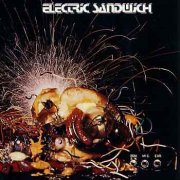 |
Electric Sandwich (1973, 39.31) ***/TChinaDevil's Dream Nervous Creek It's No Use to Run I Want You Archie's Blues Material Darkness |
Current availability:
Mellotron used:
I think the opening to Electric Sandwich's self-titled sole album must be the most 'typical' krautrock I've heard; full-on spacey jamming with an insistent backbeat, although much of the rest of the album settles for more mainstream styles, not least the unnecessary blues of, er Archie's Blues. Top marks for refusing to be shoehorned into any one style, though; every track's different, for better or worse.
Guitarist Jörg Ohlert doubled on keys, with organ on I Want You and a short Mellotron flute solo, followed by a string part on album closer Material Darkness, so not enough to make it worth it on the Mellotron front (where have we heard this before?). Overall, Electric Sandwich is a decent enough album of its type, but not really for those who aren't students of the era.
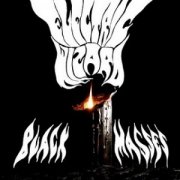 |
Black Masses (2010, 59.06) ***/TBlack MassVenus in Furs The Nightchild Patterns of Evil Satyr IX Turn Off Your Mind Scorpio Curse Crypt of Drugula |
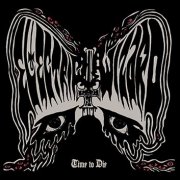 |
Time to Die (2014, 65.23) ***/TIncense for the DamnedTime to Die I am Nothing Destroy Those Who Love God Funeral of Your Mind We Love the Dead SadioWitch Lucifer's Slaves Saturn Dethroned |
Current availability:
Mellotrons used:
Electric Wizard have been around for over two decades now, purveying their take on Sabbath-style stoner metal with some degree of success. Jus Oborn has led the band through several line-up changes, the current one featuring his wife, Liz Buckingham, on second guitar, making a welcome change for a metal band. 2010's Black Masses is their seventh album, recorded at London's legendary all-analogue Toerag, making for a dense, compressed sound, complete with genuine tape-hiss and the sound of old equipment. The material's pretty much what you'd expect from the style, long, slow, doomy tracks with underwater vocals and guitar solos, not to mention horror film soundtrack effects between tracks. And no, Venus In Furs is not a Velvets cover. Alongside the studio's vintage gear, the band used the Planet Mellotron M400, played by studio mainstay Edryd Turner. Although I was under the impression they'd used the machine on more than one track, it's only credited on The Nightchild, with strings swells throughout, although the wobbly, pitchbent choirs at the end of Turn Off Your Mind couldn't be anything else. It might even be elsewhere, although I suspect the droning high notes on a couple of tracks are more likely to be controlled feedback.
2014's Time to Die (Blade Runner reference?) is a slightly more cohesive release, if only because several tracks feature radio recordings of what appears to be one of those ridiculous American cases of 'satanic suicide with metal affiliations' that hit the US news during the silly season. Musically, of course, it's Electric Wizard's standard stock in trade: sludgy, Sabbath-esque riffology, often tuned down as far as B. Oborn plays my M400 himself, this time, with a brief string line in the title track, repeating towards the end and a similar part in Lucifer's Slaves, but you'd hardly call it overused.